Designing a serene outdoor retreat has become one of the most compelling trends in Zen Garden ideas 2026. Many homeowners wonder how to create a modern yet peaceful garden that reflects harmony, balance and natural beauty. In this article, I will explore ways to transform any outdoor space into a meditative, functional environment using timeless principles blended with modern aesthetics. Whether the reader wants to redesign a small courtyard or reimagine a full backyard landscape, the ideas here will guide them toward creating a calming sanctuary.
Throughout the article, I aim to answer essential questions: Which materials support the most tranquil experience? How can I integrate water, stone and plants in a way that feels refined and intentional? And which design elements elevate usability without overwhelming the peaceful atmosphere? By sharing techniques, personal observations and professional insights seen across the newest Zen Garden ideas 2026, this guide will help create a space that looks stunning and feels restorative.
1. Tranquil Zen Garden Pathways
A tranquil garden pathway is often the core element that defines movement and flow in any modern Zen-inspired space. When planning a pathway for Zen Garden ideas 2026, I focus on creating soft curves that guide the eye gently forward. Natural stone, gravel or wooden stepping planks help introduce texture while encouraging a slow, mindful pace. Pathways should never feel rushed; instead, they should invite contemplation and allow visitors to absorb the surrounding landscape.
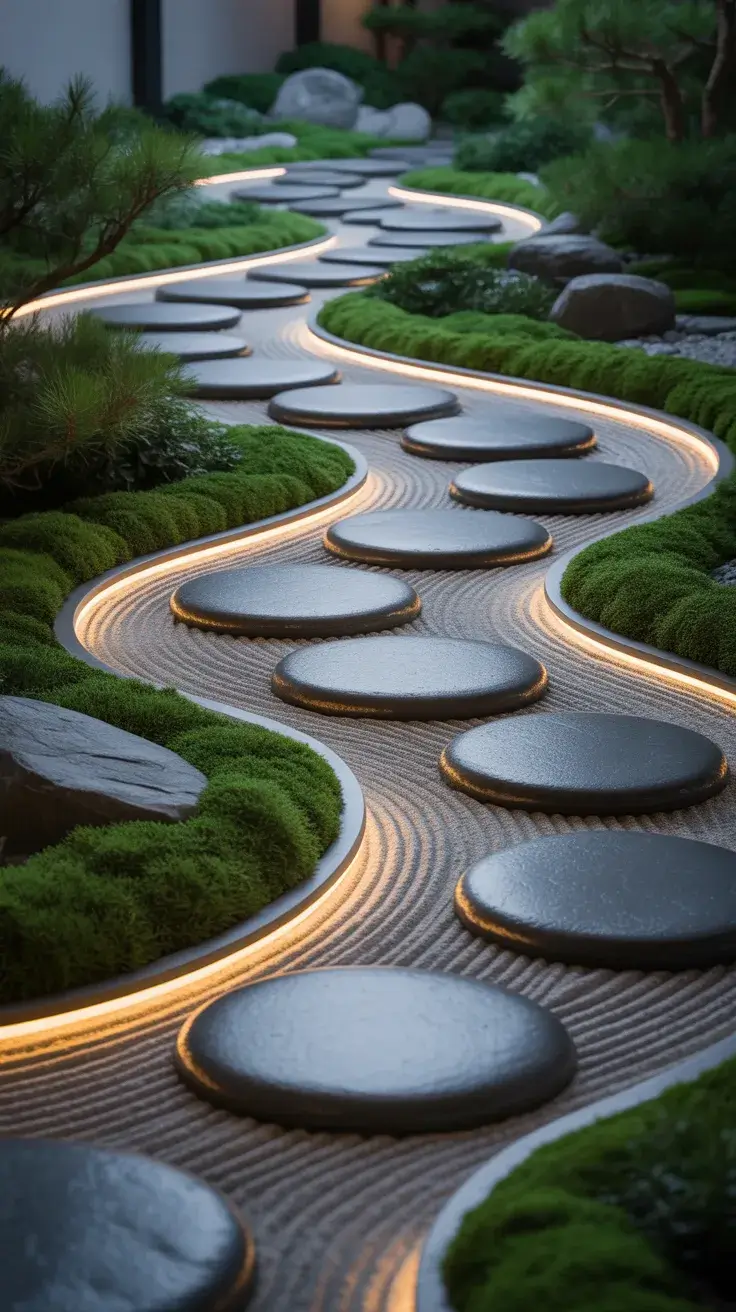
When selecting materials for these walkways, I prefer smooth river stones, muted gravel tones and wooden planks treated to withstand weather exposure. Each material contributes differently to the aesthetic and sensory experience. I also incorporate low-profile lighting, often embedded along the path edges, to highlight structure without disturbing the natural essence. Shrubs, moss or low grasses bordering the pathway help soften transitions and blend the design seamlessly into the garden.
In my experience, landscape designers like those featured in Architectural Digest suggest that pathways should act as visual “pauses”—moments where one can rest visually before moving into the next zone. I personally agree, as intentional spacing and subtle elevation changes often create a calming rhythm throughout the garden.
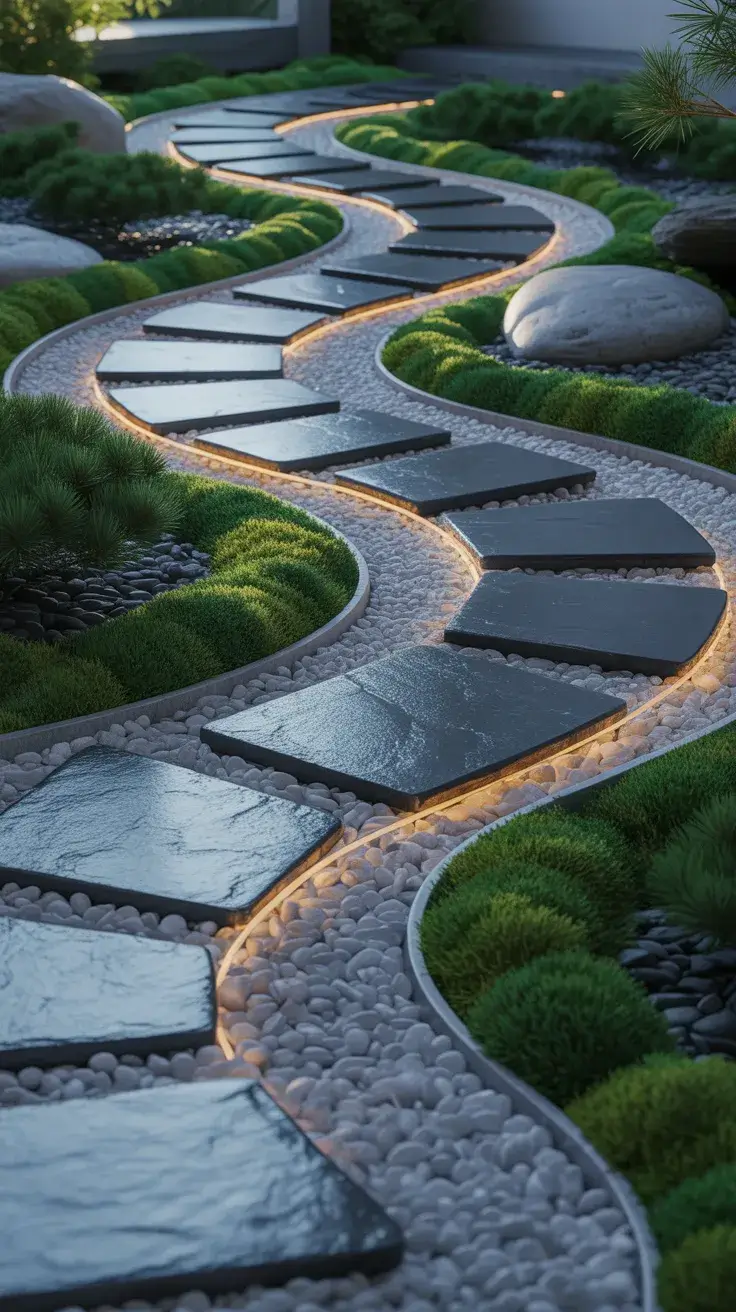
To enhance this section further, I would add a secondary path or branching walkway to introduce variety and provide alternative meditative routes for visitors.
2. Minimalist Stone Arrangements
Minimalist stone arrangements form one of the most essential components of modern Zen Garden ideas 2026. When I design them, I approach the layout with precision, ensuring each stone has a defined purpose in the composition. Whether the stones represent mountains, islands or abstract forms, their placement should evoke stillness and stability. I prefer using large, organic boulders paired with smaller stones to create natural balance.
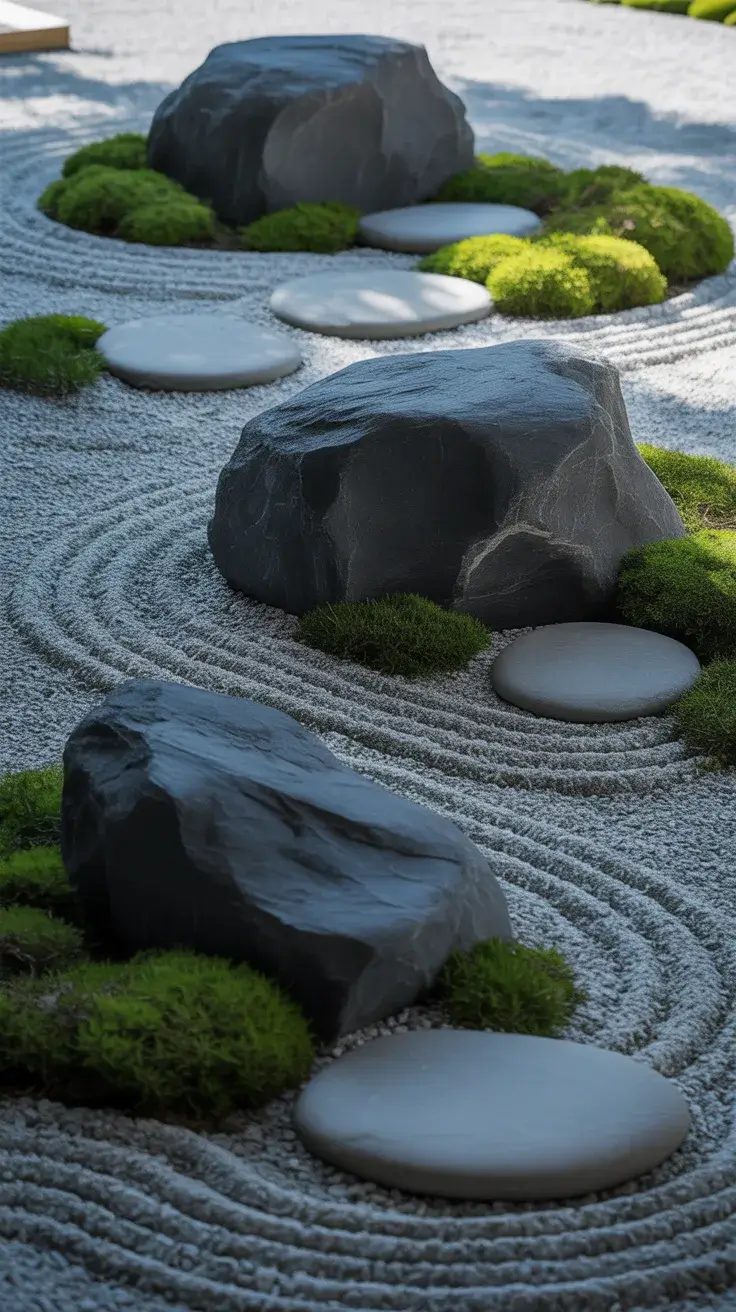
The materials I choose must reflect harmony. Basalt, granite and smooth river stones are excellent for creating grounding visual anchors. I also place stones in odd numbers, following traditional Japanese garden design principles. Supporting elements such as fine gravel or sand help emphasize contrast while maintaining a clean, minimalist aesthetic.
From my professional perspective, referencing traditional practices from Kyoto gardens has taught me that restraint is more powerful than excess. I find that fewer stones, positioned with intention, create a stronger emotional response than crowded designs.
To improve this arrangement further, I would incorporate subtle moss growth along the stone bases to introduce age, depth and natural texture.
3. Serene Water Basin Designs
Water basins add a calming auditory element that enriches the overall experience of Zen Garden ideas 2026. I design these basins to serve as focal points where movement, reflection and sound intersect harmoniously. The basin should appear hand-crafted or naturally formed, often made from carved stone to maintain authenticity.
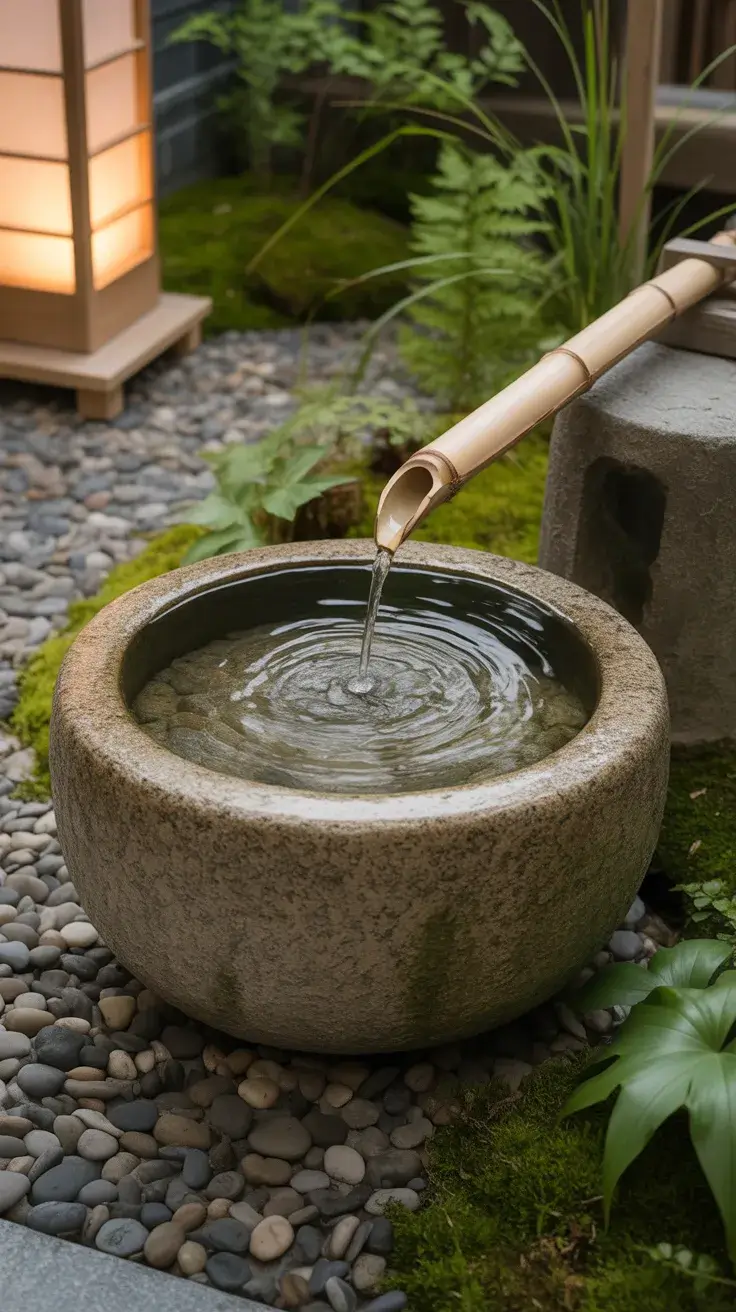
To achieve a balanced look, I pair the basin with bamboo spouts or metal fountains that gently release water in slow, rhythmic droplets. Surrounding the basin with ground cover plants, pebbles or lanterns helps create a meditative corner. I also pay attention to water circulation to ensure clarity and a soothing acoustic profile.
Personally, I find that adding a water basin instantly elevates the atmosphere. Designers in Gardenista often emphasize the importance of water flow speed, recommending slow trickles rather than streams for the most peaceful effect, a principle I follow closely.
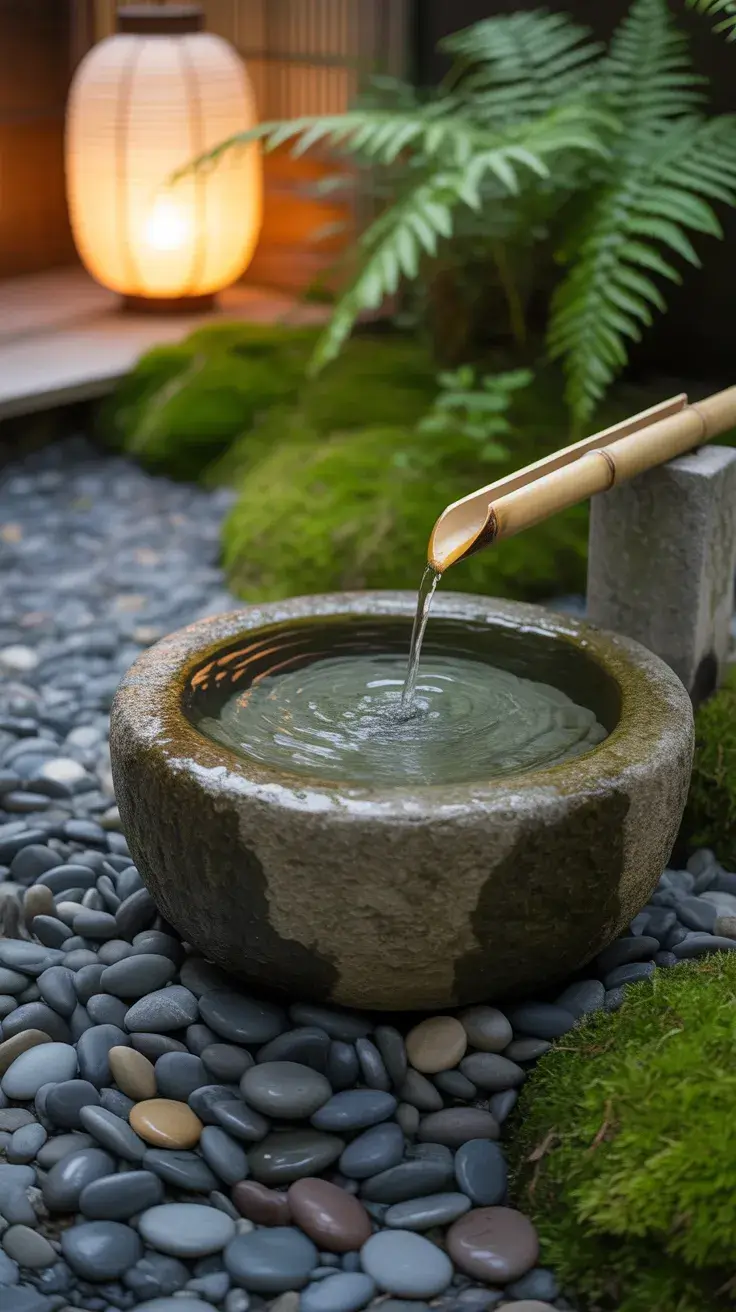
For enhancement, I would add a small seating stone nearby so visitors can pause and enjoy the sensory elements more intimately.
4. Modern Bamboo Harmony Zones
Bamboo brings height, movement and softness to Zen Garden ideas 2026, making it one of my favorite elements to include. When I create a bamboo harmony zone, I typically cluster stalks in strategic groupings to form natural partitions or sound barriers. The gentle rustling of leaves adds tranquility, while the vertical lines contribute elegance and structure.
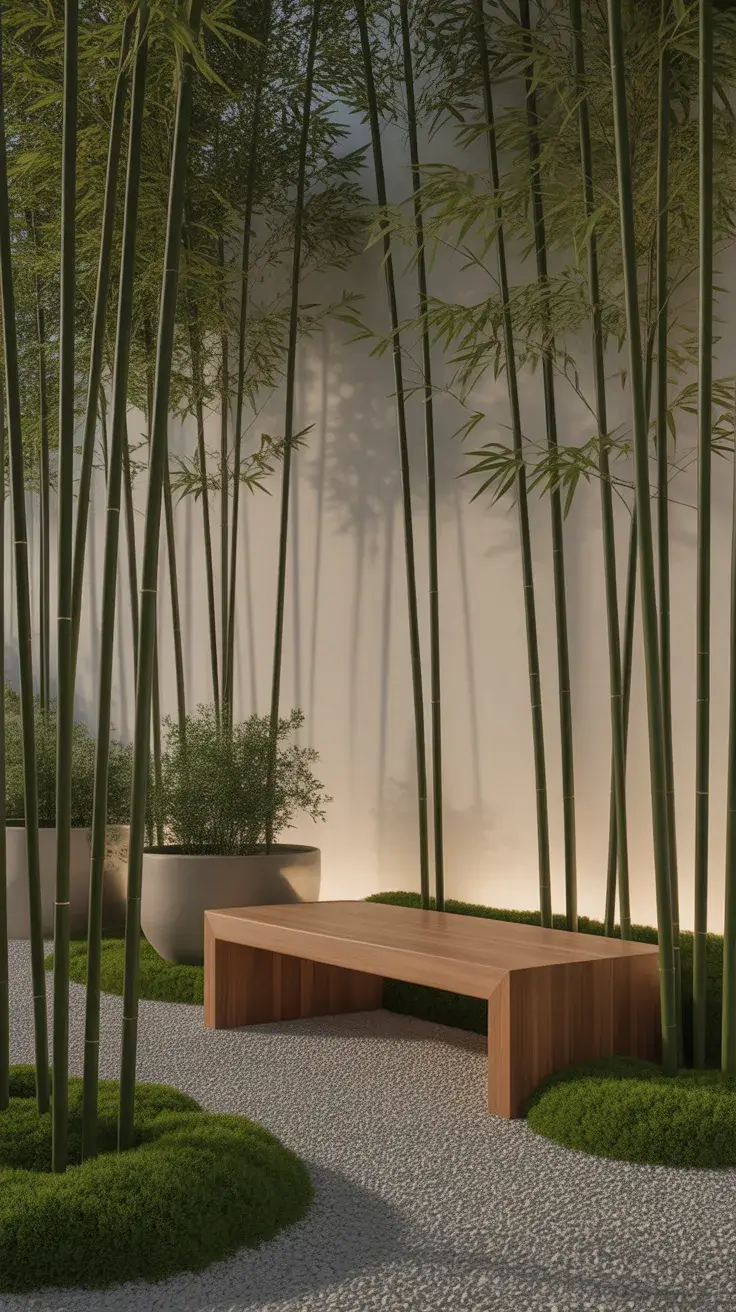
Furniture and complementary features in these zones should be minimal. I often use wooden benches, stone stools or simple ceramic planters to keep the focus on the bamboo itself. It is also essential to control bamboo spread by using containers or root barriers to maintain the garden’s organization.
From my experience, leading landscape architects often praise bamboo for its versatility and resilience. I appreciate how it softens harsher architectural lines and brings organic movement into otherwise static spaces.
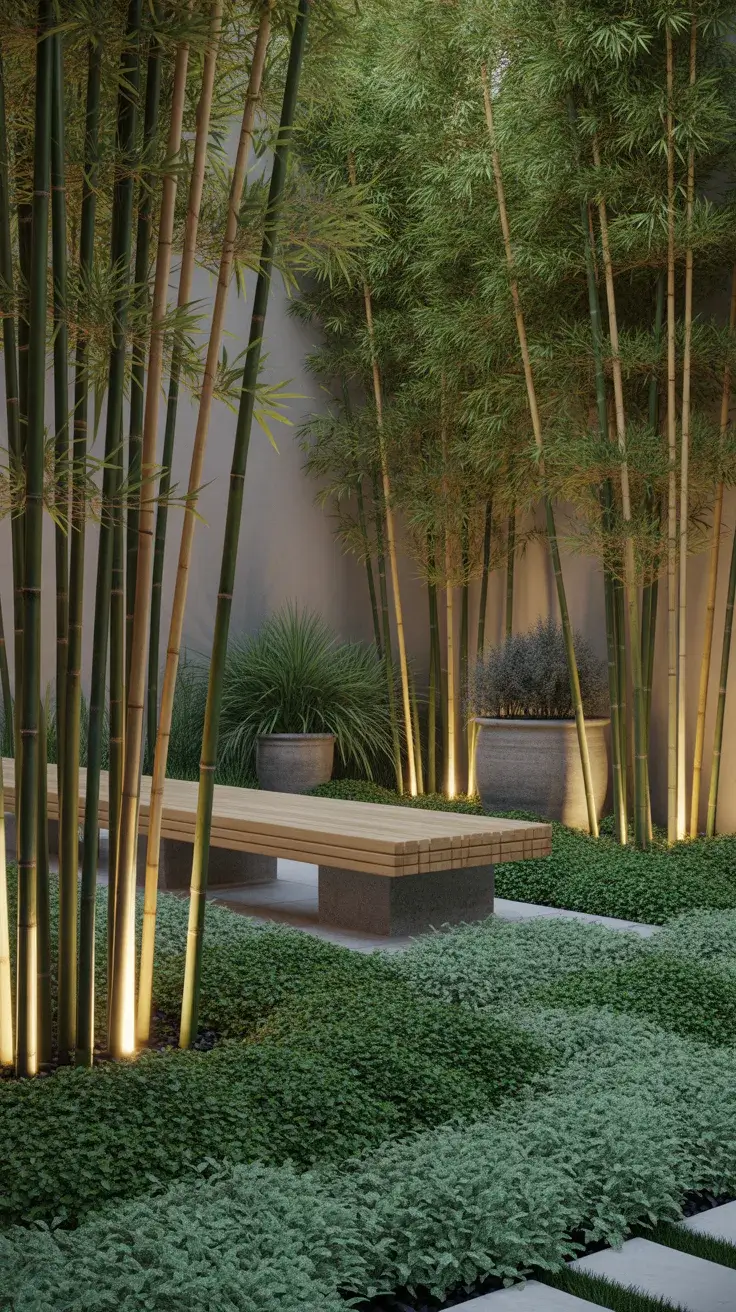
To enhance this section, I would introduce low lighting beneath the bamboo clusters to create dramatic height and shadow play at dusk.
5. Contemporary Karesansui Concepts
Karesansui, or dry landscape gardens, are a defining element of Zen Garden ideas 2026, especially for minimalist homeowners. When designing them, I focus on precision: raked gravel or sand symbolizes water, while rocks represent islands or mountains. This abstraction allows the viewer to interpret the landscape in their own way, which is one of the reasons I find it so compelling.
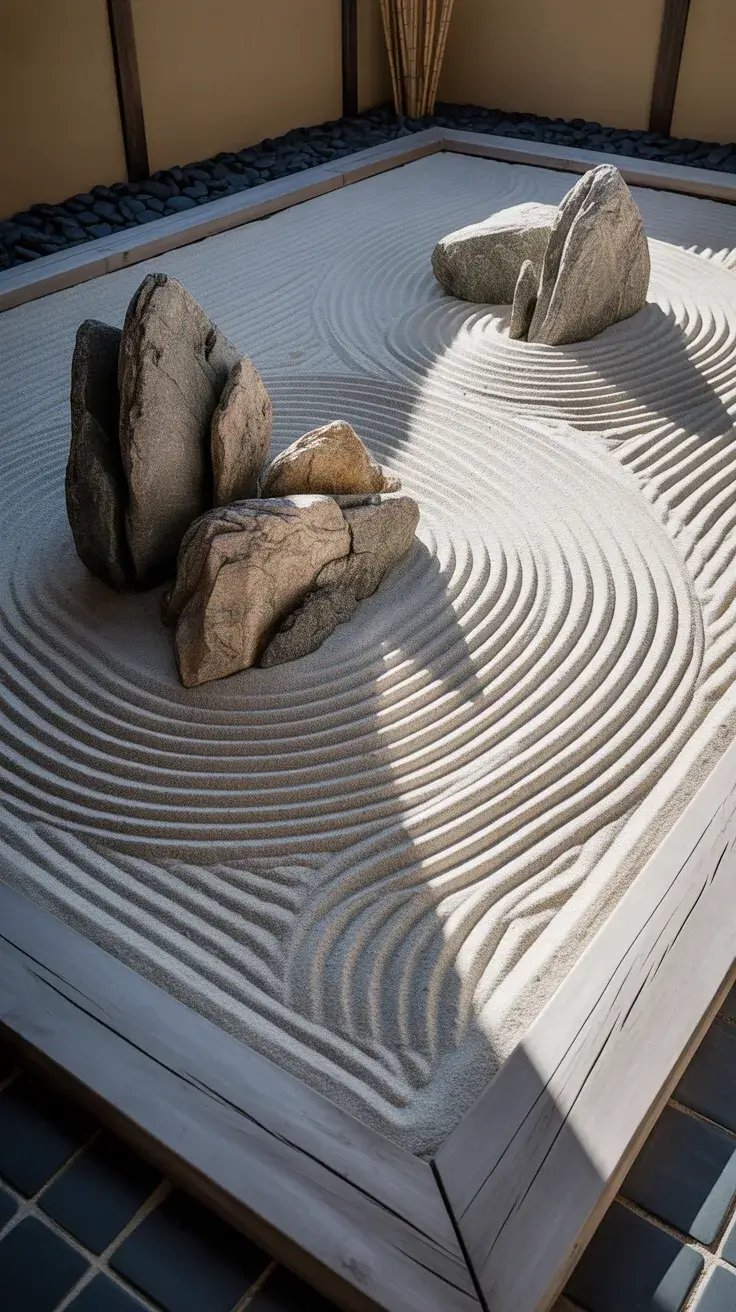
The tools and accessories I incorporate include metal or bamboo rakes, weather-resistant gravel and carefully selected stones. Raised edges or wooden frames help contain the sand while adding architectural clarity. I also like integrating subtle sculptural elements to modernize the classic style.
In my professional view, karesansui gardens are powerful because of their simplicity. As noted by Japanese garden scholars, negative space is equally as important as filled space—a concept I apply to avoid clutter and maintain emotional calm.
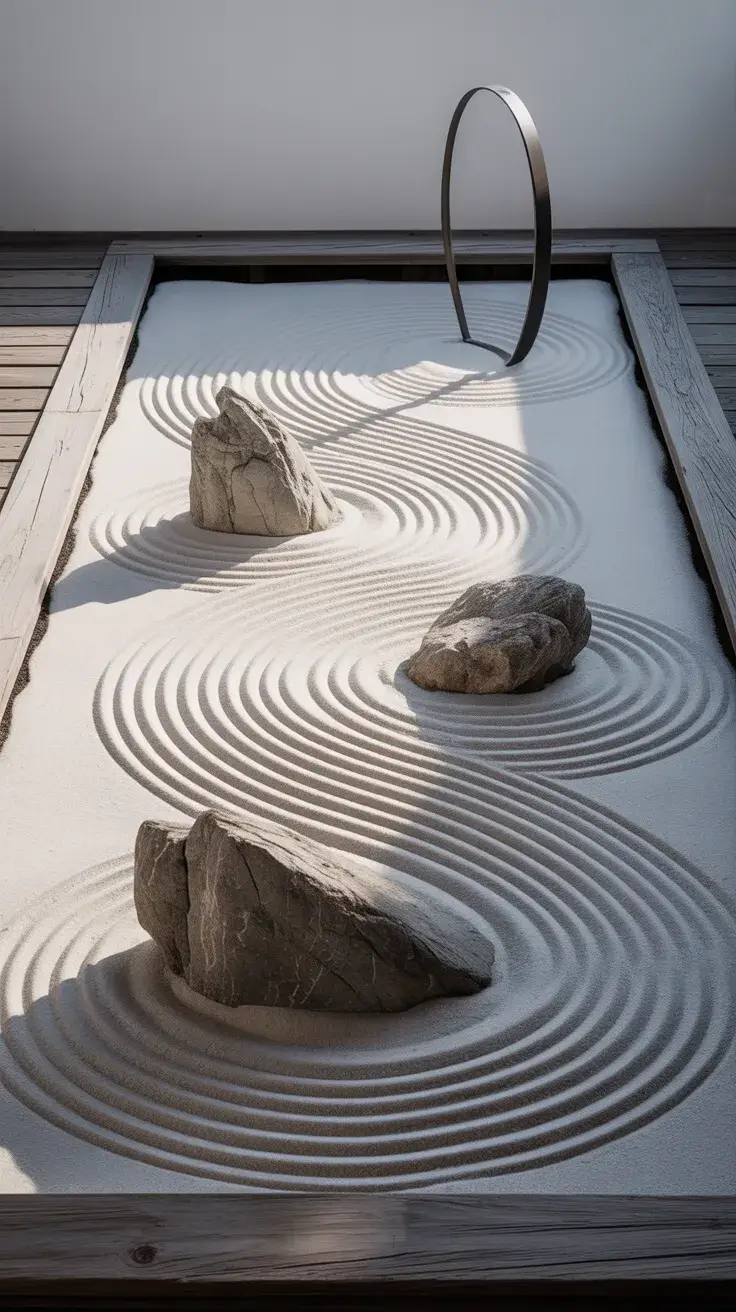
To complete this section, I would add small seating nooks so the garden can be observed from multiple angles.
6. Soft Moss Carpets For Calm Spaces
Moss carpets create lush, velvety surfaces that bring softness to Zen Garden ideas 2026. When I design with moss, I pay close attention to moisture, shade and soil composition, ensuring the environment supports dense, healthy growth. Moss instantly brings a sense of age and continuity, making any modern garden feel grounded and timeless.
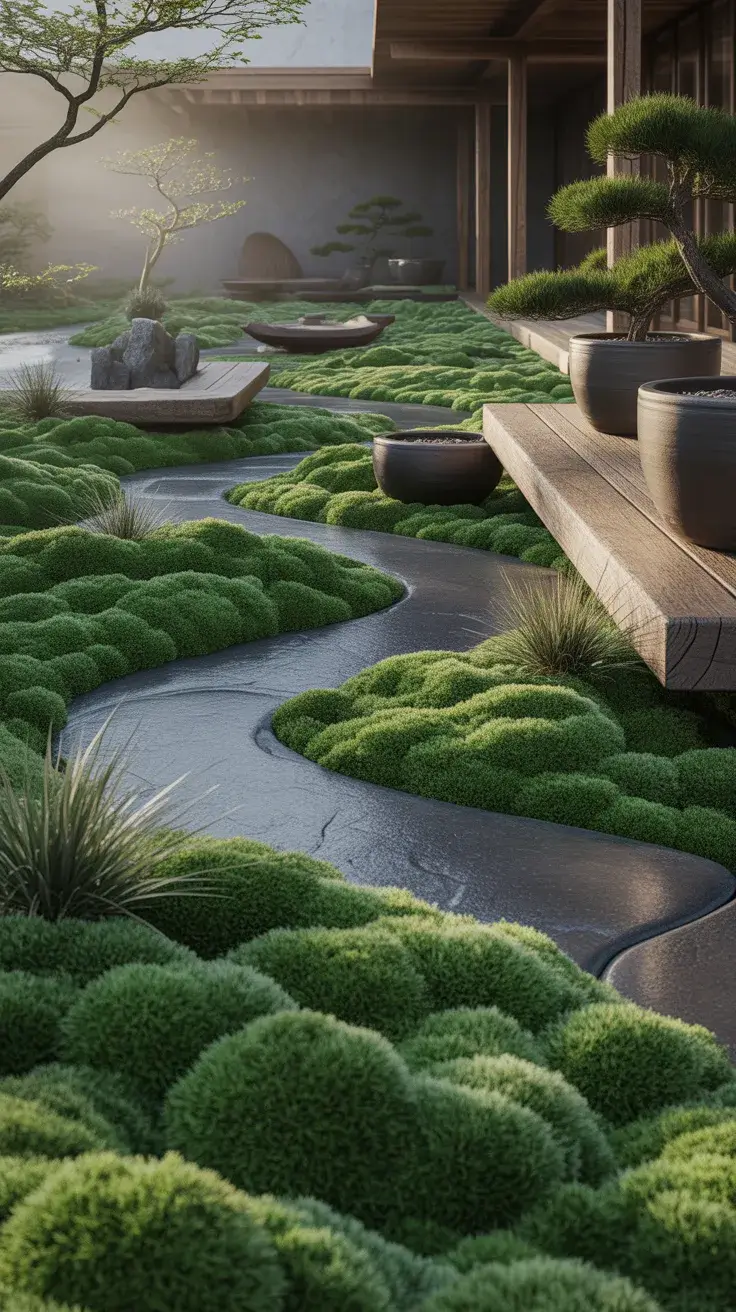
Complementary design choices include stone pathways, ceramic pots and wooden accents. Moss pairs beautifully with water features, as humidity helps the greenery thrive. I also enjoy creating moss mounds or small raised forms for added dimension.
From my experience, moss gardens have been praised by horticultural experts for their sustainability and low maintenance. I personally appreciate how they reduce visual noise and create a serene, cushioned landscape that feels soothing underfoot.
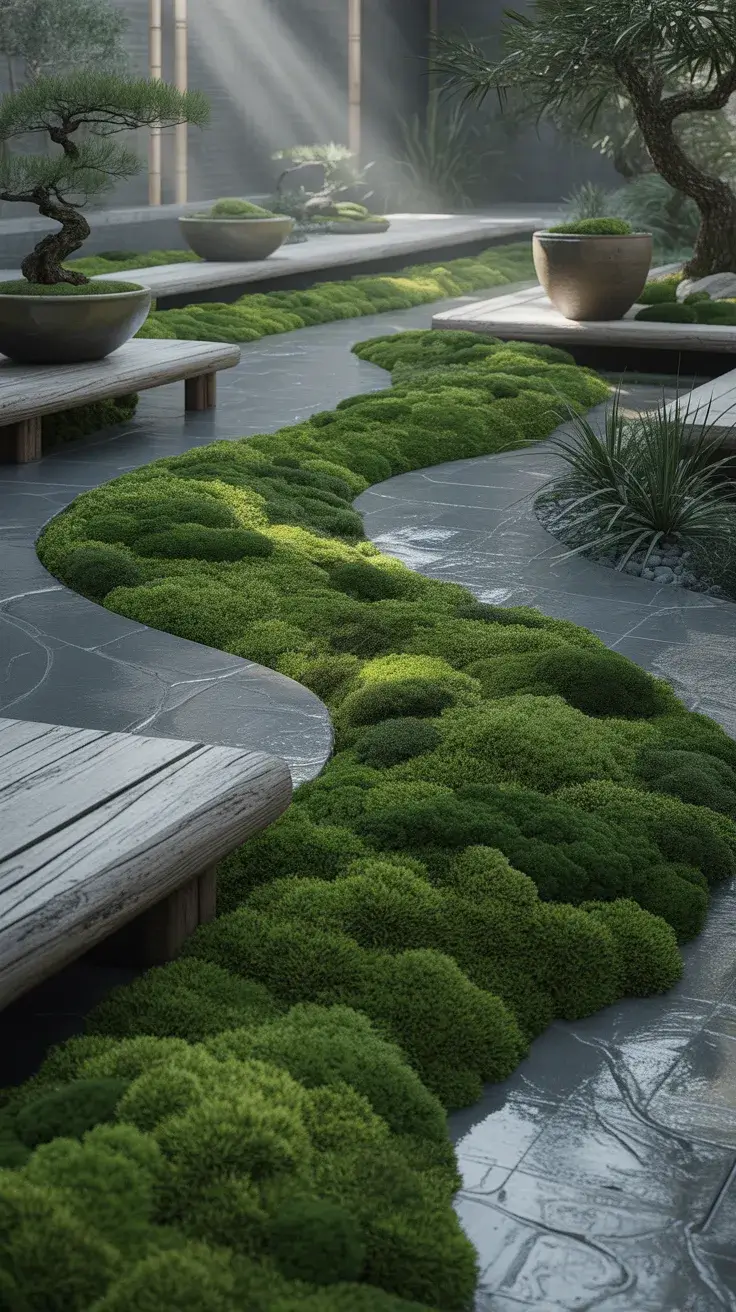
To improve this design further, I would incorporate a misting system to maintain optimal moisture during dry seasons.
7. Natural Pebble Meditation Areas
Pebble meditation zones form the foundation of many Zen Garden ideas 2026, offering simplicity and sensory grounding. When creating these areas, I shape the space as an open circle or oval, often bordered by stones or wood to define the meditative boundary. The pebbles should be smooth and comfortable enough to sit or walk upon.
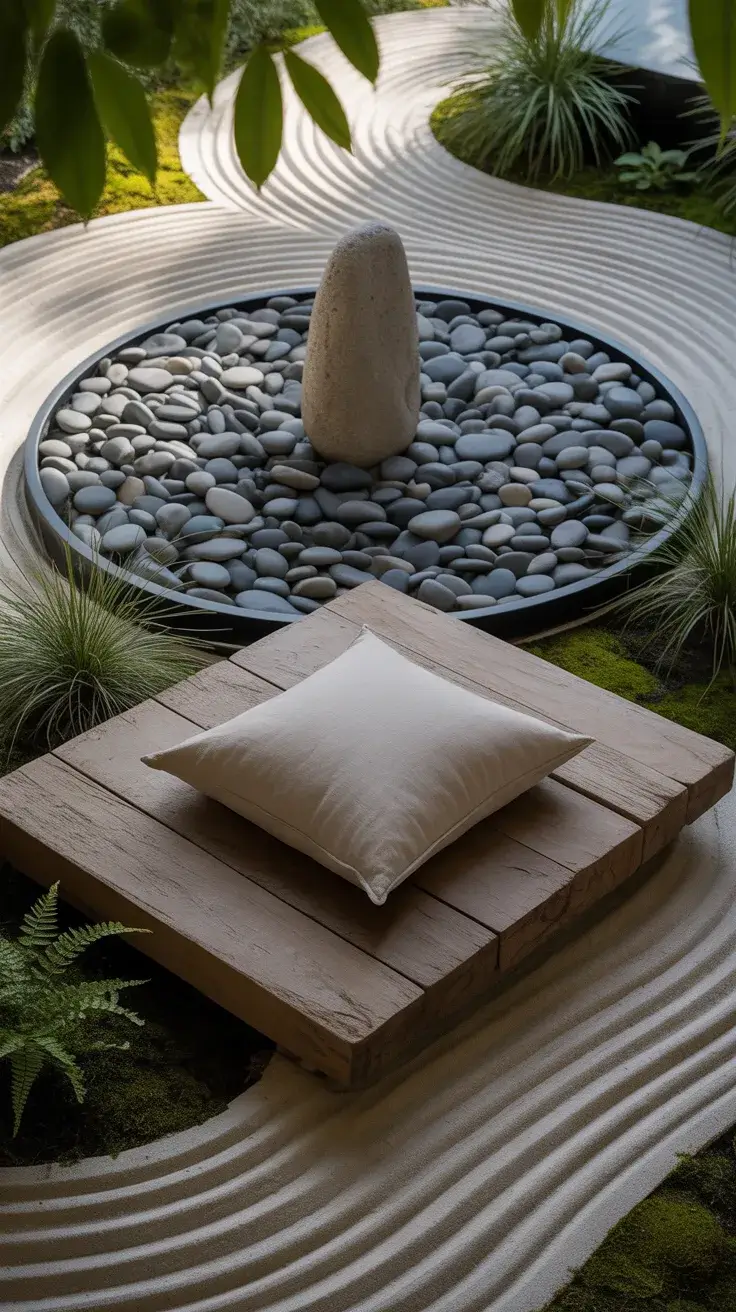
The elements I include often consist of a central stone, a meditation cushion on a wooden platform or a sculptural object that represents inner focus. Surrounding plants should remain minimal, allowing air and light to maintain an uncluttered atmosphere.
I’ve observed many wellness designers emphasize that meditation spaces benefit from neutral, natural materials that enhance relaxation. I follow this advice by avoiding bright colors or visually busy patterns.
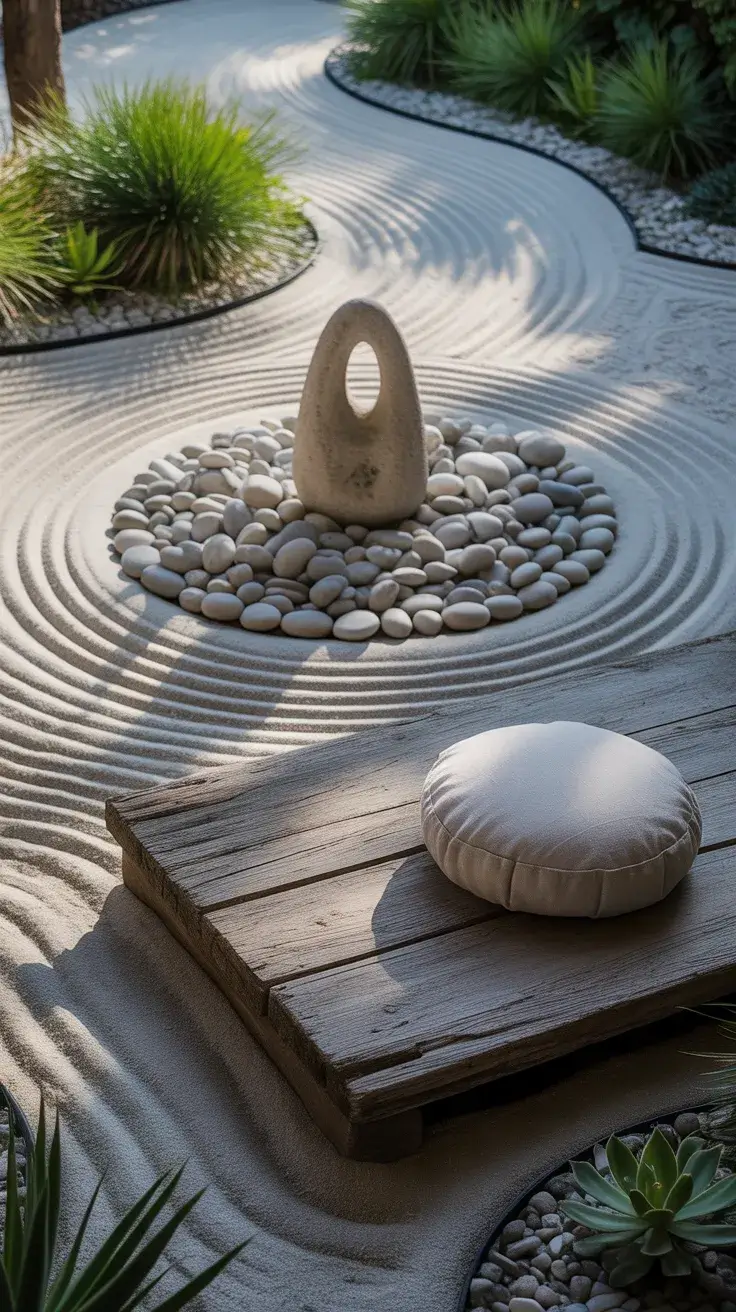
To enhance this area further, I would add a subtle scent element, such as nearby lavender or mint plantings, to deepen the sensory experience.
8. Sculptural Rock Balance Ideas
Designing sculptural rock balance installations is one of the most expressive ways to elevate modern Zen Garden ideas 2026. When I approach this concept, I treat each rock as a structural component contributing to harmony and visual rhythm. Balanced stones create a quiet sense of tension and stability, making the viewer pause and reflect. I prefer asymmetrical clusters that mimic natural formations, giving the garden a grounded yet artistic feel.
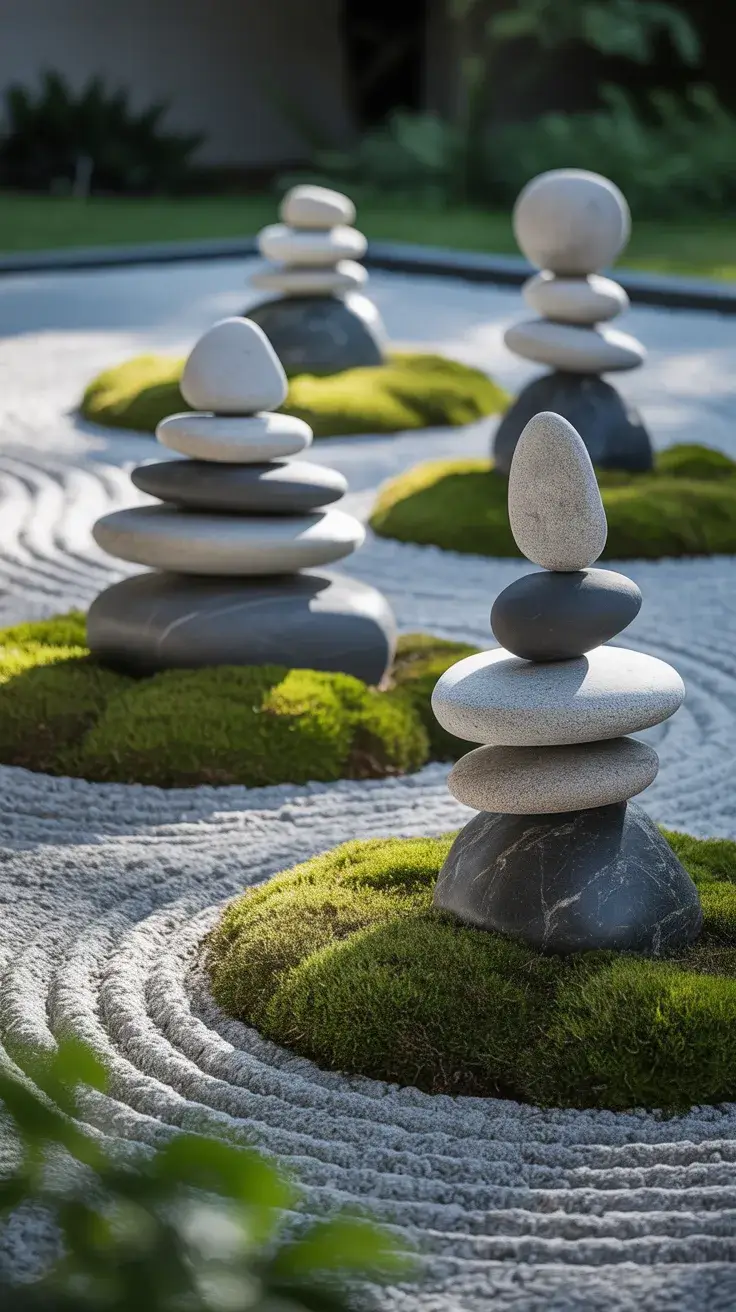
I typically choose stones with unique textures—granite, basalt and weathered limestone—to create visual diversity. Each stone must be placed with intention, ensuring the center of gravity naturally supports the composition. To enhance the installation, I often anchor the rocks into shallow gravel beds or moss patches so the structure feels embedded in the landscape.
From my experience and referencing insights shared by landscape artists in Garden Design magazine, balanced rock sculptures work best when surrounded by simple greenery and open negative space. This helps prevent visual clutter and strengthens the overall meditation quality of the garden.
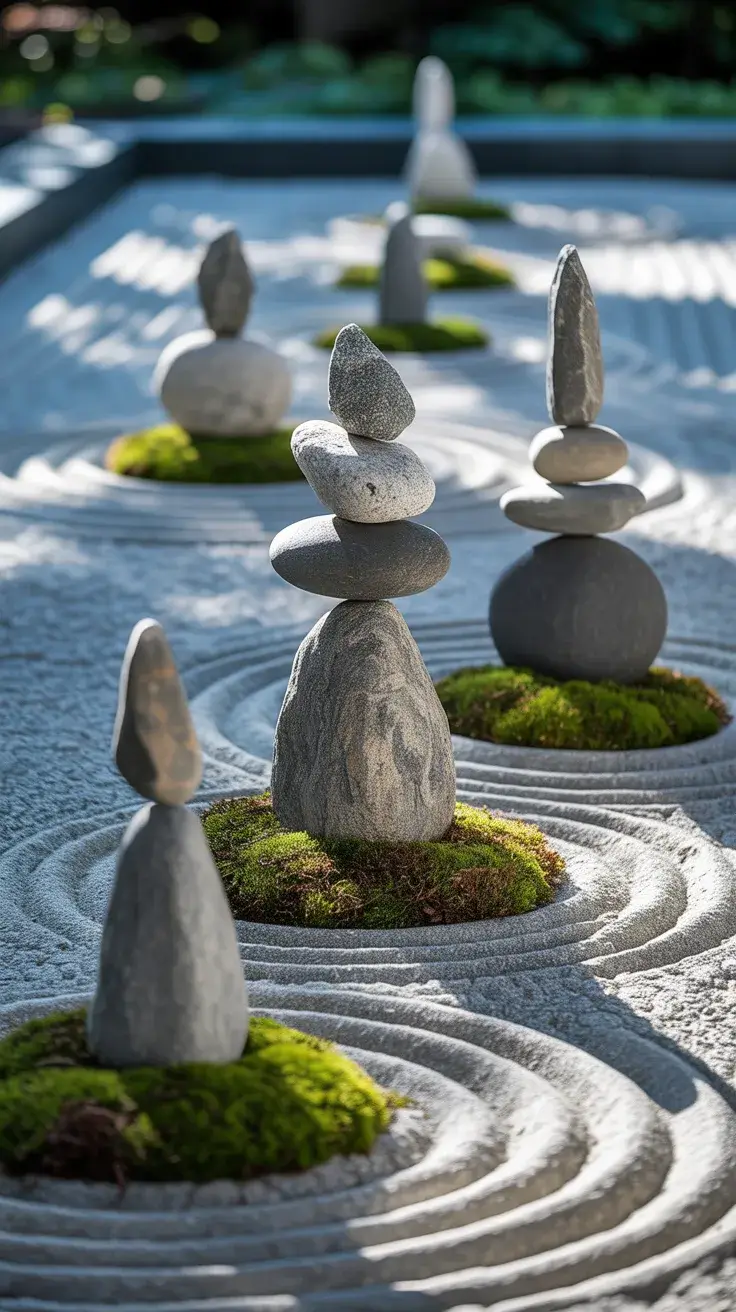
To enhance this section further, I would incorporate adjustable spotlighting to emphasize shadow play during sunrise and sunset, strengthening the sculptural effect.
9. Evergreen Plant Serenity Corners
Evergreen serenity corners bring year-round structure to Zen Garden ideas 2026, offering consistency even in changing seasons. When I design these corners, I focus on soothing shapes and gentle layering. Evergreens such as Japanese cedar, dwarf pine or cloud-pruned shrubs create sculptural silhouettes that feel meditative and timeless. These plantings help anchor the space and provide a calming backdrop for other garden features.
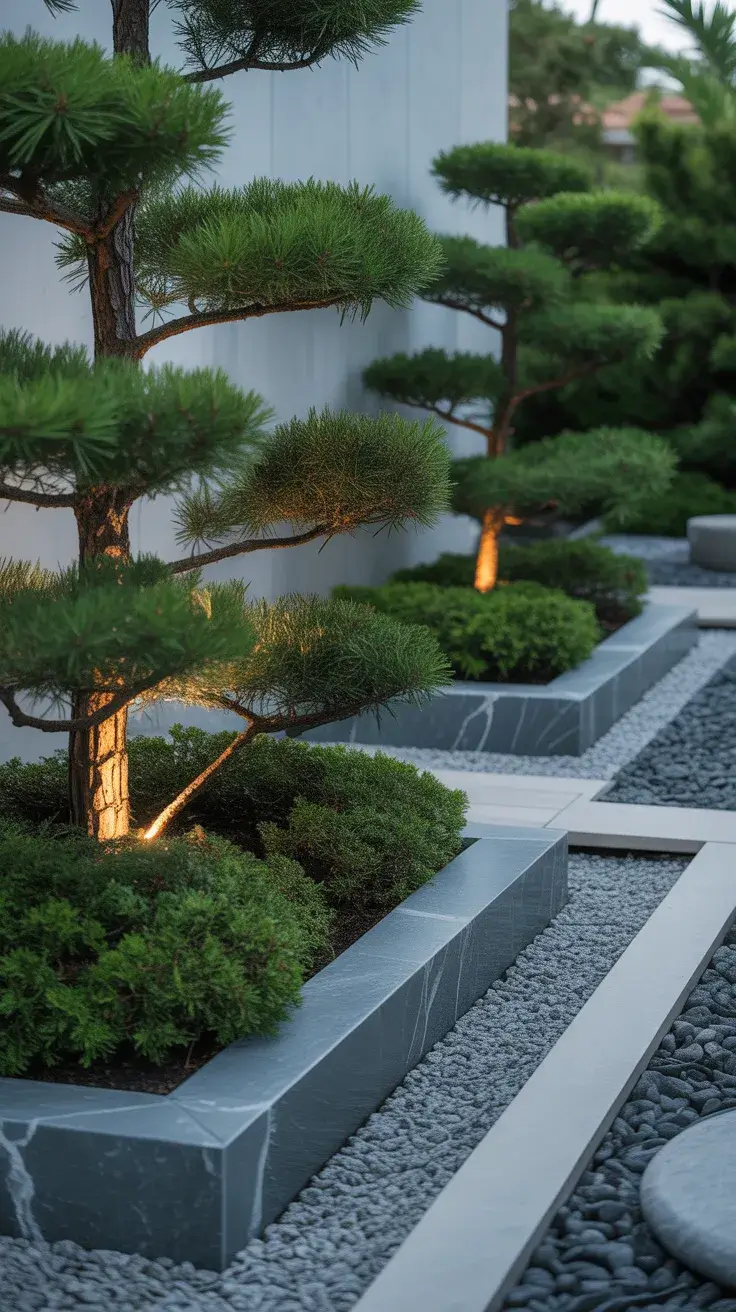
My choice of elements includes smooth stone planters, ceramic bowls and softly curving gravel lines that shape the planting area. I also integrate ground covers like moss or low grasses to enhance lushness without overwhelming the eye. The evergreen shades of green—deep, muted, or bluish—are especially effective at soothing visual fatigue.
I’ve found that designers in publications like Better Homes & Gardens often recommend using evergreens to introduce permanence into Zen-inspired gardens. I completely agree; their stability and resilience reinforce the sense of peace essential to Zen environments.
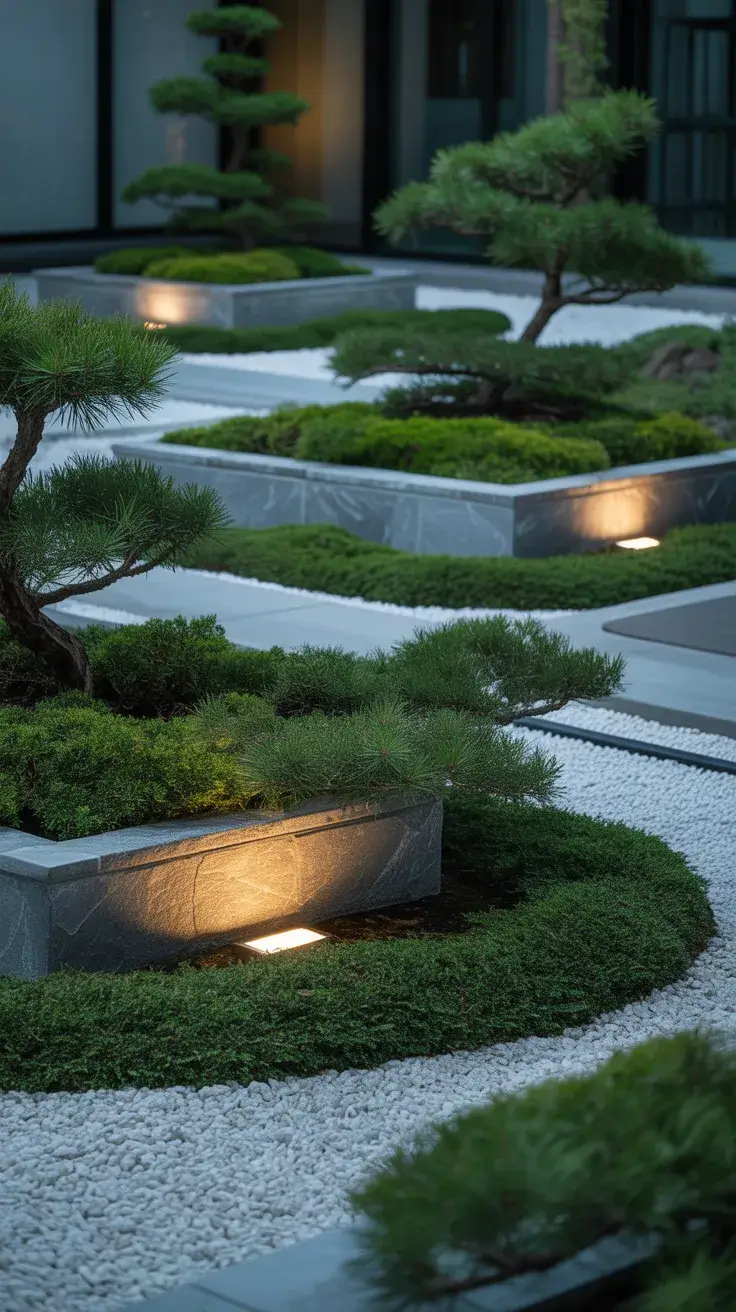
To elevate this section further, I would add subtle uplighting hidden behind the shrubs to create dramatic silhouettes at night.
10. Sand Pattern Art Inspiration
Sand pattern artistry is central to many Zen Garden ideas 2026, allowing creativity and mindfulness to coexist. When I design sand patterns, I focus on fluid motion. Gentle waves, concentric circles or intersecting lines help express symbolic meanings like water, wind or energy flow. The practice of raking sand can be meditative, encouraging presence and calm attention.
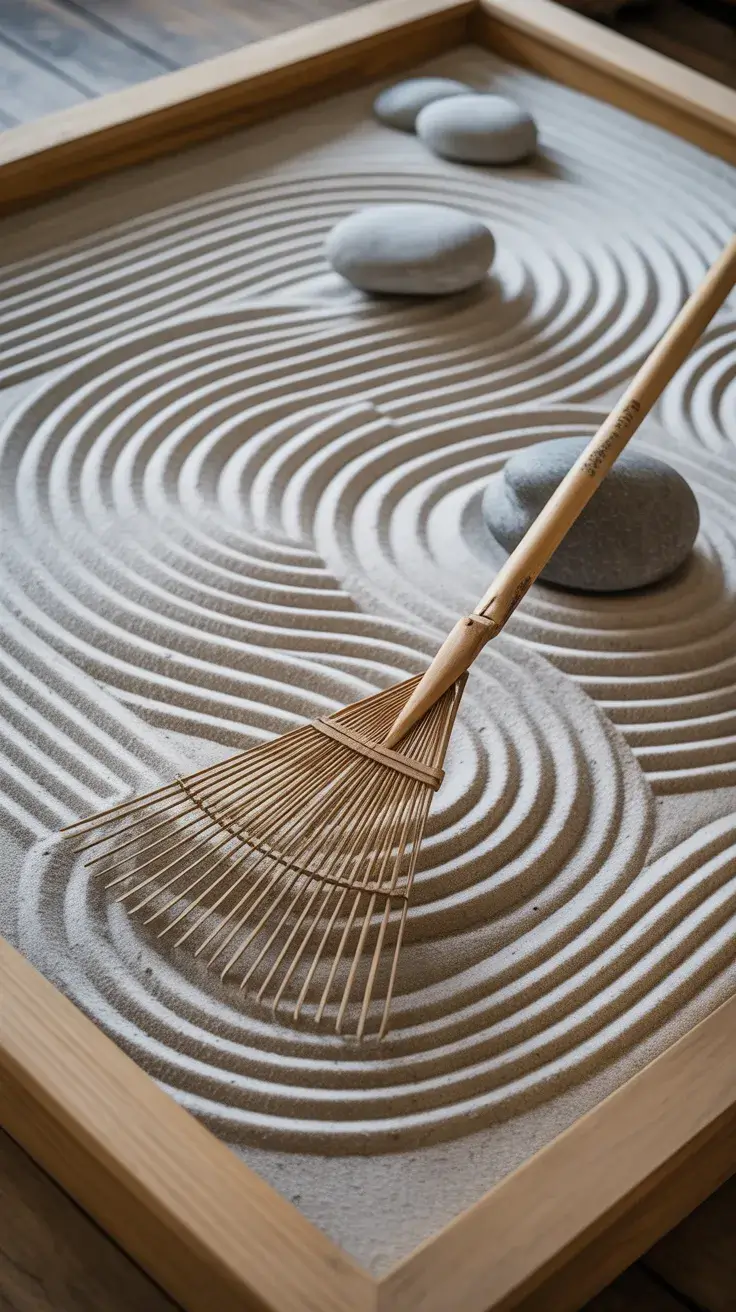
For tools and supporting features, I use wooden or metal rakes with different tooth widths to create varied textures. The sand bed itself is framed neatly with wooden edges or stone borders. Accent stones placed within the sand field serve as focal points that influence the flow of patterns around them.
In my experience, creating these patterns offers a refreshing mental reset. Designers frequently note in interviews with landscape magazines that pattern variation boosts creativity while supporting routine mindfulness. I find this true, as no two raked patterns ever look the same.
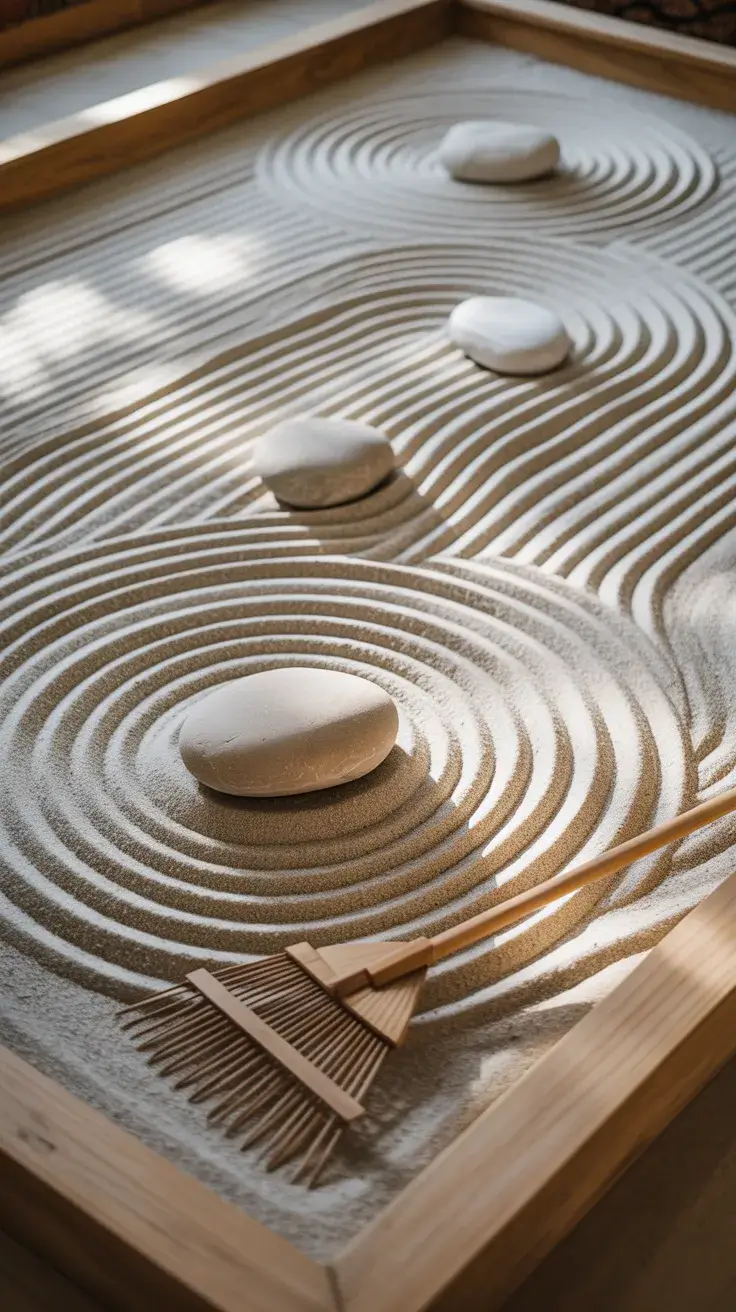
To improve this section further, I might introduce a secondary sand zone dedicated to experimental artistic patterns that change daily or weekly.
11. Quiet Lantern Lighting Concepts
Quiet lantern lighting strengthens the emotional tone of Zen Garden ideas 2026, especially during evening hours. When designing a lighting layout, I prioritize warm, low-intensity illumination that mimics natural candlelight. Stone lanterns, metal fixtures or wooden lamps can be strategically placed along pathways or near focal points to gently highlight form and depth.
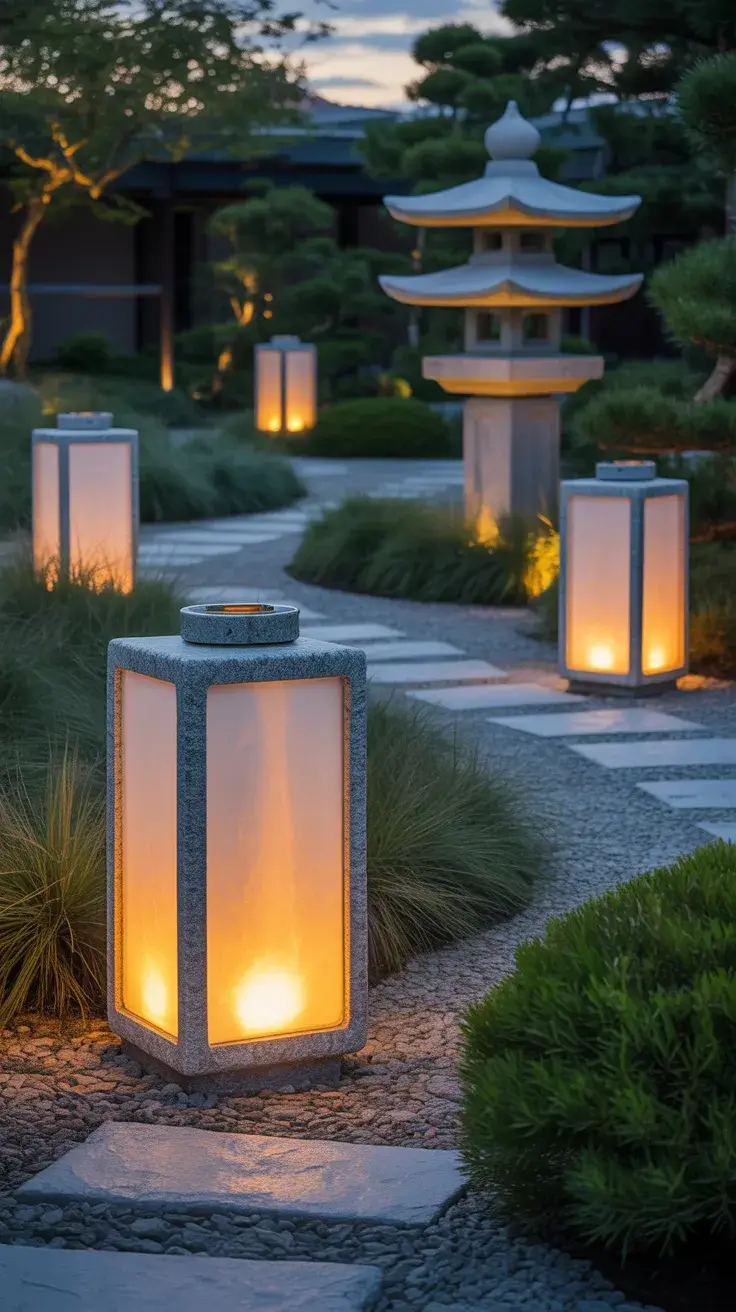
Lighting accessories include solar-powered lanterns, LED modules and concealed wiring systems to maintain minimal visual intrusion. I often choose lanterns with frosted glass or carved stone to soften diffusion and prevent harsh glare. Lantern placement must feel intentional and balanced.
From my experience, lighting designers consistently emphasize the importance of subtle layering. This aligns with my own approach: light should guide attention, not overwhelm the garden’s natural darkness. A soft glow enhances textures, creates pockets of intimacy and supports nighttime meditation.
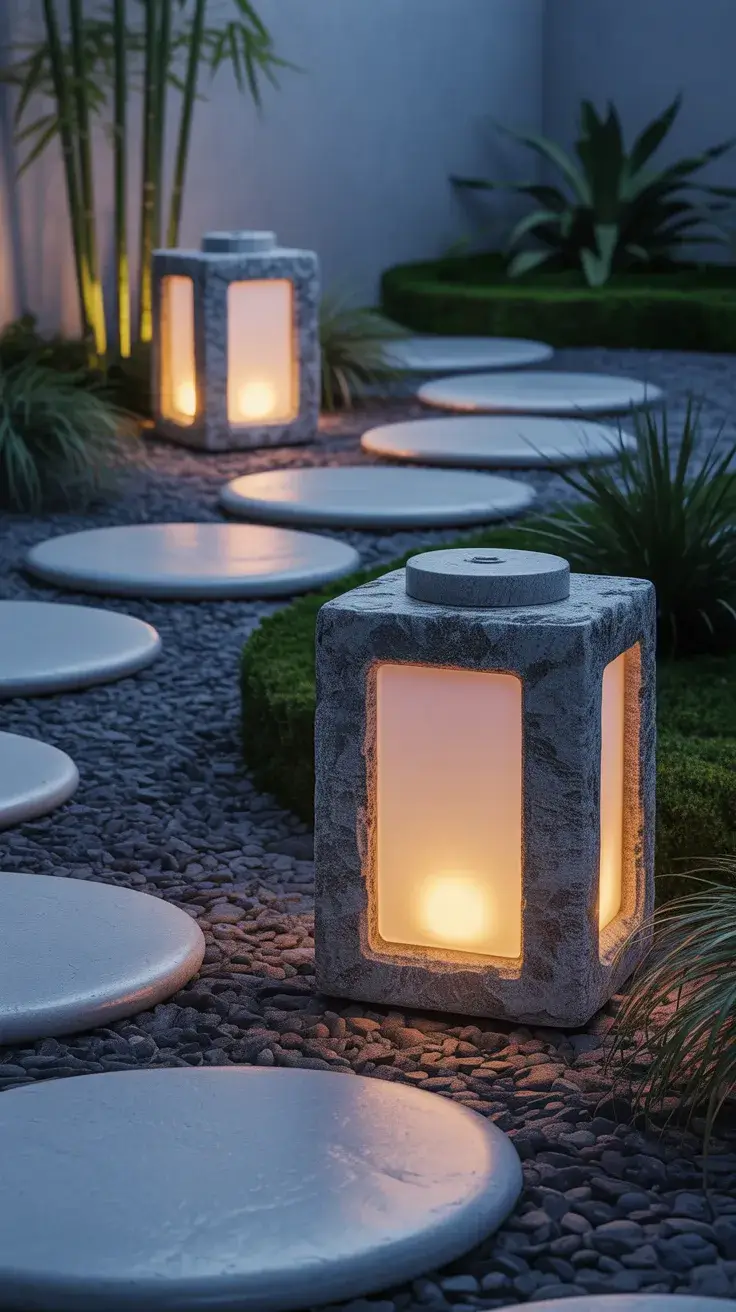
To enhance this design further, I would incorporate lanterns at different heights—ground level, mid-height and elevated—to create a multi-dimensional lighting environment.
12. Flowing Stream Integration
Integrating a flowing stream into modern Zen Garden ideas 2026 brings movement, sound and refreshing energy to the landscape. When I design these streams, I focus on gentle slopes that encourage smooth, natural water flow. The stream should feel as though it has always belonged to the space, winding gracefully through rocks, moss and plant elements.
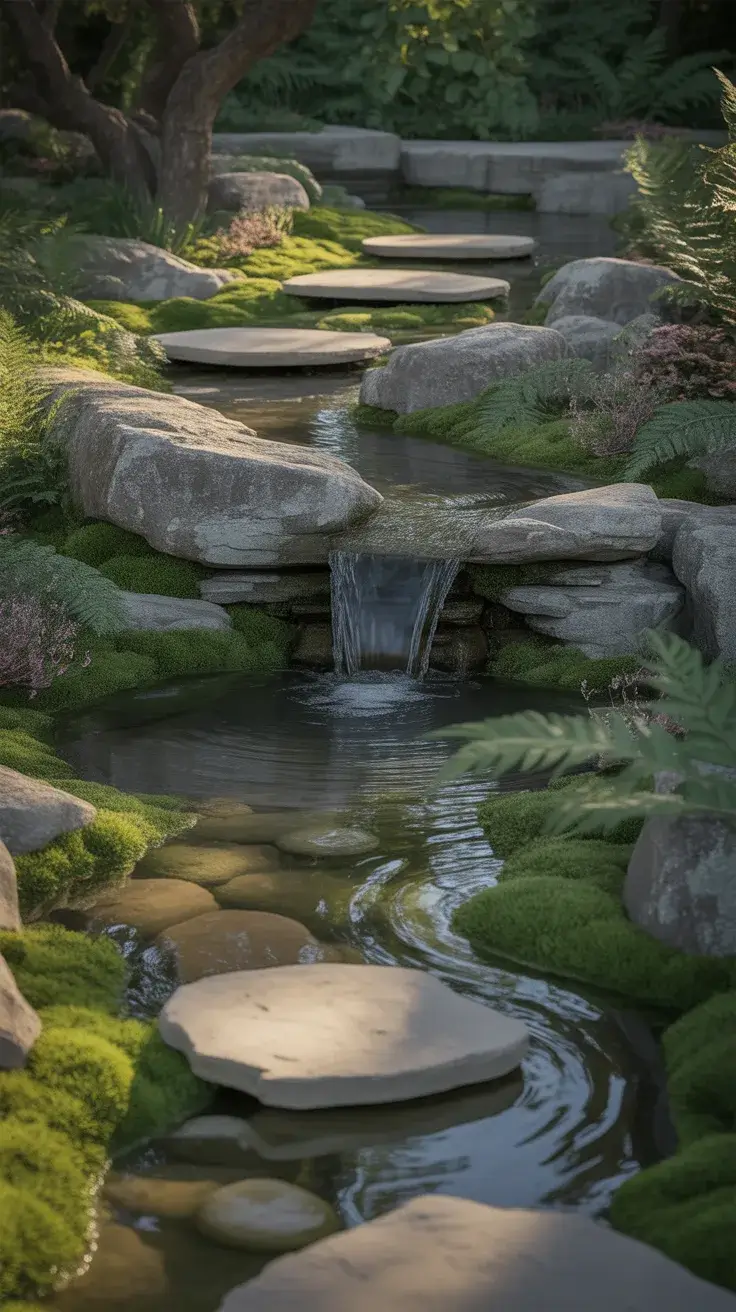
I use natural stone borders, river pebbles and aquatic plants to soften the edges of the stream. Small waterfalls or water drops can be incorporated to enhance acoustic richness. The water must remain clear and filtered, so I integrate discreet pump systems hidden among the stones.
In my experience and from studies cited by environmental designers, running water significantly reduces stress levels and enhances emotional well-being. I personally find that even a small stream adds depth and serenity unmatched by static garden elements.
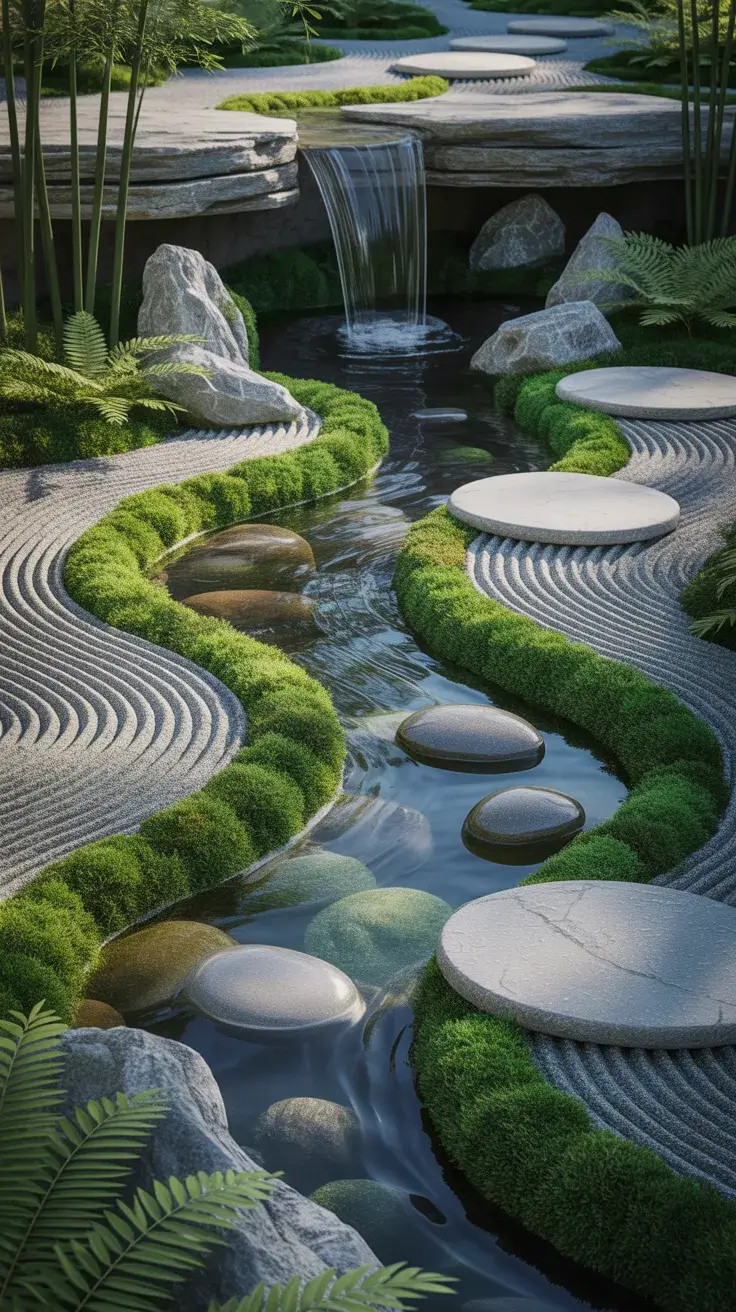
To enhance this design further, I would add stepping stones across the narrowest point of the stream to encourage mindful movement through the space.
13. Zen Inspired Courtyard Layouts
Courtyard layouts inspired by Zen philosophy are among the most adaptable components of Zen Garden ideas 2026. When I design a courtyard, I balance openness with enclosed comfort. Clean lines, natural materials and restrained color palettes ensure the space feels both structured and soothing. Courtyards benefit from symmetry balanced with organic accents such as stone or water.
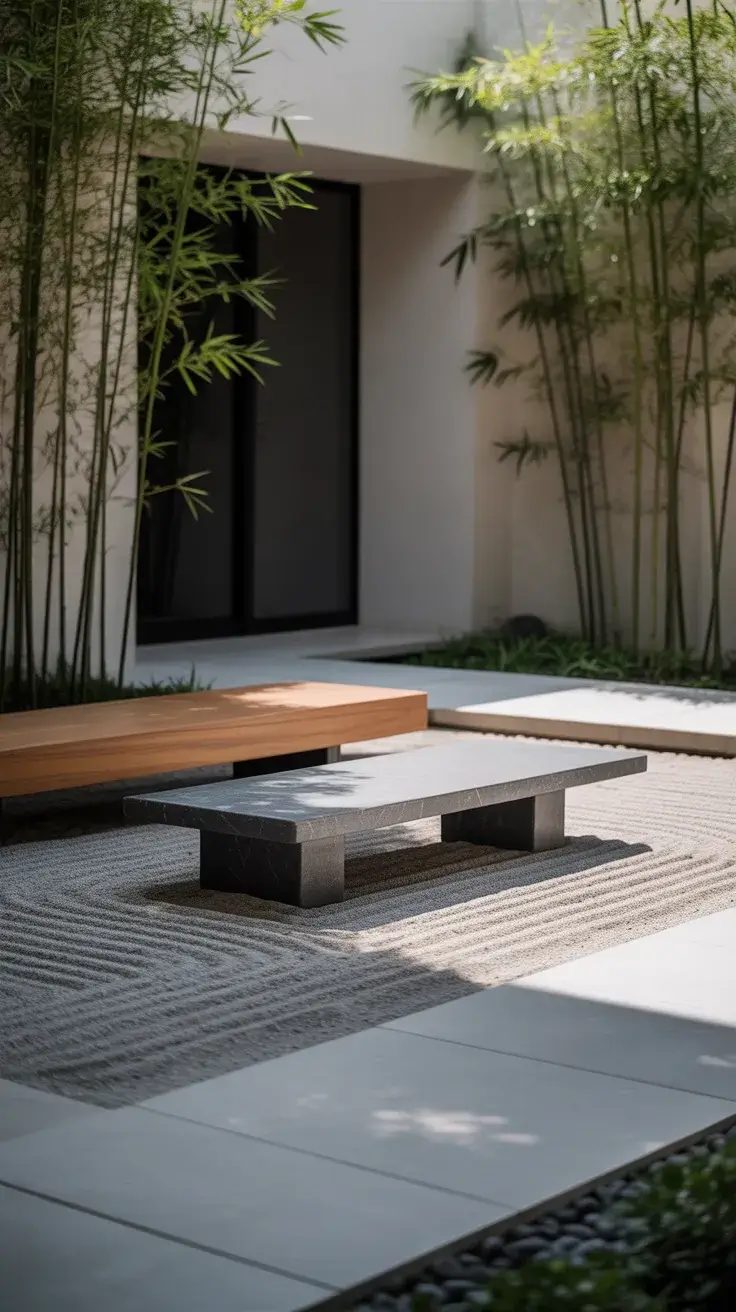
Furniture selections typically include minimalist wooden benches, stone tables or single ceramic accent pieces. Plants must remain selective—bamboo, pine, moss and small sculptural shrubs maintain clarity without overwhelming the limited spatial footprint. Pathways and gravel areas help organize the courtyard visually.
Professionals in leading architectural publications often highlight that Zen courtyards excel because they combine indoor-like comfort with outdoor freedom. I agree: a well-designed courtyard becomes an everyday sanctuary.
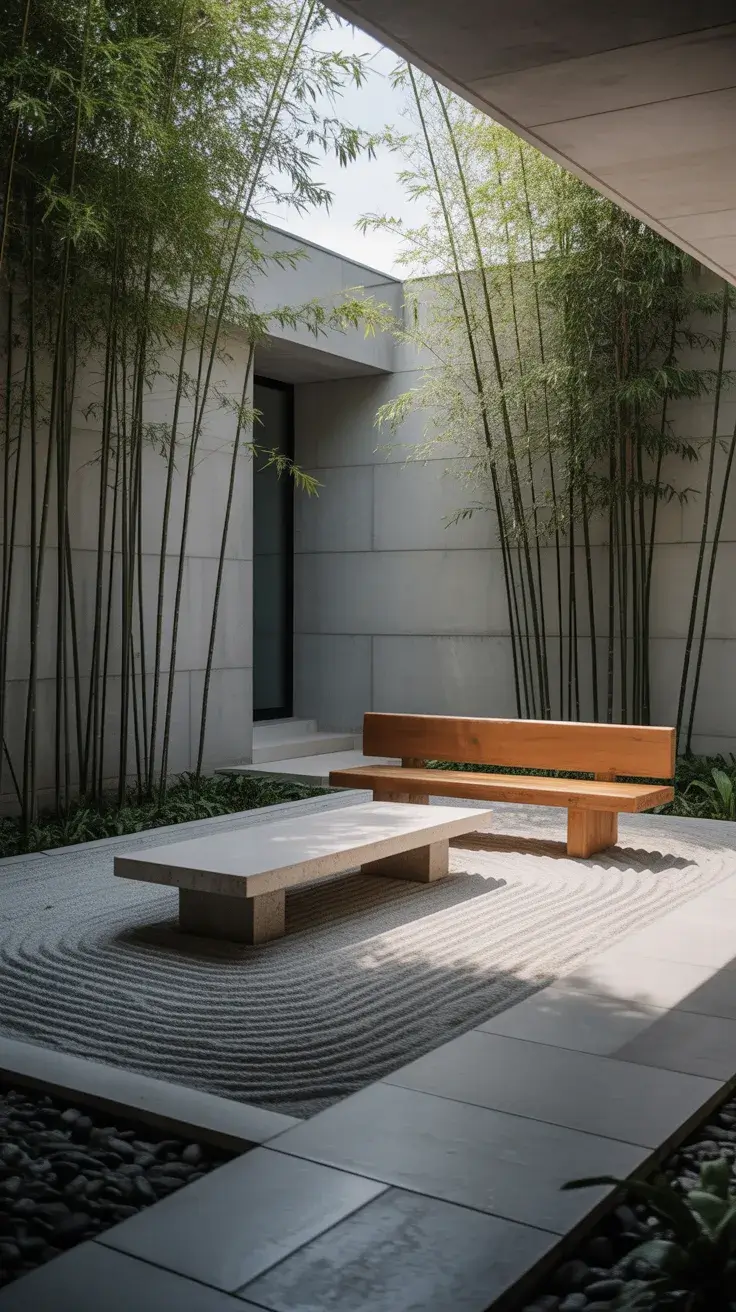
To enhance this layout further, I would incorporate a focal water feature or vertical garden wall to introduce a stronger sense of visual depth.
14. Harmonious Bridge Accents
Bridges play a symbolic and aesthetic role in Zen Garden ideas 2026, representing transition, reflection and journey. When I design bridge accents, I prioritize subtle curves, natural materials and seamless integration with surrounding elements. A bridge should appear as if shaped by the landscape, not imposed upon it.
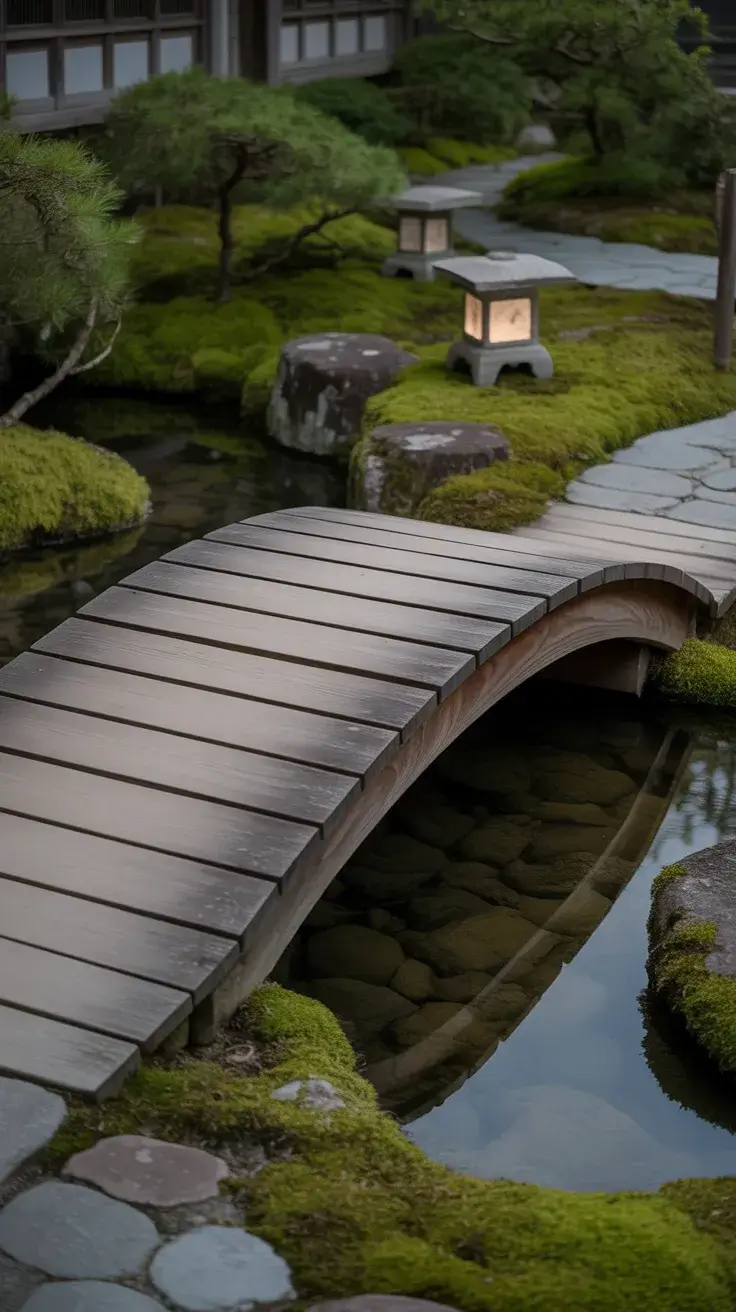
Materials such as cedar wood, stone slabs or matte-finished metal create durability while preserving organic charm. The bridge should be proportionate to its setting—wide enough for comfortable passage but visually light to maintain serenity. Soft plantings, moss or lanterns placed near the bridge enhance its calming presence.
From my perspective, bridges contribute emotional tone. As seen in Japanese garden design books, the act of walking over a bridge symbolizes leaving one mindset behind and entering another. I appreciate how this symbolism enriches the garden experience.
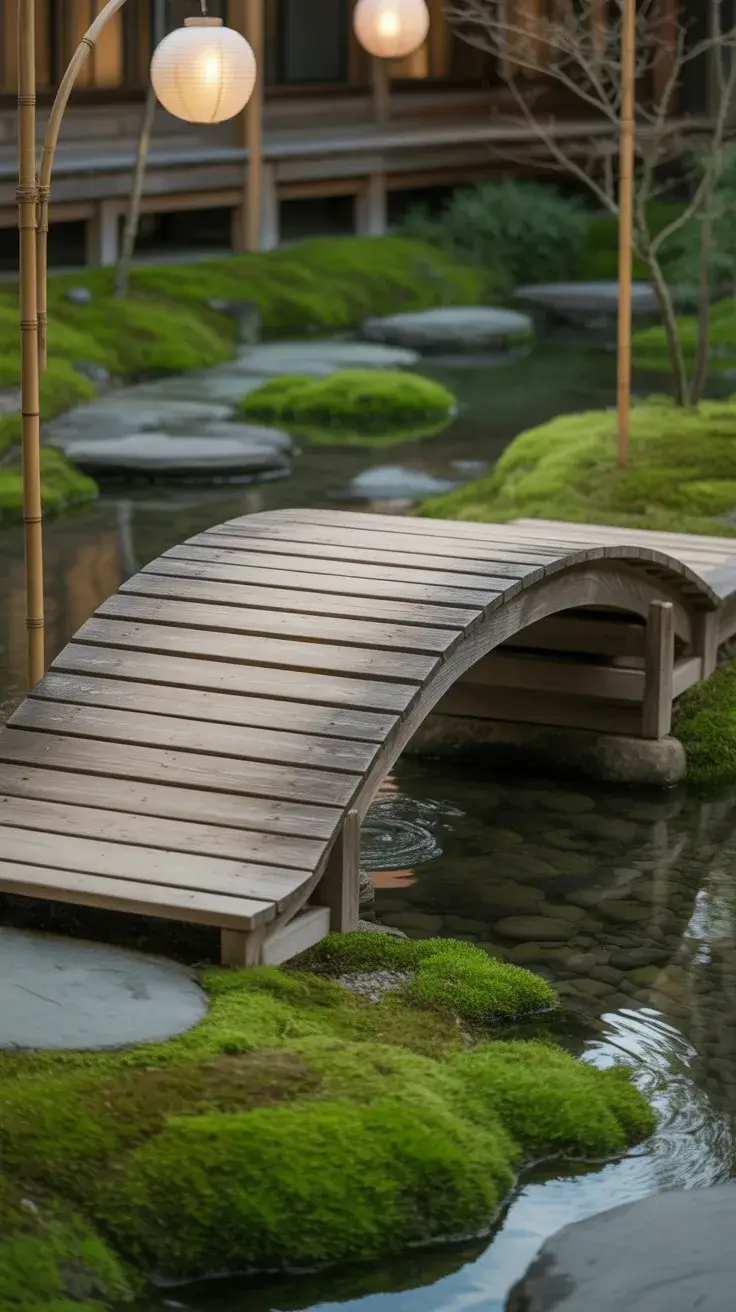
To enhance this feature further, I would add subtle under-bridge lighting to highlight reflections in nearby water.
15. Shaded Pavilion Retreat Spaces
I always find that shaded pavilion retreat spaces serve as the backbone of many Zen Garden ideas 2026, because they provide structure while maintaining an airy, tranquil ambiance. In my designs, I focus on incorporating wooden beams, open-air roofs, and soft drapery to create a sheltered, peaceful environment where natural light can gently filter through. This not only supports relaxation but also ensures the space remains functional throughout different seasons.
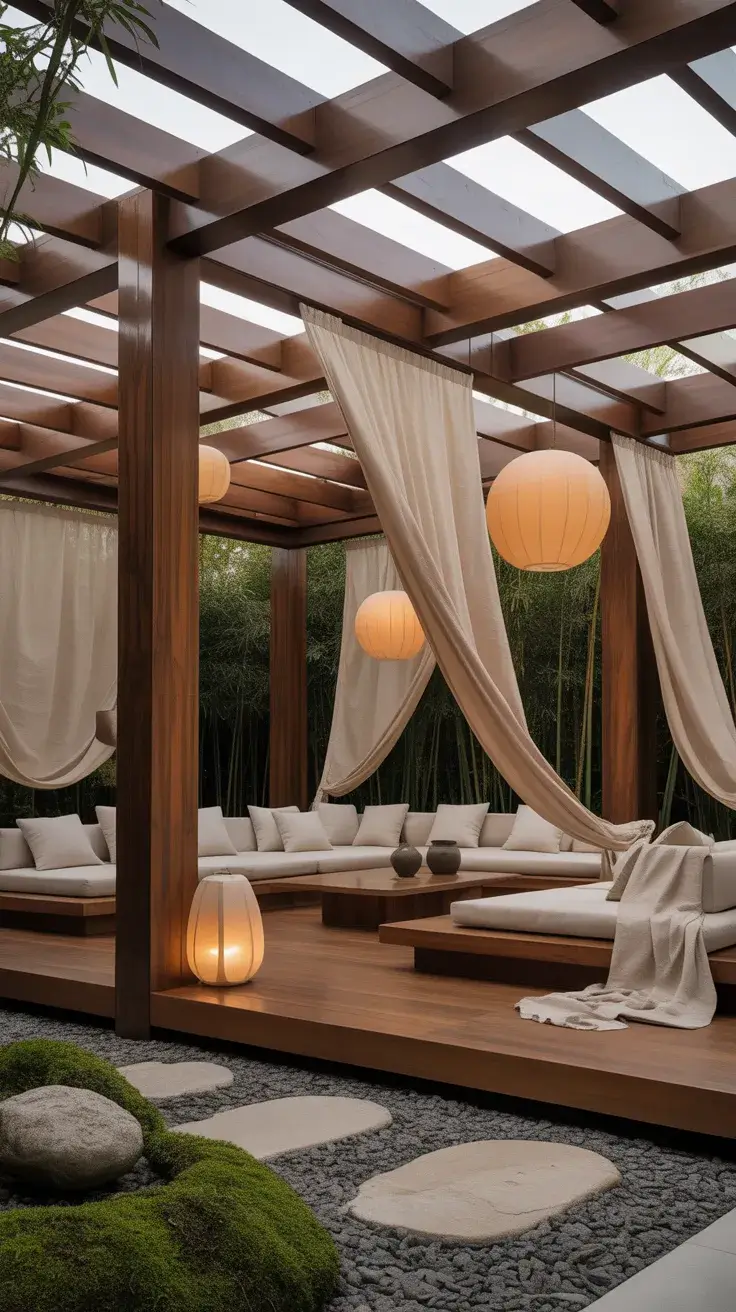
When selecting items for such a retreat, I lean toward low wooden platforms, floor cushions, and minimalist lanterns. These pieces help maintain visual harmony while emphasizing comfort and balance. A pavilion’s natural wood elements echo the surrounding garden, ensuring a seamless indoor-outdoor transition. Soft-neutral seating fabrics and subtle stone accessories complement the calming composition.
From experience, incorporating professional advice from US-based designers like those featured in Architectural Digest has taught me that shaded structures should prioritize both flow and purpose. The pavilion should never feel overfilled; instead, it should allow the landscape to speak. Adding a small incense holder or a ceramic bowl can enhance the sensory atmosphere without overwhelming the simplicity.
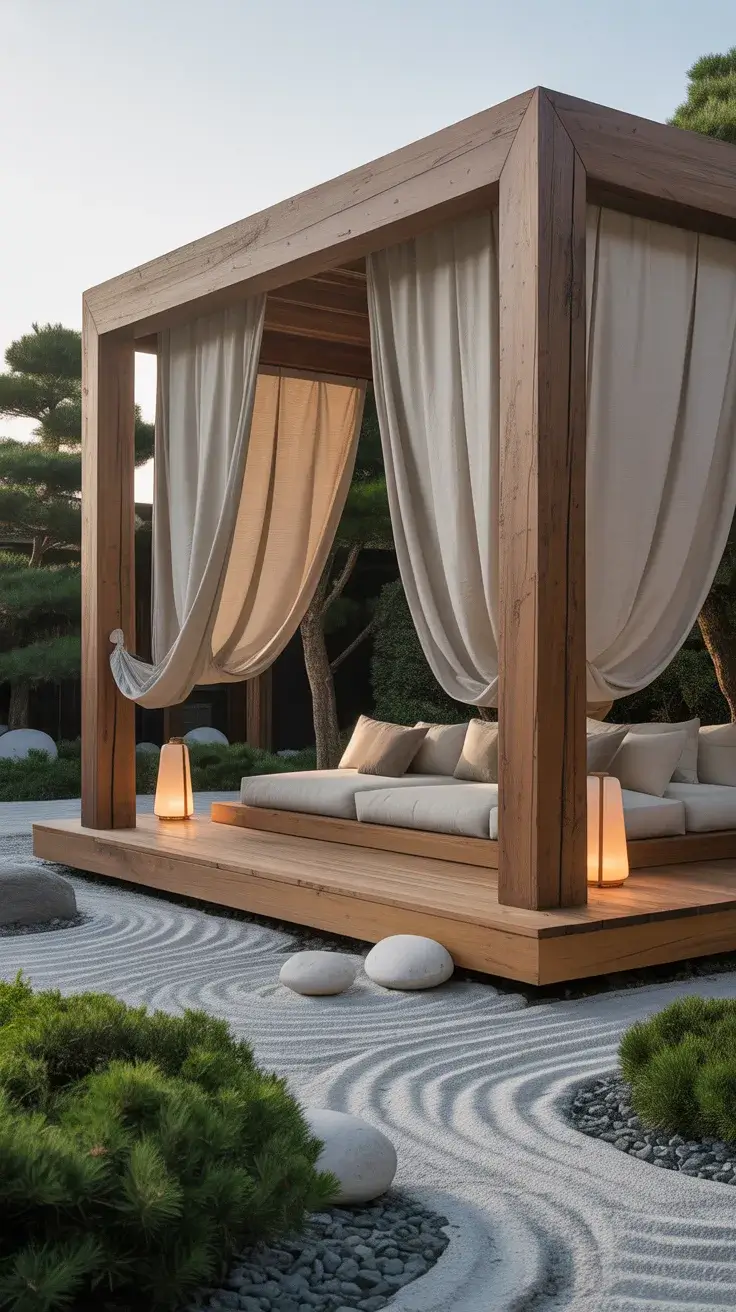
Before finalizing this section, I would add a small integrated bench along one side to create additional seating without disrupting the balance. This also supports versatility for meditation, reading, or tea moments.
16. Textured Gravel Zen Borders
In many Zen Garden ideas 2026, textured gravel borders are essential for defining pathways and establishing a structured rhythm throughout the garden. I like to use fine white gravel or soft-gray stones because they reflect light beautifully and enhance the feeling of spaciousness. Carefully raked patterns add visual interest and help elevate the overall aesthetic.
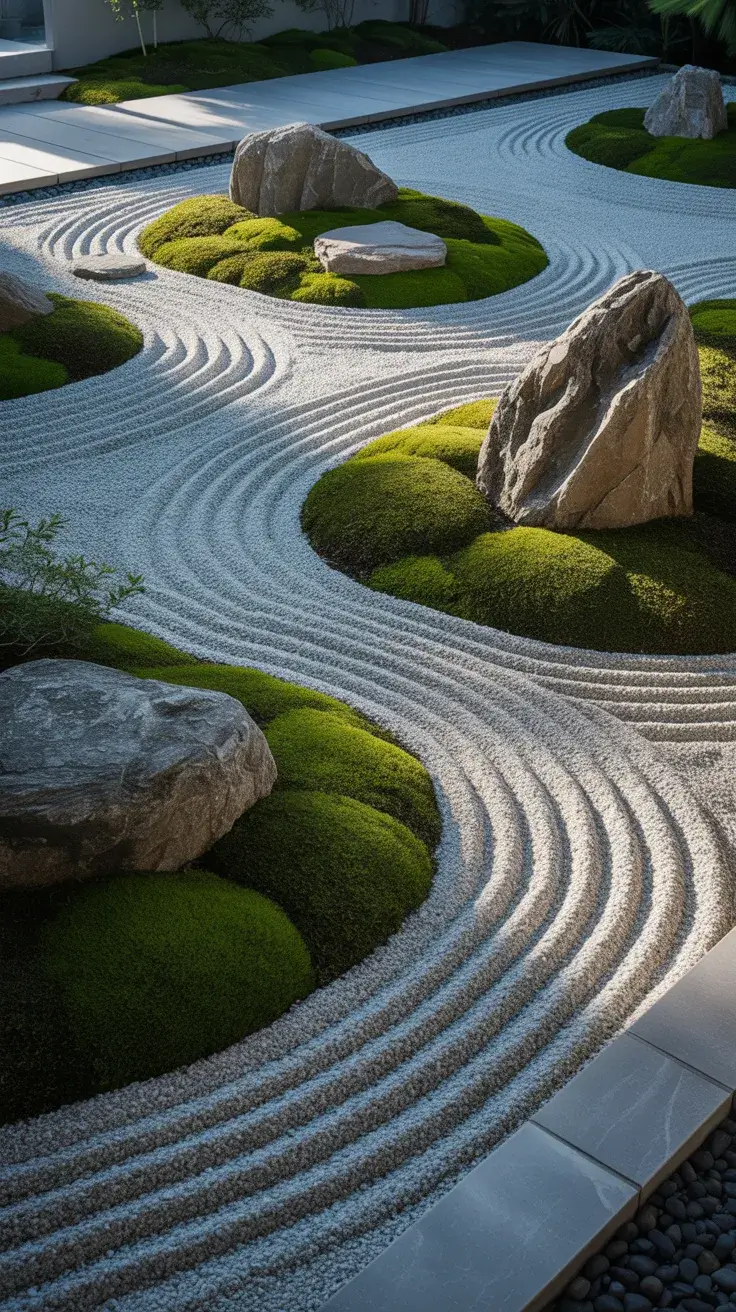
For specific items, I incorporate natural stone edging, small sculptural boulders, and simple wooden stakes to maintain clean divisions. The gravel itself becomes a design feature, especially when paired with darker soil beds or moss patches. The contrast helps guide movement through the space and prevents the garden from feeling static.
Speaking from my own practice, maintaining consistent texture across the gravel is crucial. Design professionals across major US landscaping publications often highlight that uniformity in gravel size creates a more refined result, minimizing disruption to the Zen-like quality of the layout.
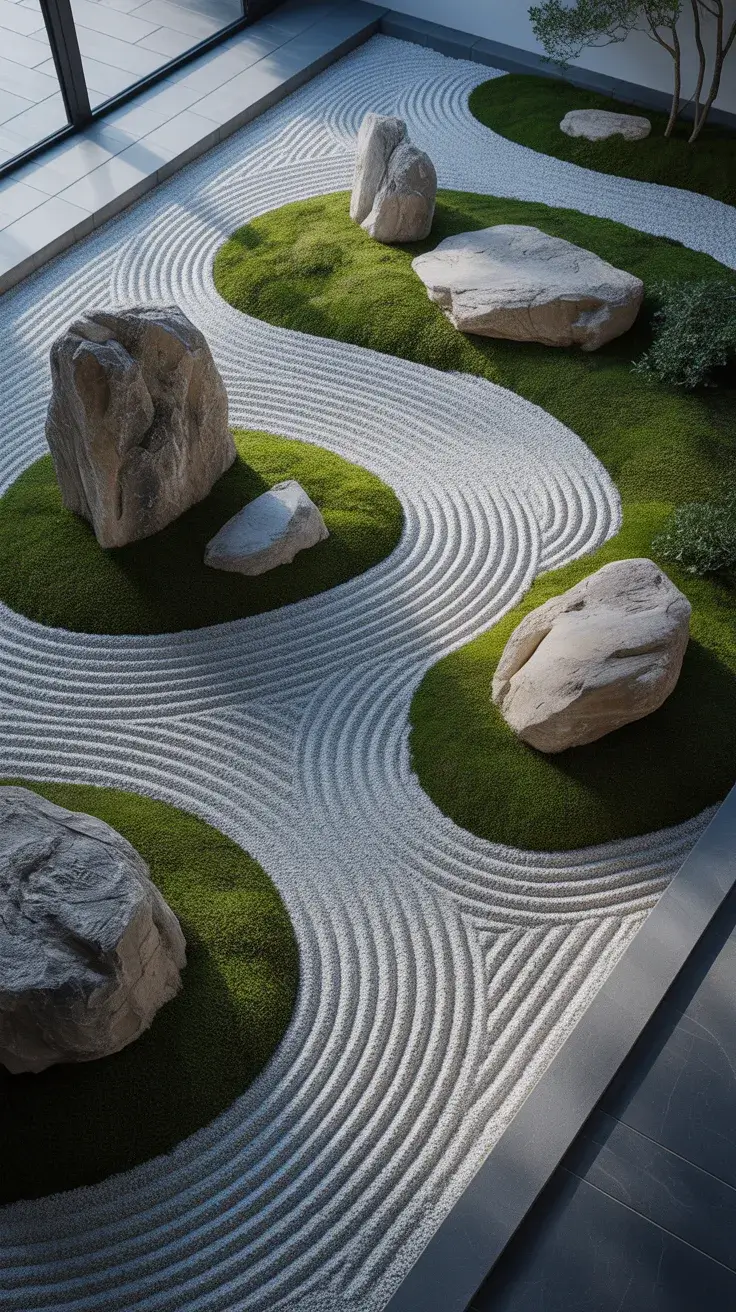
To complete this section, I’d add a discreet border light strip to gently illuminate the gravel at night, enhancing both safety and atmosphere.
17. Indoor Zen Garden Inspirations
When I design indoor Zen garden areas, I focus on creating compact but meaningful installations that support mindfulness. Many Zen Garden ideas 2026 incorporate indoor arrangements because they allow year-round enjoyment without relying on outdoor climate conditions. Integrating stone trays, miniature sand patches, or low succulents helps bring nature quietly indoors.
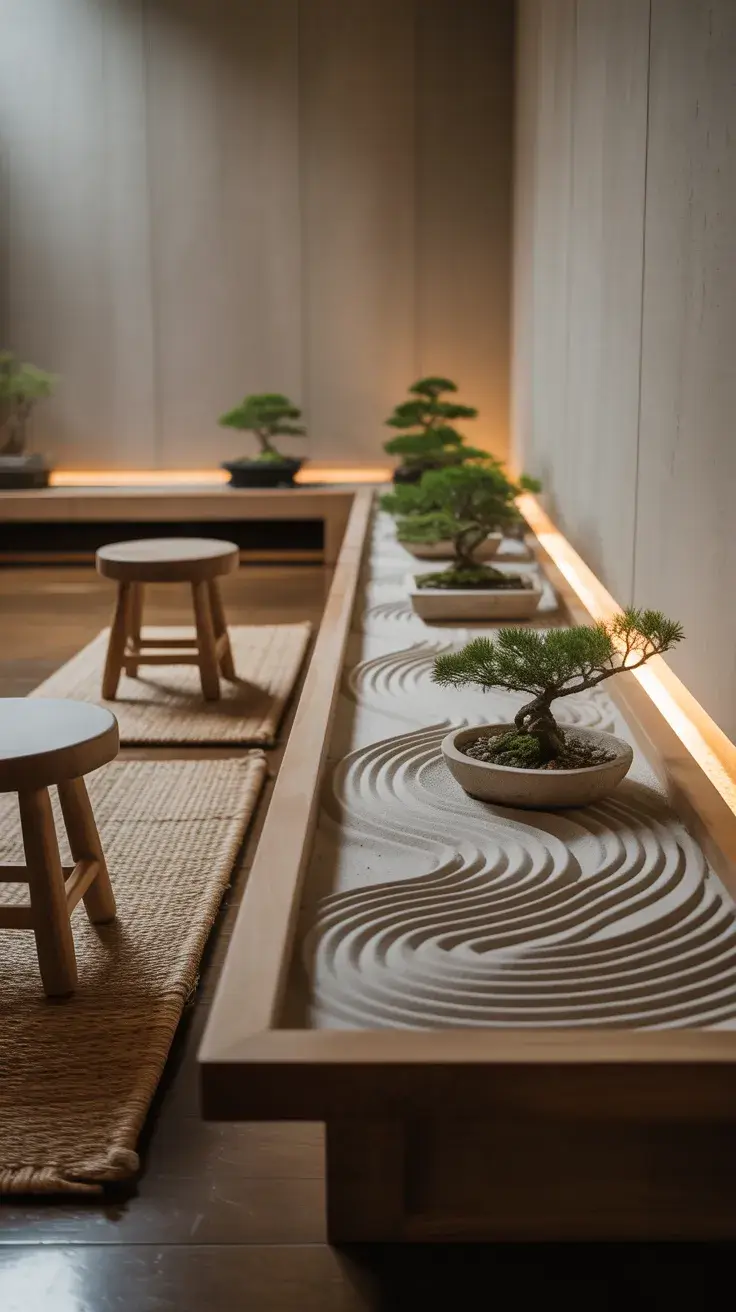
In terms of furniture, I often include low wooden stools, a narrow console table, or floating shelves to showcase small stones or bonsai plants. Soft ambient lighting plays a major role, and I make sure the fixtures are warm and dimmable. Natural fiber rugs or tatami-inspired mats anchor the area and maintain a grounded aesthetic.
From my perspective, indoor Zen gardens offer a unique emotional benefit because they transform transitional spaces—like hallways or entryways—into calming, intentional zones. Designers in outlets like Dwell emphasize the importance of keeping indoor Zen features minimal but meaningful to avoid visual clutter.
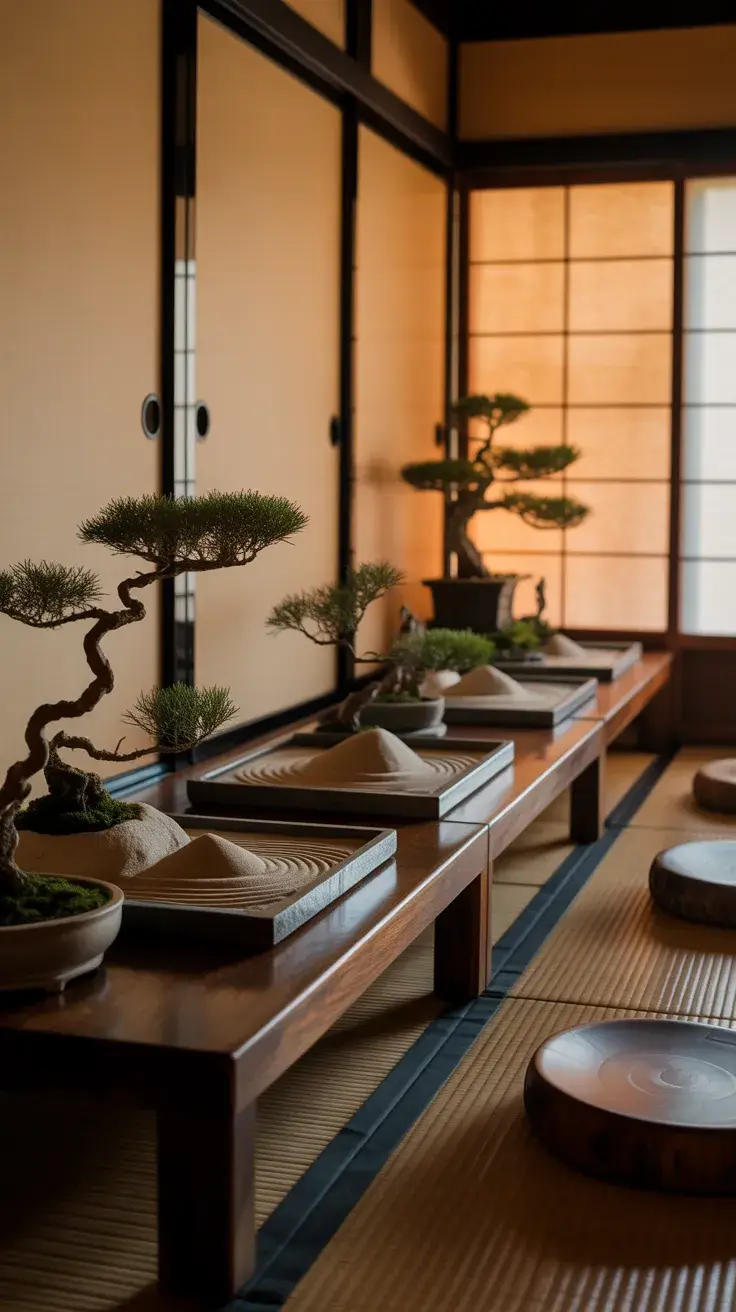
To enhance this section, I suggest adding a built-in niche for a single sculptural item, allowing the design to remain sophisticated and uncluttered.
18. Low Maintenance Zen Planting
Low-maintenance planting plays a crucial role in Zen Garden ideas 2026, especially for homeowners looking to balance beauty with practicality. In my approach, I focus on hardy evergreens, dwarf bamboo, and ground-cover plants that require minimal care but maintain visual appeal year-round. These selections keep the garden looking polished without demanding constant upkeep.
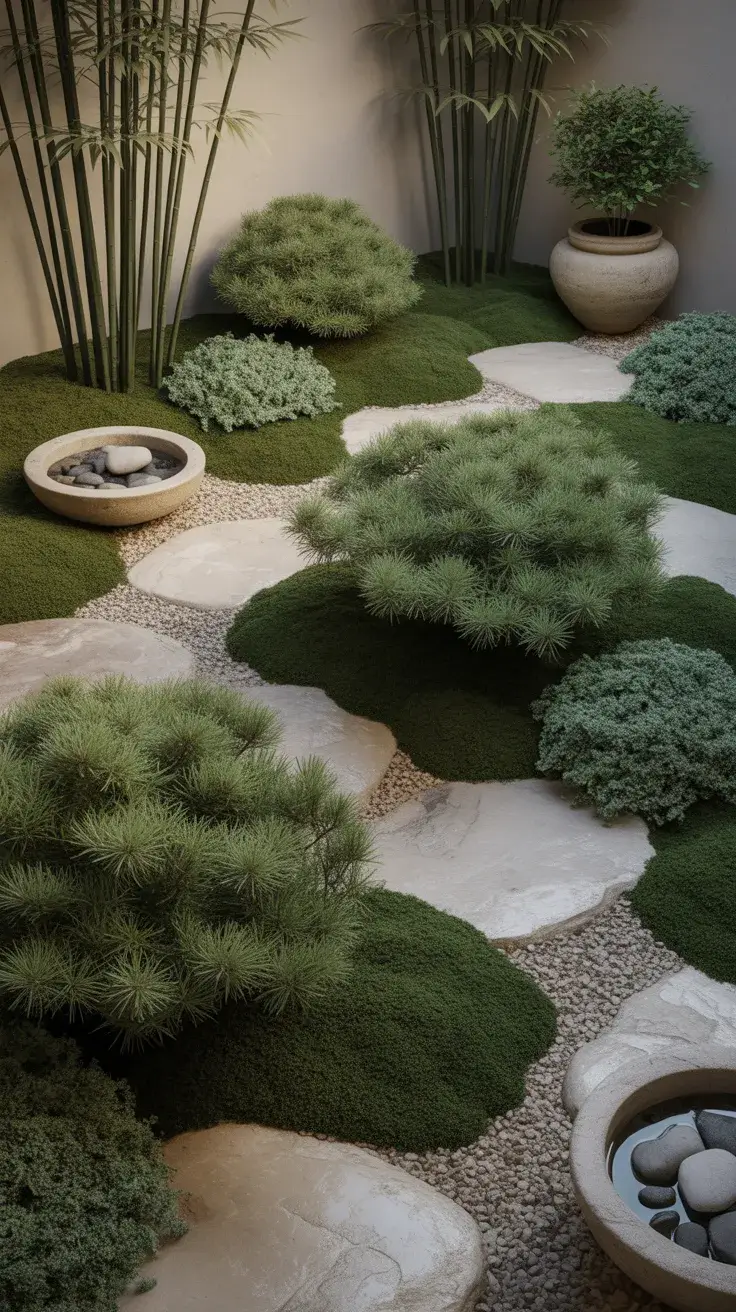
For the design elements, I rely on tall ceramic planters for structure, shallow stone bowls for accent plants, and strategically placed moss beds for softness. Each piece contributes to depth and balance. The muted tones of the planters and the natural shapes of the plants work together harmoniously in a Zen-inspired layout.
Professionals frequently recommend plant groupings of three or five for a balanced composition, and I’ve found this to be a reliable guideline. These clusters create rhythm while preventing a crowded appearance. My own experience supports the idea that plant height variation adds depth without sacrificing simplicity.
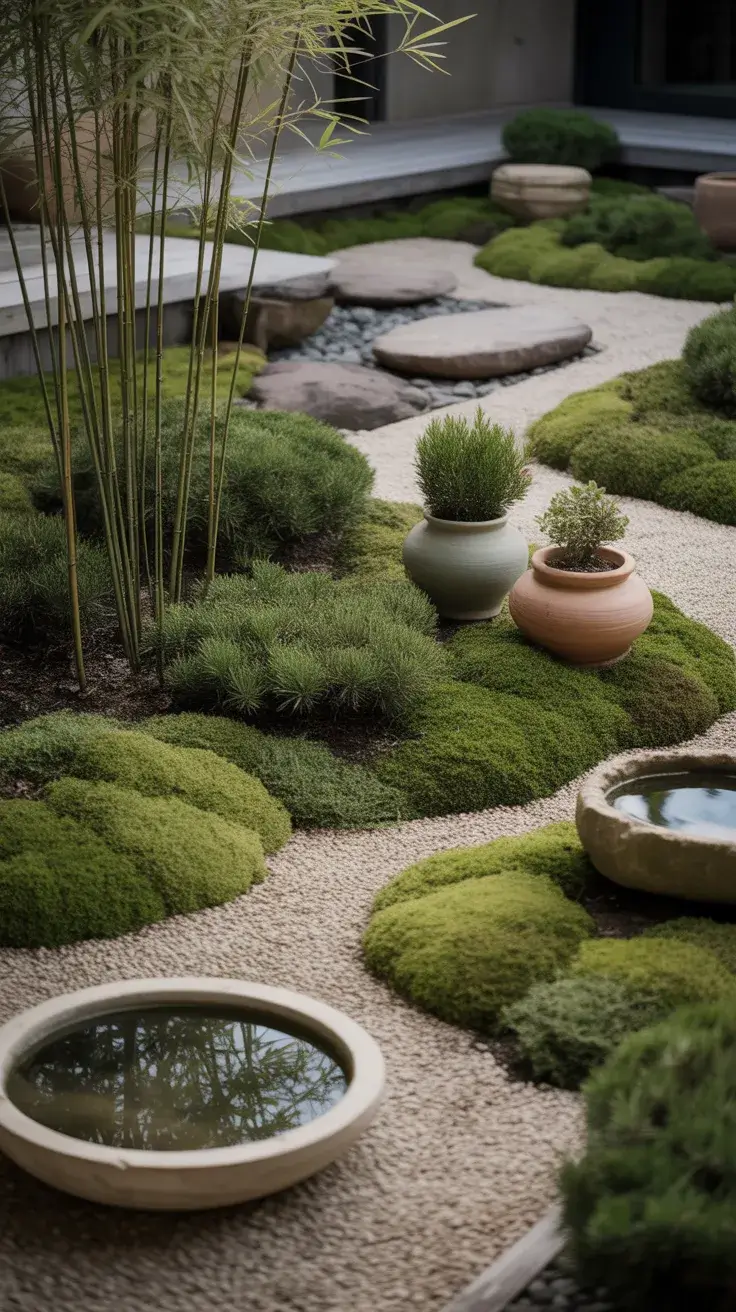
If improving this section, I would add a discreet irrigation drip line to maintain plant health while preserving the clean design.
19. Whispering Wind Chime Corners
Creating dedicated wind chime corners is one of the most soothing Zen Garden ideas 2026 I’ve encountered. I design these spaces around sound rather than visual stimulation, using subtle tones to enhance relaxation. Positioning the chimes near seating or meditative areas ensures they contribute to a peaceful atmosphere without dominating the environment.
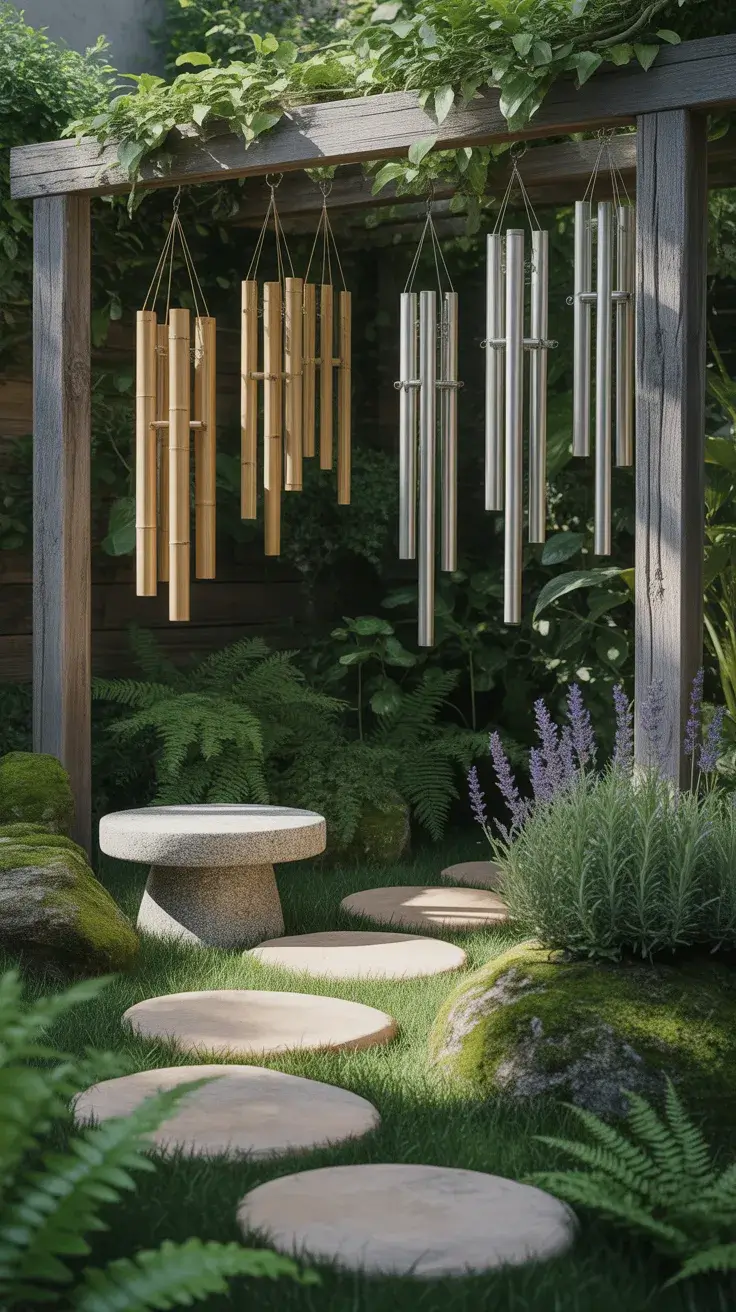
I select chimes made from bamboo, brushed metal, or ceramic, depending on the tonal quality needed. These are often paired with slender wooden posts, small stepping stones, or simple wall hooks. A low bench or stone stool nearby encourages moments of pause, making the chime corner functional as well as decorative.
In my professional experience, advice from US sound designers suggests selecting tones that resonate softly rather than sharply. The goal is to complement the garden’s natural acoustics, not compete with them.
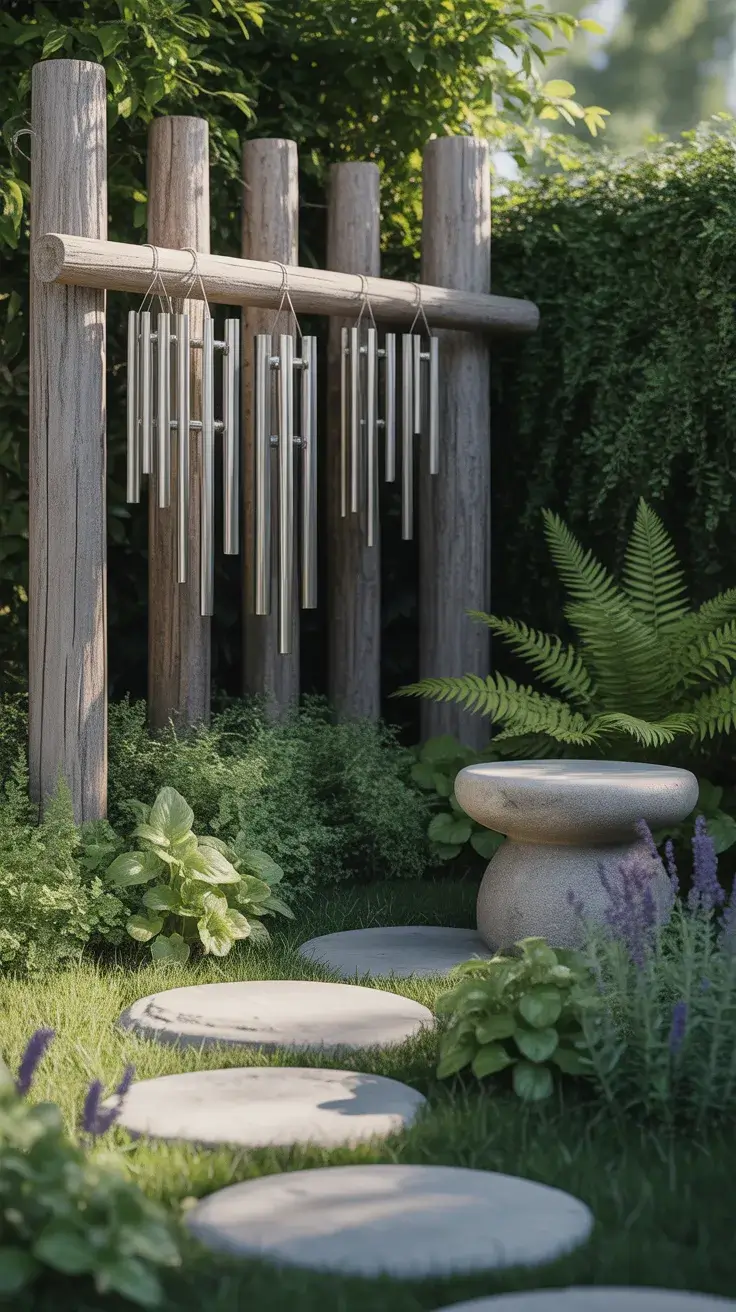
If expanding this section, I might incorporate a small planter with aromatic herbs like mint or lavender to bring scent into the sensory experience.
20. Reflective Pond Serenity Ideas
Reflective ponds remain central to many Zen Garden ideas 2026, and I love the way they mirror the sky and surrounding foliage. In my designs, I favor long, shallow rectangles or circular ponds with smooth edging to emphasize calmness. The surface should remain still, supporting the meditative quality that defines Zen spaces.
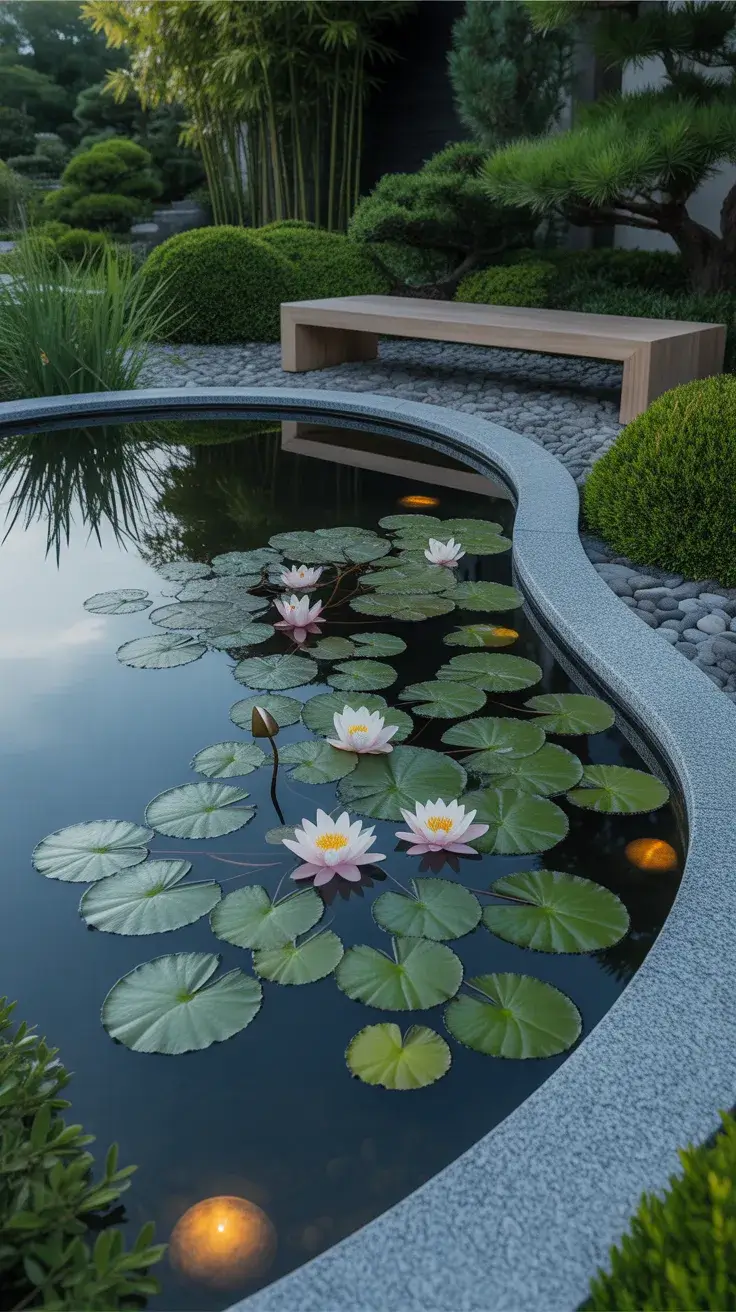
For key elements, I incorporate flat stone borders, submerged LED lighting, and simple aquatic plants like lotus or water lilies. Even a small bench positioned nearby enhances the experience, offering a place to sit and engage with the subtle movement of water.
Professionals in US landscape publications often stress that pond placement is crucial. I agree—positioning the pond where natural light can reflect properly makes all the difference. In my own projects, even small water features transform the atmosphere dramatically.
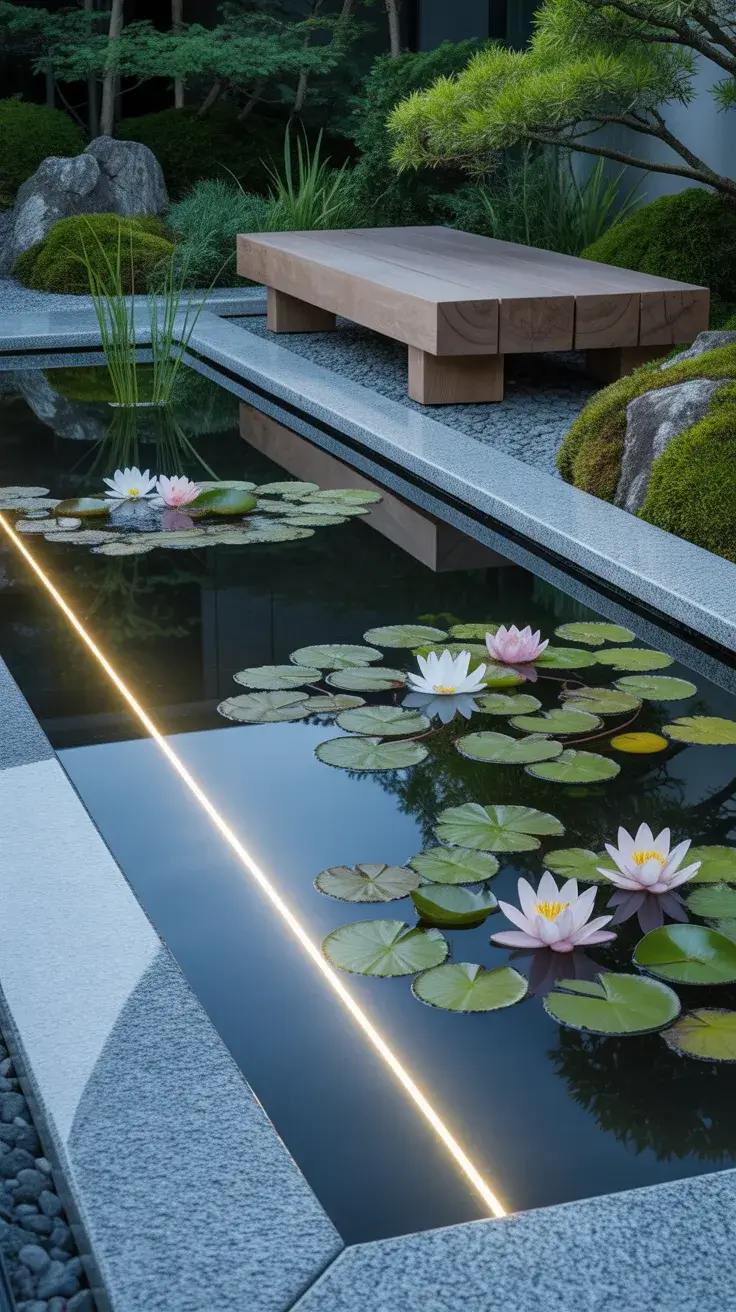
To improve this section, I suggest adding a narrow wooden walkway on one side to create interaction without disturbing the reflective surface.
21. Elevated Wooden Walkway Concepts
Elevated wooden walkways have become increasingly popular in Zen Garden ideas 2026, offering both functionality and sculptural beauty. I appreciate how they guide visitors gently through the landscape while keeping foot traffic away from delicate plantings. The gentle elevation creates a floating sensation that enhances mindfulness.
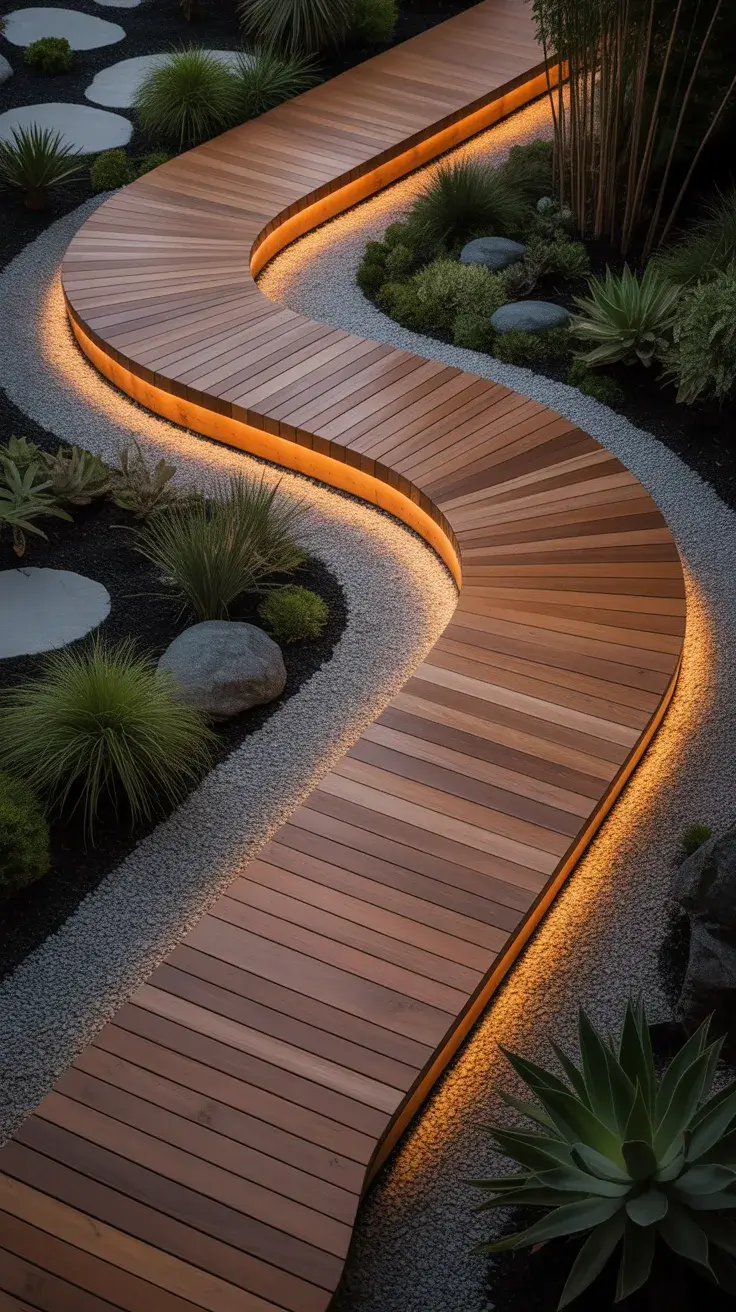
When designing these walkways, I choose weather-resistant woods like cedar or teak, along with minimalist railings or no railings at all depending on safety needs. Strategic lighting beneath the planks creates a soft glow in the evening. The walkway often connects seating zones, ponds, or shaded areas, acting as both a path and a visual feature.
In my experience, a raised walkway also improves drainage around the garden and minimizes soil disruption. Many US garden experts recommend incorporating curve lines rather than straight runs to create a more organic flow.
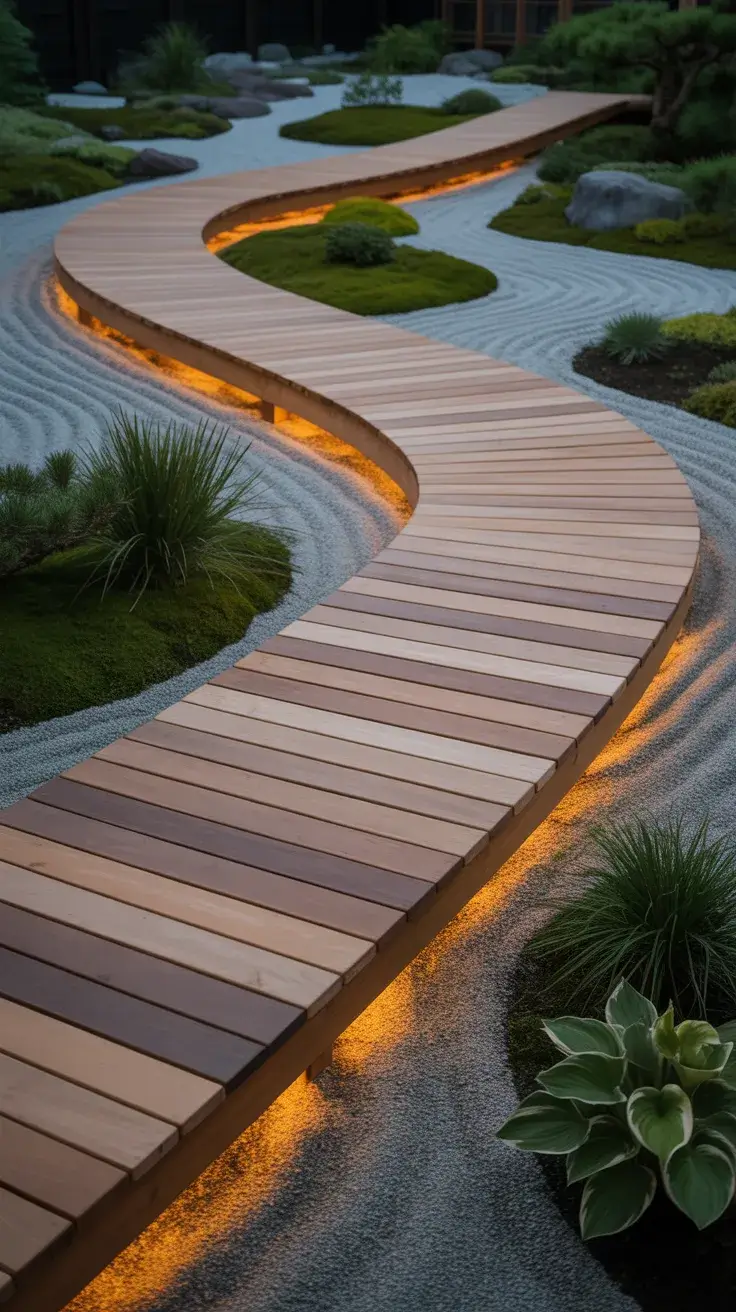
If completing this section further, I would integrate a small resting platform halfway through the walkway, adding dimension and function.
22. Ceramic Pot Zen Accents
In many Zen Garden ideas 2026, ceramic pot accents play a crucial role in adding texture, color harmony, and sculptural form to the garden. When I design with ceramic elements, I focus on a balance between functionality and visual calmness. Smooth matte finishes, earthy tones, and simple silhouettes help these pots blend seamlessly into the environment. I also like to use them to frame pathways or emphasize focal points in both indoor and outdoor Zen-inspired spaces.
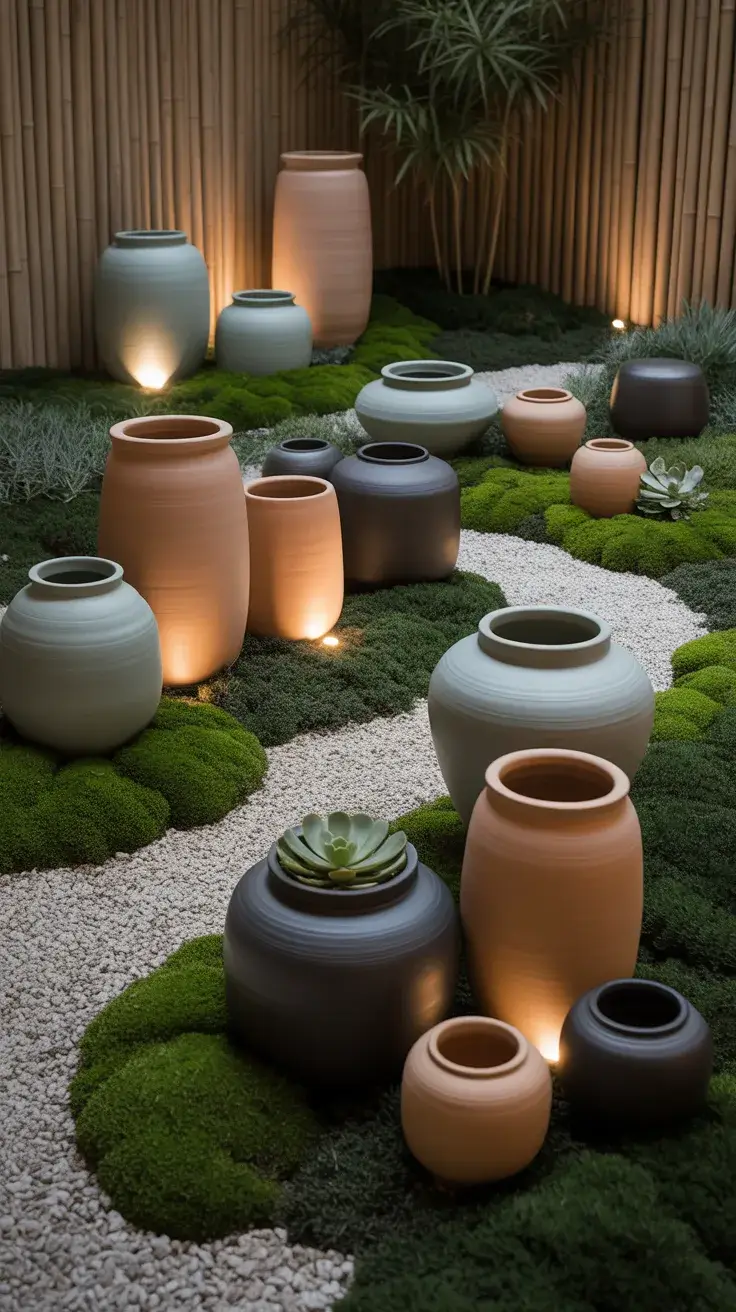
For items and placement, I choose varying pot heights to introduce subtle layers without overwhelming the garden. Large ceramic vessels anchor corners or entrances, while smaller pots with moss or succulents soften transitions. Groupings of three create natural rhythm and maintain the Zen philosophy of understated elegance. I also prefer ceramics that maintain consistent coloration to support the cohesive garden palette.
From personal experience, ceramic pots are most effective when they do not compete with surrounding plants. Many US-based garden design experts suggest sticking to muted, natural tones to preserve the tranquil atmosphere. I agree completely—ceramic accents should enhance, not distract. When selecting glazes, I aim for matte or lightly textured surfaces rather than glossy ones.
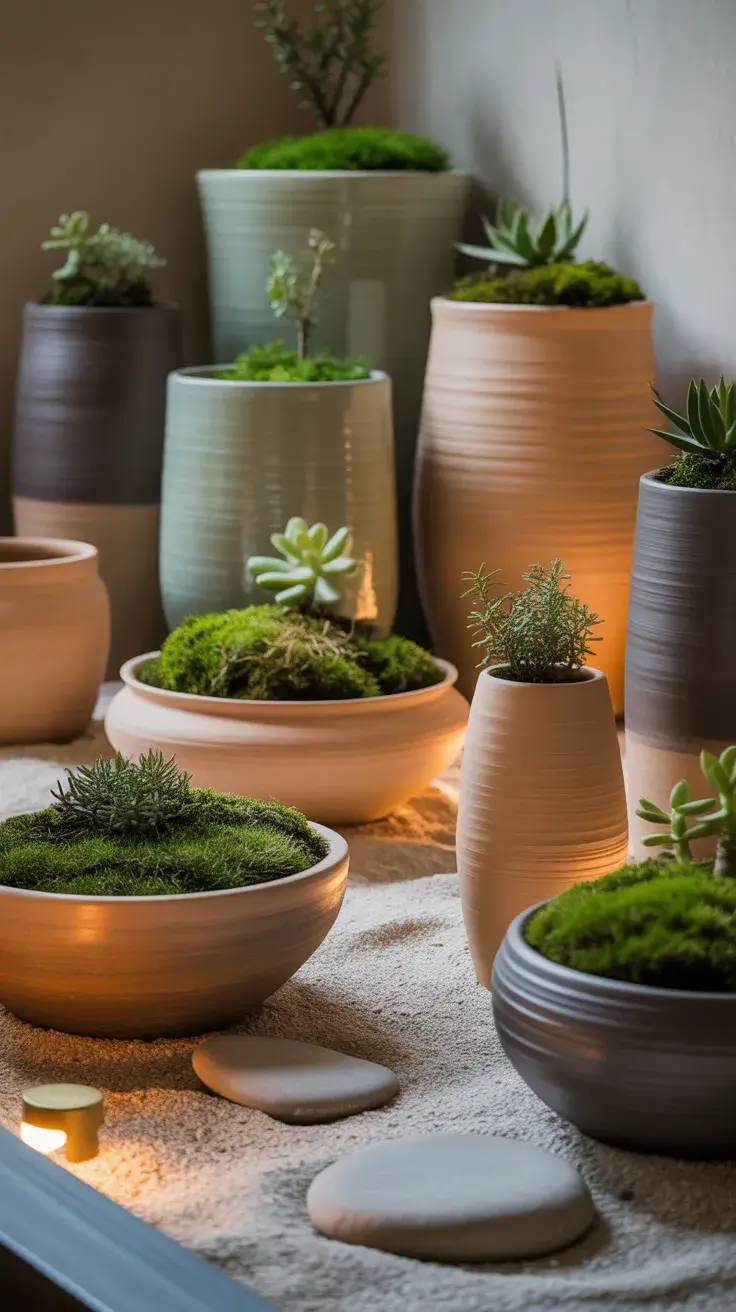
To further elevate this section, I would add a recommendation to include subtle uplighting behind a few key pots to draw attention after sunset without disrupting the peaceful aesthetic.
23. Modern Tea Garden Influences
Modern tea garden influences within Zen Garden ideas 2026 often merge contemporary minimalism with traditional Japanese sensibilities. When I craft such spaces, I focus on clean lines, open layouts, and symbolic features—like stepping stones or a kettle corner—that evoke a sense of ceremony without being overly formal. This creates a serene environment suitable for reflection or quiet gatherings.
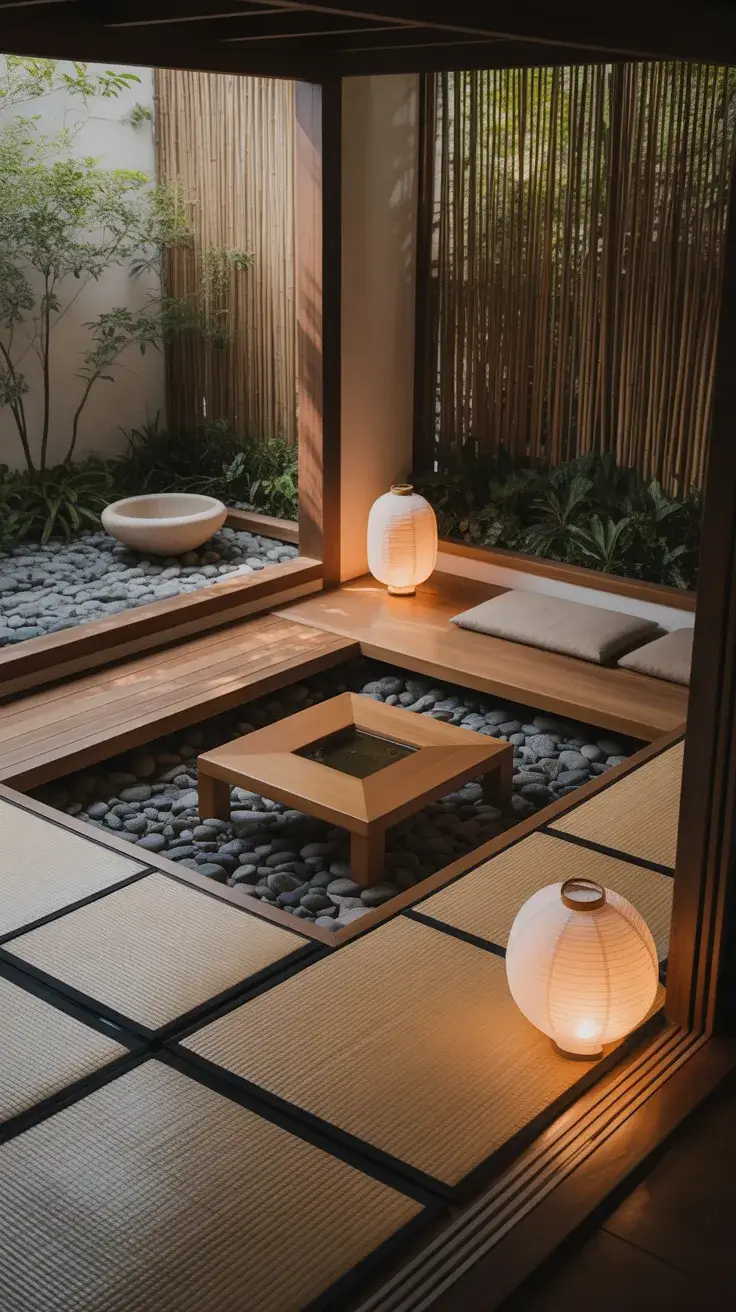
In terms of furnishings and objects, I incorporate low wooden benches, a compact tea table, and ceramic serving ware displayed intentionally on a simple tray. Bamboo screens or slatted wooden partitions help create separation without closing the space. Natural woven mats bring warmth underfoot, while a small stone basin reinforces the meditative atmosphere.
My experience with modern tea gardens highlights the importance of functionality. Renowned US interior experts often stress that tea spaces must remain uncluttered to maintain their purpose. I echo this sentiment—every element must have intention, whether decorative or practical. When thoughtfully arranged, the tea garden supports slow moments and mindful rituals.
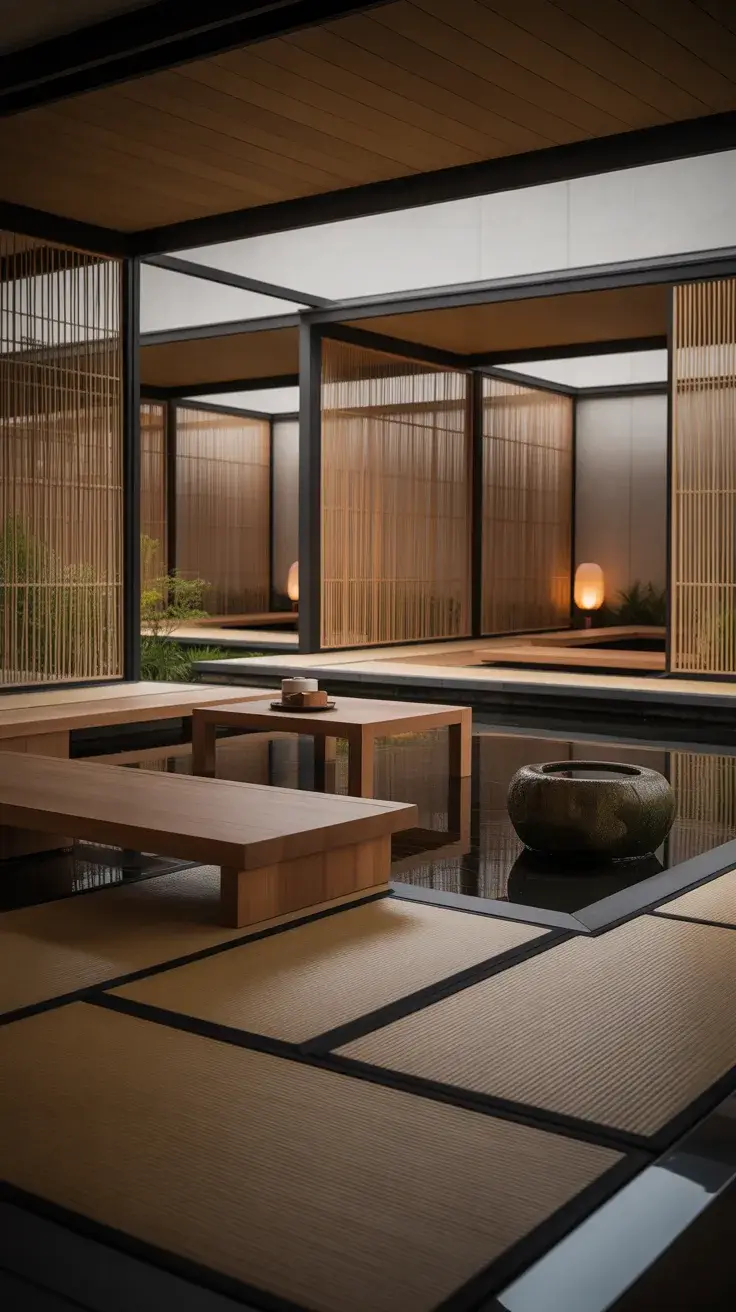
To complete this section, I would suggest adding a single, elegant hanging lantern to guide evening gatherings while maintaining the calm tone.
24. Earth Tone Zen Color Palettes
Earth tone palettes are foundational to Zen Garden ideas 2026, and I always rely on them to create harmony between built structures and the surrounding landscape. Warm browns, muted greens, soft grays, and natural beige tones help calm the mind and encourage connection with nature. These colors provide a stable visual backdrop that allows plants, textures, and architectural features to shine without competing for attention.
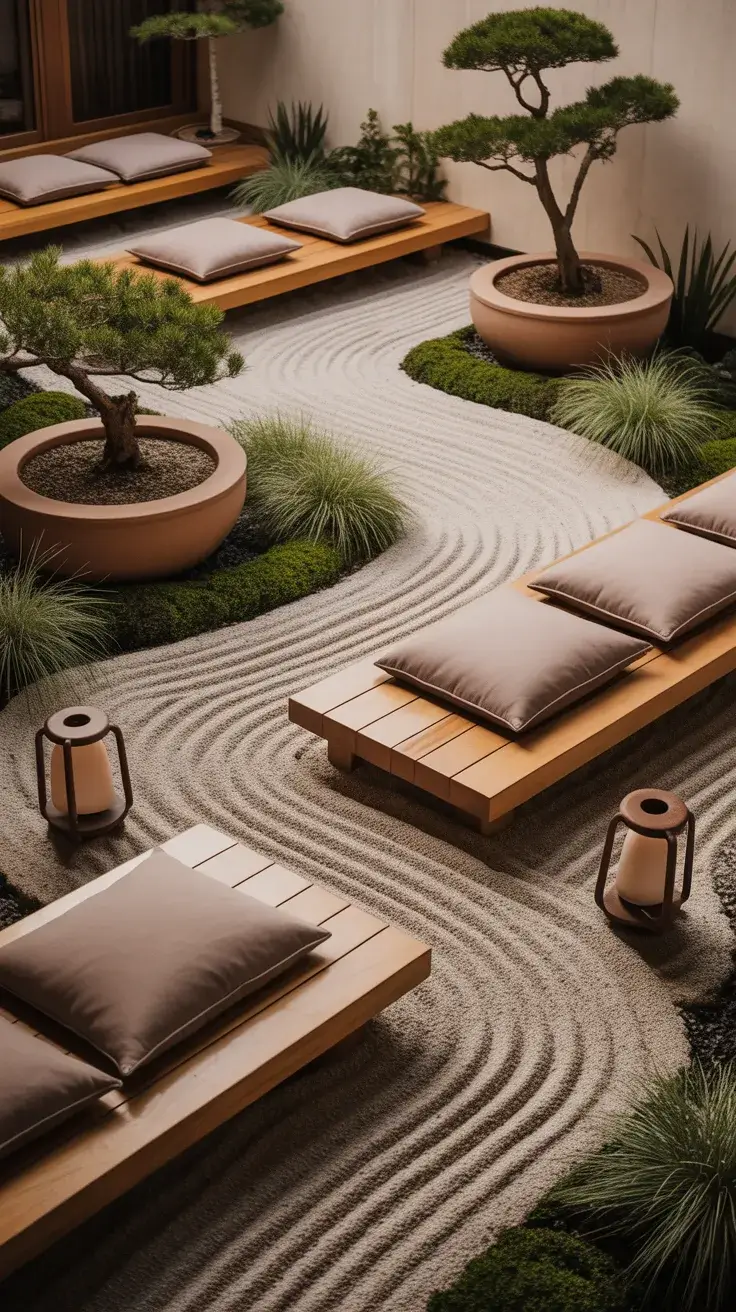
For practical application, I choose furniture and décor within a narrow color range: wooden benches in warm walnut, ceramic planters in clay shades, gravel in light neutrals, and cushions in soft taupe. This restrained palette supports unity, making the garden feel cohesive and intentionally crafted. Even lighting elements, such as lanterns or pathway lights, benefit from matte bronze or brushed stone finishes.
In my professional work, I’ve found that homeowners appreciate how grounding an earth tone palette can be. Publications like Architectural Digest often note that earth tones improve perceived tranquility in both interior and exterior Zen designs. The palette also adapts well to seasonal changes, ensuring long-term visual stability.
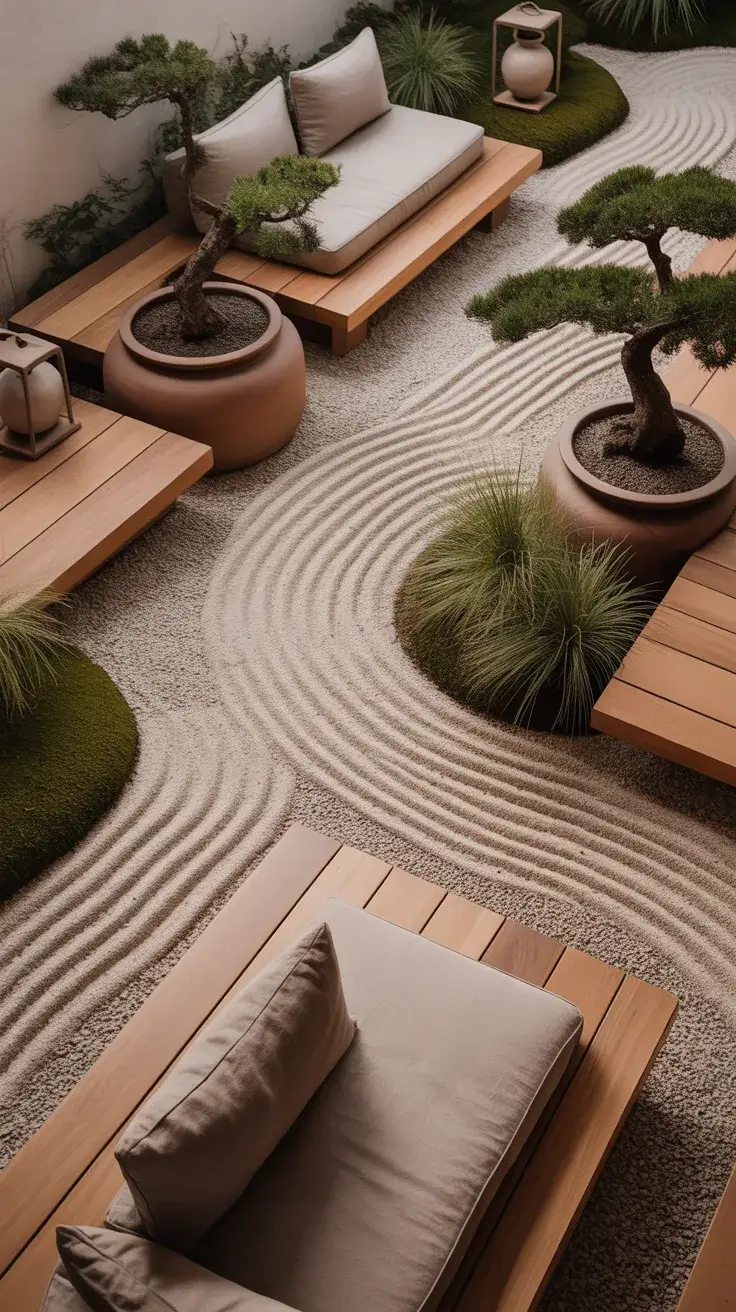
To complete this section, I would add a suggestion for integrating textured fabrics—like linen or hemp—into seating cushions for tactile warmth.
25. Tranquil Garden Seating Designs
Thoughtfully chosen seating plays a transformative role in Zen Garden ideas 2026, and I prioritize comfort without sacrificing minimalism. Whether designing a large garden or a small balcony retreat, I aim to create seating that encourages stillness and contemplation. Curved benches, floating platforms, or low wooden stools integrate seamlessly into Zen landscapes while maintaining gentle, organic lines.
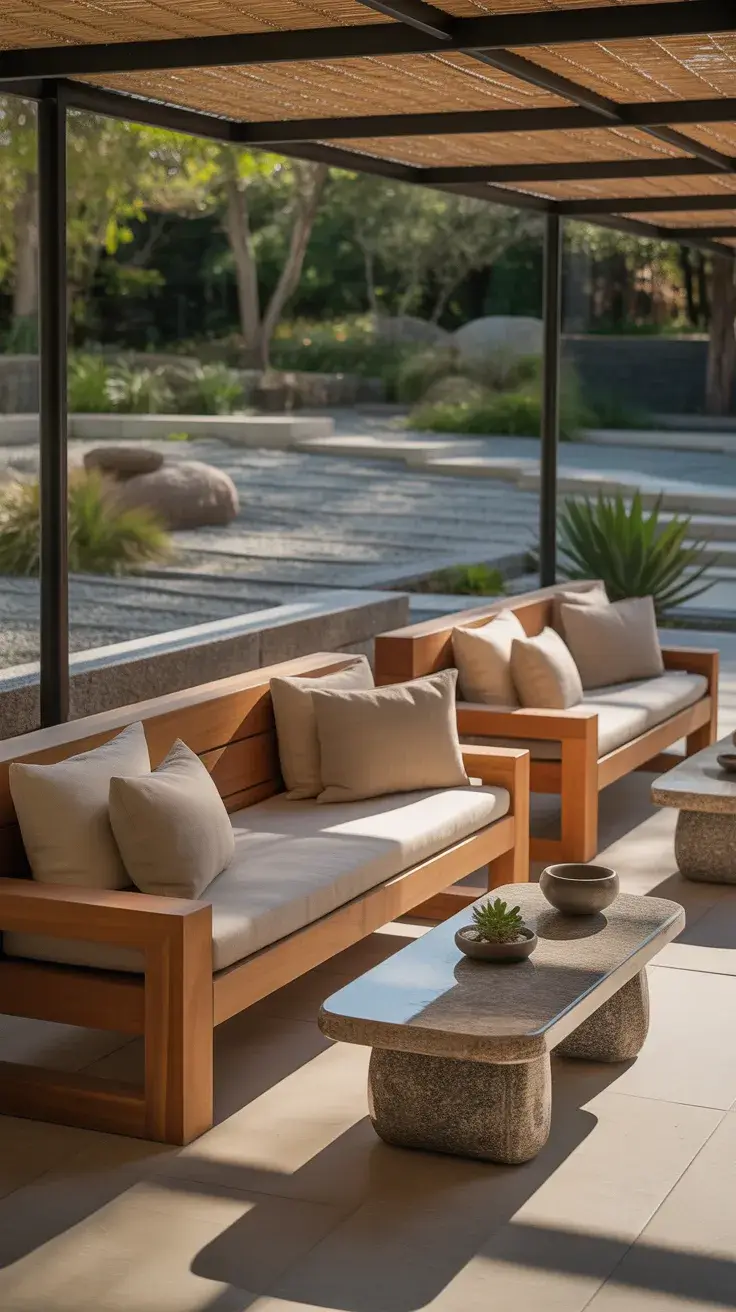
For specific items, I select materials like teak, cedar, bamboo, or smooth stone. Cushions are optional but helpful when crafted from natural, neutral fabrics. Seating should always face something meaningful—a pond, a gravel pattern, a sculptural stone, or the garden’s horizon line. Simple side tables or stone slabs can hold tea cups or books, adding subtle functionality.
In my experience, seating that blends effortlessly with nature achieves the most calming effect. US-based garden designers often advocate for positioning seats where sunlight shifts softly throughout the day. I apply this advice frequently—it ensures the seating area feels alive with slow, natural transitions.
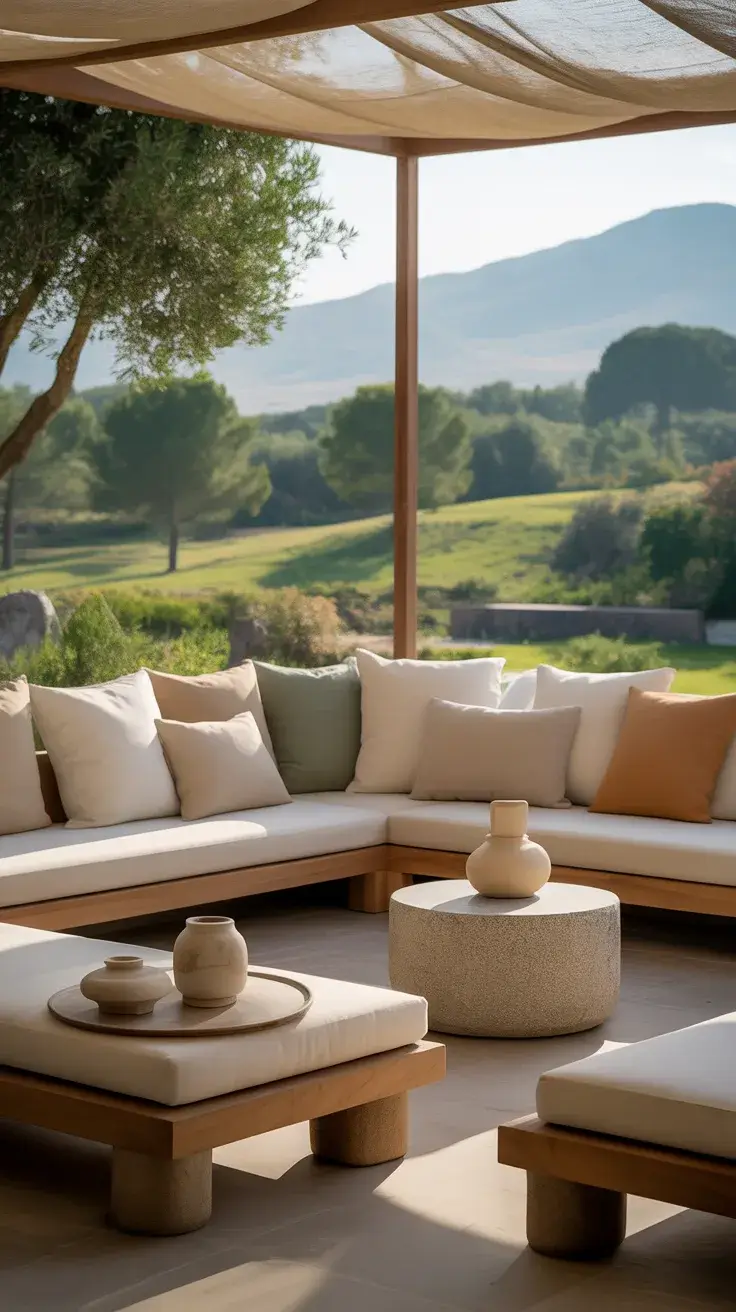
To enhance this section, I would recommend integrating a shaded element, such as a small pergola or fabric canopy, for comfort during warmer hours.
26. Vertical Zen Garden Features
Vertical elements are essential in modern Zen Garden ideas 2026, especially for compact spaces where height becomes a valuable design tool. When I create vertical Zen features, I incorporate living walls, bamboo screens, or stacked stone panels that bring structure without overwhelming the environment. These features introduce depth and rhythm to the composition.
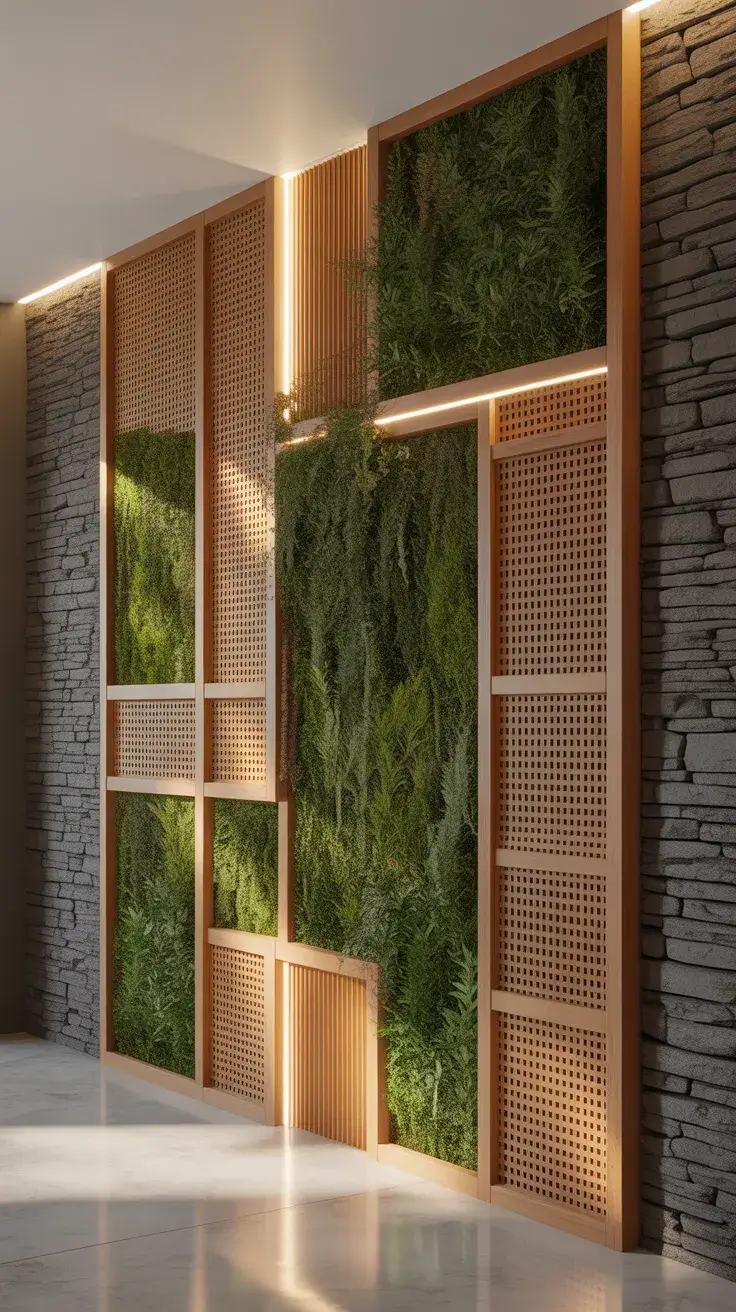
For components, I use wooden lattice frames, narrow shelving for small potted plants, or modular green wall panels. Hanging planters with cascading greens add a dynamic layer. Textured stone walls provide grounding, while bamboo or reed screens soften strong architectural lines. These features are ideal for balconies, courtyards, and indoor Zen spaces.
From personal experience, vertical installations work best when color and texture remain understated. Many US interior professionals recommend integrating lighting along the edges to accentuate height during evening hours, and I’ve found this technique remarkably effective.
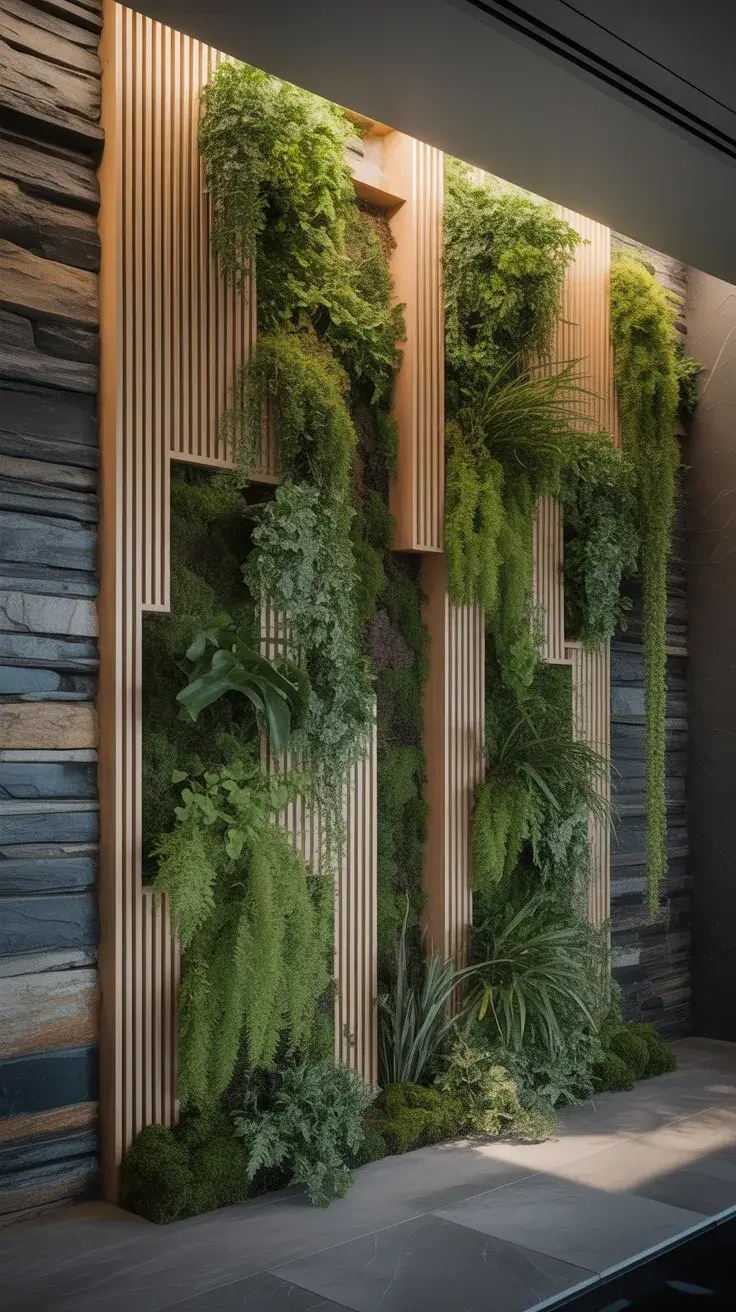
To round out this section, I would suggest adding a small water drip feature on one side of the vertical wall to increase sensory richness.
27. Subtle Garden Scent Concepts
Scent is often overlooked in Zen Garden ideas 2026, yet it’s one of the most impactful sensory layers. When I design for scent, I focus on subtle, natural fragrances rather than overpowering floral notes. Aromatic plants like jasmine, lavender, mint, and pine create soft waves of fragrance that shift gently with the breeze, enhancing relaxation and mindfulness.
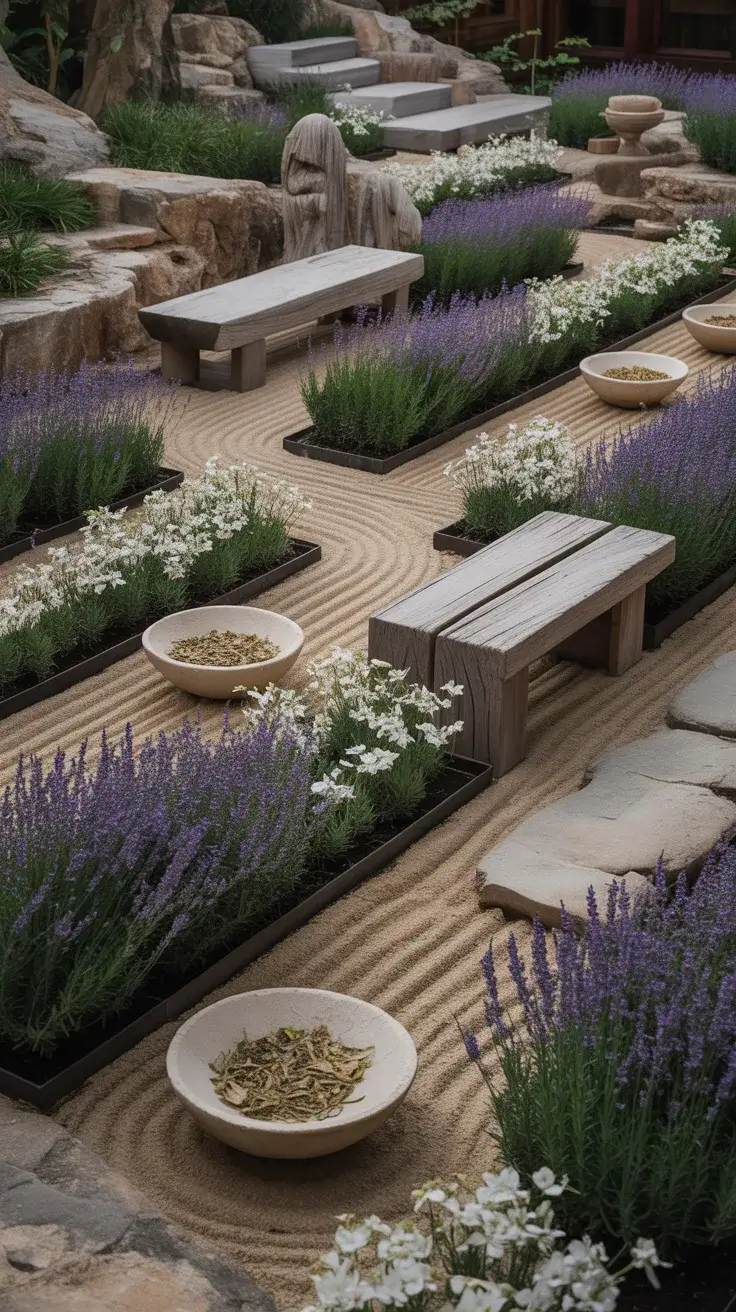
The elements I include—stone bowls with potpourri, small essential oil diffusers concealed among foliage, or herb beds—offer flexible ways to manage scent levels. Seating areas benefit from nearby aromatic plantings, while pathways often feel more inviting when scented plants flank the edges. Natural wooden structures, like cedar, also release organic aromas over time.
My personal experience aligns with recommendations from leading US garden specialists, who emphasize moderation. Too much fragrance disrupts the calm atmosphere. I’ve found that layering soft scents creates the most natural effect, especially when combined with moving air or wind chimes.
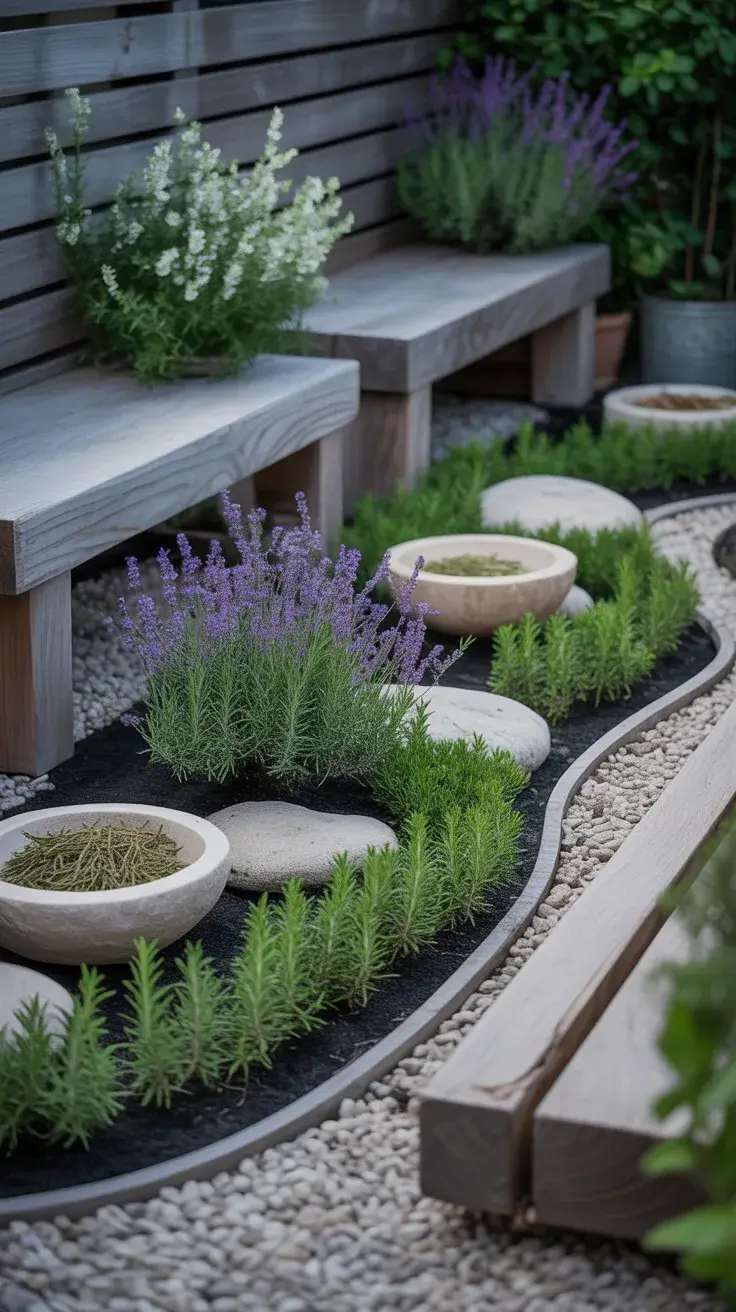
To refine this section, I would add a discreet fragrance stone placed near entrances to subtly introduce scent without overwhelming the space.
28. Natural Stone Wall Backdrops
Natural stone walls play a powerful role in Zen Garden ideas 2026, grounding the space while enhancing its textural richness. I often use these walls to frame seating zones, outline garden edges, or create private pockets within larger landscapes. The organic variations in stone add depth and authenticity—qualities essential to Zen-inspired aesthetics.
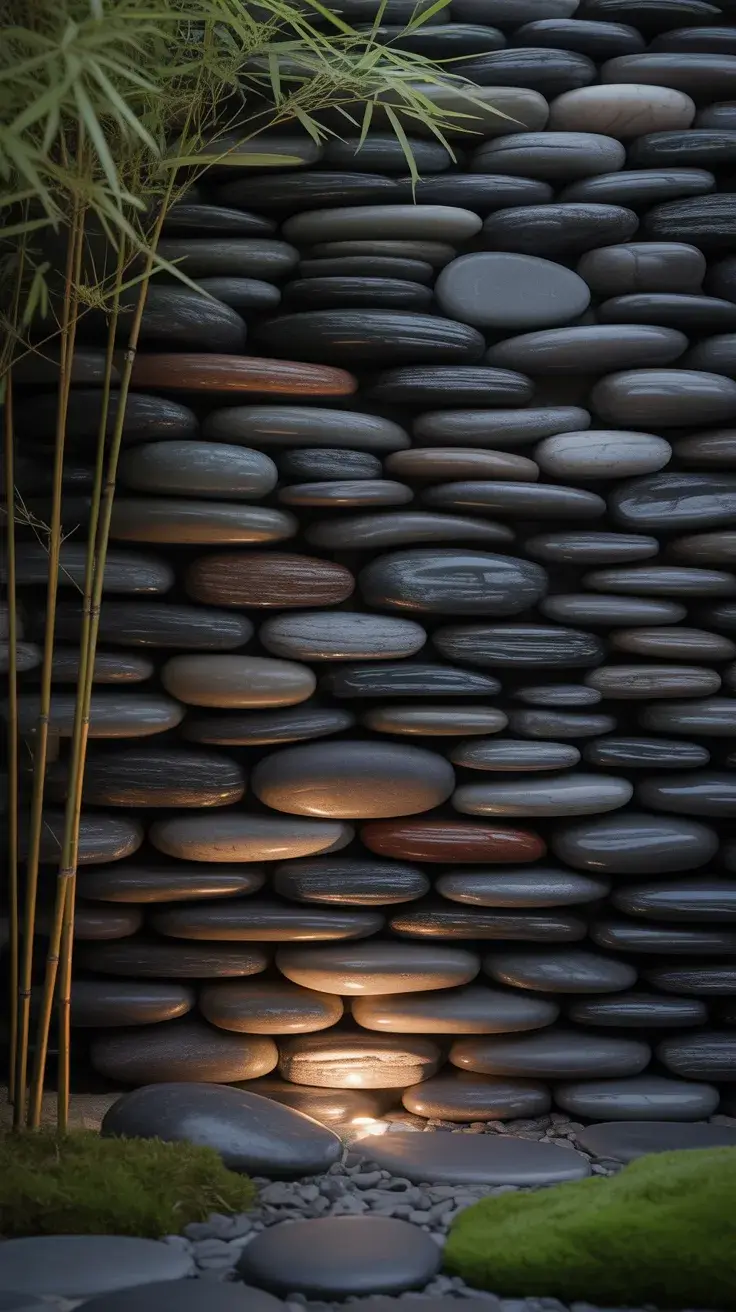
Design elements include stacked slate, smooth river stones, or rough-textured granite panels. Each material offers a distinct character. I match the stone color to surrounding elements for visual coherence—grays with gravel, warm tones with wood, or mixed neutrals with lush greenery. Subtle lighting positioned at the base of the wall enhances its sculptural beauty at night.
From my experience, natural stone elevates the sophistication of any Zen space. US design publications often highlight how stone backdrops create a meditative focal point and improve acoustic quality. I’ve seen firsthand how even a small stone wall can change the atmosphere, making the environment feel more grounded.
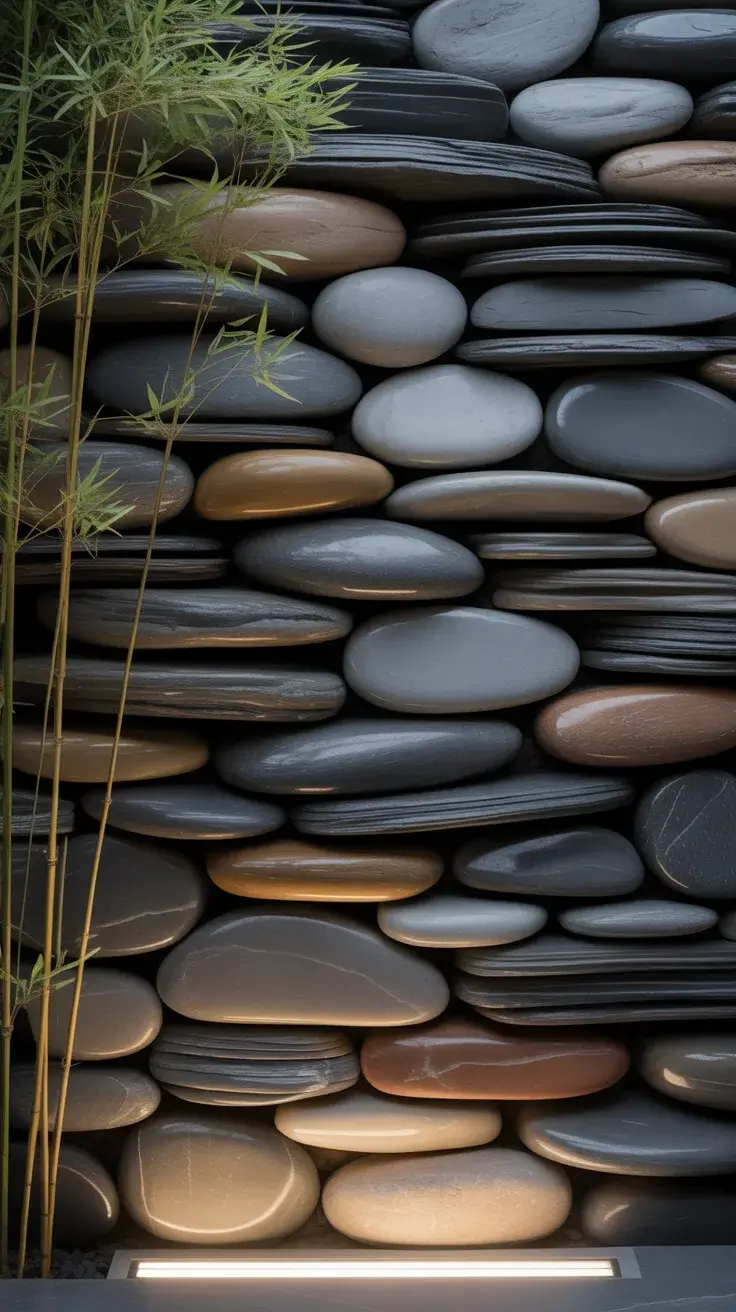
If expanding this section, I would add a single sculptural plant, like a tall slender bamboo, positioned slightly in front of the wall for layered depth.
29. Eco Friendly Zen Materials
In the evolving world of Zen Garden ideas 2026, I find that eco-friendly materials are no longer optional—they’re foundational. When I design sustainable Zen spaces, I prioritize renewable, low-impact resources such as bamboo, reclaimed wood, recycled stone composites, and natural clay. These materials not only support environmental responsibility but also strengthen the authentic, grounding atmosphere that defines Zen aesthetics.
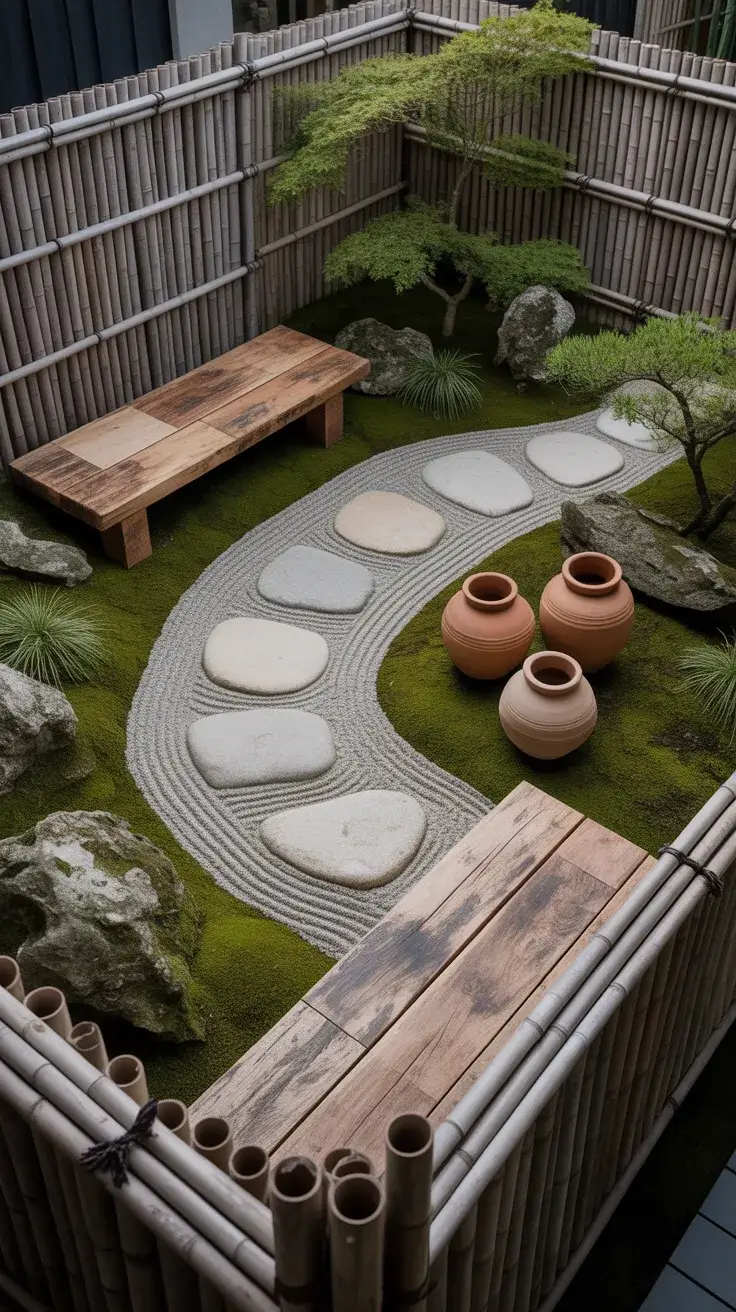
For design elements, I often incorporate bamboo fencing, reclaimed timber benches, and permeable gravel or sand pathways to promote natural drainage. Clay lanterns, recycled glass accents, and organic-fiber cushions complement the structure while keeping the visual profile calm and cohesive. Using these materials also ensures longevity with minimal maintenance, allowing the garden to remain harmonious without frequent intervention.
In my experience, eco-friendly choices enhance user connection to the space. Many US design publications emphasize that sustainable materials contribute to mental well-being, especially in natural settings where authenticity matters. I’ve observed that clients respond positively when their garden not only looks serene but also contributes meaningfully to the environment.
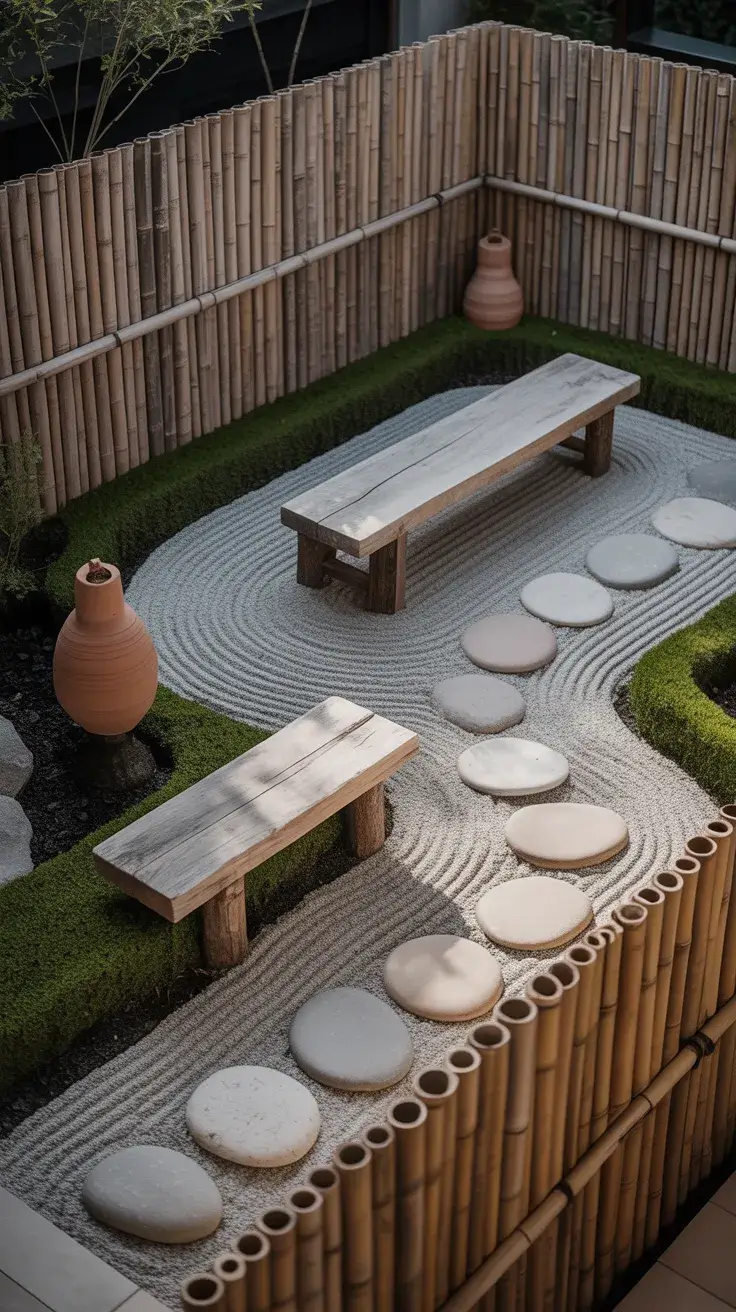
To improve this section further, I would suggest adding a rainwater collection feature that nourishes plants naturally while maintaining the garden’s sustainable identity.
30. Soft Moon Gate Entry Ideas
The moon gate has always been symbolic in Zen landscapes, and within Zen Garden ideas 2026, I find that softened, modern interpretations are becoming especially appealing. I design moon gate entries to act as transitions into calmer spaces, using rounded shapes that invite the visitor to pause and shift their mindset. Soft stone, textured concrete, or smooth-finish wood creates an elegant, welcoming threshold.
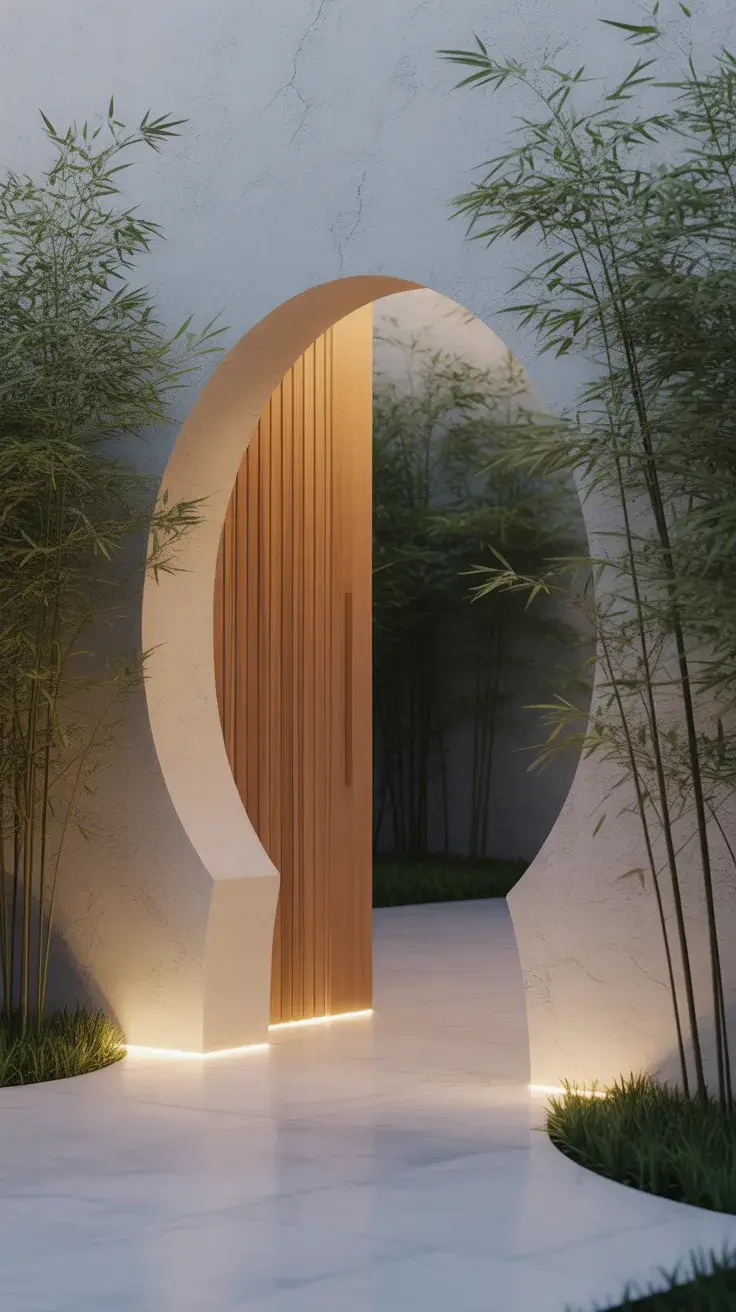
For structural elements, I use slim framing, integrated lighting along the base, and surrounding plantings such as dwarf bamboo or ornamental grasses. A stone pathway beneath the gate leads naturally into the inner garden, ensuring a sense of flow and intention. Sometimes I add a low bench nearby to emphasize the idea of slowing down before entering the sanctuary.
From my perspective and supported by notes from US landscape professionals, moon gates influence emotional experience more than most architectural features. Their curved form promotes serenity and balance, and I’ve seen how they visually anchor a garden without overpowering it.
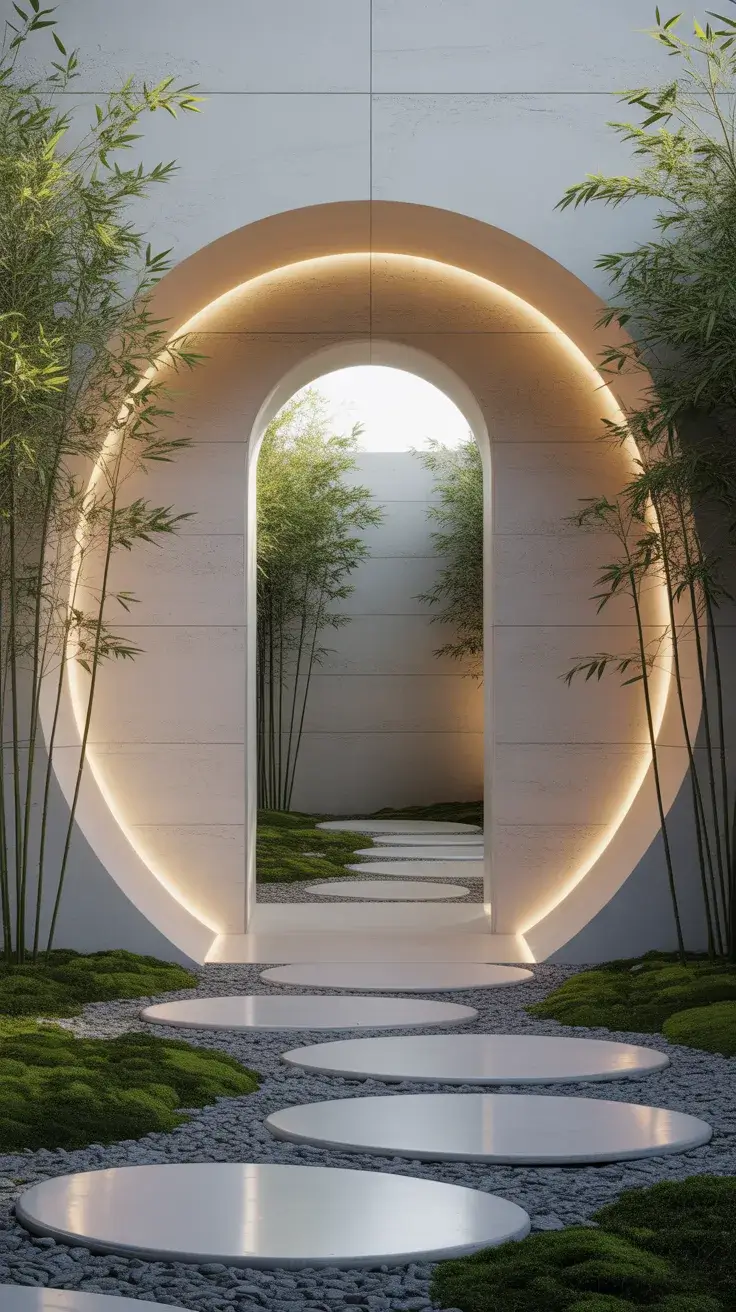
To complete this section, I would add a suggestion to incorporate subtle textural contrast—such as pairing the moon gate with a gravel patch—to draw more attention to the transition zone.
31. Seasonal Zen Garden Enhancements
Seasonal enhancements are an essential part of Zen Garden ideas 2026, and I always look for ways to keep a garden engaging year-round without compromising its simplicity. Seasonal updates allow the space to evolve naturally. In spring, fresh green shoots bring renewal; in summer, textured foliage provides shade; in autumn, soft golden hues add warmth; and in winter, bare branches introduce sculptural beauty.
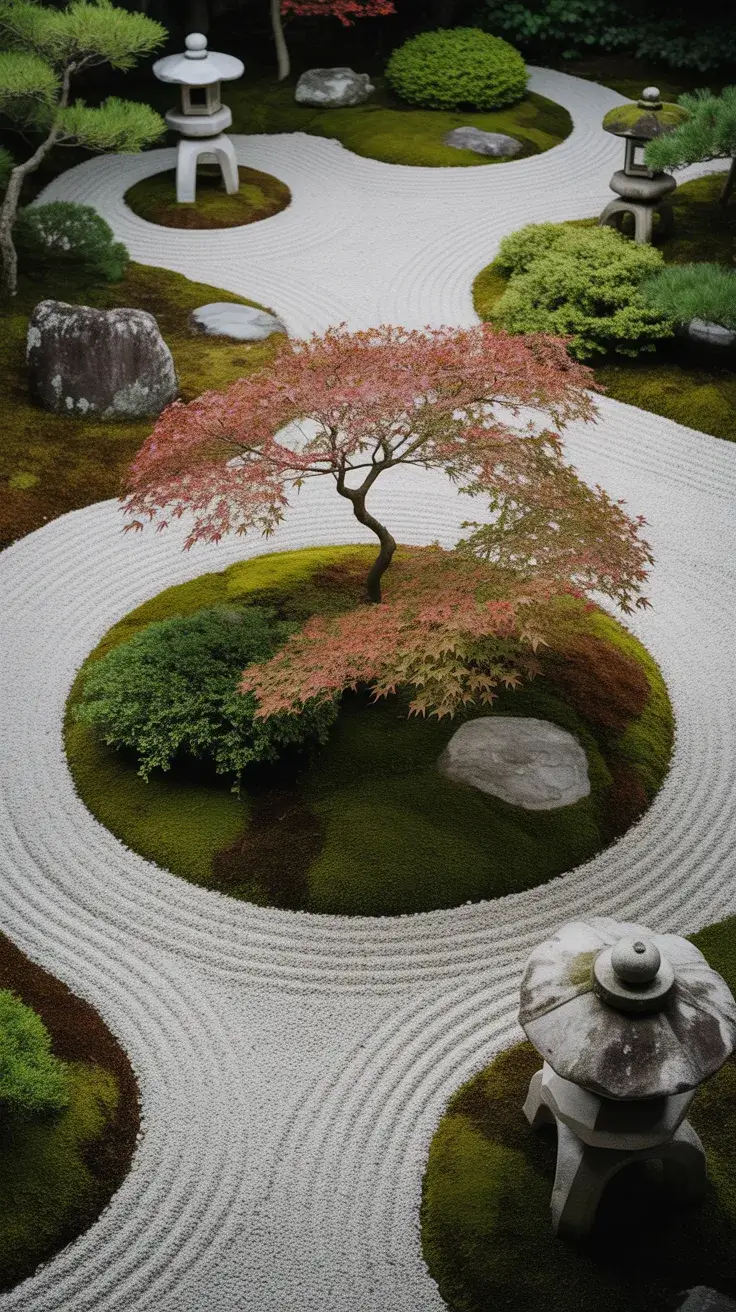
For décor and functional items, I incorporate interchangeable lanterns, seasonal planters, removable tatami-style mats, and lightweight fabric drapes that adjust easily to changing weather. Rotating potted plants—like Japanese maple in autumn or evergreens in winter—ensures visual interest while maintaining the Zen principle of balance. A modular seating cushion set also adapts well to seasonal variations.
Many US designers note that seasonal changes enhance mindfulness, encouraging observers to notice subtle natural shifts. I agree wholeheartedly. Over the years, I’ve seen clients connect deeply with their garden as they experience it evolve through the seasons. These small transformations keep the environment alive and emotionally resonant.
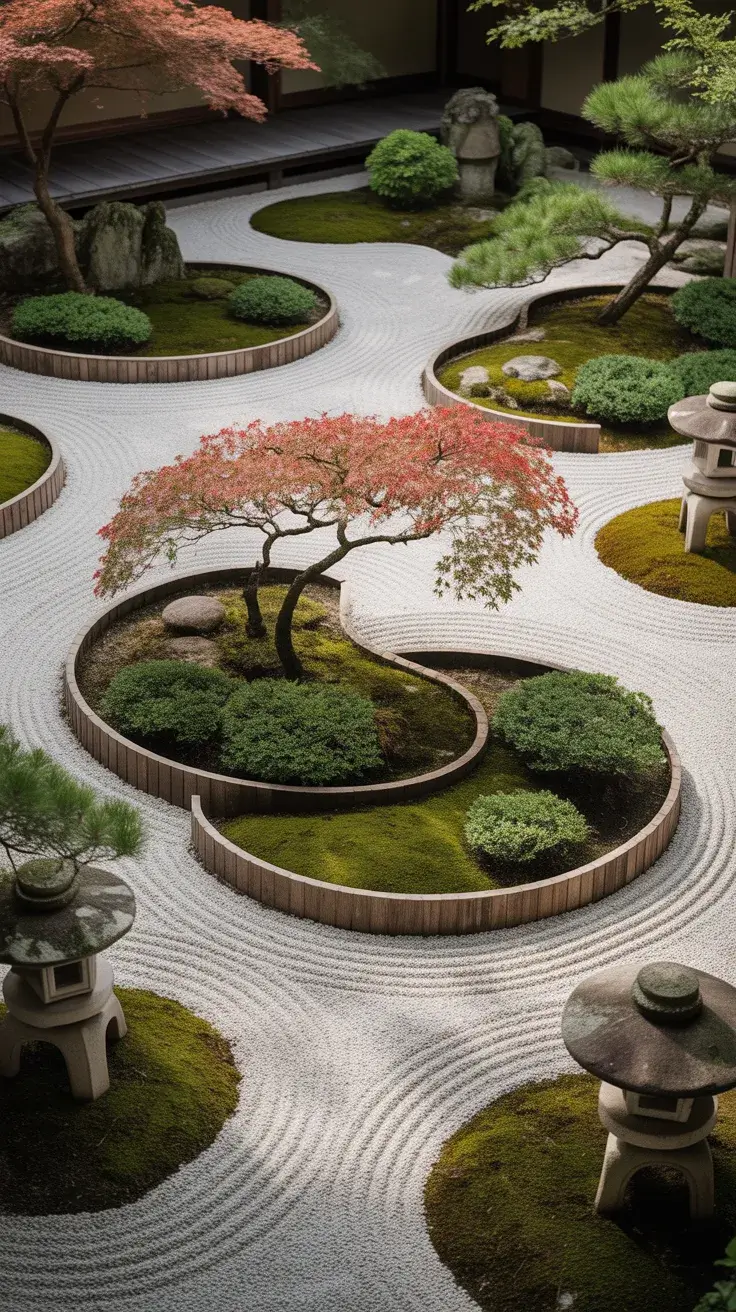
To enrich this section further, I’d recommend adding a dedicated seasonal display niche—a small area that highlights a rotating natural object such as stones, leaves, or dried branches.
32. Compact Urban Zen Retreats
Compact spaces can achieve remarkable tranquility, and in Zen Garden ideas 2026, small urban retreats are gaining tremendous popularity. I design these areas to maximize every inch while preserving simplicity. Whether it’s a balcony, rooftop, or narrow side yard, I use clean lines, muted tones, and multifunctional layouts to ensure the space feels calm rather than confined.
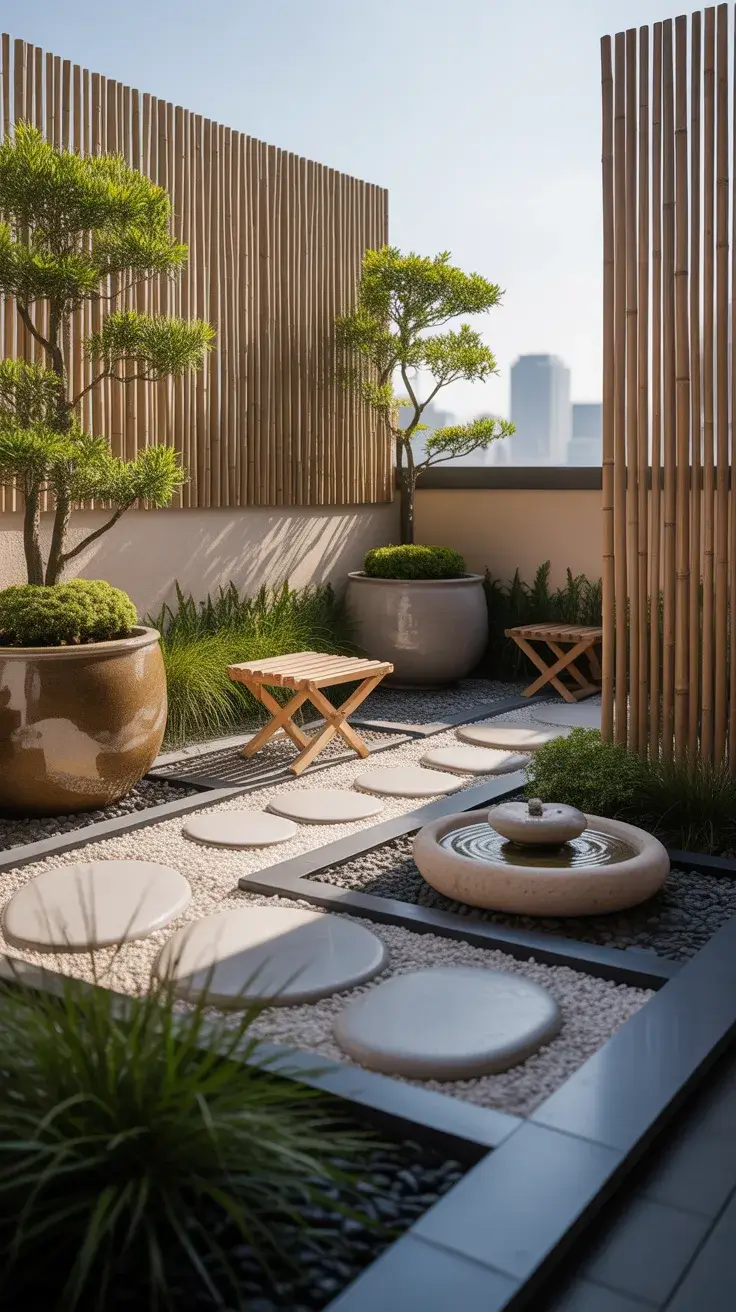
For furniture and décor, I rely on foldable wooden stools, small ceramic pots, wall-mounted planters, and narrow gravel strips that guide the eye. A modest water feature—like a tabletop fountain—adds soothing sound without taking up floor space. Vertical bamboo screens create privacy while maintaining light flow, making the retreat feel secluded despite its urban surroundings.
From experience, compact retreats benefit most from deliberate restraint. US interior experts frequently stress that small Zen spaces thrive when clutter is minimized and natural elements dominate. I’ve seen how even a tiny meditation corner transforms into a personal sanctuary with thoughtful design decisions.
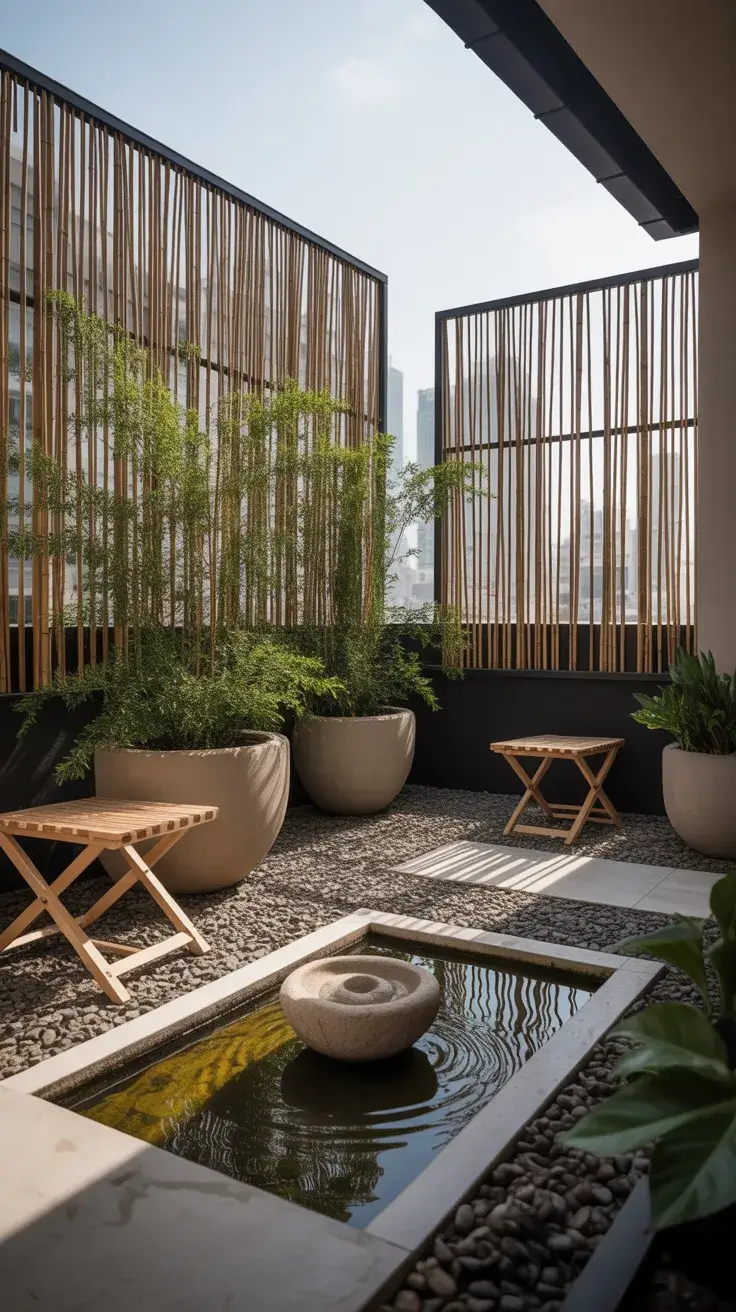
To complete this section, I’d recommend adding a small, low-profile lantern to provide intimate evening lighting without overwhelming the narrow space.