Designing a small kitchen can feel overwhelming, especially when trying to organize a functional pantry in a limited space. Many homeowners wonder how to transform a cramped area into a stylish and efficient storage zone that supports daily routines. In this article, I explore the most innovative ideas in tiny pantry design 2026, revealing practical layouts, clever storage systems, and modern aesthetics that help even the smallest kitchens feel intentional and beautifully organized.
As I walk through each concept, I highlight interiors that embrace minimalism, integrated solutions, and efficiency-driven design. These trends are shaping the future of home storage, and understanding them allows you to create a pantry that improves workflow while enhancing visual appeal. Whether you’re renovating, building, or simply optimizing, the upcoming sections will give you everything you need to design the perfect small-scale pantry with confidence.
With solutions ranging from modular units to sliding doors and over-the-door organization, I offer professional insight into how each idea can support a cleaner and more streamlined lifestyle. Let’s explore the most forward-thinking ways to elevate your pantry in 2026.
1. Compact Layouts For Small Footprints
Designing tiny pantry design 2026 solutions for limited spaces begins with creating compact layouts that maximize every square inch. I often start by mapping the pantry footprint and identifying essential zones such as dry goods, spices, appliances, and cleaning items. In small kitchens, I’ve found that linear or L-shaped layouts work exceptionally well, providing flow without overwhelming the main cooking area. To maintain practicality, I include easy-reach shelves and minimal door swing to preserve movement in narrow passages.
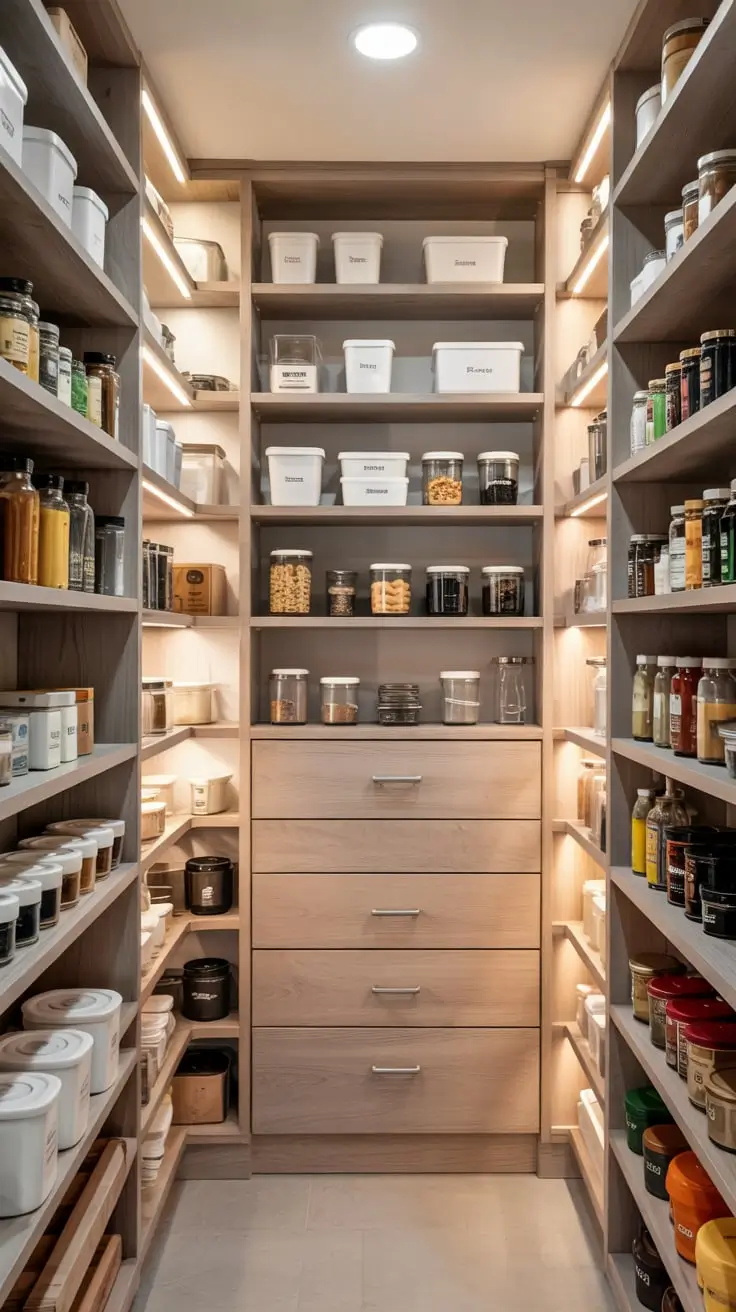
For furniture and fixtures, I choose slim shelving units, shallow drawers, and compact organizers that fit seamlessly into the available footprint. A narrow vertical cabinet can hold a surprising amount of goods, and shallow shelves prevent items from getting lost. I also incorporate LED lighting to brighten tight corners and transparent containers to make inventory visible. These elements work together to maintain function without visually shrinking the space.
From my experience, compact pantry layouts are the backbone of successful small-kitchen design. I’ve often referenced designers such as Nate Berkus, who emphasize that efficient micro-layouts can outperform larger but poorly organized spaces. His advice to “design with intention” truly resonates in tiny pantry planning.
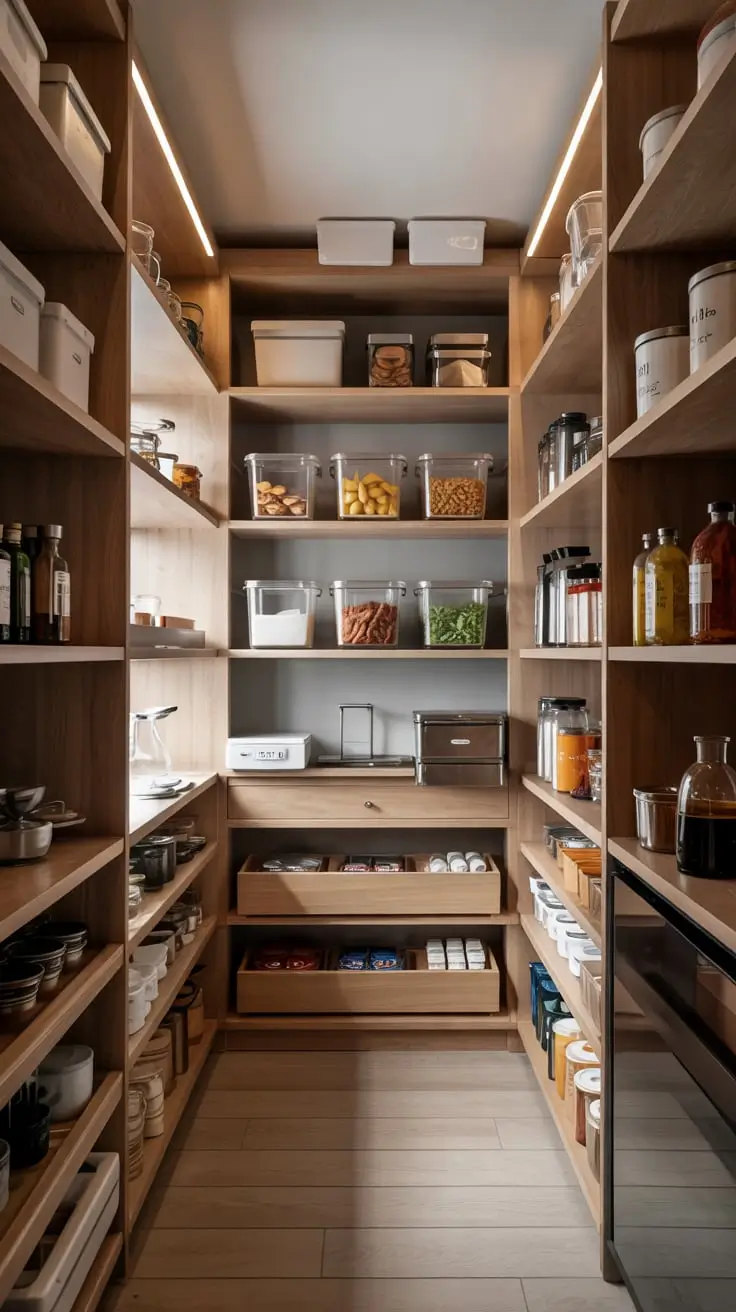
To enhance this section, I would add more guidance on how homeowners can evaluate their kitchen workflow before choosing a layout, as this often determines how well the pantry performs in daily use.
2. Vertical Storage Solutions For Tiny Pantries
When floor space is limited, the best approach is to build upward. In tiny pantry design 2026, vertical storage has become a defining trend, enabling homeowners to utilize height rather than width. When I design vertically oriented pantries, I typically focus on tall shelving units, vertical dividers for baking sheets, and ceiling-height cabinets that offer long-term storage for bulk items. This approach creates order while visually elongating the room.
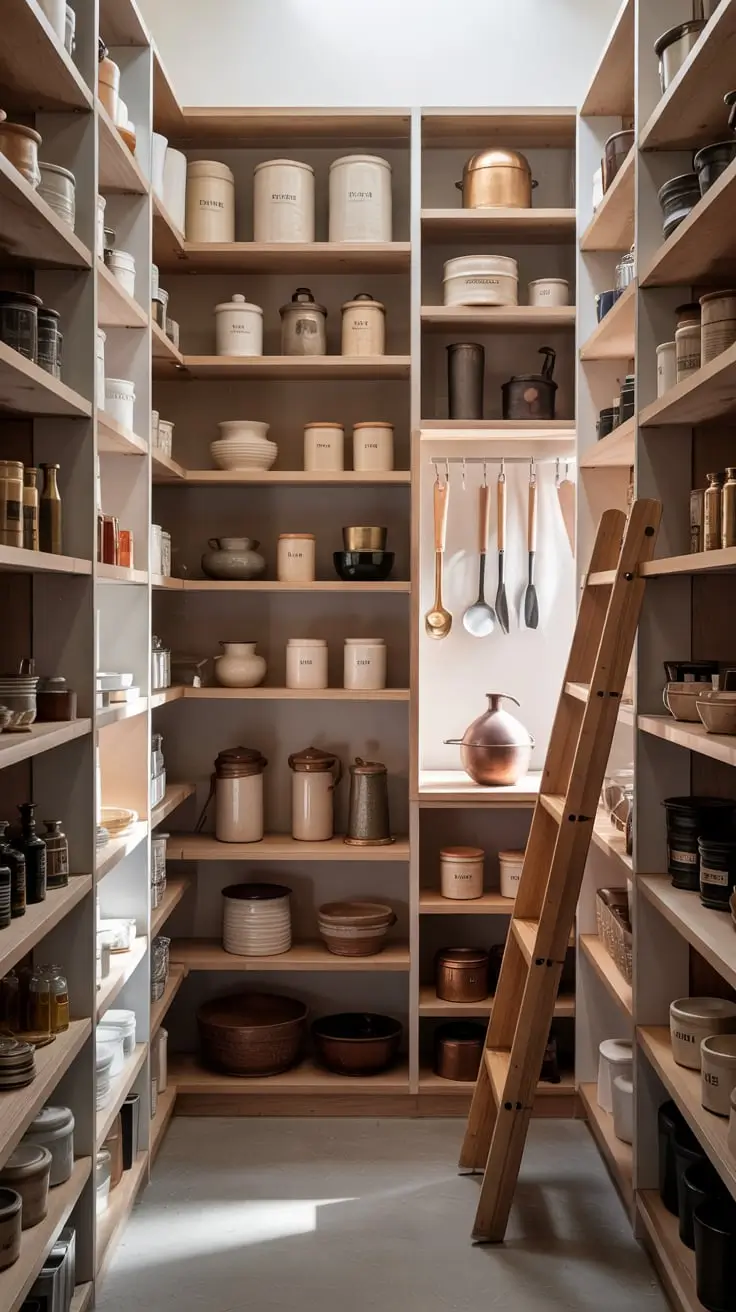
Each furnishing element serves a purpose: tall shelves increase capacity, ladder-style racks elevate everyday items, and vertical dividers prevent clutter. I like to install wall-mounted rails with hooks for lightweight accessories, which keep counters clear. Integrated lighting ensures visibility even on high shelves, making the entire system user-friendly despite the height.
Professionally, I find vertical storage invaluable for maximizing minimal space. Many publications, including Architectural Digest, highlight the importance of taking advantage of unused wall height, and I agree entirely. Small kitchens benefit greatly from designs that focus on height efficiency.
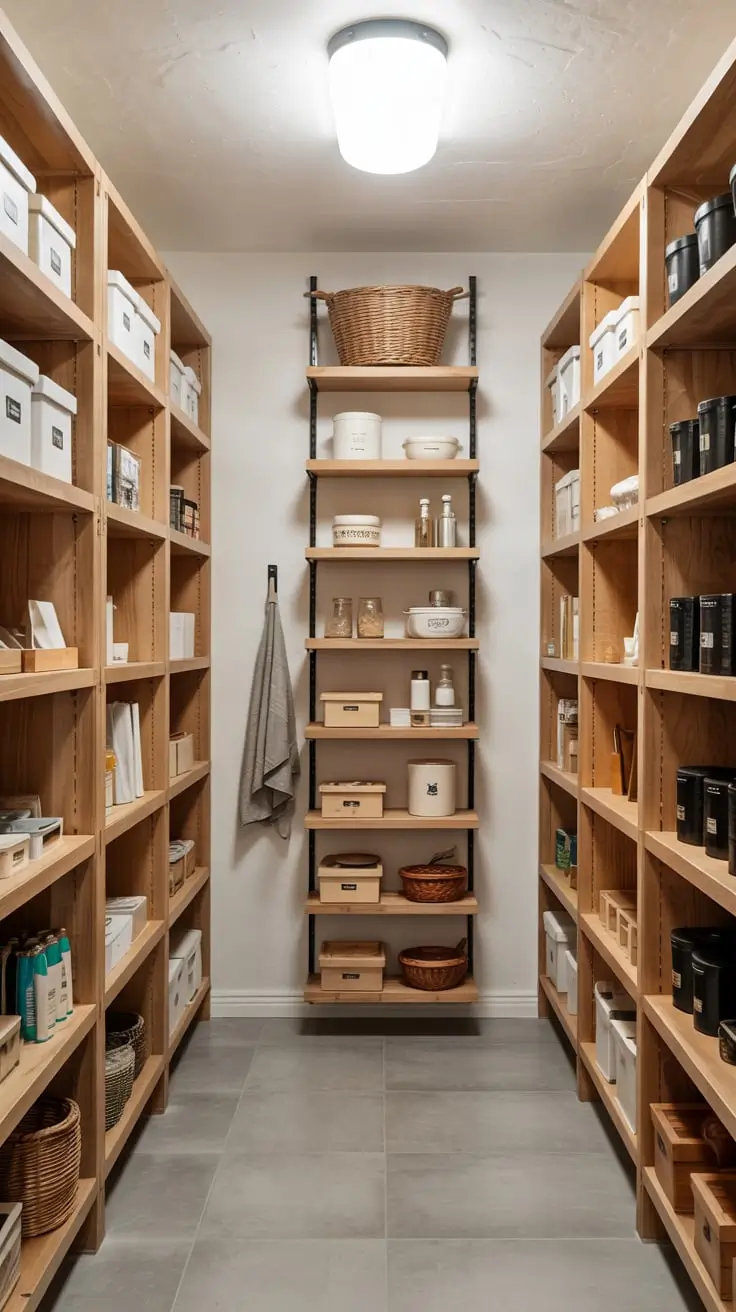
To add depth to this section, I would explain how homeowners can choose between open and closed vertical storage based on their lifestyle and design preferences.
3. Hidden Pantry Concepts For Modern Homes
Hidden storage adds sophistication and cleanliness to tiny pantry design 2026 trends. I often incorporate hidden pantries behind seamless cabinetry, pocket doors, or integrated wall panels. These concepts are ideal for homeowners who prefer a minimalist look, as everything remains concealed until in use. The result is a sleek and modern kitchen that feels larger due to the absence of visual clutter.
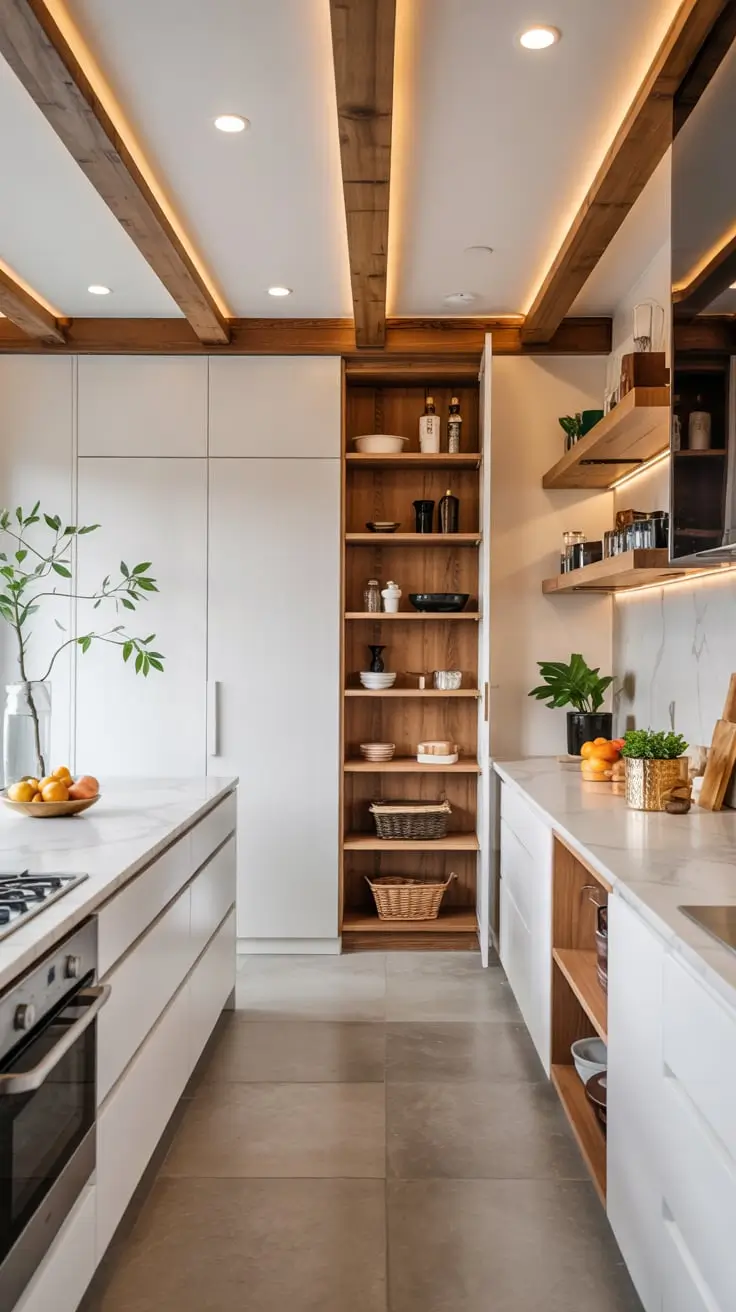
Furniture choices focus on disguise and functionality. Full-height cabinet doors blend with kitchen fronts, while concealed shelving, recessed niches, and soft-close pullouts ensure accessibility. I often include hidden drawers for spices and snacks, as well as shallow cabinets disguised within decorative wall panels. These elements allow storage to remain discreet yet immensely practical.
In my professional experience, hidden pantries elevate the aesthetic value of a kitchen. Many experts suggest that concealed storage creates a premium effect typically seen in luxury interiors. I agree with this assessment, especially when working with open-concept homes where the kitchen is constantly visible.
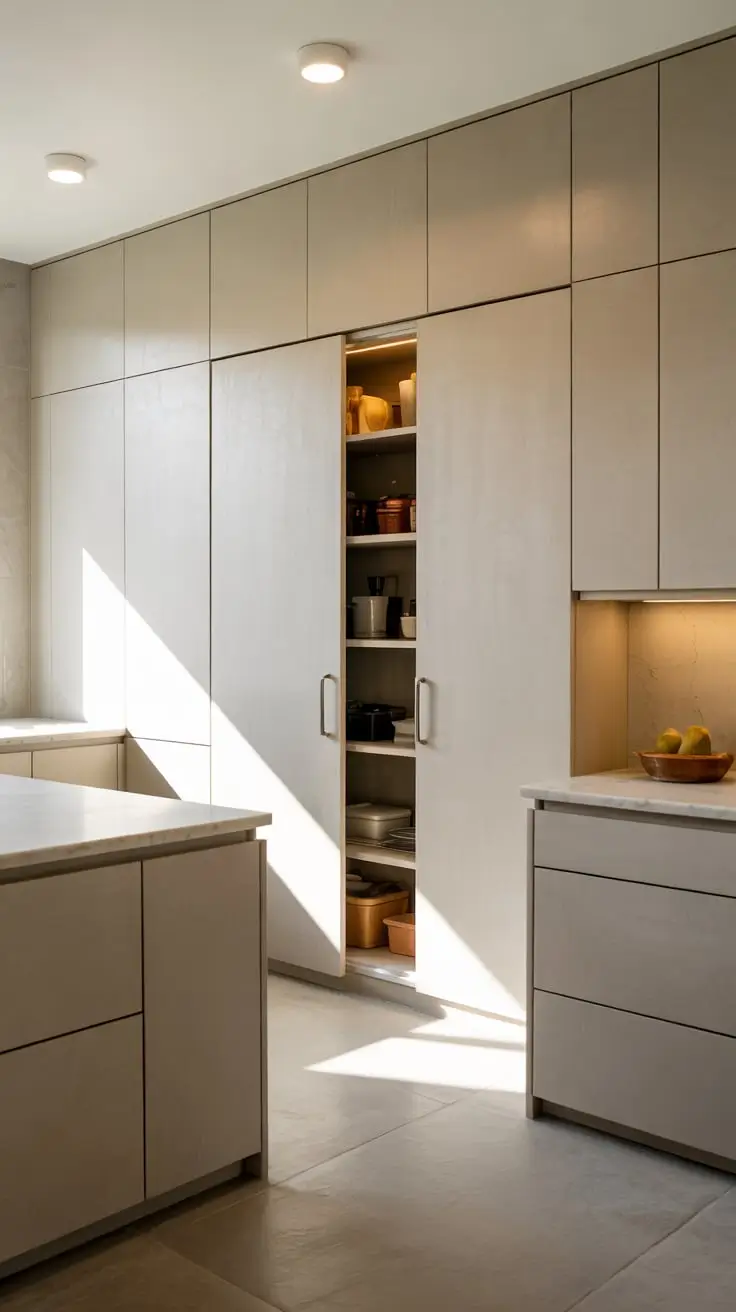
What would further benefit this section is a discussion of hardware selection, such as push-to-open hinges, which enhance the seamless design.
4. Sliding Door Pantry Ideas For Tight Spaces
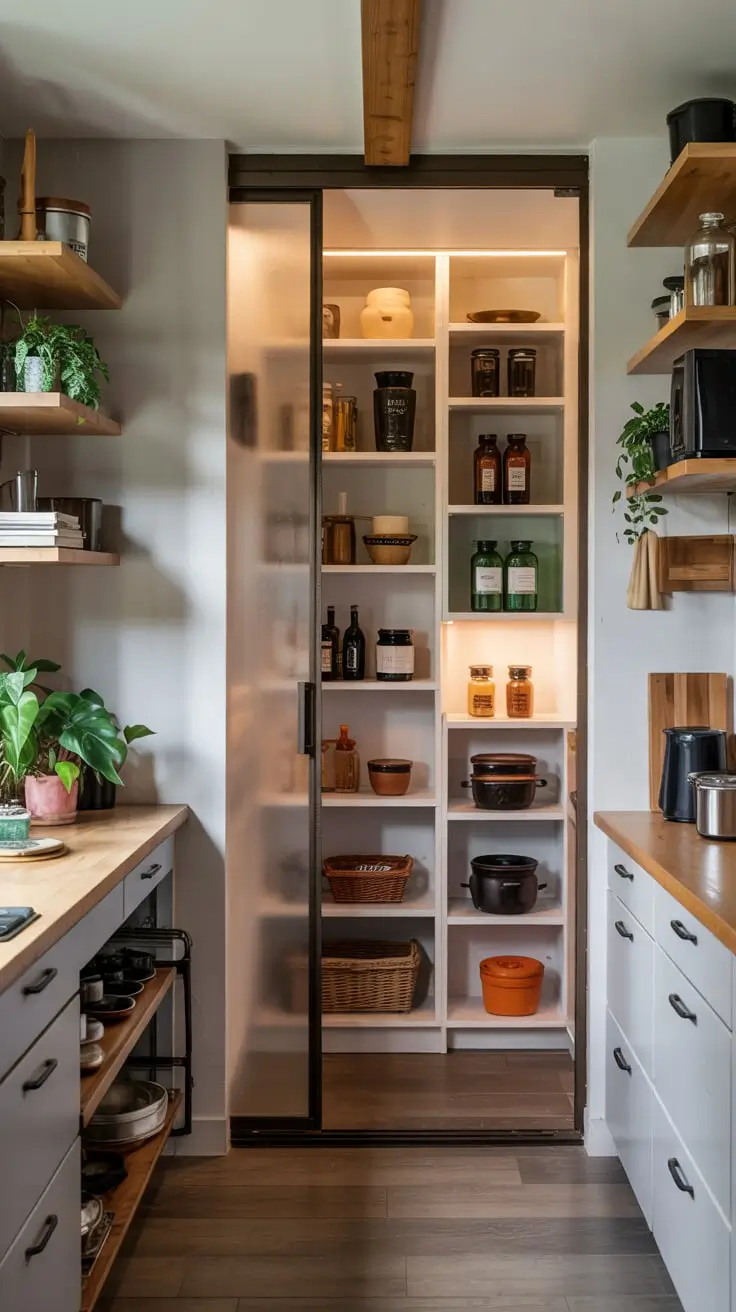
Sliding doors have become essential in tiny pantry design 2026 concepts because they conserve space and simplify movement. When I design for tight kitchens, I replace traditional swinging doors with sliding or barn-style doors that glide effortlessly along the wall. This eliminates door clearance issues and allows the pantry to be placed in previously inaccessible areas.
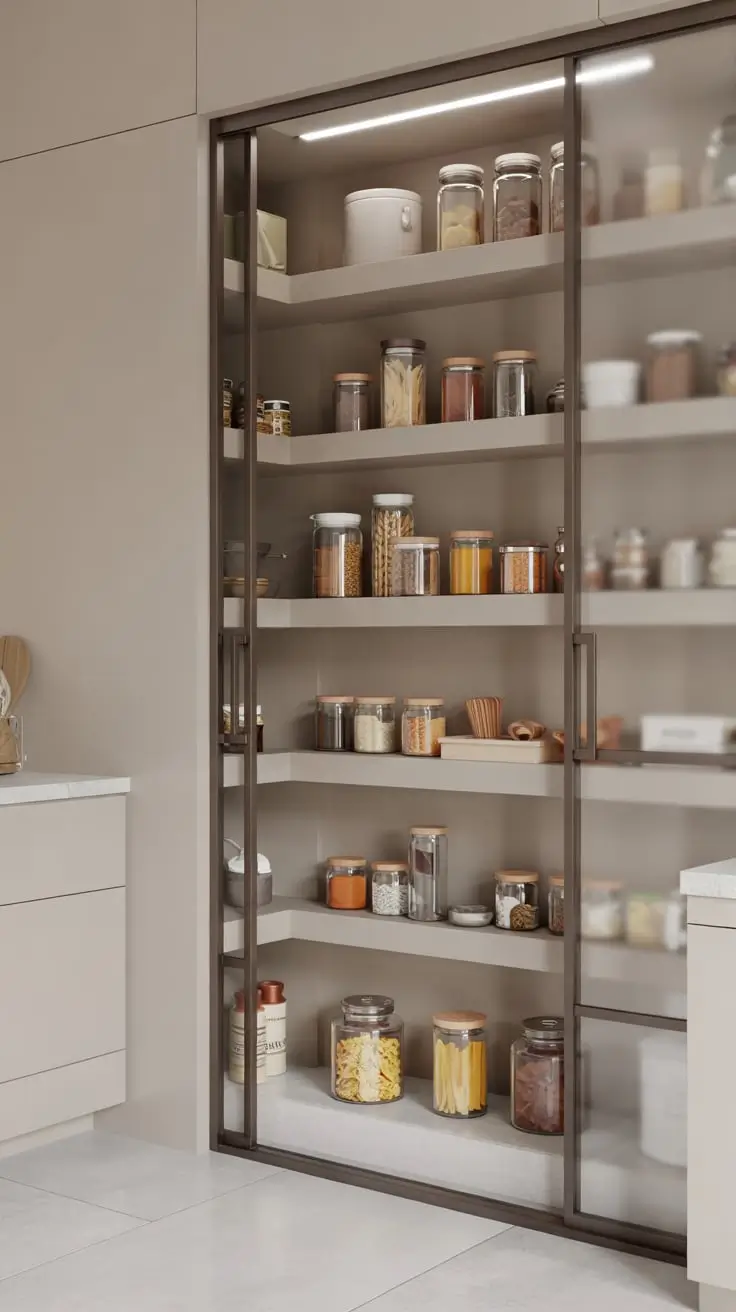
In terms of fixtures, I select lightweight yet durable door panels, recessed handles, and silent tracks to maintain practicality and comfort. Frosted glass doors work beautifully in modern kitchens, adding dimension while visually expanding the space. For rustic or contemporary homes, wood or matte laminate doors offer texture without overwhelming the decor. Inside the pantry, shallow shelving is ideal to prevent visual obstruction when the door slides open.
From experience, homeowners appreciate the convenience and aesthetic appeal of sliding-door systems. Many U.S. designers emphasize that reducing swing radius improves both safety and functionality in small homes. I’ve found this advice especially true for kitchens with narrow walkways.
To strengthen this section further, I could include recommendations for maintaining smooth door movement, such as regular track cleaning.
5. Multiuse Shelving For Micro Pantries
In tiny pantry design 2026, multiuse shelving allows homeowners to customize limited space to suit a wide range of needs. I create shelving configurations that serve multiple functions—holding dry goods, small appliances, baskets, or cooking tools. This adaptability ensures the pantry evolves with lifestyle changes and reduces the need for frequent remodeling.
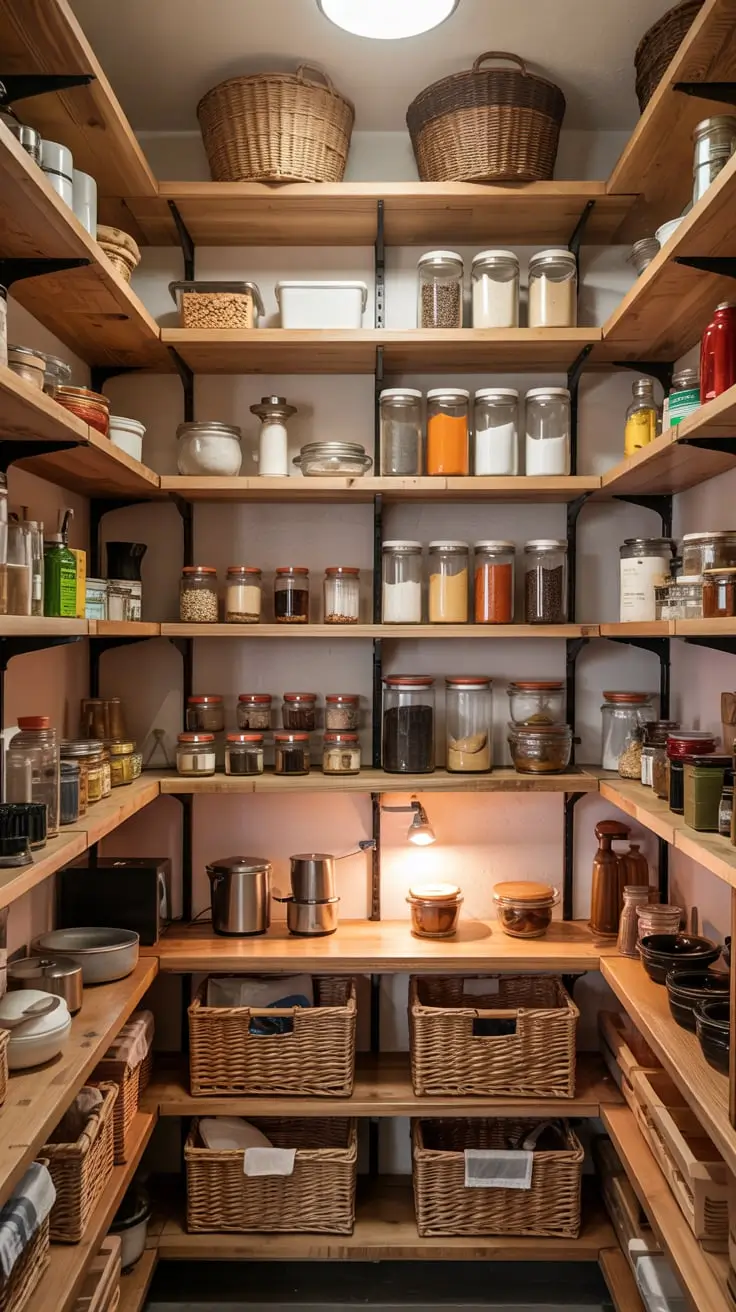
Furniture and organization items play a major role. Adjustable wooden or metal shelves provide flexible spacing, while baskets create order for smaller items. I often incorporate shallow ledges for spices, two-tier shelves for cans, and deep shelves for appliances. These elements bring harmony to the pantry while ensuring every category of kitchen item has a dedicated place.
Professionally, I’ve learned that multiuse systems bring long-term satisfaction to clients. Many interior designers note that versatility is a core principle in future-focused home design. I agree, as kitchens increasingly require adaptability to meet modern cooking and storage habits.
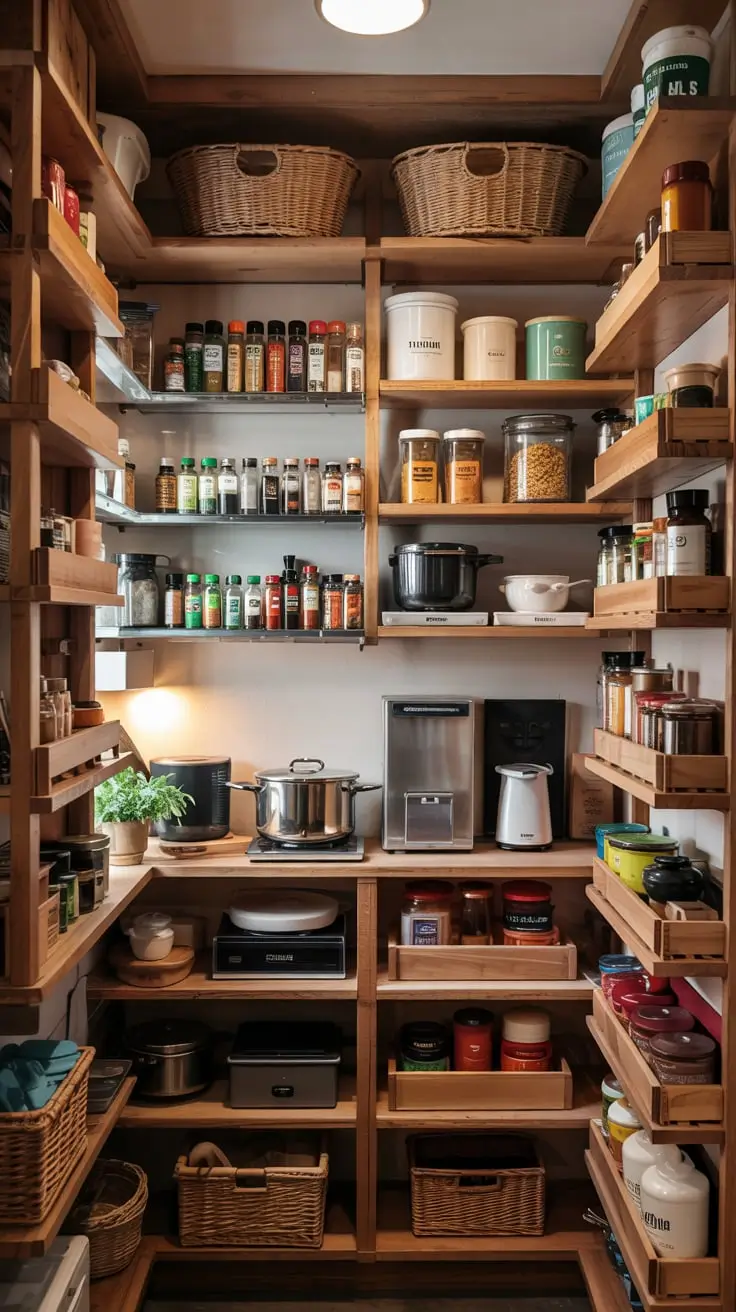
To expand this section, I would include tips on maintaining balance in shelf arrangement to avoid overcrowding heavier zones.
6. Minimalist Pantry Design For Clean Aesthetics
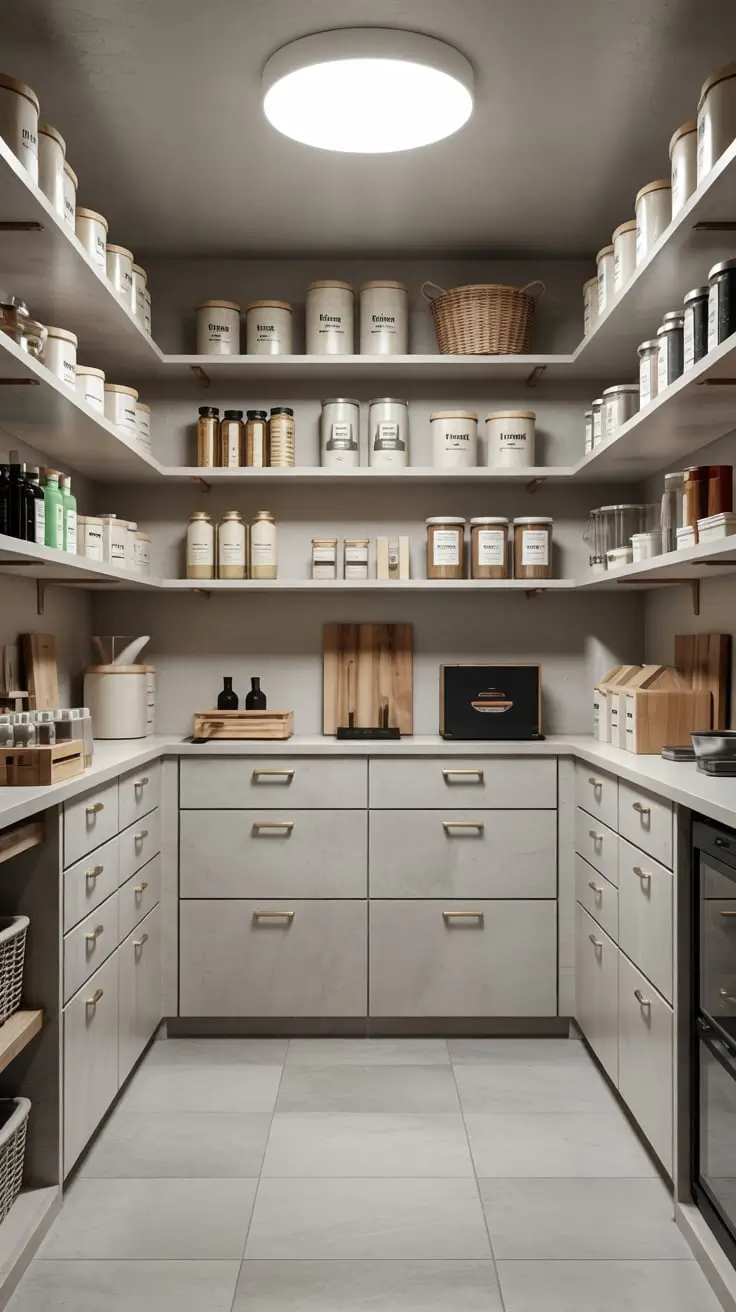
Minimalism is at the heart of tiny pantry design 2026, emphasizing clarity, calmness, and intentional styling. I create minimalist pantries using neutral color palettes, simple hardware, and streamlined storage solutions. The goal is to eliminate visual noise and allow function to shine. Clean lines and uncluttered shelves make even a tiny pantry feel larger and more refined.
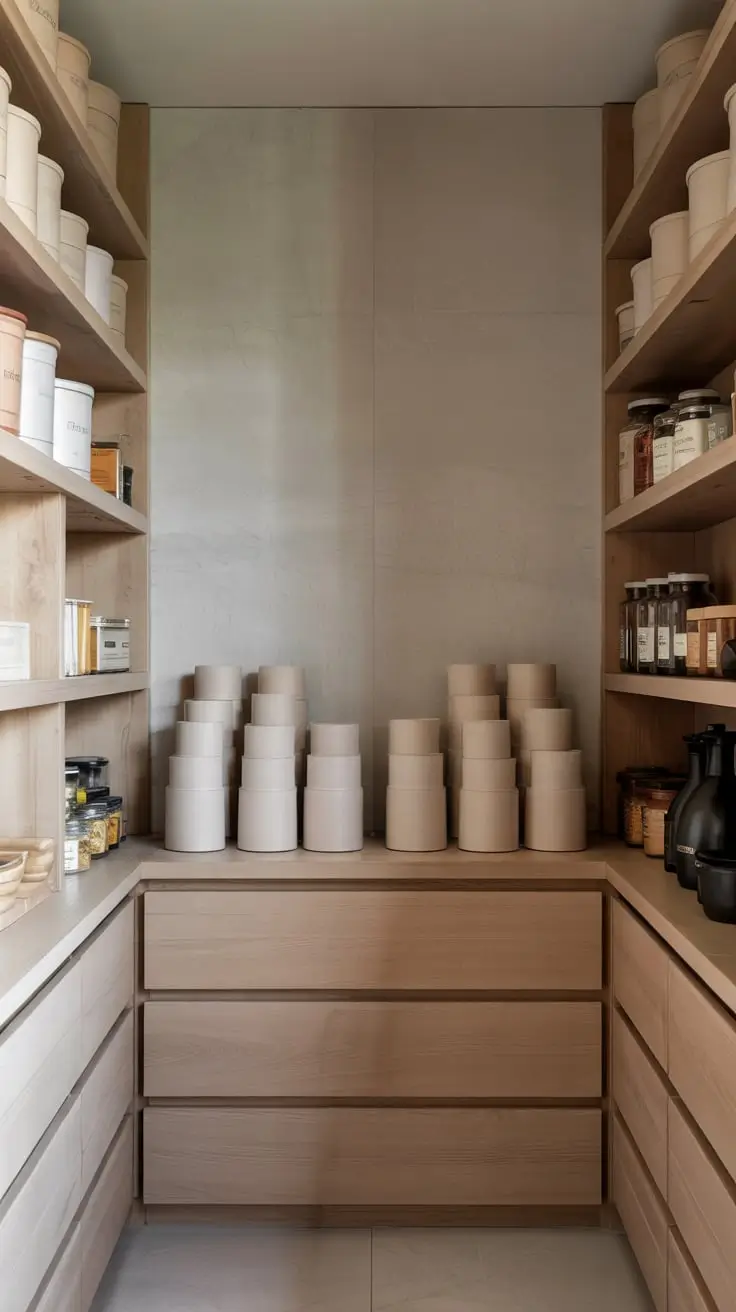
The furnishings in minimalist pantries usually include uniform containers, discreet lighting, and flat-panel cabinetry. I tend to use matte finishes for an understated look, along with soft-close drawers and unobtrusive shelving brackets. Transparent or frosted containers maintain uniformity while keeping items visible. This consistency contributes to a serene and cohesive environment.
In my design experience, minimalist interiors significantly improve user experience. Many design publications support the idea that reducing visual clutter leads to better organizational habits. I’ve witnessed this firsthand with clients who find it easier to maintain a tidy pantry when the design encourages simplicity.
A valuable addition here would be guidance on selecting a minimal color palette that still adds warmth to the space.
7. Space Saving Containers For Small Pantries
Containers play a crucial role in tiny pantry design 2026, helping homeowners streamline storage and reduce clutter. I rely on stackable, airtight, and uniformly shaped containers that optimize space while protecting food. Their consistent shape and size allow shelves to look organized and operate efficiently. With the right containers, even a few shelves can hold a surprising amount of goods.
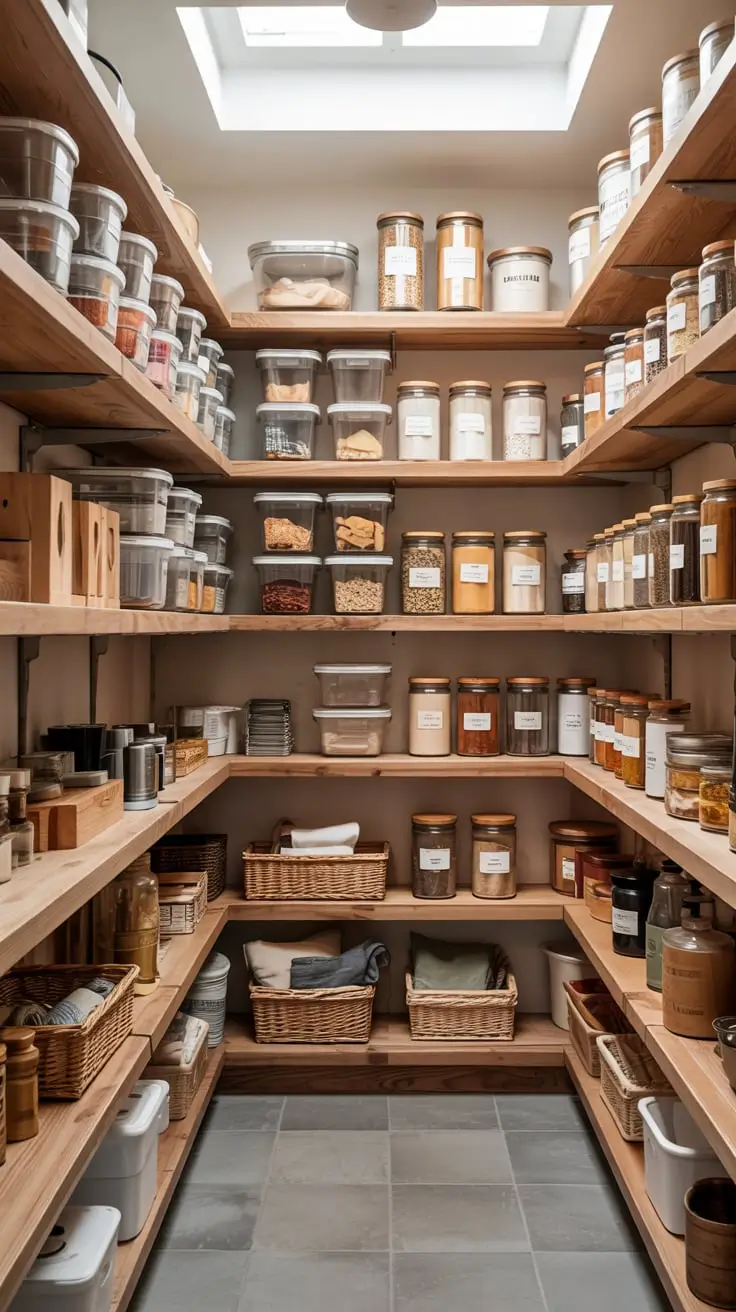
In practice, I select BPA-free clear containers, labeled canisters, and collapsible bins to support flexible storage. Airtight containers preserve freshness, while stackable silhouettes free up shelf space. I also use slim canisters for pasta, tall jars for grains, and shallow trays for snack organization. These tools bring order to the pantry and simplify meal prep.
From my experience, investing in quality containers transforms the daily cooking routine. Experts often recommend transparent storage for easy inventory tracking, which helps reduce food waste. I find this especially true in tiny pantries, where visibility is essential.
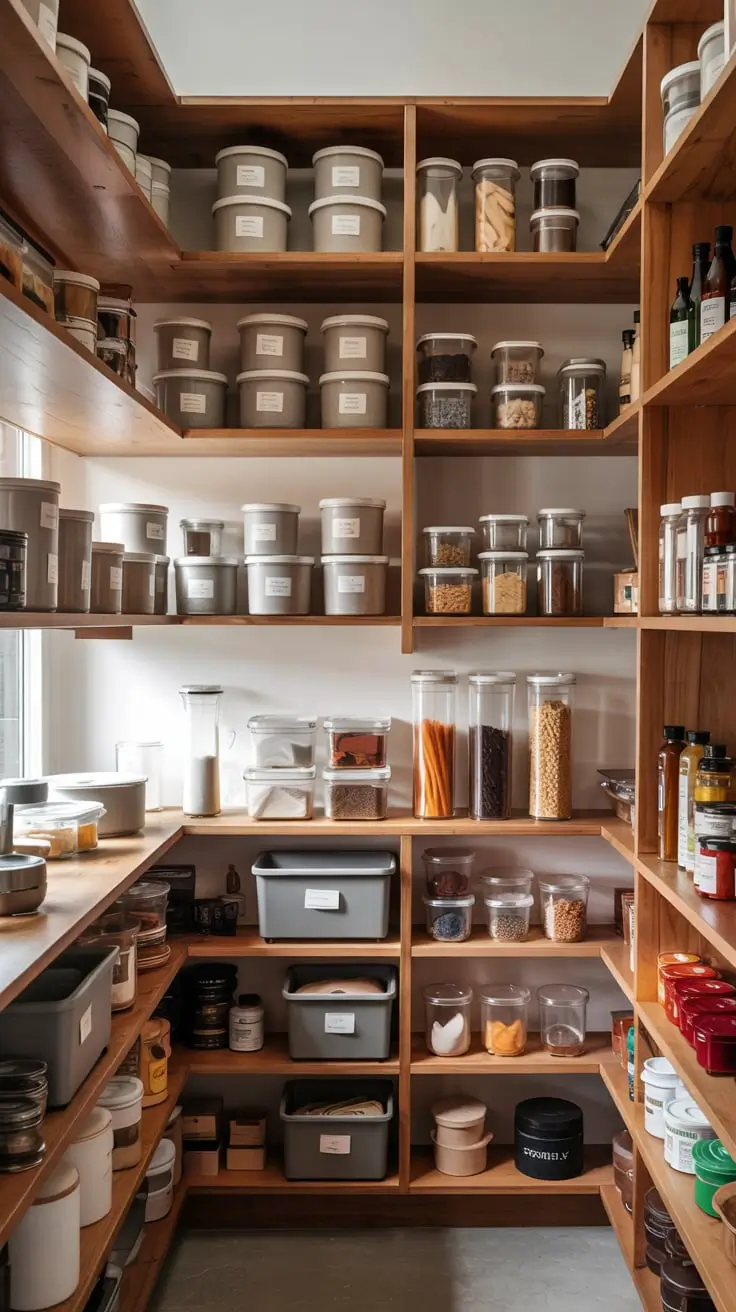
What I would add to this section is guidance on choosing container sets that complement the pantry’s overall design style.
8. Pull Out Pantry Systems For Narrow Areas
Pull-out systems have become a defining feature of tiny pantry design 2026, especially for narrow kitchens where depth is limited but height is available. When I create layouts for these tight spaces, I focus on maximizing linear reach by installing tall, pull-out columns that slide smoothly and reveal stored items from both sides. This approach is extremely practical because it allows homeowners to access every inch without bending or reaching into dark corners.
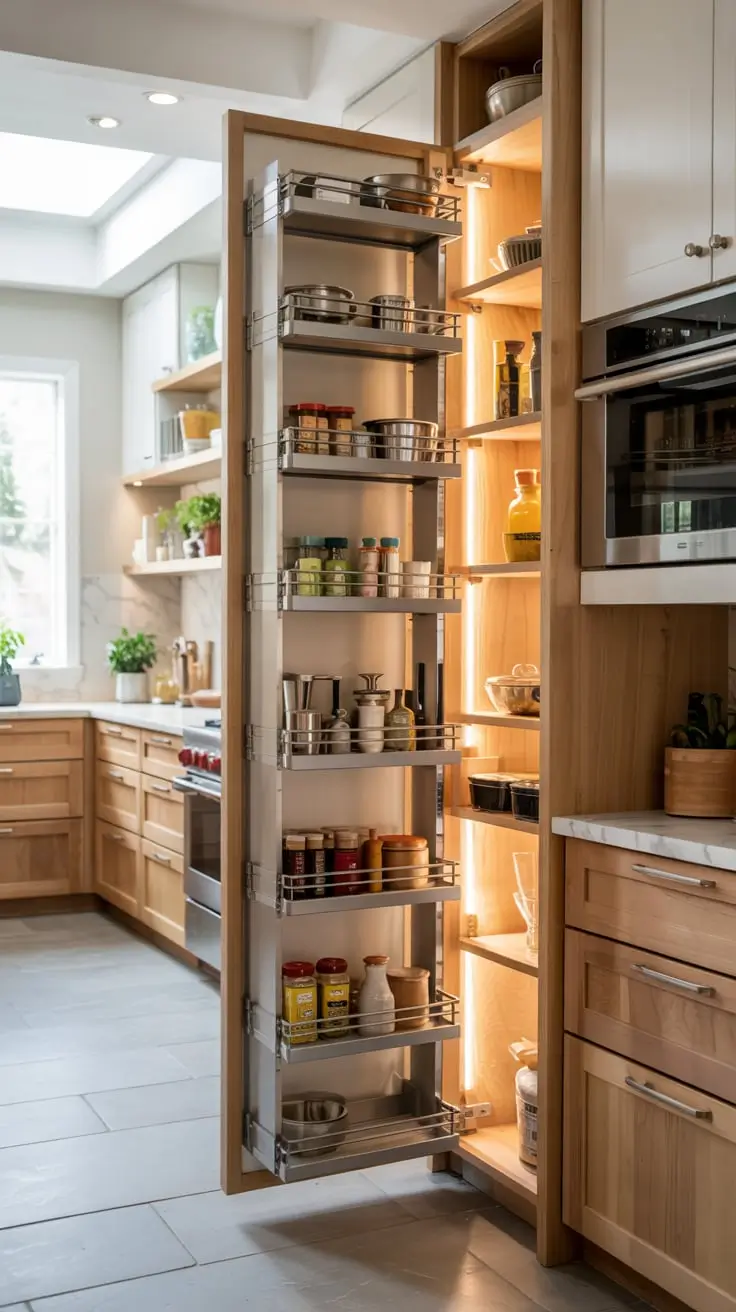
For the interior elements, I usually include slim metal baskets, adjustable dividers, and soft-close mechanisms to ensure a seamless user experience. These systems are ideal for storing cans, spices, oils, and smaller cooking essentials in an organized and visible way. The slim silhouette fits perfectly between appliances or within tight wall cavities, transforming previously unused space into highly functional storage.
In my professional experience, pull-out systems reduce clutter and increase visibility significantly. Many designers in the U.S., such as those featured in Better Homes & Gardens, reinforce the importance of maximizing accessibility in narrow kitchen zones. I find that incorporating these systems results in cleaner aesthetics and easier cooking routines.
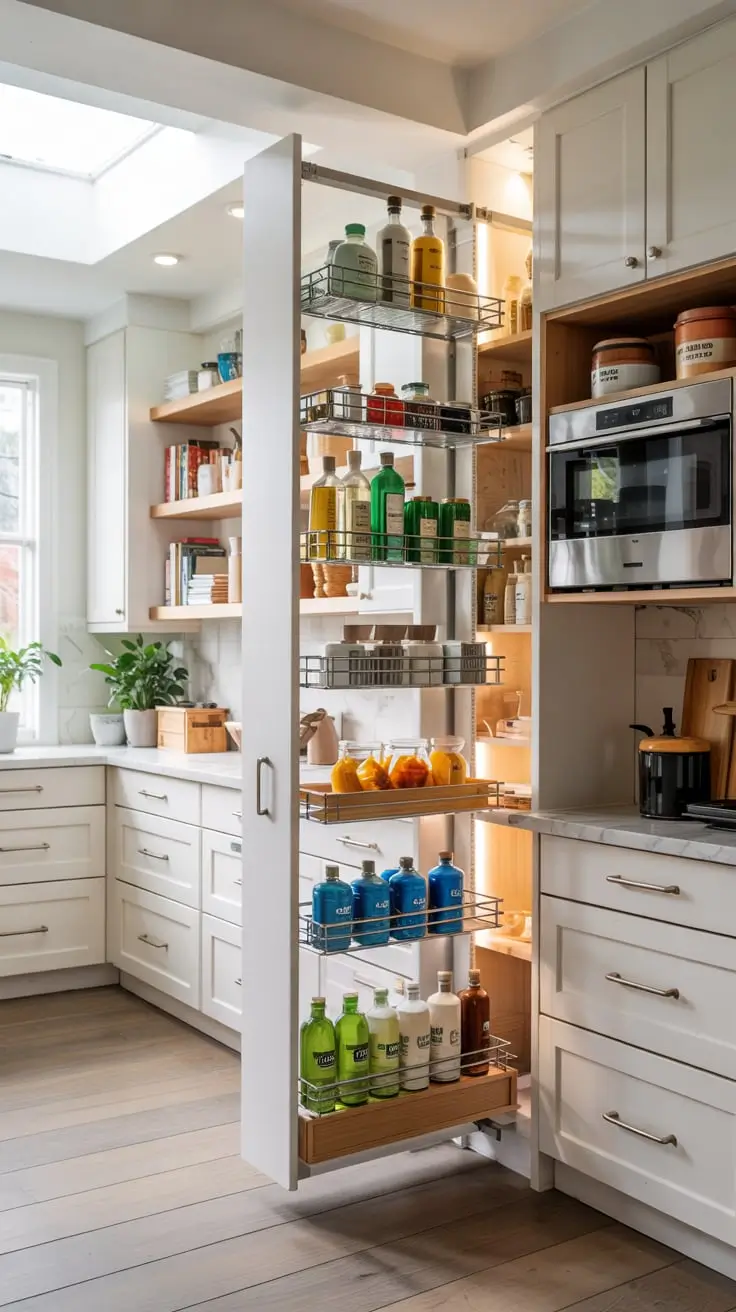
To further enhance this section, I would add advice on selecting the right hardware finish to match the kitchen style and ensure long-term durability.
9. Corner Pantry Designs For Tiny Kitchens
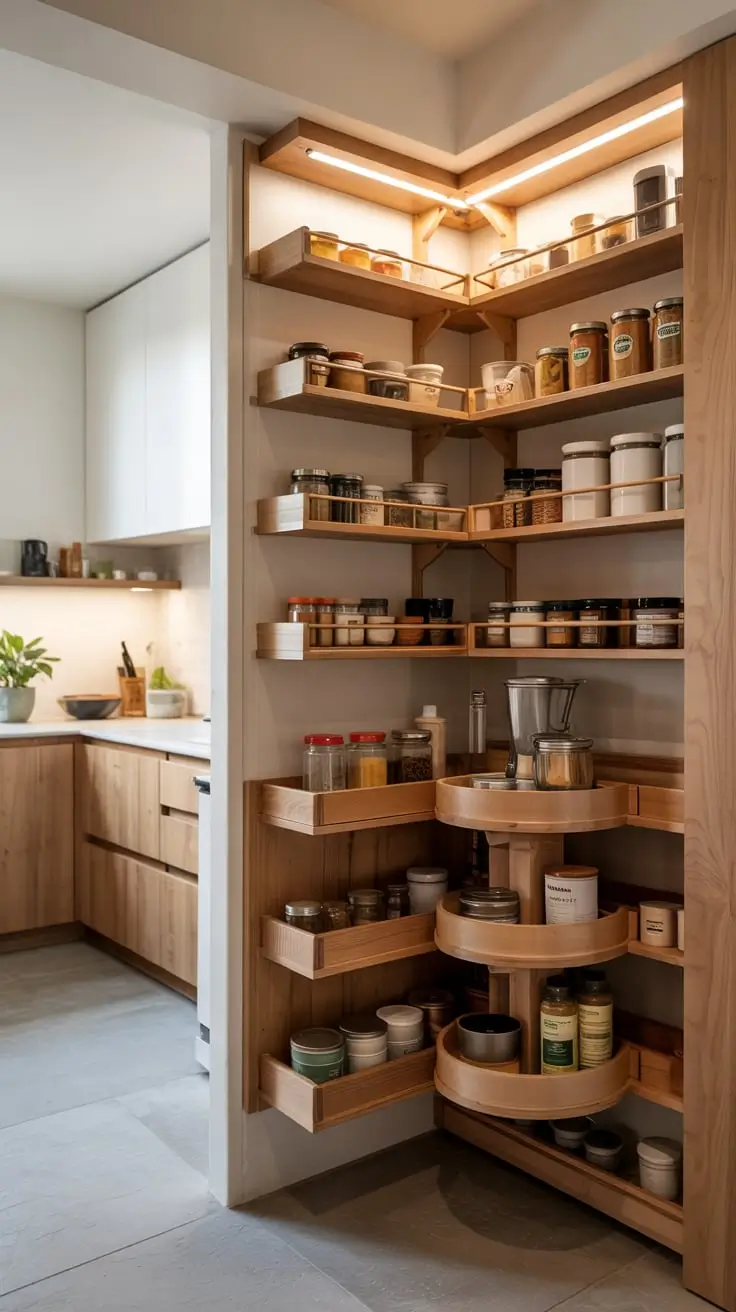
Corner spaces often go underutilized, making them an important focus in tiny pantry design 2026. When I design corner pantries, I typically include angled shelves, rotating carousels, or bifold door access to transform an awkward area into a functional storage hub. This allows homeowners to take advantage of an otherwise unusable corner while maintaining smooth flow within the kitchen.
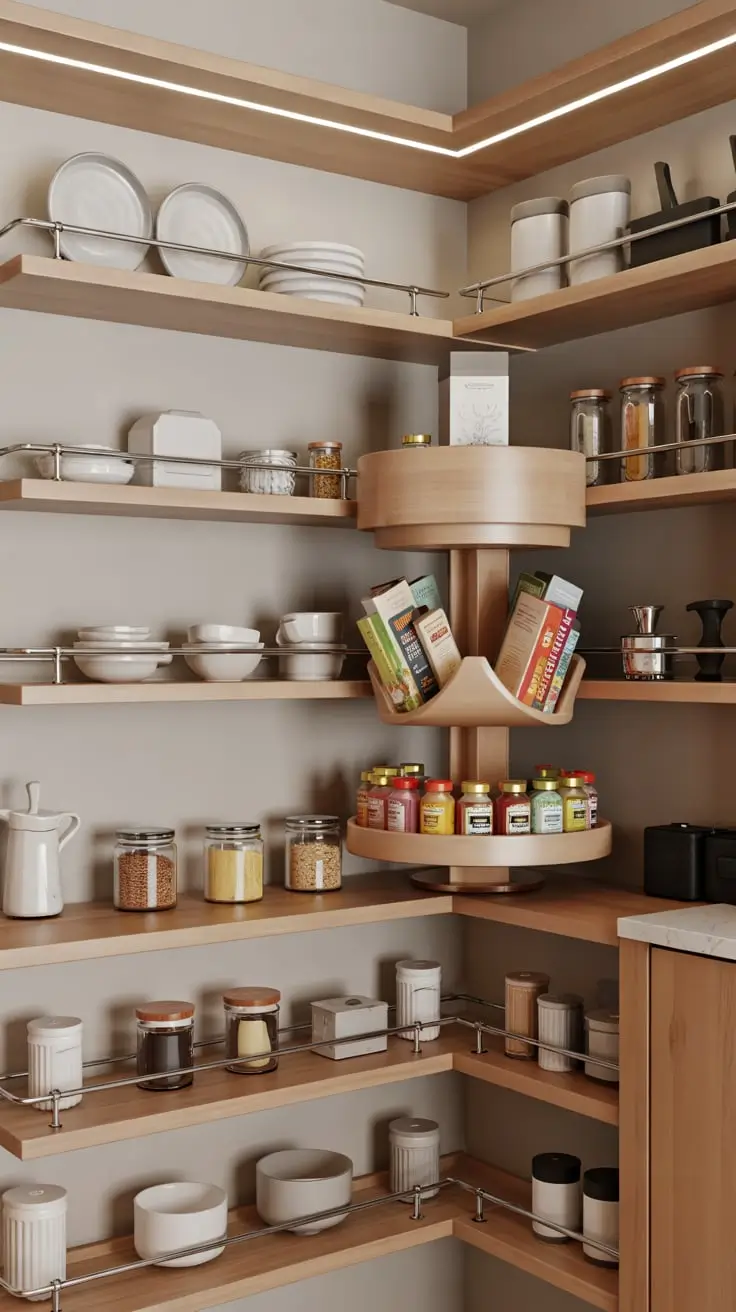
The furnishings I select depend on the size and shape of the corner. Rotating shelves help access deep spaces, while triangular shelving avoids the problem of items getting lost. I also incorporate vertical dividers, corner lighting, and sturdy brackets to support heavier items. This combination enhances structural integrity and accessibility while keeping the pantry visually appealing.
From experience, corner pantries often surprise clients with how much they can hold. Many publications discuss the importance of optimizing hard-to-reach areas, and I agree wholeheartedly. Corner solutions are valuable additions to small kitchens where every inch counts.
I would also include recommendations on choosing the best door style—whether sliding, bifold, or open shelving—to ensure ease of movement in whichever kitchen layout the homeowner has.
10. Over The Door Storage For Mini Pantries
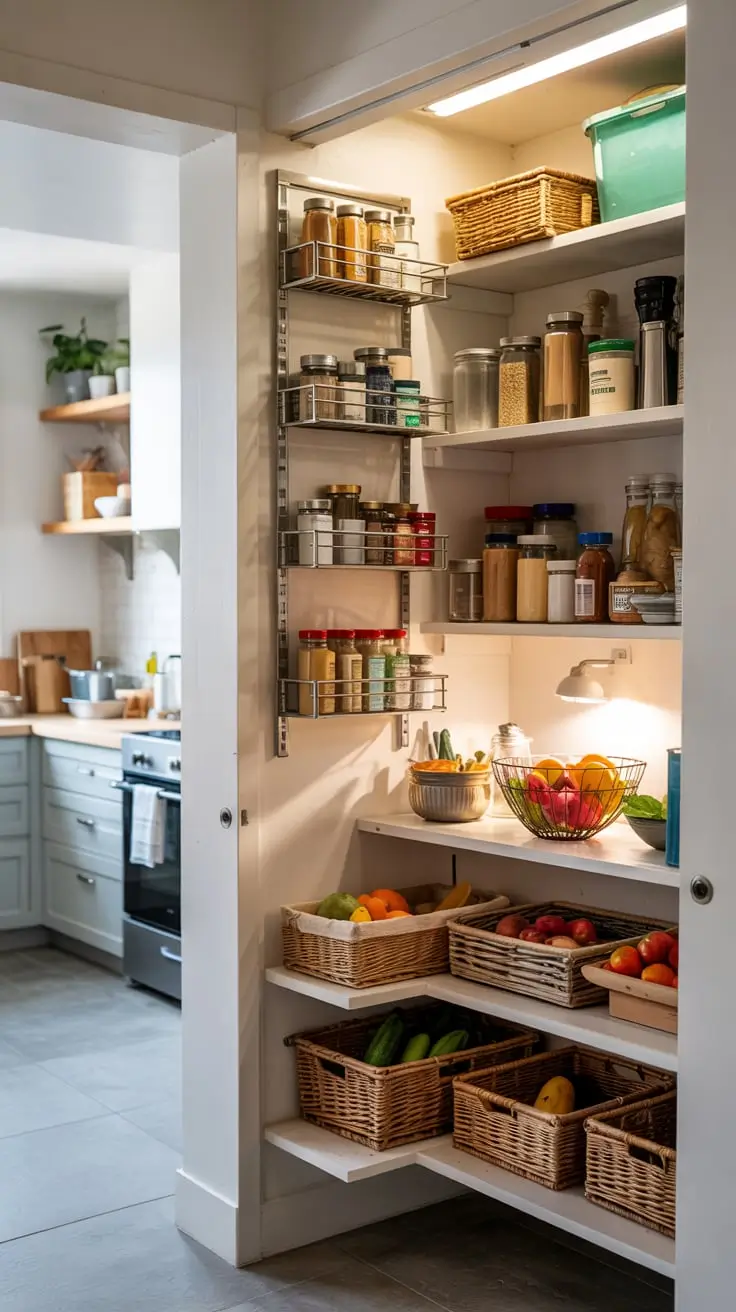
Over-the-door systems play a crucial role in tiny pantry design 2026, allowing homeowners to reclaim unused vertical real estate. When I design mini pantries, I often attach slim racks or baskets to the inside of pantry doors. These elements are lightweight yet durable, offering an ideal solution for spices, jars, condiments, and other small items that benefit from quick access.
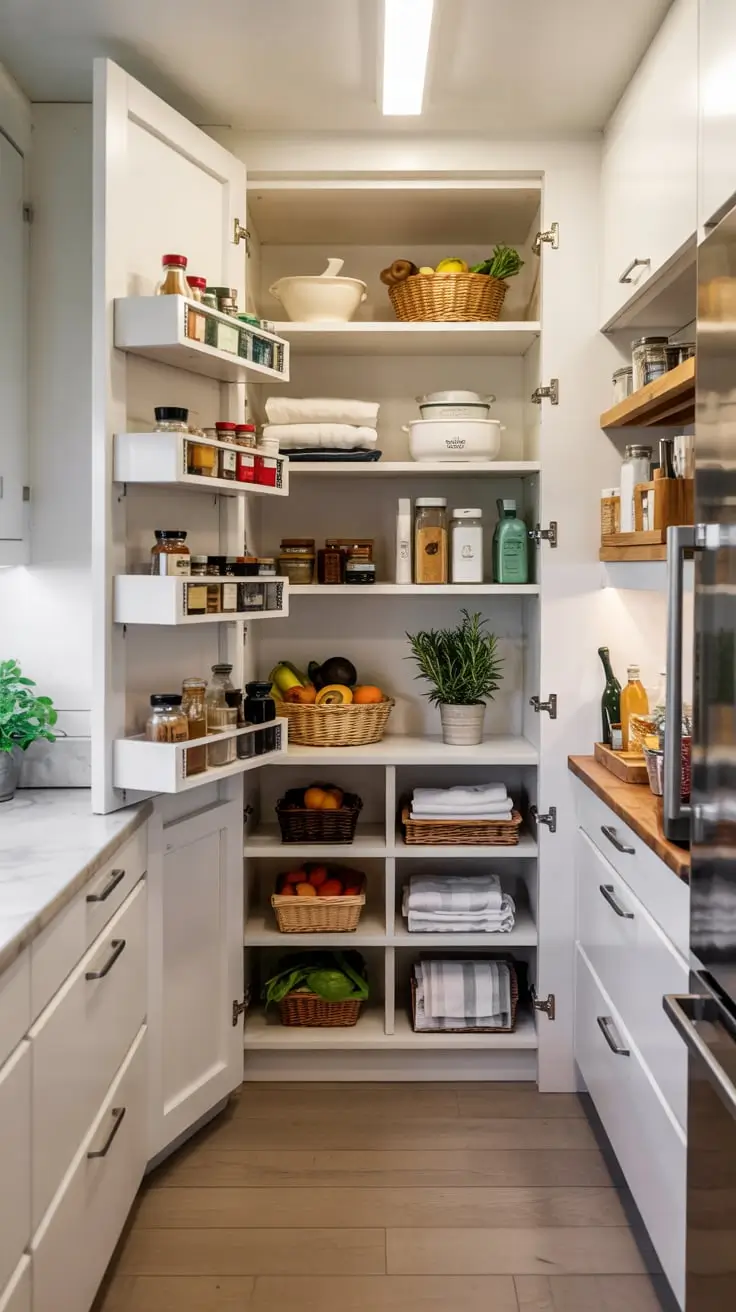
The storage components I select usually include adjustable metal racks, shallow baskets, and tiered compartments. These items help keep contents visible and prevent common clutter issues. Over-the-door solutions are especially helpful for renters or homeowners who prefer non-invasive installations, as they require minimal structural changes and can be easily replaced or upgraded.
Professionally, I find that adding door storage dramatically increases organization without altering the footprint. Many home improvement experts highlight this method as one of the most effective small-space hacks. I’ve personally implemented it in narrow kitchens where shelf space was scarce, and the results are consistently impressive.
For a more comprehensive overview, I could include guidance on choosing between open wire racks and closed containers depending on the intended use.
11. Adjustable Shelving For Flexible Pantry Use
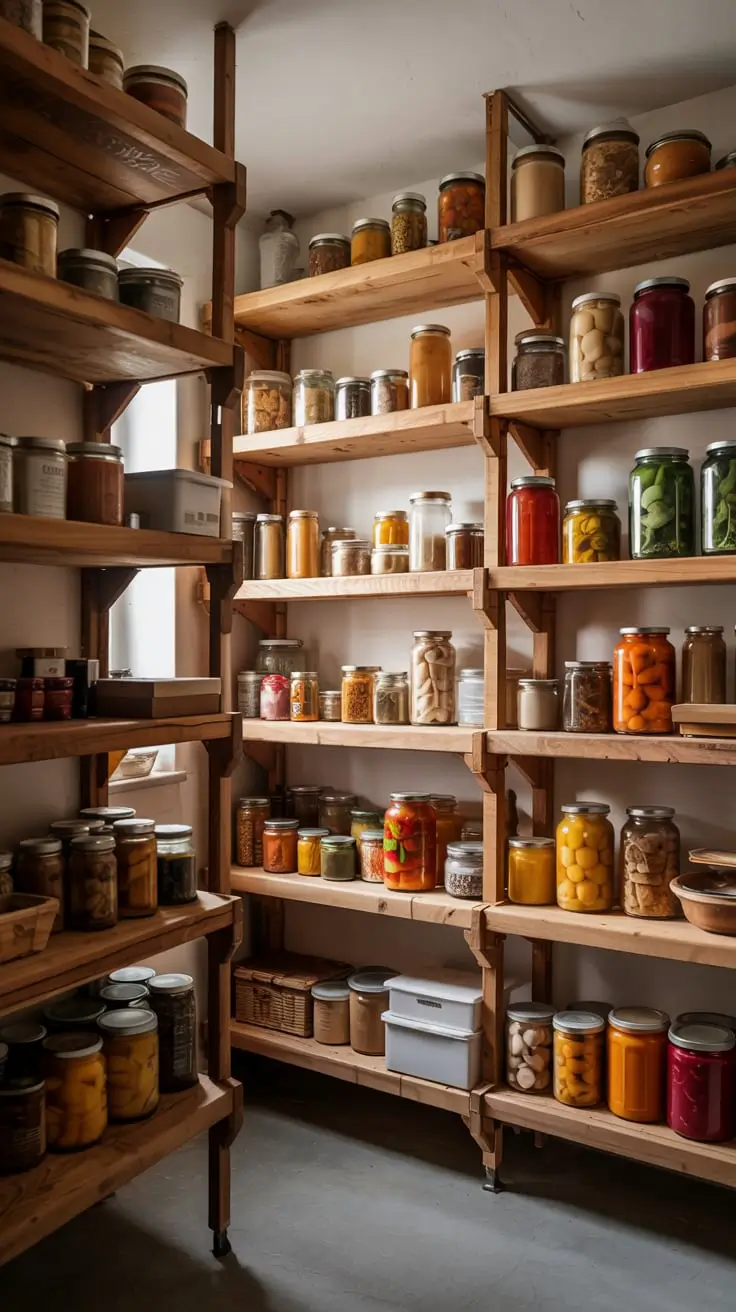
In tiny pantry design 2026, flexibility is key, and adjustable shelving systems allow homeowners to customize their space as needed. When I build a pantry around this concept, I ensure that shelves, dividers, and storage compartments can be moved, raised, or lowered to accommodate different item heights. This adaptability helps prevent wasted space and ensures long-term usability even as storage needs change.
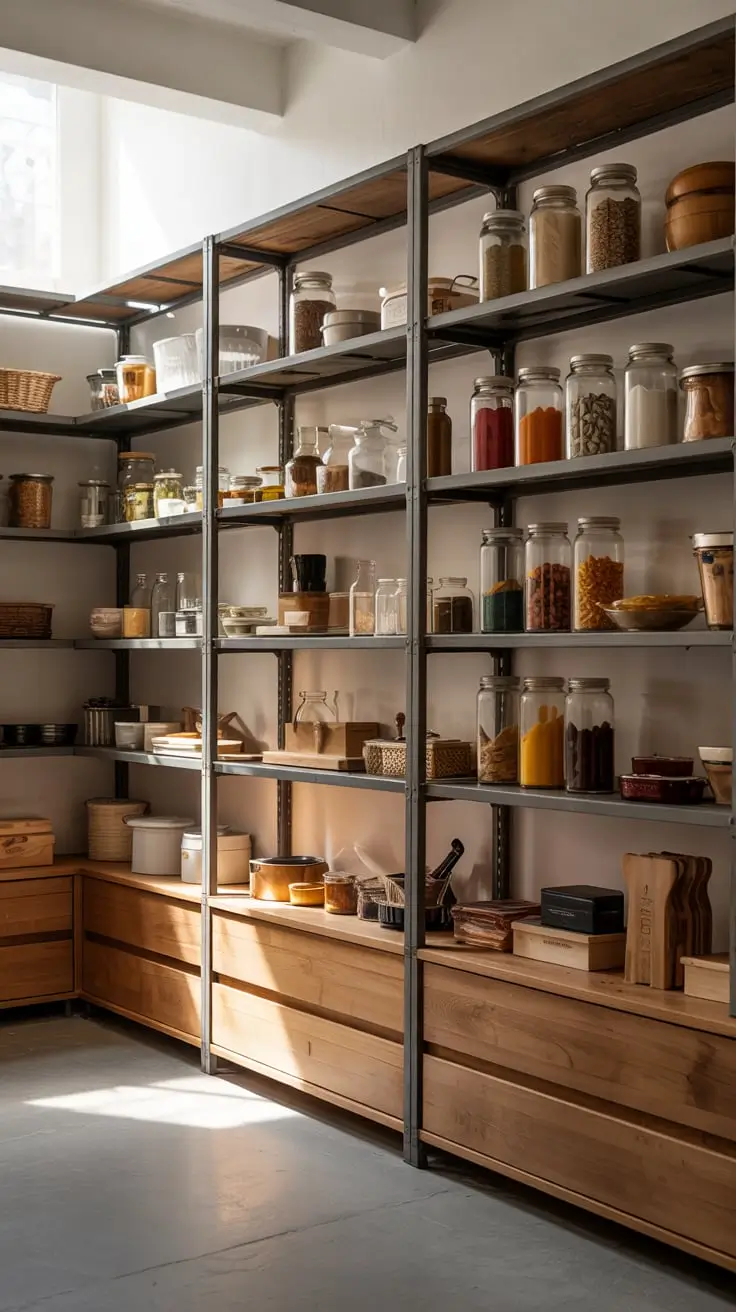
For materials, I typically choose heavy-duty metal brackets or wooden peg systems that deliver both strength and aesthetic appeal. Adjustable shelves work well with glass jars, bulk canisters, and small appliances, offering the freedom to rearrange sections for seasonal storage or new cooking habits. The result is a pantry that feels curated, functional, and easy to maintain.
From a professional standpoint, adjustable shelving is one of the most versatile investments homeowners can make. Publications like Real Simple often recommend these systems because they prevent rigid layouts and improve organization. I’ve seen families benefit tremendously from a pantry that adapts to their lifestyle rather than restricting it.
To strengthen this section further, I would add guidance on weight distribution and which bracket types are most secure for heavy pantry goods.
12. Modular Pantry Units For Custom Organization
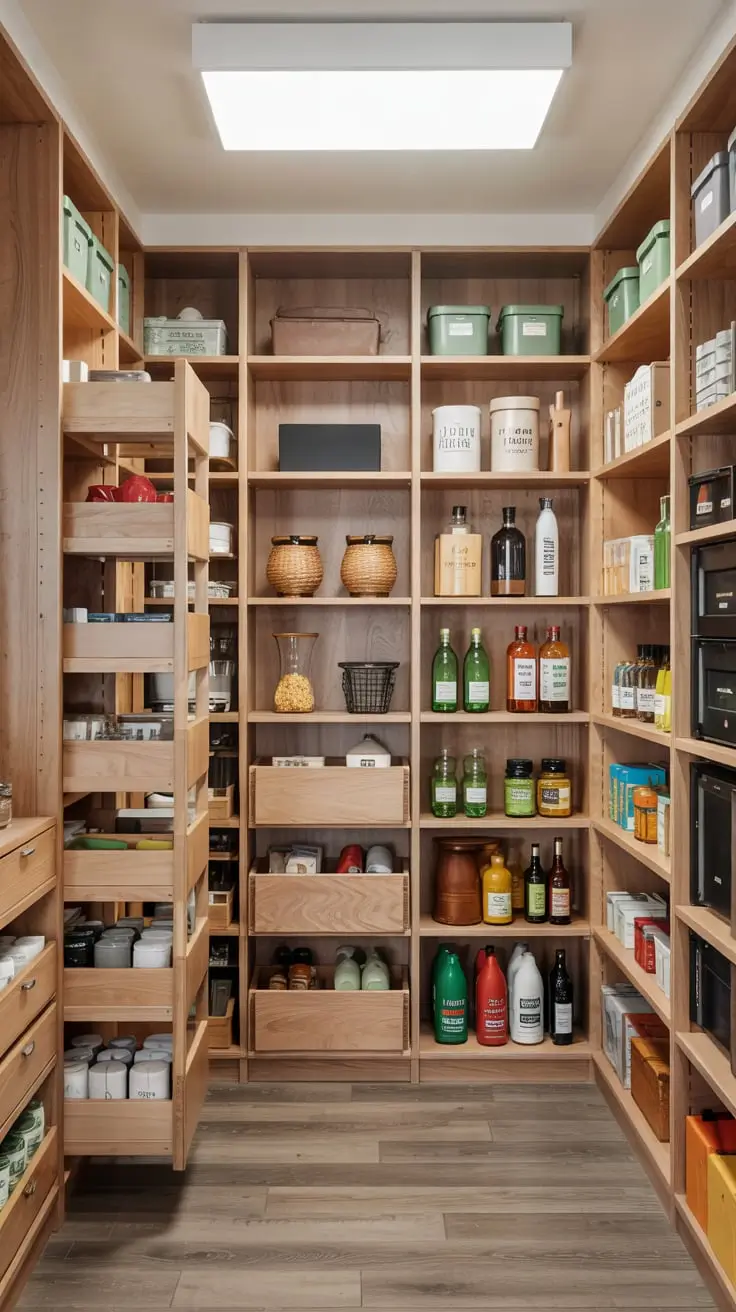
Modular systems have become a mainstay of tiny pantry design 2026, allowing complete customization within limited square footage. When I design modular pantries, I combine stackable components, pull-out baskets, cubbies, and adjustable shelves to form Personalized layouts. This building-block approach is ideal for small kitchens because homeowners can modify the system as needed without remodeling the entire pantry.
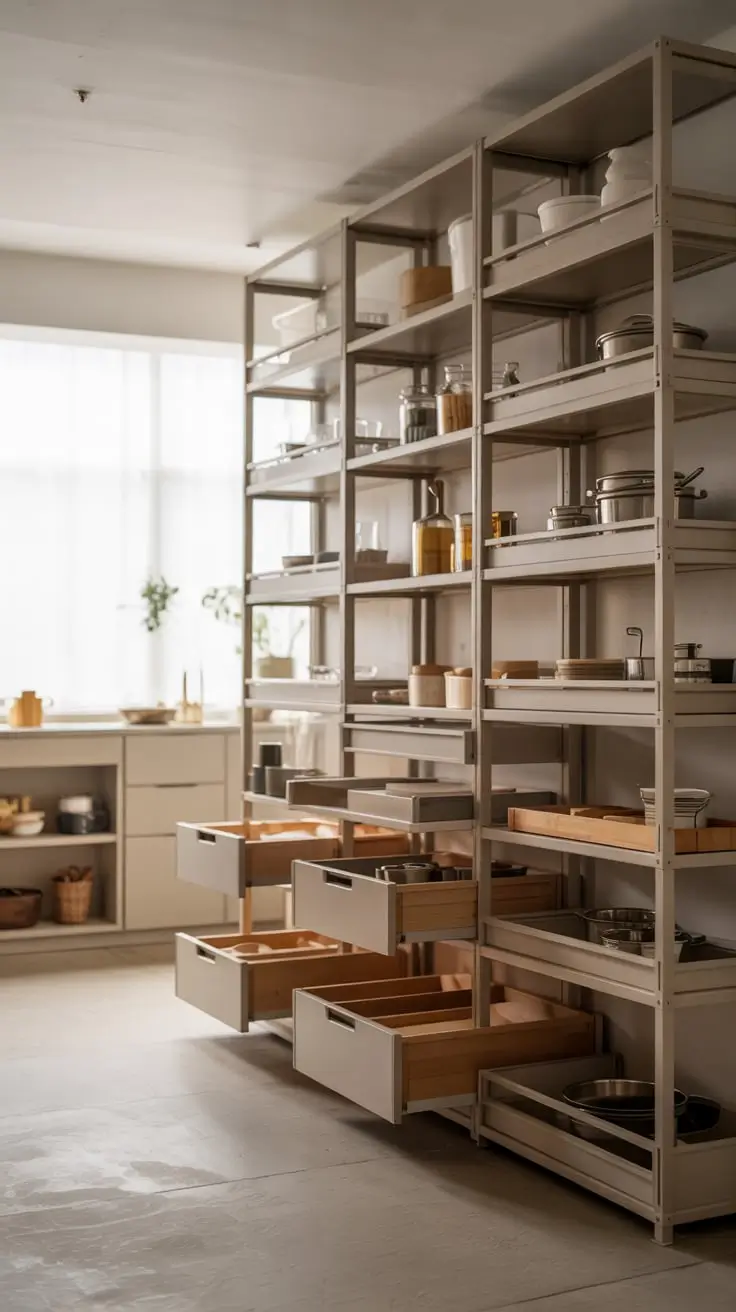
The furnishings I select often include modular wood or metal units, interchangeable drawers, and sectional dividers. These elements create distinct organizational zones for snacks, dry goods, appliances, and cleaning supplies. I prefer modular units because they integrate seamlessly with many design styles—from modern to rustic—while remaining incredibly functional.
Professionally, I find modular setups invaluable for clients who enjoy reorganizing or expanding their storage. Many U.S. design experts highlight modularity as one of the leading trends in compact home design. I’ve personally seen how this system offers long-term value, especially in evolving households.
An additional improvement would be offering guidance on selecting unit materials that best suit the kitchen climate, such as humidity-resistant finishes.
13. Stackable Storage Ideas For Tiny Pantry Zones
Stackable storage systems are essential in tiny pantry design 2026, enabling homeowners to maximize shelf height and maintain an orderly appearance. When I design these setups, I use stackable bins, trays, and airtight canisters that allow items to be stored vertically without compromising accessibility. This method is perfect for small kitchens where every inch of shelf space matters.
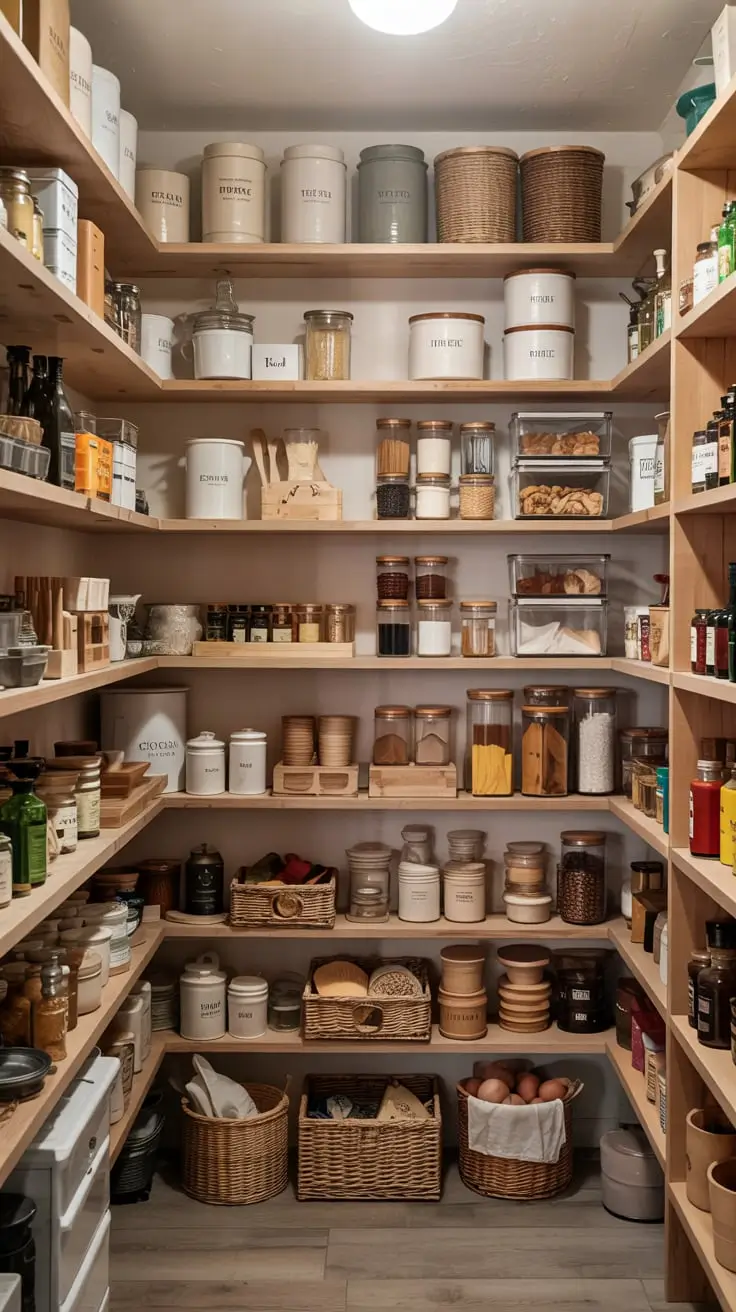
The items I typically include are uniform container sets, tiered racks, lidded bins, and stackable baskets. These furnishings promote visibility and organization by keeping categories grouped and accessible. I especially appreciate stackable canisters for dry goods because they maintain freshness while supporting clean aesthetics across the entire pantry.
In my experience, stackable storage significantly improves pantry efficiency. Many design articles mention that vertical stacking is one of the easiest ways to reduce clutter, and I agree completely. I’ve seen homeowners transform chaotic shelves simply by switching to coordinated stacking systems.
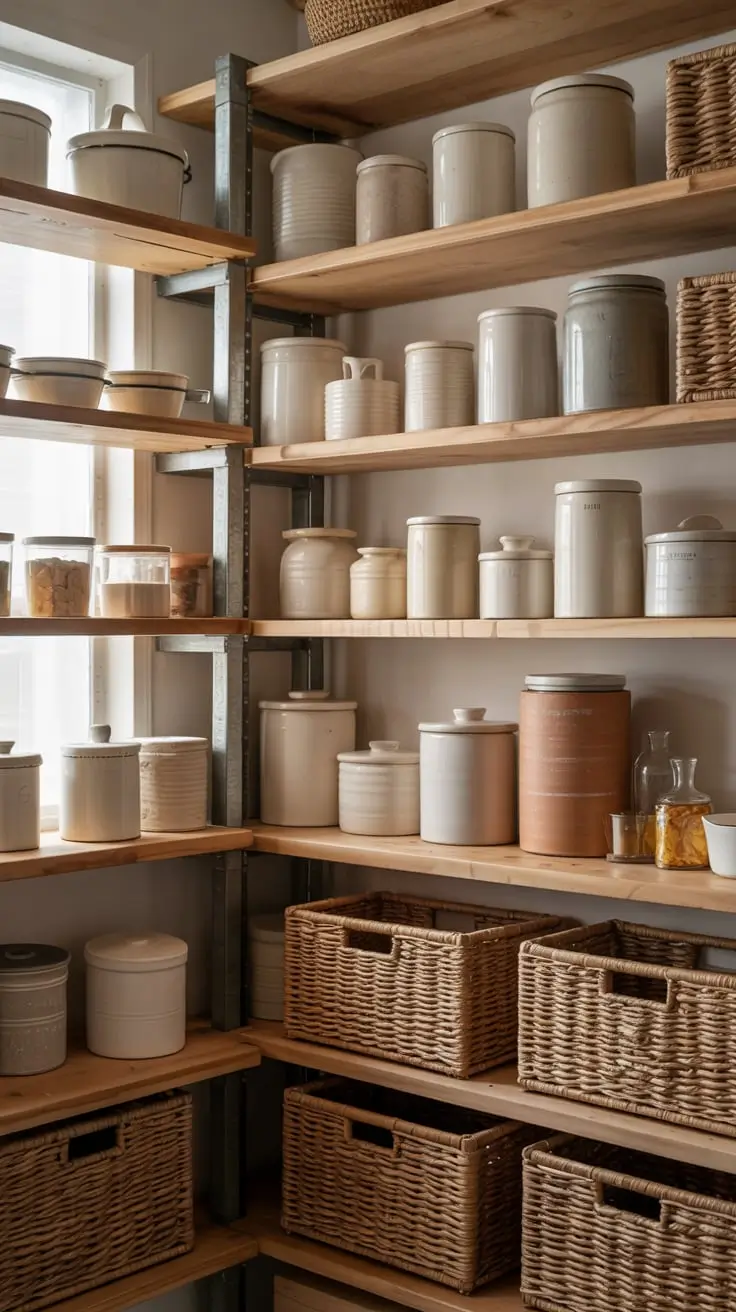
What I would add to this section is practical advice on selecting stackable items that interlock securely to avoid toppling, especially in households with busy kitchens.
14. Under Shelf Solutions For Extra Capacity
Under-shelf systems allow homeowners to squeeze additional storage into extremely tight areas, making them essential in tiny pantry design 2026. When I incorporate these systems, I usually add hanging baskets, clip-on drawers, and wire racks beneath existing shelves. This converts “dead space” into valuable real estate and ensures the pantry operates at full capacity.
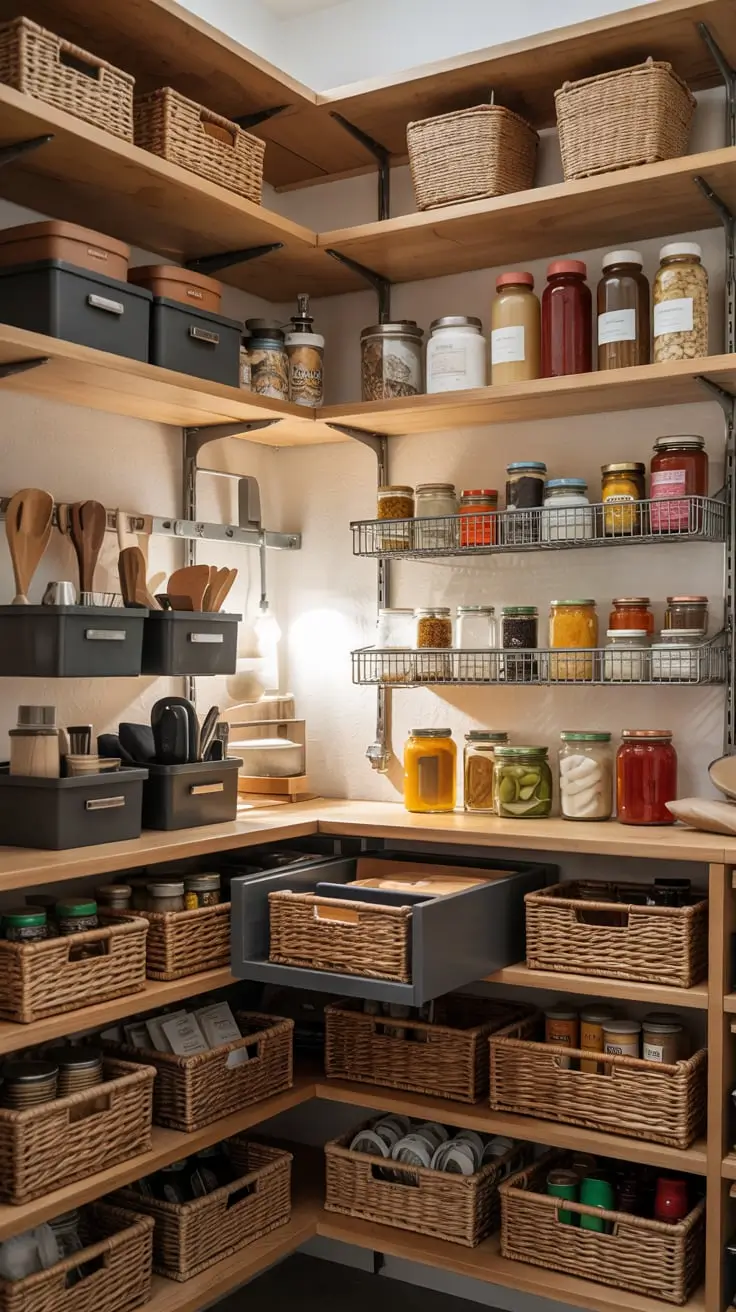
The furnishings I install include under-shelf baskets for bread and snacks, sliding drawers for small items, and hanging hooks for accessories. These additions integrate well with existing shelving, creating multi-level layers that don’t require reconstruction. I find that these solutions work particularly well in older kitchens where pantry structures may be fixed or difficult to modify.
From my professional perspective, under-shelf additions are one of the best ways to increase functionality instantly. Many experts recommend layering storage for maximum efficiency, and I’ve seen firsthand how this method reduces clutter while improving workflow.
To enrich this section, I would add guidance on selecting the correct basket depth to avoid blocking items stored on the lower shelves.
Designing a functional pantry inside a small kitchen has become a major priority for homeowners looking to keep their spaces efficient and visually appealing. What if the solutions for tiny pantry design 2026 could help create more storage, reduce clutter, and elevate modern kitchen aesthetics? In this article, I explore how new trends and innovative ideas can transform even the smallest pantry into a well-organized, high-performance area.
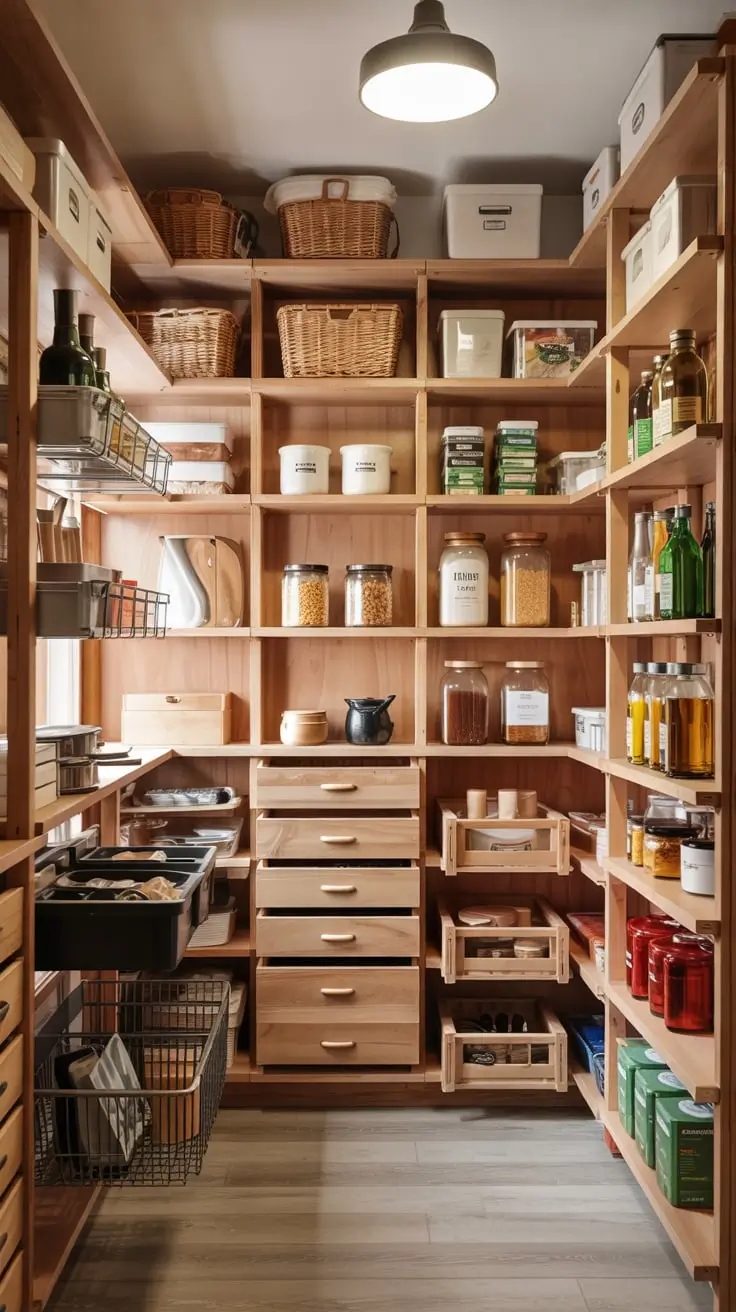
Throughout the article, I explain how materials, lighting, storage systems, color palettes, and new compact-living concepts influence pantry design. These insights are intended to guide homeowners through the process of upgrading or rethinking their tiny pantry. Whether you live in a city apartment or a small home, these ideas will help you build a space that feels modern, efficient, and stylish.
15. Smart Labeling Systems For Pantry Efficiency
In modern tiny pantry design 2026, smart labeling systems greatly improve everyday functionality. When I create design plans for small pantries, I always begin with a clear organizational structure supported by intuitive labeling. This ensures items are easy to locate and helps the space feel visually calm, even when storage is tight. With uniform labeling, the pantry instantly becomes more efficient and enjoyable to use.
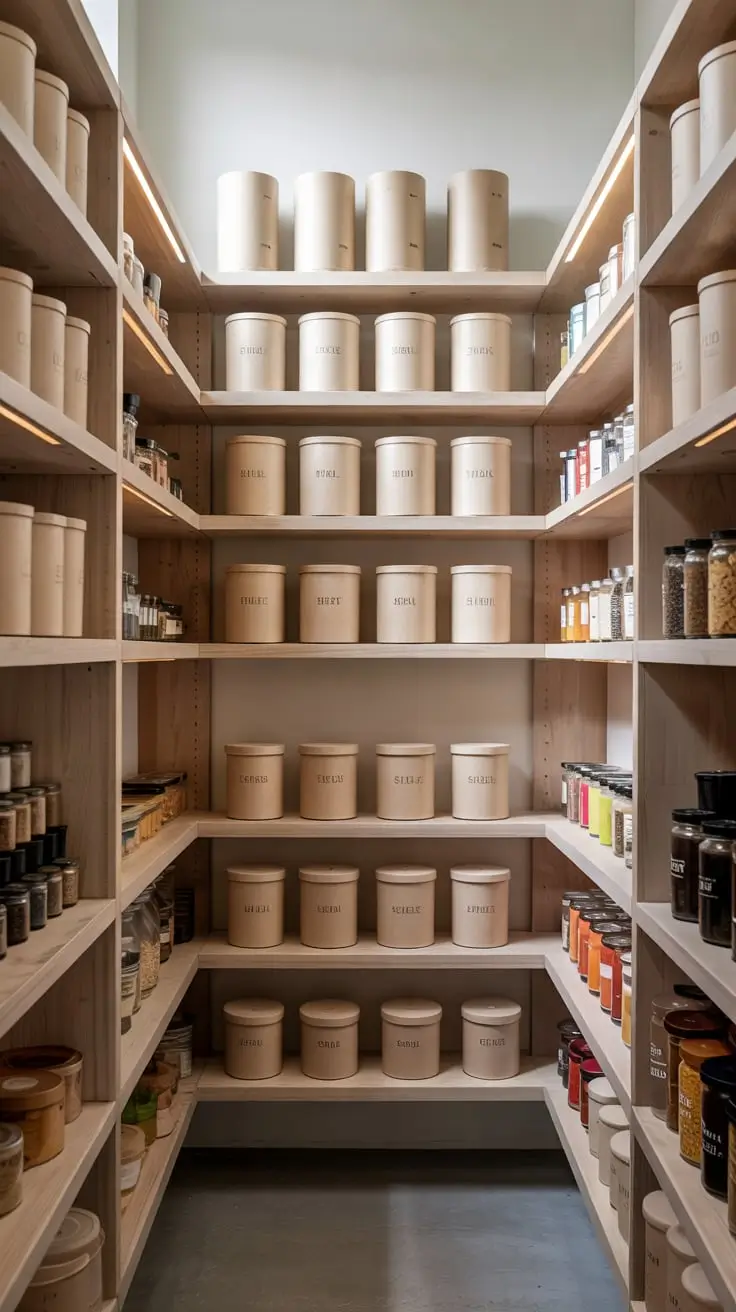
I often include printed reusable labels, transparent containers, and slim label holders that blend seamlessly with shelving. These tools help separate food categories, track inventory, and maintain order. Matching jars and bins enhance the overall aesthetic and prevent visual clutter. All of these details contribute to a pantry that looks polished and works smoothly.
From my professional experience, proper labeling reduces waste and encourages better habits. Experts featured in Real Simple emphasize that labeling is essential in small storage spaces because it saves time and prevents overbuying. I have seen clients dramatically improve their workflow after implementing consistent labeling systems.
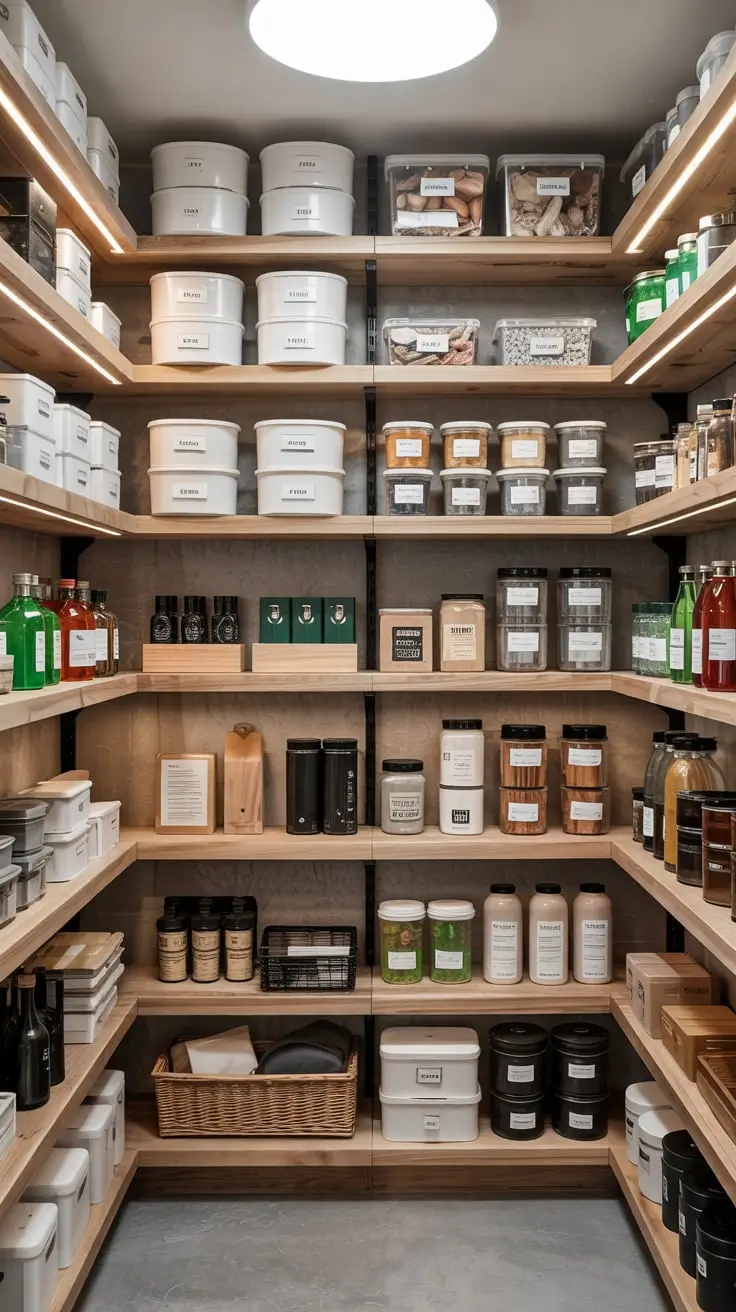
If I improved this section further, I would add digital-compatible labels that synchronize with apps for tracking pantry inventory. This upgrade supports both convenience and modern smart-home integration.
16. Lighting Concepts To Brighten Tiny Pantries
In any tiny pantry design 2026, lighting is one of the most transformative elements. When I work with small pantries, I use lighting to expand the visual boundaries of the space and eliminate dark corners. Thoughtful illumination creates a cleaner, more functional environment and makes everyday tasks easier.
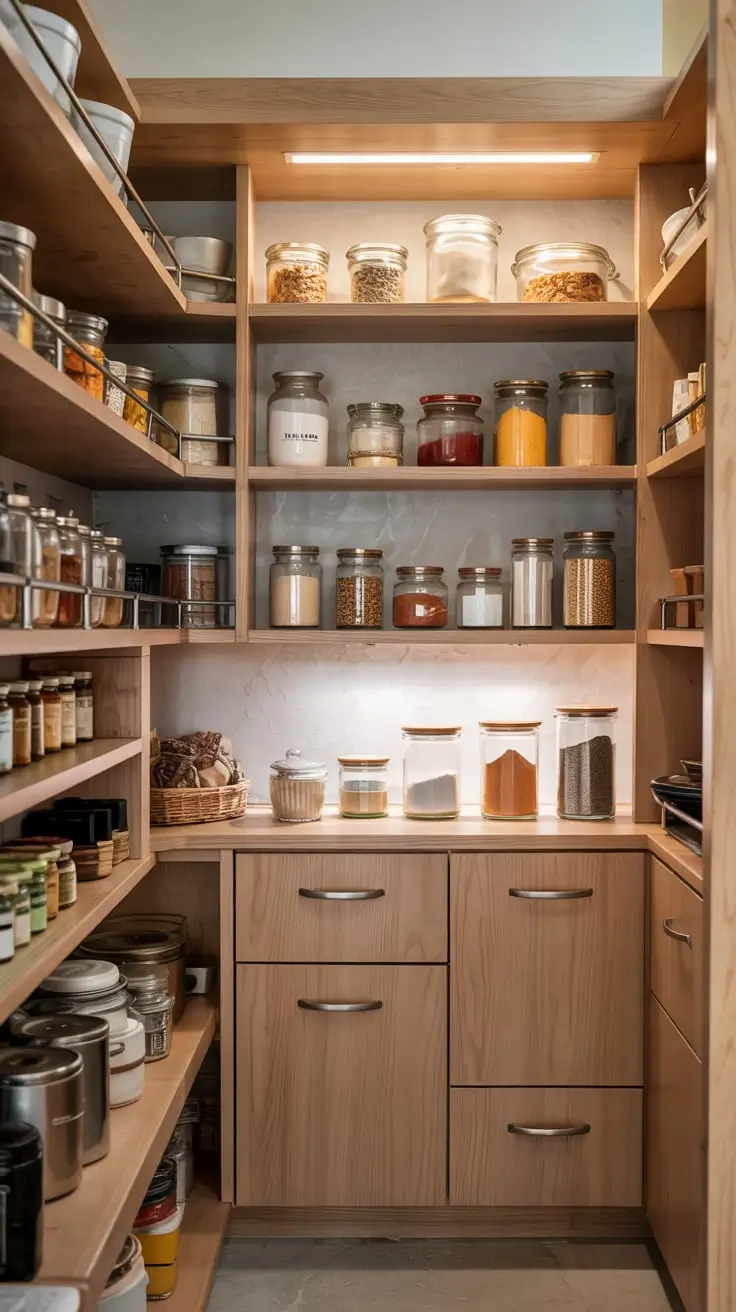
I frequently incorporate recessed micro-LEDs, motion-sensor lights, adjustable strip lighting, and warm under-shelf illumination. These fixtures highlight shelf contents, brighten storage zones, and add modern ambiance. Magnetic LED bars and slim light channels are especially useful in narrow pantries where traditional lighting fixtures don’t fit.
Through my experience, one vertical LED panel can make a small pantry appear significantly taller. Designers quoted in Architectural Digest also note that warm white light is ideal for food storage areas because it improves visibility without harsh shadows.
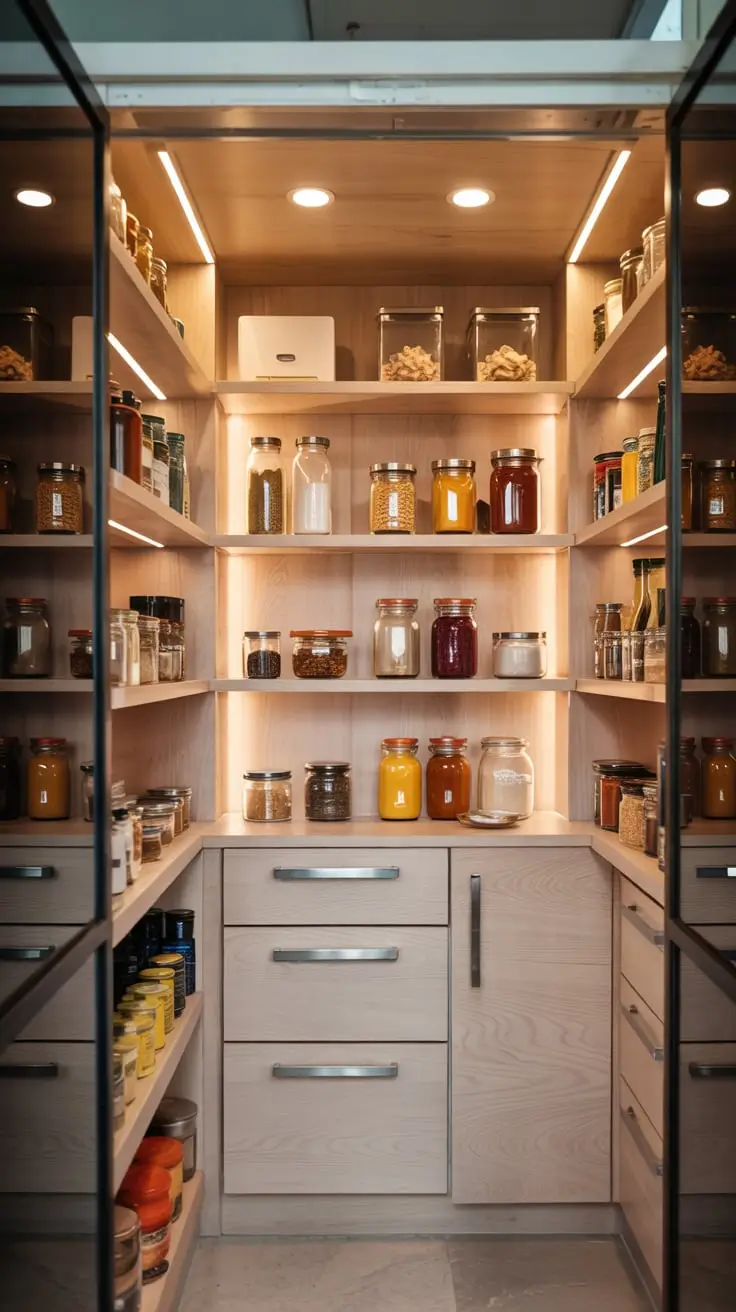
To enhance this concept further, I would include tunable lighting that allows users to adjust color temperature depending on their tasks. This adds versatility and improves the overall pantry experience.
17. Small Appliance Storage In Compact Pantries
Managing small appliances is a common challenge in tiny pantry design 2026, which is why I prioritize functional appliance zones even in limited spaces. A well-planned layout allows items like blenders, coffee makers, and mini mixers to remain accessible without occupying precious kitchen counters.
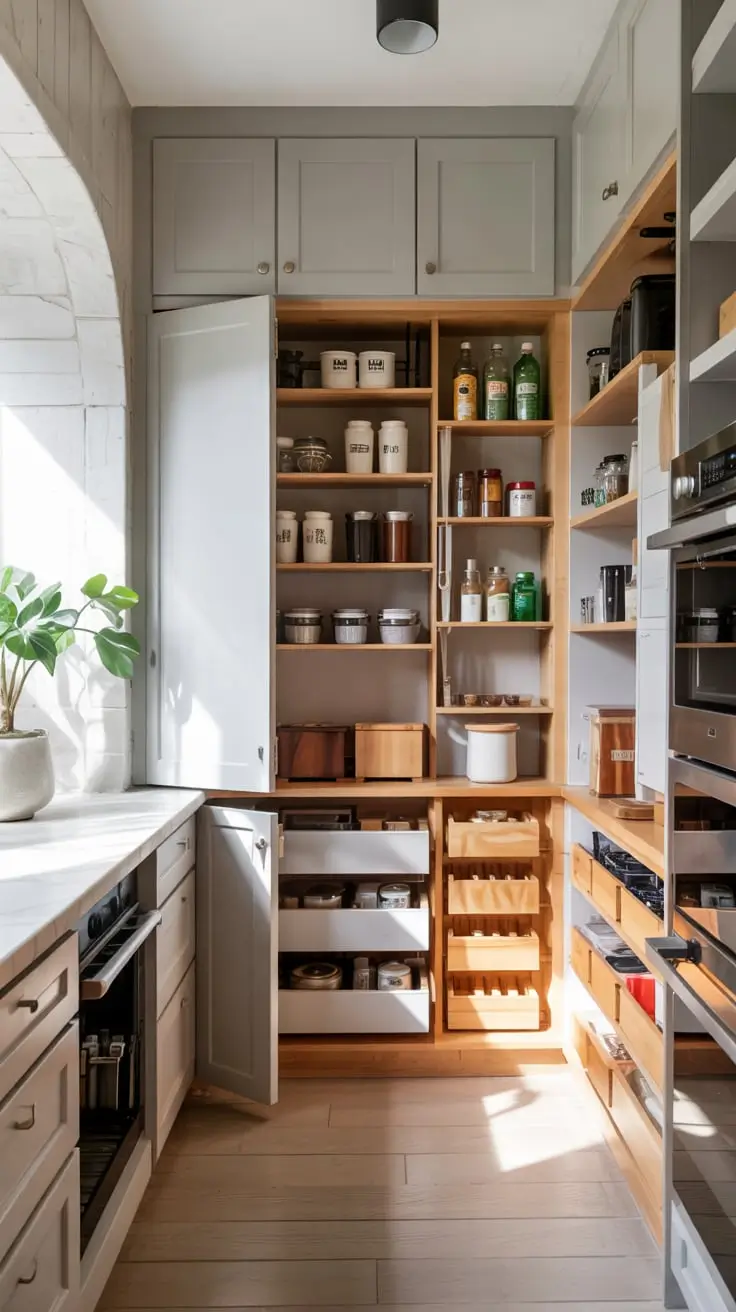
I typically integrate pull-out appliance drawers, lift-up cabinet doors, and heat-resistant surfaces within the pantry. Vertical cubbies provide ideal storage for slim appliances, while deeper shelves house bulkier items like air fryers or slow cookers. Cord-management cutouts keep everything tidy and safe.
In my experience, clients appreciate these features because they streamline daily routines. Nate Berkus and other well-known designers frequently highlight that appliance organization is crucial in modern kitchens, especially in small homes.
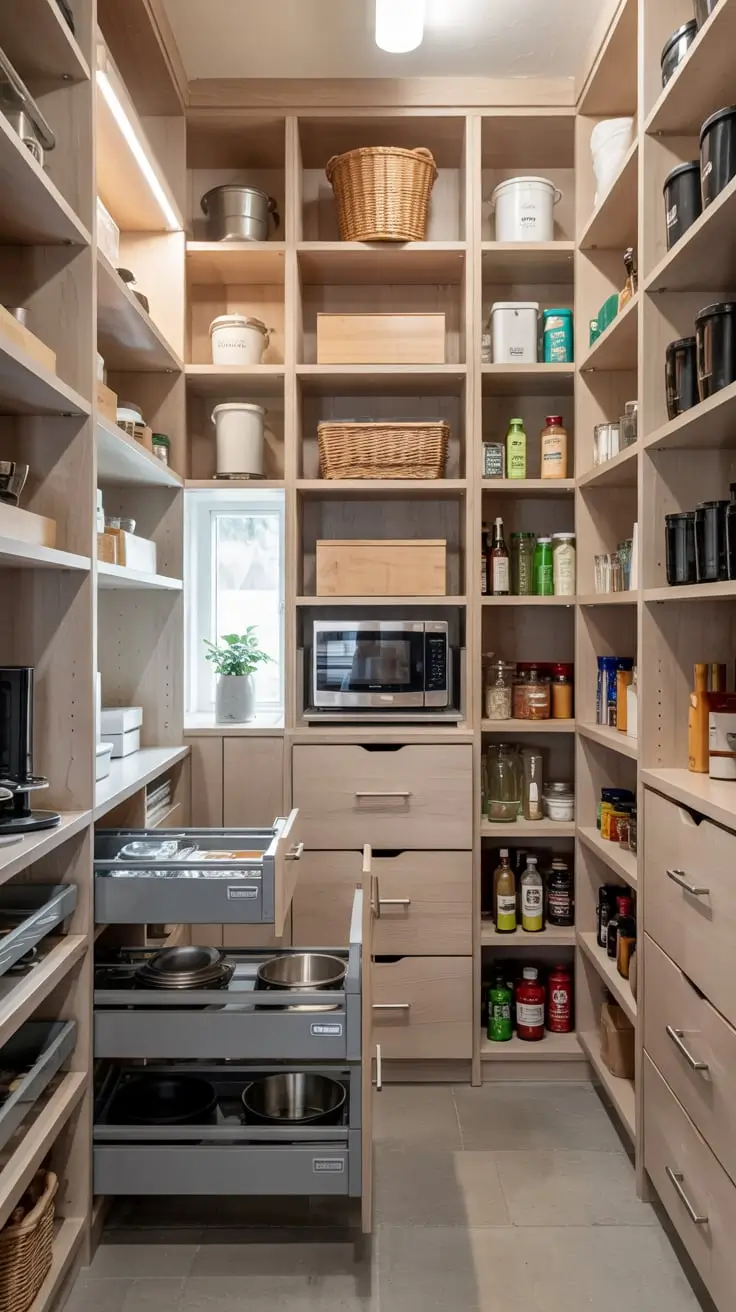
If enhancing this design further, I would add built-in ventilation systems for appliance garages to ensure proper airflow and maintain safety in tight spaces.
18. Hidden Drawers For Maximizing Pantry Space
Hidden drawers have become an essential solution in tiny pantry design 2026 because they offer discreet organization while maintaining a clean aesthetic. When designing these features, I focus on smooth mechanics and durable materials that support long-term use. Hidden storage allows small pantries to function more like full-size ones.
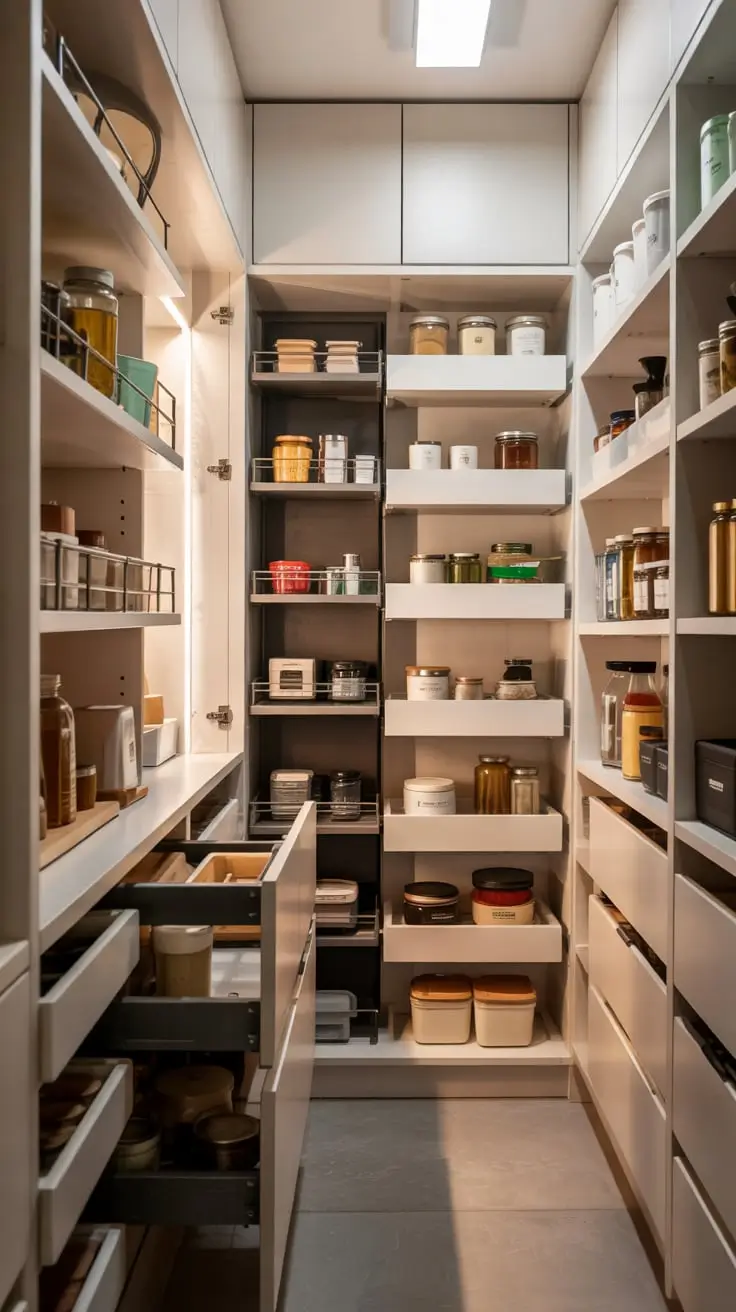
I often implement soft-close drawers, minimalist fronts, integrated handles, and interior dividers. These drawers are ideal for storing packets, snacks, baking tools, and pantry essentials that otherwise create clutter. The concealed design enhances the pantry’s overall appearance and keeps the space feeling streamlined.
Through my professional work, I have seen clients experience dramatic improvements in organization when hidden drawers are included. Publications such as House Beautiful often highlight concealed storage as one of the best methods for maximizing space in modern homes.
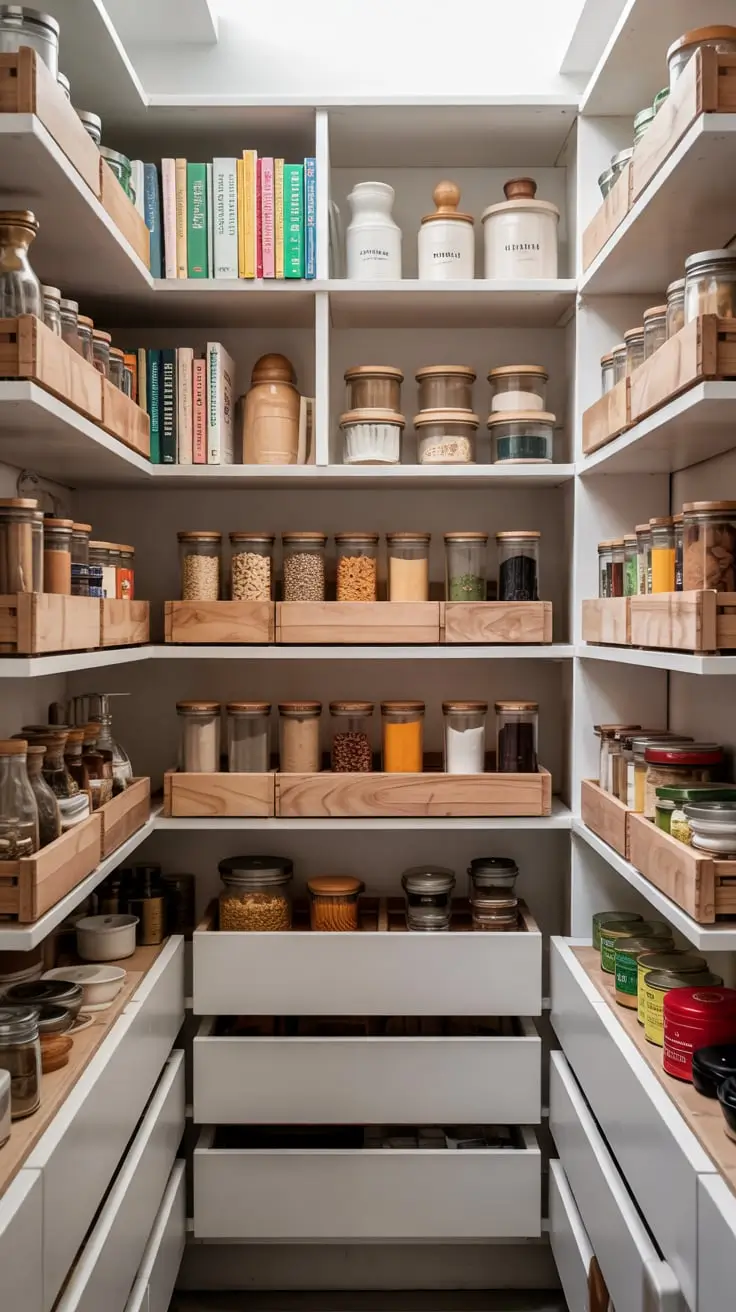
As an added improvement, I would include subtle interior labels that help users remember where categories are stored without interrupting the minimal design.
19. Floating Shelves For Open Tiny Pantry Designs
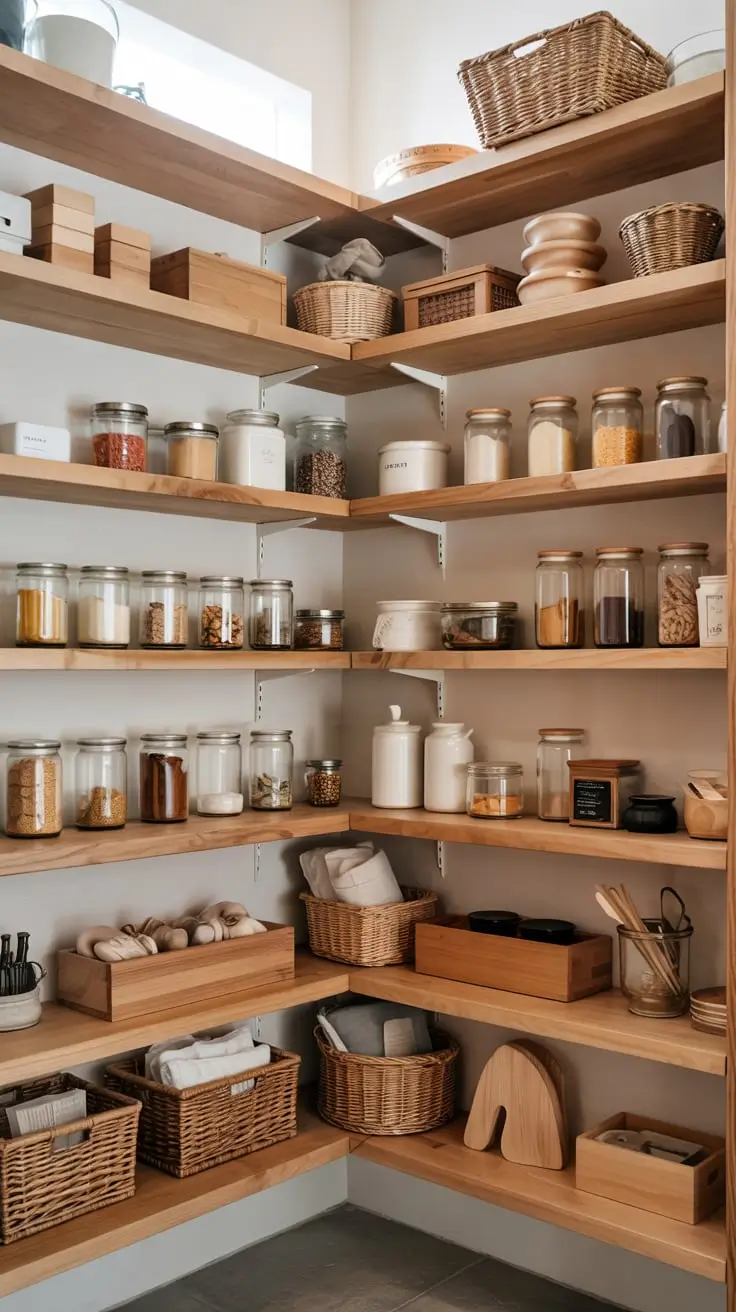
Floating shelves are a signature feature of tiny pantry design 2026, especially for homeowners who want open, breathable storage. When I install floating shelves, I ensure they complement the architecture and add a sense of lightness to the room. This method visually enlarges the pantry, making it feel less confined.
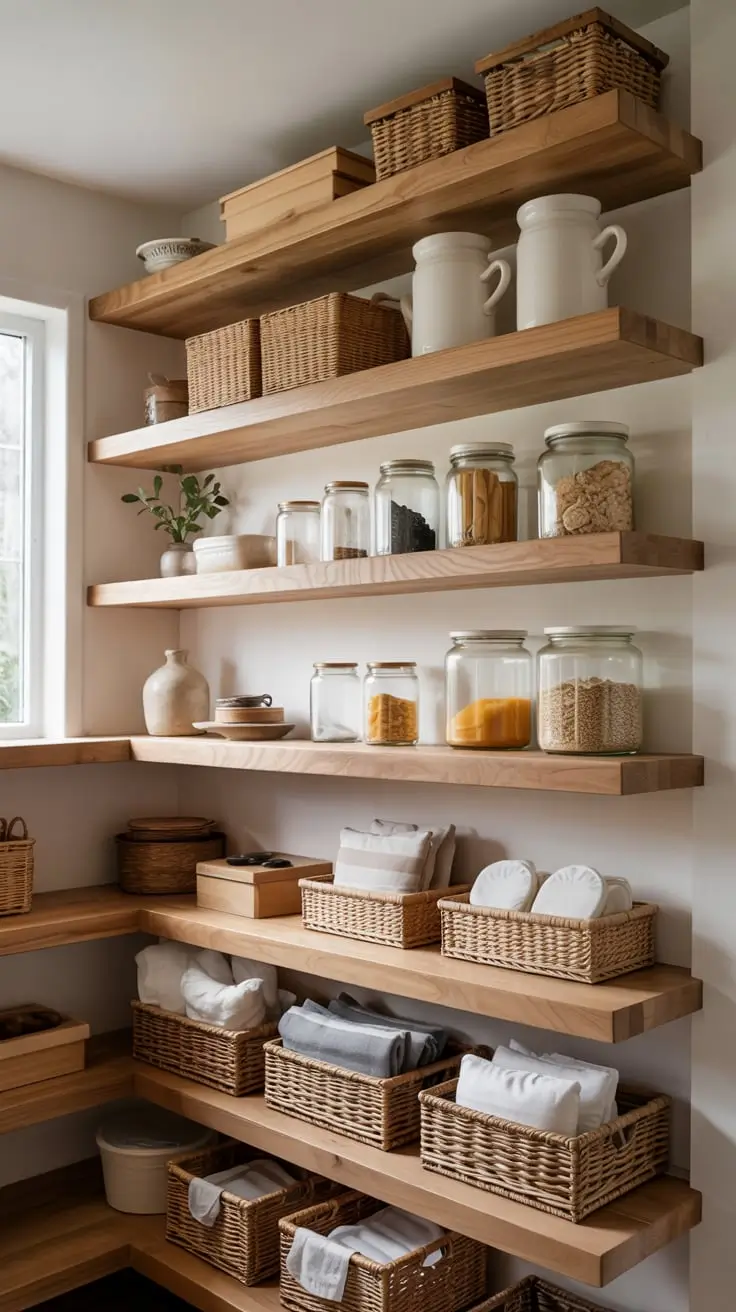
I usually specify natural wood, matte metal, or composite shelves with hidden brackets for a clean look. To maximize storage, I extend shelves to the ceiling and pair them with uniform jars, canisters, and baskets. This combination keeps essential items accessible and organized.
Based on my experience, floating shelves work best when storage items follow a cohesive color or material theme. Designers featured in Dwell recommend a tight color palette to prevent open shelves from appearing cluttered. A curated approach maintains both practicality and aesthetic appeal.
For added flexibility, I would include adjustable mounting systems that allow shelf heights to change as storage needs evolve.
20. Eco Friendly Materials For 2026 Pantry Trends
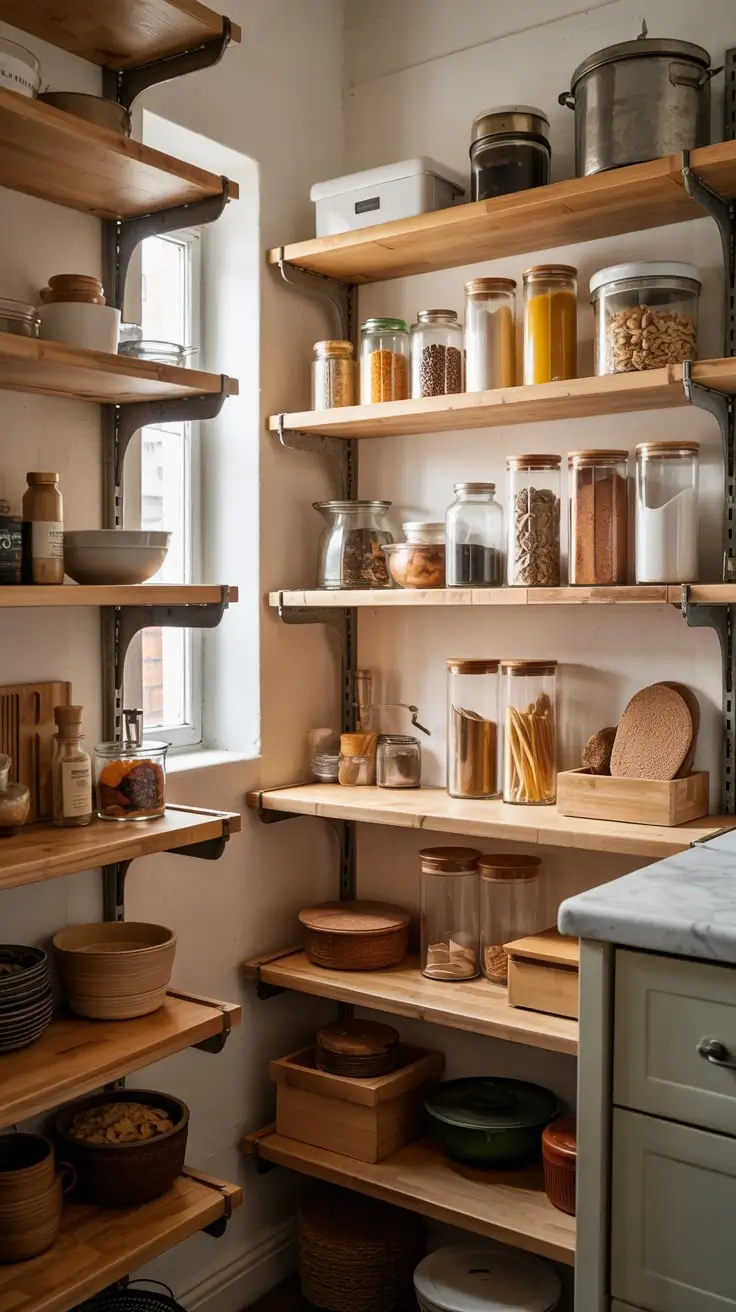
Sustainability shapes many aspects of tiny pantry design 2026, and I incorporate eco-friendly materials that enhance both style and environmental responsibility. Natural textures and non-toxic finishes help create healthier food storage areas and add warmth to small spaces.
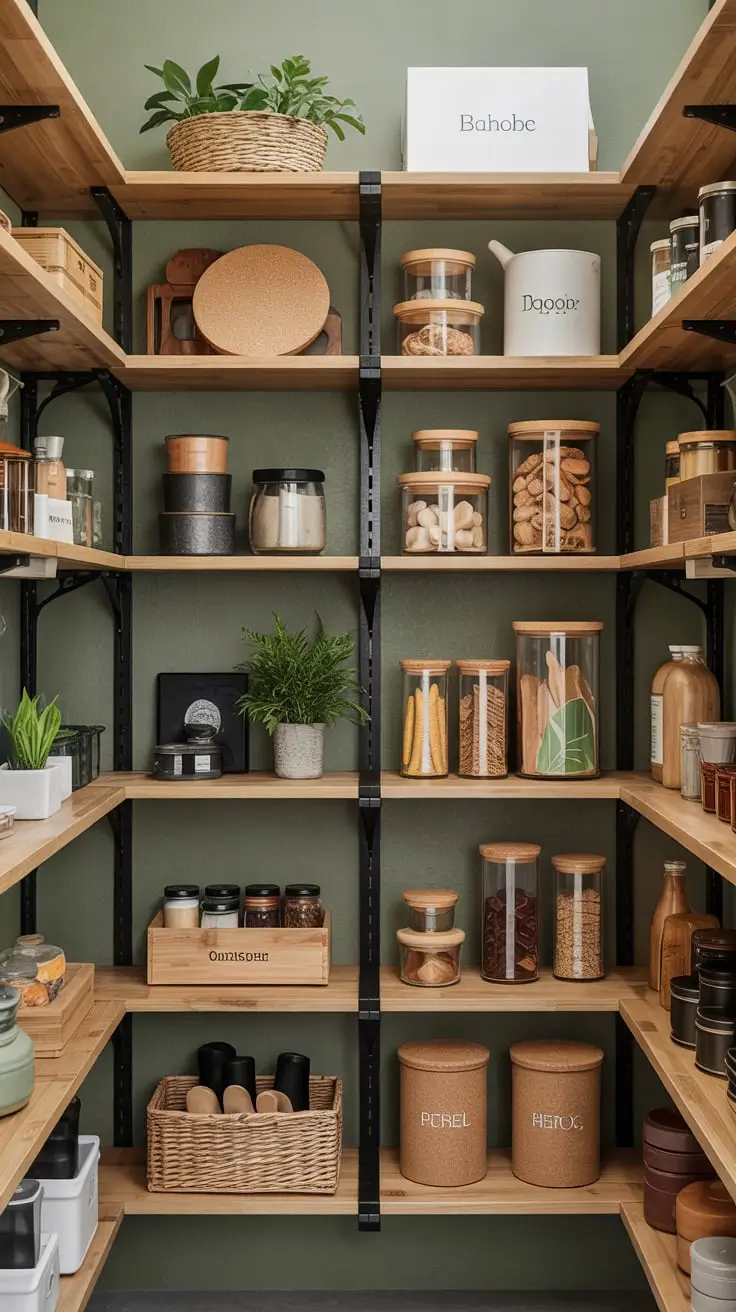
I prefer using bamboo shelves, recycled metal brackets, low-VOC paints, cork liners, and glass storage containers. These materials offer durability and help homeowners reduce their environmental footprint. Soft earthy tones complement these eco-friendly surfaces and create a calm, modern atmosphere.
Designers in Elle Decor often emphasize that sustainable materials increase long-term home value. From my perspective, clients also appreciate the peace of mind that comes with eco-conscious design choices.
To expand on this concept, I would consider adding recycled textile insulation inside pantry walls, which naturally regulates temperature and supports food preservation.
21. Color Palettes For Tiny Modern Pantry Spaces
Color selection plays a crucial role in tiny pantry design 2026, and I use carefully chosen palettes to expand the visual space. Light tones such as warm whites, stone grays, soft neutrals, and muted greens contribute to an airy, modern feel that works especially well in compact pantries.
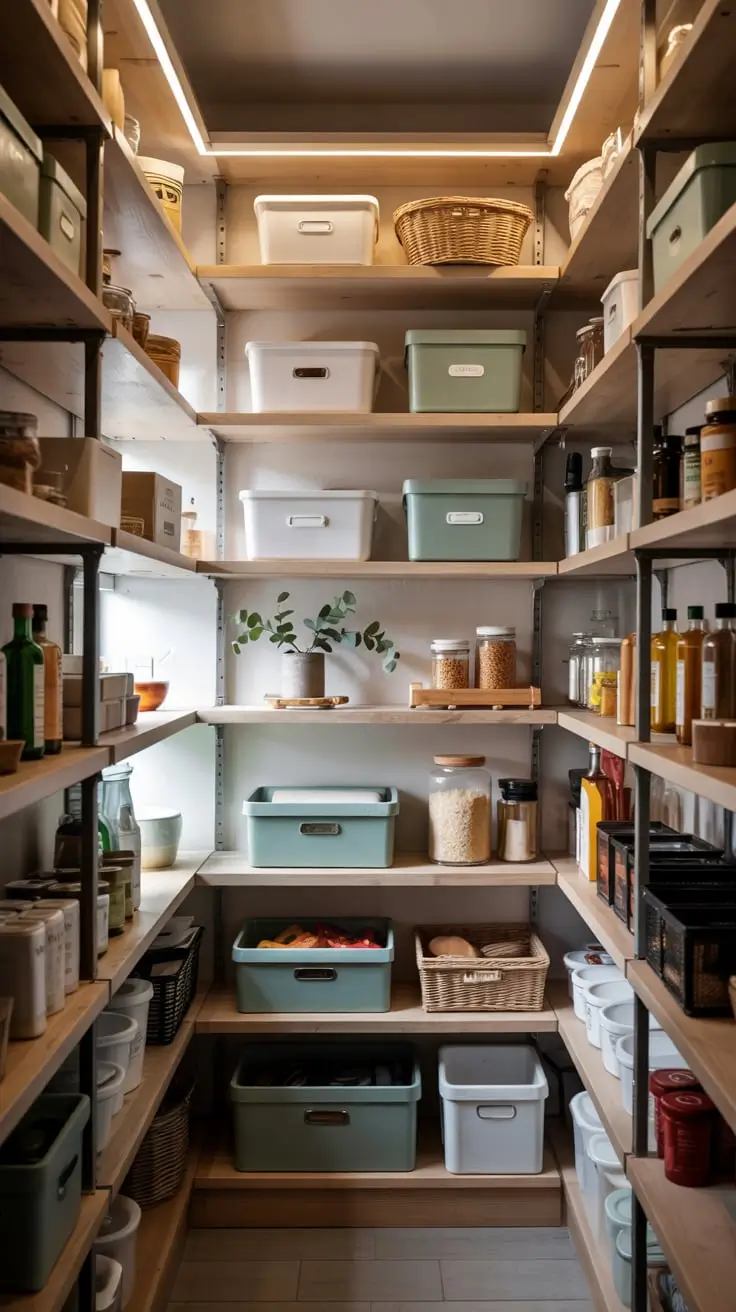
I combine matte finishes, black accents, muted metallics, and tonal storage containers to create a cohesive and clean environment. Matching bins and jars reduce visual clutter and elevate the pantry’s overall appearance. Consistency in color helps guide the eye smoothly across shelves.
Color experts at Benjamin Moore highlight the importance of soft, harmonious hues in small rooms. In my experience, establishing a consistent palette early ensures the pantry remains visually balanced even as storage needs change.
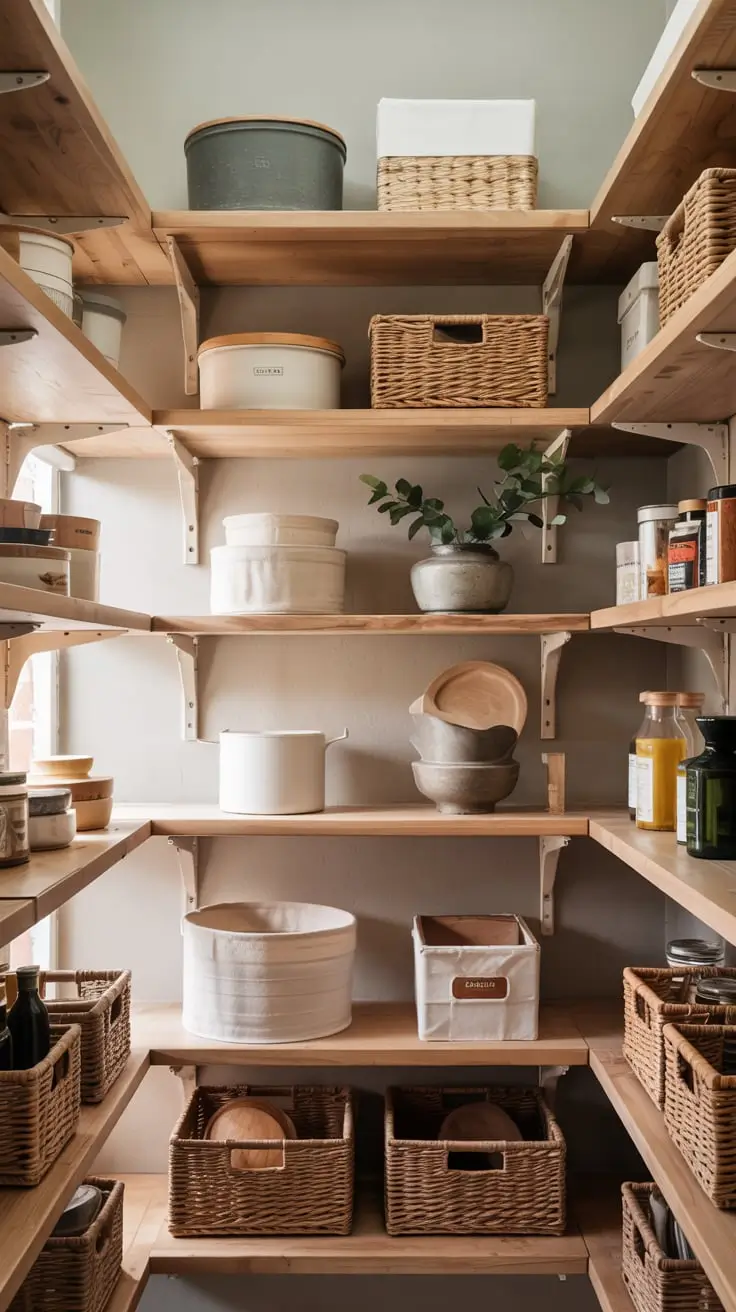
If expanding this idea, I would add optional high-contrast zones for homeowners who prefer bold styling without overwhelming the small space.
22. Stylish Baskets And Bins For Micro Storage
In modern tiny pantry design 2026, baskets and bins serve as both functional and decorative tools that enhance organization in limited spaces. When I design compact pantries, I often rely on coordinated storage baskets to reduce visual clutter and provide a clean, unified look. They help group similar items together and allow even the smallest pantry to feel curated and orderly. The right combination of texture and structure turns basic storage into a visually appealing feature.
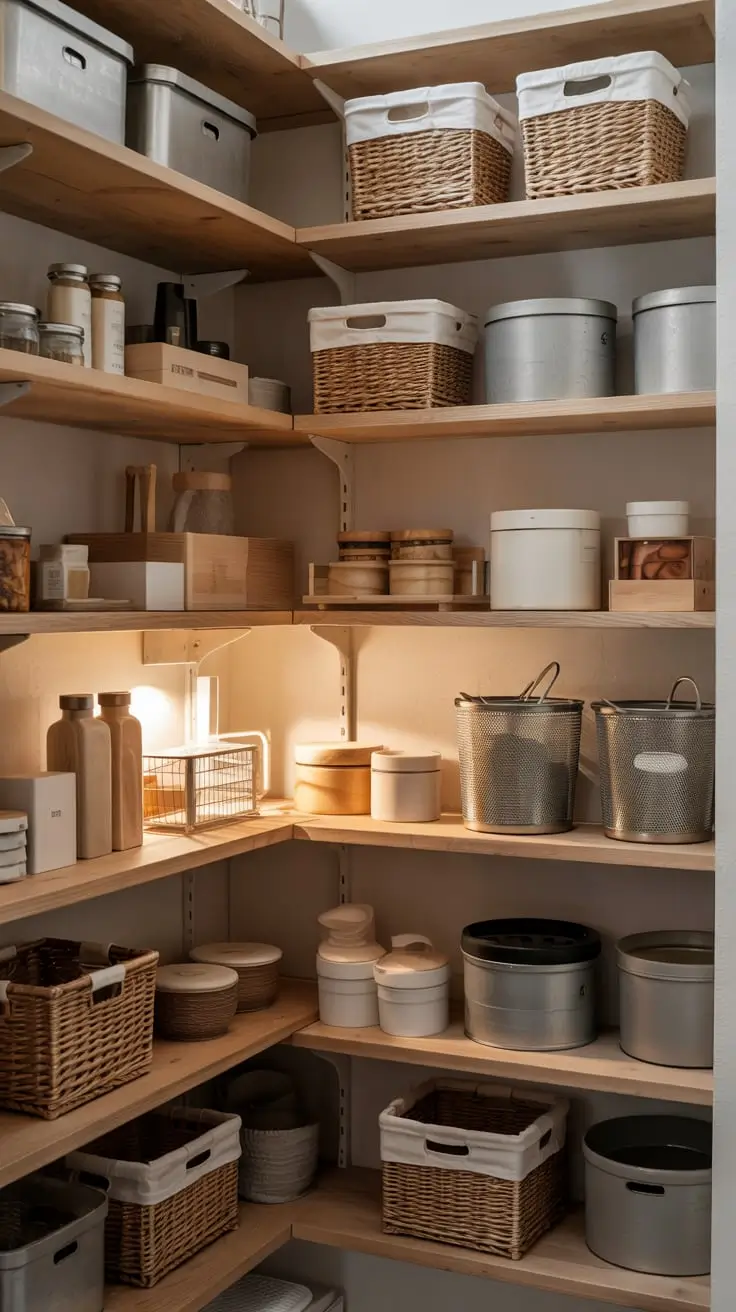
I typically use woven baskets, matte plastic bins, and metal mesh containers, depending on the pantry style. Woven options add warmth, while metal bins complement contemporary spaces. Choosing stackable or modular versions maximizes vertical space and keeps shelves looking tidy. Clear-front bins also help maintain visibility without disrupting the aesthetic.
In my experience, clients appreciate how these simple elements instantly elevate the feel of their pantry. Industry professionals featured in Better Homes & Gardens often highlight baskets as one of the easiest ways to soften a minimal pantry design while remaining practical. They are flexible, affordable, and endlessly adaptable.
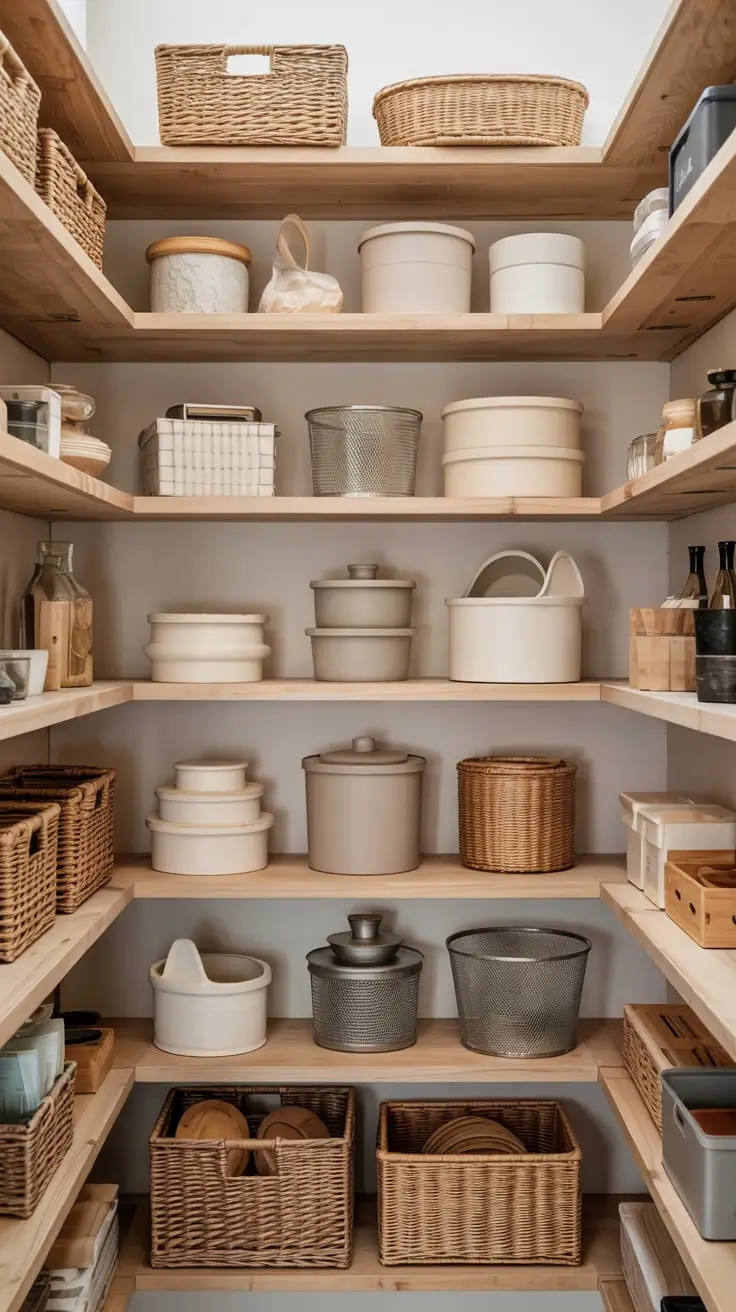
To strengthen this section further, I would recommend incorporating labeled bin dividers or tiered inserts, which improve accessibility and maintain long-term organization without increasing visual clutter.
23. Minimal Waste Stations Inside Tiny Pantries
One important shift in tiny pantry design 2026 is the integration of minimal waste stations that encourage eco-friendly habits even in very small spaces. When I create these stations, I aim to design discreet, compact sorting areas that do not disrupt the pantry’s visual balance. By including separate compartments for recycling, compost, and reusable materials, the pantry becomes more efficient and environmentally responsible.
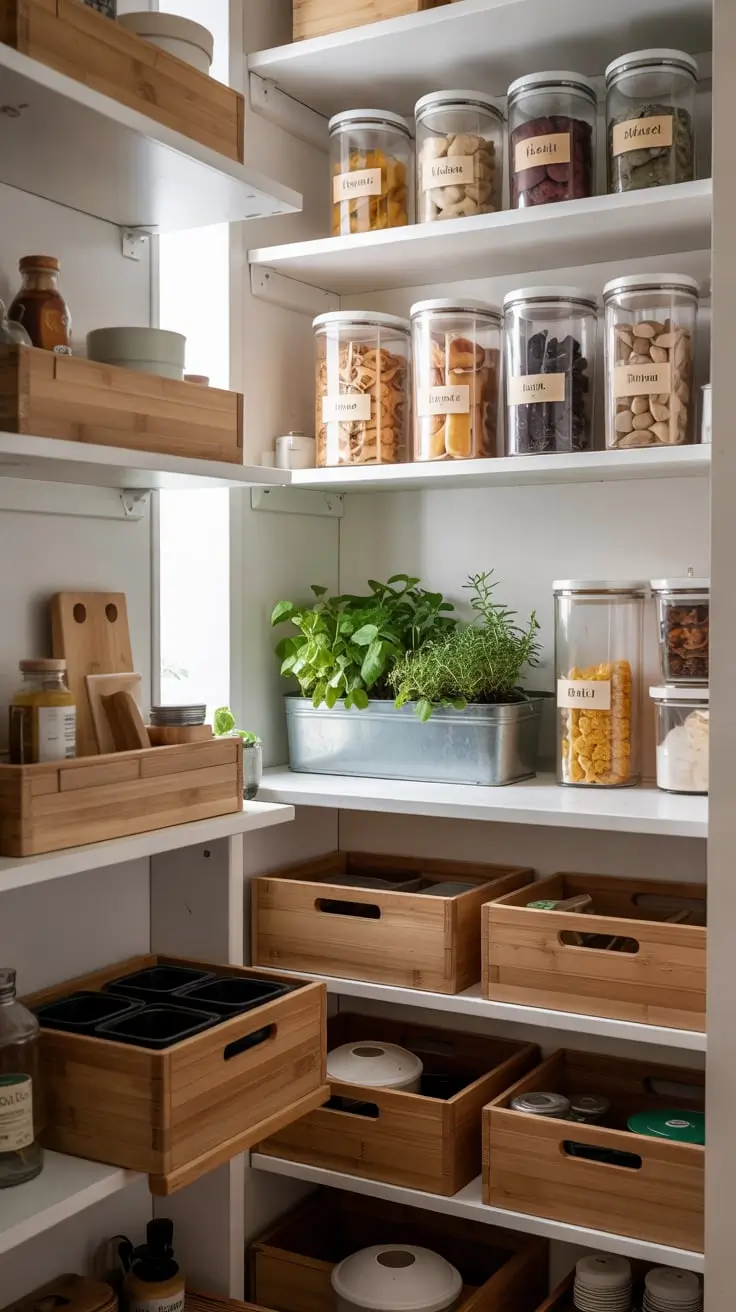
I usually add slim pull-out bins, stackable compartments, or narrow cabinets fitted with removable liners. These help homeowners manage waste without sacrificing valuable shelf space. Using odor-resistant materials and well-sealed containers ensures the pantry remains clean and comfortable. Color-coded or symbol-based identifiers support easy sorting.
Clients often express relief when they realize they no longer need to clutter their kitchen with multiple waste containers. Sustainability experts referenced in Green Living Magazine recommend incorporating waste solutions near food preparation or storage zones because it naturally encourages better habits.
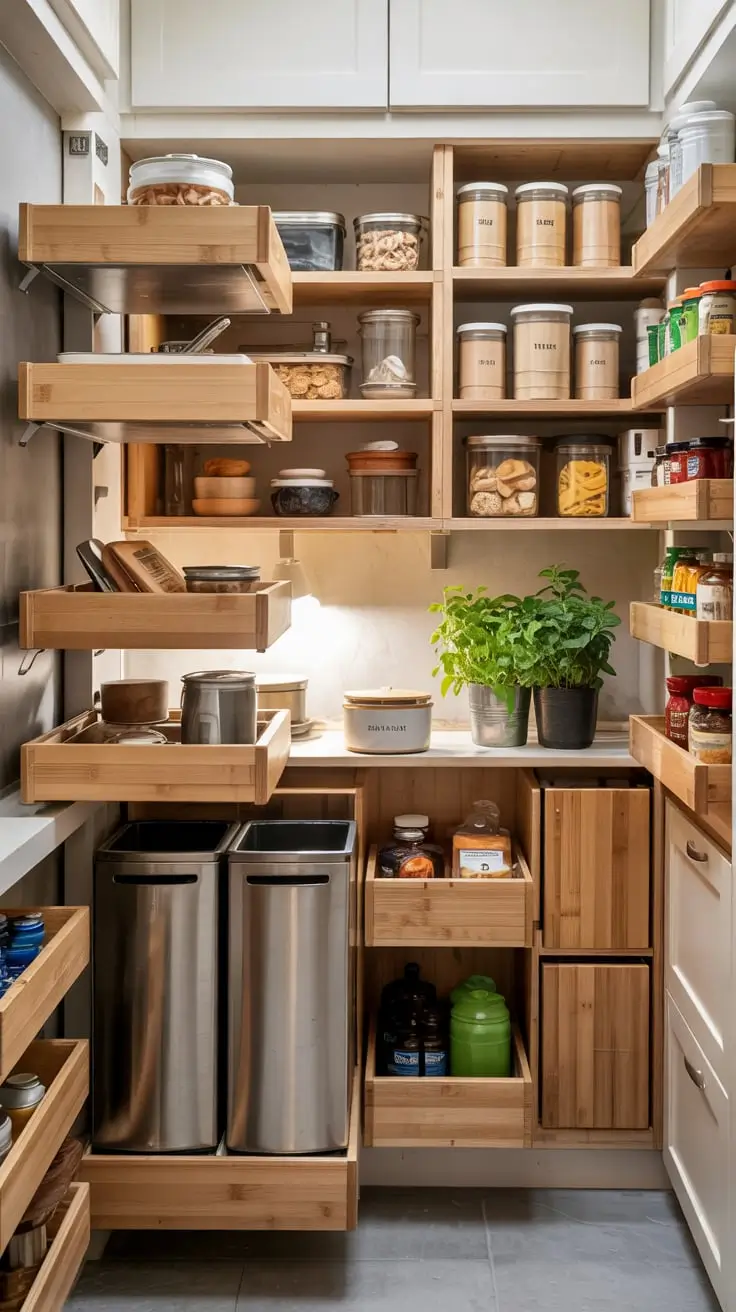
If expanding this idea further, I would include compact ventilation strips or carbon filters to keep the waste area fresh, especially in pantries that lack airflow.
24. Pantry Zones For Better Small Space Flow
In my approach to tiny pantry design 2026, one of the most effective strategies is dividing the pantry into zones based on use. When space is limited, zoning creates a sense of order and helps guide daily workflows. By intentionally grouping items, the pantry becomes easier to navigate and significantly more efficient.
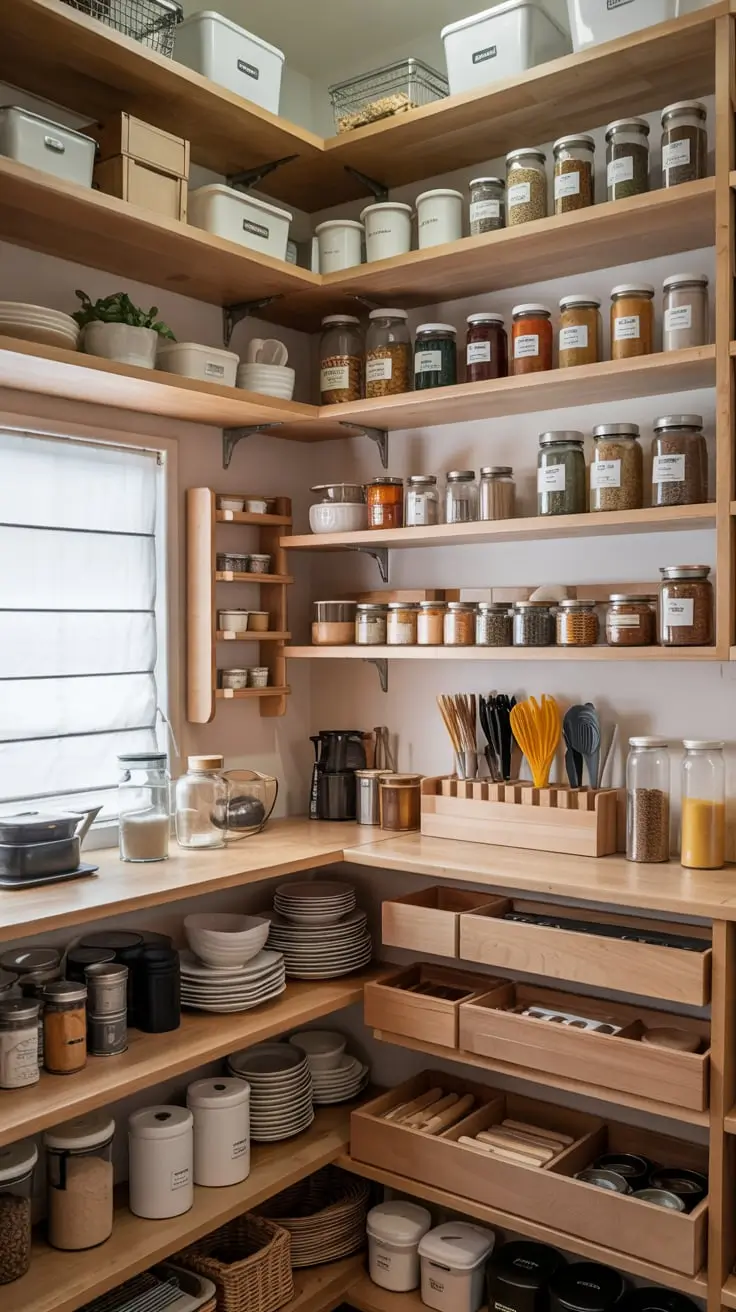
I typically define zones such as baking supplies, dry goods, snacks, beverages, and quick-access essentials. Containers, shelf labels, and tiered organizers help maintain separation between these areas. Incorporating vertical dividers or shallow bins keeps items from migrating across shelves and minimizes clutter.
Over the years, I’ve found zoning particularly helpful for families or shared living situations. Experts featured in Martha Stewart Living often highlight this technique as a foundational organizing principle because it reduces decision fatigue and encourages consistent upkeep.
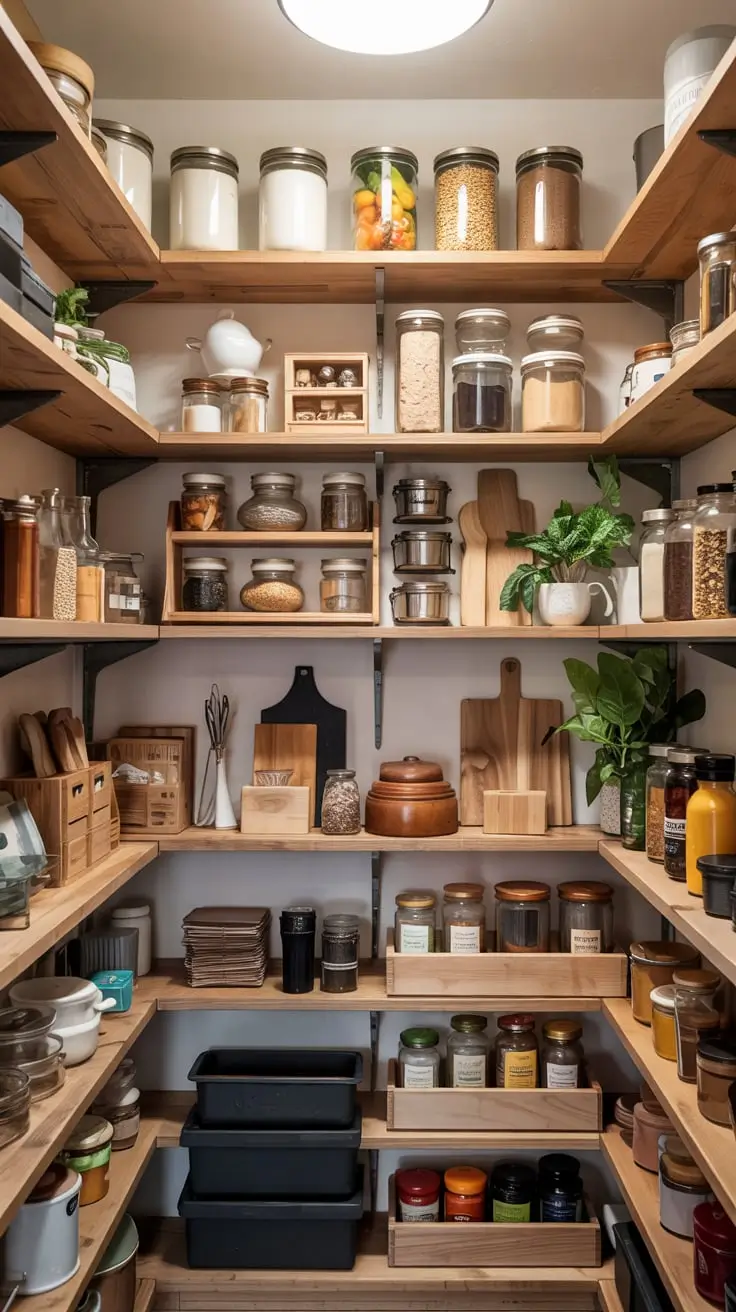
If I expanded this section further, I would recommend adding a rotating lazy-susan element in central zones to improve accessibility, especially in narrow or deep pantries.
25. High Contrast Styling For Compact Pantry Design
High contrast design adds dimension and sophistication to tiny pantry design 2026, especially when homeowners want a bold yet modern aesthetic. When I use this approach, I select contrasting tones that make the small pantry appear structured and visually dynamic. The right balance between dark and light shades can visually enlarge the space and emphasize clean lines.
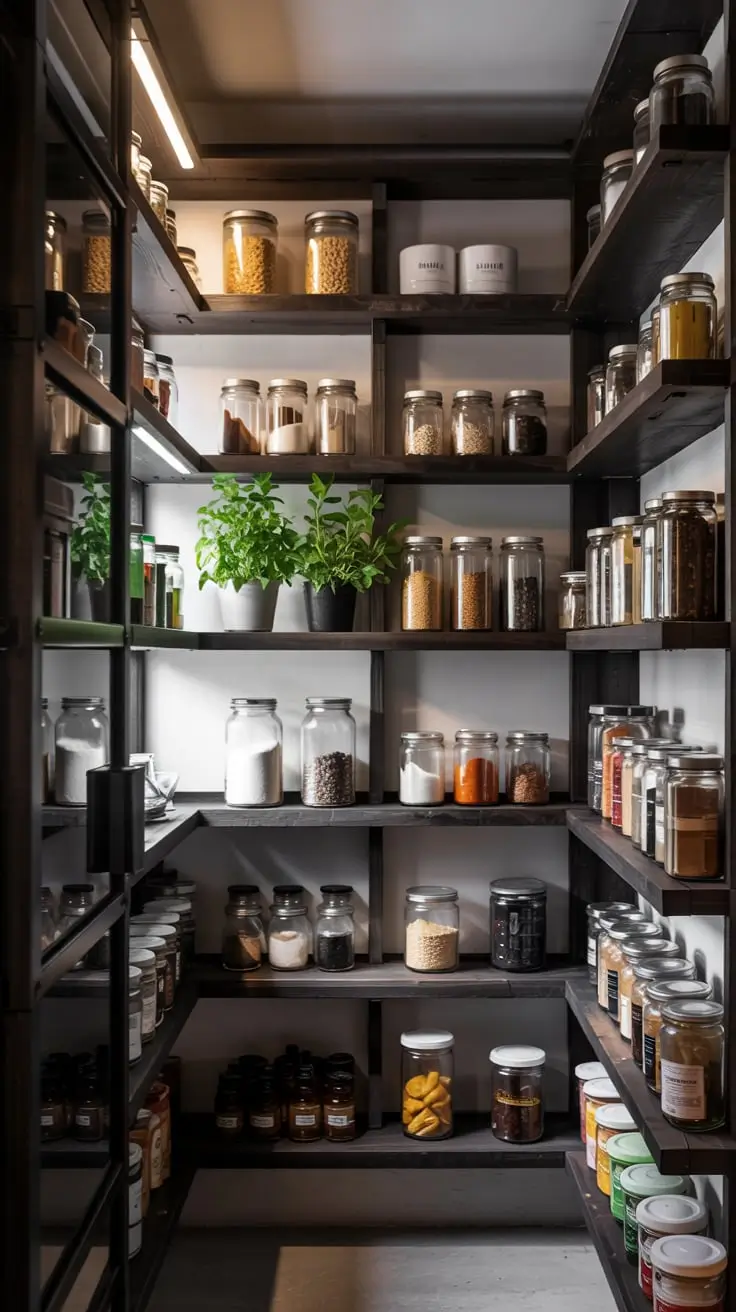
I usually combine matte black hardware with white shelves, or deep charcoal tones with warm wood elements. Using metal accents, dark frames, and contrasting bins helps give the pantry a polished, modern identity. LED lighting enhances contrast by highlighting textures and materials. These design elements come together to create a visually striking micro space.
Clients who enjoy contemporary design styles often appreciate the dramatic effect of high contrast. Publications like Domino Magazine suggest that contrast is one of the easiest ways to add impact in small rooms because it defines edges and strengthens visual flow.
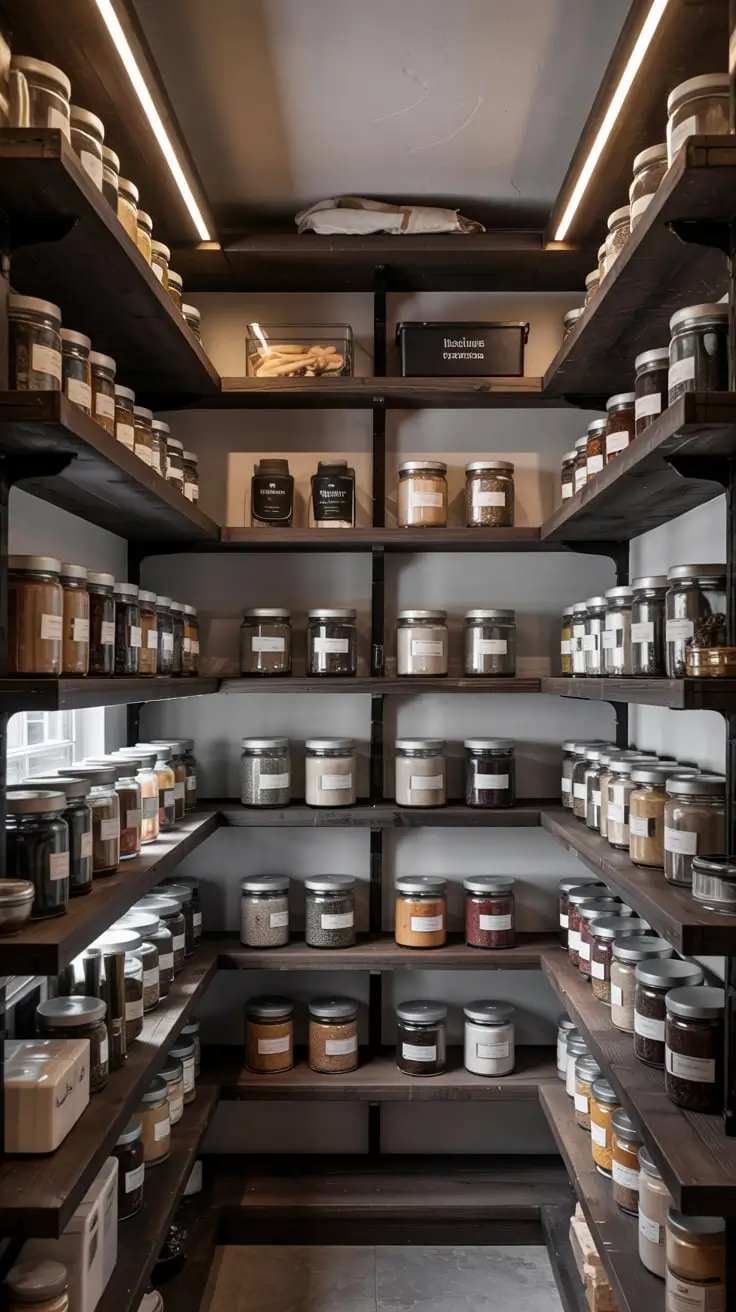
As an improvement, I might include a high-contrast backsplash panel or textured feature wall to deepen the design without overwhelming the limited space.
26. Space Optimized Door Mounted Pantry Racks
Door-mounted racks are one of the most practical additions in tiny pantry design 2026, especially when square footage is extremely limited. I often integrate slim rack systems on the pantry door to expand vertical storage potential. This overlooked surface becomes a valuable organizing area for spices, jars, snacks, and small essentials.
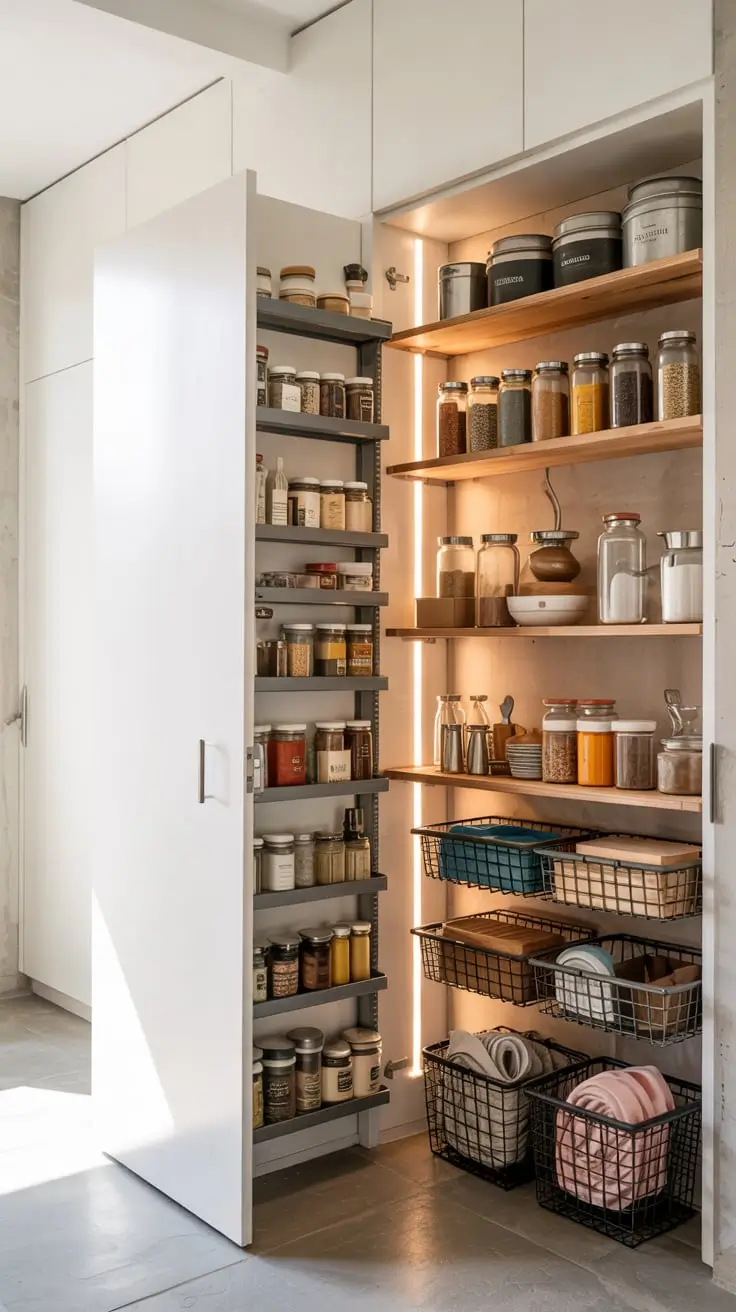
I prefer metal wire racks, adjustable shelves, and modular door systems that adapt to changing needs. Shallow shelves prevent items from shifting when the door moves, and rubberized bases keep jars stable. Multi-tier racks allow homeowners to maximize height without interfering with the pantry’s interior shelving.
In my experience, clients love this feature because it delivers significant extra storage with minimal cost and no major renovation. Many designers referenced in Apartment Therapy emphasize the importance of using every vertical surface in small homes, and the pantry door is often the simplest place to start.
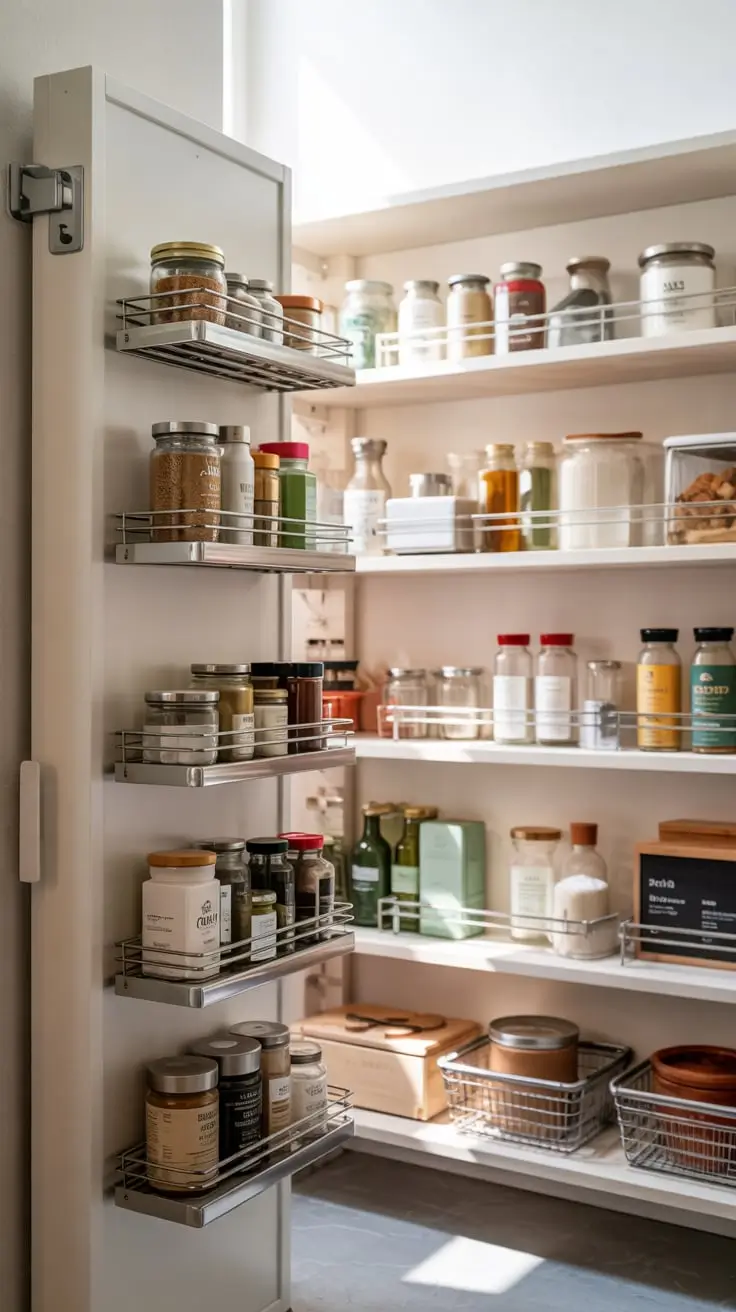
If enhancing this idea, I would add a soft-close hinge system to ensure smooth operation and reduce noise, especially when the pantry is located near living spaces.
27. Micro Pantry Solutions For Studio Apartments
Micro pantries are essential in studio apartments, and tiny pantry design 2026 continues to favor compact, multifunctional layouts for urban living. When I work on micro pantry concepts, I focus on slim shelving, fold-out components, and vertical organization. These solutions allow even the smallest kitchen to benefit from a structured food storage area.
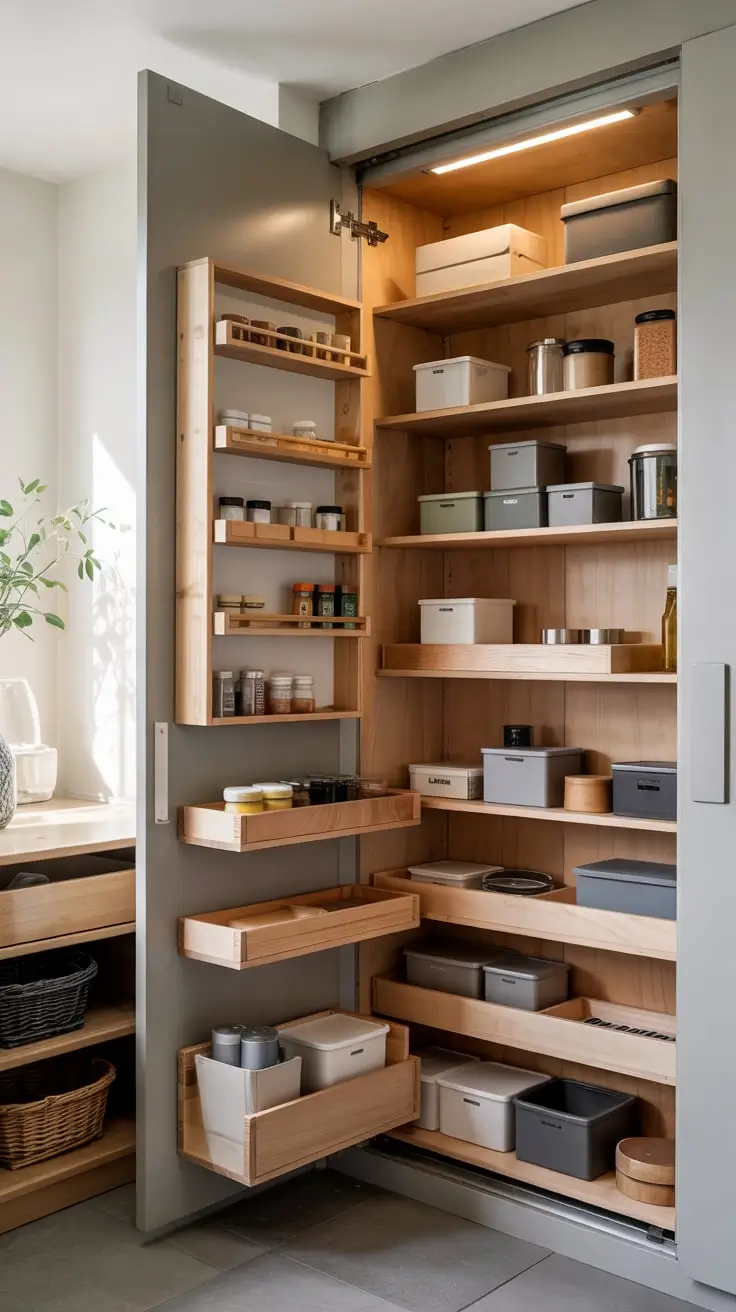
I often install narrow pull-out columns, magnetic wall panels, modular stacking bins, and mini countertop zones for quick-prep items. Sliding doors or pocket doors further reduce space consumption. Materials like matte metal, light wood, and frosted glass help the micro pantry blend seamlessly into the room without overwhelming it.
Based on my experience, micro pantry solutions dramatically improve the quality of life in tight living environments. Architects interviewed in Dwell frequently emphasize the success of hidden or hybrid pantry systems in open-layout studios because they maintain aesthetic continuity.
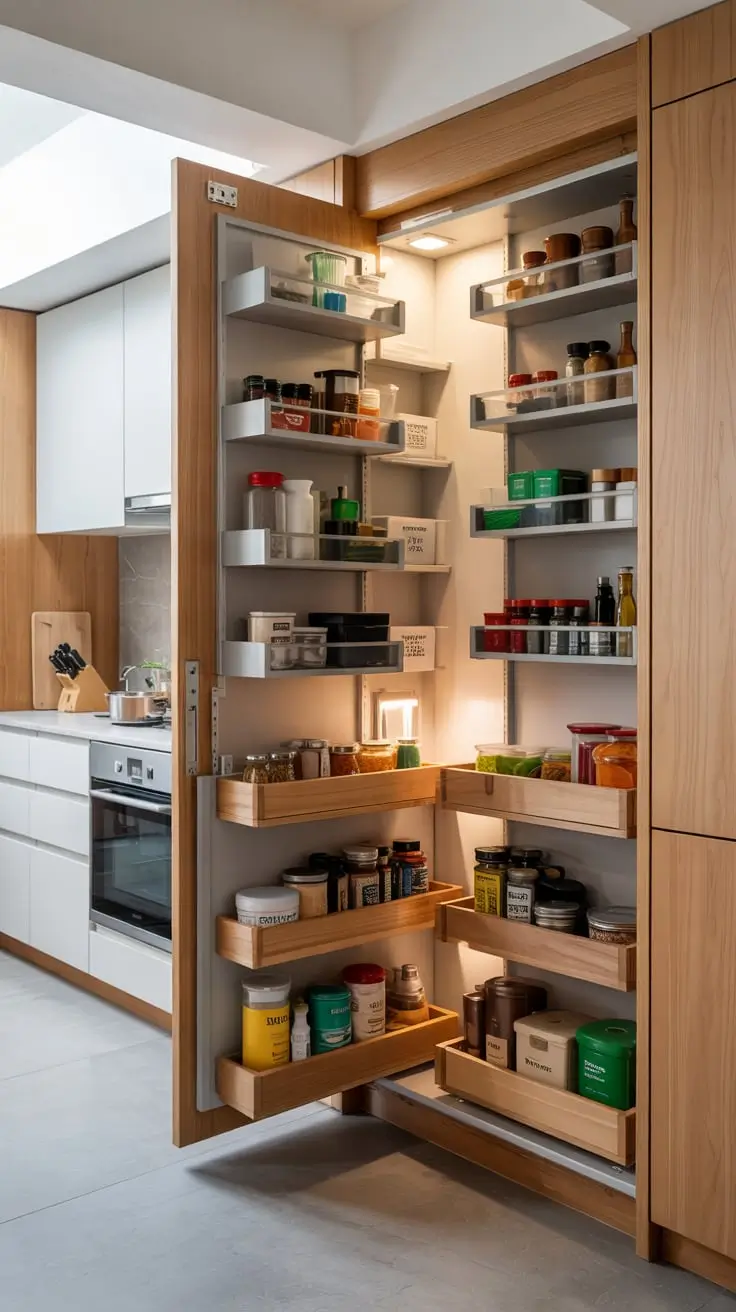
If I added more to this section, I would suggest integrating small sound-dampening panels to minimize noise when accessing the pantry in open living areas.
28. High Tech Pantry Innovations For 2026 Homes
Technology plays a major role in tiny pantry design 2026, introducing modern conveniences that support organization, monitoring, and accessibility. When I incorporate tech into pantry layouts, I focus on features that genuinely improve daily routines. Smart tools make even the smallest pantry feel cutting-edge and intuitive.
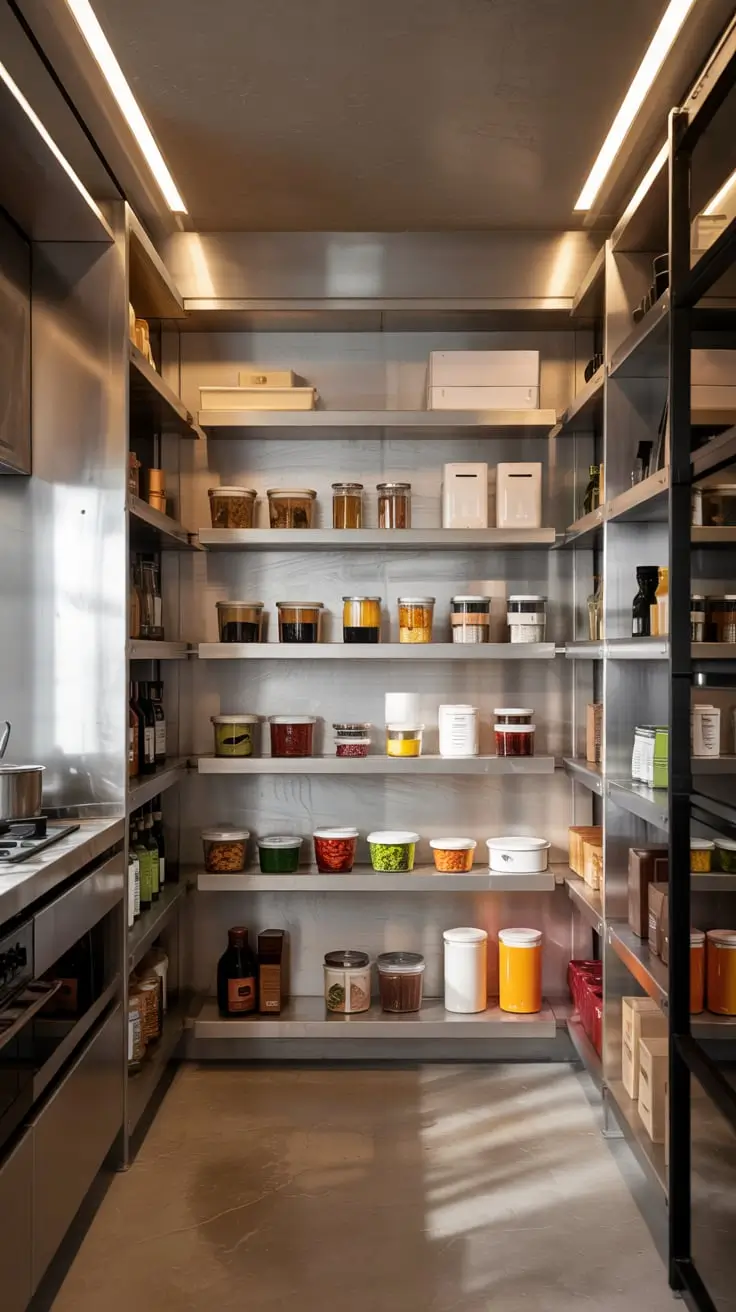
I often include app-synced inventory scanners, automatic interior lighting, humidity sensors, and temperature monitoring panels. Digital shelf indicators help track expiration dates, while motion-activated systems enhance ease of use. Wireless charging pads or smart plugs can support portable kitchen devices stored inside the pantry.
Clients who adopt these innovations often appreciate how much smoother their household management becomes. Articles in Wired Magazine frequently highlight that smart-home features are shifting toward micro-scale applications, making them ideal for compact pantries.
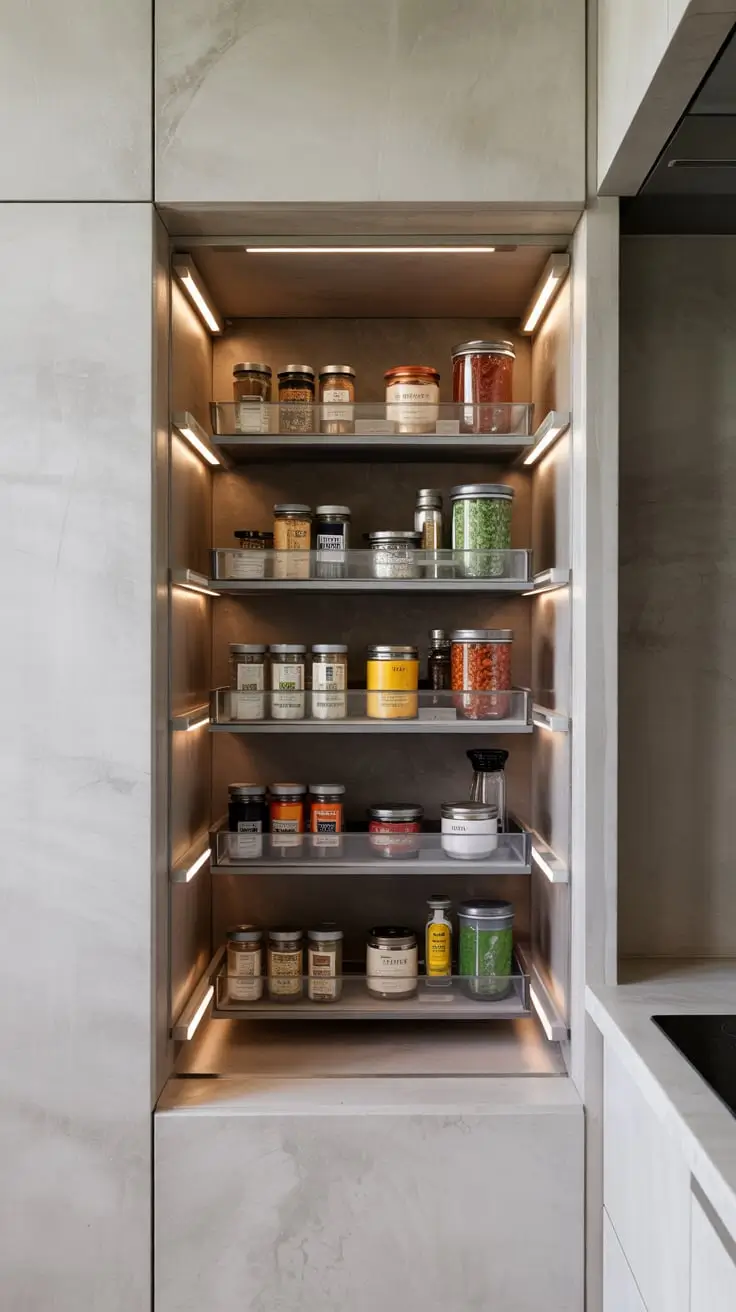
If expanding this concept, I would recommend a voice-controlled interface that allows users to update grocery lists or check inventory without physically opening containers.
29. Affordable Storage Ideas For Tiny Pantry Makeovers
When working with limited budgets in tiny pantry design 2026, I focus on creative, affordable solutions that still deliver a polished and functional result. Small pantries benefit greatly from simple upgrades such as modular shelving, repurposed jars, and budget-friendly organizers. These changes can dramatically improve the pantry’s usability without requiring costly renovations. I find that strategic improvements often matter more than expensive materials.
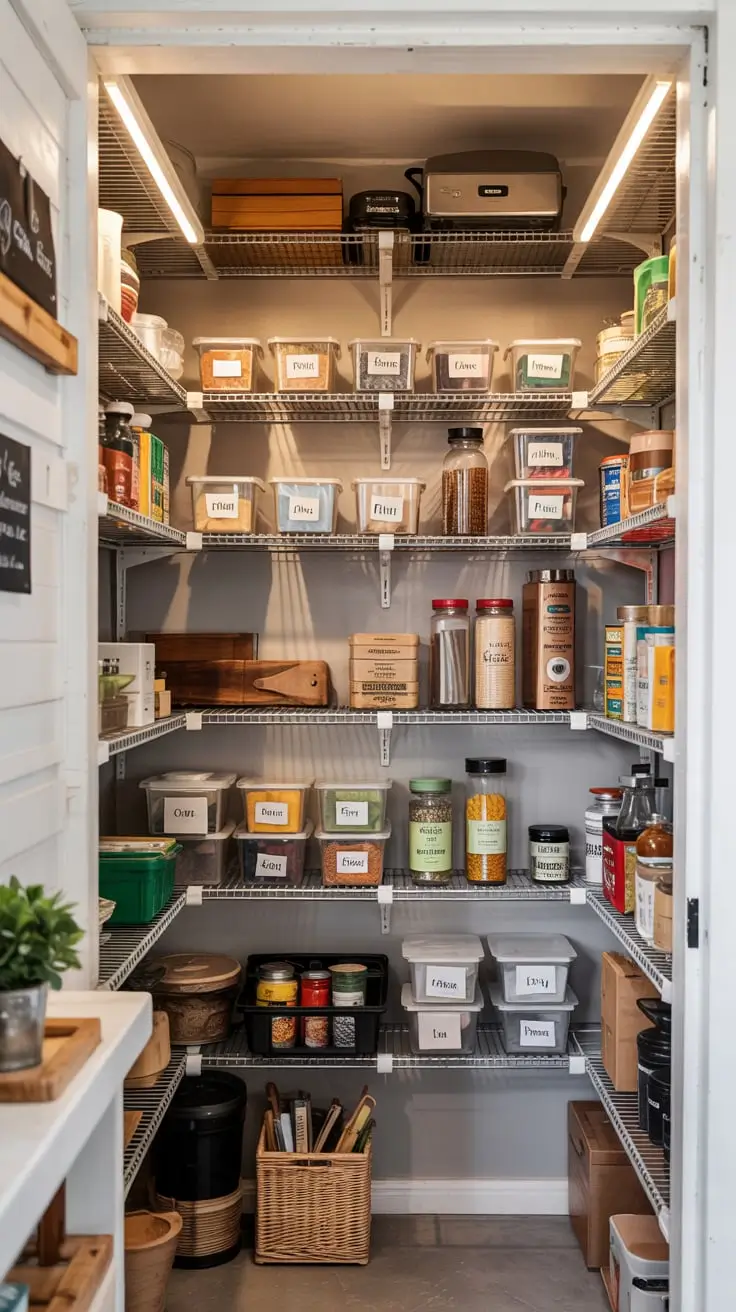
I usually recommend adjustable wire shelving, stackable bins, inexpensive clear containers, and DIY labels. Over-the-door organizers, tension rods, and slim rolling carts are also cost-effective ways to add extra storage. These items help maximize vertical and horizontal space while maintaining a tidy aesthetic. Affordable LED strip lights can elevate the look without significantly increasing the project cost.
Clients are often surprised by how stylish a pantry can look with thoughtfully selected budget pieces. Home organization experts featured in Good Housekeeping often reinforce that affordability does not mean sacrificing quality or design cohesion. Simple, repeatable elements can achieve a high-end feel when used consistently.
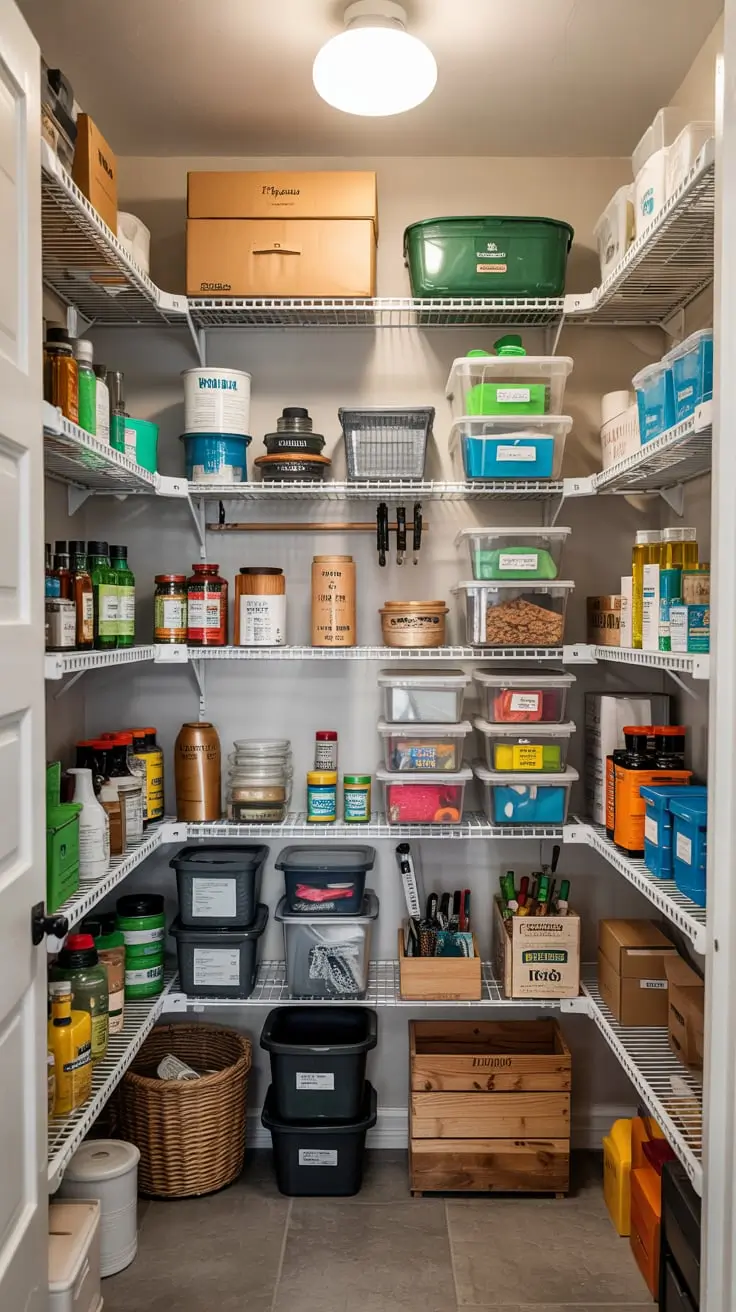
If extending this idea further, I would add lightweight pegboard panels or low-cost magnetic strips, which can create additional storage opportunities for utensils, packets, or small pantry tools.
30. Luxury Tiny Pantry Design Trends For 2026
Luxury elements in tiny pantry design 2026 focus on refined materials and personalized functionality that transform compact storage into a visually stunning space. When I design luxury pantries, I highlight craftsmanship, high-quality finishes, and thoughtful detailing. Even in a small pantry, premium touches can create a sense of sophistication and exclusivity.
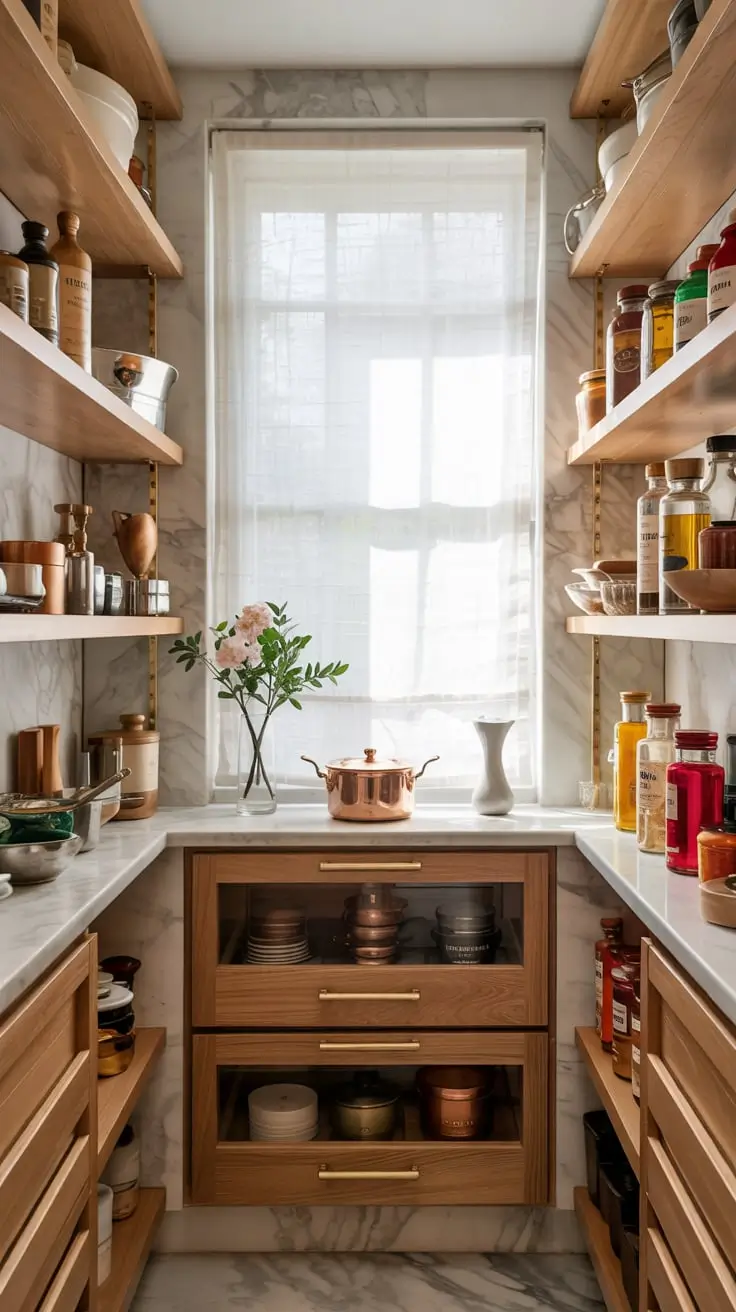
I often incorporate marble or quartz surfaces, soft-close glass-front cabinets, brass or matte-gold hardware, and designer lighting. Custom-built shelving, integrated drawers, and hand-finished wood textures elevate the experience further. These materials and features introduce elegance without overwhelming the tiny footprint.
From my experience, luxury pantries resonate with homeowners who appreciate fine design and want every corner of their kitchen to feel intentional. Reporting from designers in Luxe Interiors suggests that luxury in small spaces comes from material quality and precision rather than size.
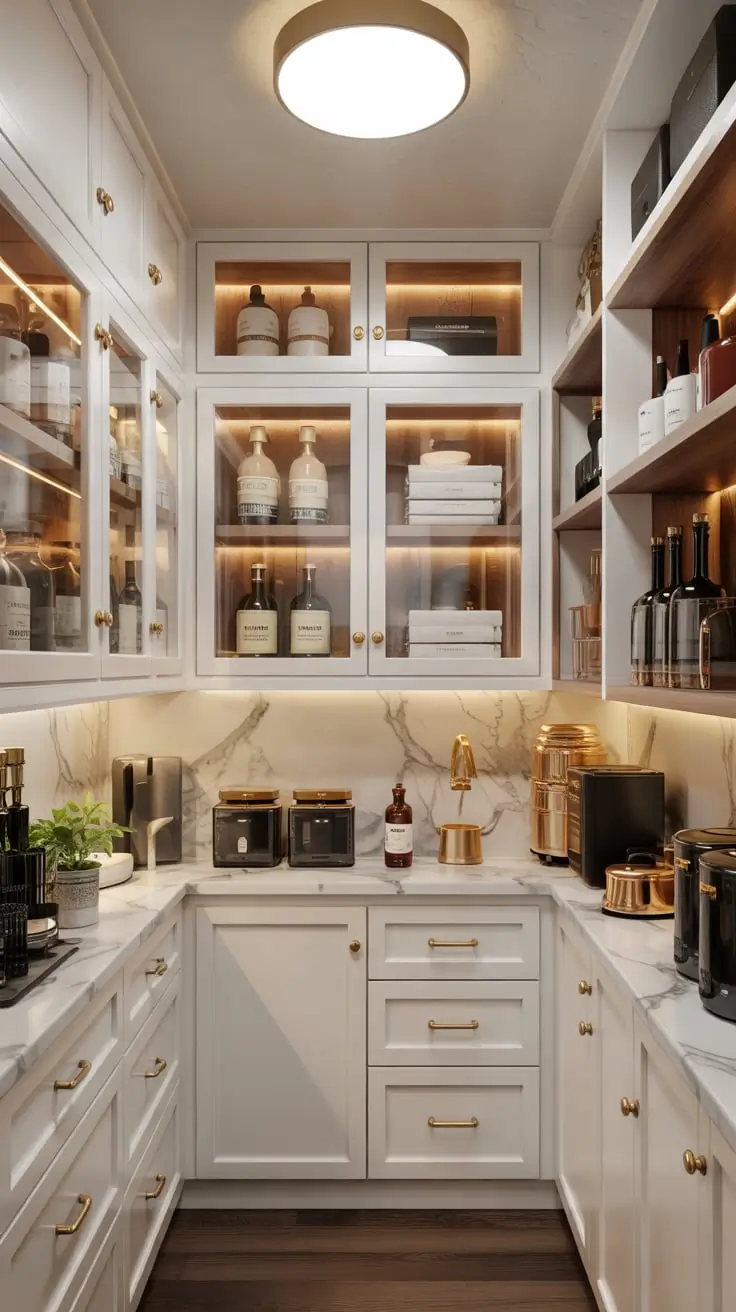
If adding additional depth to this section, I would recommend including high-end pull-out trays with velvet or felt liners for spices or specialty foods, enhancing the tactile quality of the pantry.
31. DIY Tiny Pantry Upgrades For Small Kitchens
DIY upgrades play a major role in tiny pantry design 2026, giving homeowners an opportunity to personalize their storage systems affordably. When I guide clients through DIY enhancements, I encourage easy improvements that make a significant impact, such as repainting interiors, adding removable wallpaper, or installing peel-and-stick LED lights. These updates can completely transform the atmosphere of a small pantry.
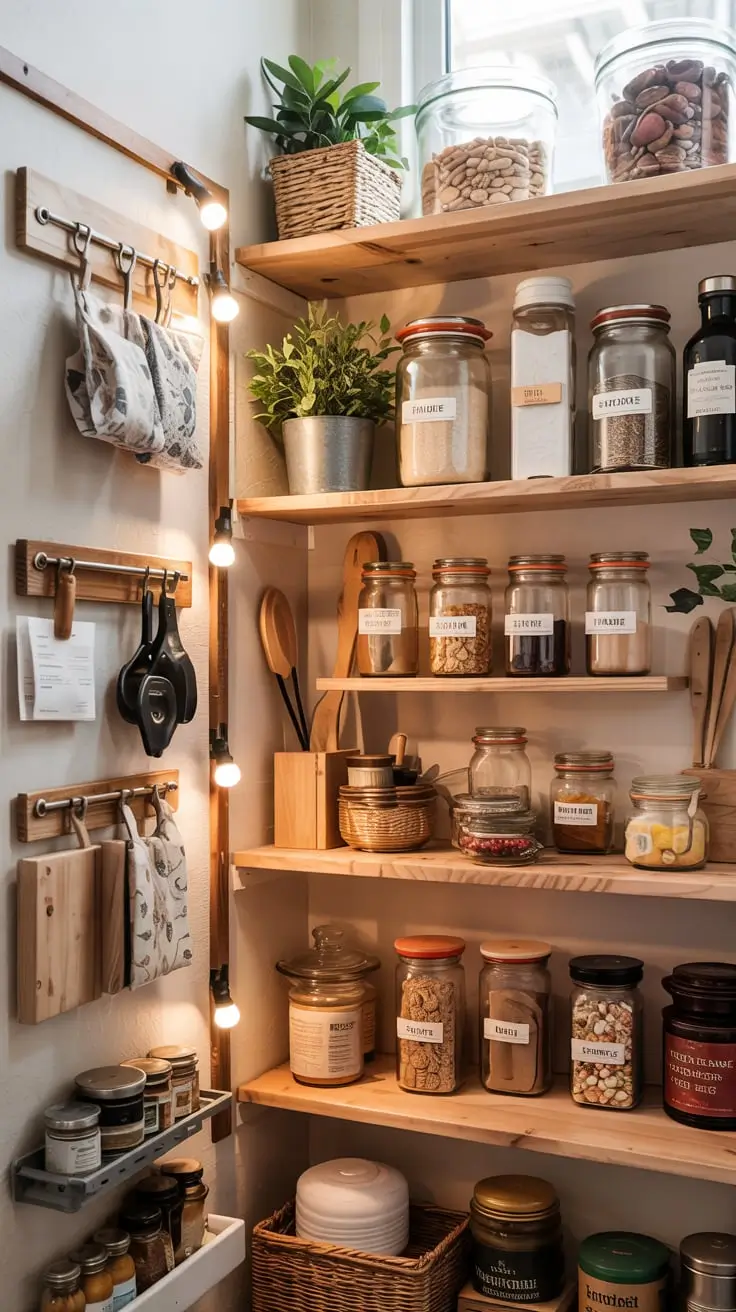
I recommend using inexpensive materials like adhesive hooks, floating shelf brackets, stackable crates, and simple wooden planks for customized shelving. Label makers, chalk-free label strips, and repurposed jars help improve organization without requiring complex tools. These elements allow homeowners to tailor storage layouts to their specific needs.
In my professional experience, DIY upgrades empower clients to take control of their kitchen spaces. Publications like Apartment Therapy highlight DIY pantry enhancements as an accessible way to refresh a home without renovation professionals.
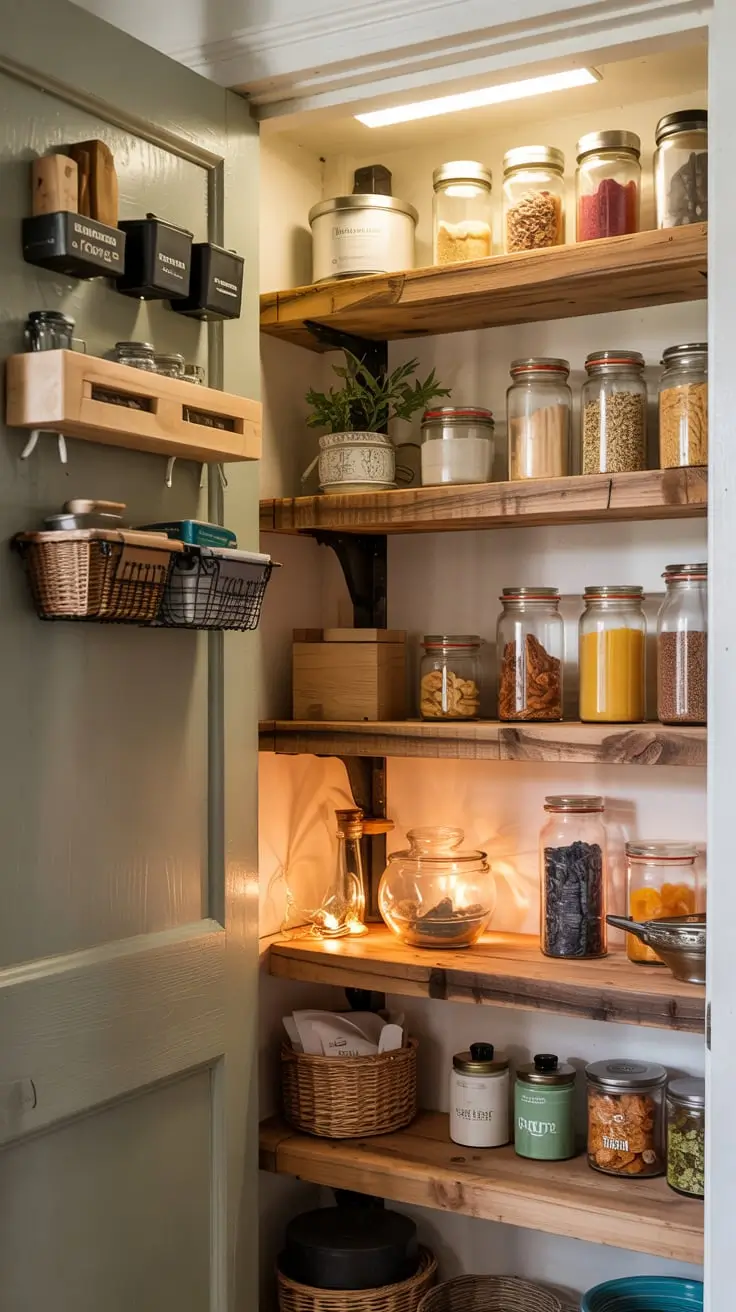
If expanding this idea further, I would suggest adding magnetic surfaces or modular pegboards, which can evolve with changing storage habits and support long-term flexibility.
32. Compact Pantry Ideas For Urban Living Spaces
Urban environments demand efficient solutions, making tiny pantry design 2026 especially relevant for city dwellers with limited square footage. When designing compact pantries for urban homes, I emphasize streamlined layouts, multipurpose storage, and visually light materials. These choices help small spaces feel organized and unobtrusive.
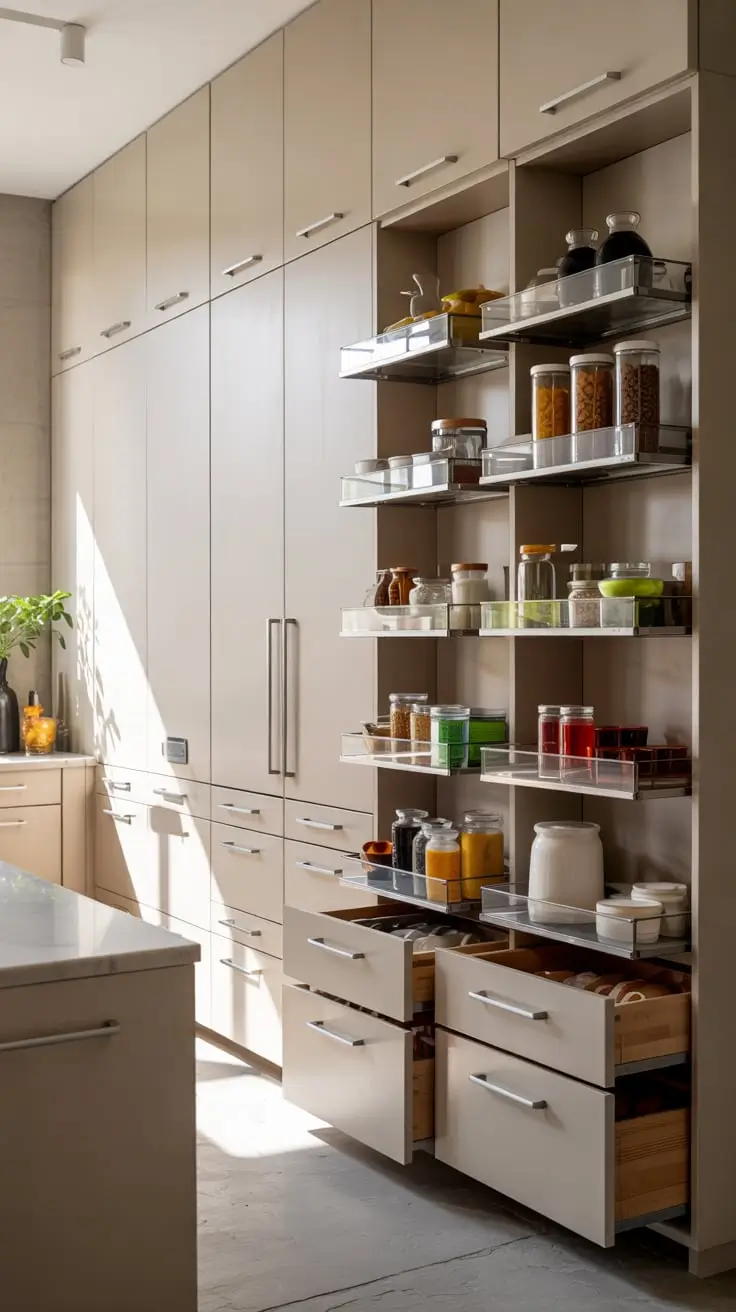
I frequently incorporate slim tall cabinets, frameless shelving systems, modular drawers, and sliding or pocket doors. Transparent containers, shallow racks, and space-saving rotating trays enhance accessibility. Light-colored materials and reflective finishes contribute to a brighter and more open feel, which is important in dense urban apartments.
From my experience, urban homeowners appreciate designs that minimize visual weight and support fast-paced, practical lifestyles. Designers interviewed in Dwell routinely stress the importance of adaptable storage in compact metropolitan homes.
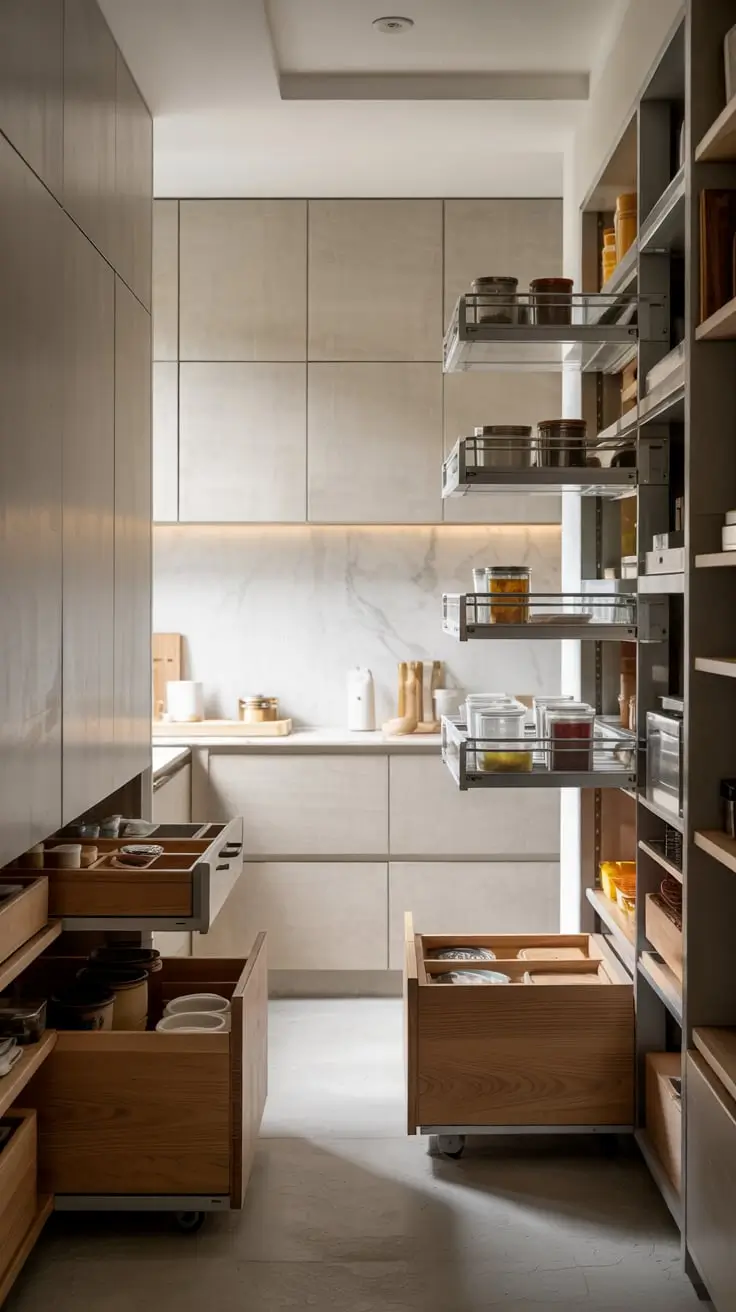
To enrich this section further, I would add compact fold-out work surfaces or convertible shelving that can temporarily serve as prep space, improving pantry versatility in very small apartments.