When homeowners look for outdoor privacy screen ideas 2026, the main questions are always the same: How can I create privacy without sacrificing style, and how do I make my outdoor space feel more intentional and modern? In this article, I will walk you through some of the most forward-thinking concepts shaping outdoor design this year, offering practical, attractive solutions that elevate both aesthetics and comfort. Whether you want a natural look, a sleek contemporary feel, or something flexible and multifunctional, each idea is designed to help you transform your outdoor area into a protected and inviting retreat.
1. Vertical Slatted Privacy Panels
I often recommend vertical slatted panels because they create a clean architectural backdrop while offering just the right balance of privacy and airflow. In 2026, this design has become especially popular due to its versatility and modern appeal. The slim vertical lines visually heighten an outdoor space, making patios or small yards feel more open while still creating a defined boundary. The spacing between the slats also allows filtered light to pass through, which helps maintain an inviting atmosphere without exposing the area completely.
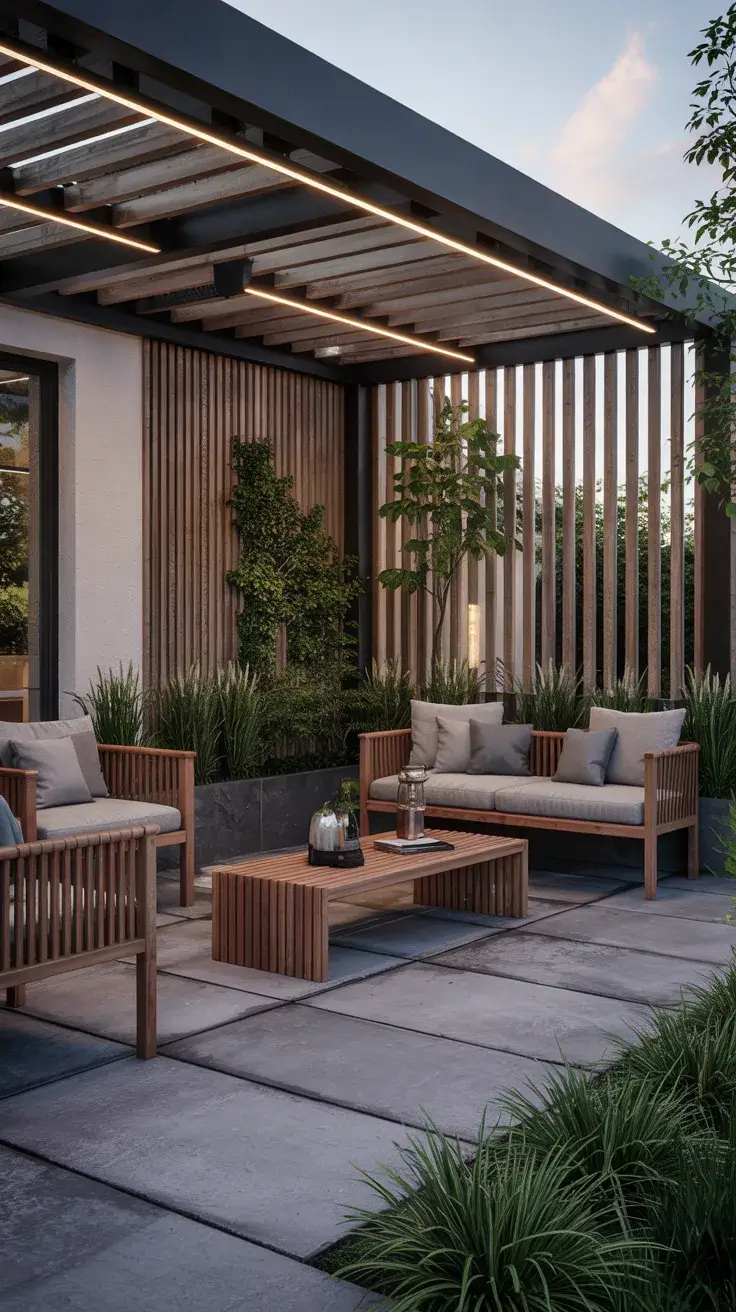
When selecting furniture to accompany these panels, I lean toward minimalist outdoor pieces such as powder-coated metal chairs, teak benches, or sleek modular seating. These shapes echo the linear geometry of the panels and create a cohesive look. I also like incorporating planters with tall grasses or slim evergreens to soften the strong architectural lines while maintaining the modern aesthetic.
From experience, I find that homeowners appreciate how easy it is to update the look with stains or contemporary finishes. Designers at Architectural Digest have often emphasized the longevity and adaptability of slatted wood elements in outdoor design, which aligns with what I’ve observed in real projects. A key recommendation I would add here is to apply a UV-resistant sealant to maintain the wood’s tone over time, especially in sun-exposed areas.
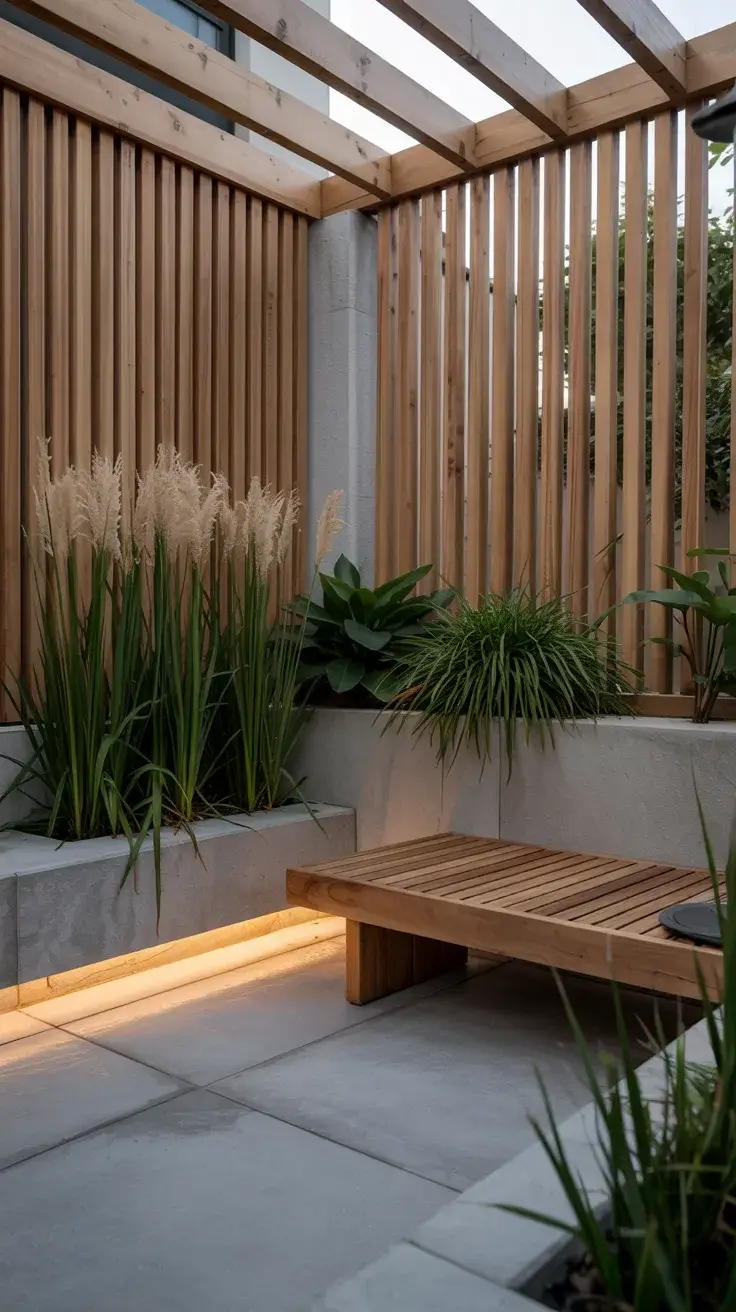
Before finalizing this section, I would also suggest adding vertical LED strip lighting between slats. This subtle glow enhances nighttime ambiance and reinforces the modern architectural style.
2. Modern Metal Grid Privacy Screen
A modern metal grid screen brings a bold, structured aesthetic that works exceptionally well in contemporary outdoor spaces. I often choose this solution when I want to introduce a slightly industrial feel while keeping the design polished and refined. The grid pattern creates partial privacy, allowing enough openness to avoid making the space feel enclosed.
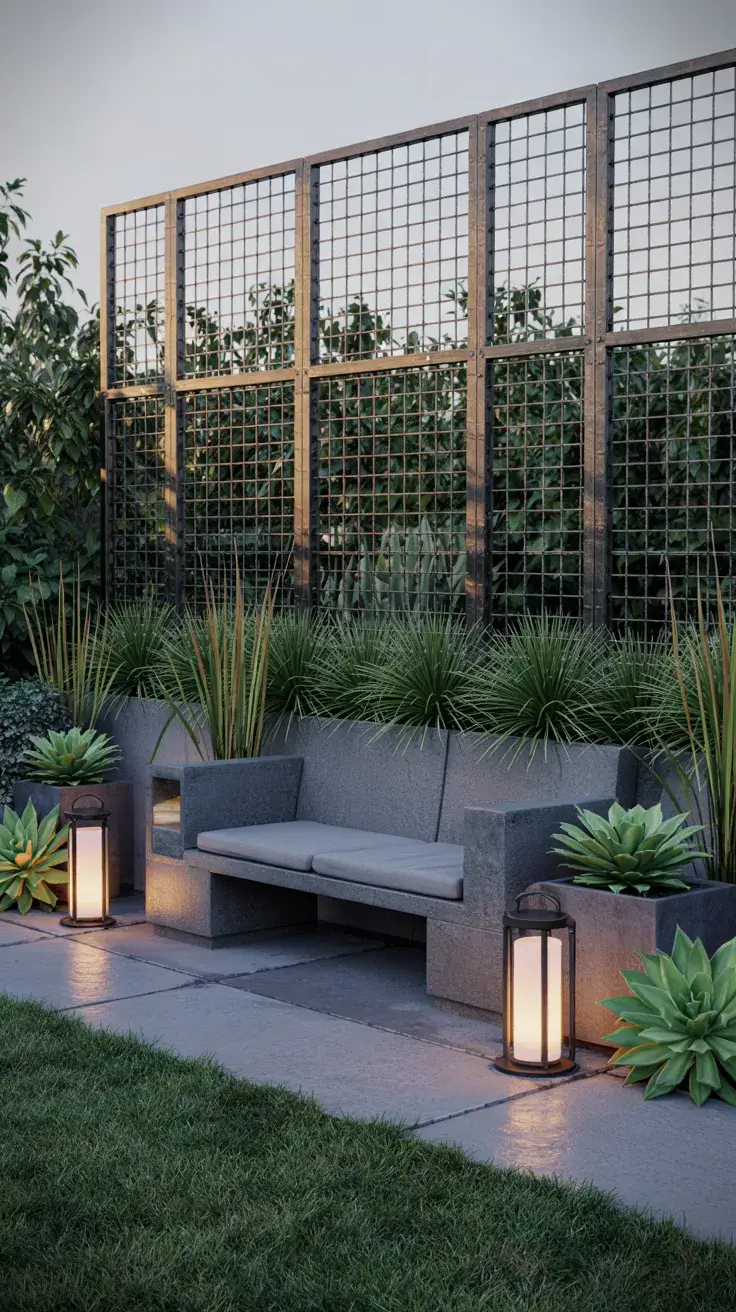
To complement this structure, I typically pair it with concrete outdoor furniture, black metal planters, or compact outdoor sectionals in neutral tones. These elements enhance the modern theme while ensuring the overall look remains functional and visually balanced. Small lanterns or geometric planters placed near the screen help soften its rigidity without taking away from the design’s precision.
Having tested similar installations, I find metal grid screens extremely durable, especially when powder-coated. Not only do they resist rust, but they also maintain their clean lines for years with minimal maintenance. I’ve heard similar recommendations from outdoor living specialists who emphasize choosing high-quality steel or aluminum for long-term stability.
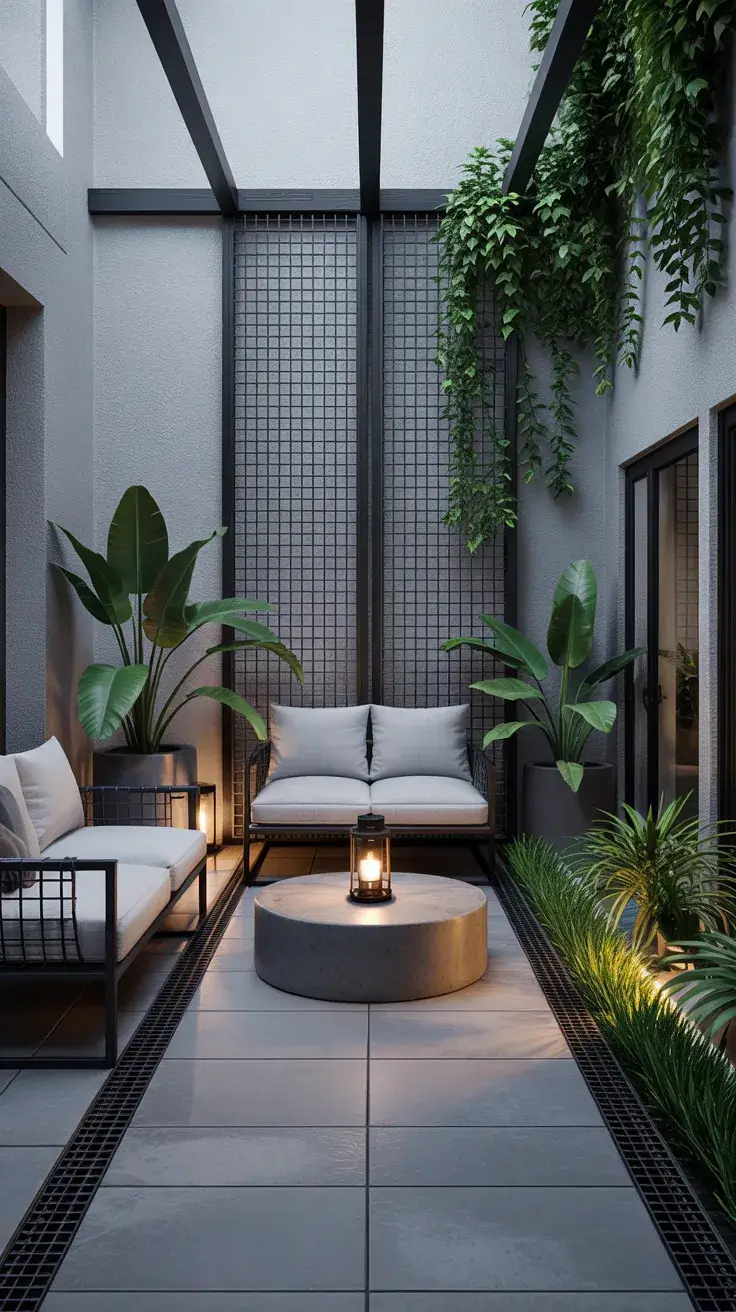
To improve this block even further, I would add a suggestion to integrate climbing plants like jasmine or ivy for homeowners who want privacy that evolves naturally over time.
3. Natural Bamboo Garden Partition
Bamboo partitions are among my favorite eco-friendly options, offering a warm, organic texture that softens any outdoor space instantly. In 2026, bamboo screens are especially valued for their sustainable qualities and their ability to blend seamlessly with garden landscapes. They provide excellent privacy while introducing a calm, tropical feel that enhances relaxation areas.
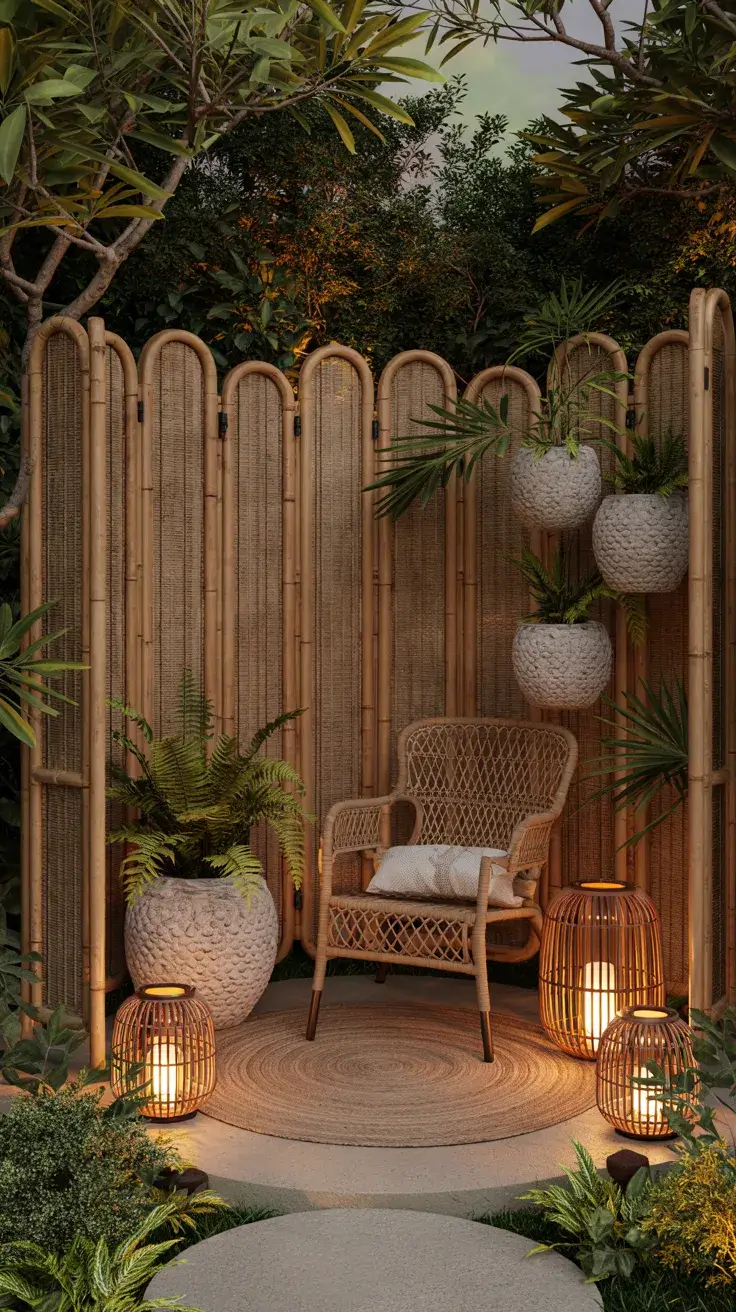
For furniture pairing, I gravitate toward woven outdoor seating, light wood tables, and neutral outdoor textiles. These materials echo the natural beauty of bamboo, reinforcing a harmonious environment. Adding ceramic planters, soft lanterns, or ground-level lighting helps create a balanced mix of natural and decorative elements.
In my experience, bamboo works particularly well in gardens where homeowners want an unobtrusive divider. Professionals often emphasize sealing bamboo to maintain its tone and prevent weather damage, and I fully support this advice. Regular maintenance ensures the screen remains visually appealing and structurally sound over time.
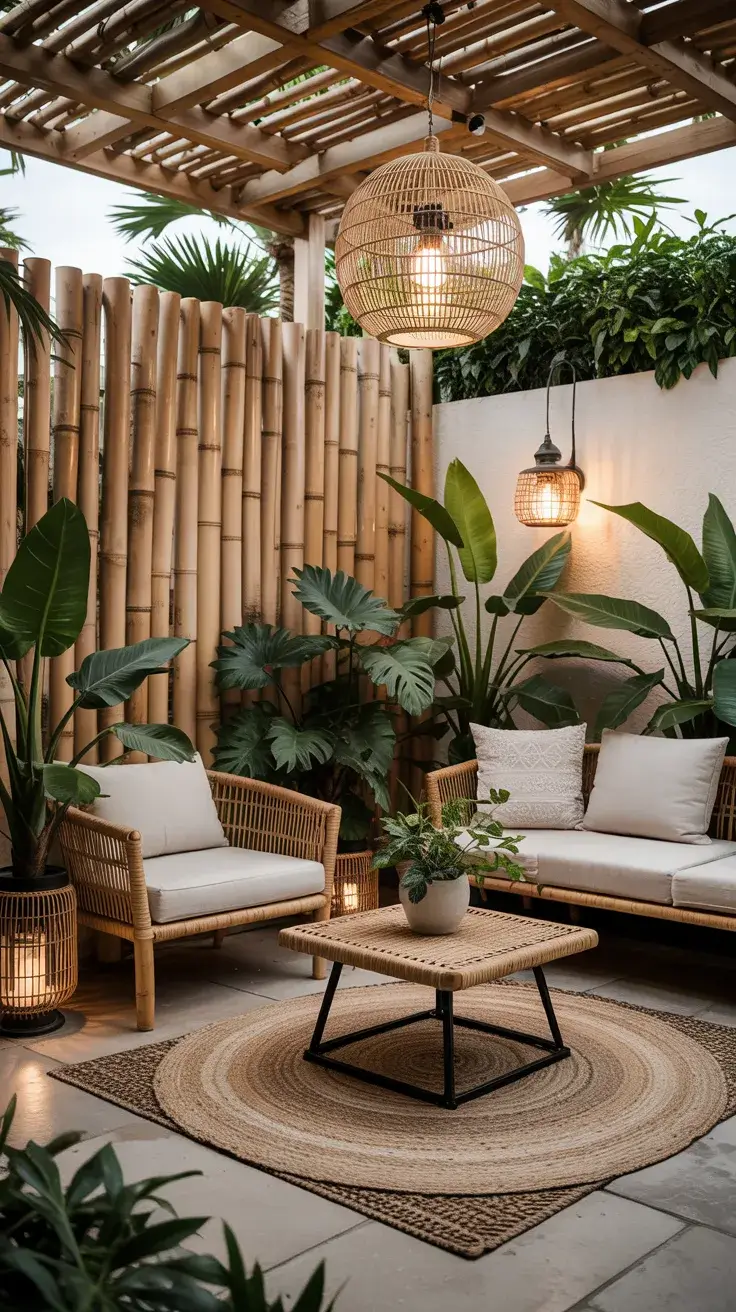
What I would add to this section is the recommendation to space bamboo panels slightly apart and fill the gaps with tall grasses. This layered effect increases privacy and gives the partition a richer, more landscaped appearance.
4. Freestanding Cedar Privacy Wall
A freestanding cedar wall offers both privacy and a stunning visual focal point. I often choose this option when clients want a warm, natural look without committing to a permanent structure. Cedar’s natural resistance to insects and rot makes it a durable material that performs well outdoors while aging gracefully into a soft gray tone if left untreated.
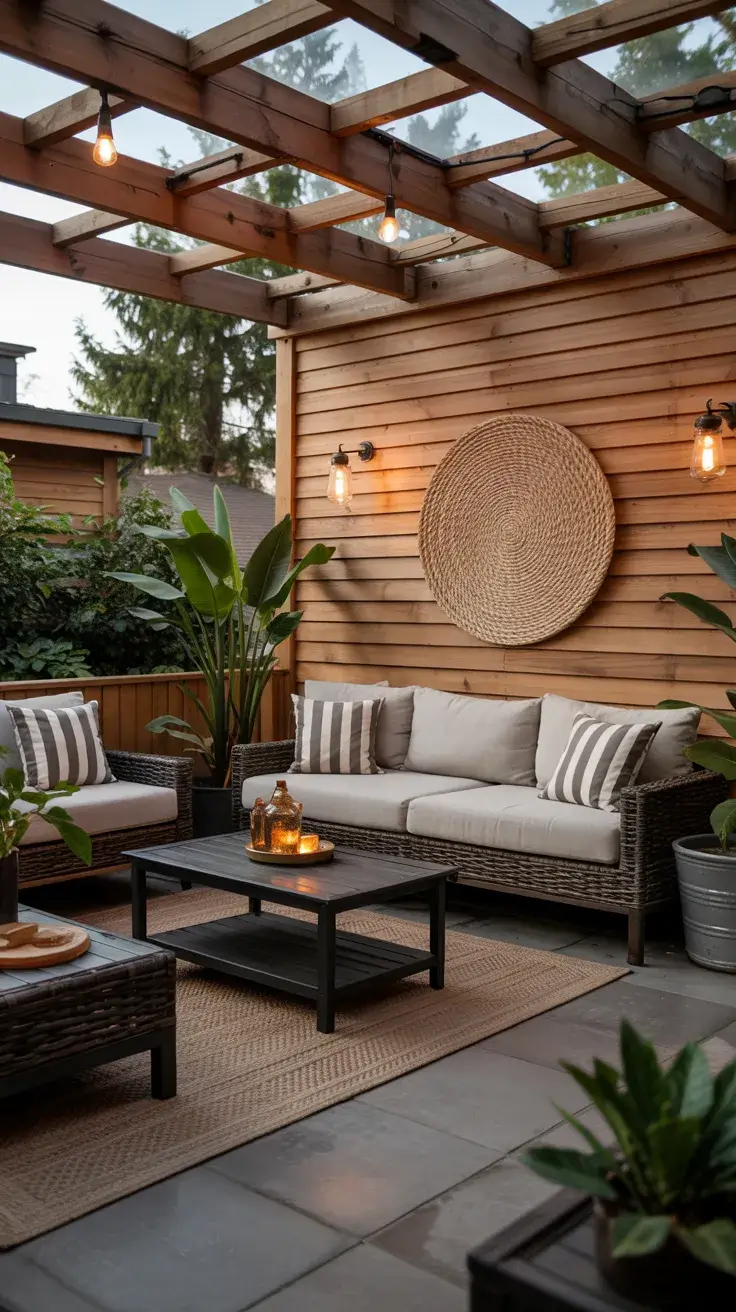
Furniture choices for this design typically include deep outdoor sofas, woven side tables, and accent pillows in earthy tones. These pieces enhance the inviting feel created by the rich cedar backdrop. I also like incorporating matte black fixtures or outdoor sconces to introduce contrast without overpowering the natural wood.
Based on years of working with cedar installations, I’ve found that this material remains one of the most reliable and timeless choices for outdoor privacy. Experts at Sunset Magazine often highlight cedar for its longevity and aesthetic versatility, and I can confidently confirm that it performs beautifully in both sun-exposed and shaded areas.
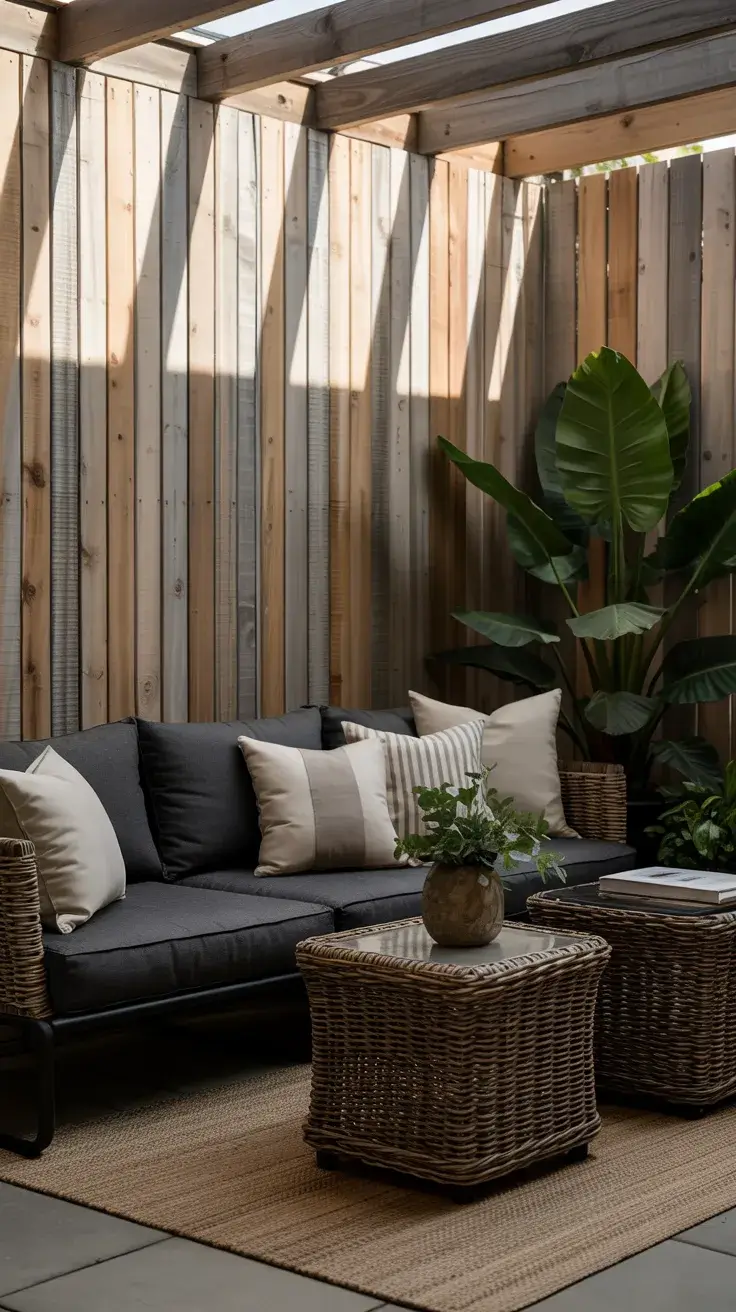
To strengthen this section, I would recommend adding integrated shelving into the cedar wall. This small upgrade offers both functionality and a distinctive design element.
5. Tall Louvered Outdoor Screen
Tall louvered screens provide adjustable privacy, making them ideal for patios exposed to changing sunlight or wind conditions. I frequently recommend this solution because the louvers can be angled to control light and visibility, giving homeowners a customizable level of enclosure that still feels airy and open.
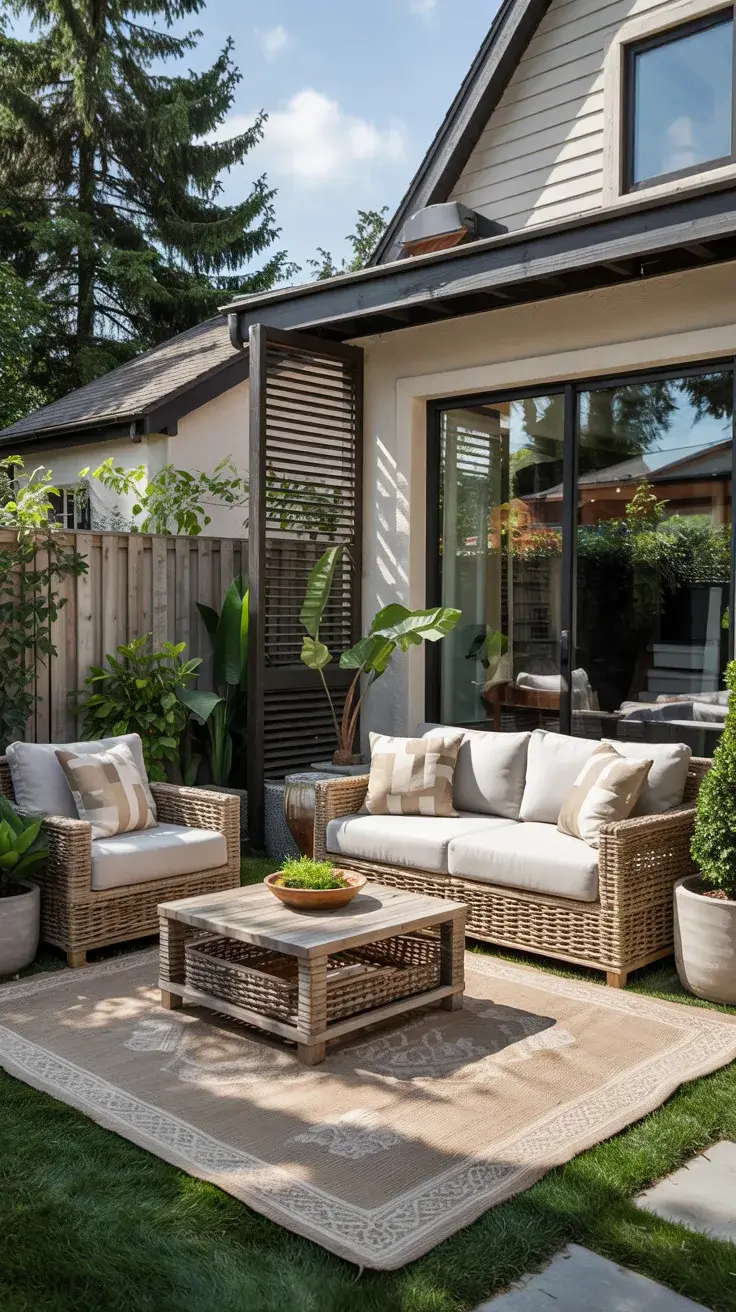
When styling the area, I typically choose contemporary patio furniture with weather-resistant upholstery, complemented by outdoor rugs and side tables that enhance comfort. Adding oversized potted plants near the louvers creates a lush backdrop that softens the structure while contributing to privacy.
From real projects, I appreciate the flexibility louvers offer. They are especially practical in climates with strong sun exposure, as they help regulate shade without compromising ventilation. Many US design experts note that adjustable shading systems are becoming essential in modern outdoor living, and I see this trend continuing.
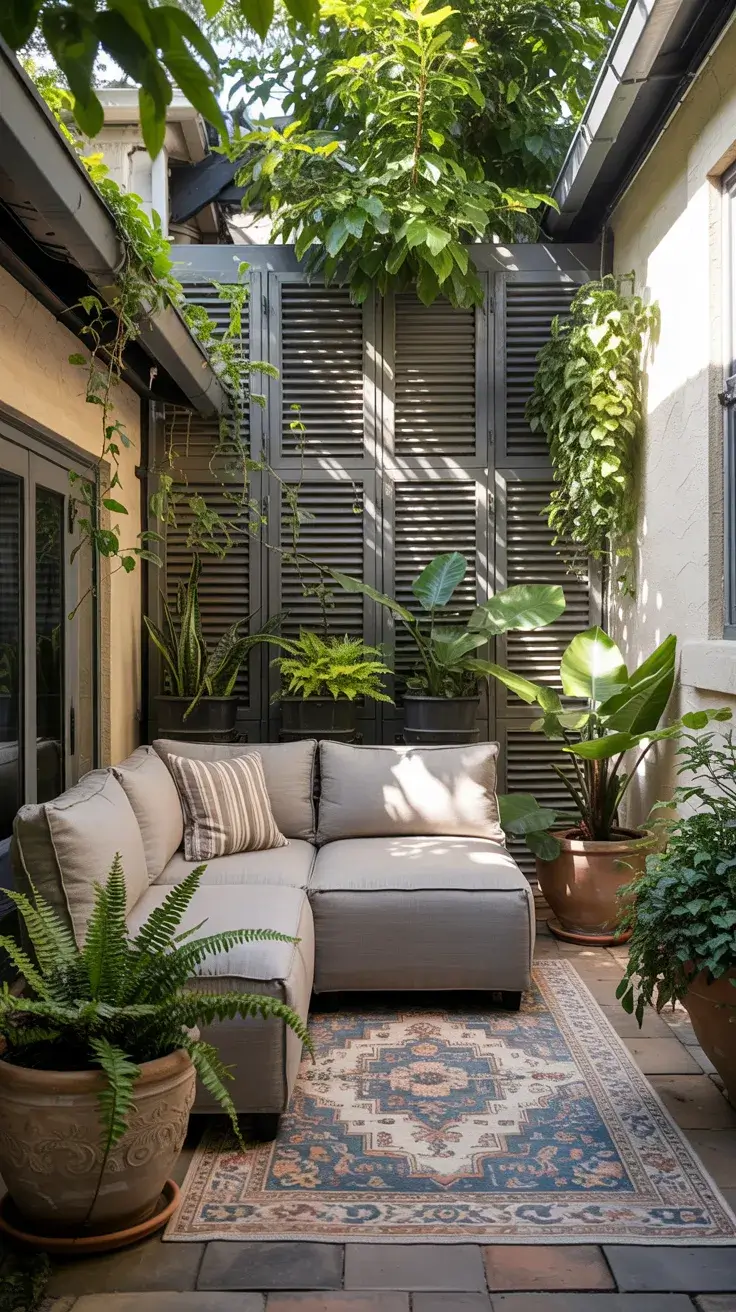
What I would also include here is the suggestion to integrate a top rail planter that allows trailing plants to cascade over the louvers, enhancing both privacy and natural appeal.
6. Decorative Laser Cut Steel Screen
Decorative laser-cut screens are artistic, impactful elements that transform outdoor areas into curated, design-driven spaces. I often use them when I want a privacy solution that doubles as sculptural decor. The intricate patterns cast beautiful shadow art during the day while still offering partial concealment.
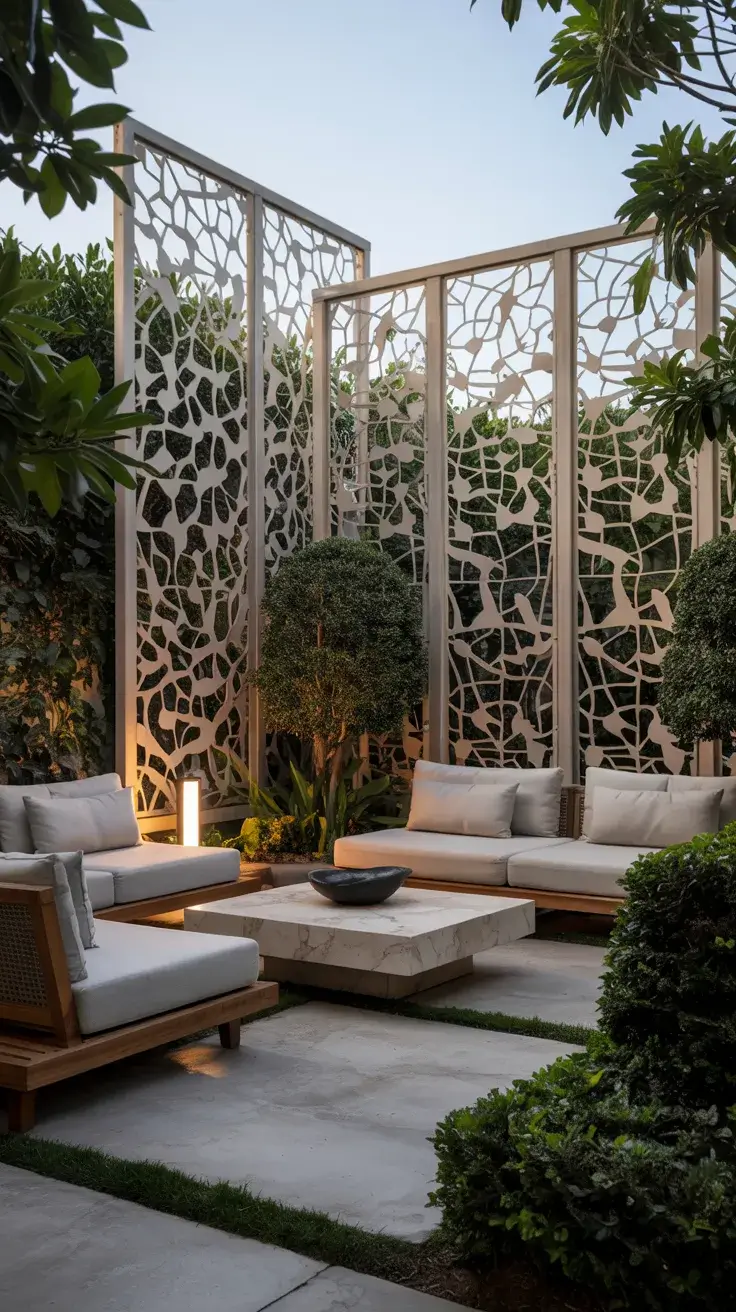
To pair with this bold feature, I usually select minimalist furniture: streamlined lounge chairs, stone coffee tables, and simple planters in dark finishes. This keeps the focus on the screen while ensuring the design remains balanced. Subtle lighting placed behind the screen can also highlight the pattern at night, creating a dramatic visual effect.
In my professional experience, clients appreciate how low-maintenance these steel panels are. Powder-coated steel panels withstand weather changes exceptionally well and maintain their detailed cutouts for years. Many design publications praise their ability to bring artistic flair to functional outdoor elements, and I fully agree.
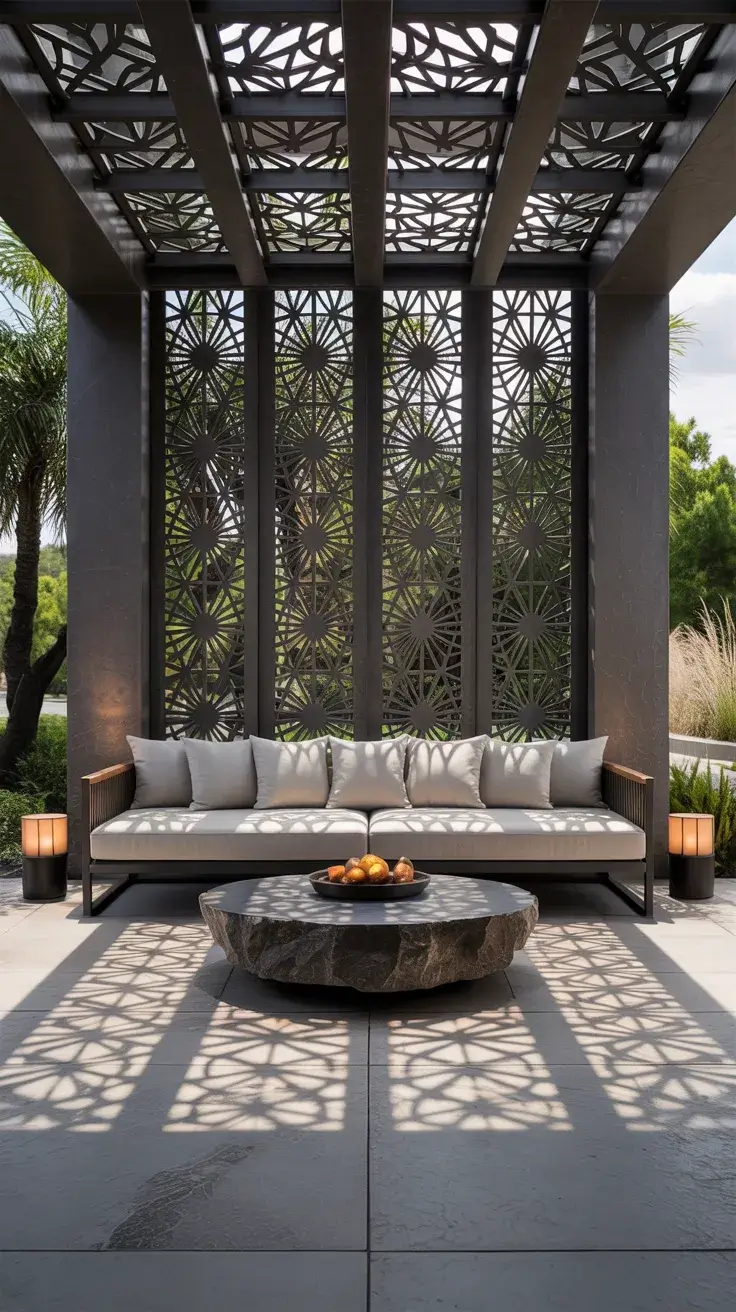
One improvement I’d recommend in this block is to consider mixing two or three panels with different patterns for a custom, high-end installation.
7. Climbing Plant Trellis Privacy Wall
A climbing plant trellis offers a living, evolving privacy solution that blends seamlessly into natural landscapes. I often turn to this option when I want to create a soft, organic form of screening that increases in beauty and density over time. Whether using ivy, clematis, jasmine, or wisteria, the trellis brings life and texture to outdoor environments.
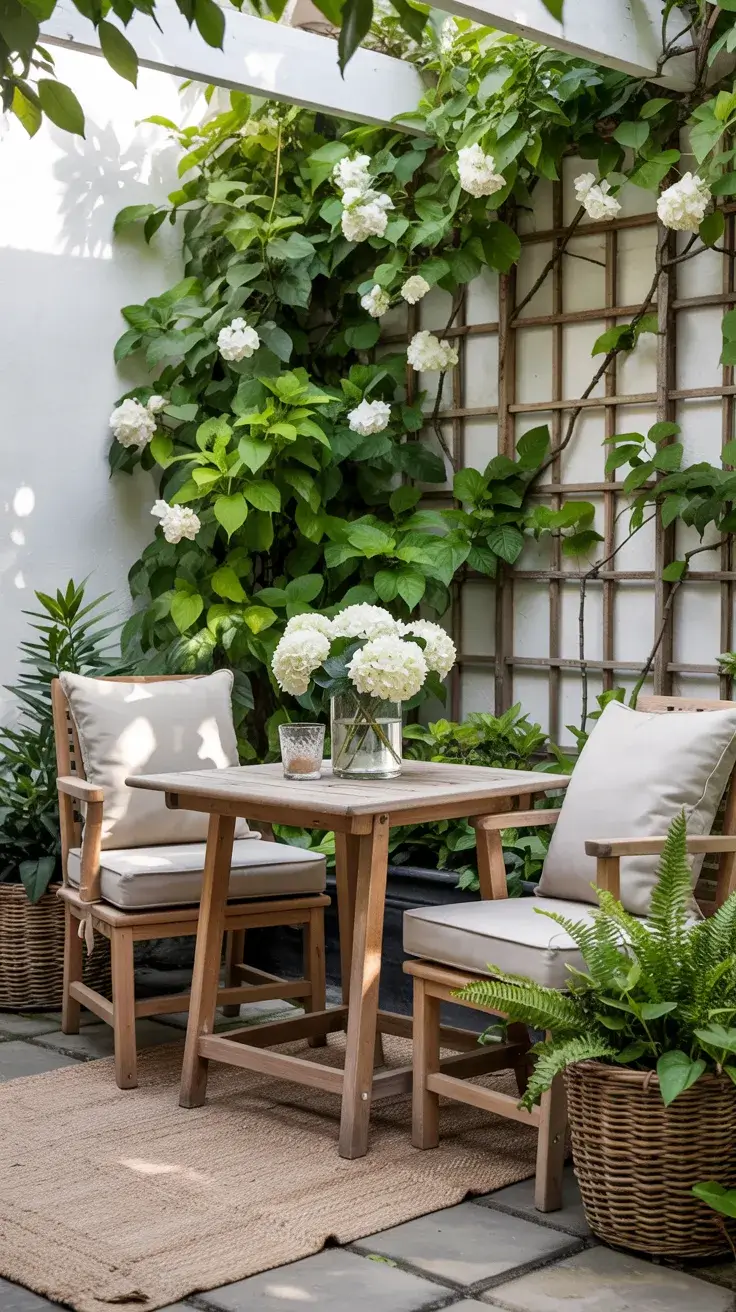
For furniture, I recommend natural materials like teak, rattan, or stone-top tables to complement the greenery. Accessories such as outdoor lanterns, hanging string lights, and ceramic planters work beautifully alongside a trellis, creating a serene, gardenlike ambiance.
From experience, plant-based screens are deeply appreciated by homeowners who enjoy low-maintenance gardening. Garden designers in the US often recommend using a steel trellis frame for durability, especially when supporting heavier vines, and I have found this approach incredibly reliable.
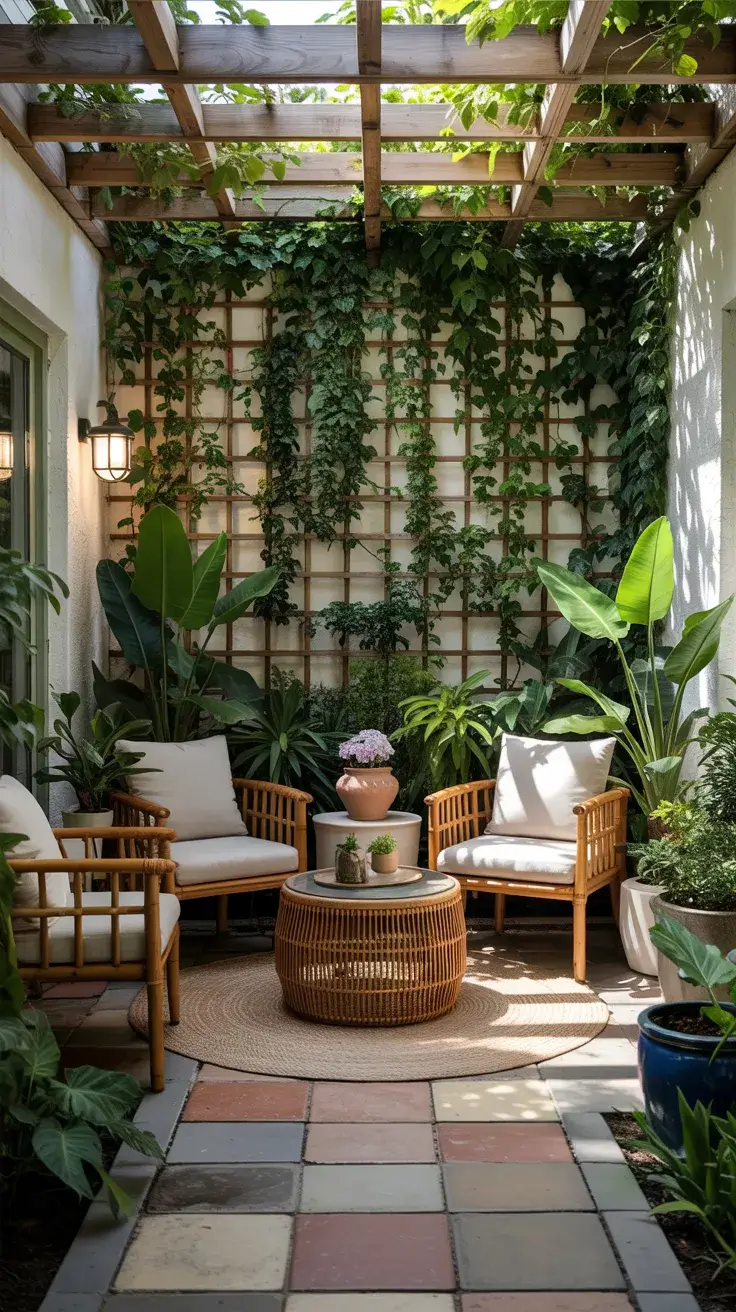
Before completing this section, I would also suggest adding mulch or ground cover plants at the base of the trellis. This enhances the garden aesthetic and encourages healthier plant growth.
8. Rustic Wooden Plank Divider
A rustic wooden plank divider creates a warm and inviting outdoor atmosphere, especially suited for homes that embrace natural or farmhouse-inspired aesthetics. I often choose this design when I want a strong sense of character without overwhelming the space. The varied textures and tones of reclaimed or weathered wood introduce visual interest and depth while providing reliable privacy. This type of divider blends beautifully with garden landscapes, offering a cozy, grounded feeling.
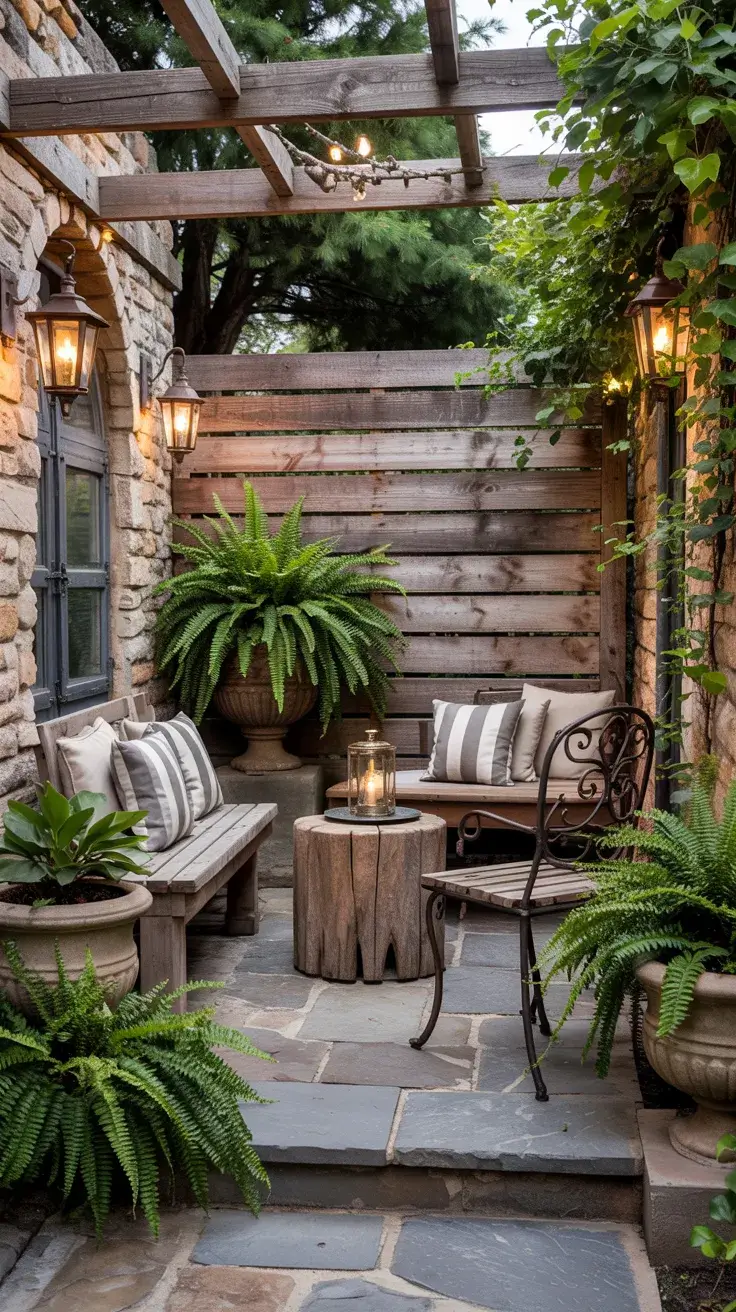
When complementing this divider with furniture, I prefer pairing it with chunky wooden benches, wrought iron chairs, or rattan loungers to stay consistent with the earthy theme. Soft outdoor cushions in muted tones, stone planters, and lantern-style lighting also work exceptionally well. These elements highlight the divider’s rustic charm and ensure the entire space feels cohesive and thoughtfully styled.
From personal experience, rustic plank dividers offer homeowners a sense of durability and authenticity that many appreciate. Design experts from leading US publications consistently point out that natural textures help outdoor areas feel more refined and timeless. I’ve found that adding climbing plants or herbs near the base gives the screen a lived-in, organic look over time.
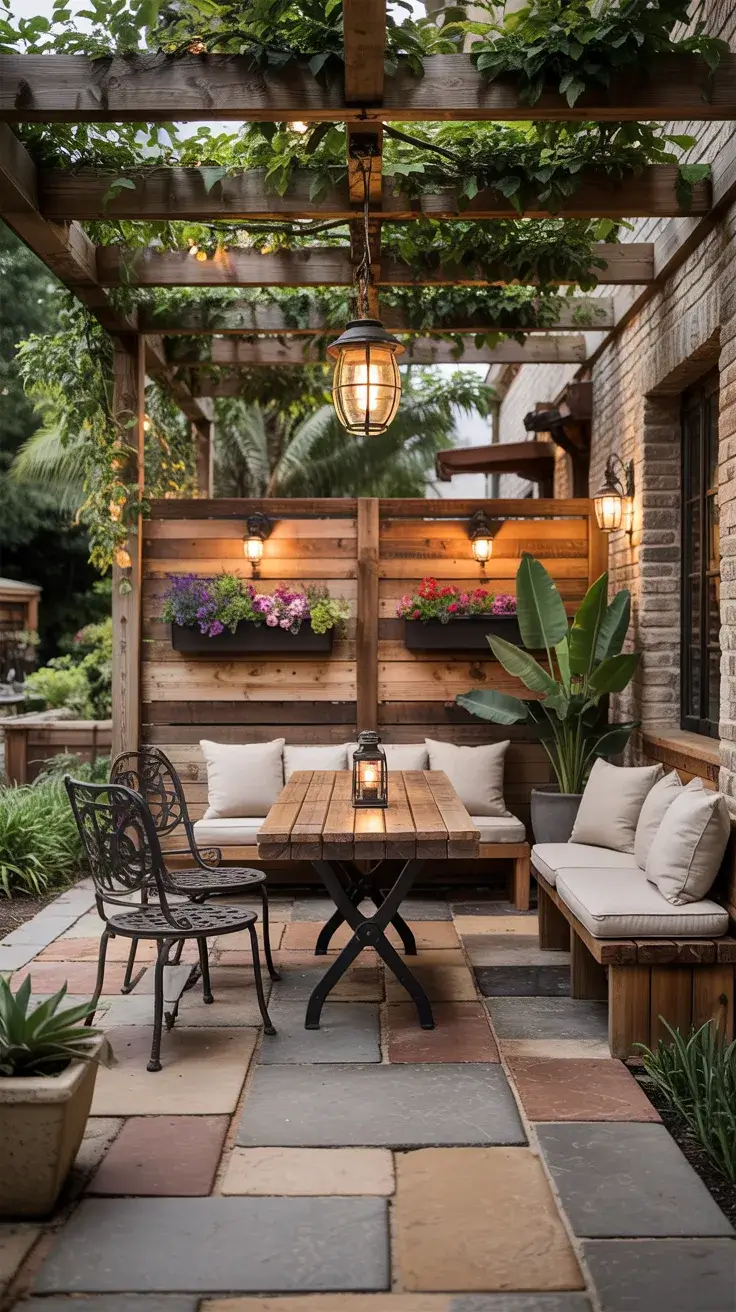
To further enhance this section, I would recommend incorporating built-in hooks or shelves into the wooden planks. These small additions bring functional value and reinforce the welcoming, handcrafted feel.
9. Retractable Fabric Patio Screen
Retractable fabric screens are one of the most convenient privacy solutions I use, especially for patios or verandas that need flexible coverage. This option allows homeowners to shield their space only when necessary, making it perfect for entertaining or evenings when extra shade is needed. The clean lines and soft texture of the fabric introduce a modern, relaxed aesthetic without creating a permanent visual barrier.
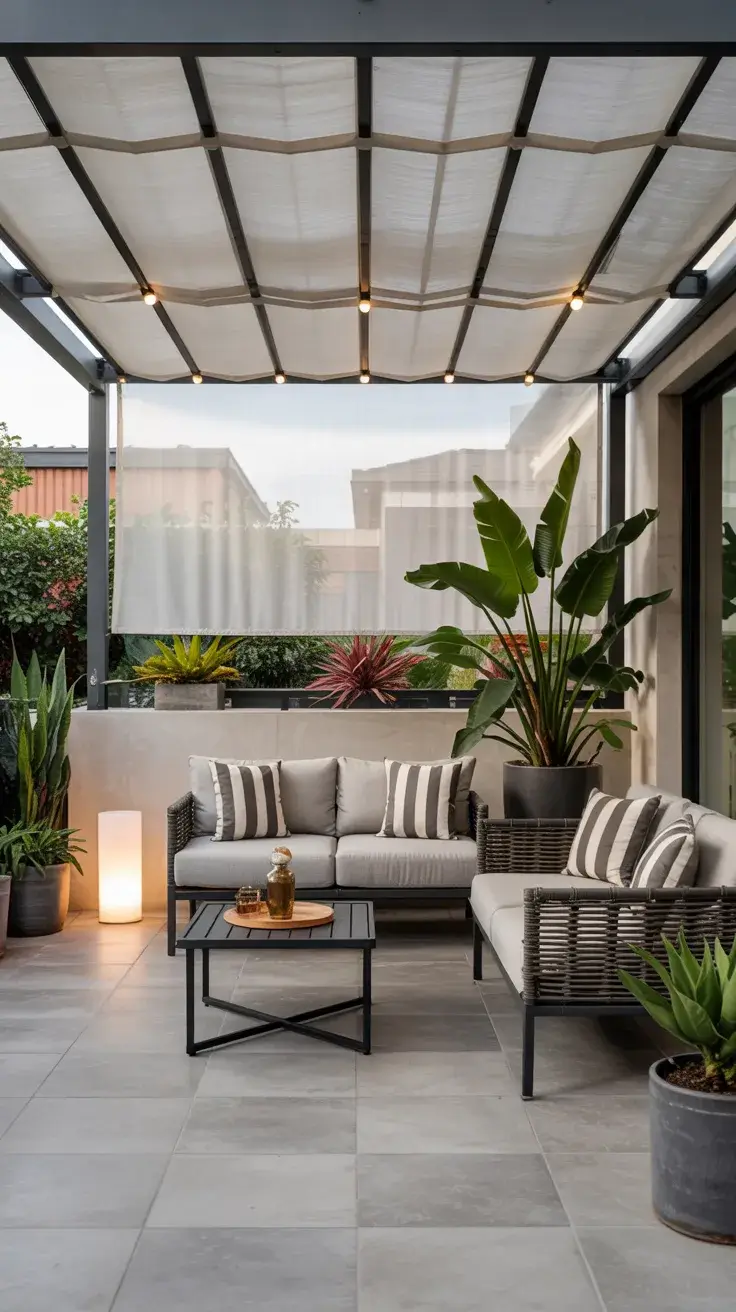
For furnishings, I tend to pair retractable screens with modular outdoor sofas, lightweight metal side tables, and soft textiles that echo the fabric’s breezy feel. Neutral or earthy color palettes usually work best to maintain a calm, balanced environment. Adding potted trees or tall planters nearby creates a more enclosed, intimate atmosphere when the screen is lowered.
Professionally, I appreciate how retractable panels withstand outdoor conditions when properly chosen. Designers in major lifestyle publications often recommend investing in UV-resistant, mold-proof fabrics to ensure longevity, and I fully support this advice. Proper installation is also essential to maintain smooth operation.
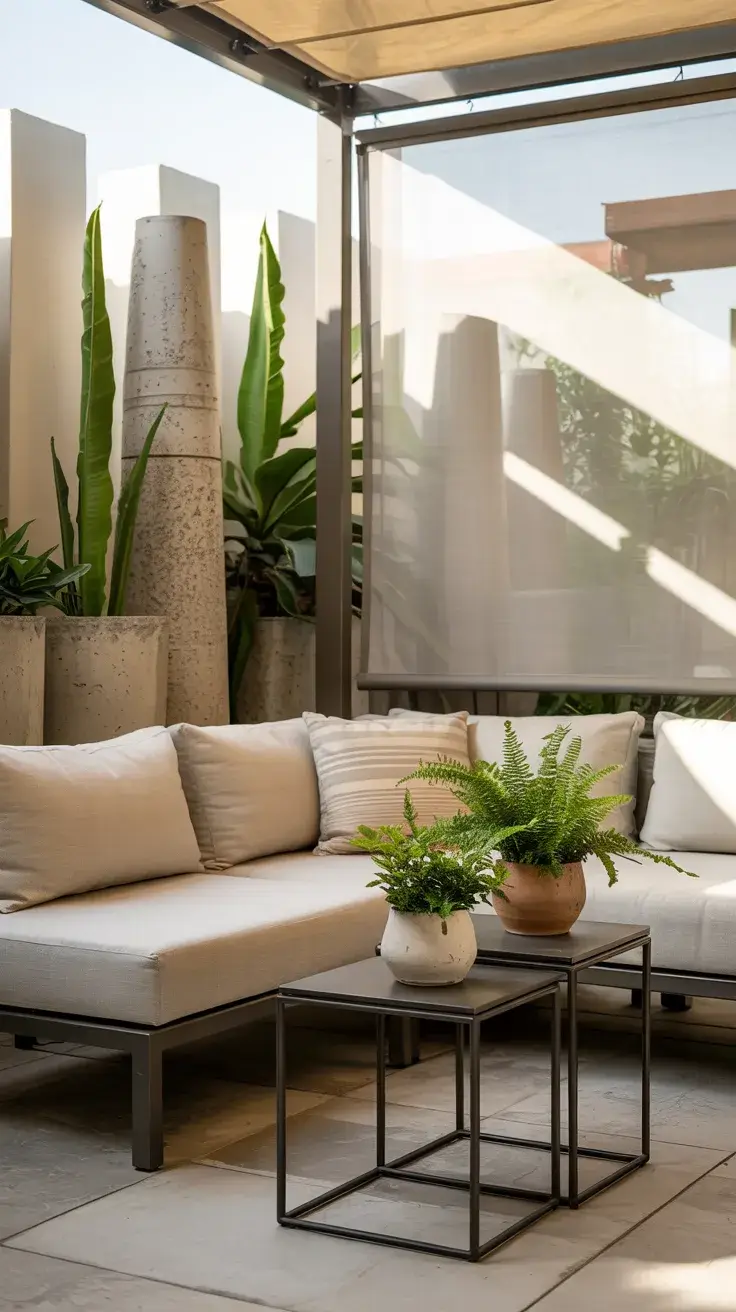
If I were to add anything to this section, I’d recommend integrating subtle LED lighting along the top rail. This small upgrade enhances visibility and ambiance during evening use without overpowering the space.
10. Outdoor Privacy Curtains
Outdoor curtains offer a soft, elegant approach to privacy that I often turn to when clients want a more relaxed, resort-inspired atmosphere. These curtains sway naturally with the breeze, adding movement and comfort to patios, pergolas, and balconies. They create instant seclusion while maintaining a feeling of openness when tied back.
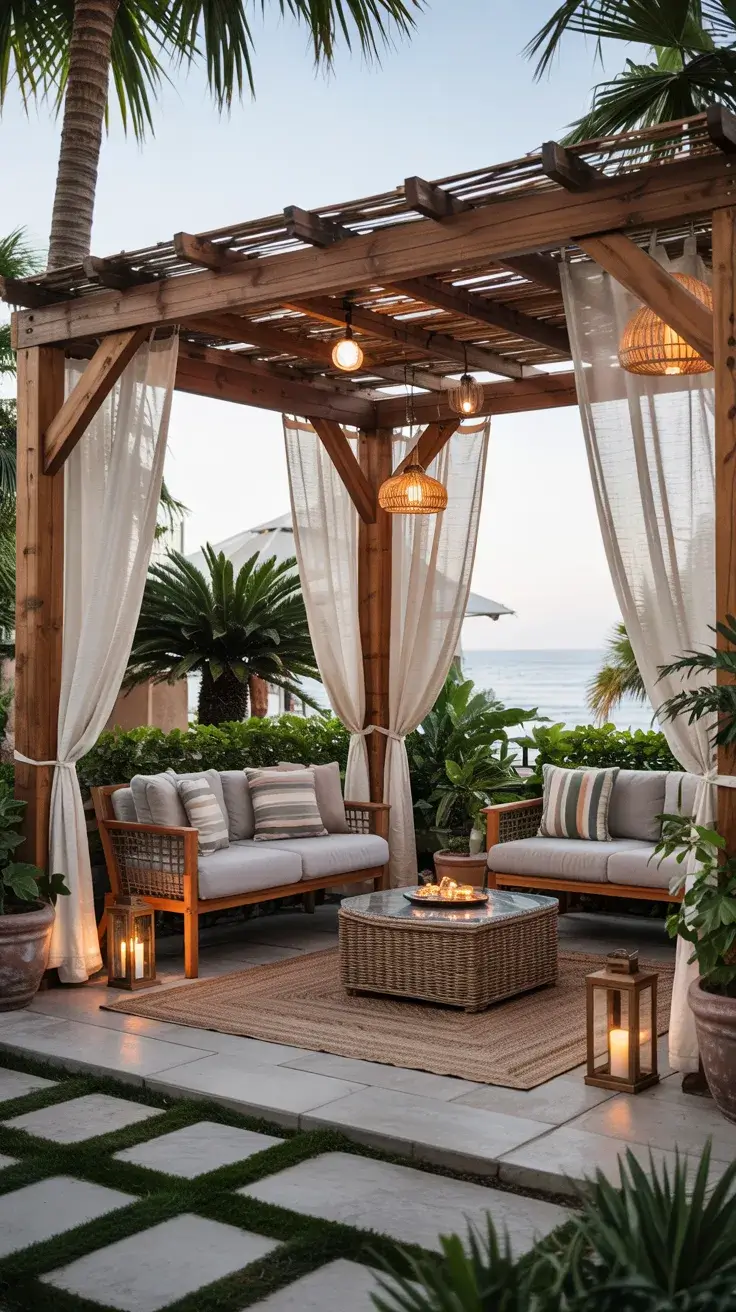
In terms of design pairing, I usually recommend cushioned lounge seating, woven accents, and neutral textiles that complement the curtains’ softness. A simple pergola structure or curtain rods designed for outdoor use help define the space while maintaining visual lightness. Accessories such as lanterns, textured rugs, and potted palms strengthen the serene, retreat-like ambiance.
In my experience, high-quality outdoor curtains can significantly elevate the feel of a space. Many US designers advocate for using weather-resistant fabrics that resist fading and moisture, ensuring that the curtains perform beautifully over time. I’ve found that choosing slightly heavier fabrics helps maintain drape and prevents excessive fluttering in windy conditions.
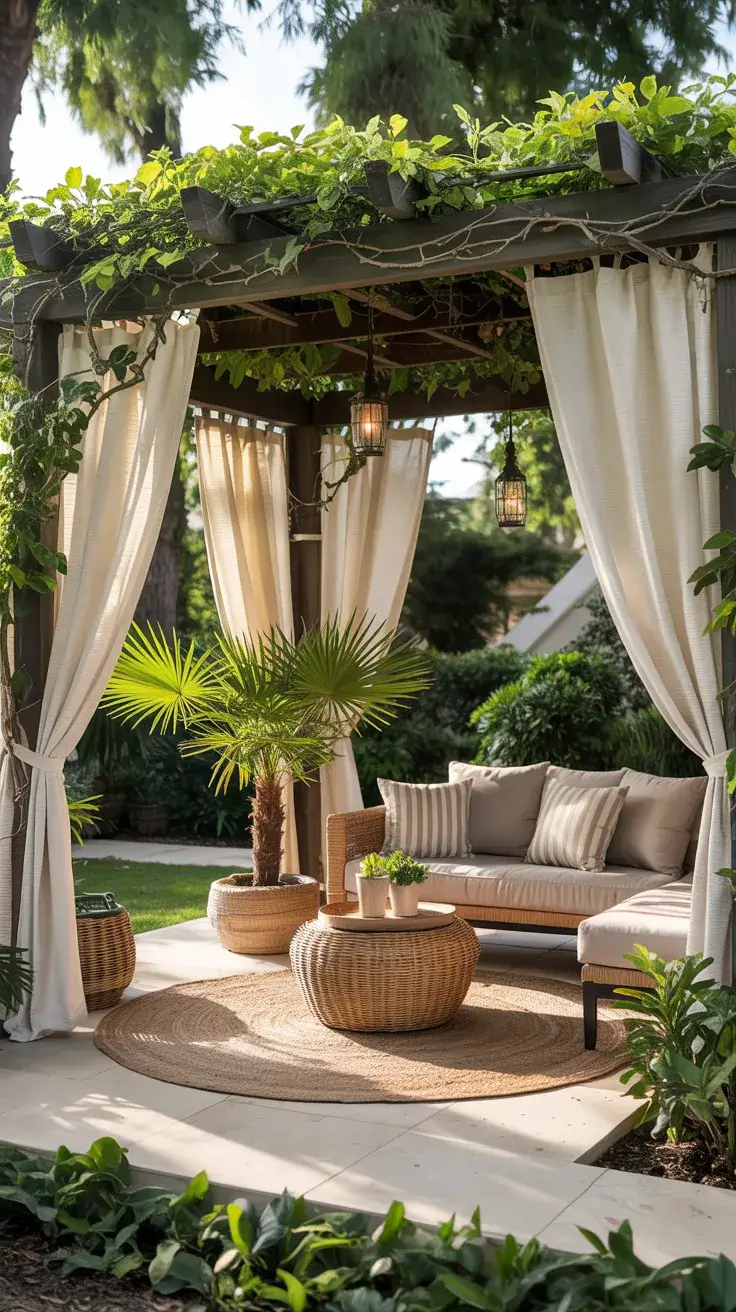
To finish this section, I would also suggest adding weighted hems or discreet clips that hold curtains in place without detracting from the aesthetic.
11. Stone And Wood Combination Screen
A stone and wood combination screen creates a balanced interplay between ruggedness and warmth. I often use this design when I want a privacy solution that feels substantial and integrated into the surrounding landscape. The stone adds durability and texture, while the wood introduces warmth and softness, resulting in a visually compelling outdoor feature.
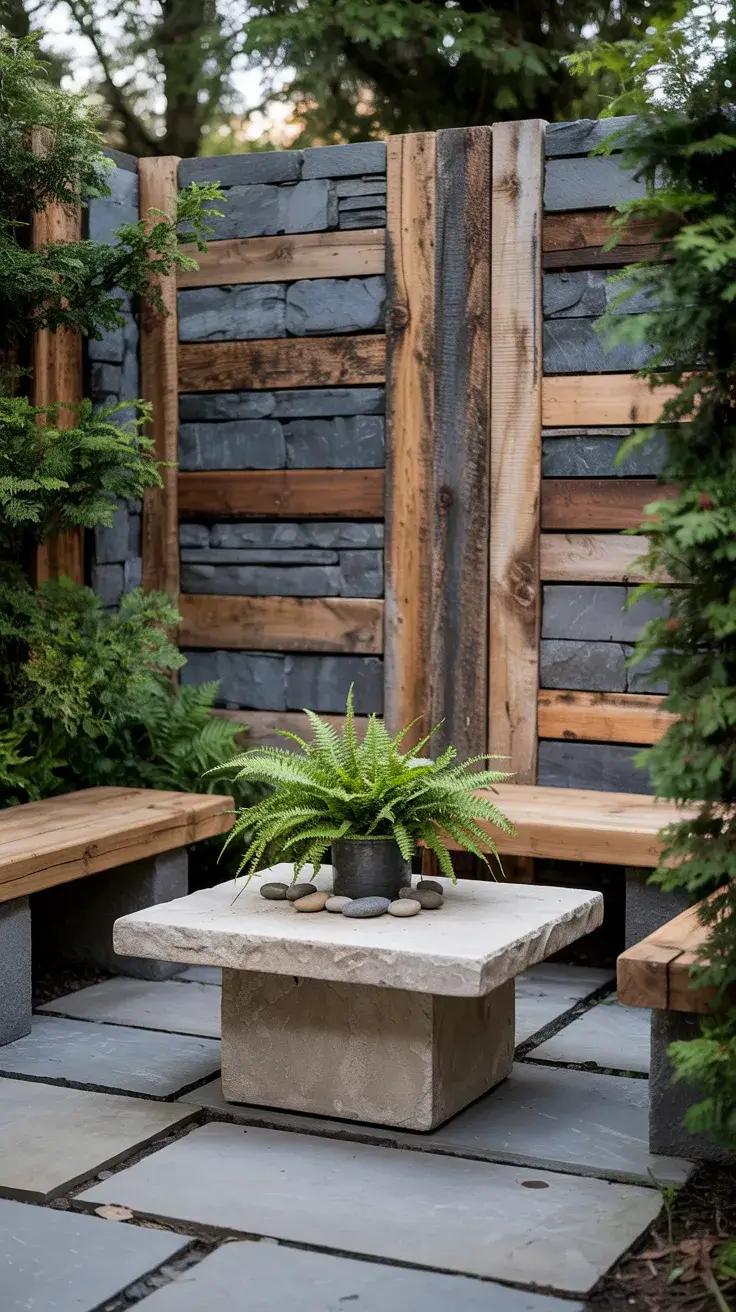
To complement this structure, I typically incorporate solid outdoor seating such as stone-topped coffee tables, wooden benches, and metal-framed loungers. Potted shrubs, climbing greenery, or ground-level landscaping strengthen the organic aesthetic. These additions tie the contrasting materials together and create a serene, grounded environment.
Professionally, I appreciate how this combination holds up over time. Many landscape designers in the US highlight the importance of mixing materials to add depth and character to outdoor spaces. I’ve personally observed that clients often gravitate toward this look because it feels both modern and timeless.
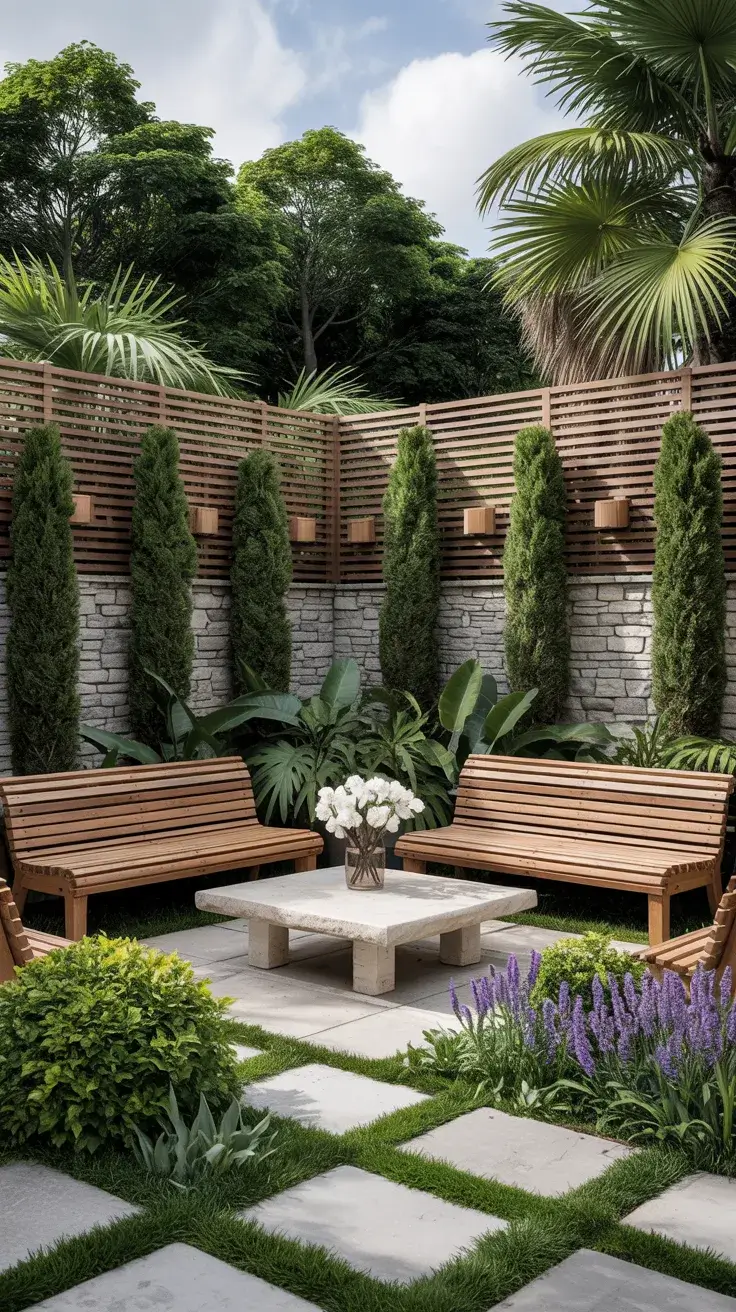
If I were to add anything further, I’d suggest integrating small built-in planters within the stone areas. These planters introduce greenery without cluttering the overall structure.
12. Eco Friendly Living Green Wall
A living green wall is one of the most sustainable and visually striking privacy solutions available today. I frequently recommend it for homeowners who want an immersive natural experience while achieving full privacy. By incorporating dense layers of plants into a structured frame, this wall becomes a vibrant, living piece of architecture.
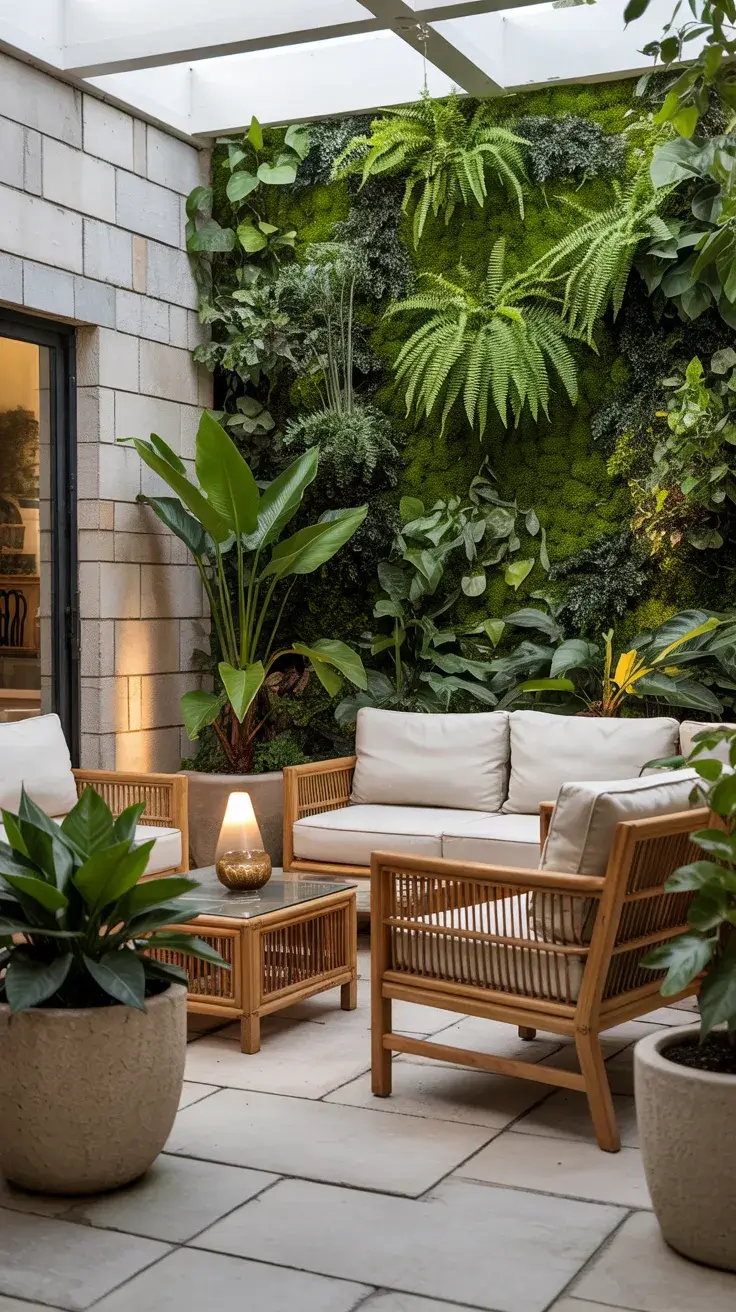
For furnishings, I typically choose materials that complement the organic theme: teak seating, stone planters, rattan accents, and neutral outdoor textiles. Soft lighting placed above or below the green wall highlights the textures of the foliage and enhances the calming atmosphere. This combination creates a fresh, inviting outdoor retreat.
Professionally, I find that living walls not only improve privacy but also enhance air quality and reduce noise. Many environmental designers in the US emphasize their ecological benefits, and I completely agree. Regular irrigation and proper plant selection ensure longevity and healthy growth over time.
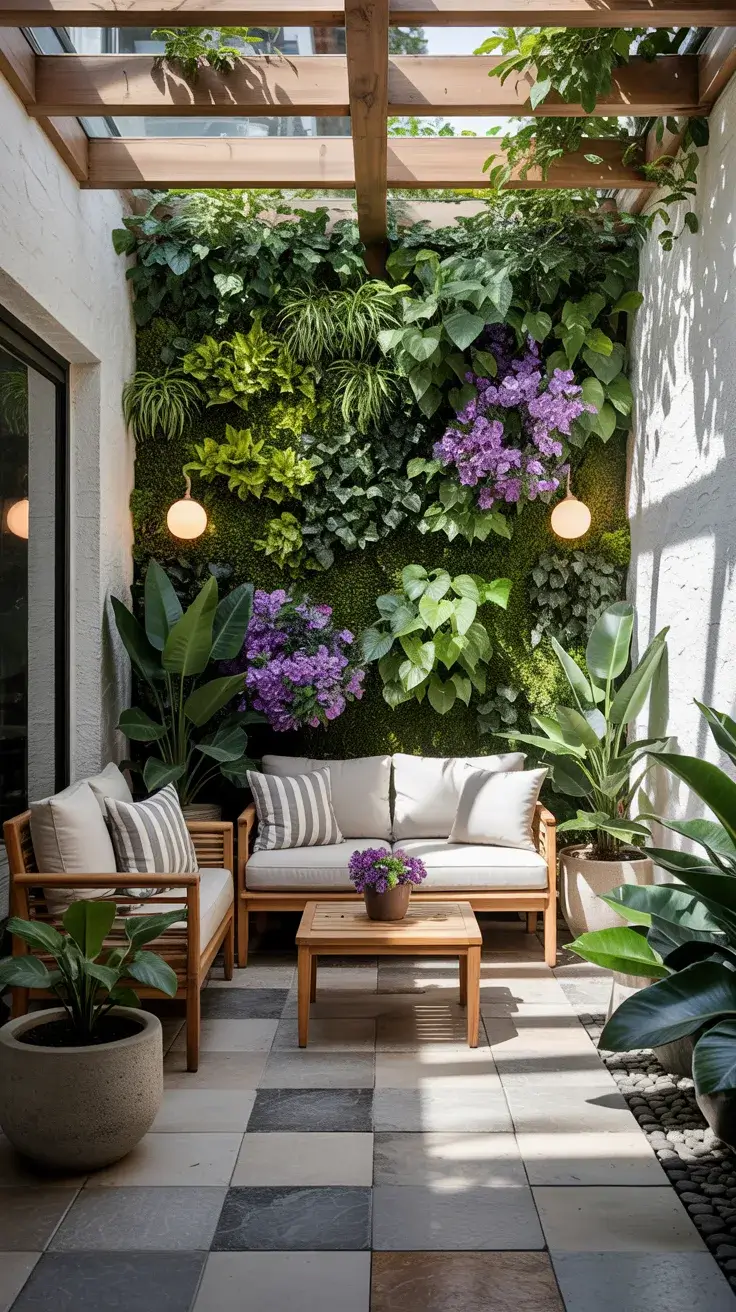
What I would suggest adding to this block is an integrated drip irrigation system. This simplifies maintenance and supports consistent plant health.
13. Foldable Rattan Patio Divider
A foldable rattan patio divider is an ideal choice for homeowners who want portability and style without committing to a permanent installation. I like using these dividers because they offer lightweight functionality and natural aesthetics, making them perfect for balconies, small patios, or flexible seating arrangements. The woven texture adds visual warmth and complements many design styles.
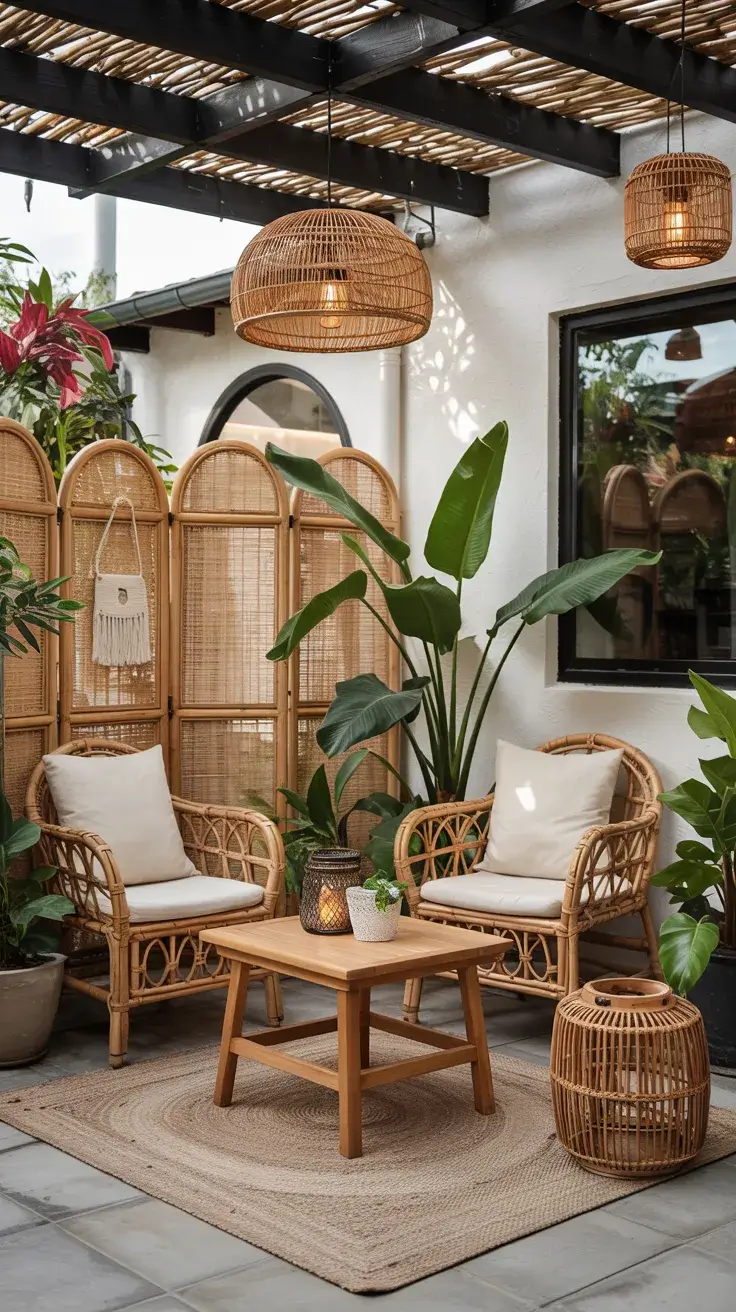
Furniture pairing is simple: rattan chairs, teak tables, and soft outdoor cushions harmonize effortlessly with the divider. Adding potted plants or woven lanterns deepens the cohesive look while maintaining a relaxed atmosphere. Rattan works beautifully with earthy palettes and organic accessories.
In my experience, foldable dividers provide unmatched versatility. They are easy to store, reposition, or combine with other privacy solutions. Lifestyle experts often recommend them for renters or homeowners who want flexible options without permanent construction, and I fully support this advice.
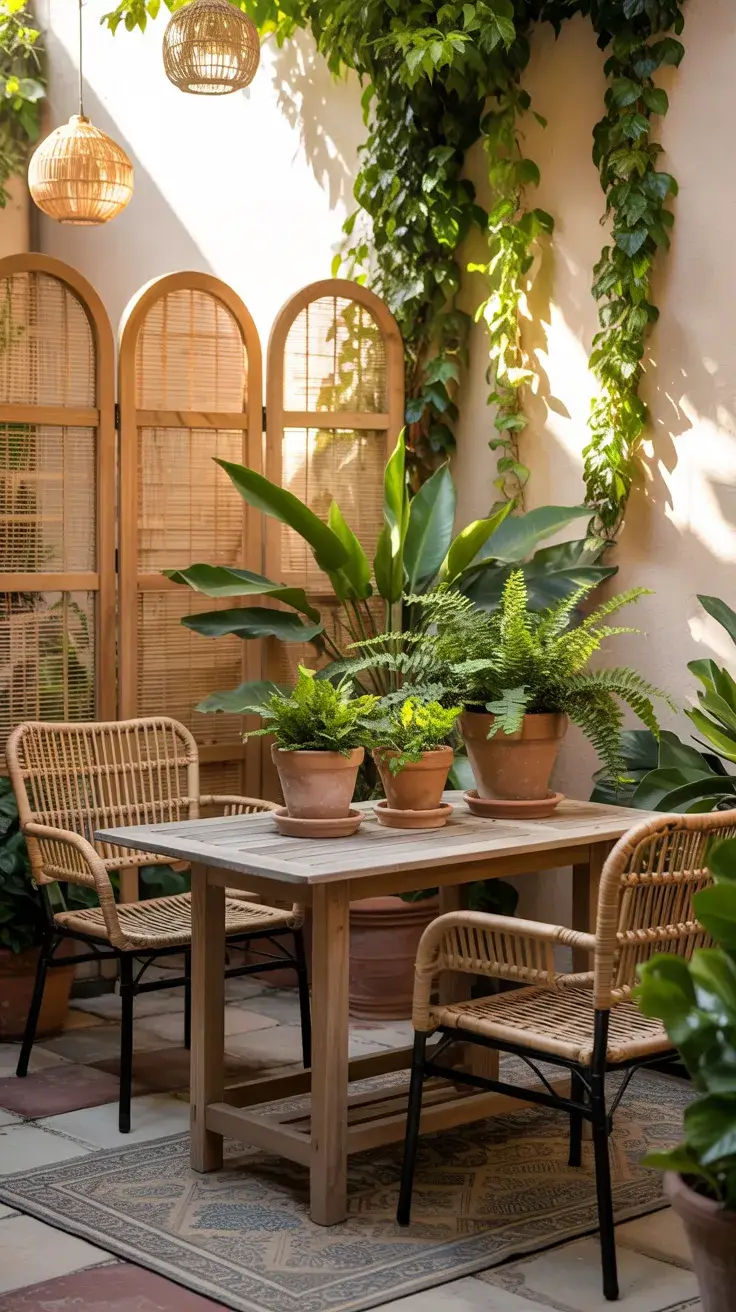
To enhance this section, I would suggest selecting a divider with adjustable hinges. This feature allows the screen to curve or angle, offering more design flexibility.
14. Pergola Privacy Panel Insert
A pergola privacy panel insert is a smart way to enhance an existing pergola while maintaining its open, airy structure. I often incorporate these inserts when clients want additional protection from neighboring views without compromising the beauty of their pergola. The panels can be crafted from wood, fabric, or metal, allowing for a wide range of design possibilities.
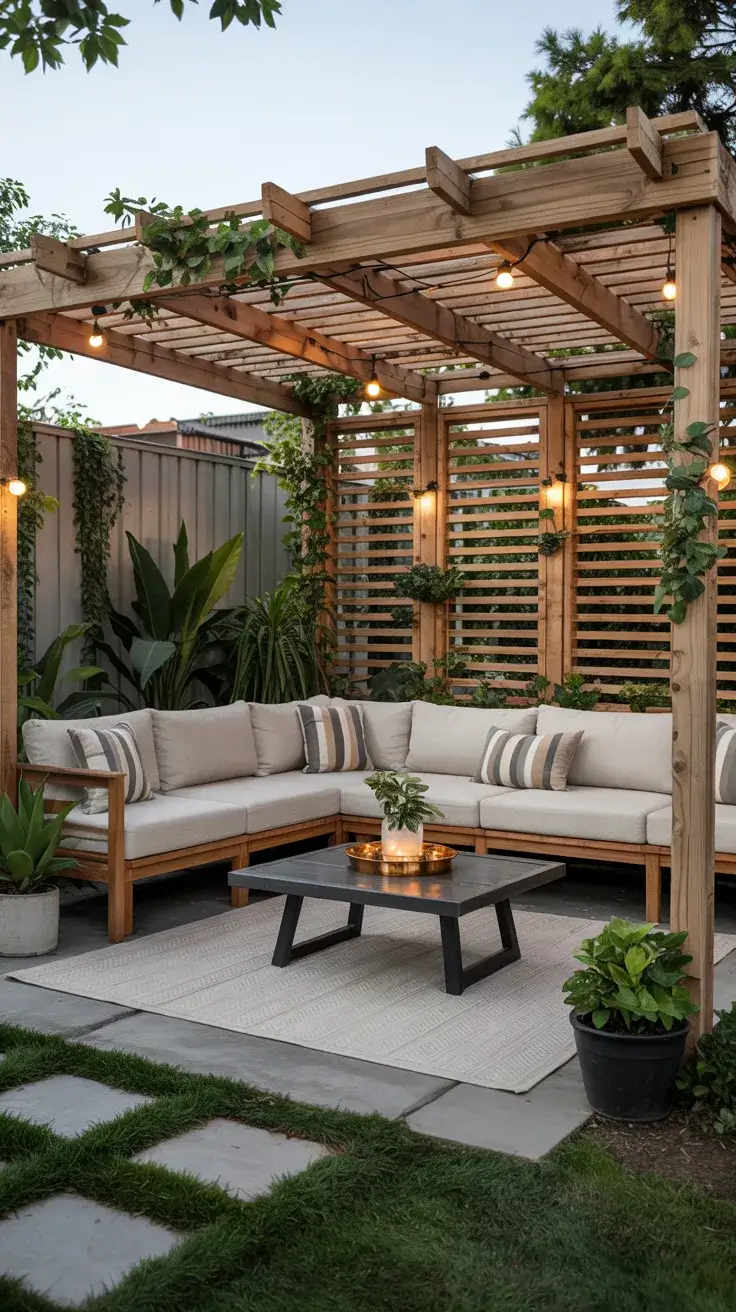
For complementary furnishings, I prefer outdoor sectionals, low-profile tables, and soft lighting such as string lights or sconces. These elements highlight the pergola structure and create a comfortable, layered outdoor setting. Adding climbing plants around the pergola posts helps integrate the panels into the overall design.
Professionally, I appreciate how inserts allow homeowners to update their pergola without major reconstruction. Many design publications emphasize the practicality of customizable pergola enhancements, and I often see clients pleasantly surprised at how significantly inserts improve both privacy and comfort.
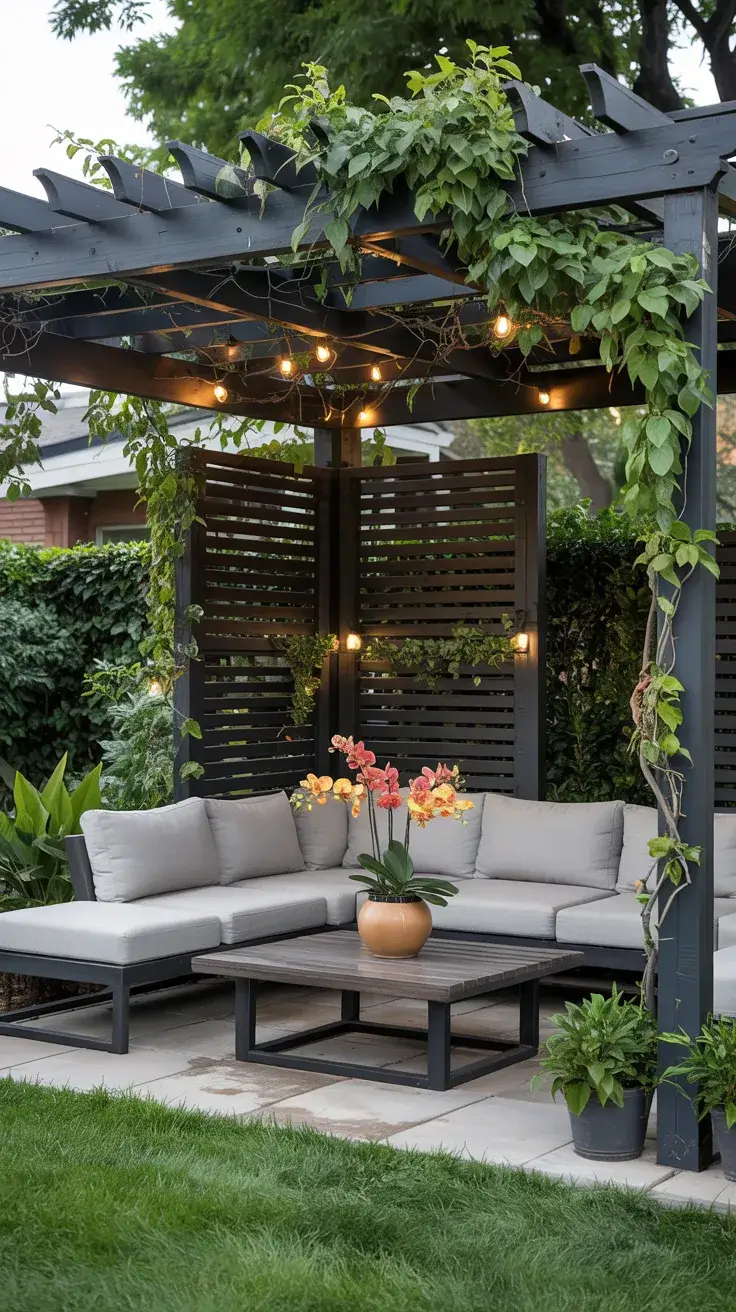
For improvement, I would recommend choosing panels that can slide or fold. This creates a multifunctional setup that adapts to changing needs throughout the day.
15. Frosted Glass Outdoor Partition
A frosted glass outdoor partition is one of the most contemporary privacy solutions I enjoy using, especially for patios that need privacy without losing natural light. The soft translucency creates a refined backdrop while maintaining brightness and an airy feeling in the space. In 2026, frosted glass continues to dominate modern outdoor settings because it offers both elegance and practicality, acting as a sleek architectural element.
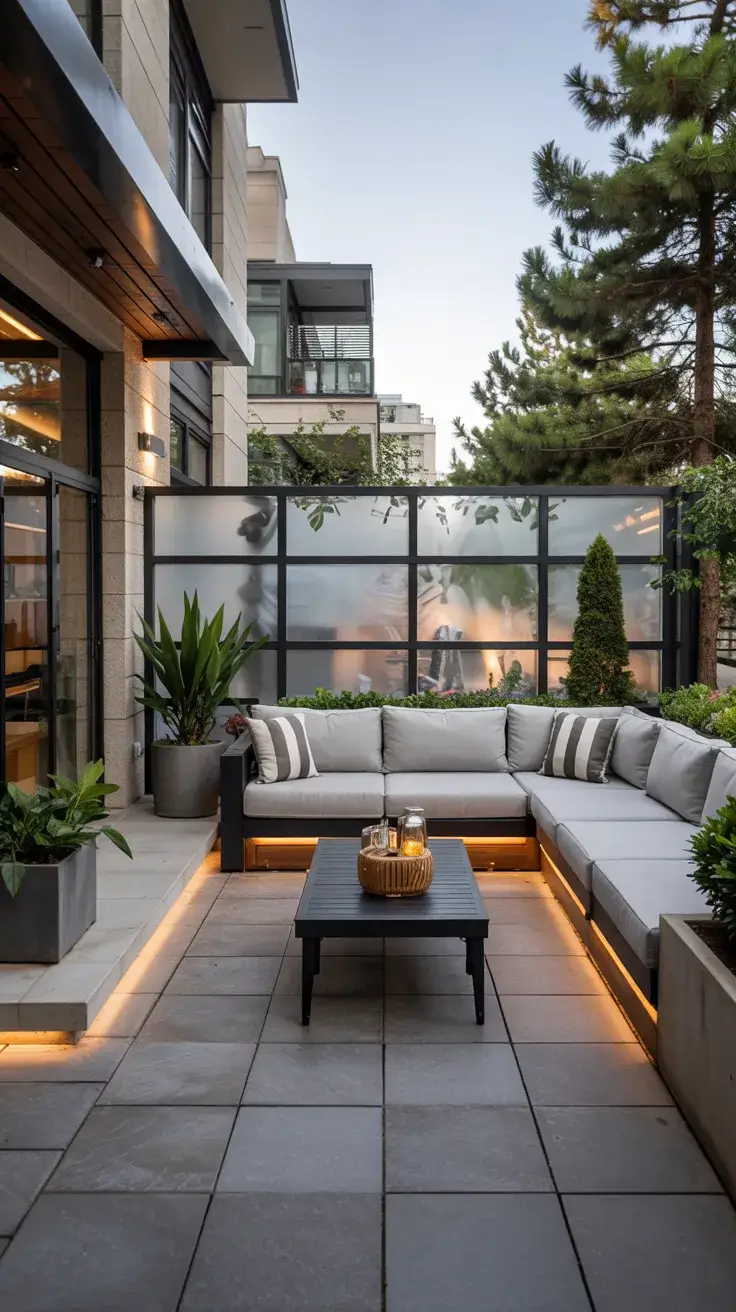
When styling this partition, I prefer clean-lined furniture such as powder-coated aluminum chairs, modular seating with neutral cushions, and minimalist planters with tall greenery. These pieces complement the frosted surface, enhancing its modern and polished appearance. Subtle ground lighting or integrated side sconces help illuminate the glass beautifully at dusk without overpowering the setting.
In my experience, frosted glass performs exceptionally well in urban areas where privacy is a priority but natural light is limited. Many US design experts praise frosted panels for creating a luxurious feel without adding visual heaviness, and I fully agree based on real projects. They remain easy to clean and maintain when treated with protective coatings.
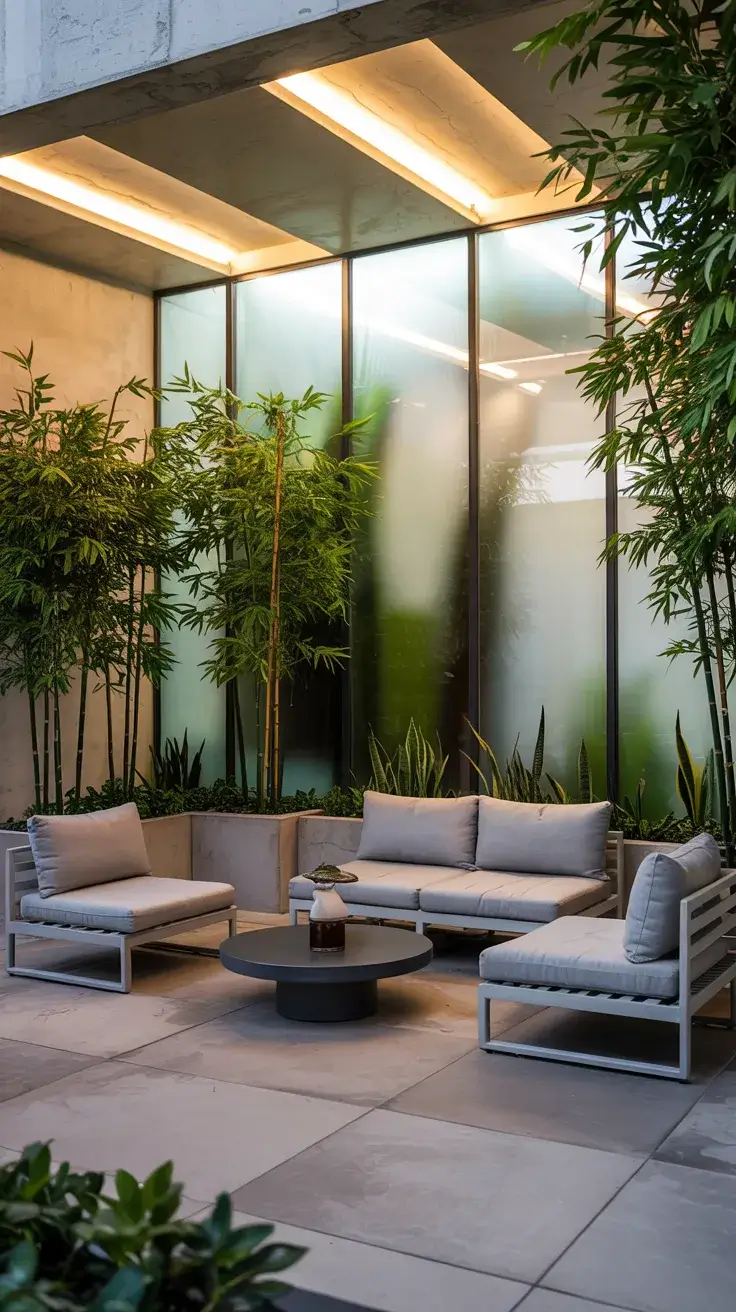
To further elevate this setup, I would incorporate a thin metal frame around the glass. This adds structural definition and ties the screen into the broader outdoor design.
16. Outdoor Privacy Fence With Planters
An outdoor privacy fence with built-in planters provides both function and beauty, merging greenery with structural coverage. I often choose this design when I want to soften hardscaping while offering a significant level of natural privacy. The integration of planters allows the fence to feel like part of the landscape rather than a separate boundary.
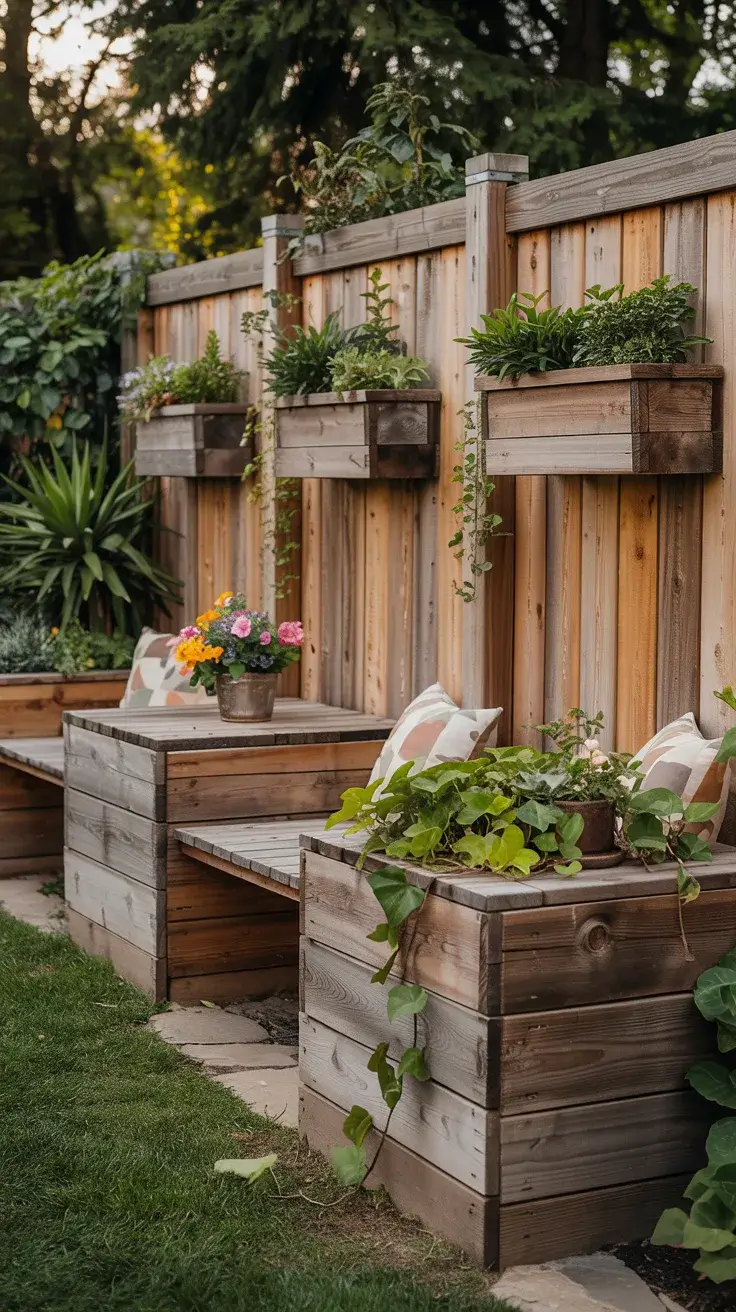
To complement this setup, I prefer adding outdoor seating with warm wood tones, stone side tables, and soft textiles that echo the organic feel of the planters. Using a variety of plant heights, from cascading vines to upright shrubs, enhances the layered aesthetic and brings extra depth to the space.
Professionally, I appreciate how planter-integrated fences encourage homeowners to interact more with their outdoor spaces. Many landscape designers emphasize the importance of mixed greenery for privacy because it creates a breathable, visually pleasing barrier. I’ve found this approach especially effective in suburban or compact yards.
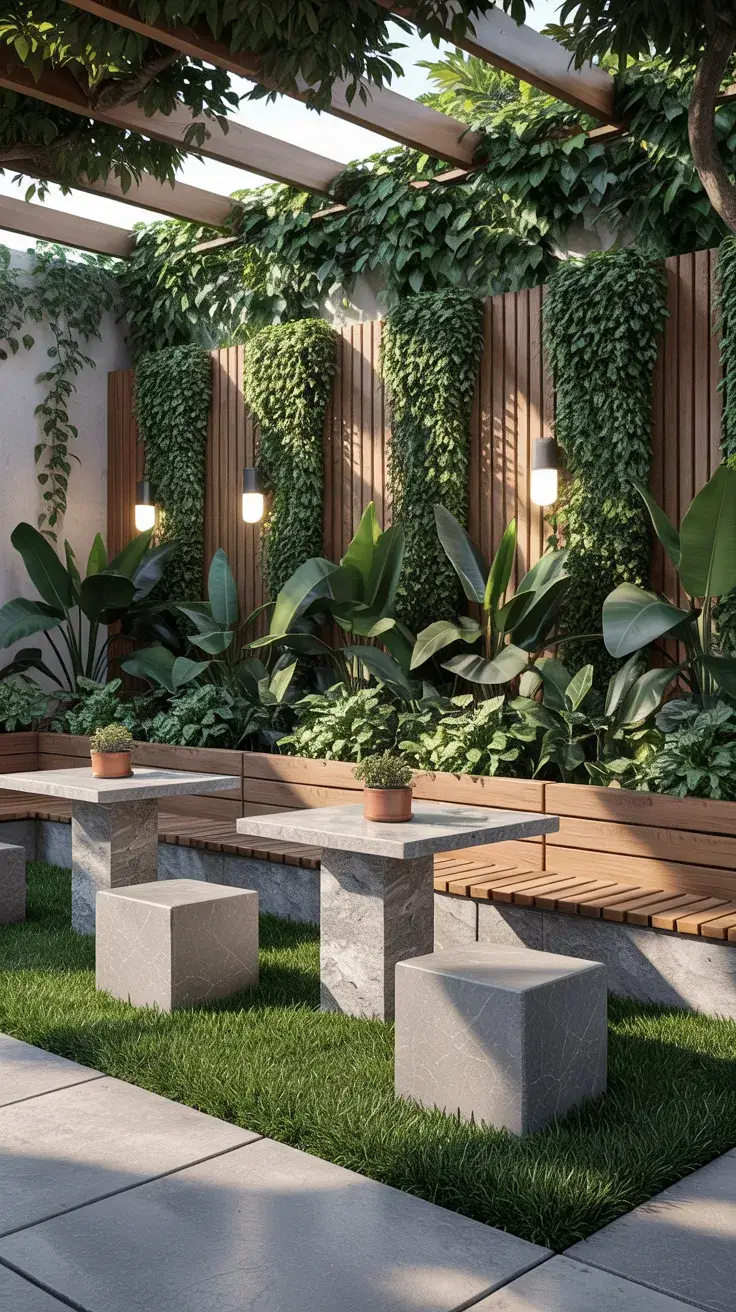
If I were to expand this design further, I’d recommend adding irrigation lines within the planters. This maintains plant health effortlessly and ensures a consistently lush appearance.
17. Woven Reed Garden Privacy Screen
A woven reed screen brings a relaxed, earthy charm that works beautifully in garden settings. I often use this solution when I want a natural texture that feels handcrafted and blends seamlessly with outdoor landscapes. The woven pattern provides excellent partial privacy while adding warmth and softness to the environment.
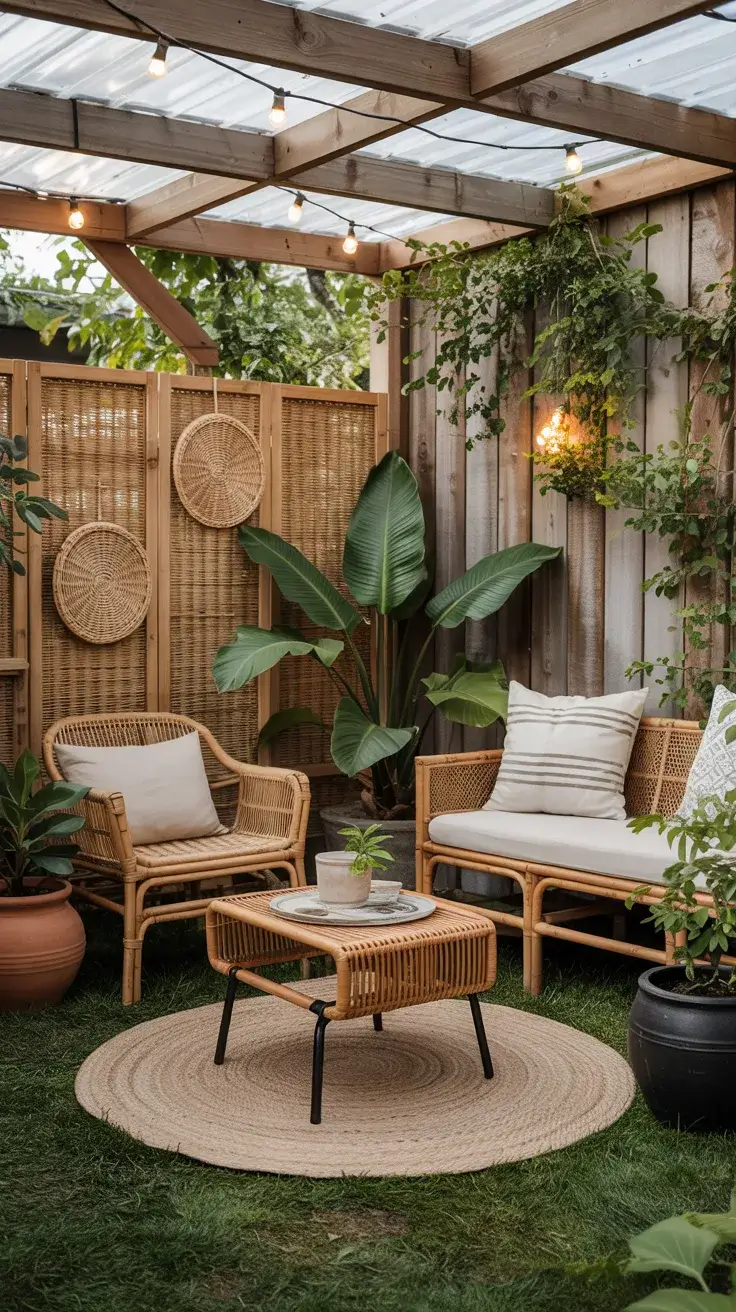
When styling around a reed screen, I often choose rattan furniture, teak benches, or low-slung loungers paired with ceramic pots and woven accents. These natural materials pair harmoniously with the reed texture, reinforcing a cohesive and soothing aesthetic. Soft string lighting or pathway lamps complete the serene setting without detracting from the screen’s organic feel.
Based on my experience, reed screens offer flexibility and affordability, making them a favorite for informal outdoor areas. US outdoor living experts often recommend reed due to its lightweight nature and visual warmth, though sealing can extend its lifespan significantly.
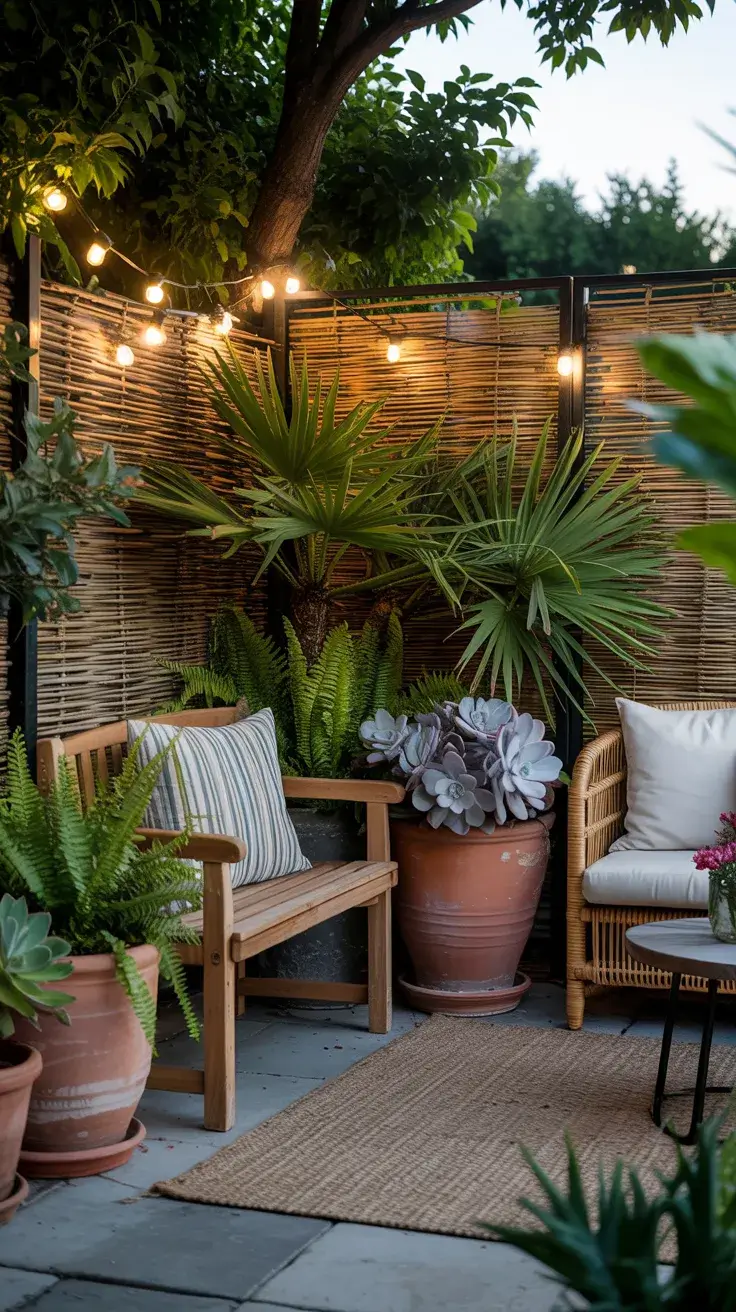
To enhance this section, I would suggest adding tall grasses or bamboo plants behind the screen. This creates depth and strengthens the feeling of natural enclosure.
18. Slatted Composite Privacy Wall
A slatted composite privacy wall is an excellent choice for homeowners seeking durability with a streamlined contemporary look. I often choose this material because composite withstands harsh weather while maintaining a sleek, uniform appearance. The horizontal or vertical slats provide partial visibility control while keeping the space well-ventilated.
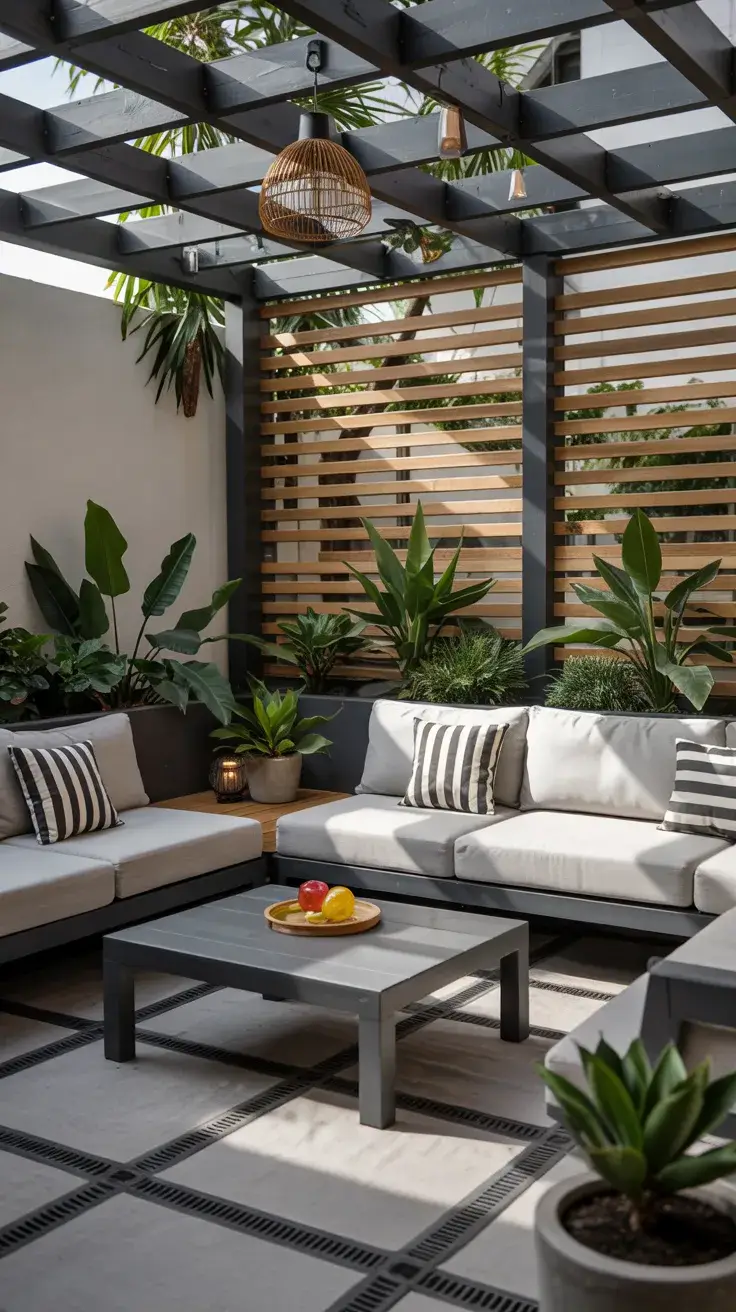
For complementary furnishings, I recommend modern outdoor sectionals, durable resin tables, and metal lighting fixtures. Composite’s smooth finish pairs well with structured, minimal furniture, and adding planters with architectural plants like snake plants or boxwood enhances the modern tone.
In my experience, composite slatted walls are among the lowest-maintenance options available. Many US design publications highlight composite as a top choice for long-term outdoor installations due to its resistance to fading, cracking, and warping. I’ve found this to be consistently accurate across various climates.
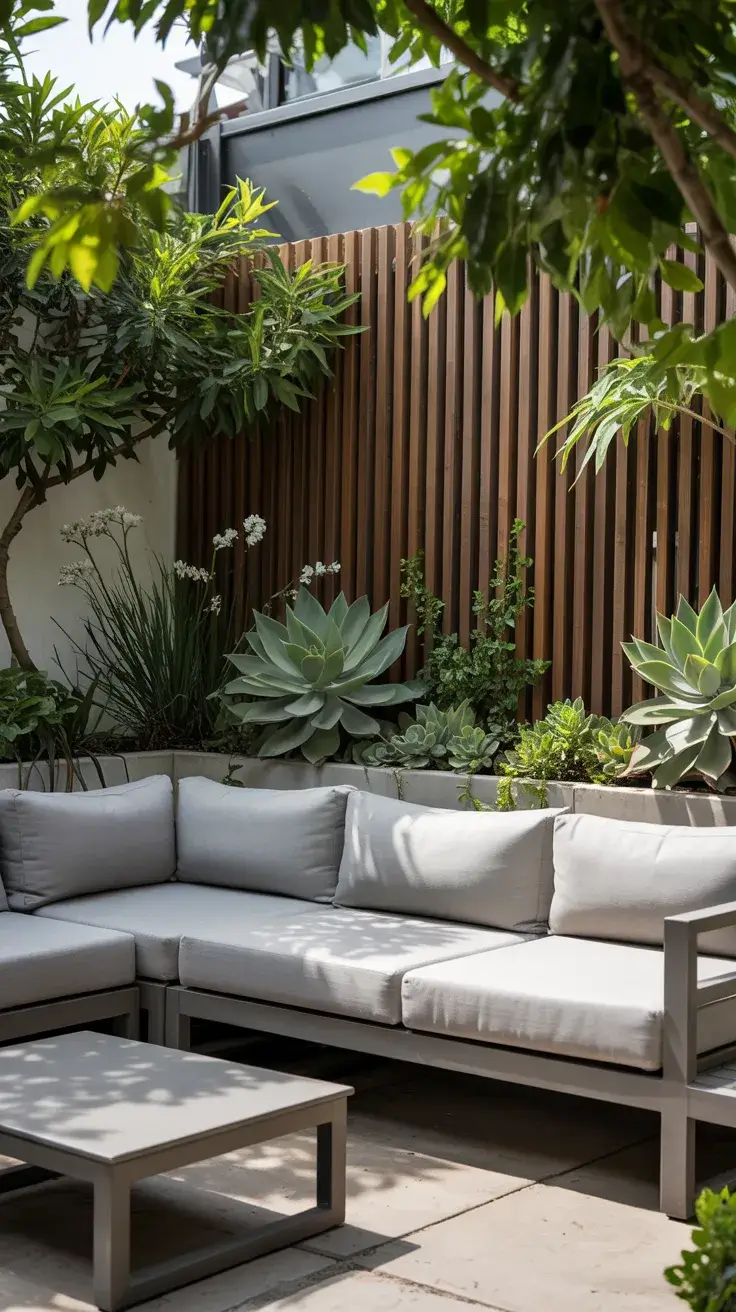
To strengthen this design, I would add a contrasting trim, such as black aluminum framing, to accentuate the clean lines and give the wall a more polished, custom look.
19. Minimalist Black Metal Privacy Screen
A minimalist black metal privacy screen introduces a bold, architectural presence that works beautifully in modern outdoor spaces. I often use this design when I want crisp lines and a strong visual statement that still feels lightweight. The matte black tone contrasts beautifully against greenery and natural wood elements, giving the space a refined, contemporary edge.
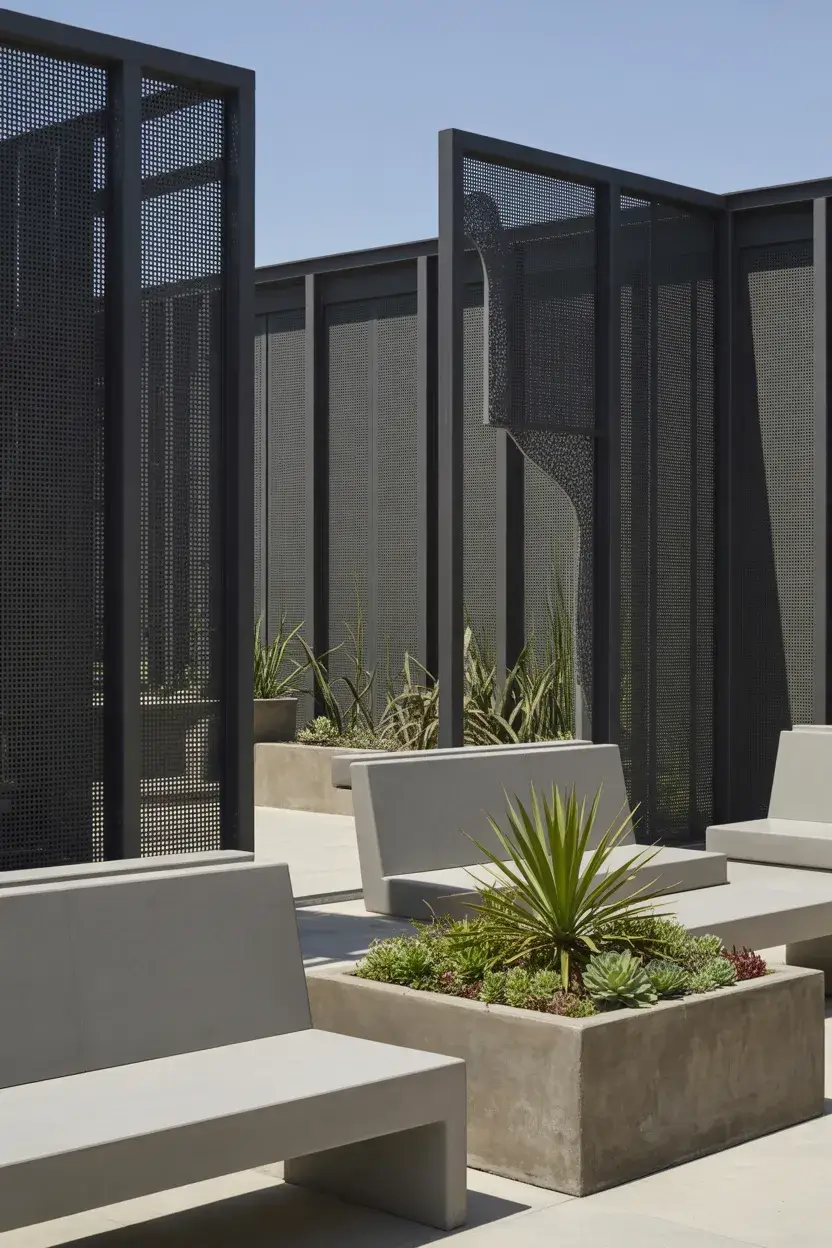
Furniture pairing is straightforward: concrete benches, modular outdoor seating, and structured planters all complement the screen’s clean silhouette. I also like incorporating a neutral outdoor rug to soften the overall look while preserving its modern feel. Accent pieces such as lanterns or sculptural planters enhance the bold aesthetic without overpowering it.
From experience, black metal screens age exceptionally well, maintaining their color and structure with minimal upkeep when powder-coated. Many US experts highlight matte black as a defining trend in outdoor privacy screen ideas 2026, and I find that it consistently elevates the sophistication of outdoor spaces.
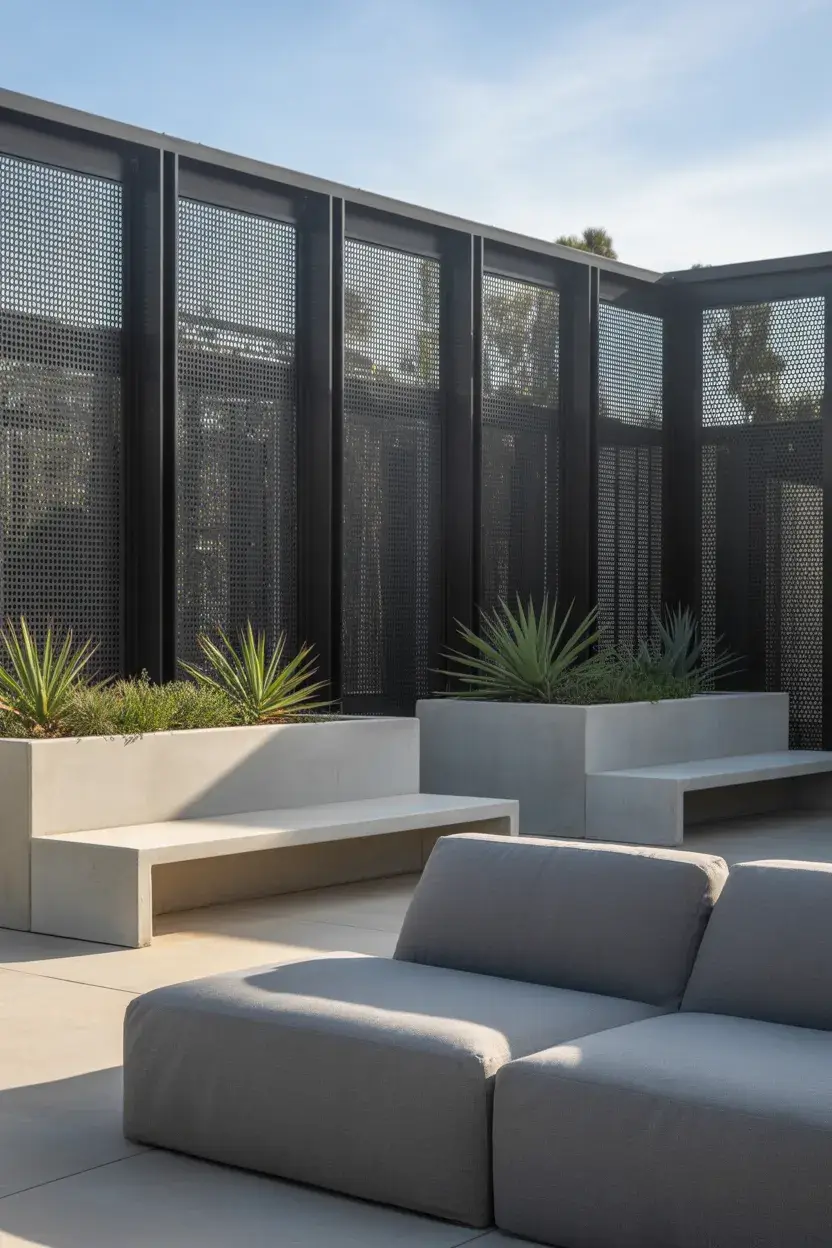
To improve this setup even more, I recommend adding geometric cutouts or perforations to the metal. This provides visual interest while allowing controlled light to pass through.
20. Outdoor Hanging Panel Divider
An outdoor hanging panel divider is one of the most flexible privacy solutions I use, especially for pergolas or covered patios. This design adds movement and lightness to an outdoor space, functioning both as décor and privacy. The suspended panels can be arranged in various configurations to create partial separation without enclosing the area completely.
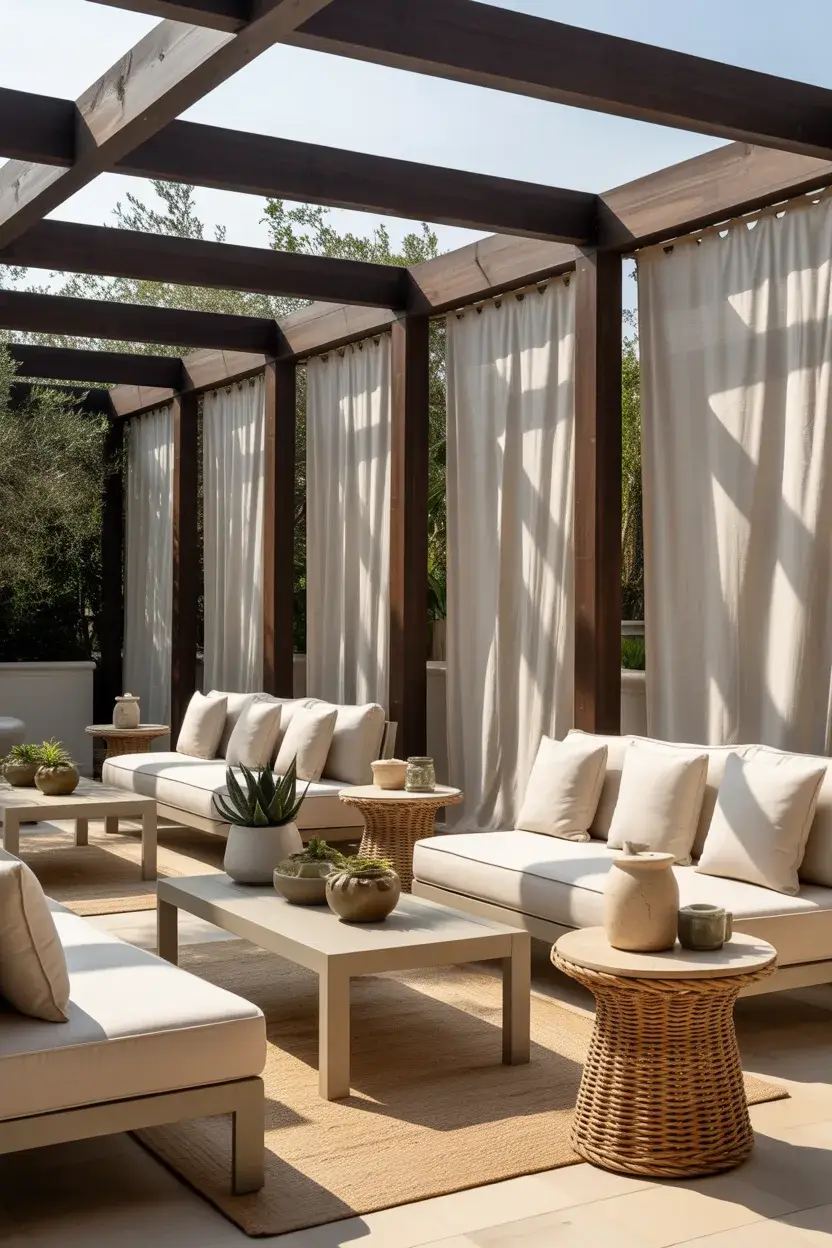
In terms of styling, I prefer pairing hanging panels with soft lounge furniture, woven accessories, and lightweight tables to maintain the airy aesthetic. Fabrics like canvas or waterproof textiles bring softness, while wood or metal frames provide a strong visual anchor.
Professionally, I enjoy the adaptability hanging panels offer. They allow homeowners to adjust coverage depending on the time of day or the level of openness desired. Many lifestyle magazines recommend them for multifunctional outdoor spaces, which aligns with what I see in real-world projects.
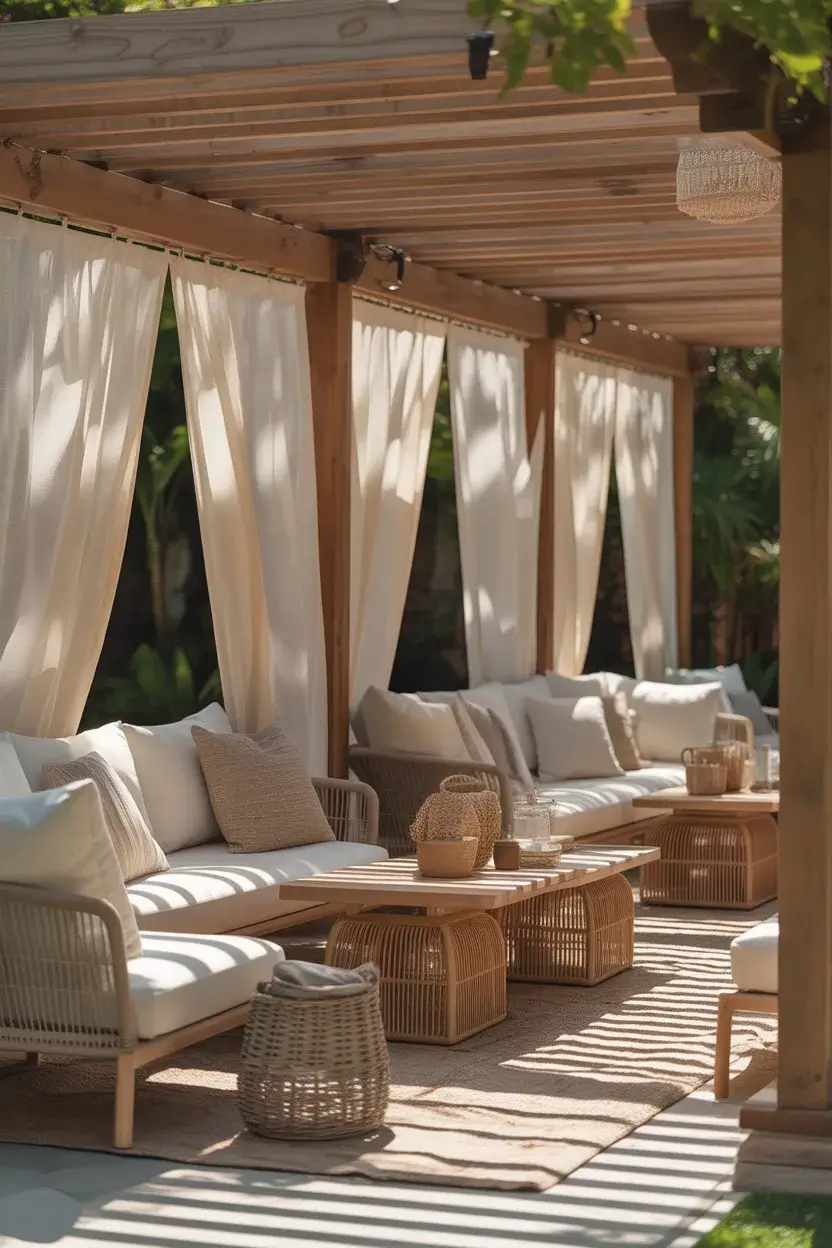
To enhance this design, I would recommend adding adjustable track hardware, allowing the panels to slide or stack as needed for more dynamic space control.
21. Slatted Aluminum Balcony Screen
A slatted aluminum balcony screen is one of my favorite solutions for apartment or condo settings. Its slim, lightweight design provides excellent privacy while maintaining airflow and a clean, modern appearance. Aluminum’s durability makes it ideal for elevated spaces that receive strong sunlight or wind exposure.
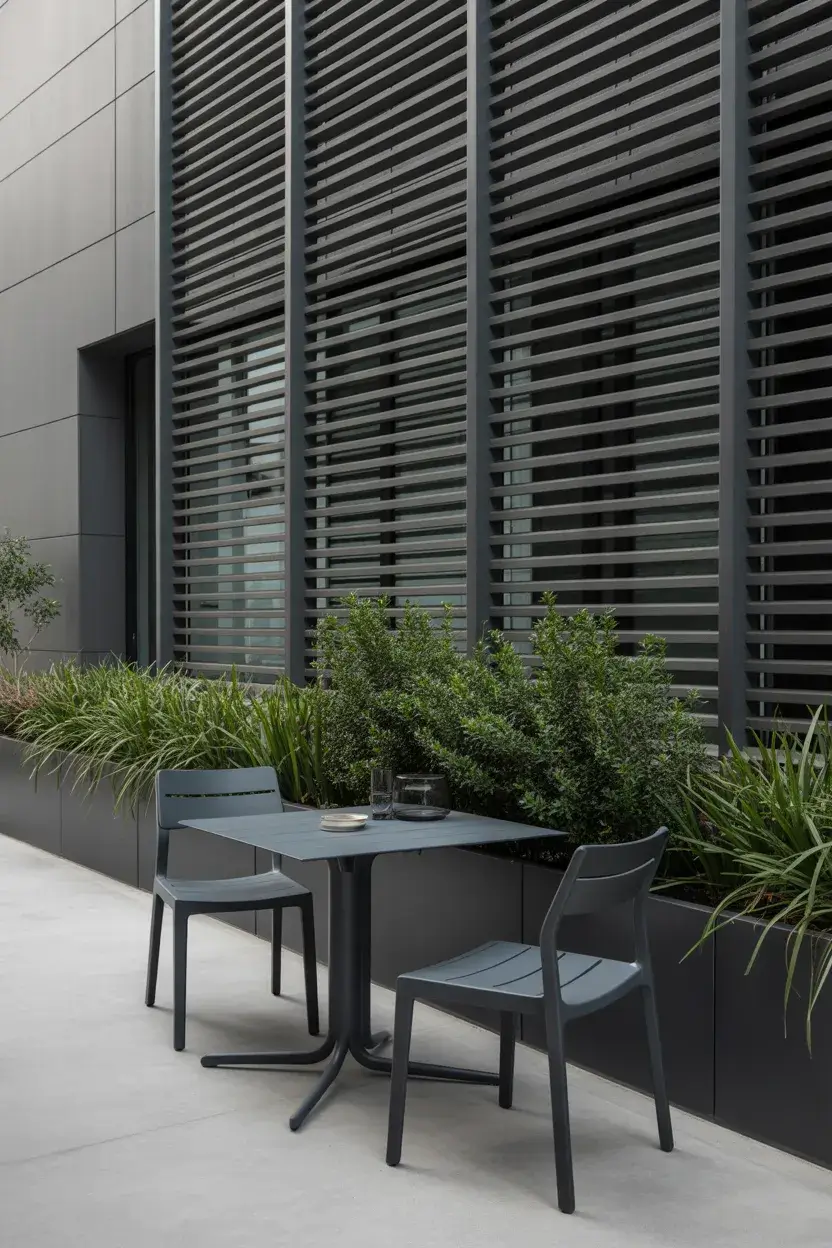
For furnishing, I typically choose compact outdoor sets, foldable chairs, and narrow planters that fit comfortably on balconies. The sleek look of aluminum pairs well with monochromatic palettes and contemporary materials such as metal, glass, and polished wood. Soft textiles like weatherproof cushions help balance the structure’s cool, industrial tone.
In my experience, aluminum screens are incredibly reliable and long-lasting. Many US professionals highlight aluminum as a top material for balcony installations due to its corrosion resistance and minimal upkeep. It stays visually appealing even in challenging climates.
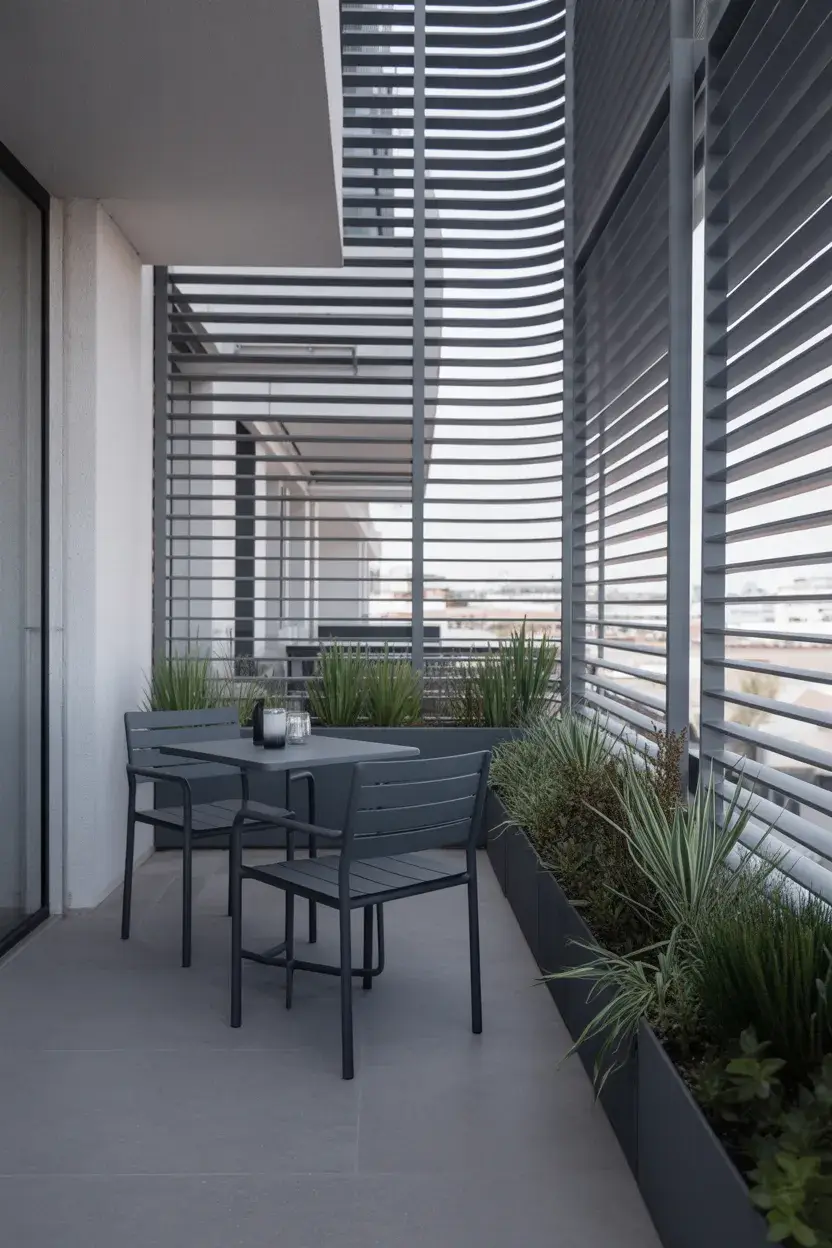
To further elevate this section, I suggest installing adjustable slats. This feature enhances privacy control and allows homeowners to personalize sunlight exposure.
22. Tiered Planter Privacy Screen
A tiered planter privacy screen is a dynamic and visually rich solution that I often use when homeowners want a natural barrier with added depth. The tiered structure allows plants at varying heights to create a layered privacy effect while adding texture and dimension to the outdoor space. This approach works beautifully in gardens, patios, and even balconies where greenery plays a primary design role. The staggered height levels provide excellent concealment without creating a wall-like feeling.
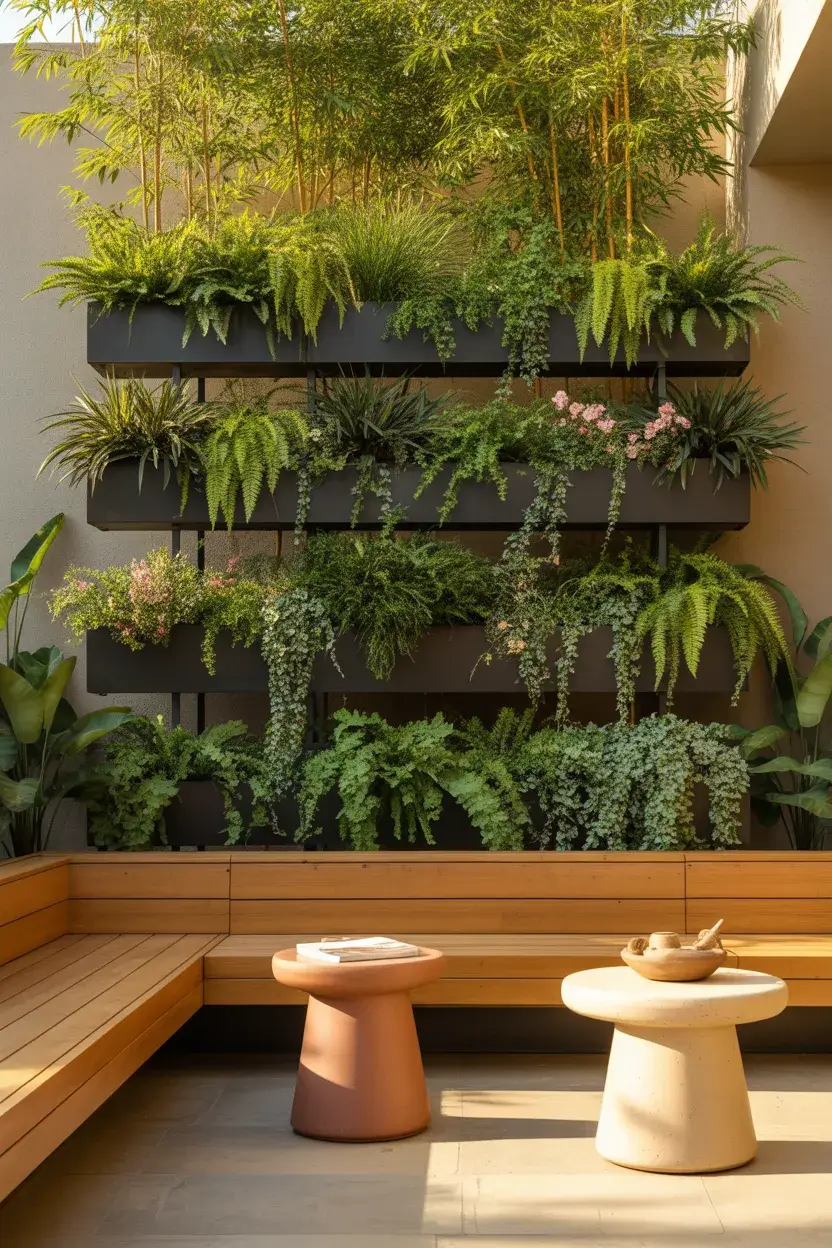
When designing around this screen, I prefer incorporating outdoor seating with warm wood tones, ceramic side tables, and soft textiles that echo the organic look of the planter structure. Selecting plants with different shapes, leaf sizes, and colors enhances the overall visual interest. I often use tall grasses, cascading vines, and flowering plants to bring variety and personality to the tiered arrangement.
In my experience, tiered planter screens not only improve privacy but also boost the overall landscaping impact. Many US garden designers praise these structures for their ability to maximize plant density in smaller spaces. I’ve found them particularly useful for homeowners who want privacy that feels alive and evolving rather than static or architectural.
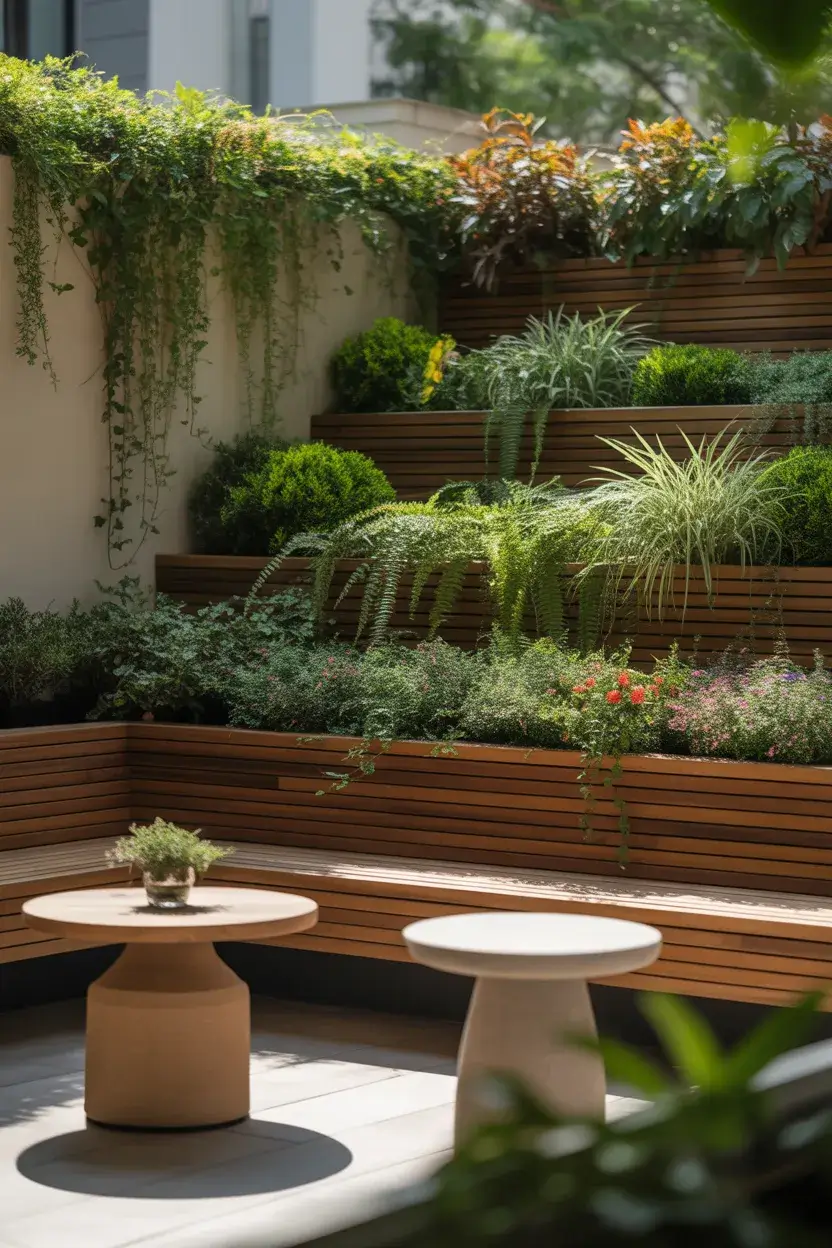
To elevate this design further, I would add a drip irrigation system built directly into the planter tiers. This keeps the plants healthy and lush with minimal maintenance.
23. Weather Resistant Vinyl Privacy Screen
A weather-resistant vinyl privacy screen is an excellent choice for homeowners seeking durability with minimal upkeep. I often recommend this solution in climates with strong sun, humidity, or heavy rain because vinyl holds its shape and color remarkably well. The smooth surface creates a clean, polished look that suits both modern and traditional outdoor spaces.
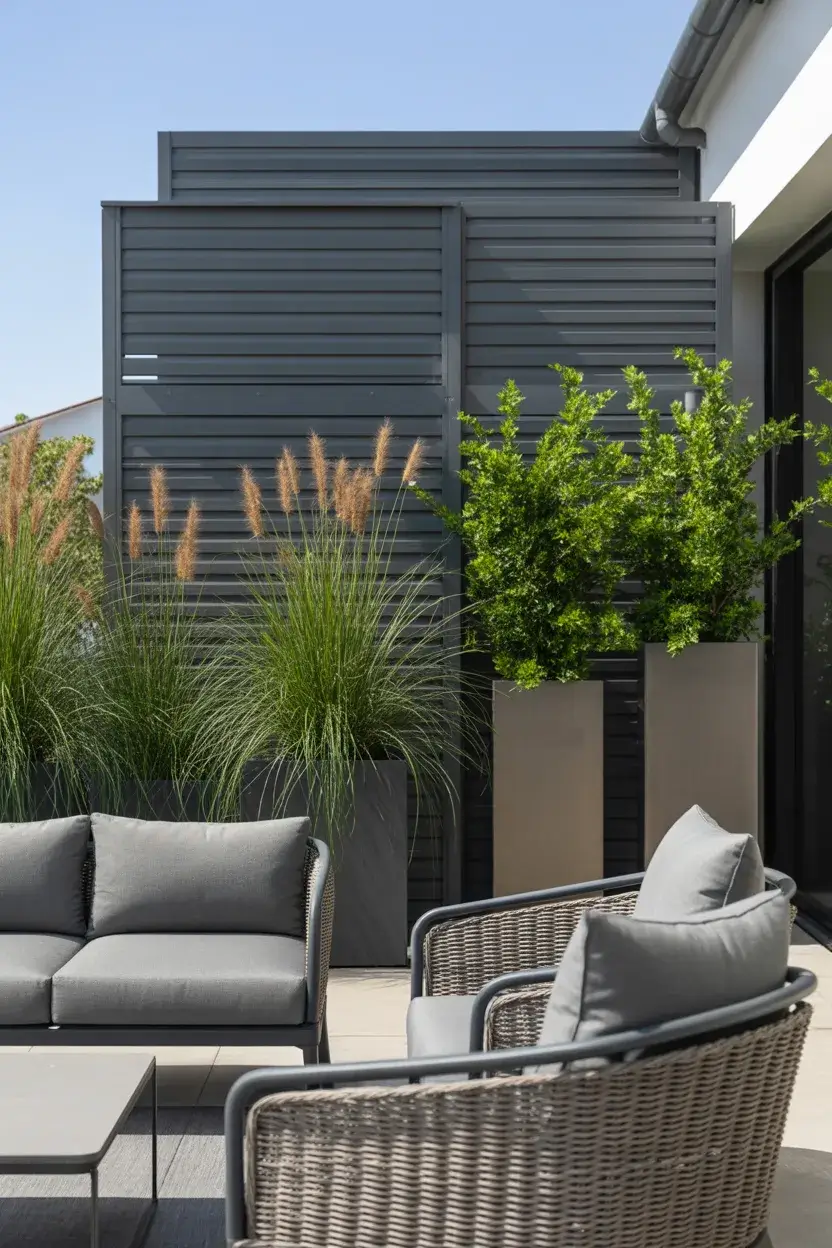
For furnishing, I like pairing vinyl screens with outdoor sectionals, metal or wicker chairs, and neutral cushions that soften the sleek appearance. Decorative elements such as tall planters, outdoor lanterns, or small side tables help bring warmth and texture to contrast with the vinyl’s uniformity. These combinations ensure the space feels inviting rather than overly structured.
Professionally, I appreciate vinyl screens for their longevity and versatility. Many home improvement experts emphasize vinyl as a cost-effective material that performs consistently, especially in variable climates. I’ve frequently seen clients choose vinyl when they want something stylish yet low-maintenance.
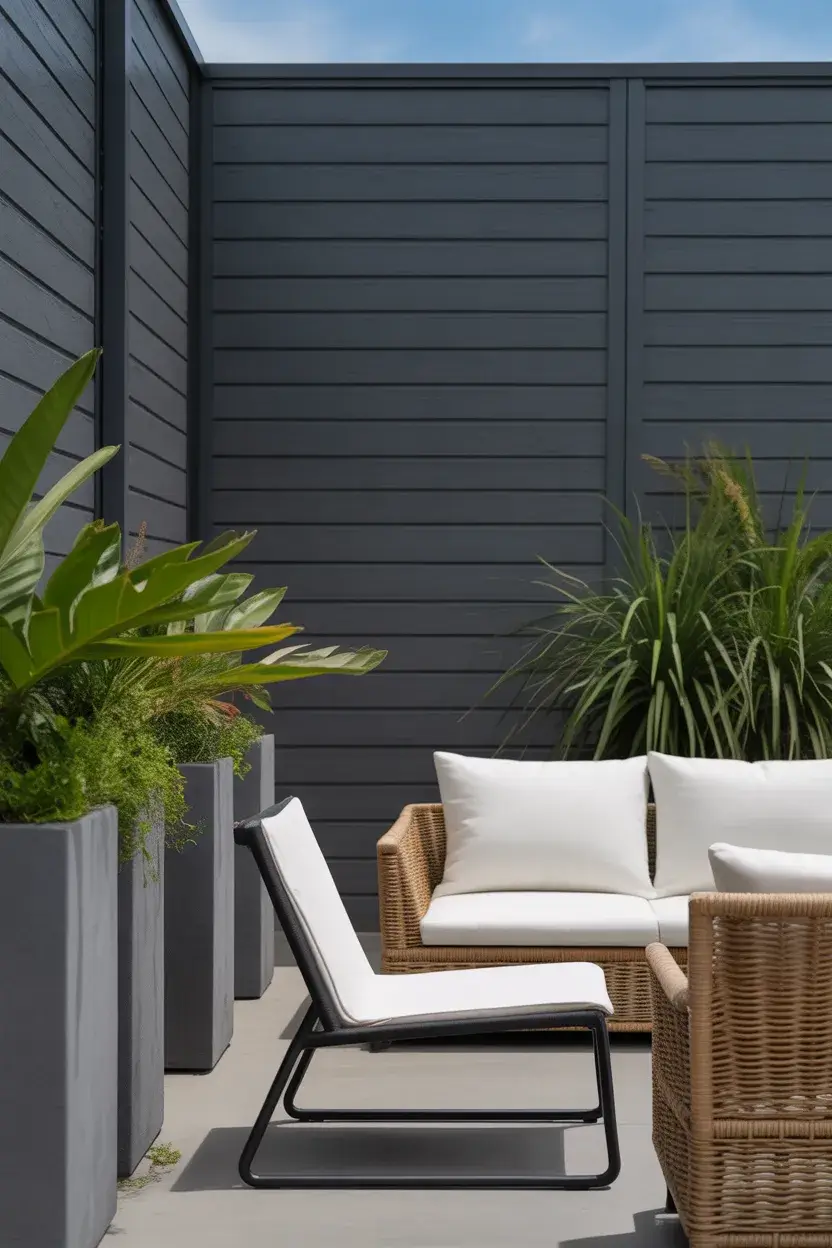
To build on this idea, I recommend selecting vinyl panels with subtle decorative grooving or slatted textures. These details add depth while maintaining the screen’s clean lines.
24. Modern Geometric Privacy Panels
Modern geometric privacy panels introduce a strong visual statement that immediately elevates outdoor design. I often use these panels when I want a combination of privacy and artistic flair. The geometric cutouts allow filtered light to pass through, creating intricate shadows and a dynamic interaction with the surrounding environment.
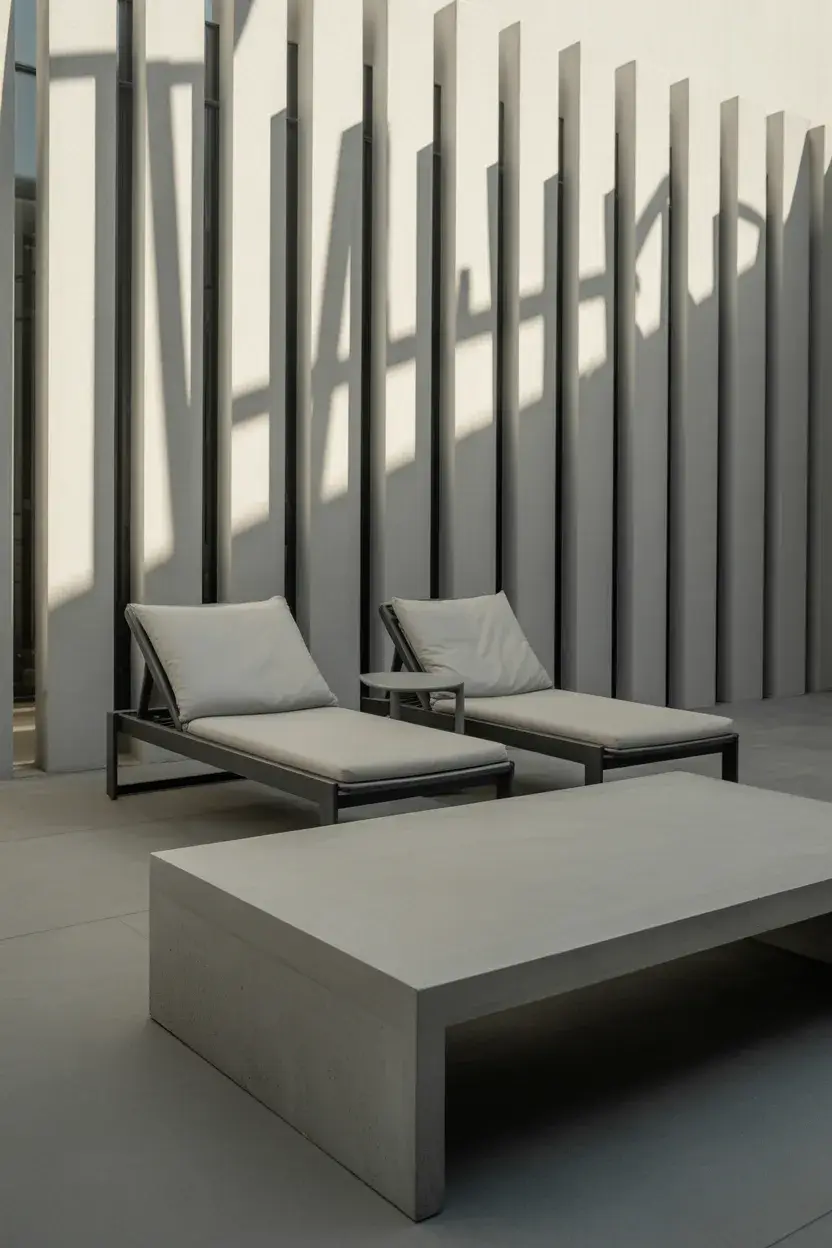
When choosing furniture for this setup, I gravitate toward streamlined loungers, concrete or metal tables, and minimalist decor pieces that complement the bold patterns. A monochromatic palette works especially well to keep the geometric panels as the focal point while ensuring the overall look remains cohesive and modern.
From experience, these panels work best in patios or garden spaces where the homeowner wants an artistic touch without overwhelming the design. Many US designers highlight geometric motifs as a major trend in outdoor privacy screen ideas 2026, and I agree. Their sculptural qualities bring a curated, gallery-like mood to outdoor environments.
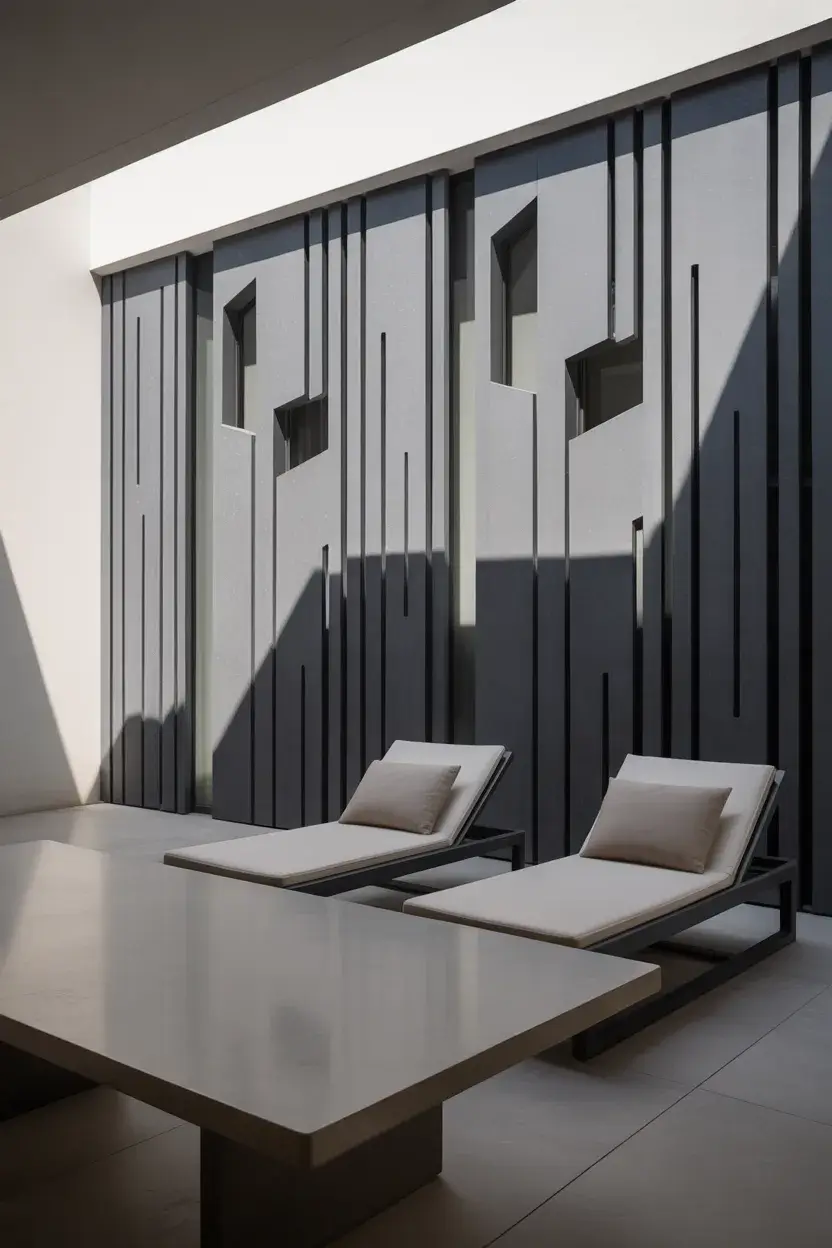
To further enhance this concept, I would recommend incorporating LED backlighting for subtle nighttime illumination. This accentuates the geometric shapes and adds dimension after sunset.
25. Outdoor Canopy With Side Panels
An outdoor canopy with side panels offers a multifunctional privacy solution that combines shade, comfort, and seclusion. I often choose this design for clients who entertain frequently because the canopy creates a defined outdoor room while the side panels allow for flexible coverage. It feels intimate without being confining, making it ideal for dining areas or lounge setups.
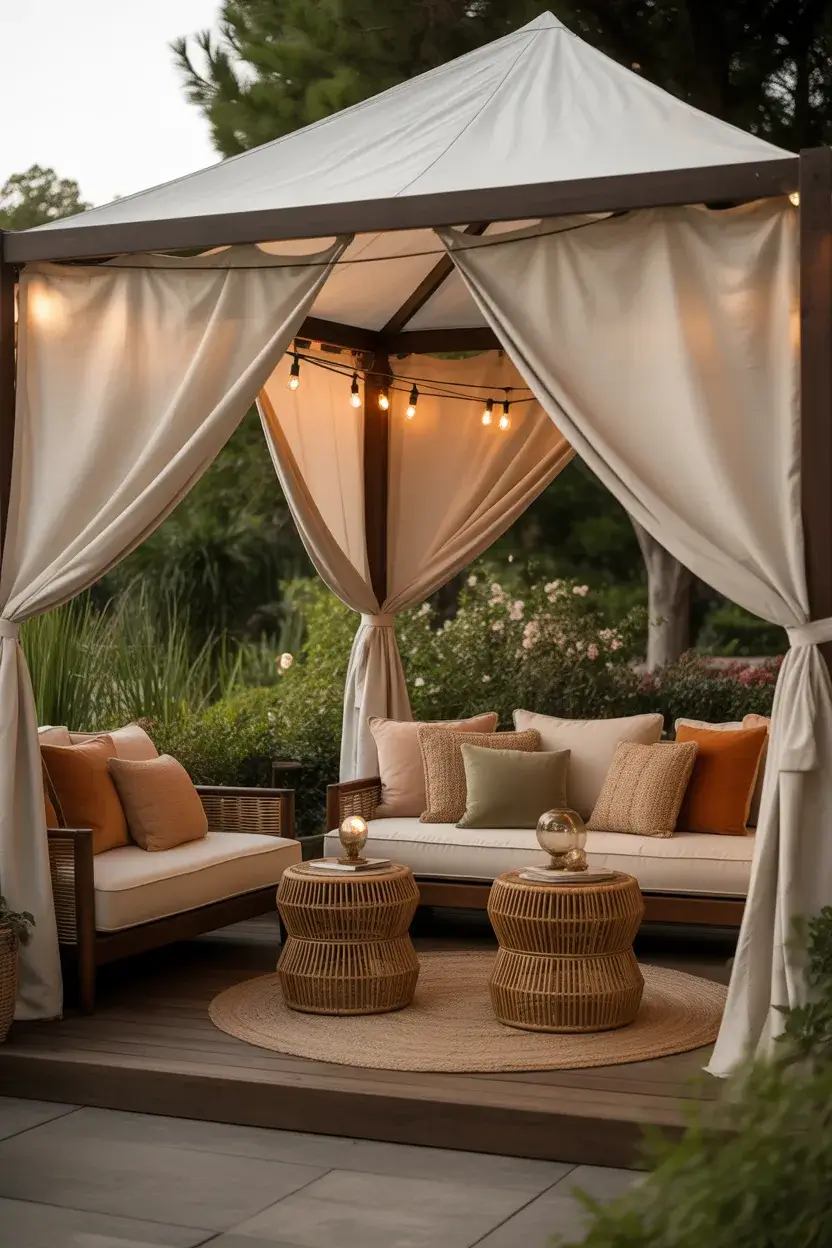
Furniture choices for this configuration typically include cushioned sofas, a central dining table, or loungers depending on the outdoor space’s purpose. I often use warm-toned textiles, woven accents, and soft lighting to create a cohesive and relaxing retreat. The side panels can be fabric, bamboo, or even slatted, depending on the desired level of privacy and sunlight filtration.
Professionally, I appreciate canopy systems because they provide structure while remaining adaptable. Many experts in outdoor design publications emphasize their role in creating comfortable microclimates, which I’ve seen work remarkably well in both sunny and breezy environments.
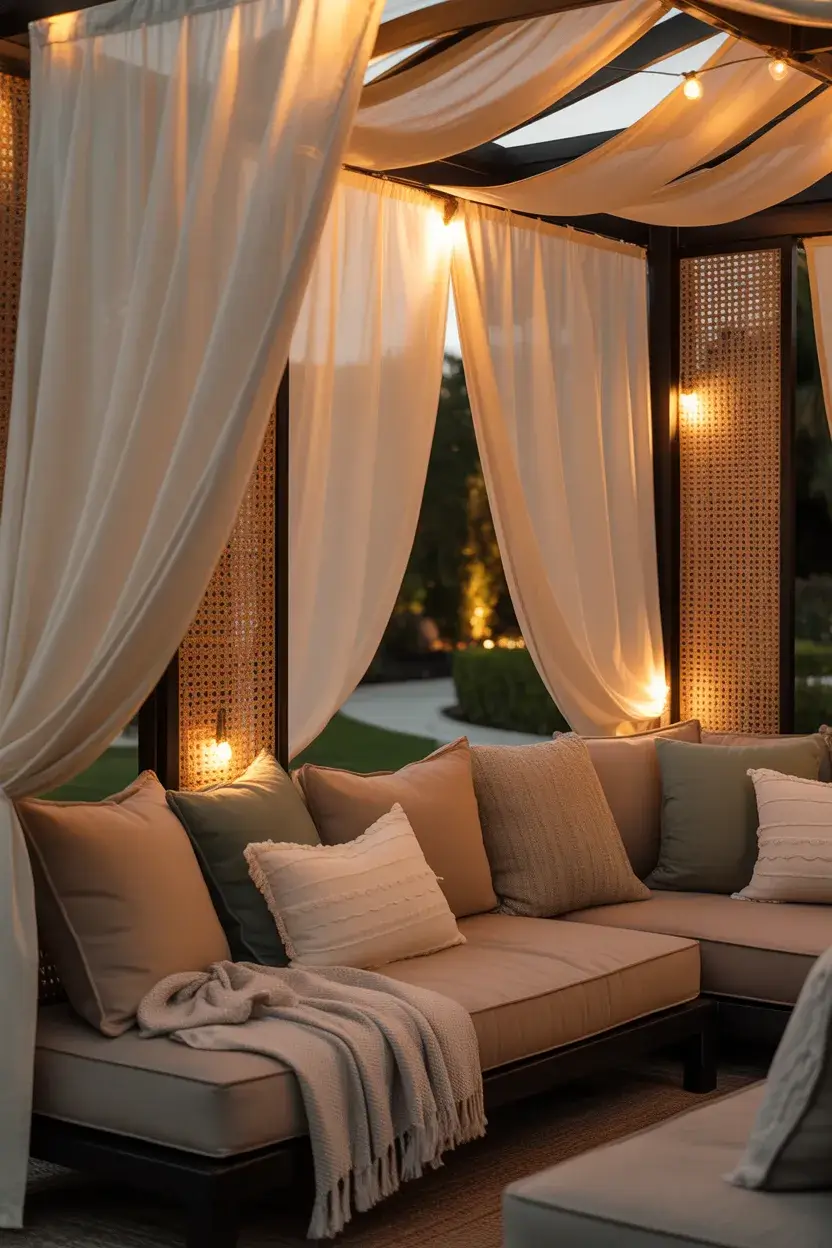
If I were to add anything to this block, I’d recommend using tie-backs or adjustable panel mechanisms so the space can easily transition from open to enclosed.
26. Vertical Garden Privacy Structure
A vertical garden privacy structure combines lush greenery with architectural support to create a living barrier. I enjoy using this design because it adds vibrancy and depth while promoting sustainability. The vertical framework allows for dense plant growth, which increases privacy and improves the overall atmosphere with rich textures and natural color.
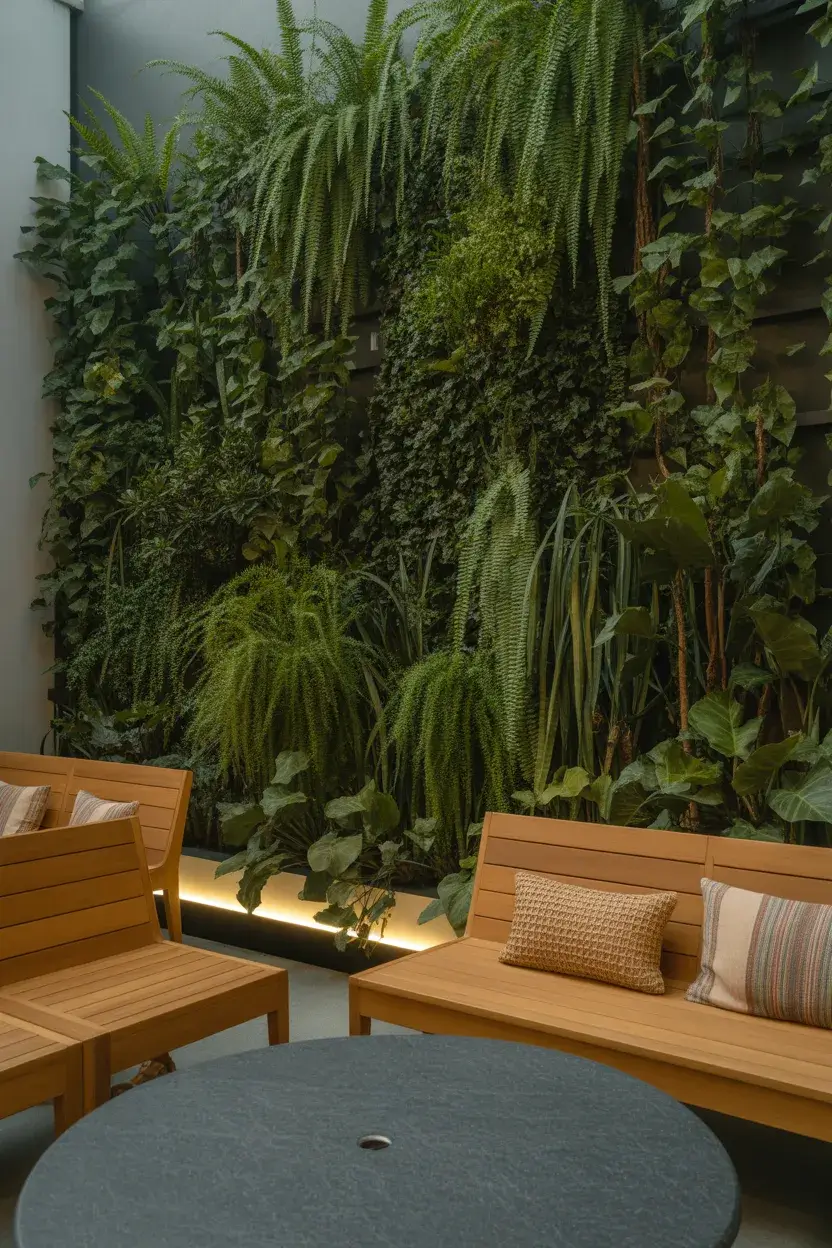
In terms of furnishing, I pair vertical gardens with teak outdoor seating, stone or terrazzo tables, and natural woven accessories. These elements highlight the organic feel of the garden wall and create a balanced space where the greenery takes center stage. Lighting at the base of the structure can also bring dramatic nighttime appeal by spotlighting leaf patterns.
From experience, vertical gardens are always a favorite among homeowners who want privacy solutions that enhance air quality and contribute to a calming environment. US environmental designers often recommend incorporating plants that thrive vertically, such as ferns, succulents, or creeping vines.
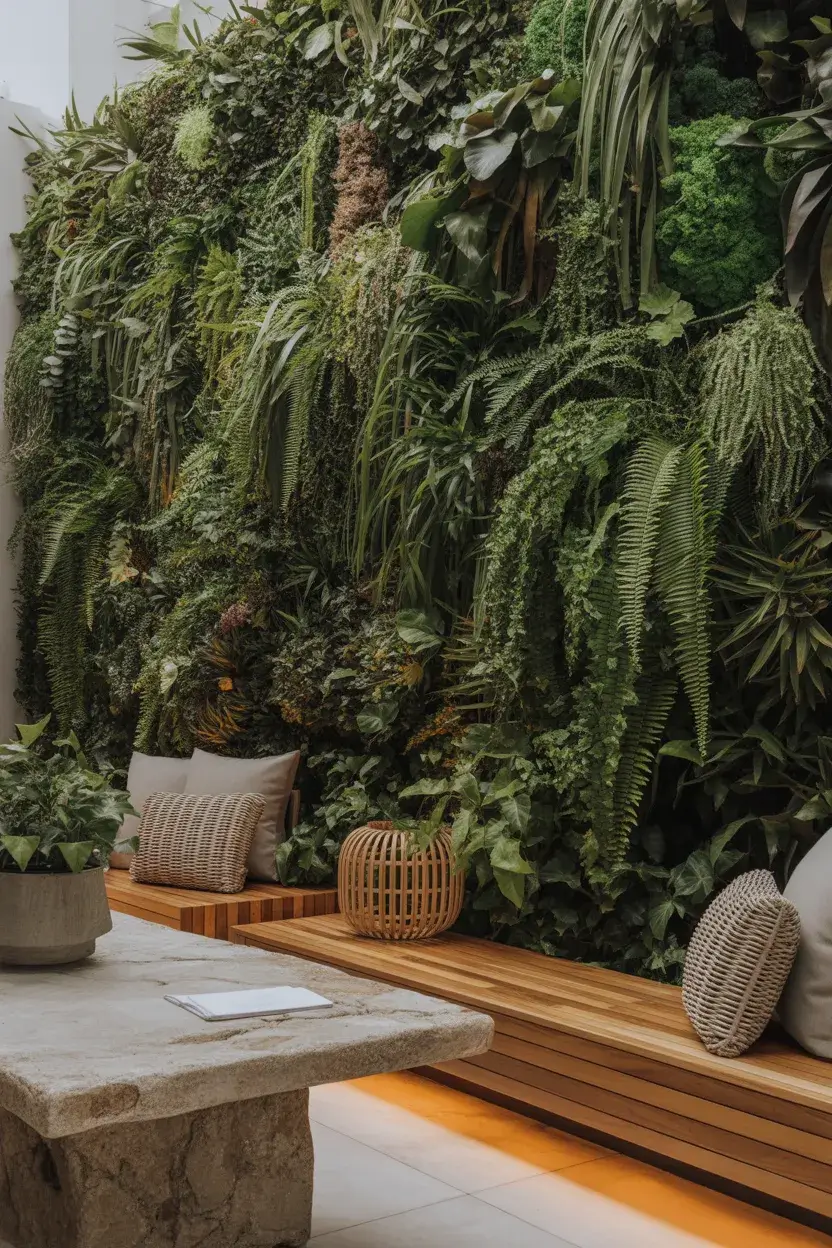
To enrich this structure further, I would suggest integrating modular planting trays. This allows homeowners to rearrange or replace plants easily for seasonal variety.
27. Rustic Barn Door Style Privacy Wall
A rustic barn door style privacy wall adds character and charm to an outdoor setting. I often choose this design for spaces that embrace farmhouse, cottage, or rustic themes. The wide wooden planks, cross-bracing, and rich textures offer a warm and familiar aesthetic that doubles as an effective privacy barrier.
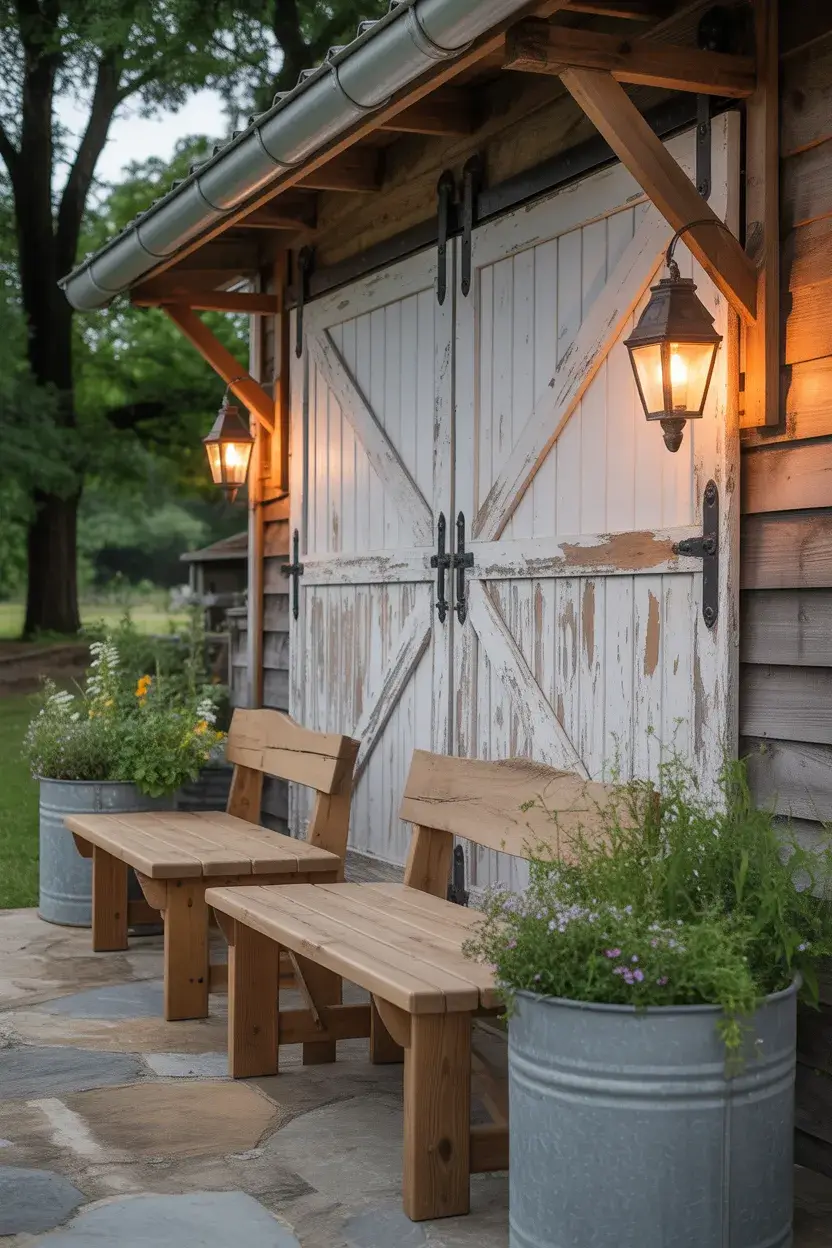
When complementing this wall, I prefer using wooden benches, galvanized metal planters, and soft outdoor textiles in warm tones. Lantern-style lighting or vintage-inspired decor also pairs beautifully with the rustic elements, creating a cohesive and welcoming environment. This style works especially well near gardens, fire pits, or cozy lounge areas.
In my experience, barn door privacy walls resonate strongly with homeowners because they evoke nostalgia while delivering a practical solution. Experts from lifestyle magazines often highlight the timeless appeal of farmhouse-inspired outdoor structures, and I couldn’t agree more based on client responses.
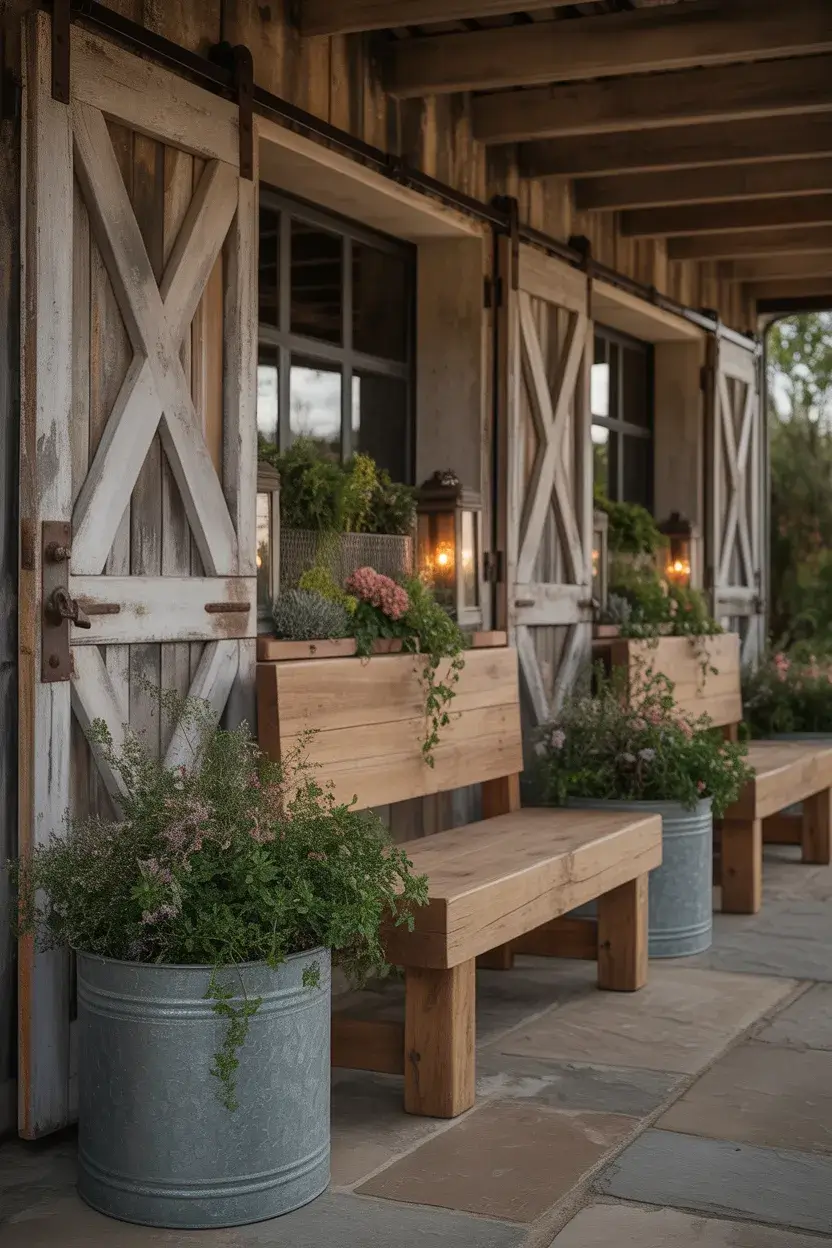
If I were to expand on this idea, I would suggest adding sliding hardware to make the barn door movable. This provides flexibility while enhancing the design’s authenticity.
28. Patterned PVC Privacy Panels
Patterned PVC privacy panels are a lightweight and versatile solution that I often use for homeowners looking for durability without sacrificing style. The patterned cutouts add a decorative touch while maintaining effective coverage. PVC is weather-resistant, easy to clean, and available in numerous designs, making it an attractive choice for modern outdoor spaces.
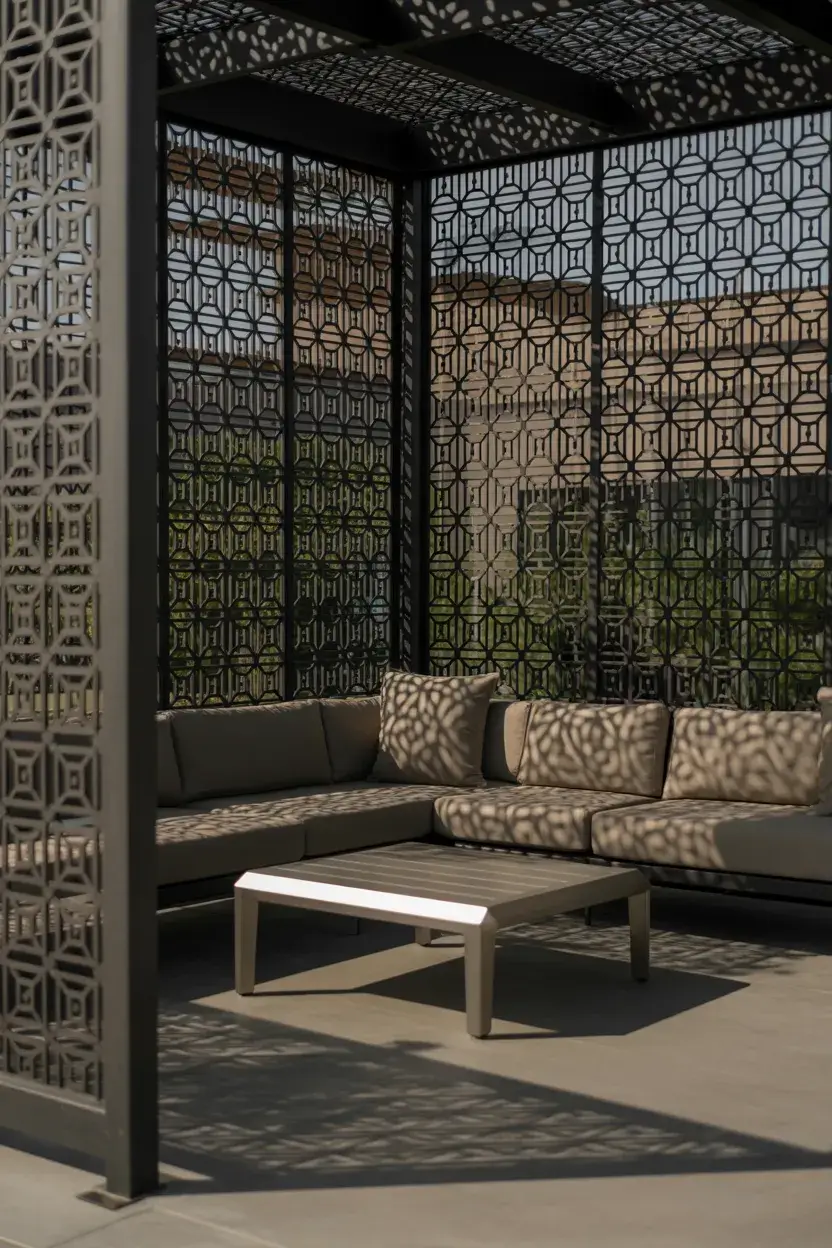
For furnishing, I typically combine these panels with outdoor sectionals, aluminum tables, and planters in crisp, clean finishes. The patterns pair well with minimal furniture, allowing the panels to serve as the main visual element. Lighting placed behind or near the panels creates intriguing shadows that highlight the design.
In my experience, PVC panels are ideal for renters or homeowners seeking a quick installation with long-lasting results. Many US design specialists recommend PVC for its affordability and resistance to moisture, UV rays, and temperature fluctuations.
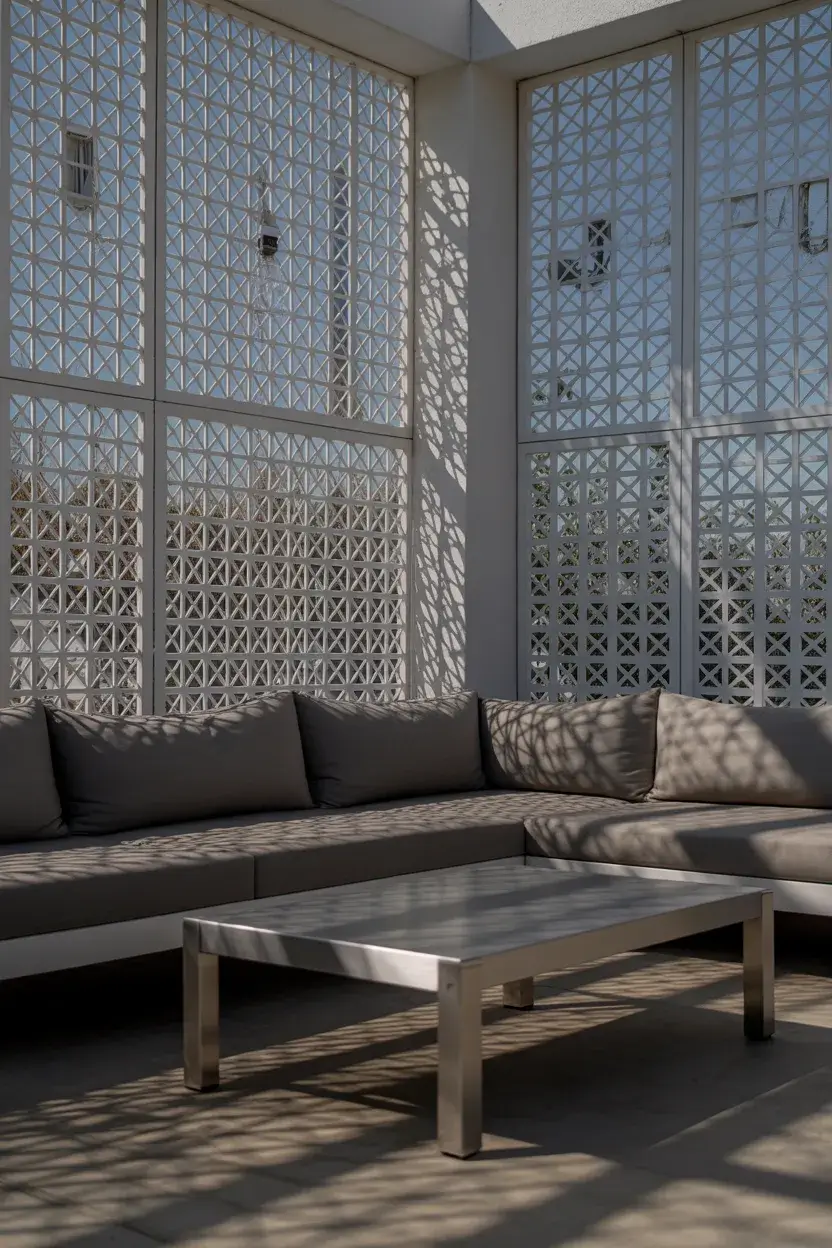
To enhance this block, I would recommend choosing panels with interchangeable inserts. This allows for seasonal updates or stylistic changes without replacing the entire structure.
29. Coastal Style White Board Privacy Screen
A coastal style white board privacy screen brings a fresh, airy feeling to any outdoor space, and I often turn to this design when I want to create a bright, seaside-inspired atmosphere. The crisp white boards reflect sunlight beautifully, making the space feel open while still offering full privacy. This look works especially well for patios, decks, and poolside areas where a clean coastal theme enhances relaxation.
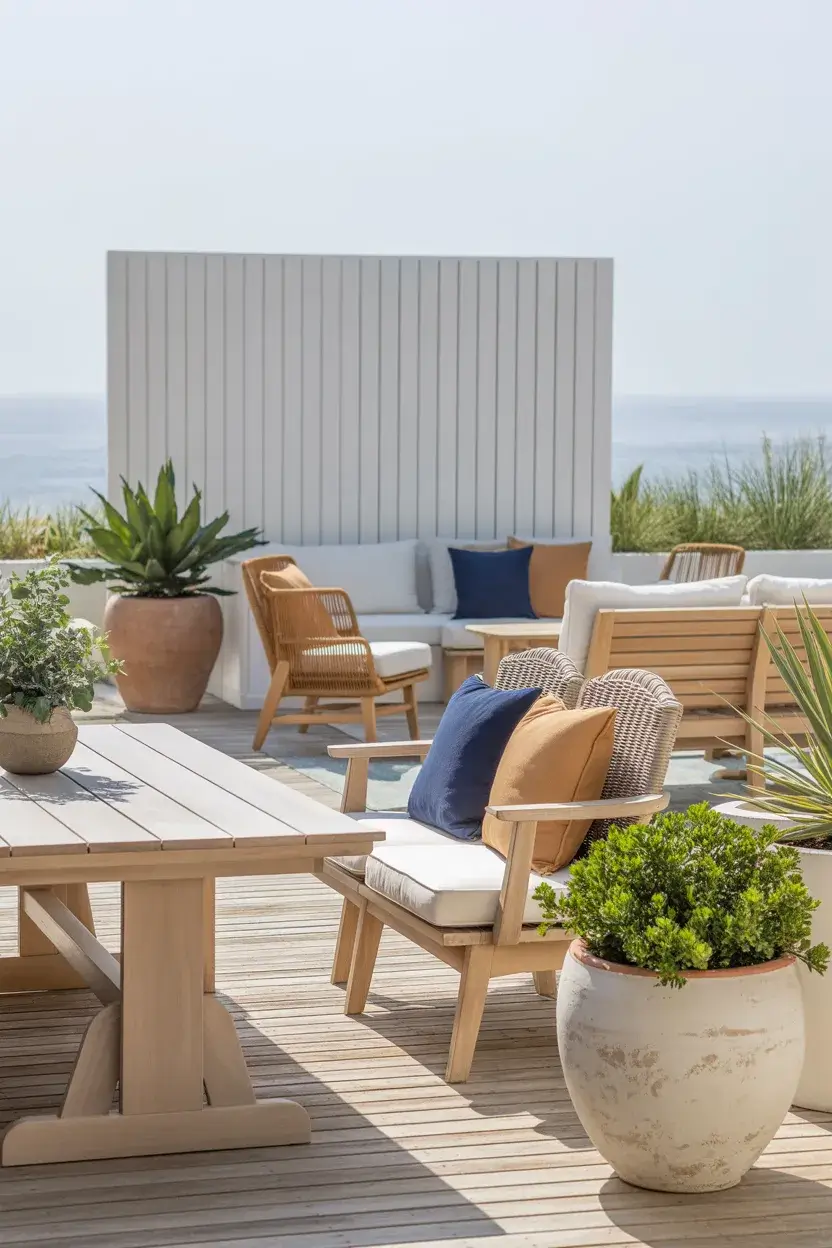
To complement this screen, I prefer using light-toned wooden furniture, woven outdoor chairs, and soft blue or beige cushions to reinforce the beach-inspired mood. Accessories like rope accents, ceramic planters, or driftwood-style décor elements pair seamlessly with the white boards, creating a cohesive and inviting coastal environment.
From my experience, white board privacy screens are timeless and easy to maintain with occasional repainting. Many US designers praise the coastal palette for its calming qualities, and I’ve seen clients respond very positively to the brightness and simplicity this style offers. It creates a visual connection to nature that feels both refreshing and enduring.
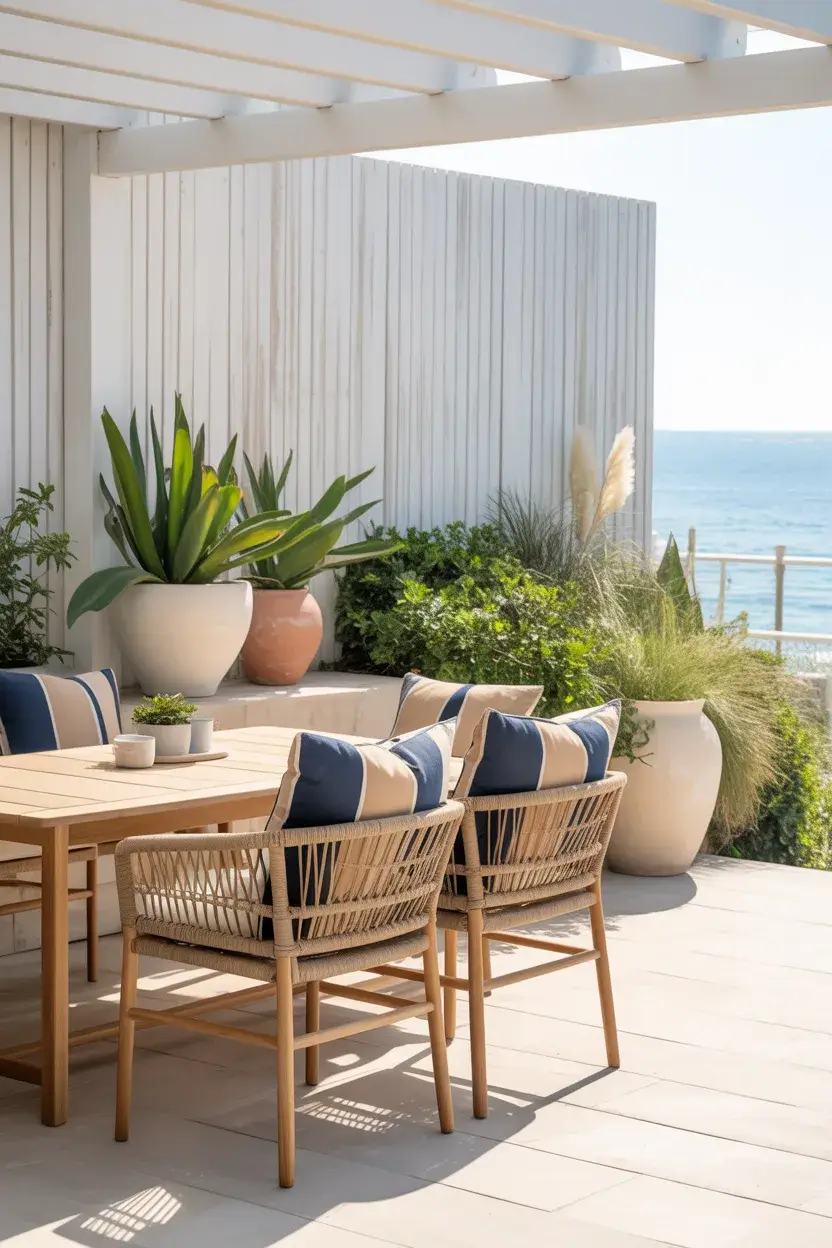
If enhancing this setup further, I would suggest adding horizontal or vertical trim details to give the boards more architectural depth without complicating the design.
30. Outdoor Screen With Integrated Lighting
An outdoor screen with integrated lighting is one of the most functional and visually striking solutions in outdoor privacy screen ideas 2026. I often use this feature when homeowners want privacy that shines—literally—after sunset. Integrated LED lighting placed within or behind the screen creates a warm ambiance and turns the divider into a nighttime focal point. This dual-purpose approach works exceptionally well for modern patios or evening entertainment spaces.
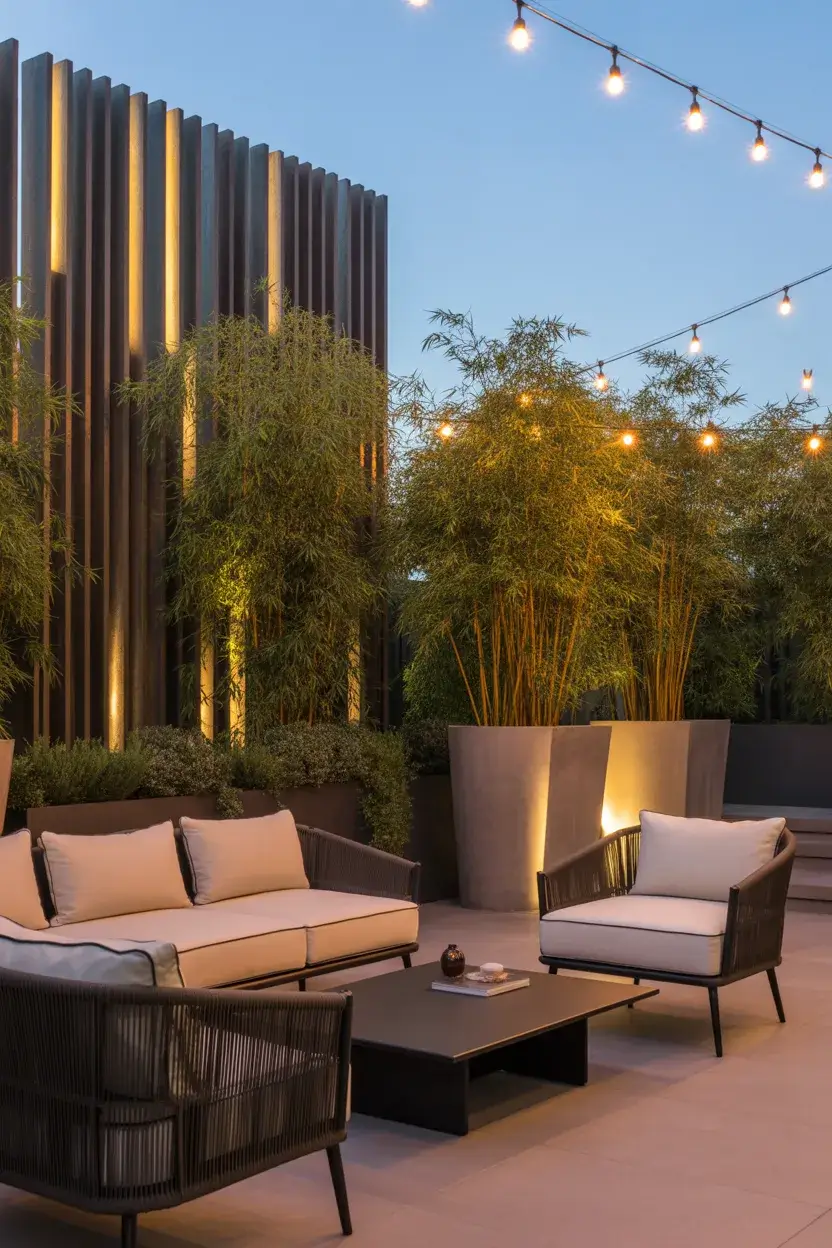
When styling around such a screen, I usually include contemporary lounge seating, low-profile tables, and neutral textiles that allow the illuminated feature to stand out. Planters with tall greenery help diffuse the light subtly while maintaining the area’s sense of enclosure. Soft underlighting or pathway lighting enhances the layered lighting effect without overwhelming the design.
Professionally, I appreciate how integrated lighting adds comfort and safety while reducing the need for additional fixtures. Many outdoor design publications highlight the rising trend of built-in lighting for both aesthetics and functionality, and I’ve seen how dramatically it transforms the atmosphere of an outdoor setting.
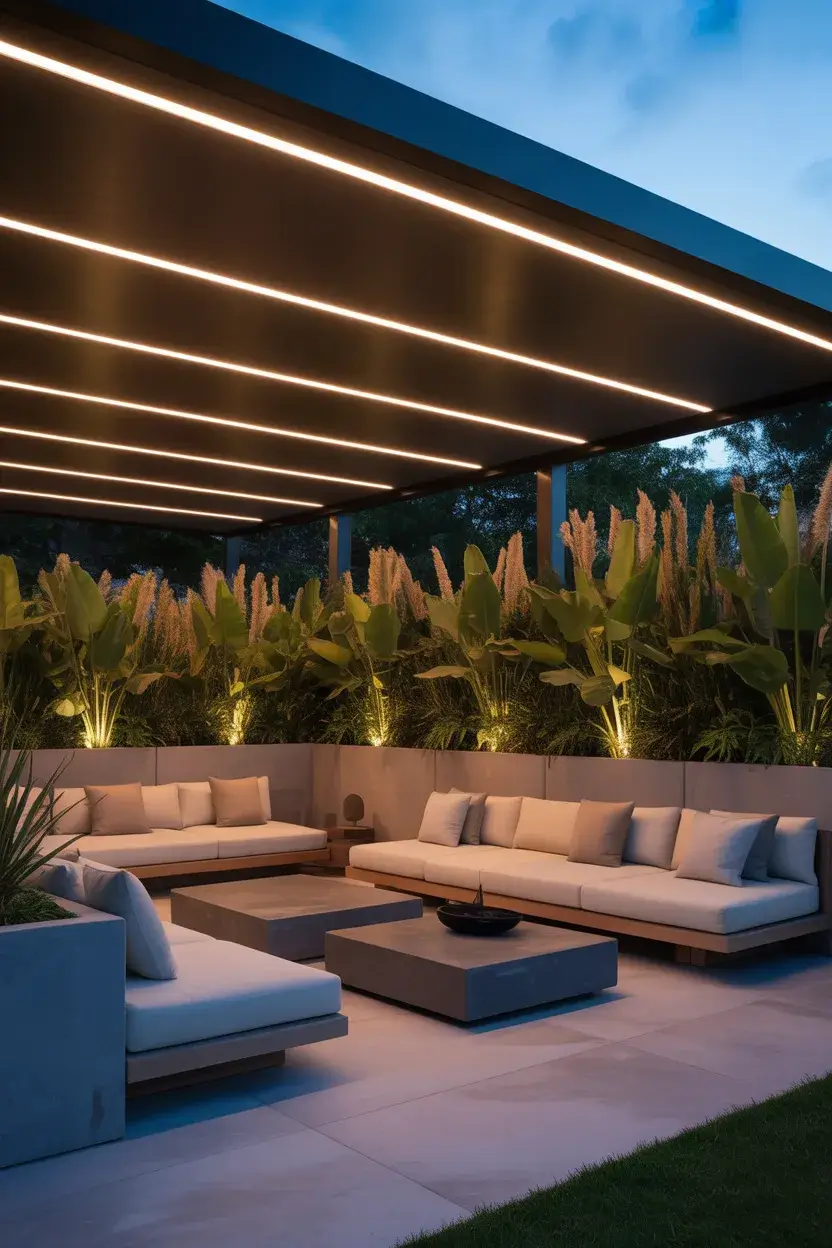
For a final enhancement, I would recommend choosing dimmable lighting. This gives homeowners flexibility to create anything from a soft glow to a dramatic illuminated wall.
31. Art Inspired Garden Privacy Display
An art inspired garden privacy display allows homeowners to blend creativity with practical function. I often choose this design when the outdoor space could benefit from a strong focal point. The screens may include sculptural elements, painted panels, or artistic cutouts that elevate the garden into an expressive, curated environment. Beyond privacy, these installations bring personality and visual impact.
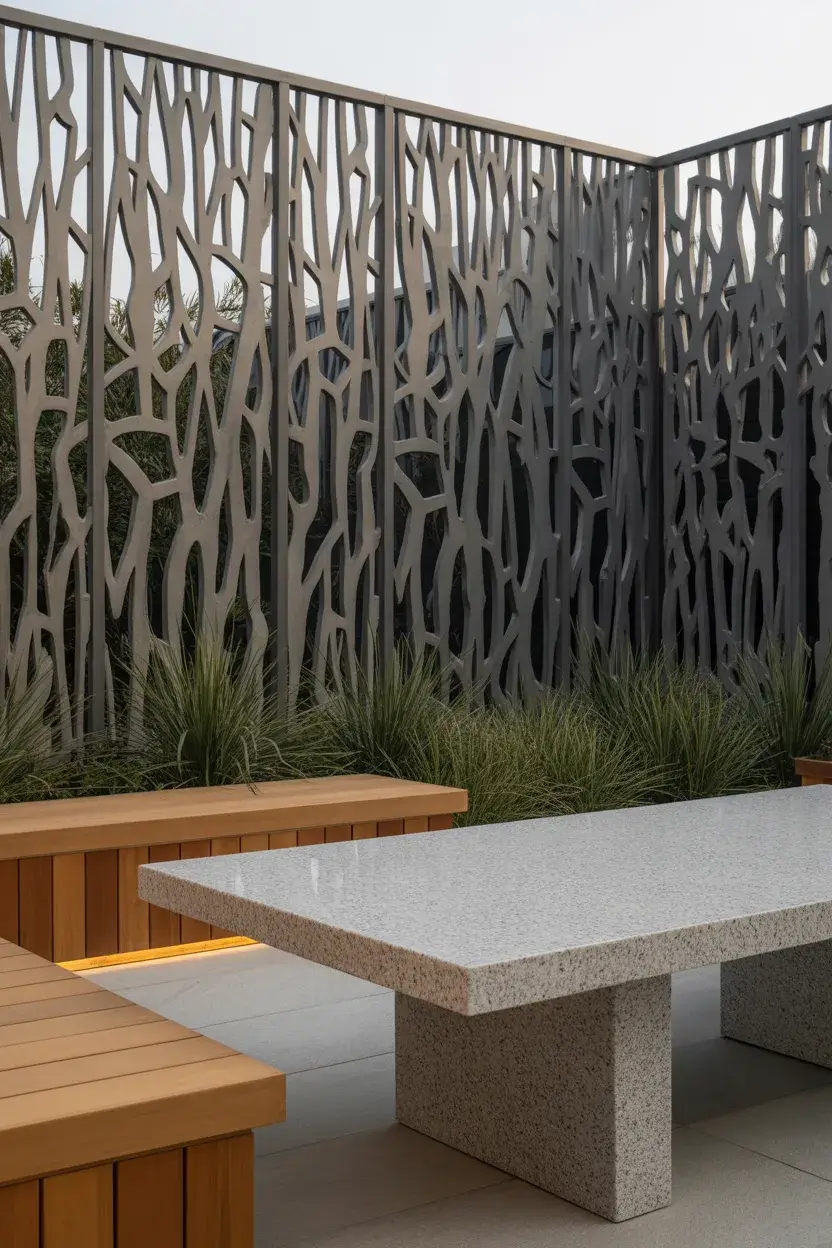
For furnishing, I prefer understated outdoor pieces such as minimalist benches, stone tables, and subtle planters that allow the artwork to remain the focal point. Neutral palettes work best so the artistic display can shine. Soft accent lighting directed at the screen helps highlight its textures, colors, or patterns during evening hours.
From experience, homeowners appreciate how these artistic screens turn their garden into a gallery-like space. Many US landscape architects emphasize that integrating art into functional elements increases visual interest and creates emotional connection. I’ve found that clients enjoy the uniqueness and personalized identity this approach offers.
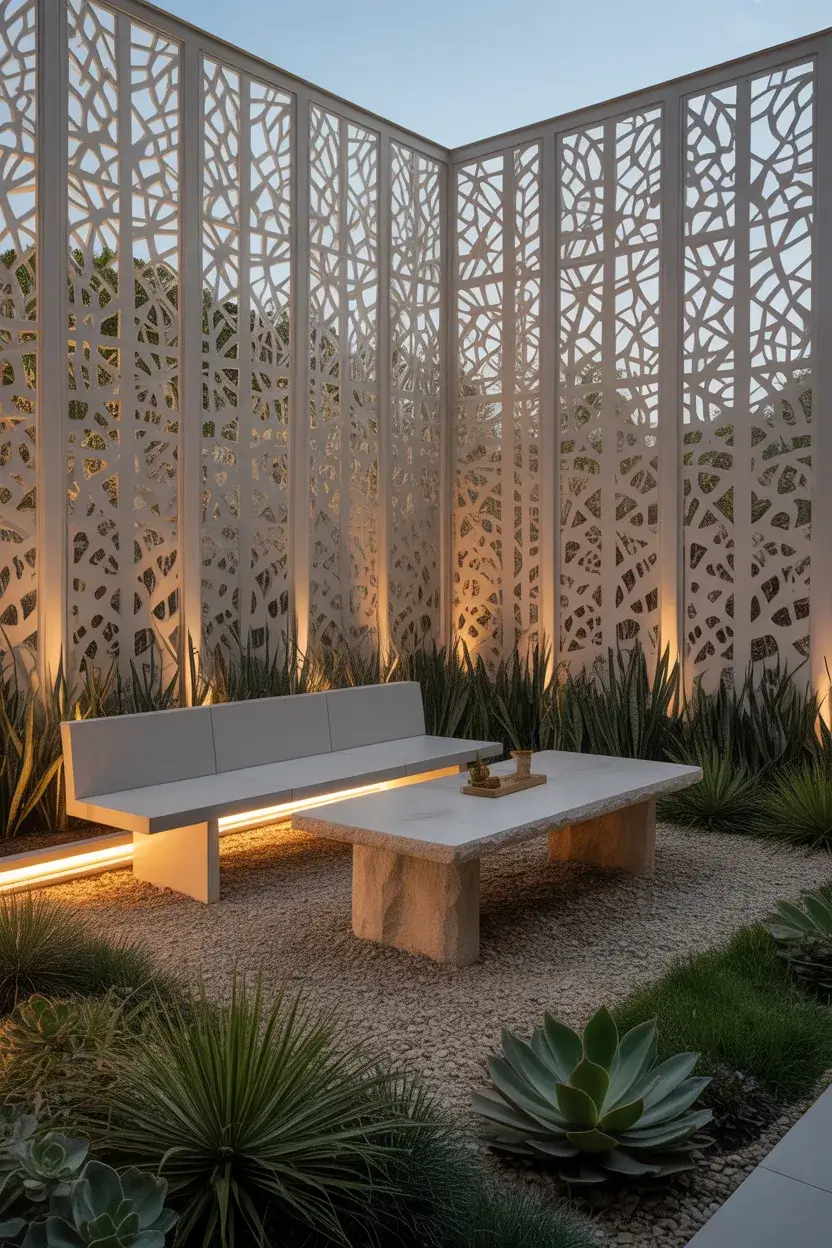
If expanding on this idea, I would suggest incorporating weather-resistant materials like treated metal or composite so the art retains its beauty over time.
32. Multi Panel Movable Privacy Divider
A multi panel movable privacy divider is one of the most flexible and adaptive solutions I recommend, especially for outdoor spaces that serve multiple functions. This divider consists of several connected panels that can be arranged, angled, or folded depending on privacy needs. I enjoy using this design because it offers freedom to reshape the space without permanent installation.
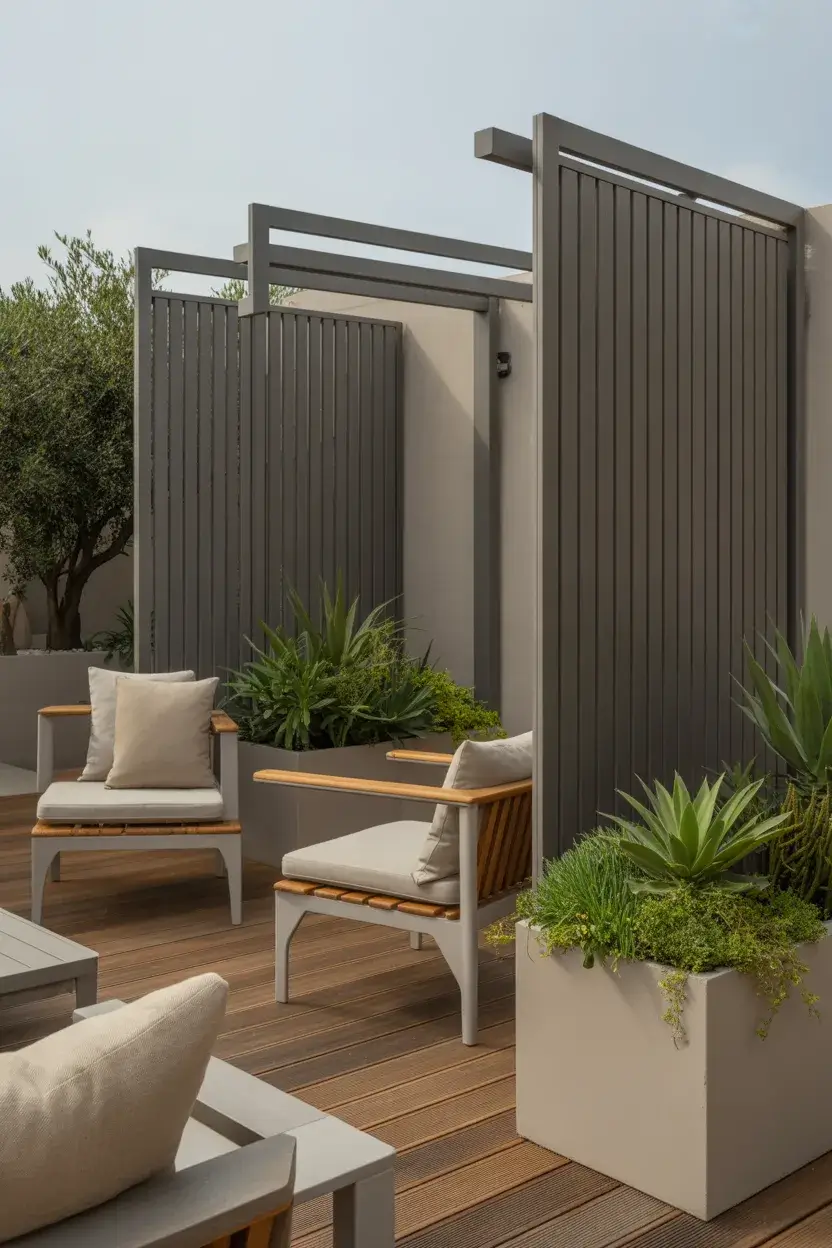
For furnishings, I typically select lightweight outdoor seating, foldable side tables, and compact planters that allow for easy adjustment of the layout. Rattan, aluminum, and teak all work well with movable screens, giving the space a harmonious yet adaptable look. Neutral outdoor textiles help soften the structure while maintaining flexibility.
Professionally, I find these dividers incredibly practical for renters, entertainers, or anyone looking for seasonal configuration changes. Many design experts highlight movable implements as essential for modern multifunctional outdoor spaces. Based on my projects, clients appreciate being able to reposition the panels to block sun, wind, or views instantly.
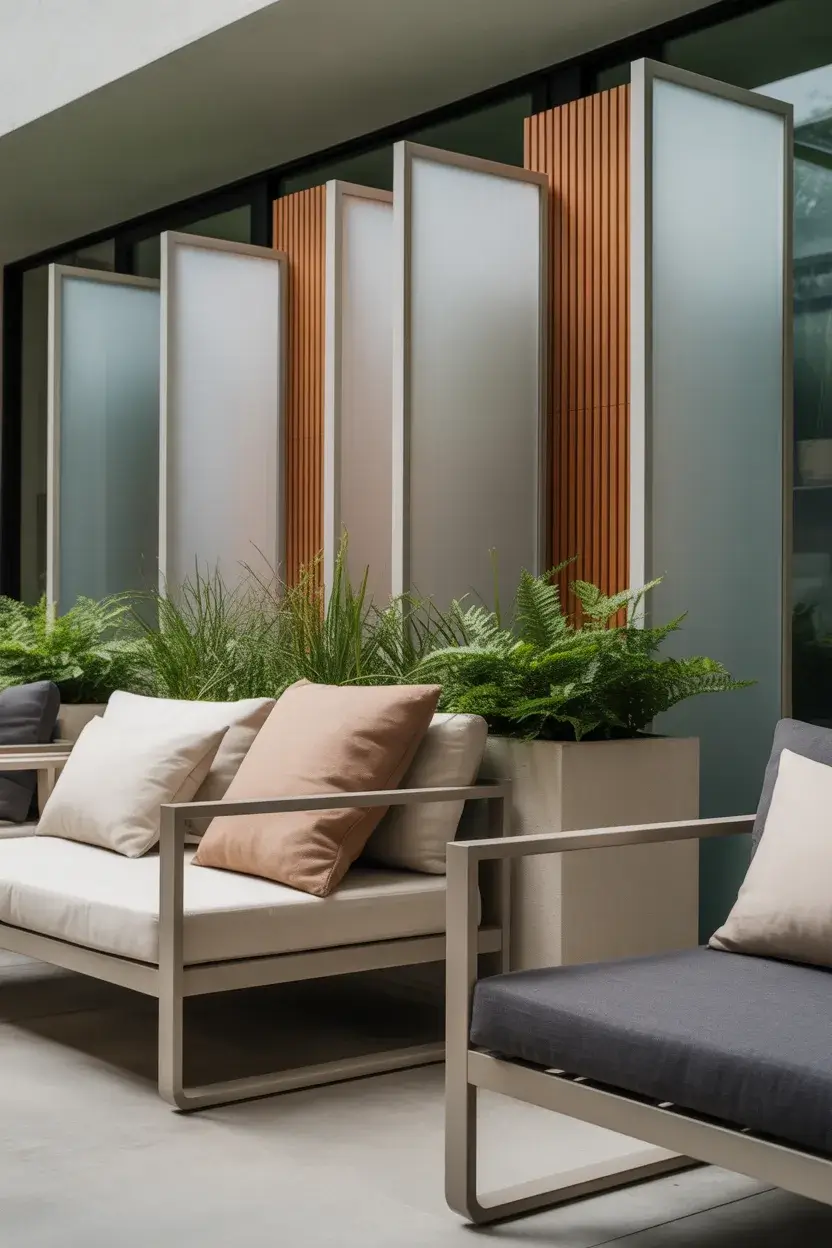
To enhance this section further, I recommend choosing panels with lockable hinges. This adds stability while keeping the flexibility that defines this design.