When homeowners search for Creative Porch Ideas 2026, they usually want spaces that feel both modern and deeply personal. How can a porch become more than a transitional area and instead act as an extension of daily living? And which design approaches genuinely improve comfort, style, and long-term usability? In this article, I explore forward-thinking porch concepts that blend functionality with aesthetic appeal, helping readers create porches that feel refreshing, inviting, and uniquely suited to contemporary living.
1. Cozy Modern Porch Retreat
A cozy modern porch retreat is my go-to solution when clients want a relaxing outdoor extension that still feels connected to the home’s interior atmosphere. I typically focus on warm neutral tones, layered textures, and streamlined architectural accents because these elements create a peaceful setting that works year-round. In 2026, many homeowners are gravitating toward seamless indoor-outdoor flow, so I prioritize large, unobstructed views and comfortable seating.
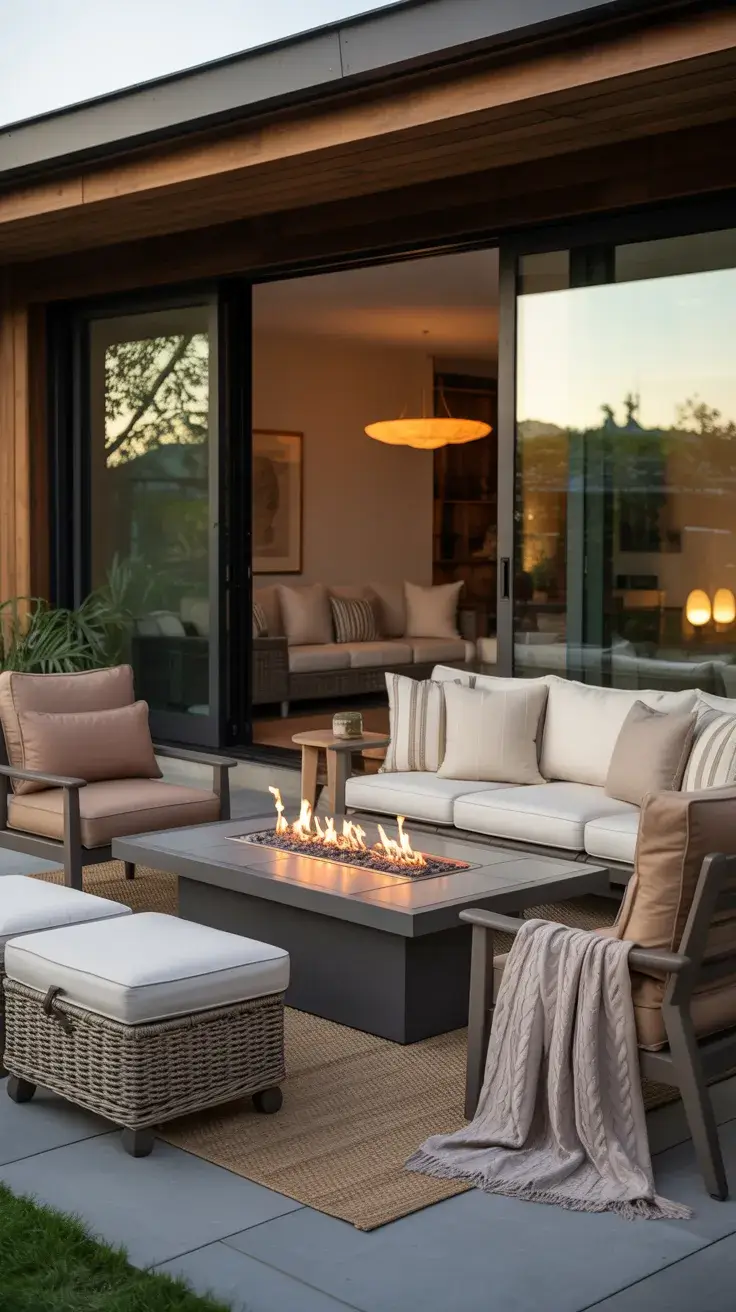
When selecting furniture, I choose deep-cushion lounge chairs, a low modern sofa, and a compact fire table for ambiance. Neutral outdoor fabrics pair well with wood or composite decking, while soft throws and outdoor rugs help zone the seating area. I also prefer including adjustable side tables, as they enhance practicality without overcrowding the layout.
In my experience, this type of porch feels most inviting when lighting is layered. Architectural Digest often recommends combining ambient and task lighting to shape atmosphere, and I follow that guidance closely. A mix of warm sconces and subtle overhead fixtures creates balanced illumination without harsh shadows.
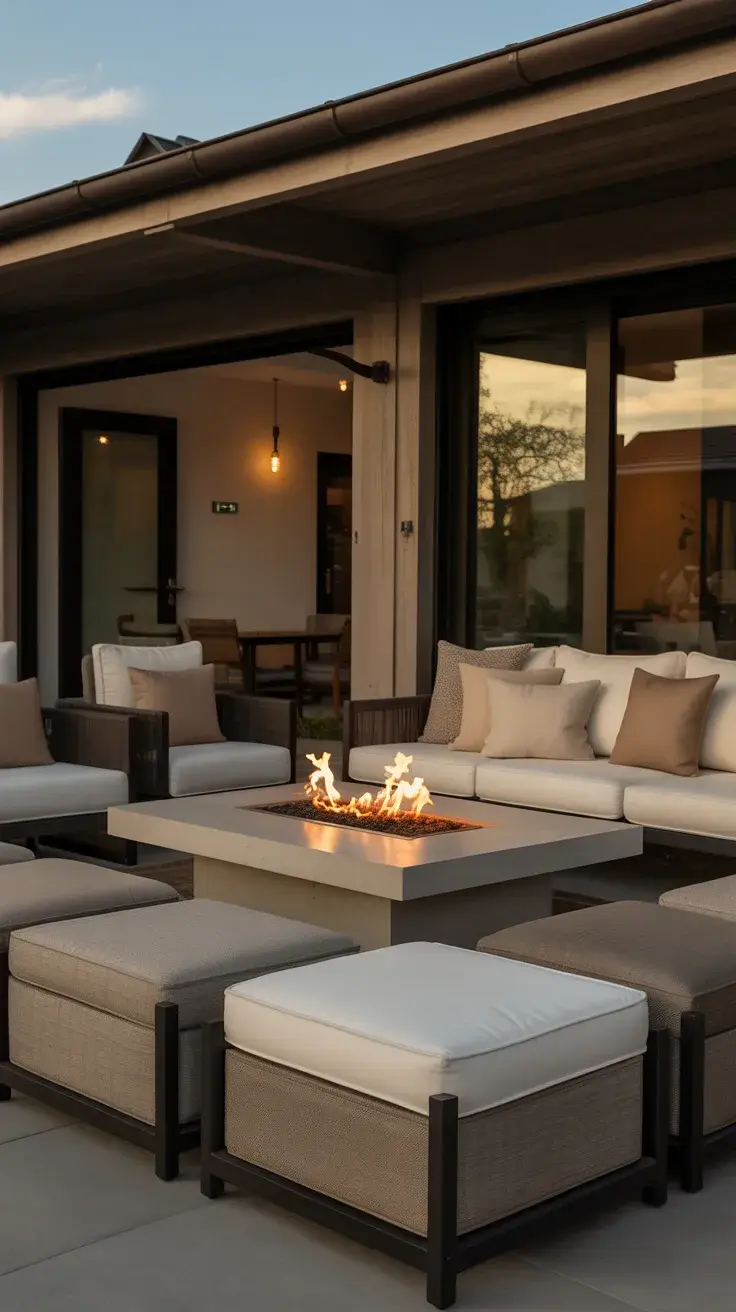
To further elevate this section, I would add modular storage benches along one wall. They provide functionality, hide clutter, and help maintain the minimal aesthetic of the space.
2. Sustainable Porch Design Innovations
When working on sustainable porch designs, I start by assessing materials because durability and environmental impact matter equally. Using reclaimed wood, recycled composite decking, and low-VOC finishes helps achieve the environmentally conscious aesthetic many homeowners will prioritize in 2026. I also incorporate shading solutions that minimize heat gain, making the porch more energy-efficient and pleasant to use.
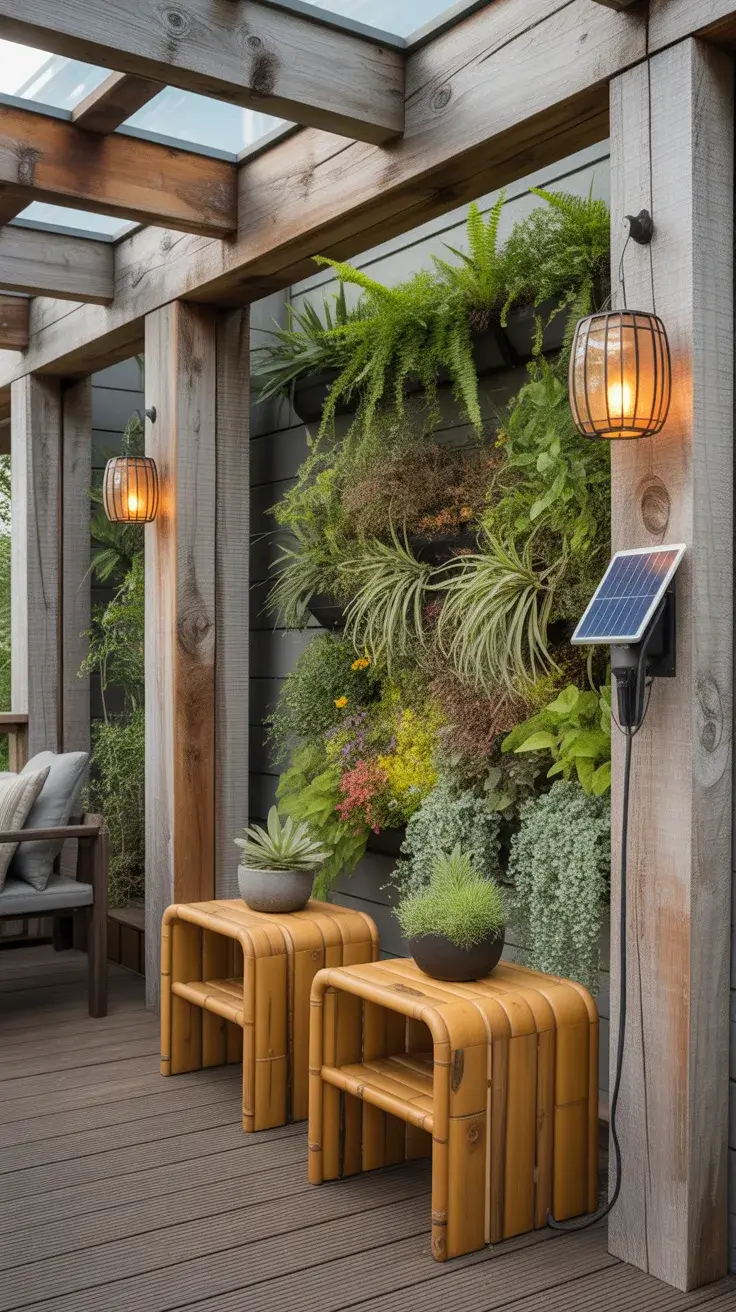
Furniture plays a critical role in sustainable design, so I select eco-certified chairs, bamboo side tables, and solar-powered lanterns. Rain-harvesting planters and vertical gardens add natural beauty while encouraging mindful water usage. These elements not only support the environment but also bring texture and vitality to the space.
From my perspective, the most successful sustainable porches integrate nature into the layout. Designers from major US eco-magazines often highlight the value of passive cooling and natural shade, which I’ve found to be extremely effective. Simple additions like native plants or climbing vines offer long-lasting visual appeal and ecological benefits.
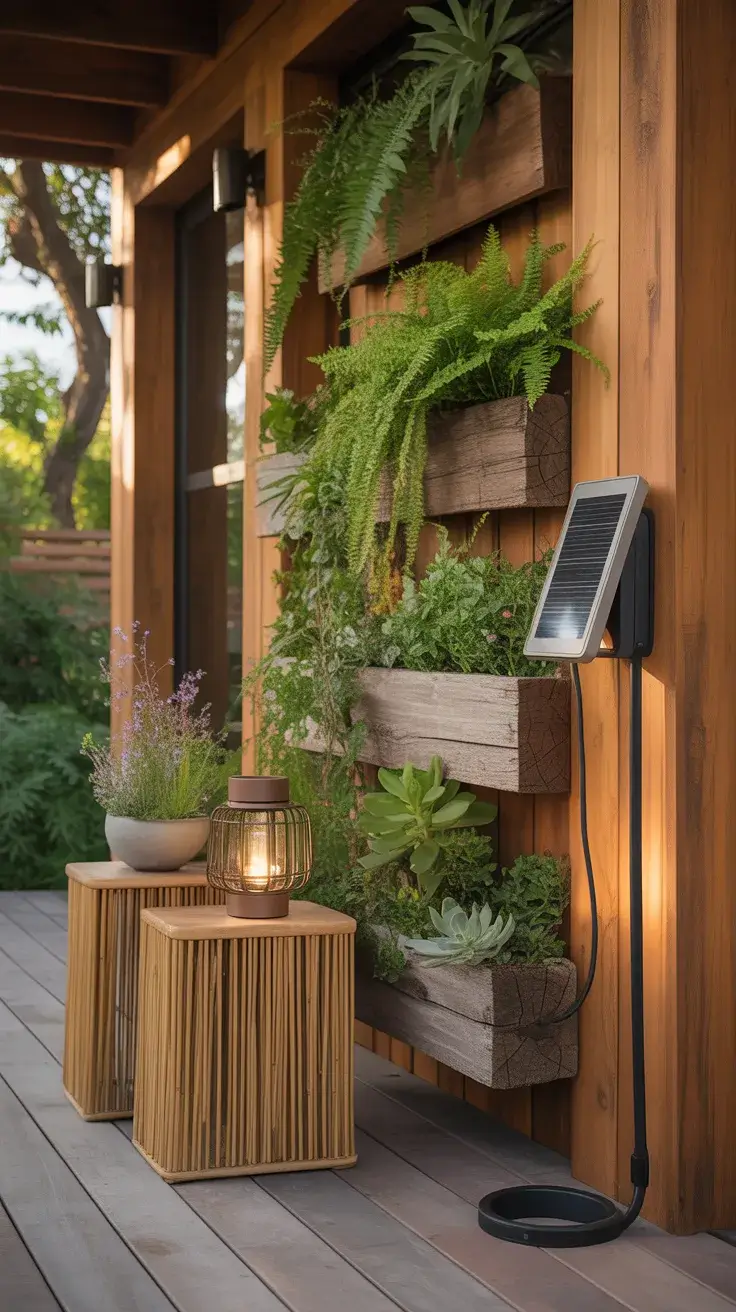
To enhance this section, I would include a multi-use solar charging station built into a console table, blending sustainability with everyday functionality.
3. Minimalist Porch Aesthetic Inspiration
A minimalist porch design is ideal for homeowners who appreciate clean lines, uncluttered surfaces, and purposeful décor. I begin by selecting a restrained color palette—soft whites, earthy grays, and muted stone tones—to maintain a sense of calm. The focus is always on space, light, and proportion rather than numerous decorative accents.
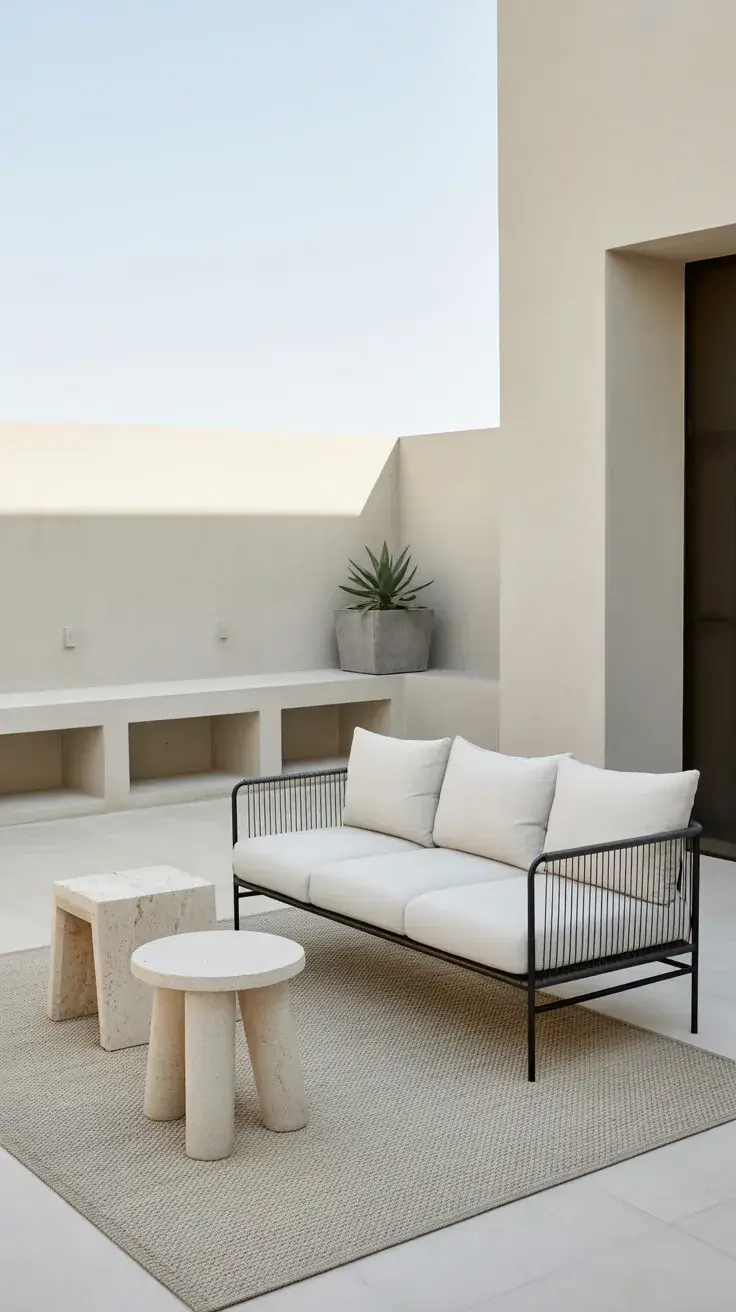
Furniture selection is intentional. I typically choose a slim-frame metal sofa, a pair of sculptural lounge chairs, and a single stone side table. These pieces help maintain visual balance and prevent overcrowding. A textured rug in a neutral shade adds softness without breaking the minimalist theme.
In my professional experience, the minimalist aesthetic succeeds only when storage and organization are thoughtfully addressed. Experts at major design platforms often note that hidden storage is essential to maintaining visual clarity, and I completely agree. Incorporating sleek built-in benches with unobtrusive compartments ensures the porch stays tidy.
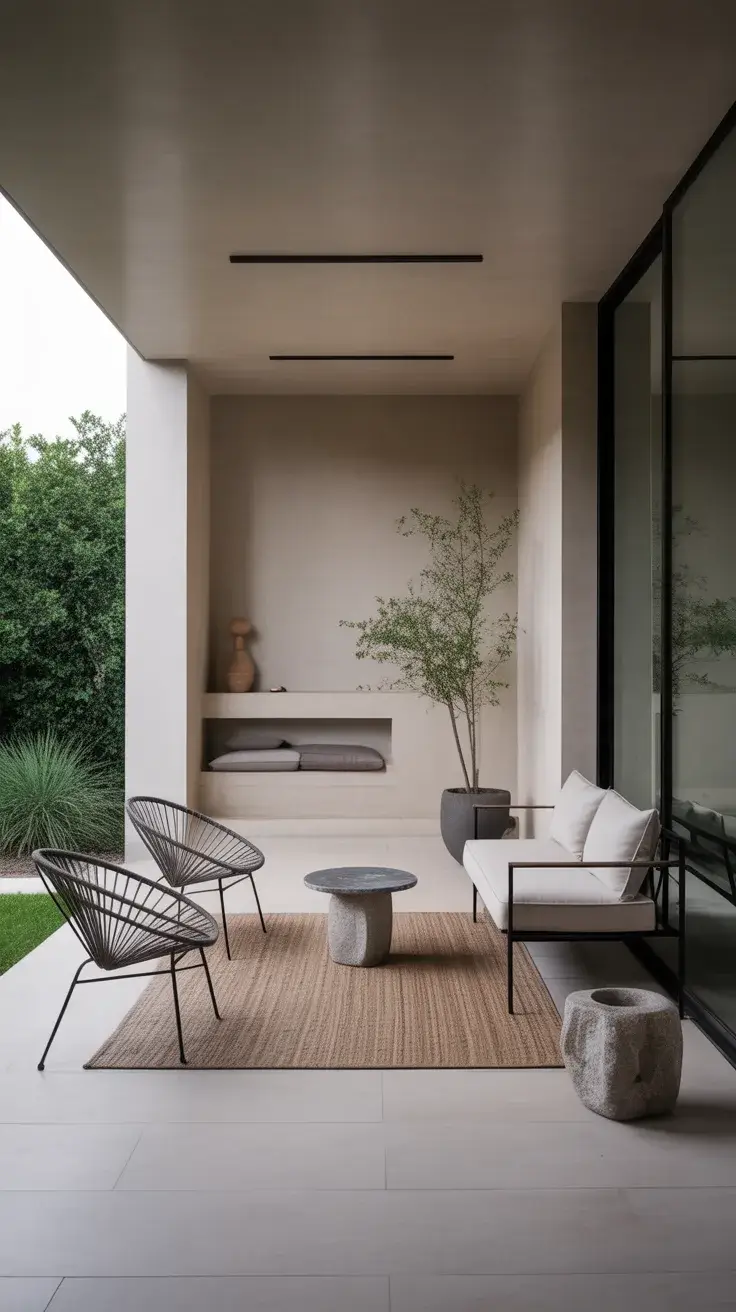
To refine this section even more, I recommend adding a single architectural planter with a structural plant like a snake plant or ornamental grass to introduce organic contrast without disrupting simplicity.
4. Boho Style Porch Makeover
A boho porch makeover allows me to layer textures, patterns, and colors while maintaining a relaxed and inviting atmosphere. I generally start with earthy tones and woven materials, then build the design using cushions, rugs, and eclectic accessories. The goal is to capture a carefree but harmonious aesthetic that feels lived-in and truly personal.
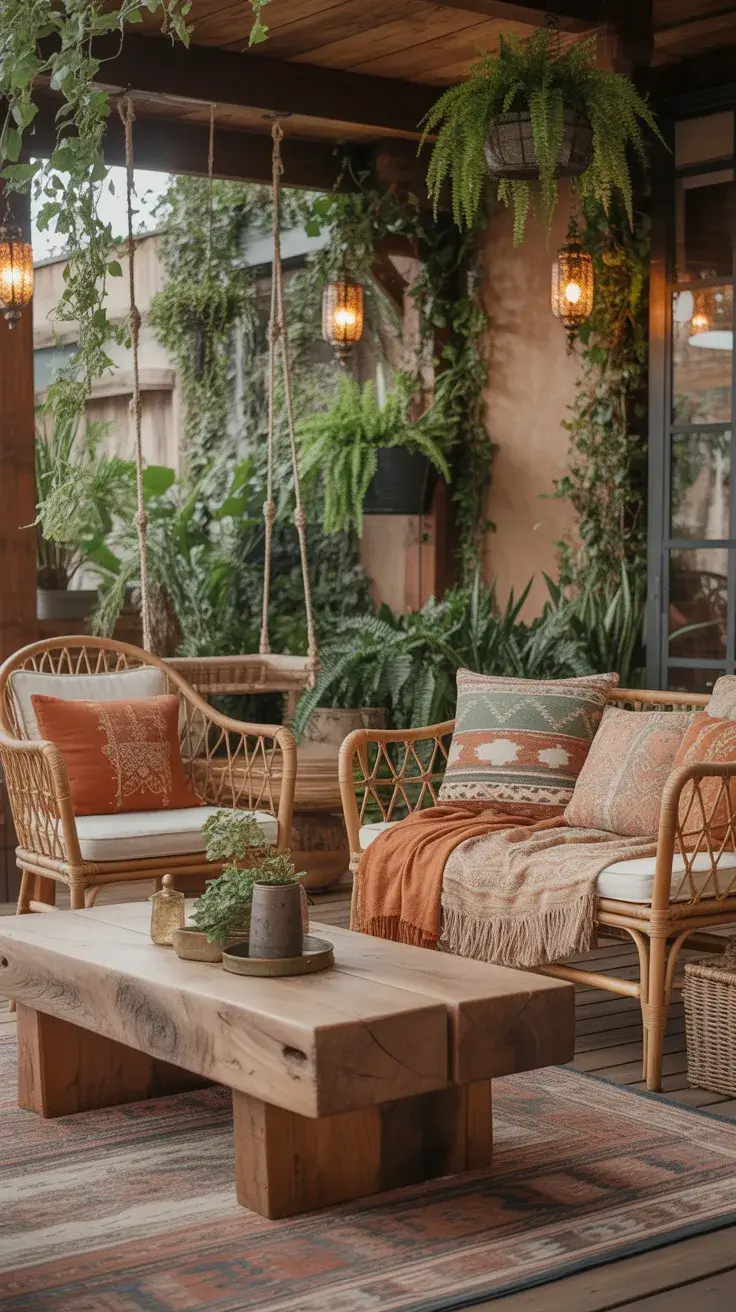
For furniture, I choose natural rattan chairs, a macramé swing, and a reclaimed wood coffee table. These elements offer comfort and personality while supporting the bohemian theme. Patterned cushions, lanterns, potted plants, and tapestries help complete the look without overwhelming the space.
From my perspective, boho porches work best when there is a sense of intentional softness. Many US designers recommend layering textiles to build depth, and I’ve found this approach consistently successful. Adding throws, kilim-style rugs, and textured poufs encourages lounging and creates a visually dynamic environment.
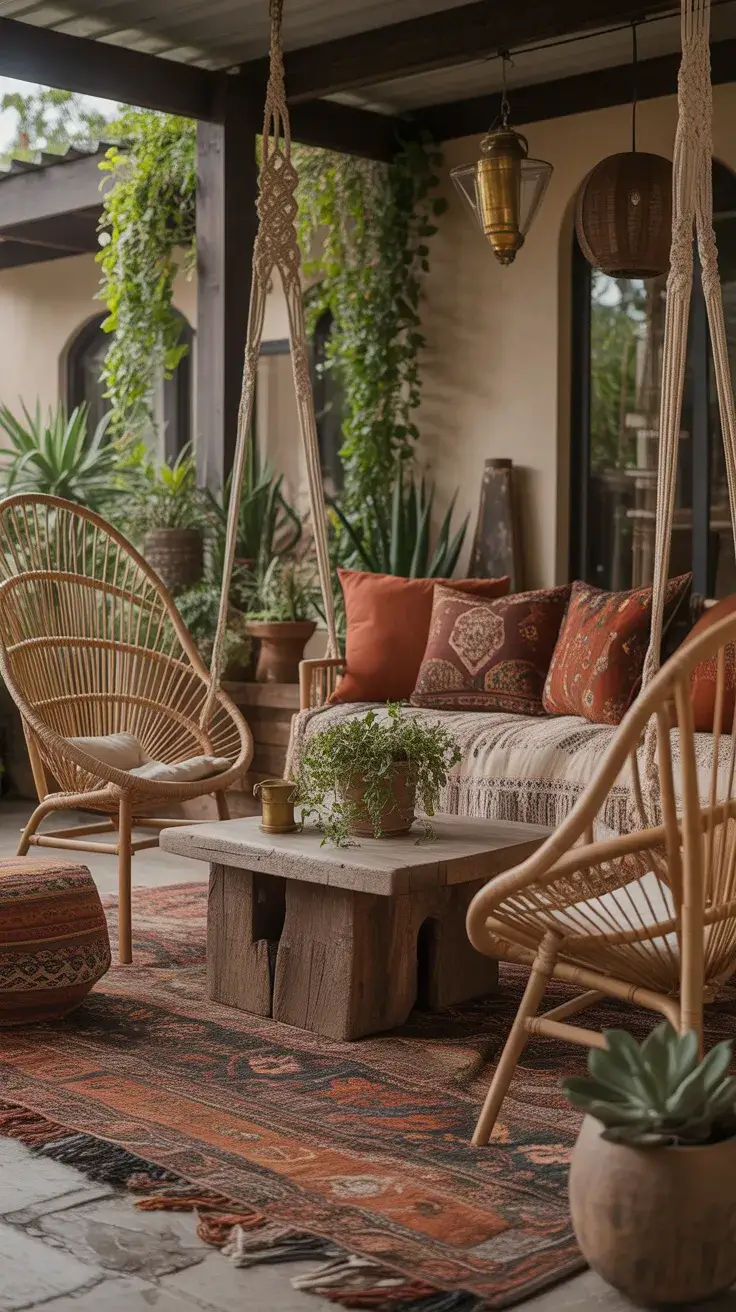
If I were expanding this section, I would add more greenery—particularly cascading plants—which enhance the boho vibe and bring natural movement to the space.
5. Smart Technology Enhanced Porch Ideas
When integrating smart technology into porch design, I focus on improving comfort and convenience. Automated shades, climate-friendly fans, and app-controlled lighting systems create a modern space that feels effortless to use. This approach is becoming extremely popular in 2026 as homeowners look for smarter outdoor living solutions.
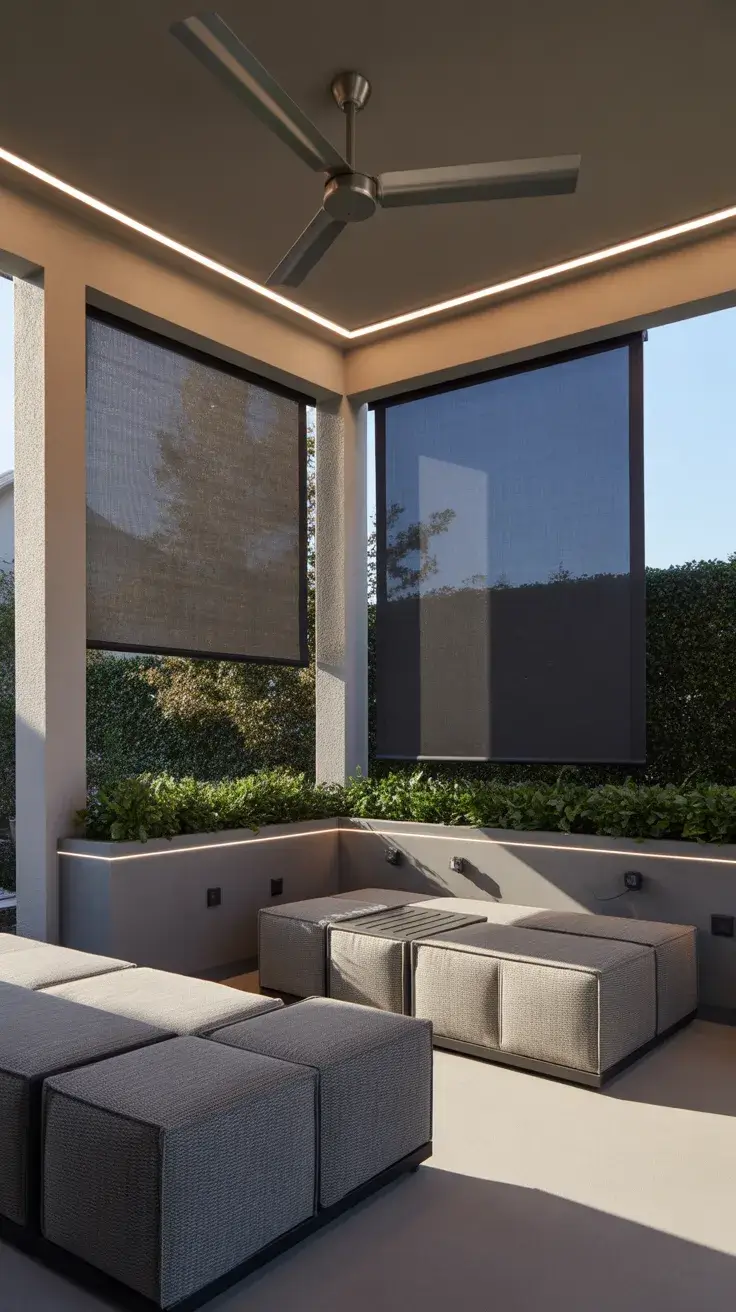
Furniture should support the tech-forward theme. I use sleek modular seating, a weather-resistant charging table, and LED-embedded planters that adjust brightness automatically. These pieces add sophistication without feeling too futuristic. Smart speakers concealed in architectural features offer functionality while maintaining aesthetics.
Based on my experience, smart tech shines when used subtly. Leading US home tech magazines advise incorporating automation gradually to maintain a natural flow, and I follow that advice closely. For instance, motion-activated pathway lights enhance safety without drawing attention to the technology itself.
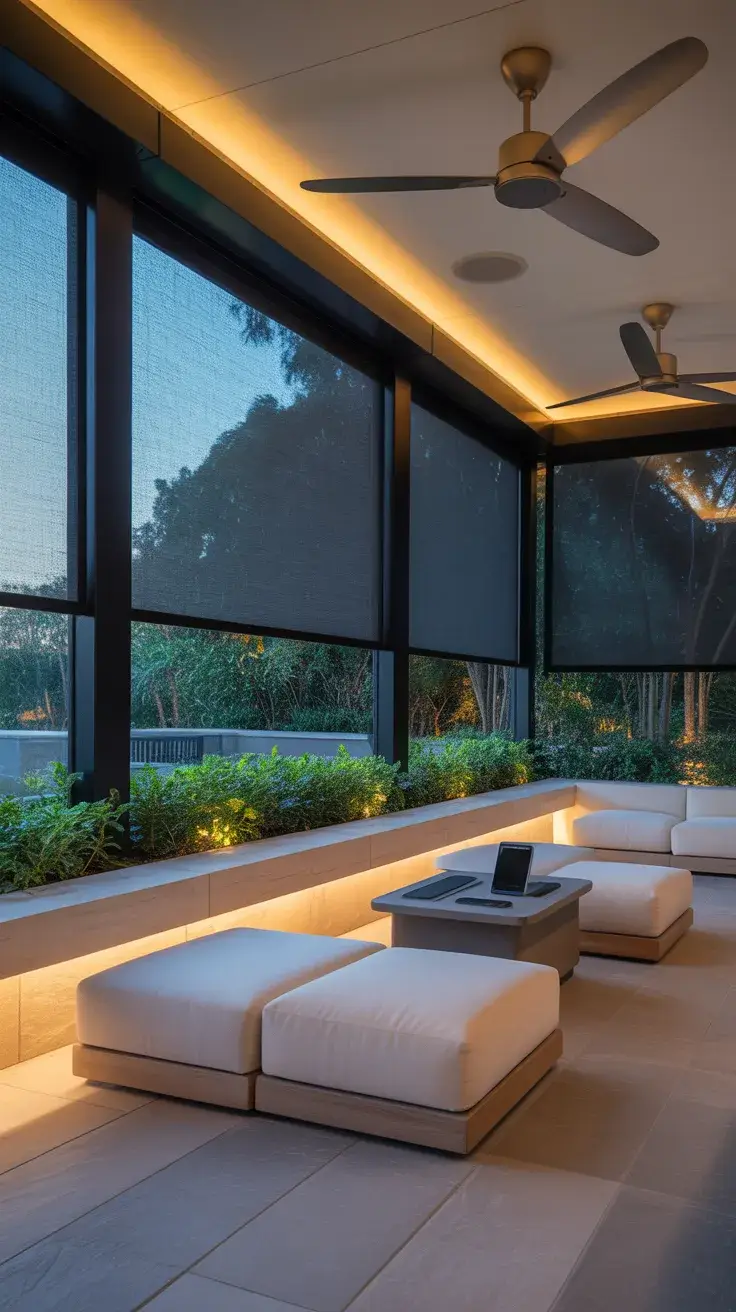
To enhance this section, I’d include a smart heating panel discreetly installed under a bench to extend porch usability into cooler evenings.
6. Nature Inspired Porch Concepts
A nature-inspired porch draws heavily from organic materials and calming color palettes. I usually begin with natural wood decking, stone planters, and soft green textiles to ground the space visually. This approach transforms the porch into a peaceful retreat with strong biophilic qualities.
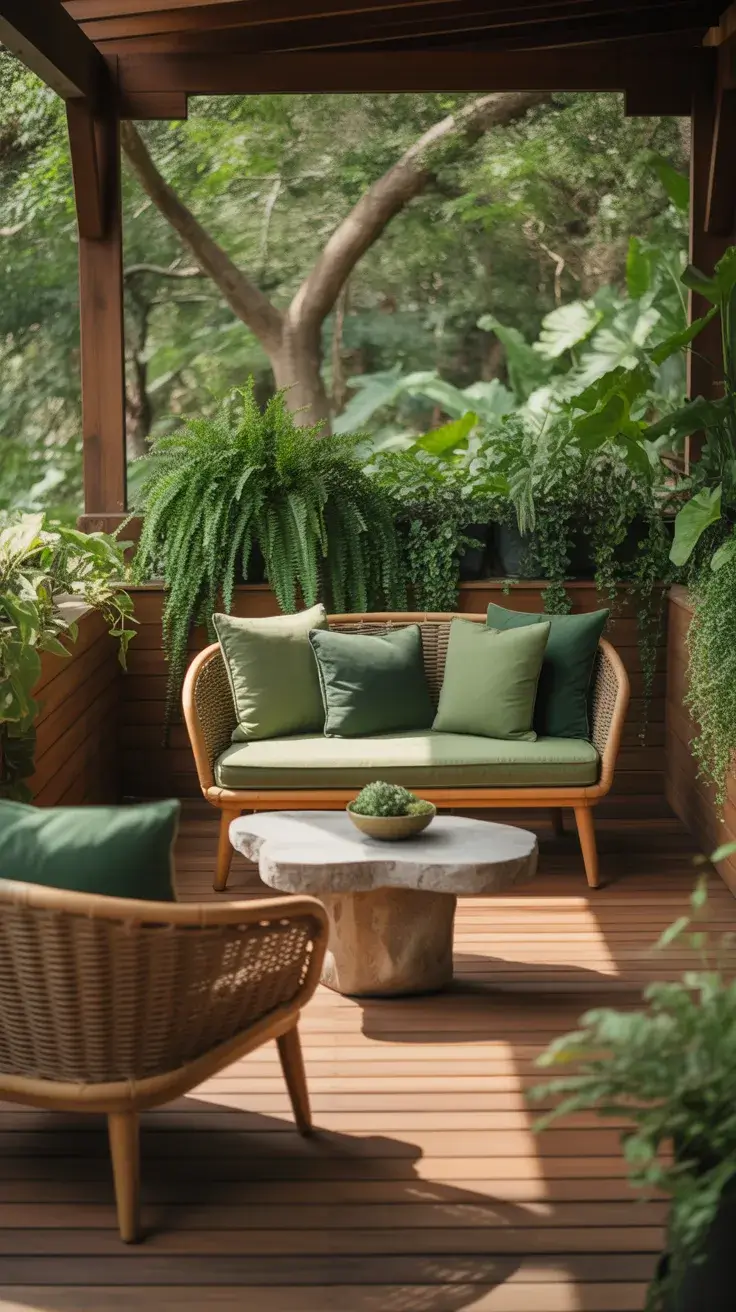
Furniture choices include teak chairs, a woven loveseat, and a stone-top coffee table. I also use botanical prints and earthy accessories to echo outdoor surroundings. Live plants—both large and small—are essential for creating freshness and a sense of immersion in nature.
In my opinion, these porches feel most successful when noise and distractions are minimized. Many experts emphasize designing with sensory elements in mind, and I’ve found this to be true. Adding a small water feature or wind chimes helps cultivate a calming environment.
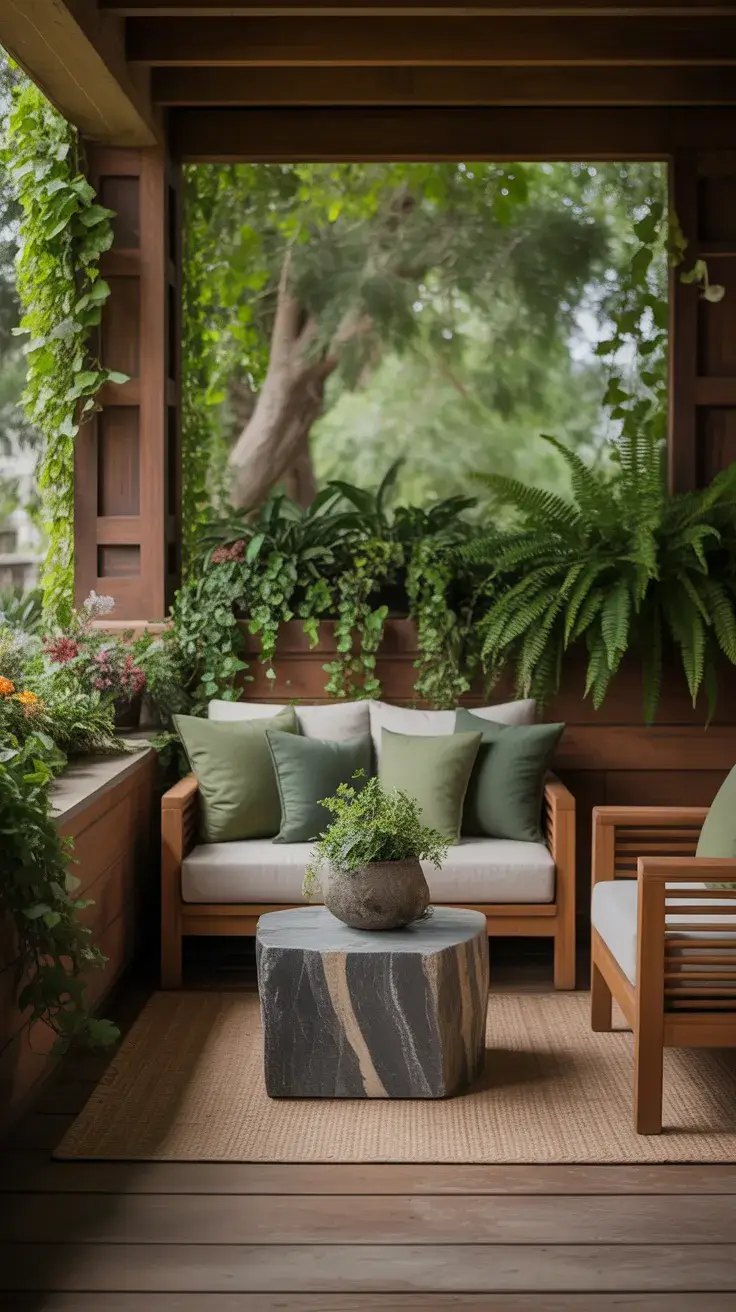
To improve this section further, I would integrate built-in planter boxes along the perimeter to enhance the natural enclosure effect.
7. Multifunctional Porch Living Spaces
A multifunctional porch is perfect for homeowners who want versatility without sacrificing style. I begin by establishing separate zones, such as a lounge area, dining corner, and workspace nook. This zoning enhances functionality and ensures every square foot serves a purpose.
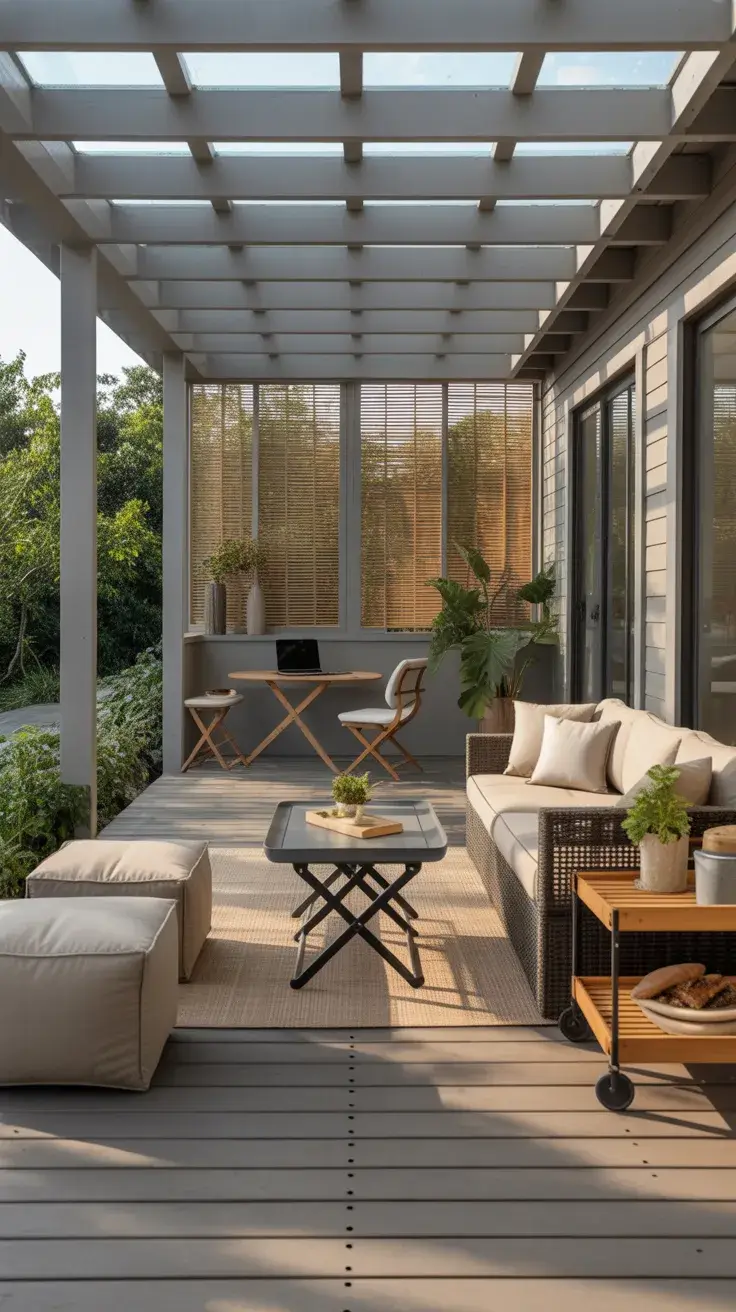
Furniture selection is strategic. I use foldable dining sets, storage ottomans, a small desk with weatherproof finish, and sectional seating that can be rearranged easily. These pieces allow the porch to shift between relaxation, dining, and productivity depending on the homeowner’s needs.
I’ve seen multifunctional porches become especially useful as more people adopt hybrid lifestyles. Publications like House Beautiful highlight the value of adaptable design, and I agree completely. Adding accessories such as rolling carts or modular shelving helps homeowners transition the space efficiently.
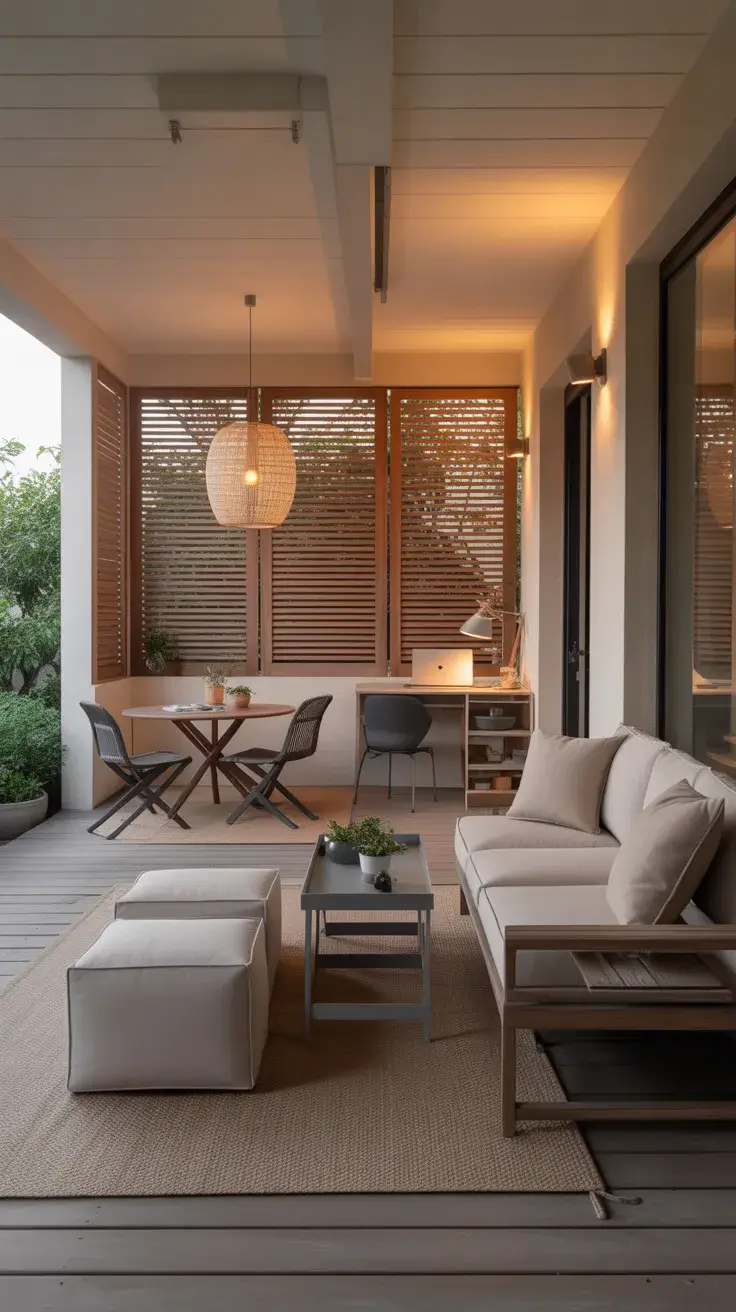
To make this section even stronger, I would add privacy screens that slide open or closed, offering flexibility for work, dining, or simply relaxing.
8. Rustic Charm Porch Transformations
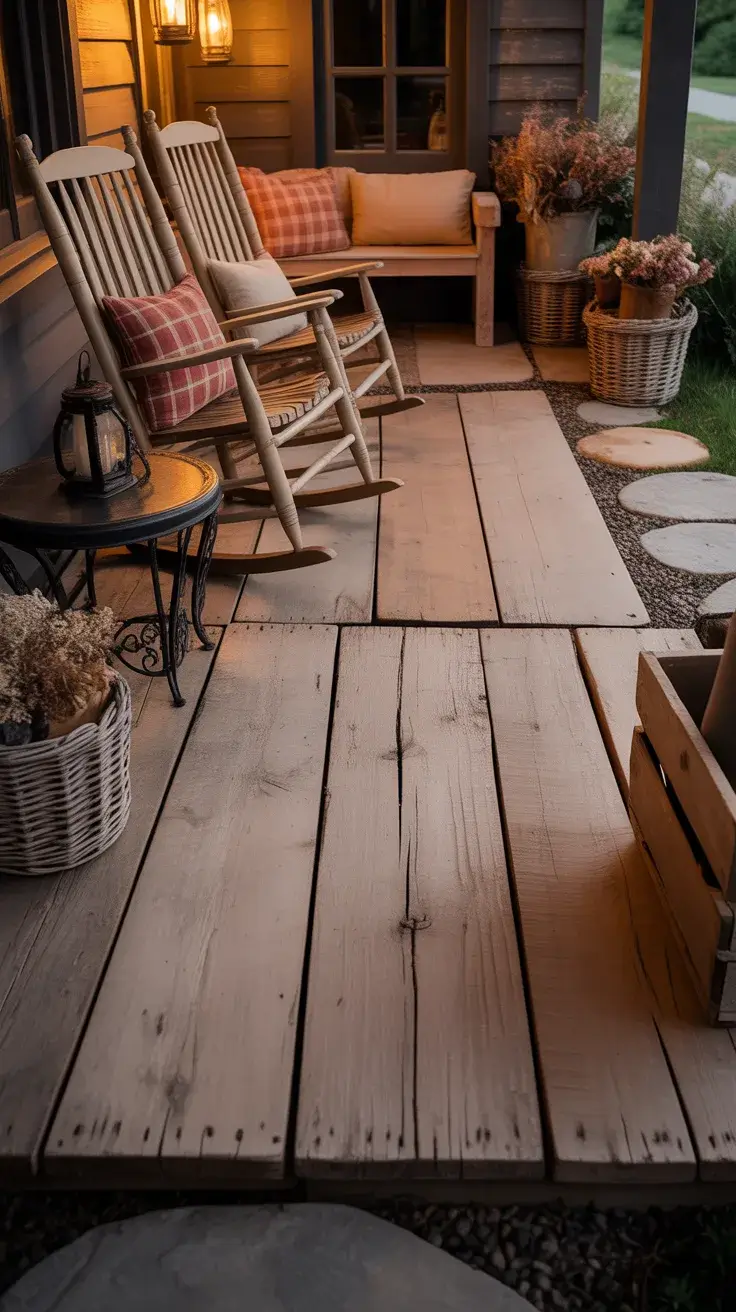
When I design a rustic-style porch, I prioritize natural textures and authentic materials that bring warmth and character to the space. I typically start with distressed wood flooring or stone pavers, which immediately set the tone and create a timeless foundation. Soft earth tones, handcrafted décor, and warm lighting help the porch feel welcoming and grounded, staying true to the rustic aesthetic that continues trending in Creative Porch Ideas 2026.
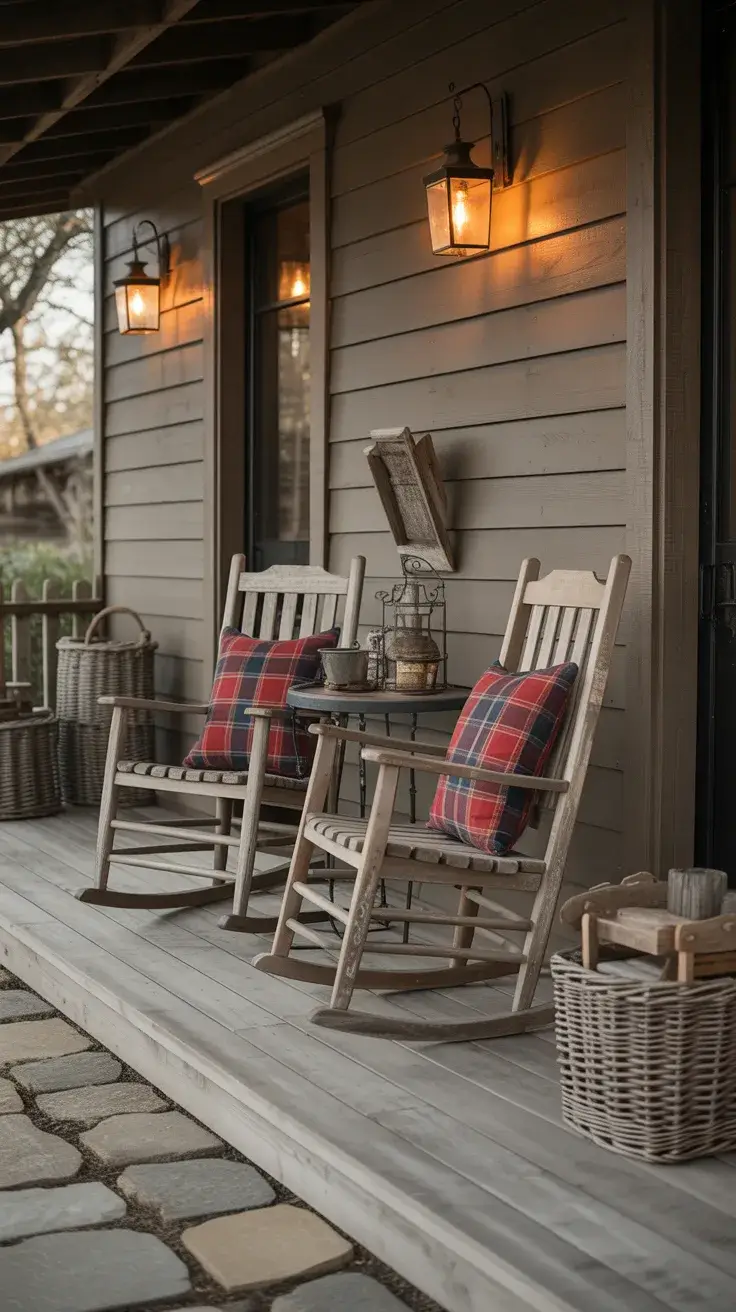
For furniture, I often choose solid wood rocking chairs, a farmhouse-style bench, and a wrought-iron side table. These pieces add a cozy touch while offering durability. Woven baskets, plaid cushions, and iron lanterns round out the look, making the porch feel intentional and thoughtfully curated. I find that adding a vintage accent—like an antique crate or weathered planter—adds personal charm without overwhelming the design.
From my professional experience, rustic porches are most successful when they strike a balance between old-world character and modern convenience. Many American interior stylists recommend mixing reclaimed materials with updated textiles, and I follow that guidance closely. It keeps the porch functional while preserving the nostalgic appeal.
To enhance this section, I would add wall-mounted hooks for outdoor gear or blankets, allowing the porch to serve both practical and decorative functions.
9. Small Porch Space Maximization
When working with small porches, my goal is to transform limitations into strengths by using layout and scale strategically. I typically rely on compact, multifunctional furniture and a light color palette to visually expand the space. Vertical décor, reflective surfaces, and smart zoning help maximize every inch without overcrowding.
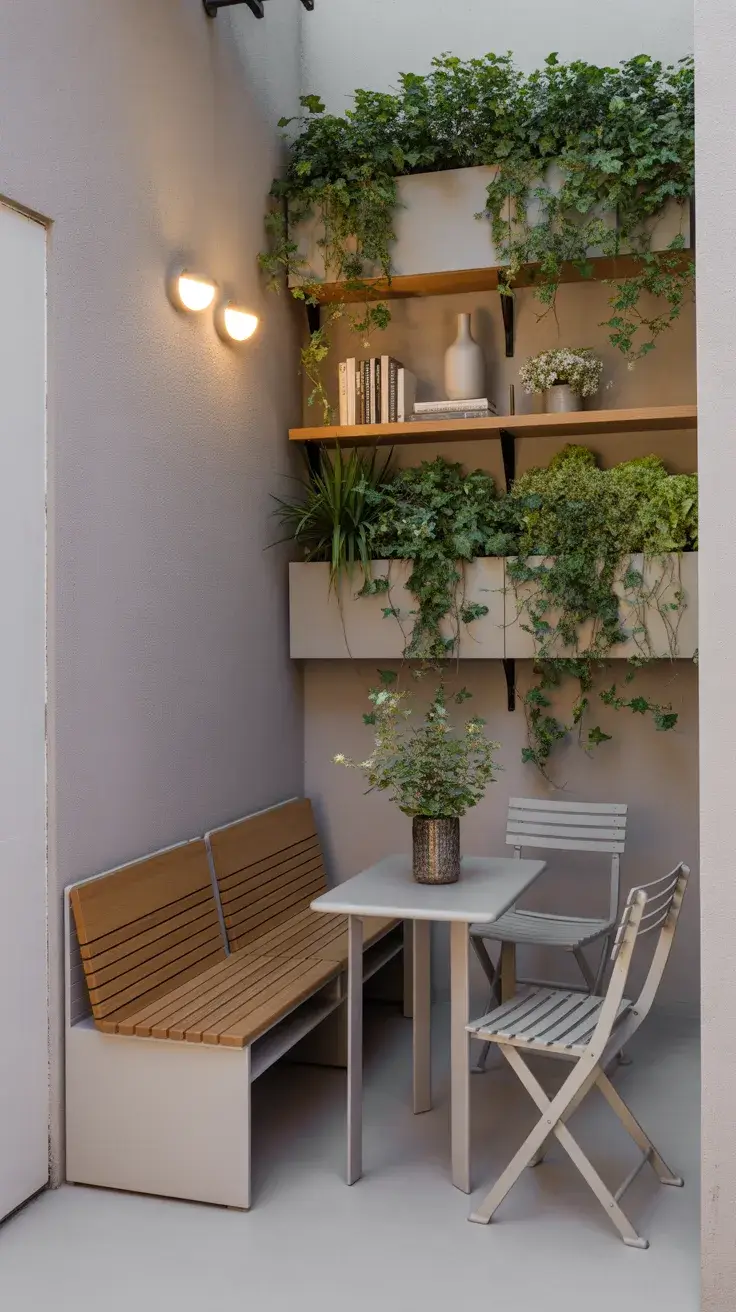
Furniture selection is crucial. I often choose a narrow bench with hidden storage, foldable bistro chairs, and a slim-profile side table. Wall-mounted planters or shelves help lift décor upward, preserving precious floor space. Outdoor cushions and a small rug add comfort while keeping the look cohesive.
In my professional opinion, small porches benefit greatly from thoughtful lighting. Many design experts highlight the power of soft directional lighting for creating an illusion of depth, and I’ve seen this firsthand. Simple sconces or string lighting can make a compact space feel intimate yet spacious.
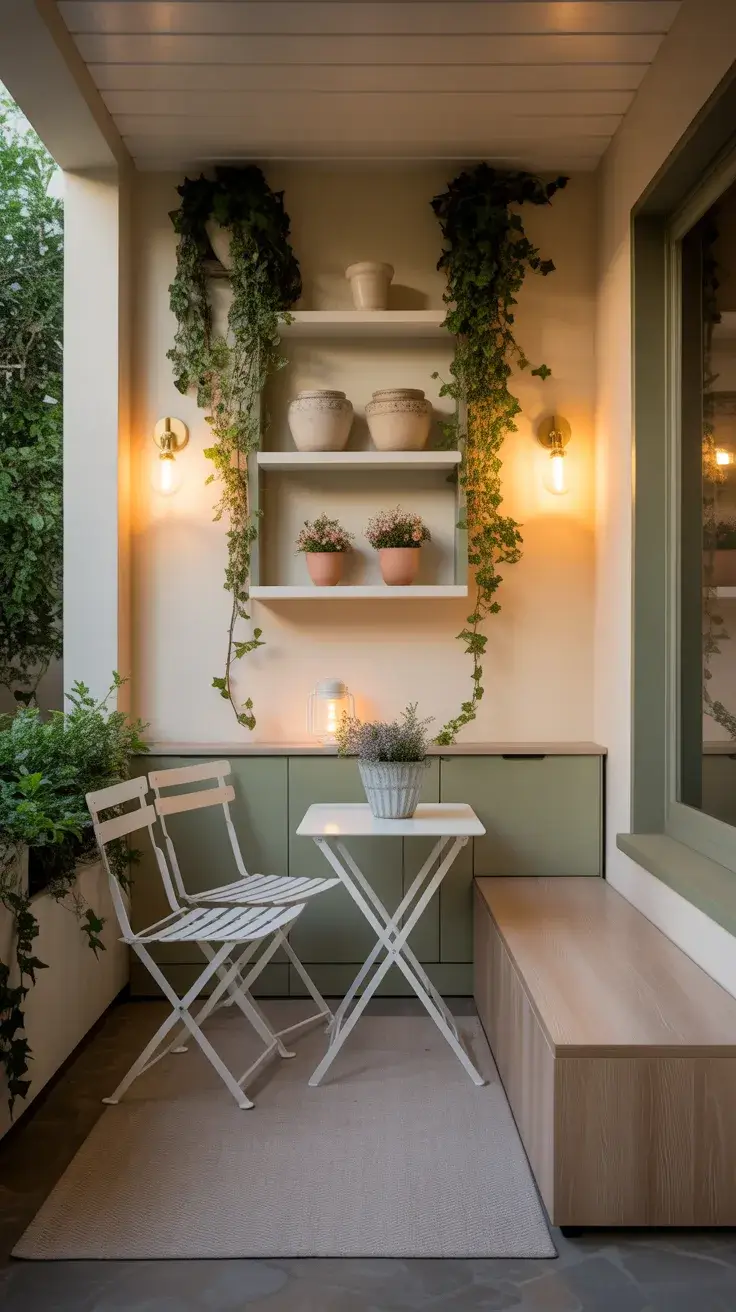
To improve this section even further, I’d add a small extendable table that tucks discreetly against a wall, offering additional function without clutter.
10. Colorful Porch Decorating Inspiration
A colorful porch allows me to experiment with bold tones and playful accents while keeping the design balanced. I usually begin with a neutral base—such as white trim or natural wood—so brighter hues stand out without overwhelming the space. Pops of color on textiles, planters, and accent furniture bring creativity and vibrancy to the overall palette.
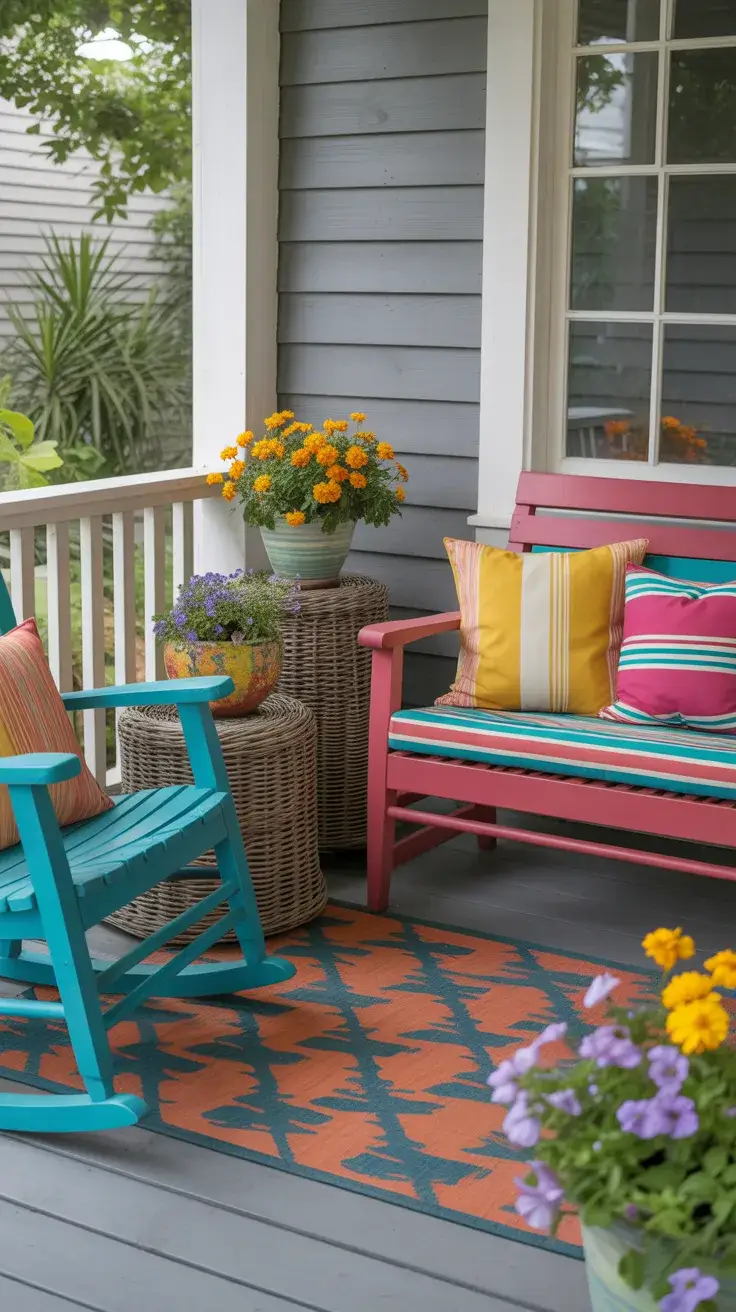
For furniture, I like to incorporate painted rocking chairs, a cheerful outdoor rug, and decorative side tables in contrasting tones. Bright cushions, patterned throws, and curated accessories help unify the palette. I’ve learned that repeating two or three accent colors is the most effective way to keep the porch visually cohesive.
In my experience, colorful porches benefit from seasonal versatility. US-based designers often recommend swapping cushion covers or small décor items to refresh the palette easily, and I find this technique invaluable. It allows homeowners to enjoy bold design without long-term commitment.
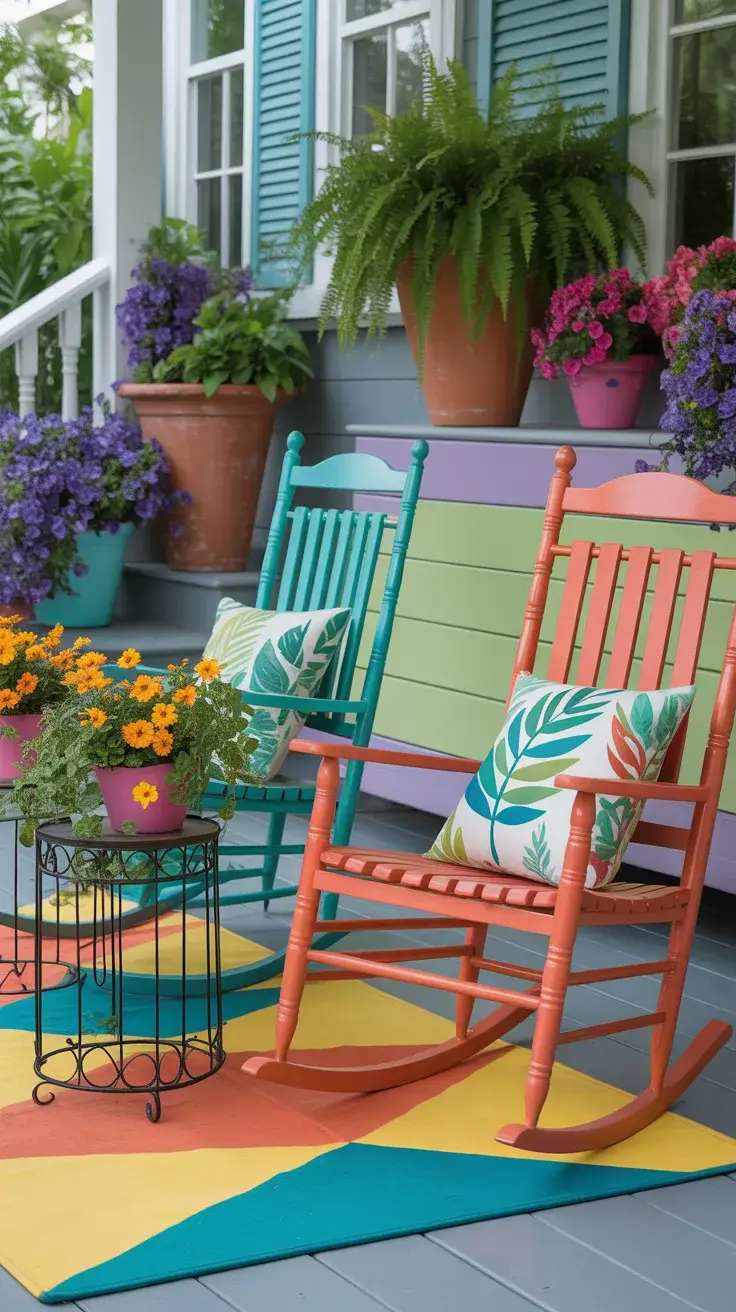
To elevate this section, I would add a statement piece—such as a vibrant ceramic planter or a color-blocked bench—creating a focal point that ties the entire porch together.
11. Breezy Coastal Porch Vibes
When designing a coastal-inspired porch, I draw heavily from seaside textures and serene tones. Soft blues, sandy beiges, and crisp whites create a breezy, relaxing atmosphere. I usually incorporate natural materials like linen, rope, and wicker to reinforce the coastal mood and provide durability in outdoor environments.
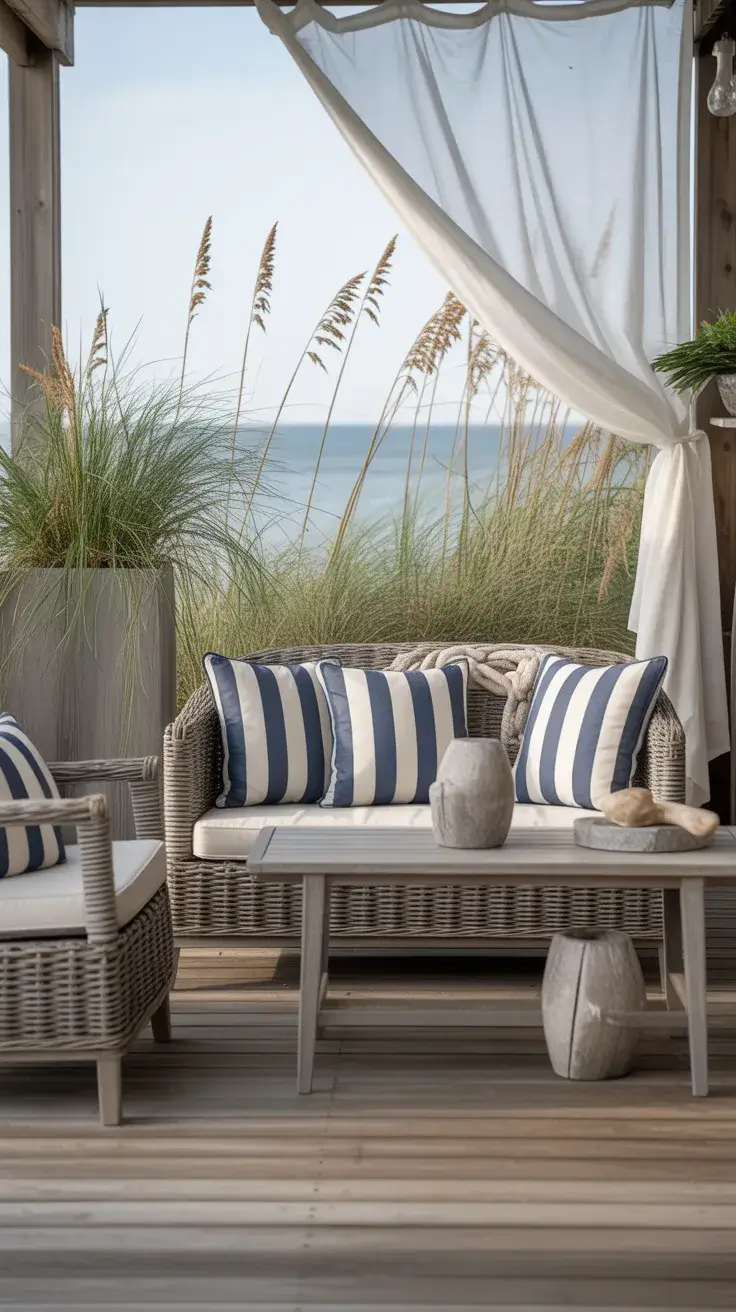
For furniture, I prefer a wicker loveseat, weathered wood coffee table, and rope-accented lounge chairs. These items pair beautifully with nautical-striped pillows, textured rugs, and oversized planters filled with beach grasses. The goal is to create an airy, sun-washed ambiance that feels fresh and uplifting.
Coastal porches shine when they incorporate movement—whether through flowing curtains, lightweight textiles, or gentle color transitions. Many US décor magazines recommend sheer outdoor curtains for added softness and privacy, and I often include them because they enhance the calming experience.
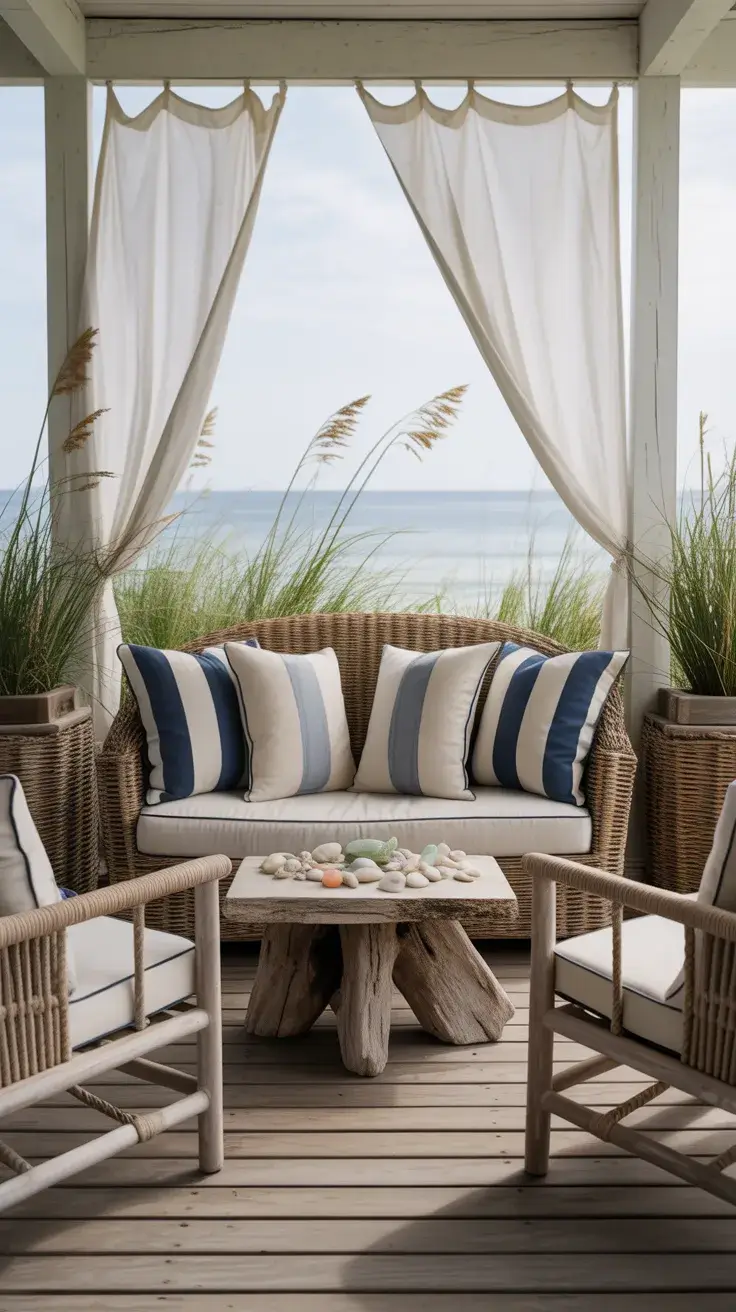
To enhance this section, I’d add a driftwood-inspired decorative piece or wall art to strengthen the seaside theme without overpowering the simplicity.
12. Farmhouse Porch Style Revival
A modern farmhouse porch blends traditional charm with contemporary comfort. I generally start with classic elements such as whitewashed wood, black metal accents, and natural textures. This combination creates a timeless look that feels both welcoming and refined.
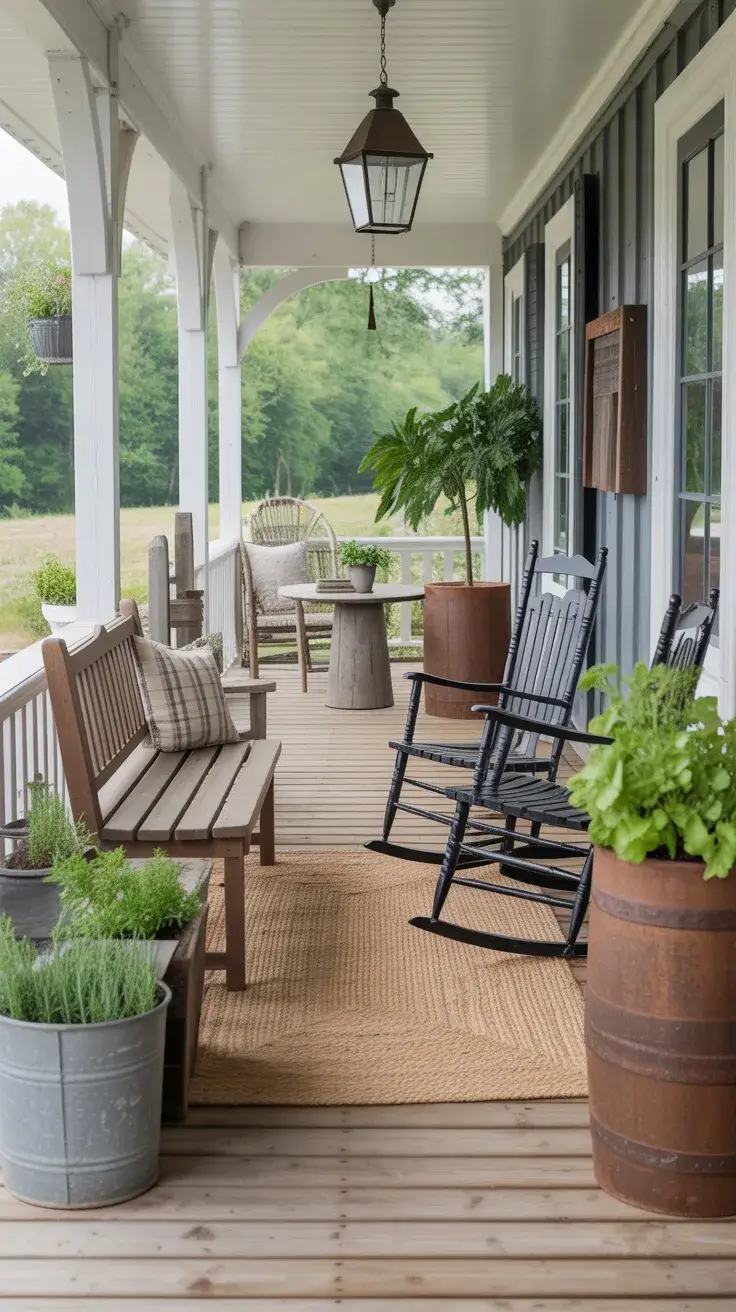
Furniture plays a central role. I often choose a long wooden bench, black spindle rocking chairs, and a galvanized metal side table. Layered cotton cushions, rustic lanterns, and oversized planters help complete the farmhouse feel. A simple jute rug grounds the seating area while maintaining the minimalist elegance typical of this style.
From my perspective, farmhouse porches are most successful when they incorporate subtle modern touches. Designers from leading US publications frequently emphasize mixing old and new elements—something I fully support. Sleek lighting fixtures or updated textiles make the porch feel current without sacrificing charm.
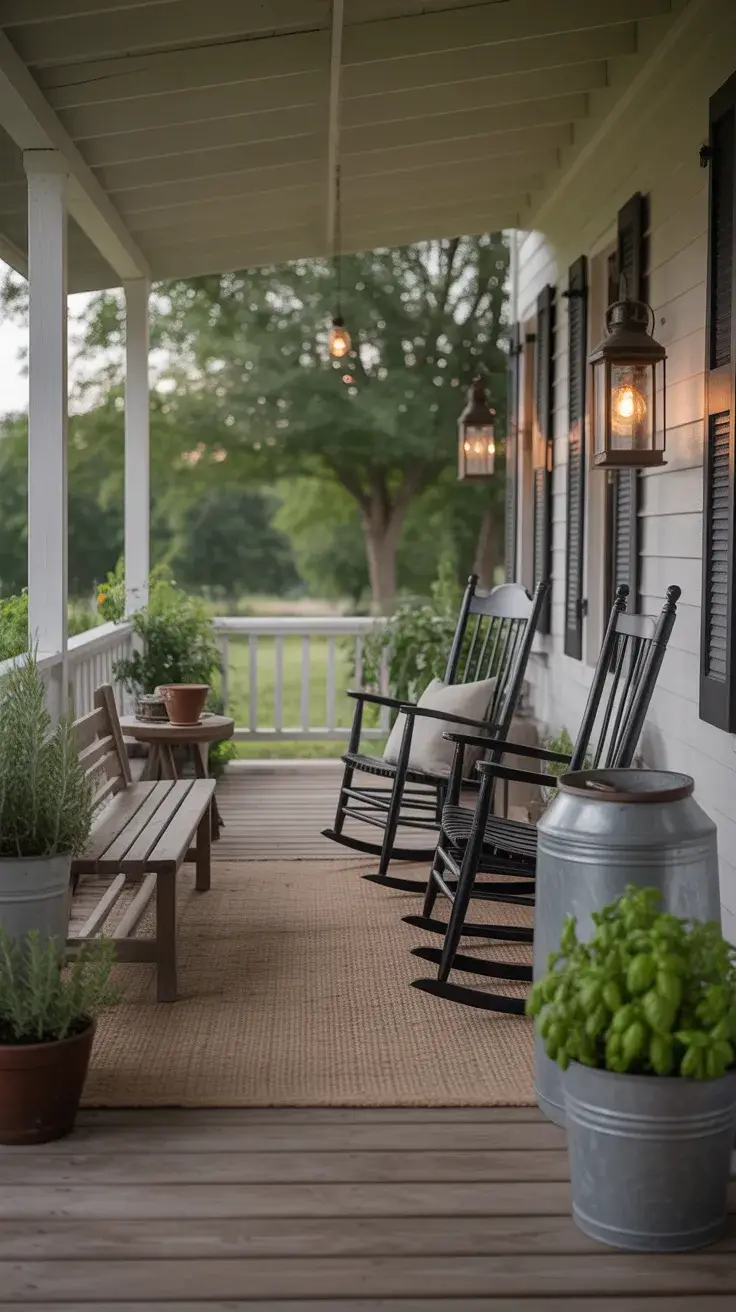
To enhance this section further, I would add a vintage-style welcome sign or a cluster of potted herbs to bring authenticity and personality to the space.
13. Contemporary Porch Furniture Trends
In 2026, contemporary porch furniture trends lean toward sculptural silhouettes, performance fabrics, and weather-resistant materials. When designing these porches, I emphasize bold forms and high-quality textures that create a polished outdoor environment. Clean lines, muted tones, and modular configurations define this year’s most popular looks.
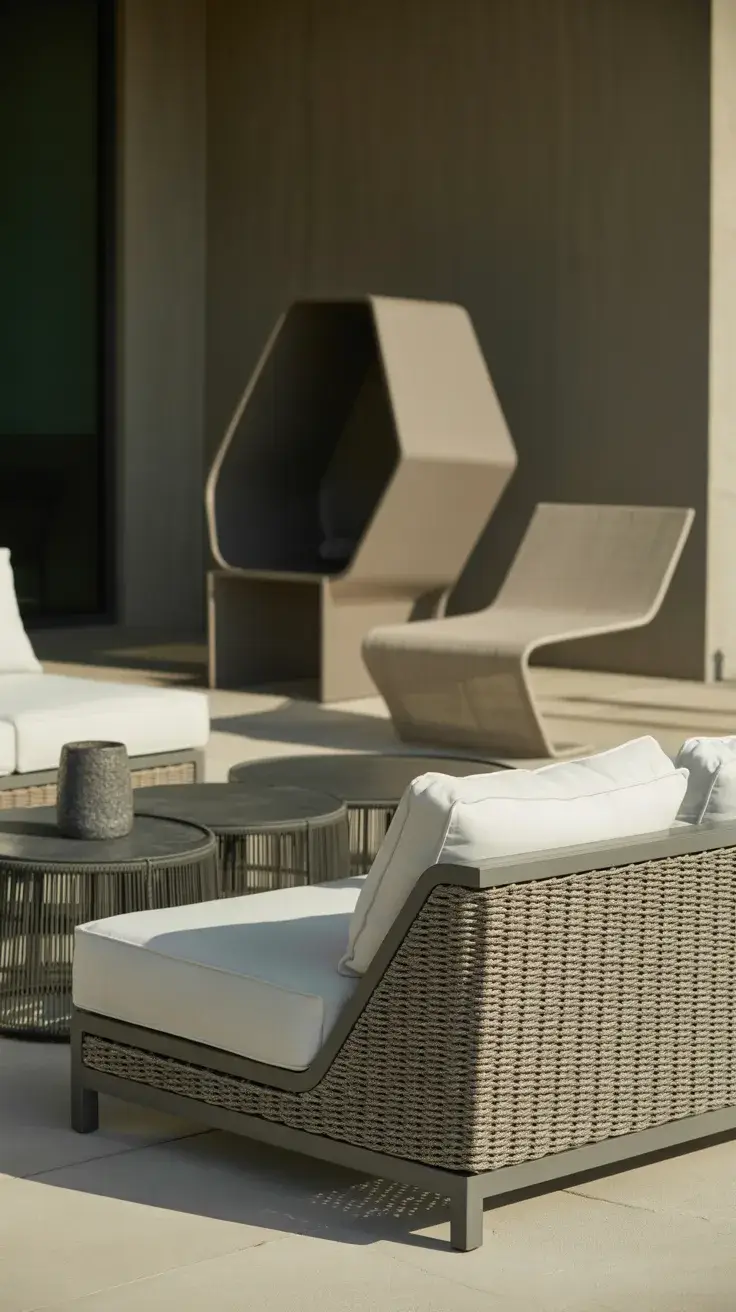
Furniture often includes angular lounge chairs, low-profile sectionals, sleek metal tables, and innovative hybrid materials like resin-wicker blends. I also prioritize performance fabrics that resist fading, moisture, and wear. These choices not only elevate the aesthetic but ensure longevity in varying weather conditions.
According to many US design experts, contemporary outdoor furniture should strike the perfect balance between comfort and sophistication. I’ve found this perspective essential. Incorporating ergonomic shapes and cushions maintains comfort while still keeping the overall aesthetic modern.
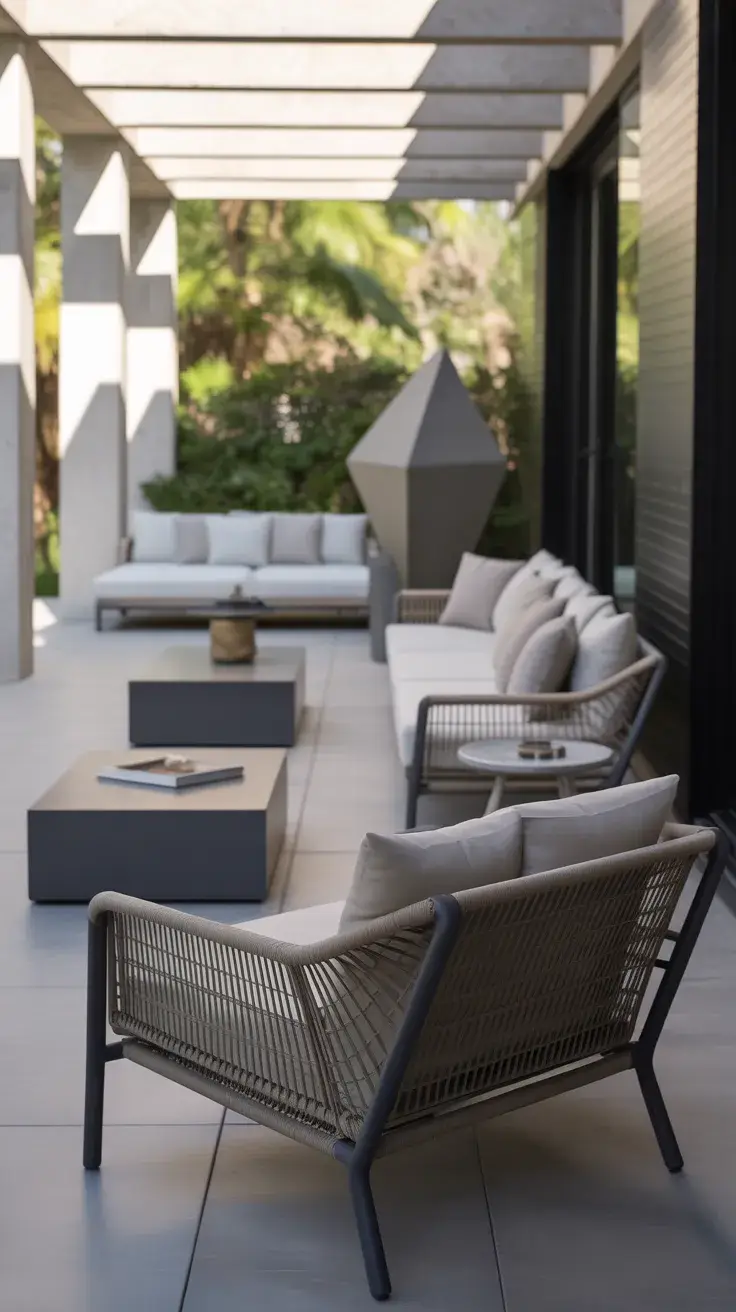
To strengthen this section, I’d add a sculptural statement chair or a minimalist chaise to anchor the design visually.
14. Outdoor Porch Lighting Magic
Lighting is one of the most transformative elements in porch design. When I plan lighting for outdoor spaces, I combine ambient, task, and accent layers to create depth and atmosphere. Soft warm tones are my preference, as they foster relaxation and enhance architectural details.
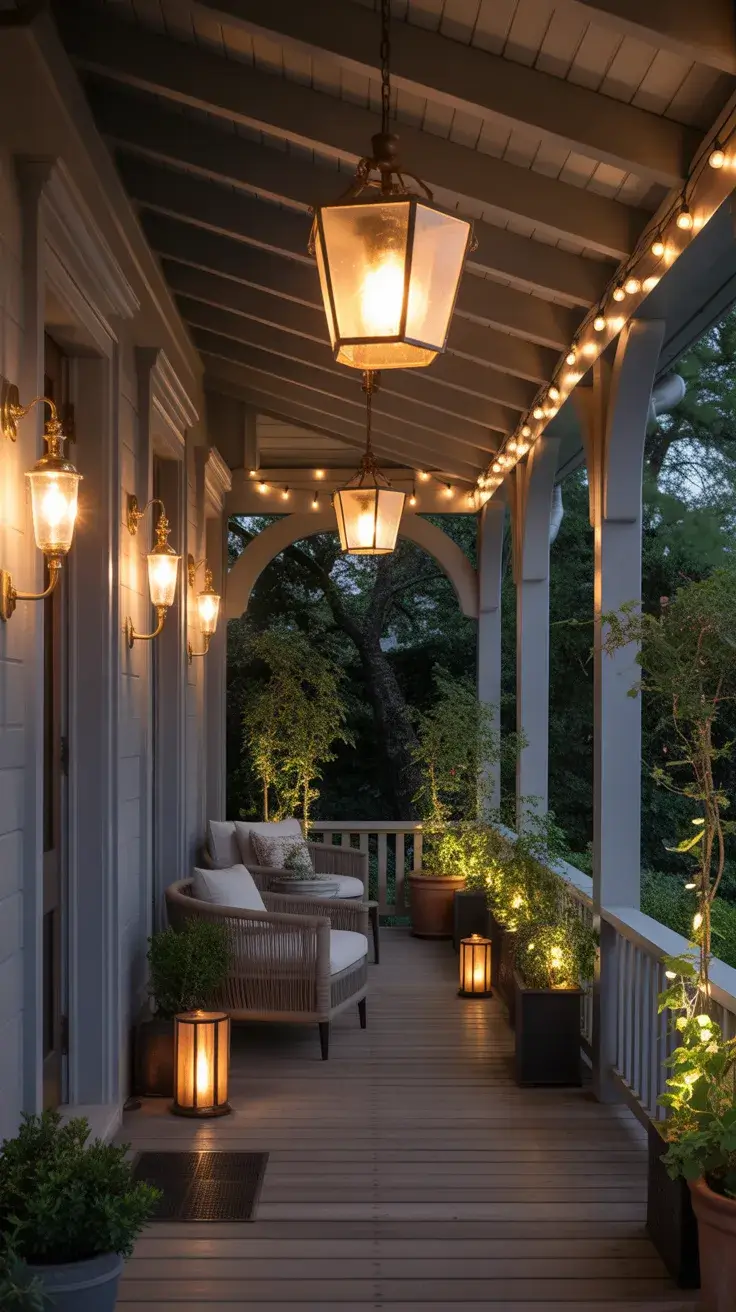
I often use a mix of wall sconces, pendant lights, string lighting, and discreet floor lanterns. Each type plays a role—sconces add structure, pendant lights define a central zone, and lanterns create intimacy. Solar-powered accent lights help reduce energy usage while illuminating pathways or planters.
In my professional experience, lighting can shift the entire mood of a porch. Many US lighting specialists advise pairing dimmable options with layered lighting, allowing homeowners to adapt the environment for lounging, dining, or entertaining. I’ve consistently seen this strategy enhance outdoor usability.
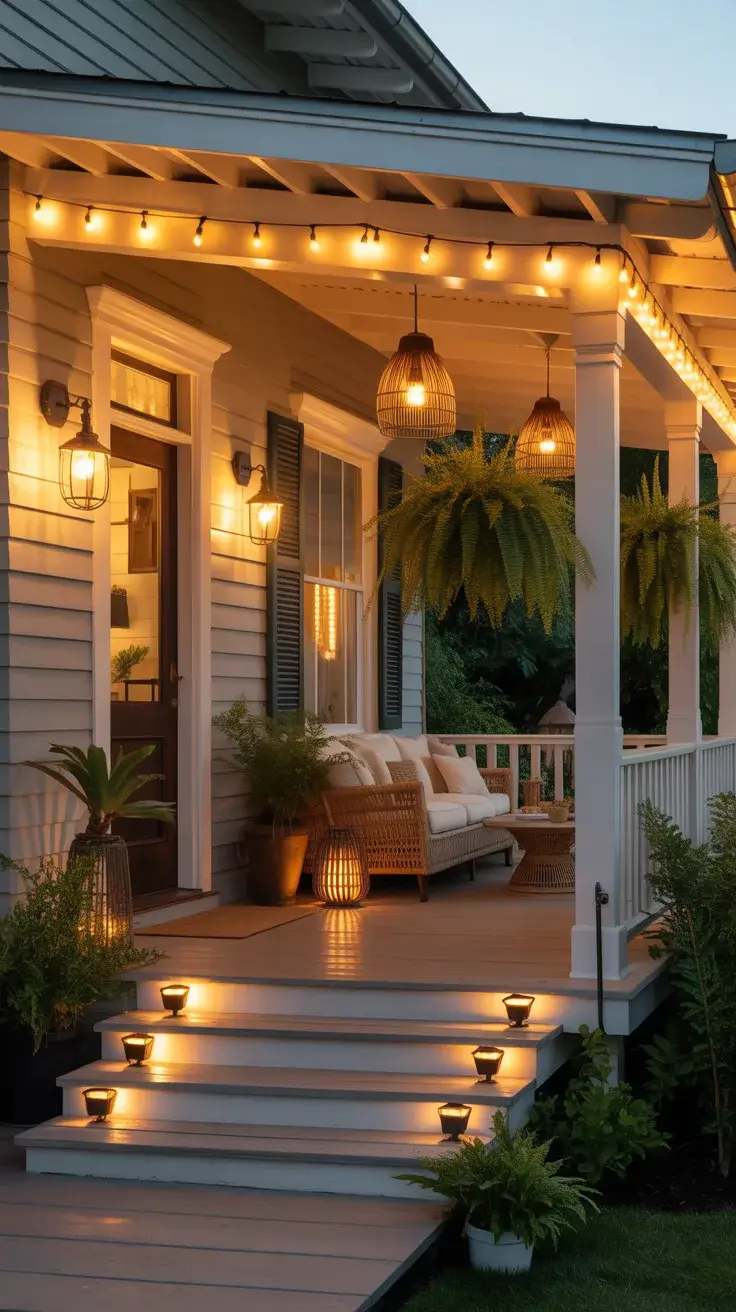
To heighten this section further, I would add subtle uplighting to highlight architectural beams or surrounding greenery.
15. Greenery Filled Porch Ambience
I like to start porch designs with lush greenery because it instantly softens the architectural lines and creates a calming natural atmosphere. In 2026, plant-rich porches are gaining popularity for their ability to improve air quality and visually enlarge the space. I often incorporate layered plants—hanging vines, potted shrubs, and vertical gardens—to create depth that feels immersive without crowding the porch.
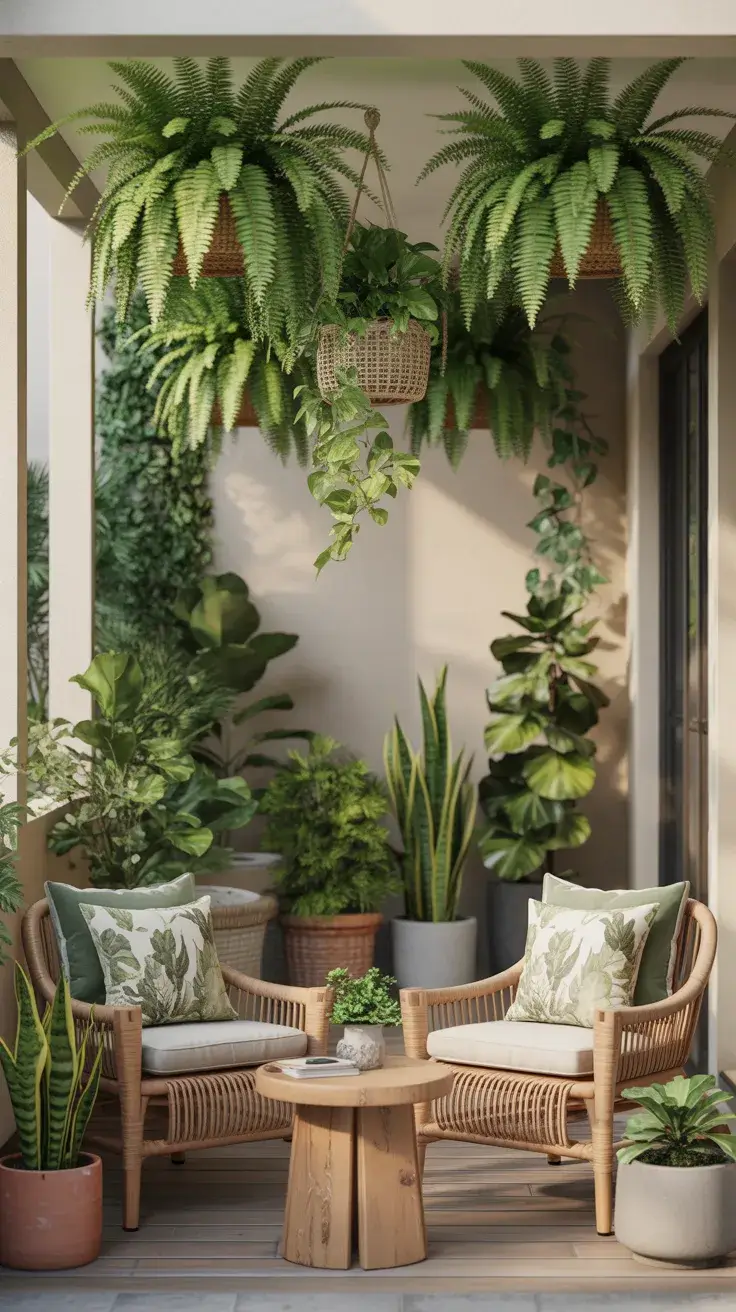
When selecting furniture, I pair simple wooden benches, rattan loungers, and ceramic planters to create harmony between natural textures. I find that neutral seating with botanical cushions helps keep the porch looking cohesive while allowing the greenery to remain the focal point. A small teak side table also adds function without overwhelming the layout.
In my experience, taking advice from designers like Emily Henderson, grouping plants by height and leaf shape creates a more curated aesthetic rather than a cluttered one. I’ve found that mixing edible herbs with ornamental plants elevates visual interest and usefulness.
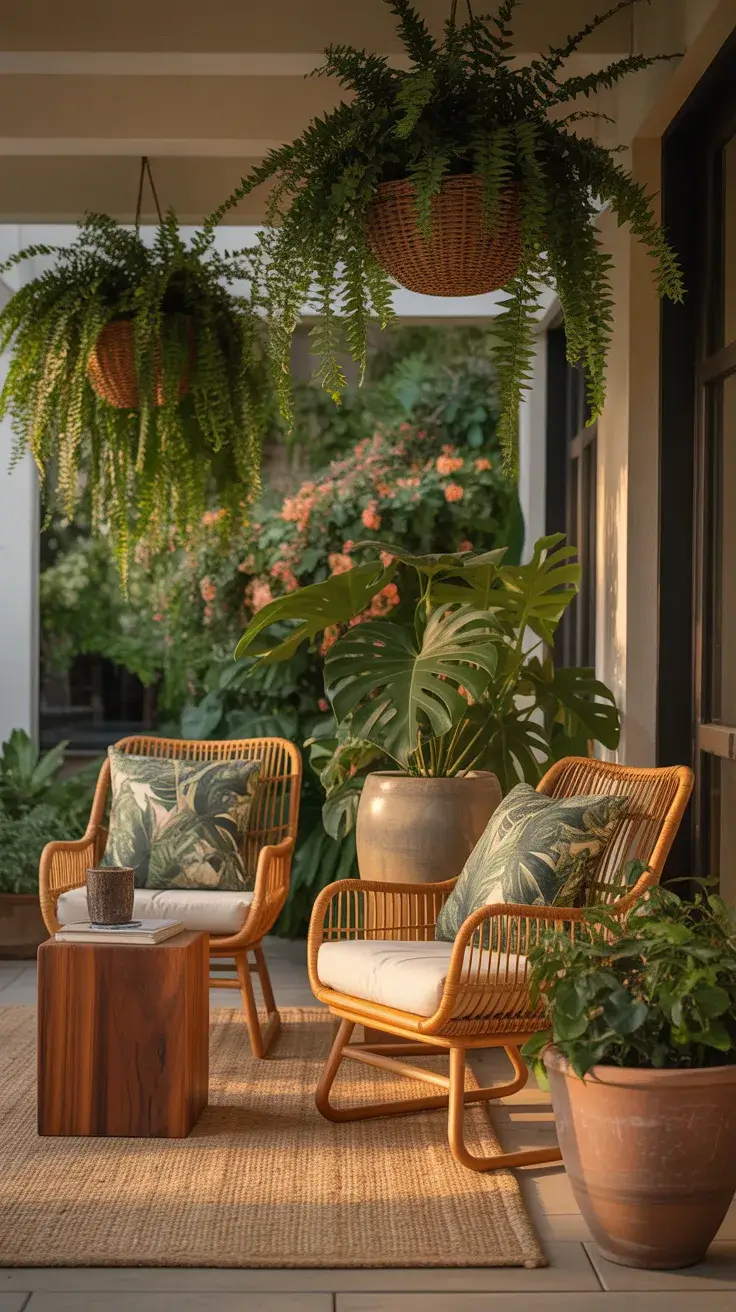
If I were to add anything here, I would include soft landscape lighting under planters to highlight greenery in the evening and make the porch usable after sunset.
16. Porch Privacy Solutions With Style
When designing porches that feel intimate yet open, I turn to privacy solutions that enhance rather than restrict the exterior environment. For Creative Porch Ideas 2026, homeowners increasingly want stylish privacy options that maintain airflow while creating a personal retreat. I often use slatted wood screens or tall planters to naturally divide views without closing in the porch.
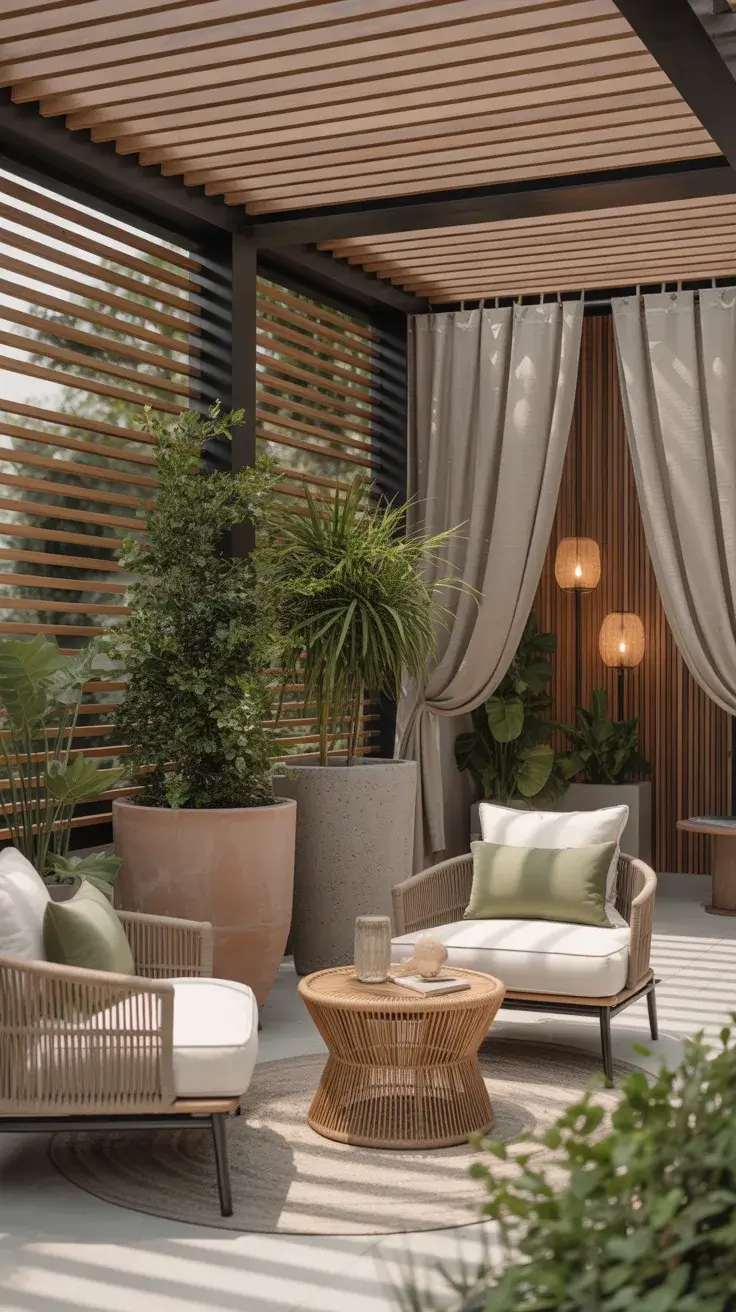
Furniture plays an important role here. I prefer deep cushioned chairs, woven side tables, and privacy drapes made from durable outdoor fabric. These elements allow me to adjust the level of coverage as needed while still contributing texture and elegance. A bamboo divider behind a reading chair adds both privacy and a beautiful vertical accent.
From my own work, I’ve noticed that privacy fabrics in warm earth tones create a relaxing environment, especially when layered with greenery. US designers often suggest mixing natural and architectural elements—like combining wood screens with concrete planters—to achieve balance between organic softness and structured privacy.
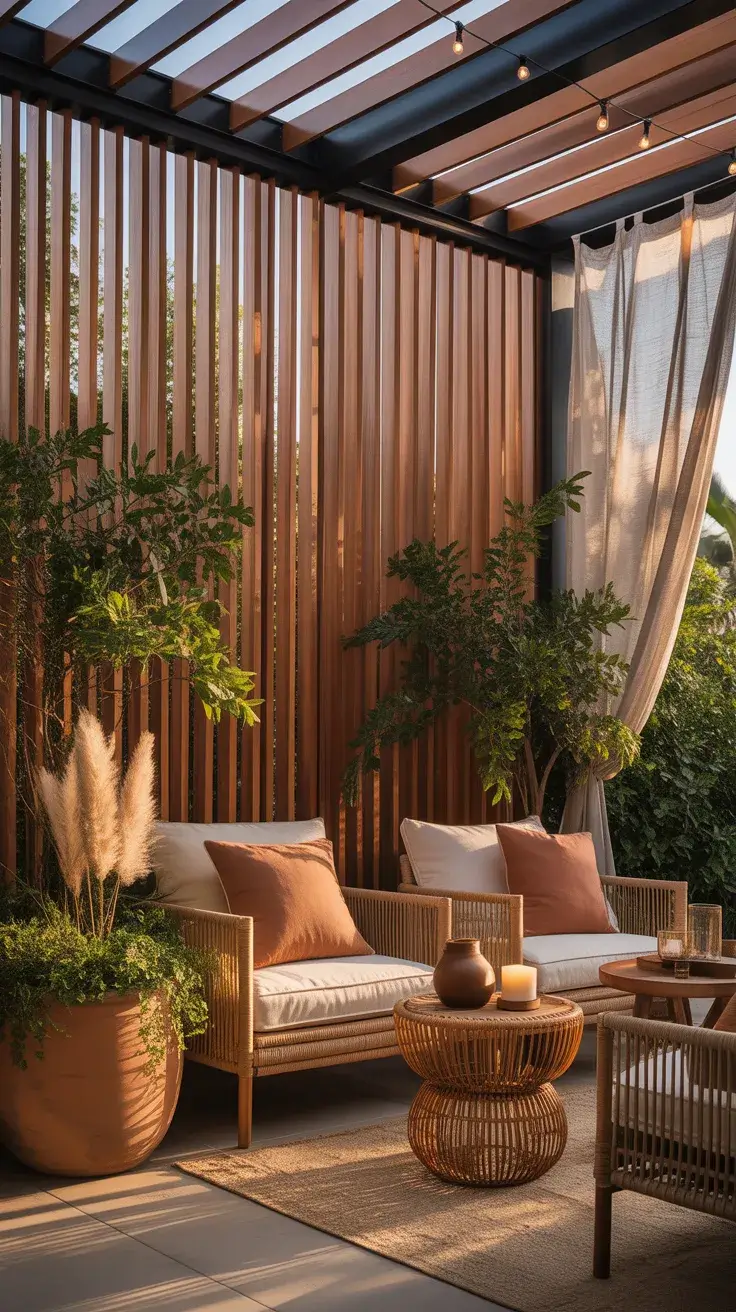
I would add soft-glow lanterns or LED sconces to enhance evening comfort and reinforce the cozy, private ambiance.
17. Creative Porch Flooring Ideas
Flooring sets the tone for the entire porch, and in my projects I always treat it as a foundational design moment. For Creative Porch Ideas 2026, I see homeowners gravitating toward patterned tiles, stained wood planks, and composite deck boards that blend aesthetics with durability. I like using geometric tile patterns to energize smaller porches, while wide wood planks help longer porches feel more unified.
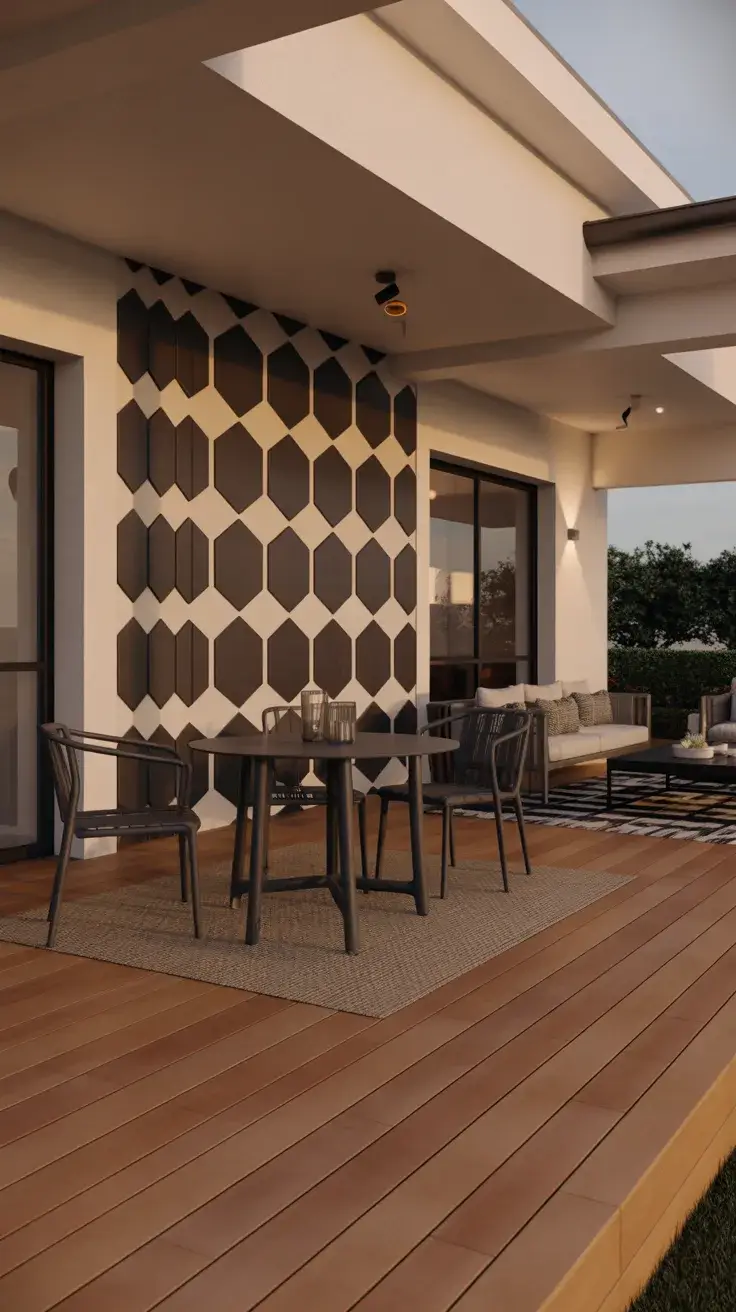
Each flooring choice influences the furniture selection. For example, bold tiles pair best with simple, monochrome seating to avoid visual overload. If I use natural cedar flooring, I lean toward black metal furniture for a modern contrast. Outdoor rugs help define zones and add warmth without hiding the flooring design.
From personal experience, designers like Shea McGee recommend choosing flooring that complements the home’s architectural style for seamless indoor-outdoor continuity. I’ve followed this advice on many projects and found that it dramatically increases visual cohesion and resale appeal.
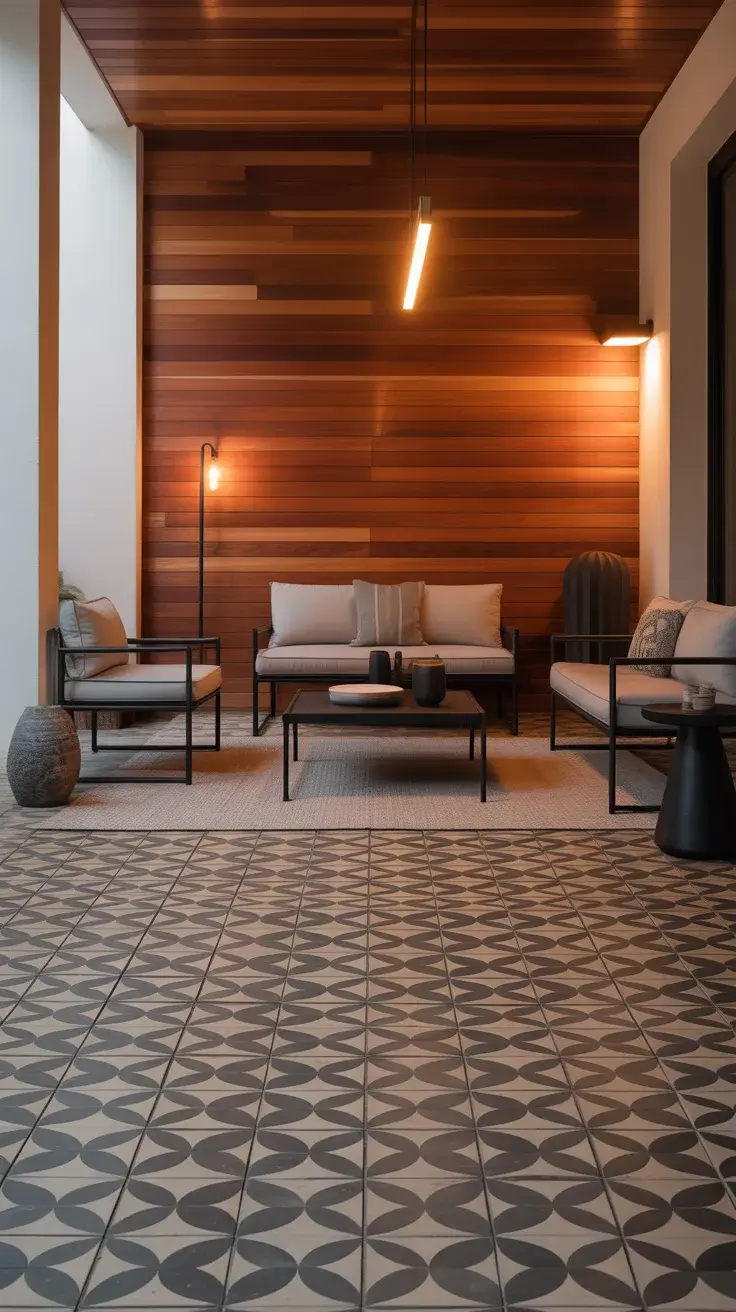
If I added one more element, I’d incorporate built-in floor lighting along the porch edges to highlight the flooring and improve safety at night.
18. Timeless Classic Porch Designs
I enjoy creating timeless porch layouts because they provide lasting appeal while staying functional. Classic designs typically include symmetrical arrangements, soft color palettes, and traditional architectural elements like columns or beadboard ceilings. For 2026, the trend leans toward combining tradition with subtle modern touches, creating spaces that feel comforting yet contemporary.
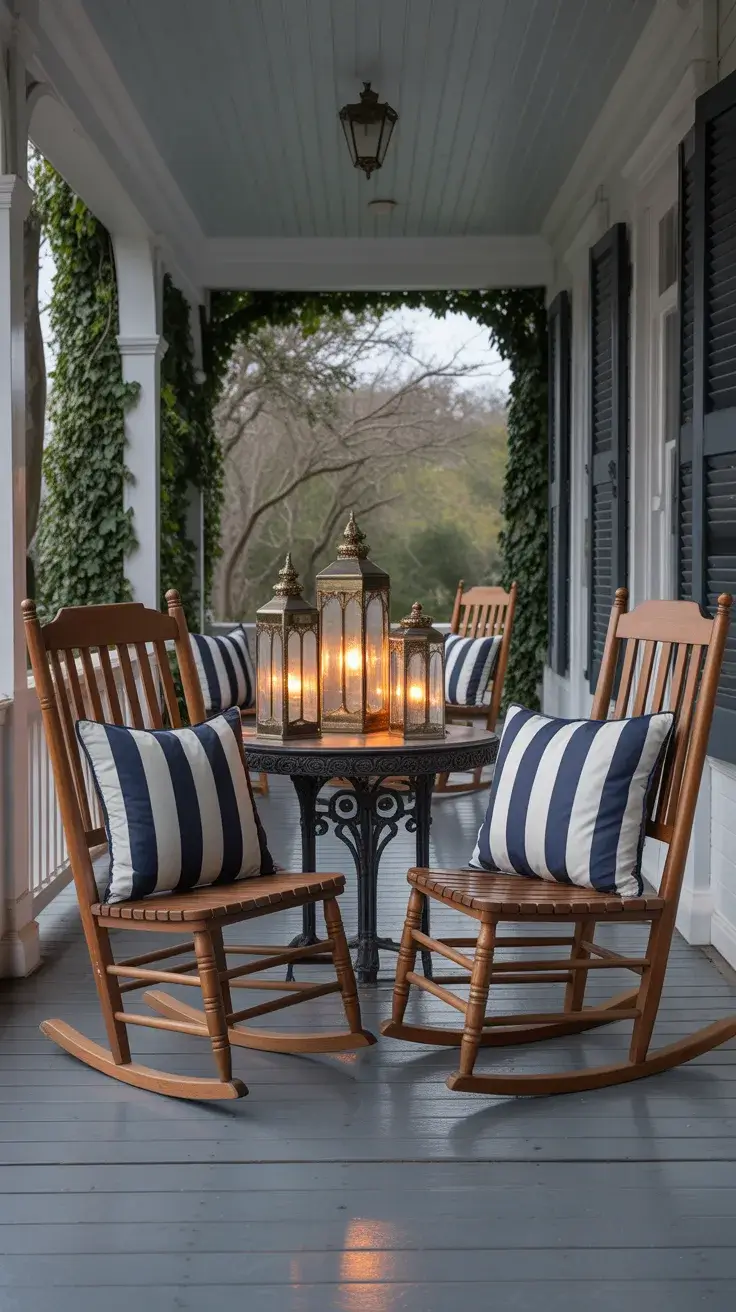
When selecting furniture, I rely on rocking chairs, spindle-back benches, and wrought-iron tables. These staples ground the porch with familiarity. I enhance them using striped cushions, lantern-style lighting, and woven baskets for storage. These pieces preserve the classic charm while making the porch practical for daily use.
Reflecting on industry advice, many experts—such as those featured in Better Homes & Gardens—highlight the importance of durable materials like teak and powder-coated metal to maintain timeless beauty over many years. Following this guidance has helped my clients enjoy porches that age gracefully.
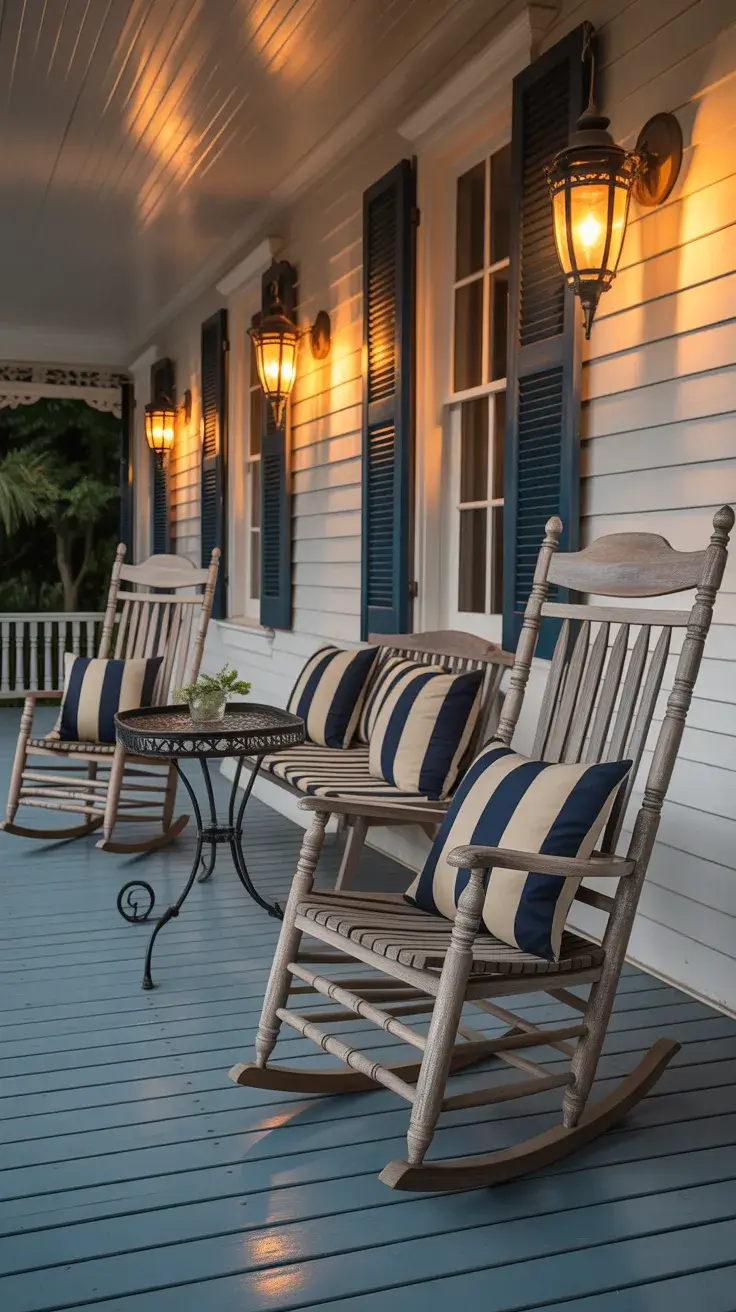
To enrich this section further, I would add ceiling fans with a vintage profile to improve comfort and reinforce the timeless aesthetic.
19. Artistic Porch Accent Concepts
In many of my designs, I like to express personality through creative accent pieces that turn simple porches into curated outdoor galleries. Artistic accents for Creative Porch Ideas 2026 might include sculptural planters, mosaic tables, hand-woven wall hangings, or custom outdoor artwork. These elements bring individuality and transform the porch into a memorable experience.
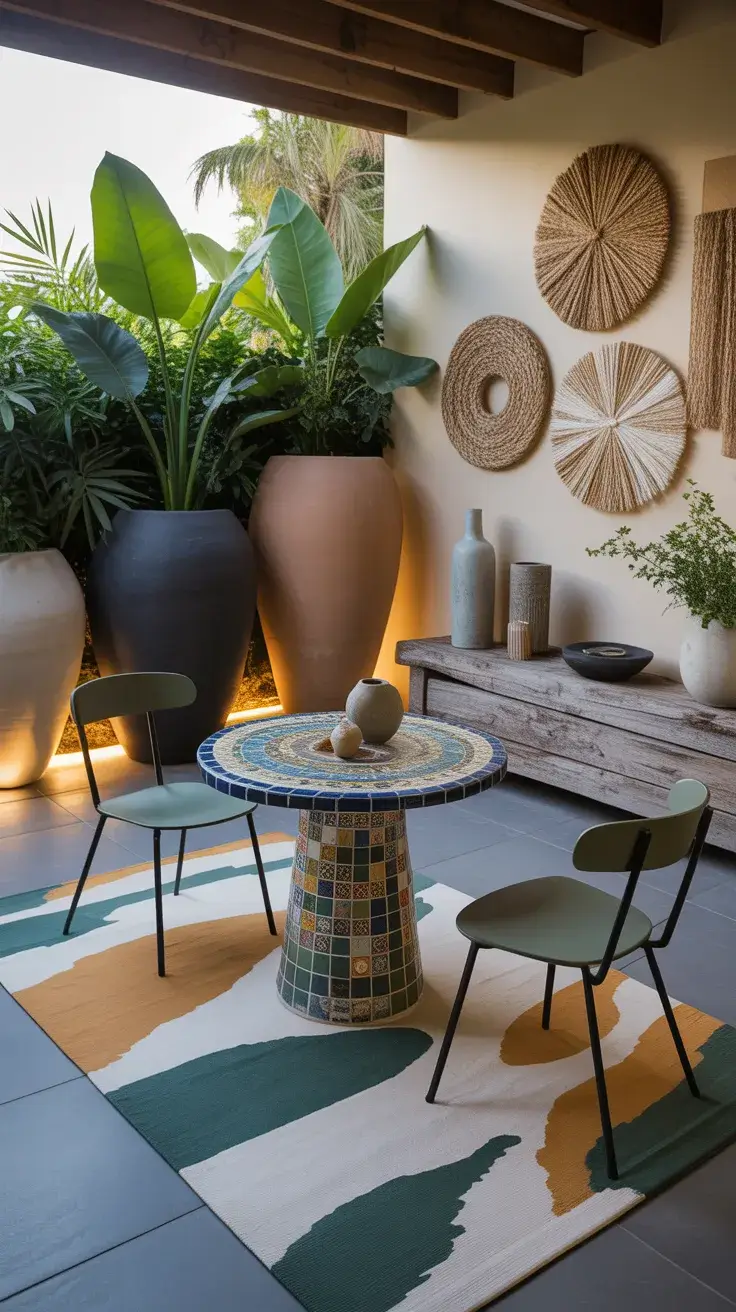
For furniture, I pair minimal forms—like slim metal benches or neutral loungers—to ensure artistic accents remain the star of the design. A statement planter, a colorful ceramic stool, or an abstract-patterned outdoor rug can dramatically shift the mood. I often include reclaimed wood consoles to display art objects and greenery.
Based on my experience and the recommendations of leading designers, porch art should withstand weather conditions. I often follow advice from Architectural Digest, which suggests choosing resin-coated or powder-coated materials for outdoor sculpture longevity.
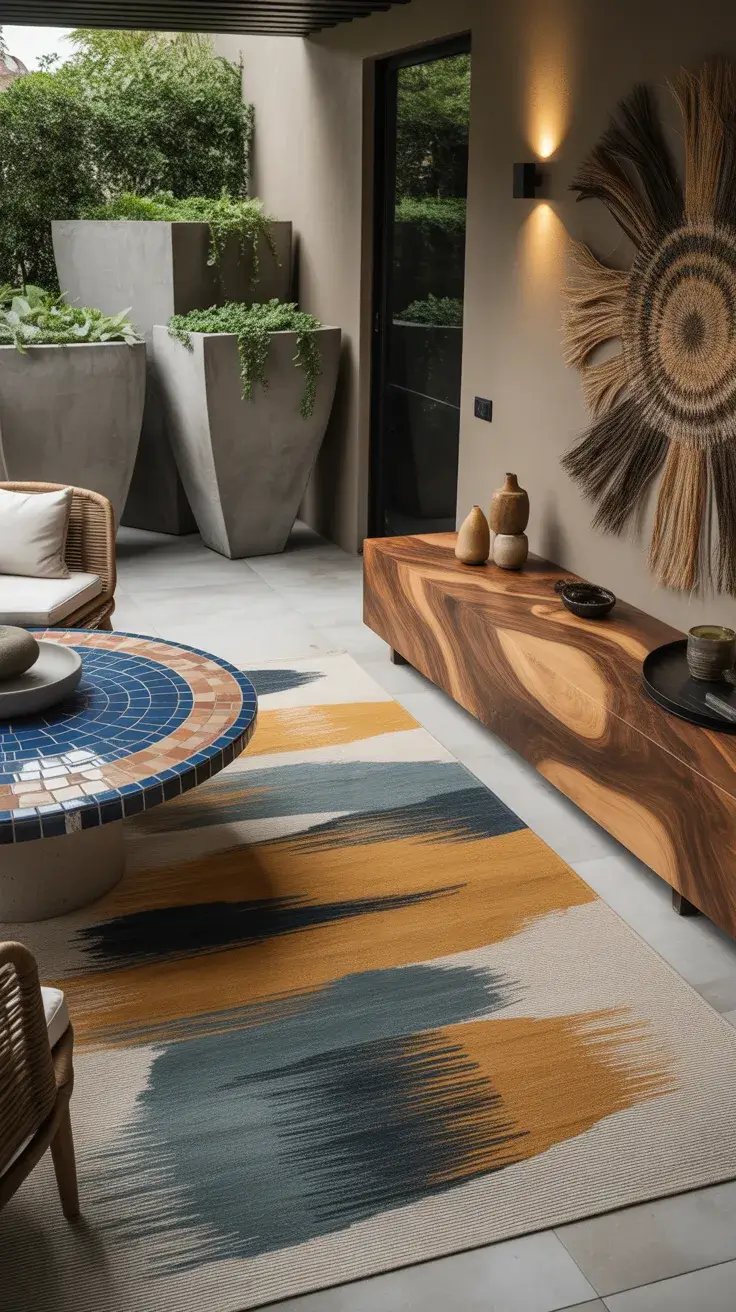
I might add soft uplighting to illuminate accent pieces and enhance their artistic presence at night.
20. Porch Layouts For Social Gatherings
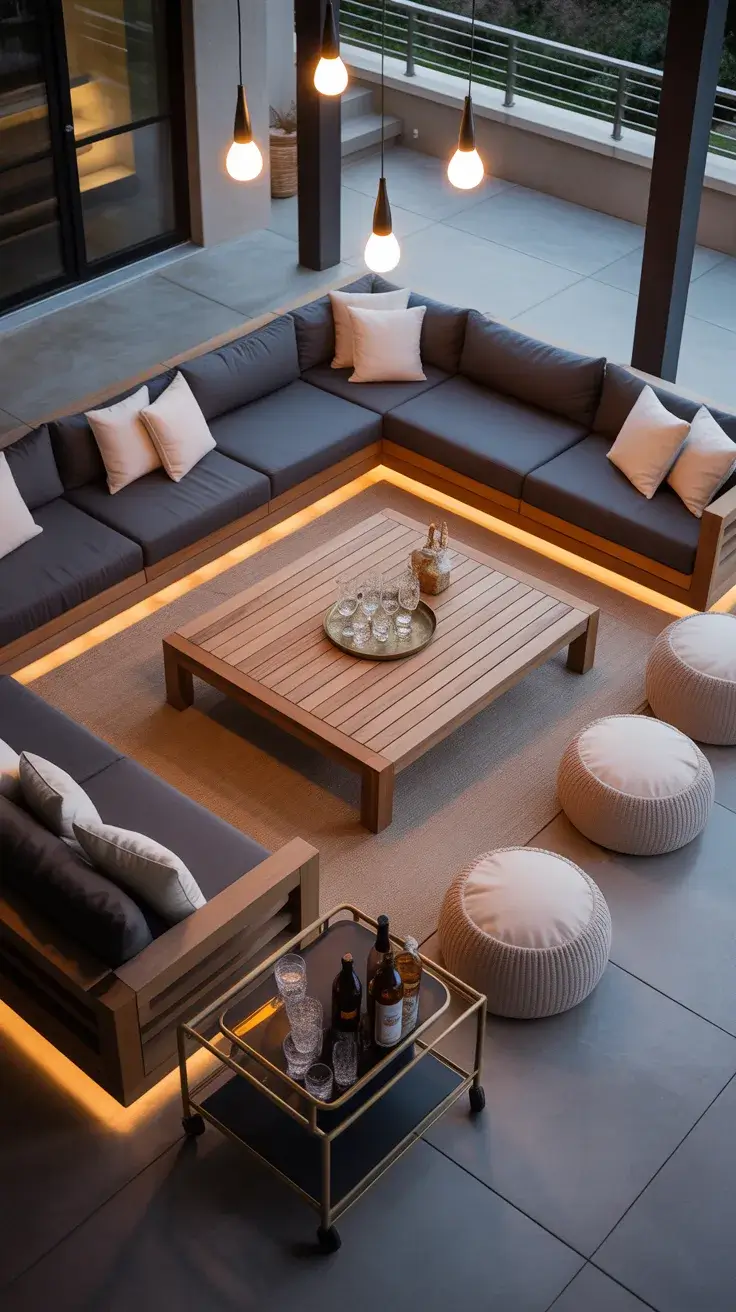
When designing porches meant for hosting, I focus on maximizing flow and creating conversational zones. In 2026, flexible layouts are key, especially for families that enjoy gathering outdoors. I often arrange modular seating around a central table to encourage engagement while leaving enough room for movement.
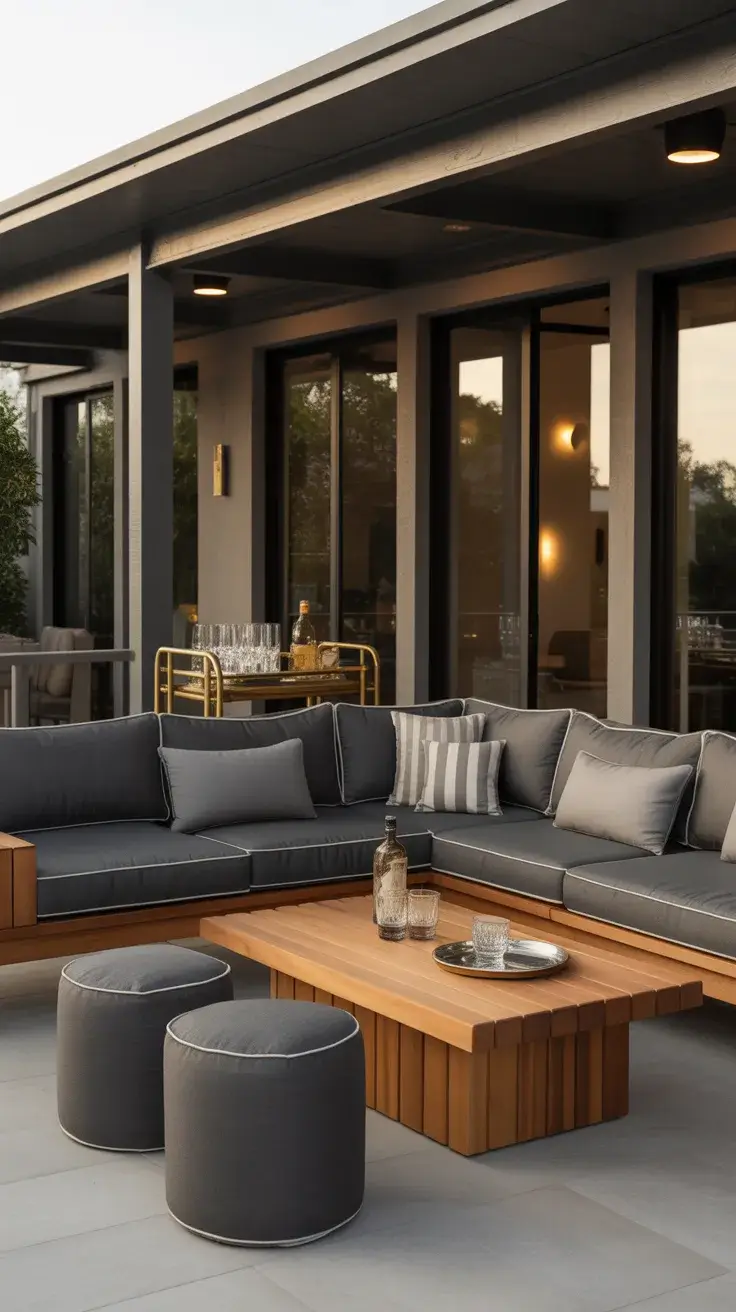
The furniture I choose typically includes sectional outdoor sofas, movable poufs, and stackable chairs. A large, weatherproof coffee table anchors the space and provides room for serving food or drinks. I also like to add a bar cart or slim console table for convenience during social events.
Through my work, I’ve confirmed the advice of designers like Nate Berkus, who emphasizes functionality above all else in social layouts. When every piece contributes to flow or comfort, hosting becomes effortless.
To complete this section, I would suggest including outdoor speakers with discreet placement to enhance ambiance without disrupting the style.
21. Seasonal Porch Styling Ideas
Seasonal styling has become one of my favorite porch design strategies because it allows homeowners to refresh their space without major renovations. For Creative Porch Ideas 2026, I recommend palettes and décor that easily shift between seasons—light pastels for spring, bold greenery for summer, warm textures for fall, and soft layered fabrics for winter.
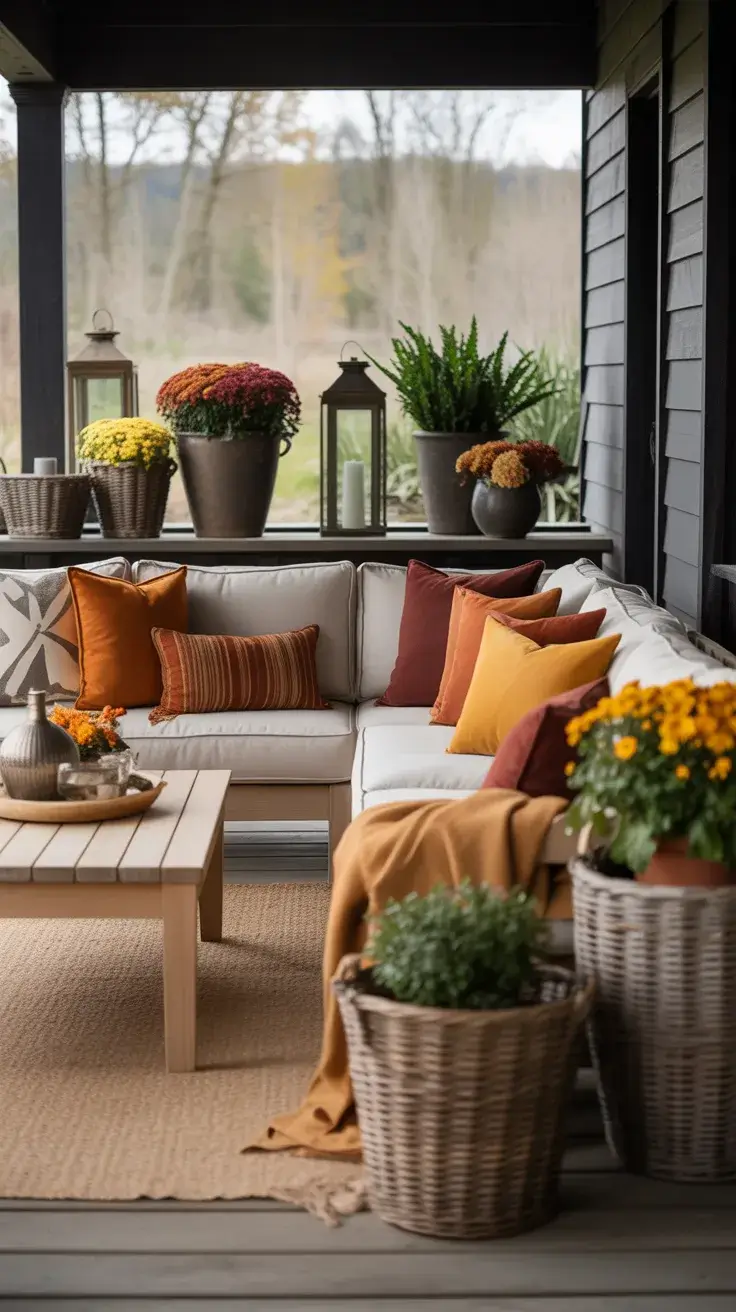
I rely on interchangeable elements such as throw pillows, blankets, centerpieces, wreaths, and lanterns. Neutral base furniture—like white or natural wood chairs—works well because it adapts to seasonal accents. I also incorporate planters that can be updated with seasonal florals or evergreens.
In my experience, following guidance from lifestyle experts such as those at HGTV, rotating just a few items each season keeps the porch feeling fresh while remaining cost-effective. I regularly use this method for clients who want variety without replacing large pieces.
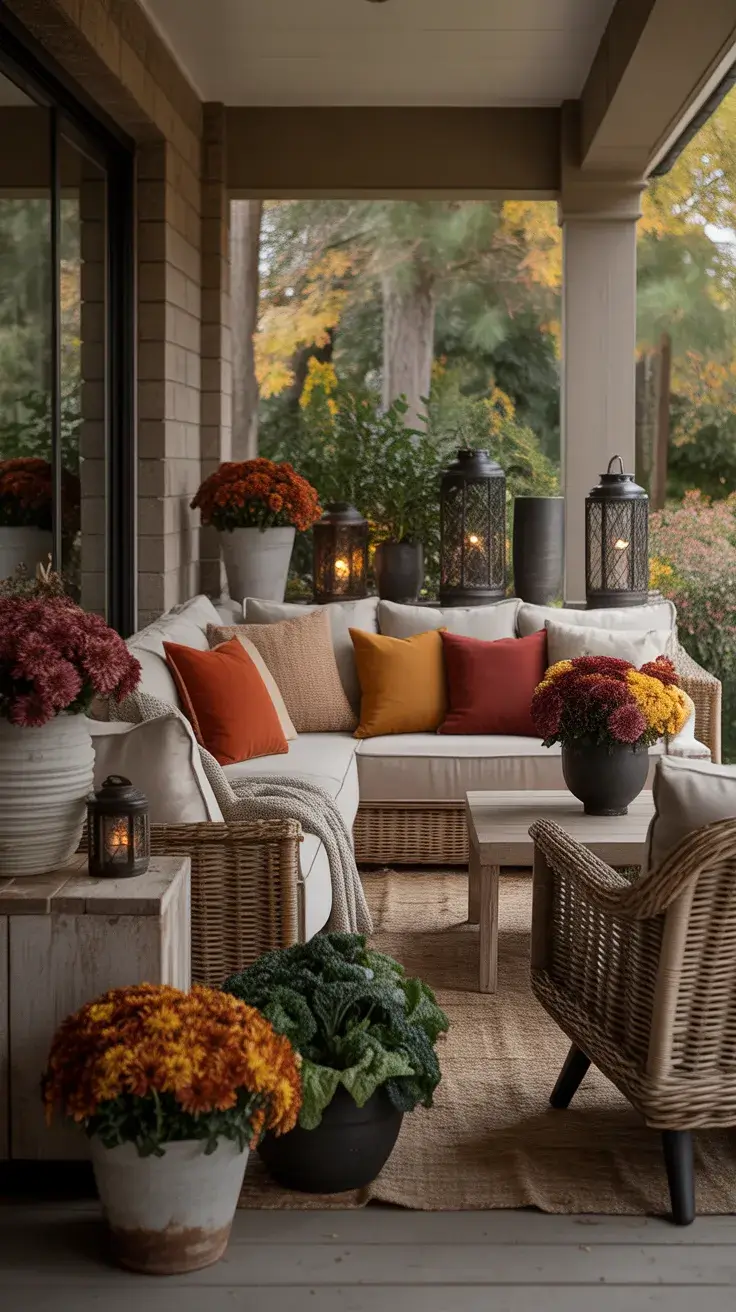
To add even more versatility, I’d include storage-friendly décor bins to keep seasonal items organized and ready for rotation.
22. Indoor Outdoor Porch Flow Enhancement
When I design porches that seamlessly blend indoor and outdoor living, I focus on uninterrupted movement, consistent materials, and an open visual connection. For Creative Porch Ideas 2026, homeowners increasingly ask for porches that expand their usable living space without feeling like a separate zone. I often use wide sliding glass doors or accordion-style openings to remove barriers and let the porch function as an extension of the interior.
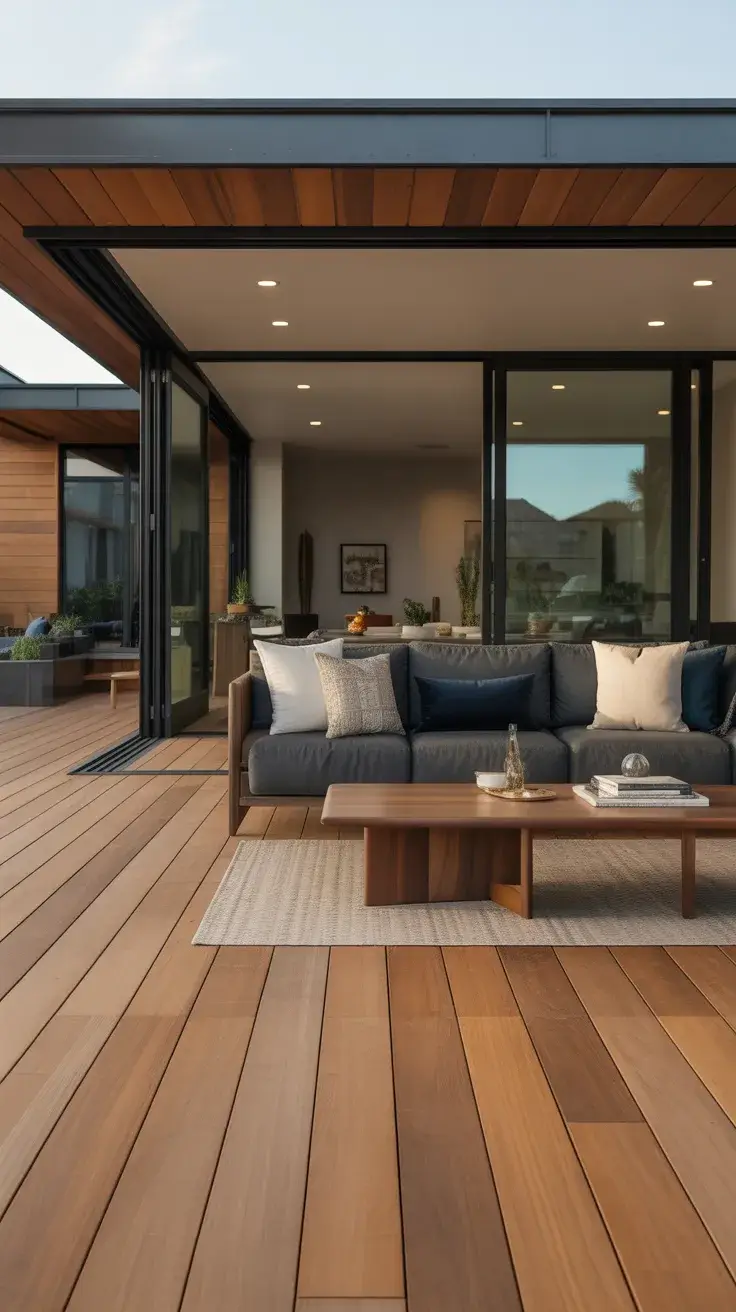
Furniture selection is essential for maintaining this fluidity. I like to choose indoor-inspired outdoor pieces—such as upholstered loungers, low-profile sofas, and sleek coffee tables—so the transition feels natural. Repeating colors or materials from inside the home, such as the same flooring tone or similar textiles, helps unify the spaces beautifully. Decorative elements like indoor-style rugs rated for outdoors also enhance continuity.
From my experience and the advice from publications like Architectural Digest, consistency is a key design principle for successful indoor-outdoor transitions. I’ve applied this in many homes, and the results create a cohesive, luxurious feel that significantly improves how the space is used day-to-day.
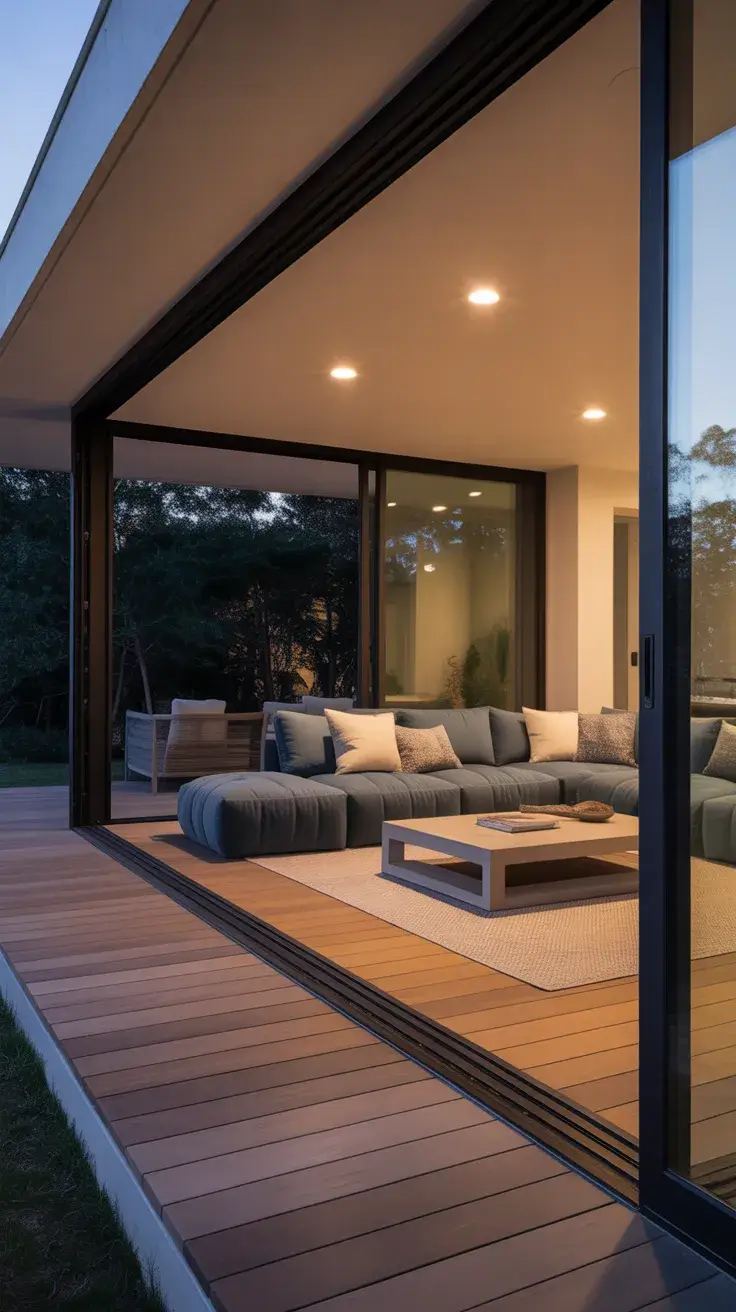
If I added one more improvement, I would integrate recessed lighting that matches the interior fixtures, strengthening the visual connection after sunset.
23. Vintage Inspired Porch Creations
When I explore vintage themes, I enjoy combining nostalgic elements with modern comfort. For Creative Porch Ideas 2026, vintage porches often feature distressed wood finishes, classic wicker seating, antique-style lanterns, and retro color palettes. These touches create charm and invite slow, relaxed living reminiscent of traditional American porches.
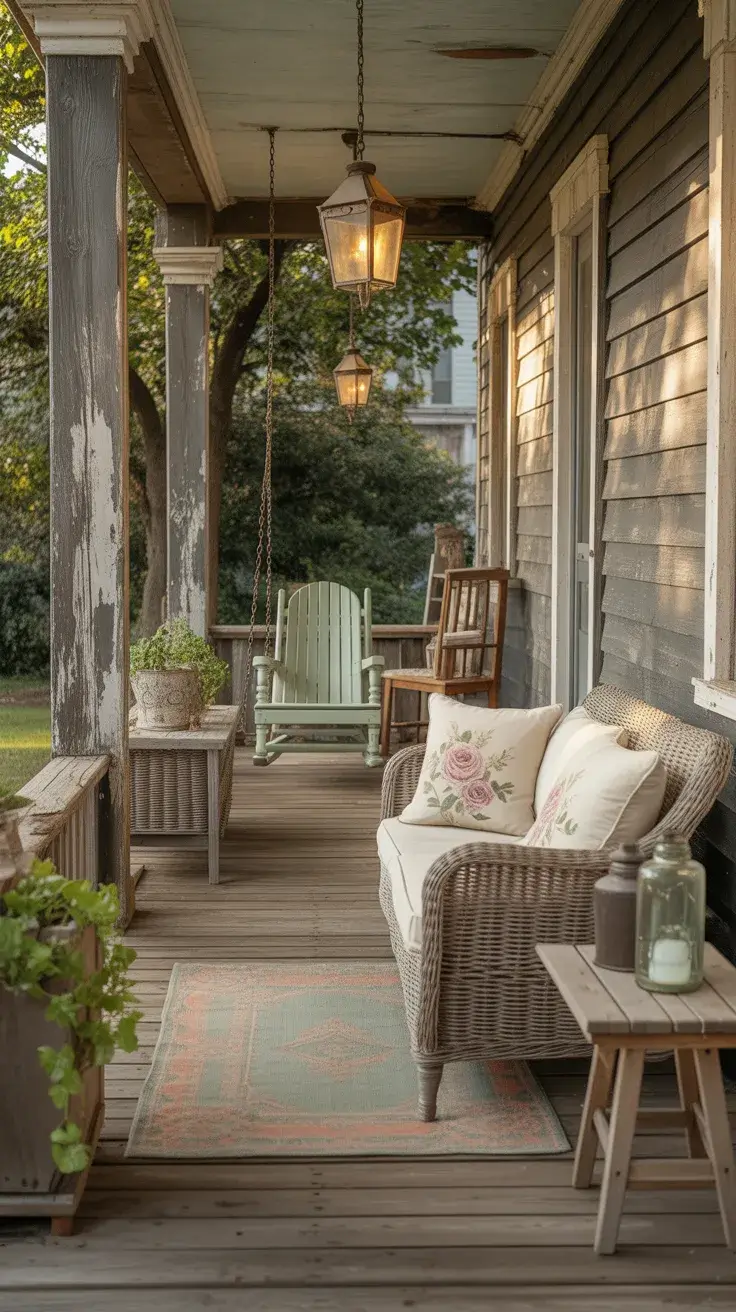
Furniture pieces like wrought-iron chairs, spindle rockers, or refurbished trunks serve both decorative and functional purposes. I often pair them with floral cushions, lace-style textiles, and vintage-pattern outdoor rugs. Adding historic-style planters or enamelware décor reinforces the authentic atmosphere while still keeping the space practical for everyday use.
Drawing from the recommendations of home experts featured in Southern Living, mixing genuine antiques with weather-resistant replicas ensures longevity without compromising the vintage aesthetic. In my practice, I’ve seen this balance create porches that feel timeless yet durable.
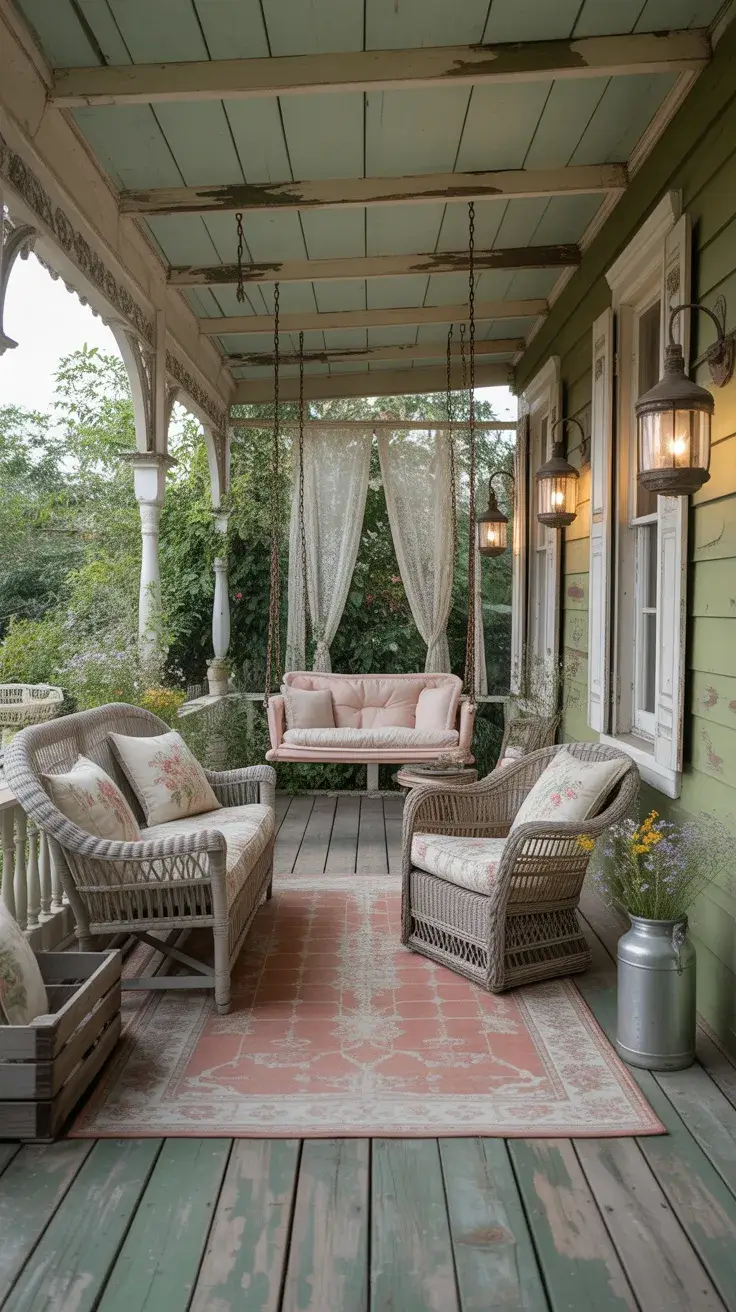
To enhance the theme further, I would add a classic porch swing with metal chains, painted in a soft pastel hue to complete the vintage ambiance.
24. Elegant Porch Railings And Details
Railings play a major role in porch aesthetics, and I often view them as architectural jewelry. For Creative Porch Ideas 2026, elegant railing designs—whether sleek metal, carved wood, or composite options—can elevate even the simplest porch structure. Incorporating decorative balusters or minimalist horizontal lines helps establish the style direction.
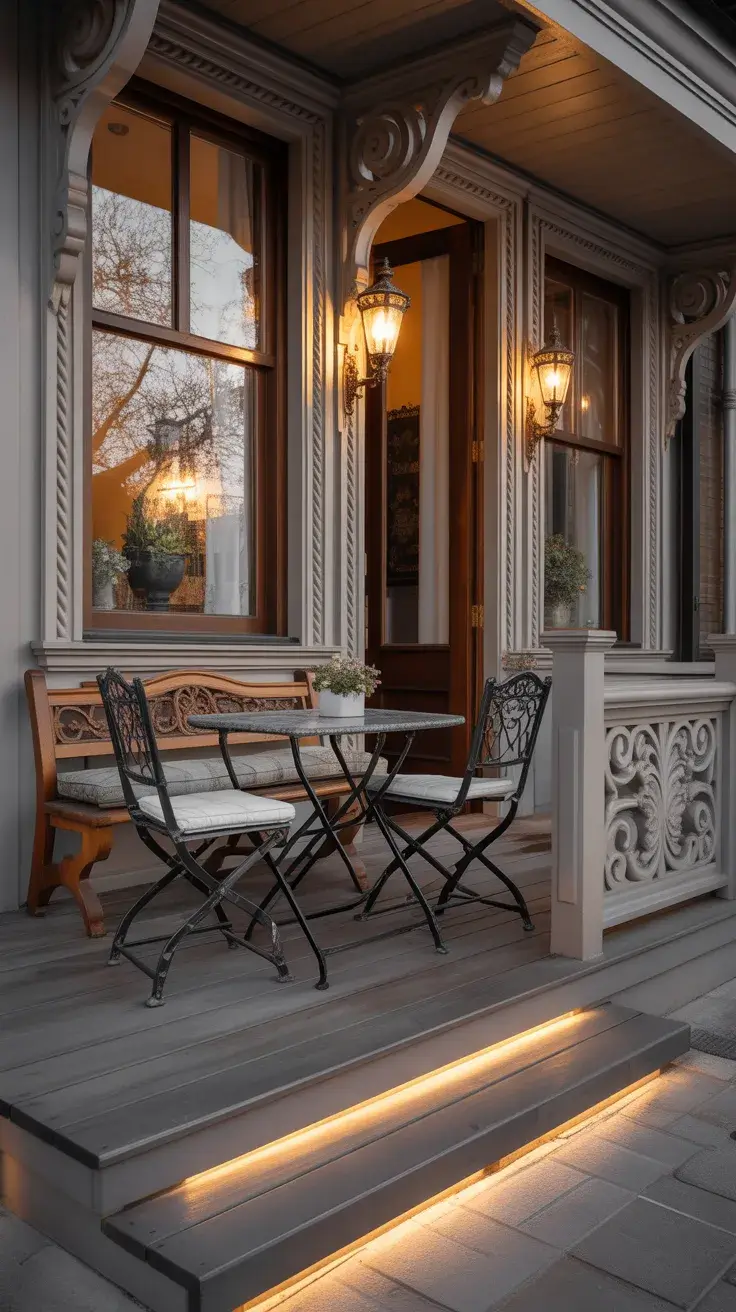
I pair railing designs with refined details like ornate sconces, stylish house numbers, or decorative trim. Furniture with clean lines—such as narrow benches or slender bistro sets—helps maintain visual harmony. These subtle additions refine the porch’s character without overpowering it.
From my own work and the advice of architects quoted in Dwell magazine, the key is ensuring railings complement the home’s architecture rather than compete with it. When chosen thoughtfully, they enhance safety and beauty simultaneously.
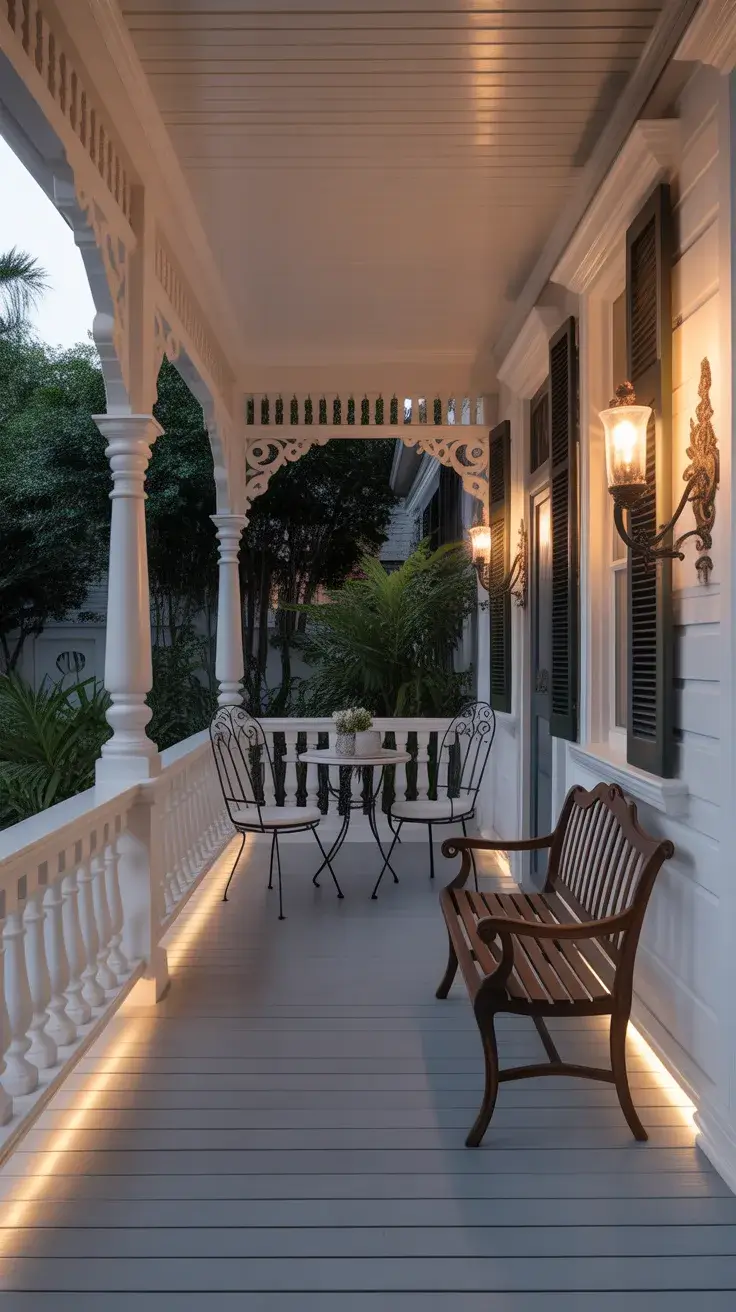
If I added one more detail, I would recommend integrating LED strip lighting under the railing to create an elegant glow that highlights the craftsmanship at night.
25. Weatherproof Porch Décor Solutions
In climates with heavy sun, rain, or humidity, weatherproof décor becomes essential. I prioritize durable materials like powder-coated metals, high-performance fabrics, treated teak, and resin wicker. For Creative Porch Ideas 2026, this approach allows homeowners to enjoy long-lasting style with minimal maintenance. I frequently choose UV-resistant rugs and ceramic planters to withstand seasonal extremes.
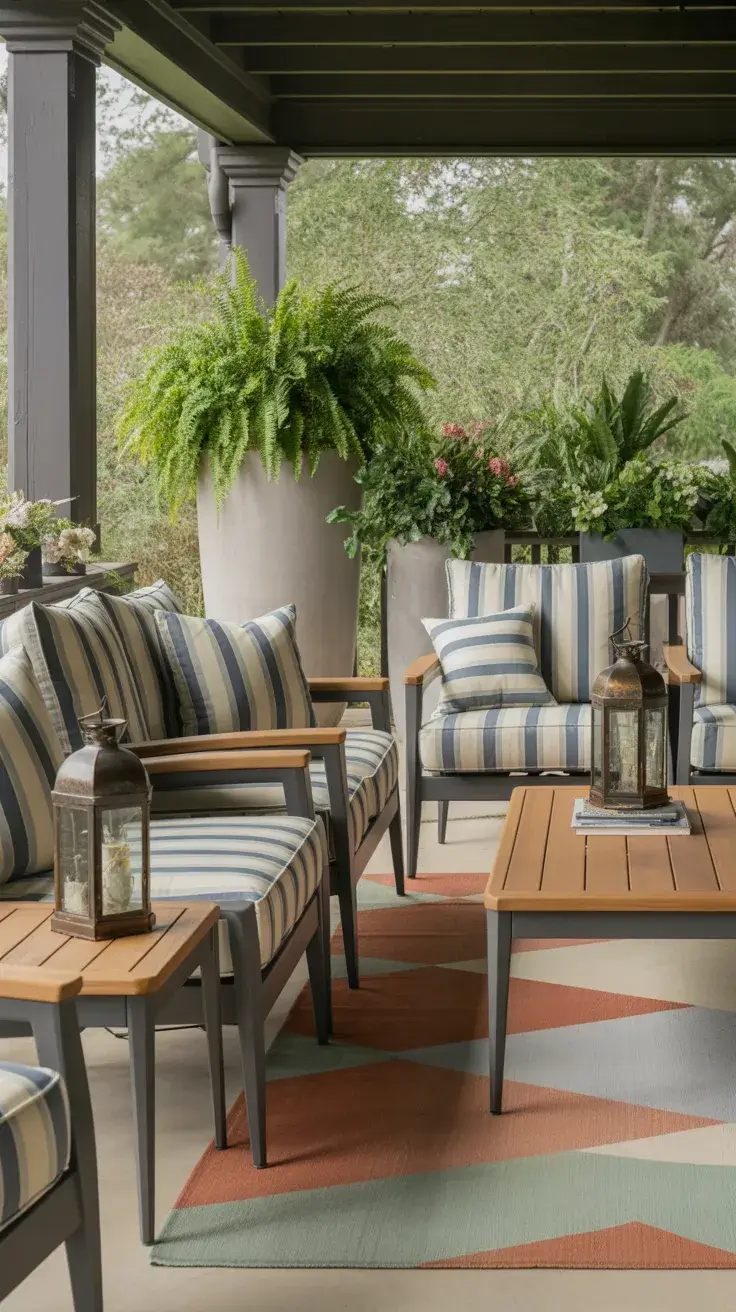
Each furniture item is selected for durability as much as design. I often include composite side tables, marine-grade cushions, and rust-resistant lanterns. These materials hold up exceptionally well outdoors and maintain their appearance over years of use. Heavy planters or weighted bases also prevent décor from shifting in strong winds.
As many outdoor living specialists recommend—including experts at Sunset Magazine—choosing weatherproof materials increases longevity and reduces the need for frequent replacements. In my own designs, this principle consistently results in porches that look new far longer.
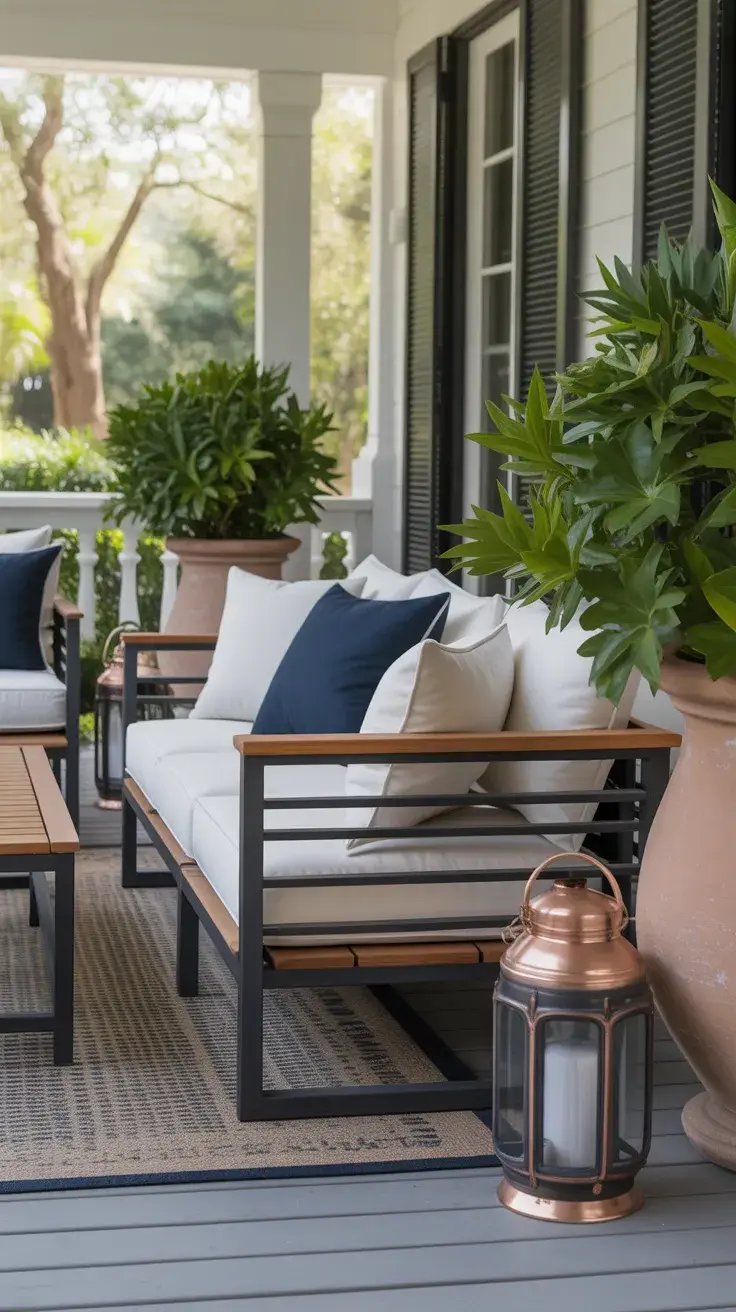
To complete this section, I would add weather-sealed storage benches to protect décor items during storms and extend their lifespan.
26. Eco Friendly Porch Material Choices
Sustainability is becoming a major focus in home design, and I enjoy helping homeowners make environmentally conscious choices. For Creative Porch Ideas 2026, eco-friendly porches often include reclaimed woods, recycled composite decking, natural fiber textiles, and energy-efficient lighting. These choices allow the porch to feel warm, modern, and responsible at the same time.
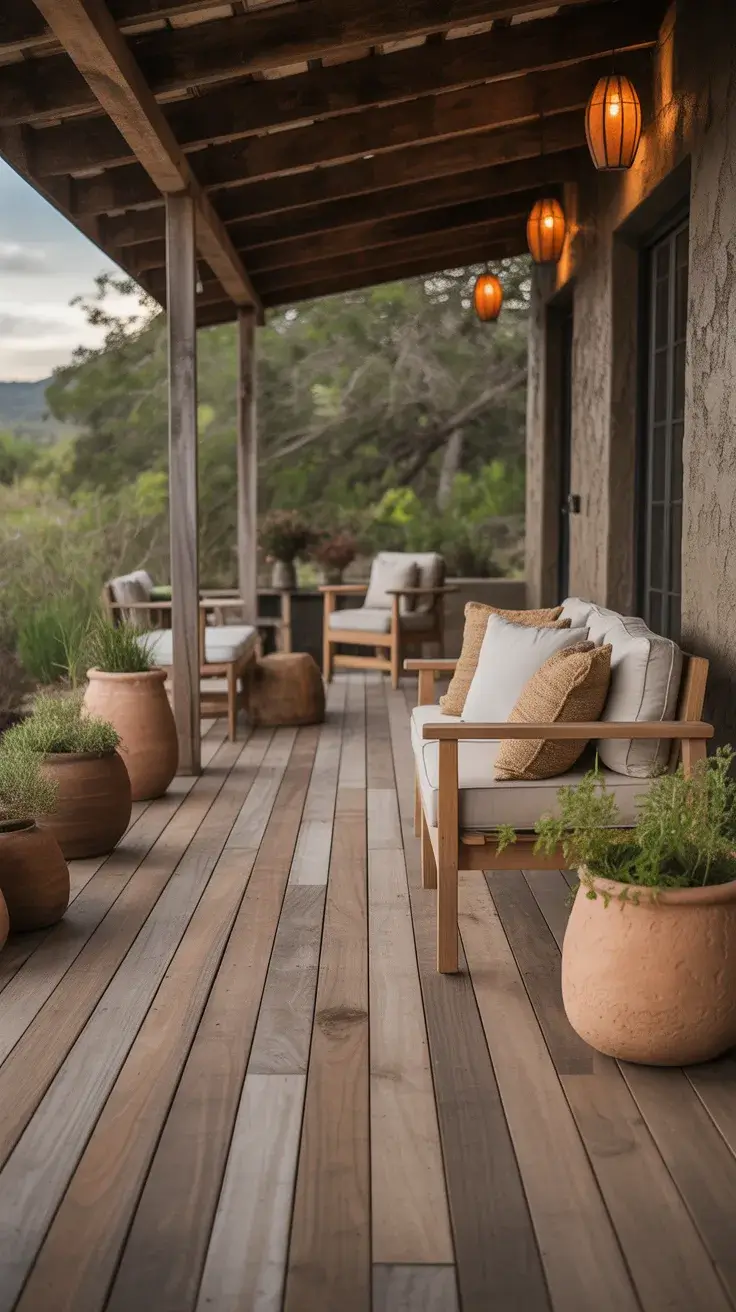
I typically choose furniture made from FSC-certified wood, recycled metal, or responsibly sourced rattan. Natural-dyed cushions and organic cotton throws create comfort without compromising sustainability. I also prefer clay or biodegradable planters that reduce ecological impact while adding earthy beauty.
Drawing from industry insights—such as recommendations from Green Building Advisor—selecting sustainable materials doesn’t just benefit the environment; it also enhances durability and indoor-outdoor air quality. In my personal experience, clients appreciate porches that align with their values while maintaining style.
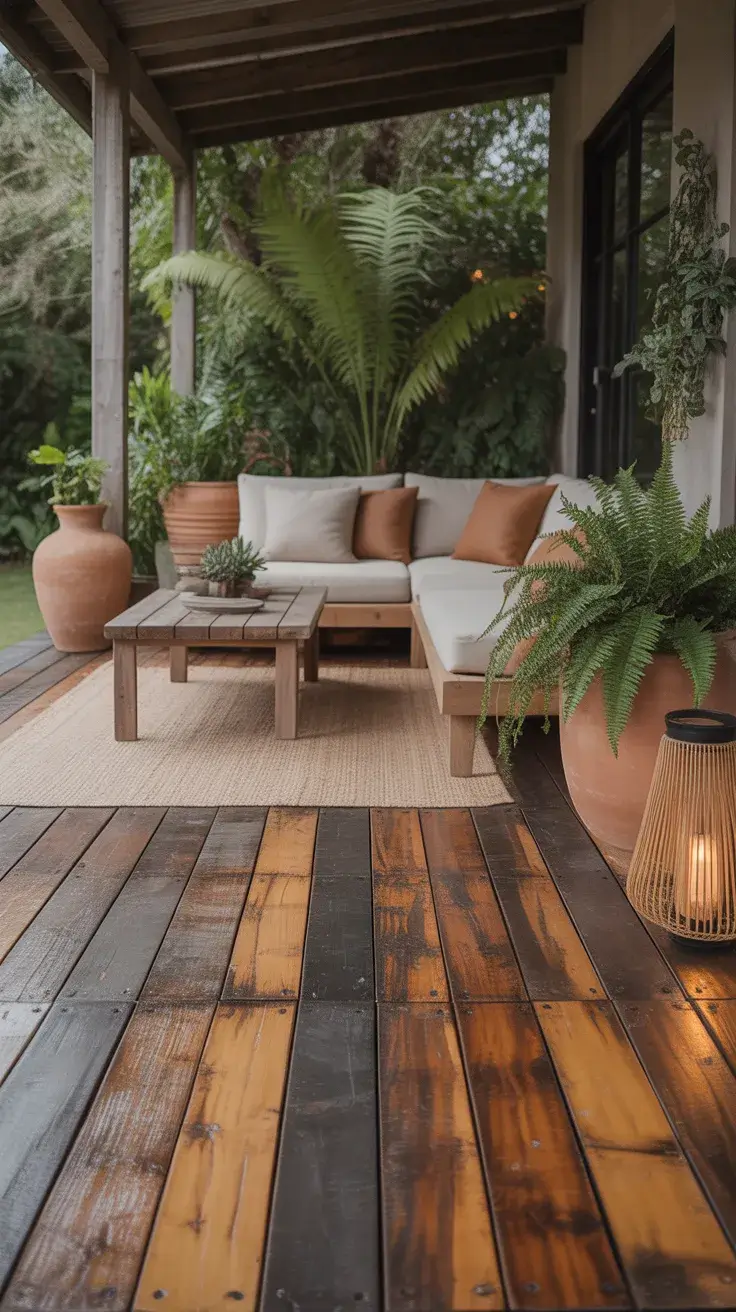
To strengthen the eco-friendly theme, I would add solar-powered lanterns or sconces to lower energy use and highlight sustainable innovation.
27. Porch Seating Arrangement Creativity
Seating layout is one of the first things I consider when designing a porch, and creative arrangements can transform even compact spaces. For Creative Porch Ideas 2026, I often mix built-in benches, hanging chairs, modular sofas, and movable stools to create zones for conversation, lounging, and quiet reading. Creativity in layout maximizes usability while making the porch feel dynamic.
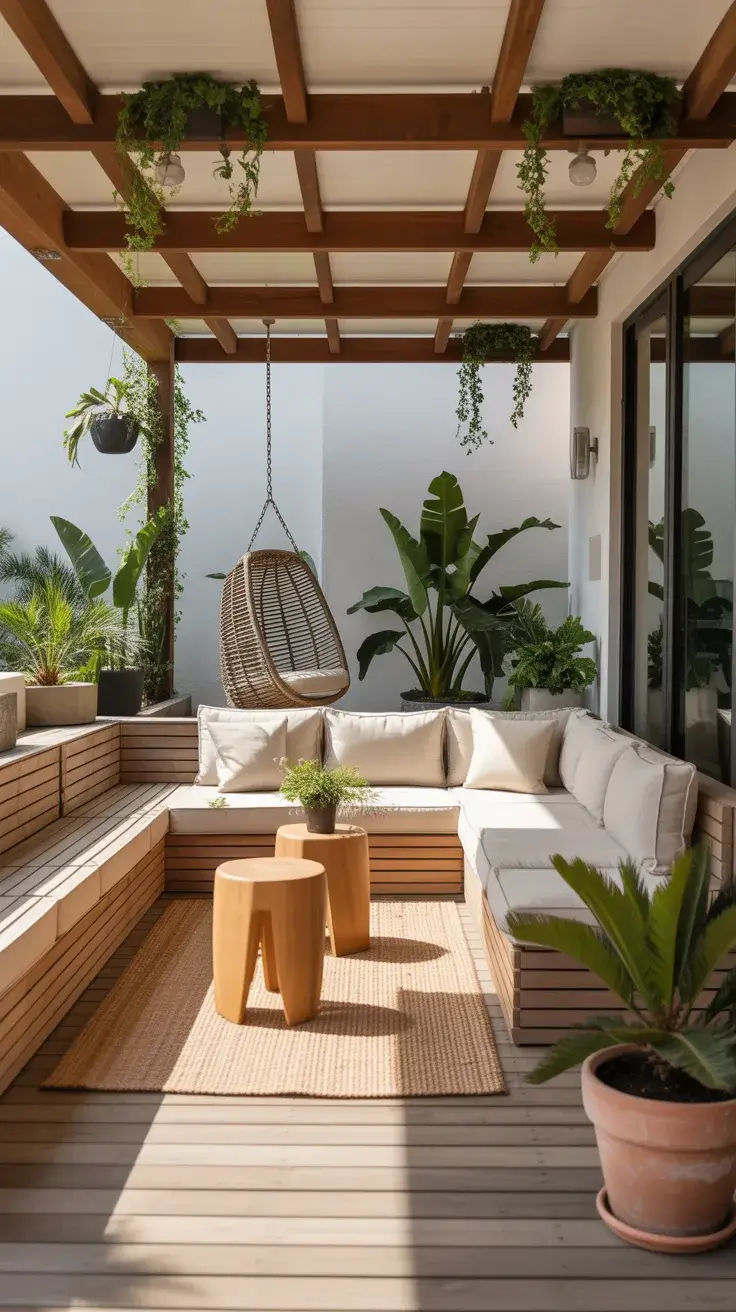
Each seating element serves a purpose. Built-ins save space and provide storage, while hanging chairs create a playful vertical focal point. Modular sectionals allow flexible configuration based on the number of guests. I usually anchor the layout with a rug or central table to create visual balance.
Following insights from designers featured in House Beautiful, I’ve found that varying seating heights and shapes keeps the porch visually interesting and more comfortable for group gatherings. Implementing this approach in my designs has consistently improved functionality and flow.
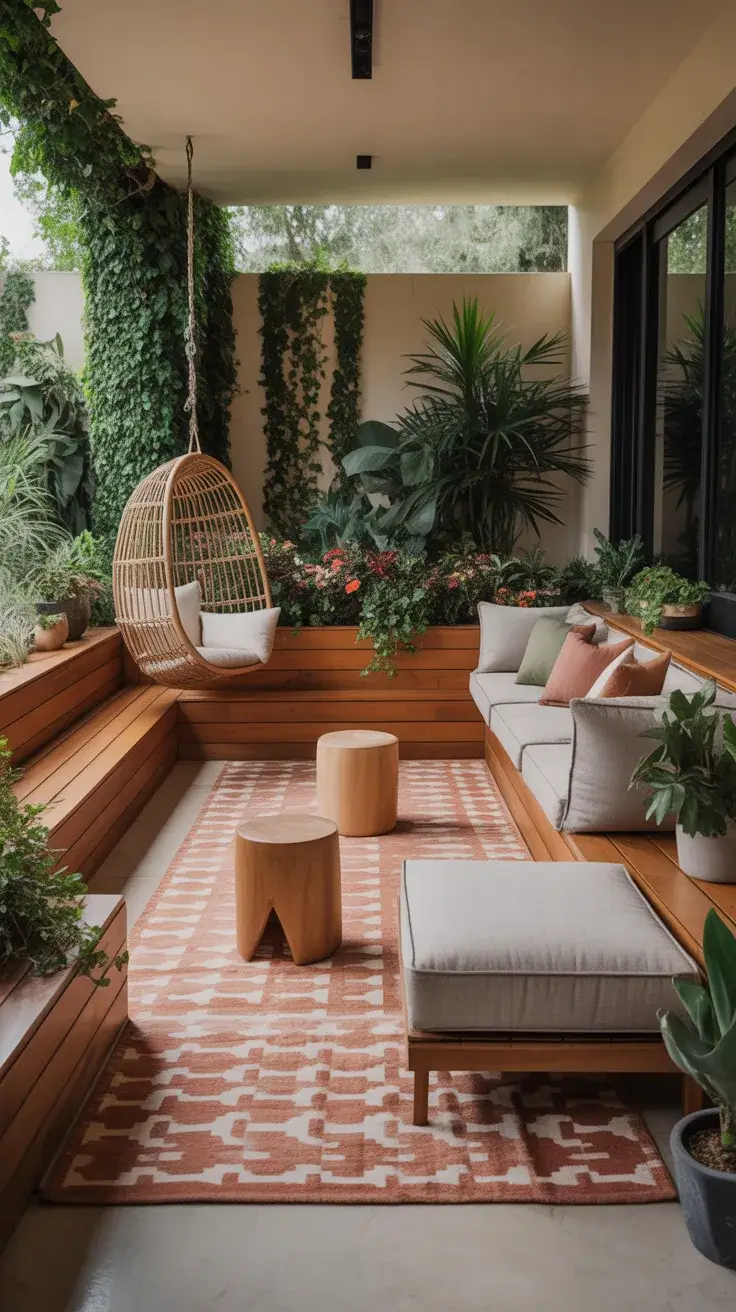
To enhance this section, I would incorporate multi-level plant stands near seating to create natural freshness without overcrowding the floor space.
28. Relaxation Focused Porch Features
When designing porches with a relaxation-first mindset, I aim to create a serene retreat where homeowners can decompress. For Creative Porch Ideas 2026, this trend includes soft loungers, daybeds, water features, ambient lighting, and calming color palettes. I often integrate gentle textiles, aromatherapy plants like lavender, and subtle soundscapes to create a tranquil mood.
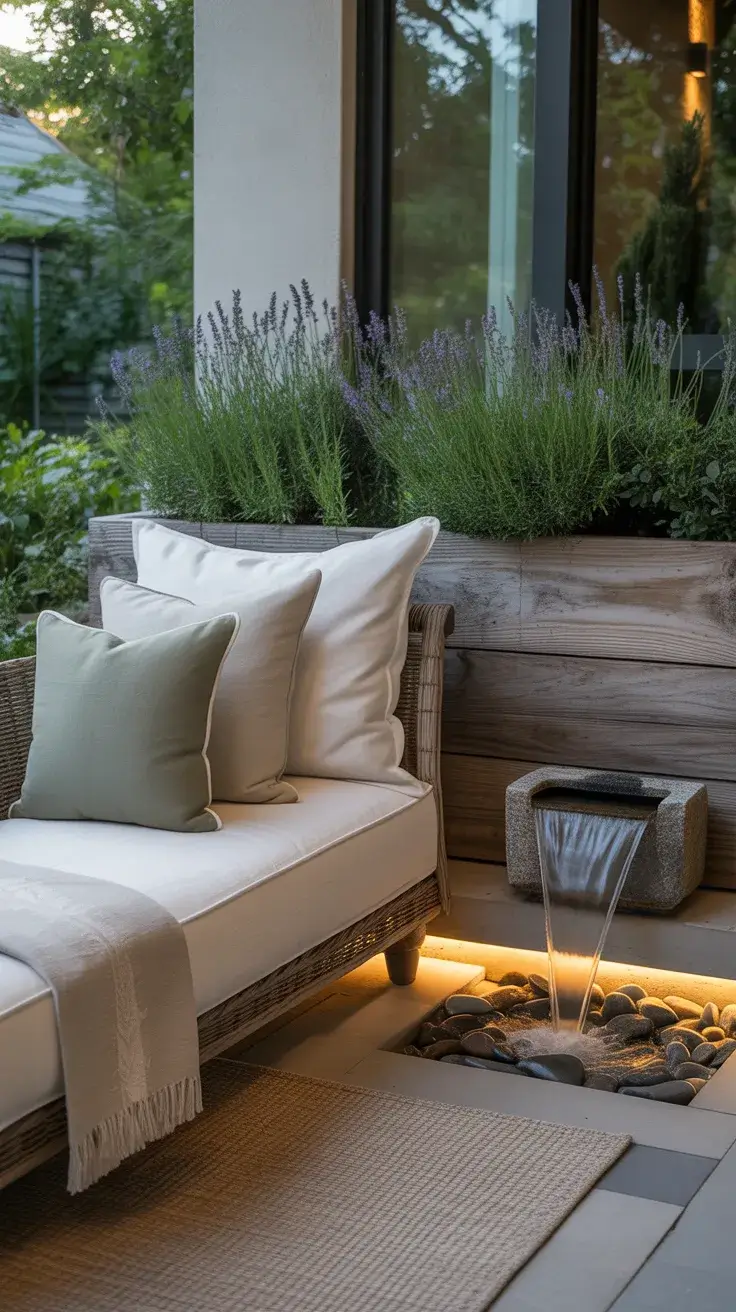
Furniture selection focuses on comfort—padded chaise lounges, upholstered swings, or cushioned recliners. I pair them with side tables for drinks or books, and add soft throws for cooler evenings. Natural textures like linen, wicker, and bamboo help reinforce the relaxing energy.
Drawing from expert advice shared by wellness designers in publications like Well+Good, incorporating sensory elements—water sounds, warm lighting, or fragrant plants—greatly improves emotional well-being. I’ve used these principles often, and clients consistently report greater enjoyment of their porches.
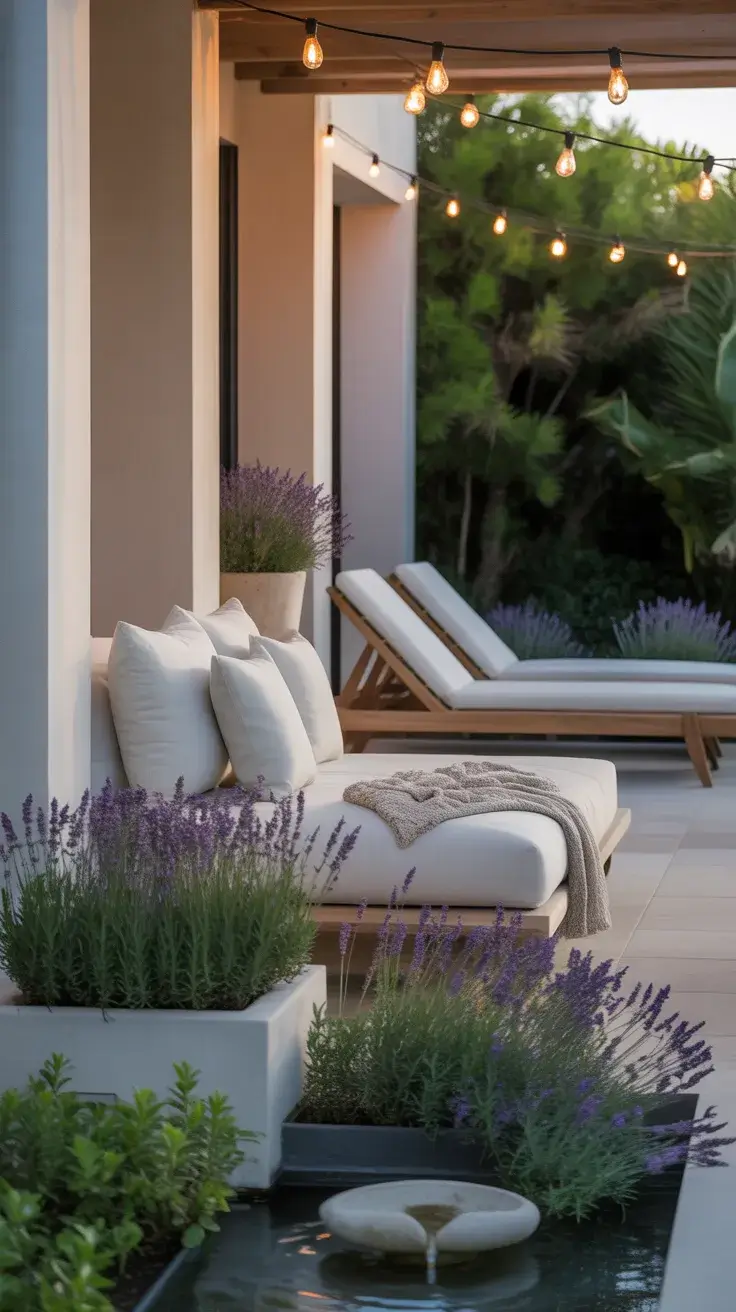
To elevate this section further, I would add dimmable lanterns or smart ambient lighting to give users control over their relaxation environment.
29. Bold Statement Porch Elements
When I design porches that need a dramatic focal point, I turn to bold statement elements that immediately capture attention. For Creative Porch Ideas 2026, this often includes oversized planters, sculptural seating, geometric lighting fixtures, or striking color contrasts. These features allow the porch to express personality while still functioning as a welcoming entry or gathering space. I like using one or two large-scale pieces rather than many small ones to maintain balance.
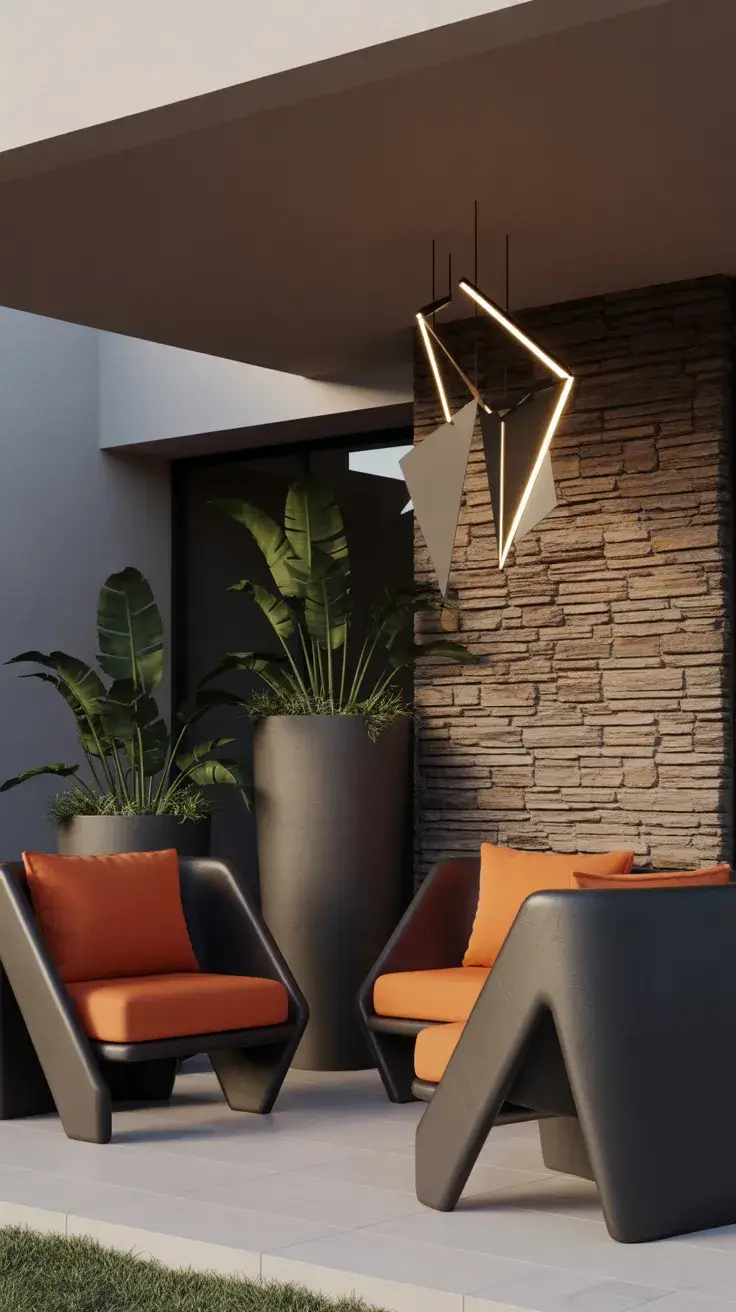
Each decorative item in a bold porch design serves a visual purpose. I tend to choose contemporary chairs with unique silhouettes, a standout pendant or lantern, or a large architectural planter to anchor the space. These pieces pair best with more neutral surroundings so the statement elements remain the highlight without overwhelming the porch.
Based on advice from designers featured in Elle Decor, bold elements work best when they complement the home’s architecture rather than conflict with it. In my own work, I’ve seen how a single statement piece—like a sculptural bench—can transform an entire porch and create memorable curb appeal.
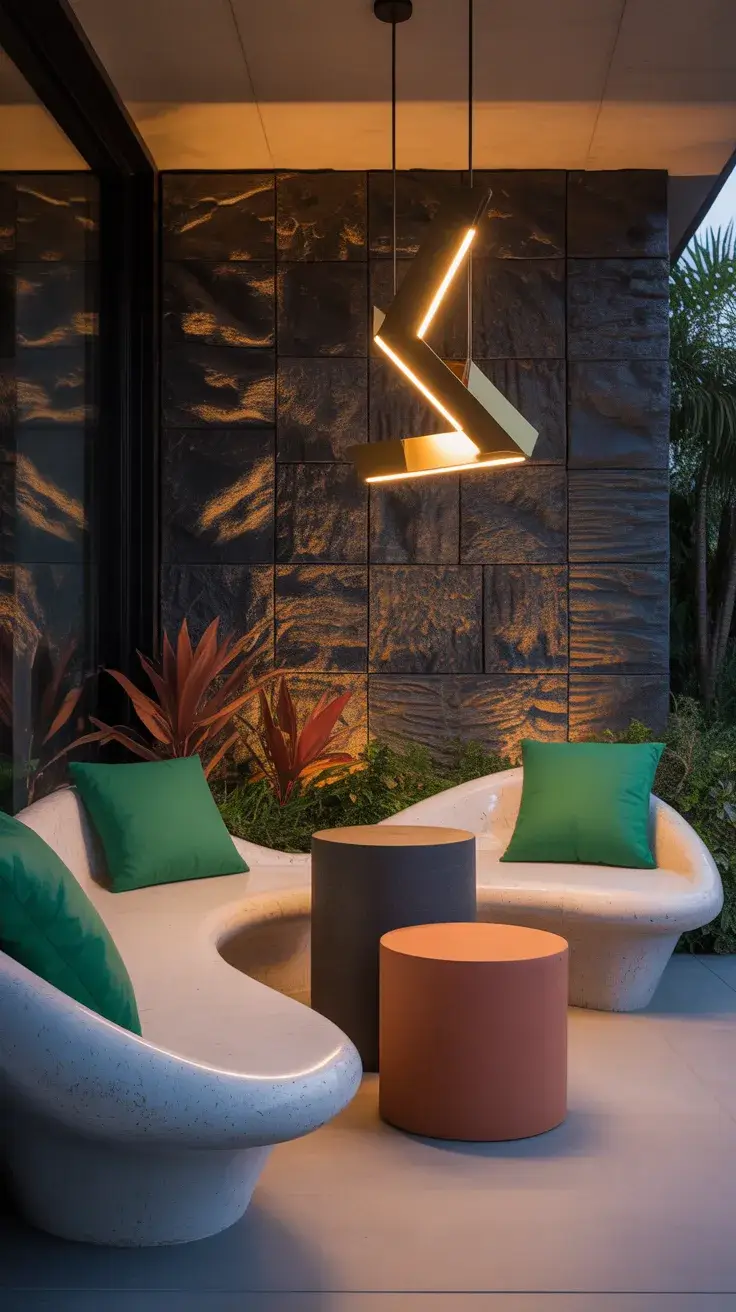
If I added anything more to this section, I’d include textured siding or accent walls behind the statement piece to further elevate its impact.
30. Open Air Porch Dining Concepts
I enjoy creating porch dining areas that blend fresh air with the comfort of an indoor dining experience. For Creative Porch Ideas 2026, open-air dining focuses on weather-resistant tables, comfortable seating, good lighting, and thoughtful layout planning. I often place dining zones where airflow is natural but sun exposure is controlled, ensuring guests are comfortable throughout the meal.
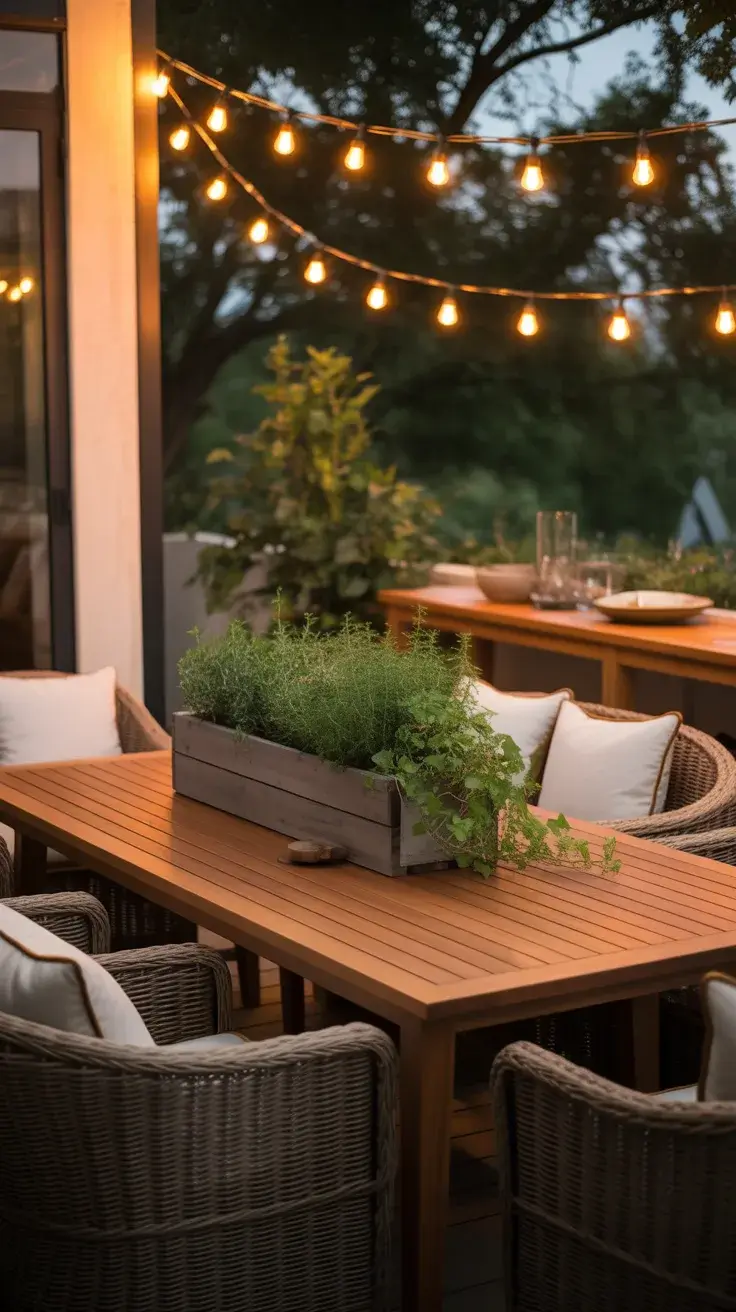
Furniture typically includes a sturdy outdoor dining table—often teak or composite—a mix of cushioned chairs and benches, and a centerpiece planter or lantern arrangement. I like using outdoor-rated textiles so the dining area feels warm without sacrificing durability. String lights, pendant lanterns, or sconces help build a cozy evening dining atmosphere.
Industry experts frequently mention the importance of scale in outdoor dining setups. Following guidance from Better Homes & Gardens, I ensure the table and seating leave enough circulation space so dining feels relaxed and not cramped. My clients appreciate layouts that feel intentional and easy to use for both small family meals and larger gatherings.
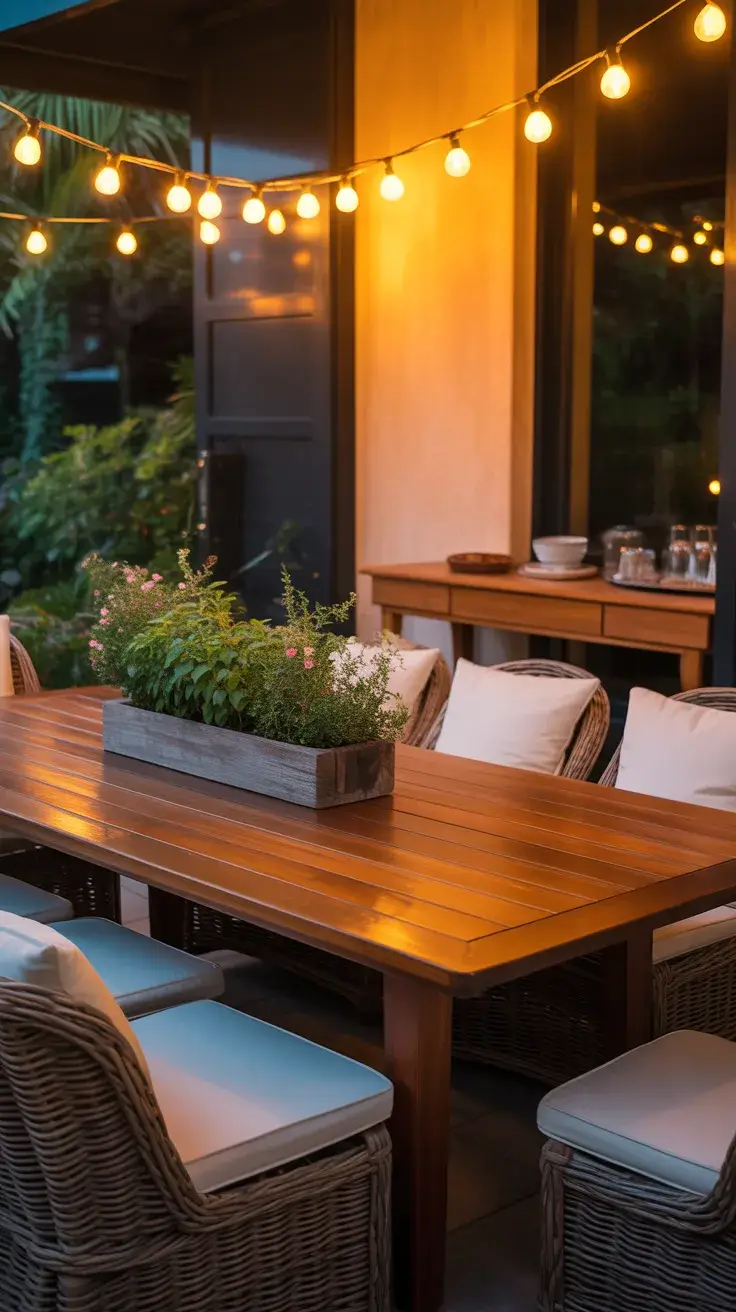
To enhance this design even further, I would add a slim outdoor buffet or serving console to increase functionality during meals.
31. Personalized Porch Decor Touches
Porches truly come alive when personalized décor elements reflect the homeowner’s personality. For Creative Porch Ideas 2026, I often encourage clients to include expressive touches—custom cushions, curated art pieces, unique planters, or sentimental objects. Personalization turns a porch from a generic outdoor space into a meaningful extension of the home.
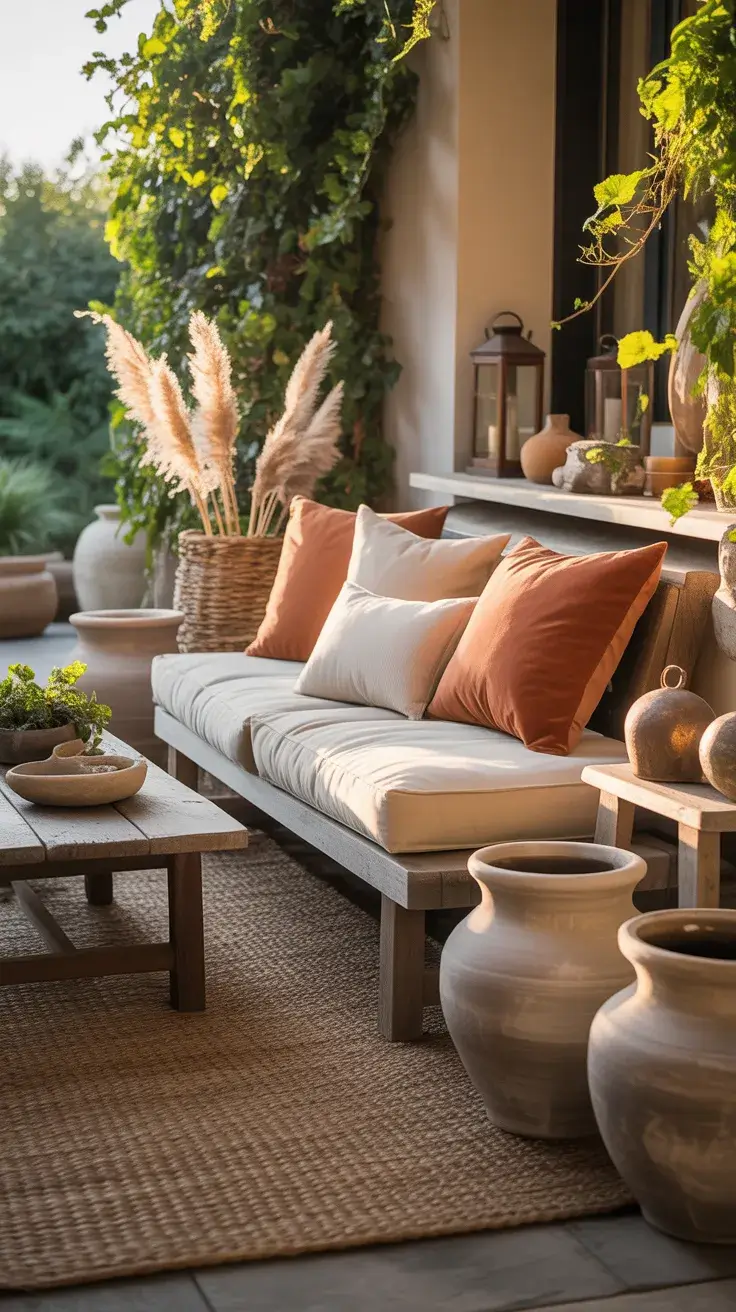
I like incorporating items such as monogram-free door mats, textured pillows in favorite colors, handmade pottery, or decorative baskets. These smaller pieces contribute warmth and character without overwhelming the layout. A statement outdoor rug or a collection of matching planters can also unify personalized accents beautifully.
From my experience and advice shared by design professionals in Real Simple, personalized décor works best when the color palette remains cohesive. This ensures variety feels intentional rather than chaotic. I apply this principle consistently when helping clients choose meaningful accents.
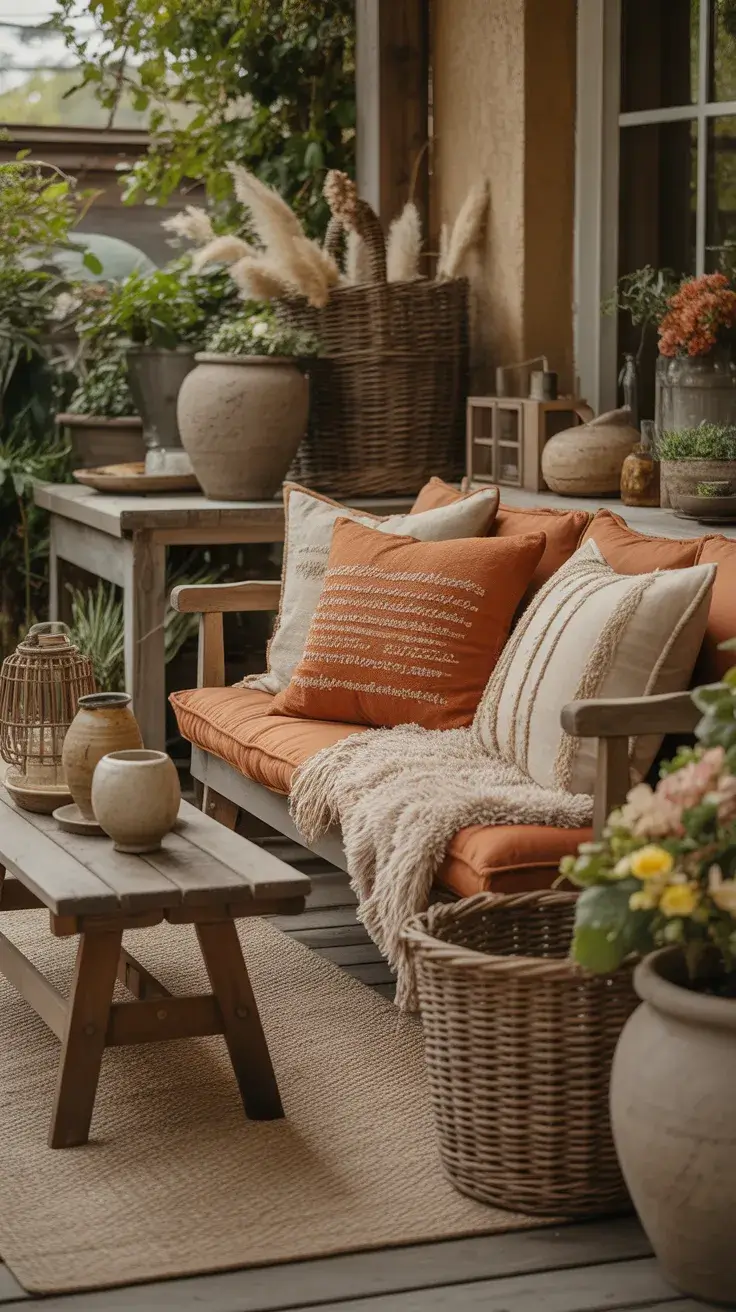
To enrich this section further, I would recommend adding a signature scent—like eucalyptus or citrus—through planters or essential oil diffusers made for outdoor use.
32. Next Generation Porch Trends 2026
Looking at upcoming trends, I see Creative Porch Ideas 2026 moving toward multifunctional, tech-integrated, sustainability-conscious designs. I incorporate features like smart ambient lighting, hidden storage, modular seating, and hybrid indoor-outdoor materials. These upgrades help porches function as workspaces, relaxation zones, and social hubs simultaneously.
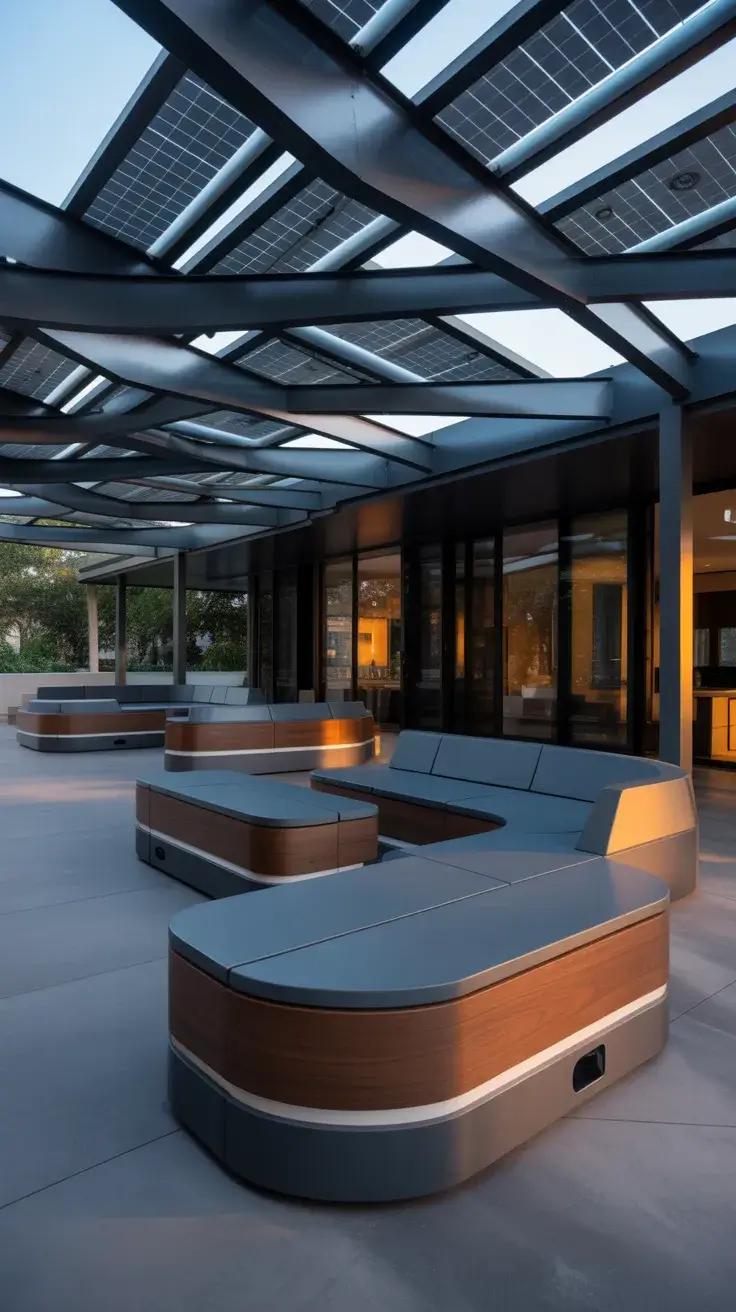
The furniture for next-generation porches includes adaptable pieces—extendable tables, convertible loungers, and stackable seating. I also see a rise in natural-meets-modern décor, such as stone composite surfaces paired with warm wood accents. Innovation drives these designs, but comfort remains the core priority.
Industry forecasters like those at Architectural Digest emphasize that the future of porch living involves adaptable layouts and long-lasting, eco-forward materials. I’ve already integrated these principles into several projects, and they create porches that feel truly future-ready.
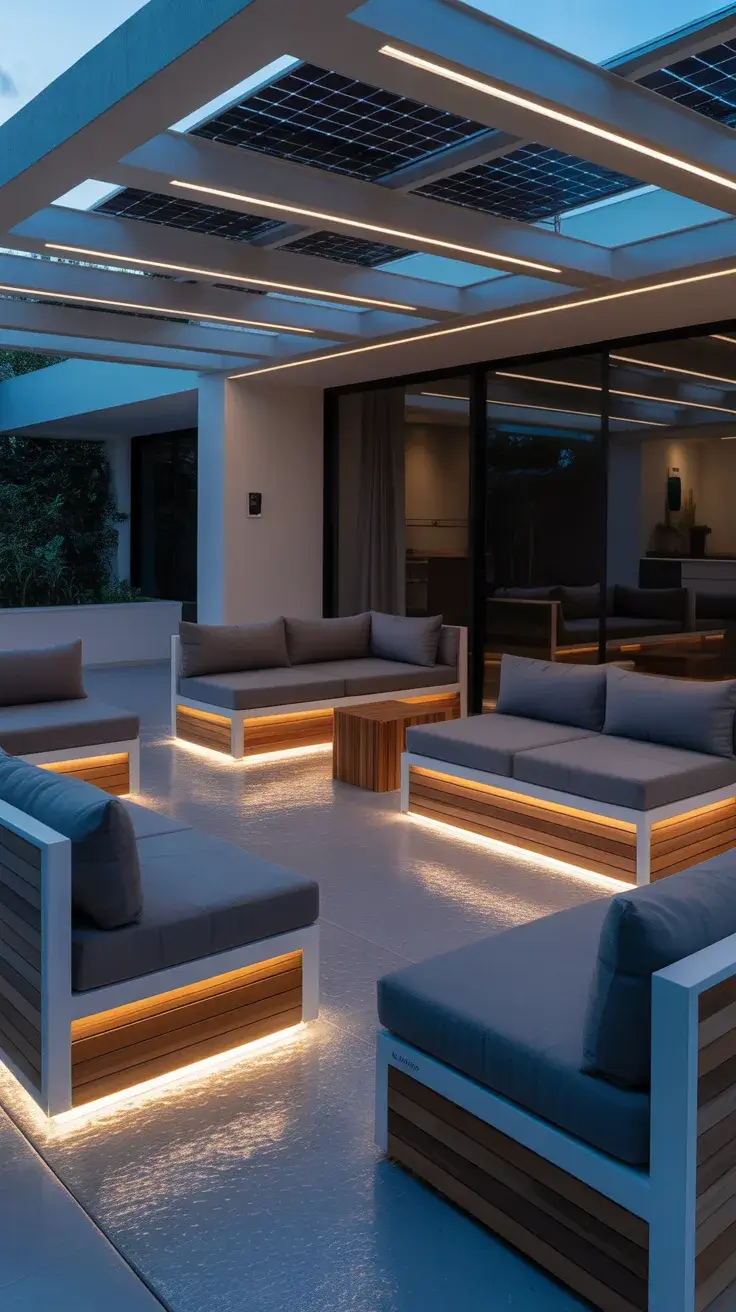
If I added something extra, I’d include solar-integrated pergolas or smart climate-control fans to emphasize how technology blends seamlessly with outdoor living in 2026.