What if the outdoor spaces we already have could become richer, safer, and more imaginative play zones for our children? And what if the best backyard playground ideas 2026 didn’t require a full renovation, but rather a fresh understanding of how modern families live and play? In this article, I explore a range of innovative concepts that combine beauty, practicality, and the latest design trends to inspire your next project.
As someone who regularly studies emerging design movements, I find that backyard playground ideas 2026 balance creativity with sustainability more than ever before. Every idea in this guide is shaped by real-use functionality, modern technology, and child-centered design principles. Throughout this article, I share insights from professional designers, educators, and my own field experience integrating play spaces into real homes.
Whether you’re looking for eco friendly concepts, minimalist approaches, or high-tech solutions, this guide will give you clear, actionable ideas to create a backyard playground that enhances both play and lifestyle. Let’s explore the first seven sections.
1. Modern Backyard Playground Ideas 2026
In 2026, modern backyard playgrounds have shifted toward sleek lines, muted natural palettes, and multifunctional elements that adapt easily to different play styles. When I design these spaces, I prioritize structures that feel unified with the surrounding landscape while offering various opportunities for climbing, balancing, hiding, and role play. This helps the backyard function not just as a playground, but as an integrated outdoor environment.
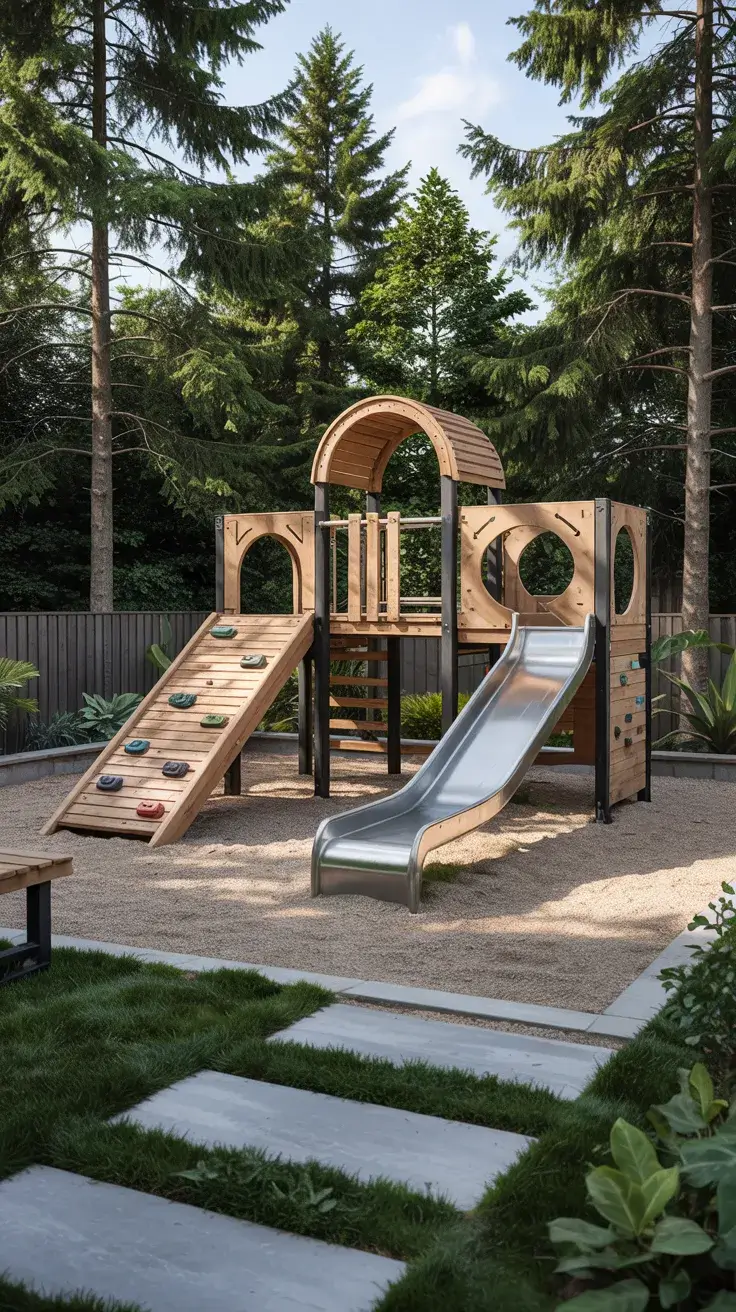
Incorporating modular benches, climbing walls with matte finishes, and sculptural slides is something I often recommend. These elements look contemporary while staying highly practical for families. I also prefer using weather-resistant composite materials that maintain a clean, sophisticated appearance with minimal maintenance, which is especially valuable for homeowners who want longevity from their investment.
From my professional experience, many modern designers in the US emphasize the importance of versatility. Experts featured in Architectural Digest often highlight playground layouts that double as social and leisure zones, allowing kids to play while adults relax comfortably nearby. I’ve found this multi-use philosophy especially practical in residential settings.
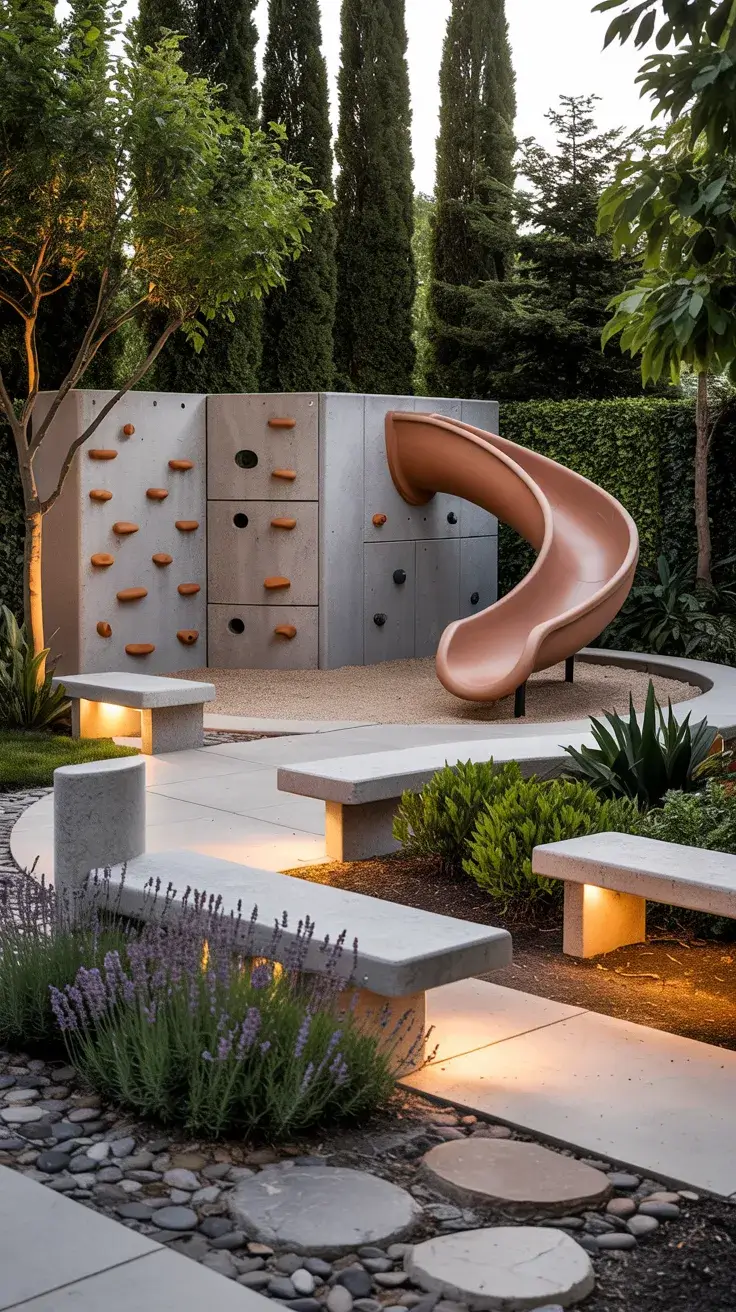
For this section, I would add adjustable lighting features such as low-voltage LED pathway lights to enhance visibility and aesthetics during evening play.
2. Innovative Play Structures For Future Backyards
When I look ahead to future play structure trends, I see a clear emphasis on hybrid systems that mix physical activity with imaginative play. These designs stand apart through creative geometry, curved forms, and interactive components that adapt as children grow. In my work, I aim to incorporate open-ended play zones, which encourage longer engagement than traditional fixed structures.
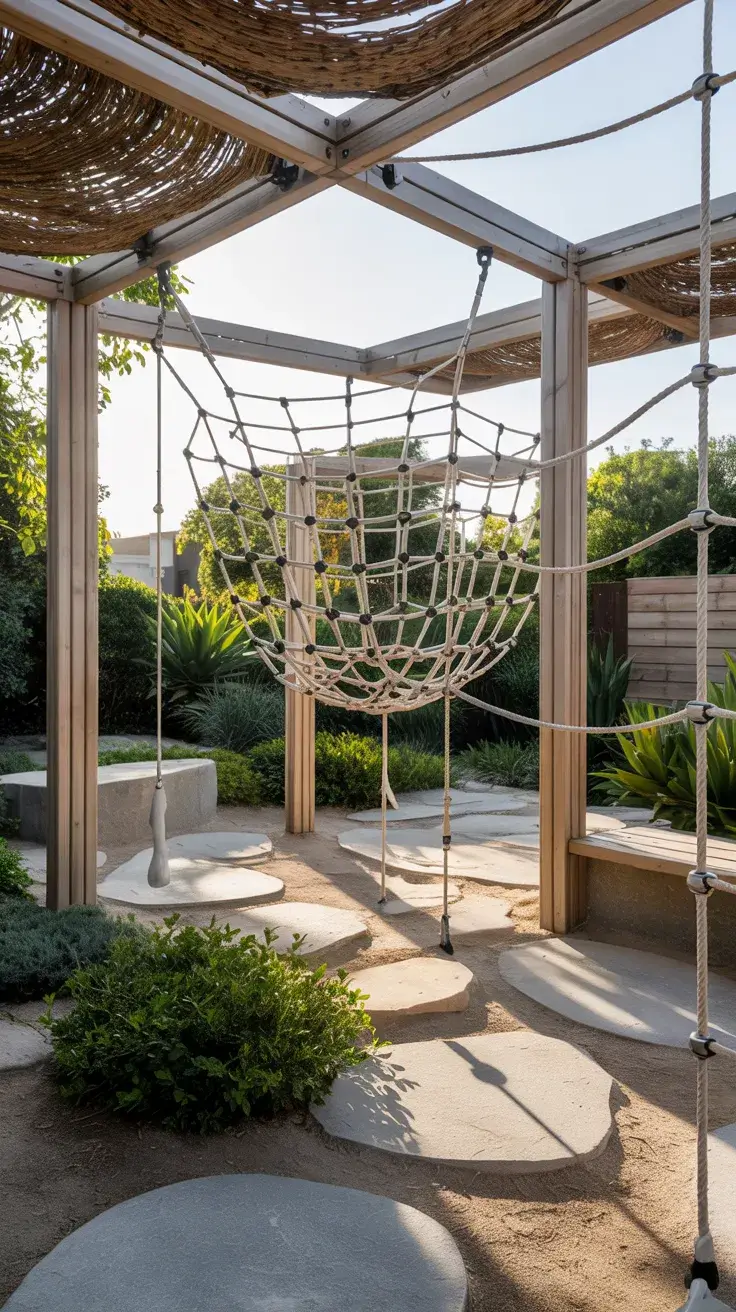
Features such as geometric climbing nets, rotating balance beams, and convertible forts are particularly impactful. I’ve used lightweight yet durable aluminum frames and silicone-coated ropes, both of which withstand harsh climates without losing their shape or safety integrity. Each piece serves a purpose, stimulating different developmental skills while keeping the backyard visually cohesive.
In my experience, designs endorsed by educational organizations like the American Academy of Pediatrics often stress the value of active play structures that support motor development. I’ve seen how these futuristic systems encourage children to experiment, invent games, and explore creative problem-solving.
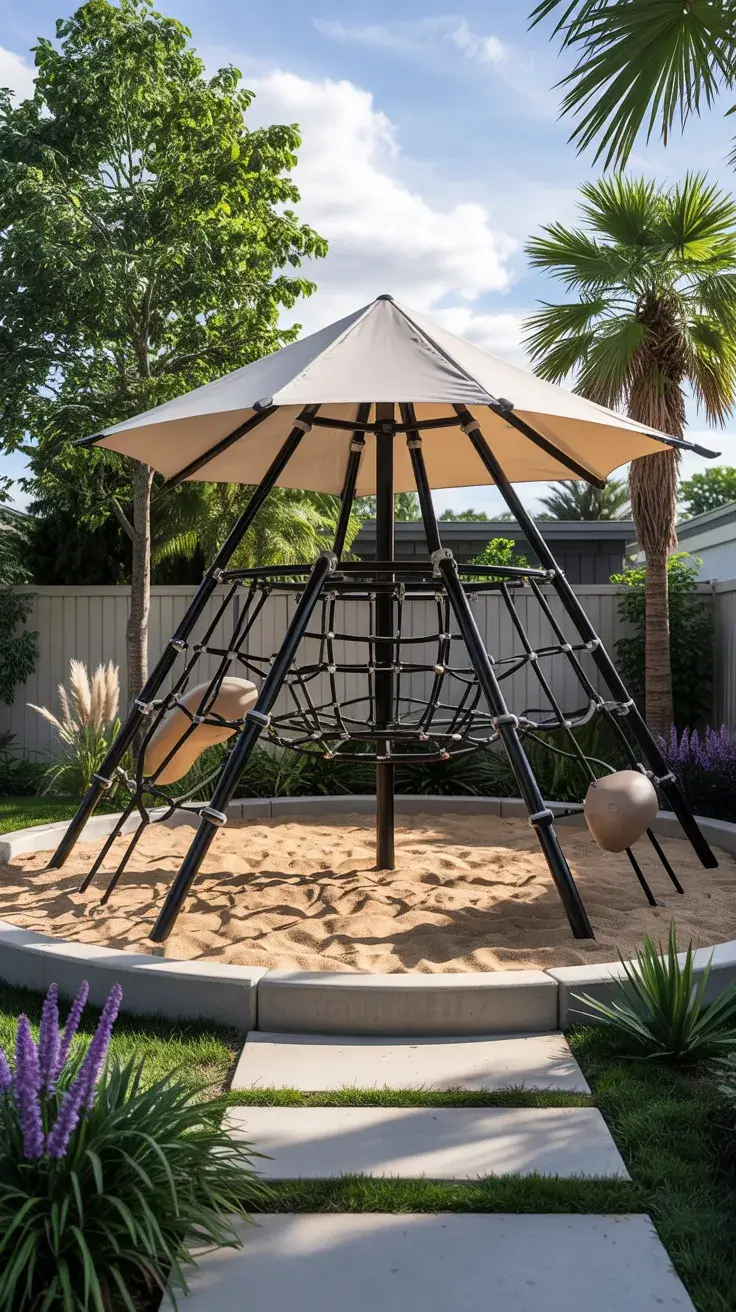
To complete this concept, I would also integrate a shaded rest area using tensile fabric canopies to allow breaks from active play.
3. Eco Friendly Playground Concepts For 2026
Eco friendly playgrounds in 2026 emphasize sustainable materials, low-impact manufacturing, and a natural aesthetic that blends seamlessly with gardens or green landscaping. In my design approach, I prefer using reclaimed wood, recycled plastics, and plant-based composite materials to create an environmentally responsible foundation for play.
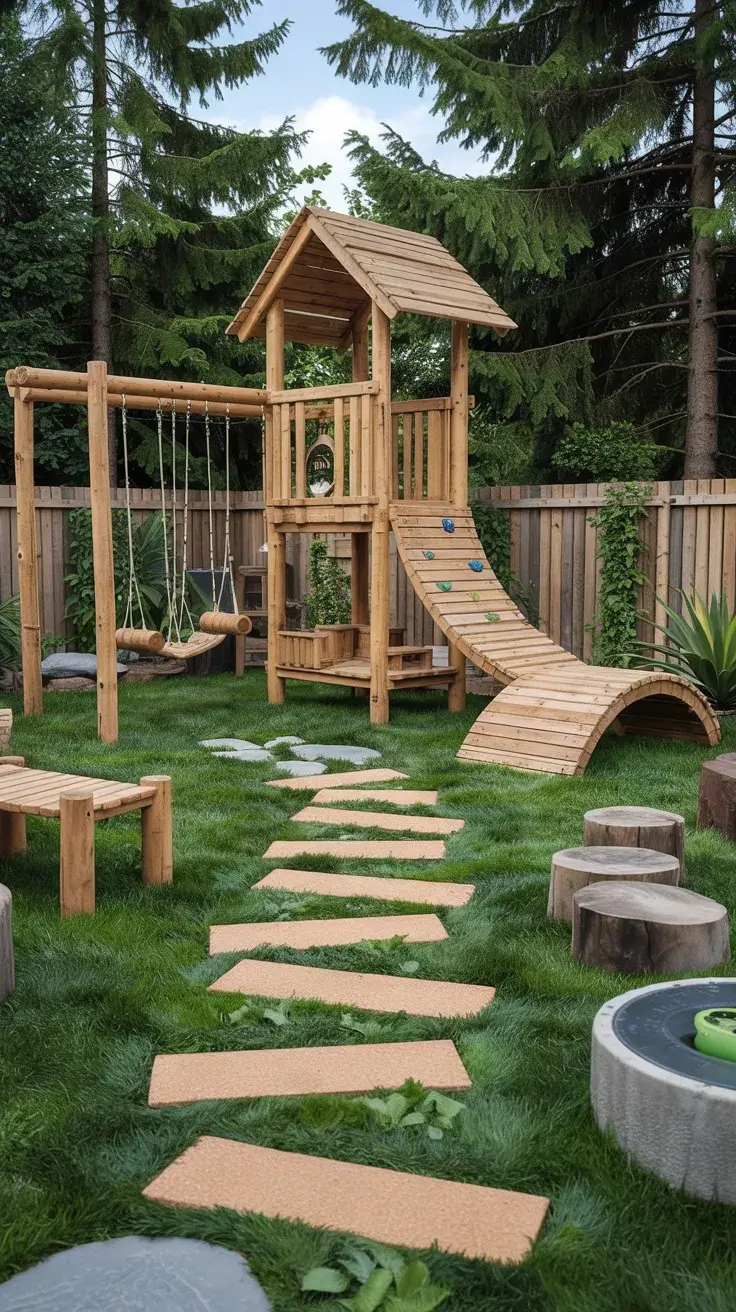
Items such as bamboo climbing frames, cork stepping pads, and recycled rubber seating all provide environmentally conscious alternatives to traditional playground equipment. I choose these materials for their tactile qualities and resilience, and they naturally introduce children to textures that reflect the outdoor world while supporting sustainable living.
From my own professional perspective, one of the biggest benefits of eco friendly design is its long-term adaptability. Major US publications like Dwell have repeatedly highlighted the growing trend toward green-conscious outdoor structures, which mirrors what I observe in family homes seeking healthier, toxin-free environments.
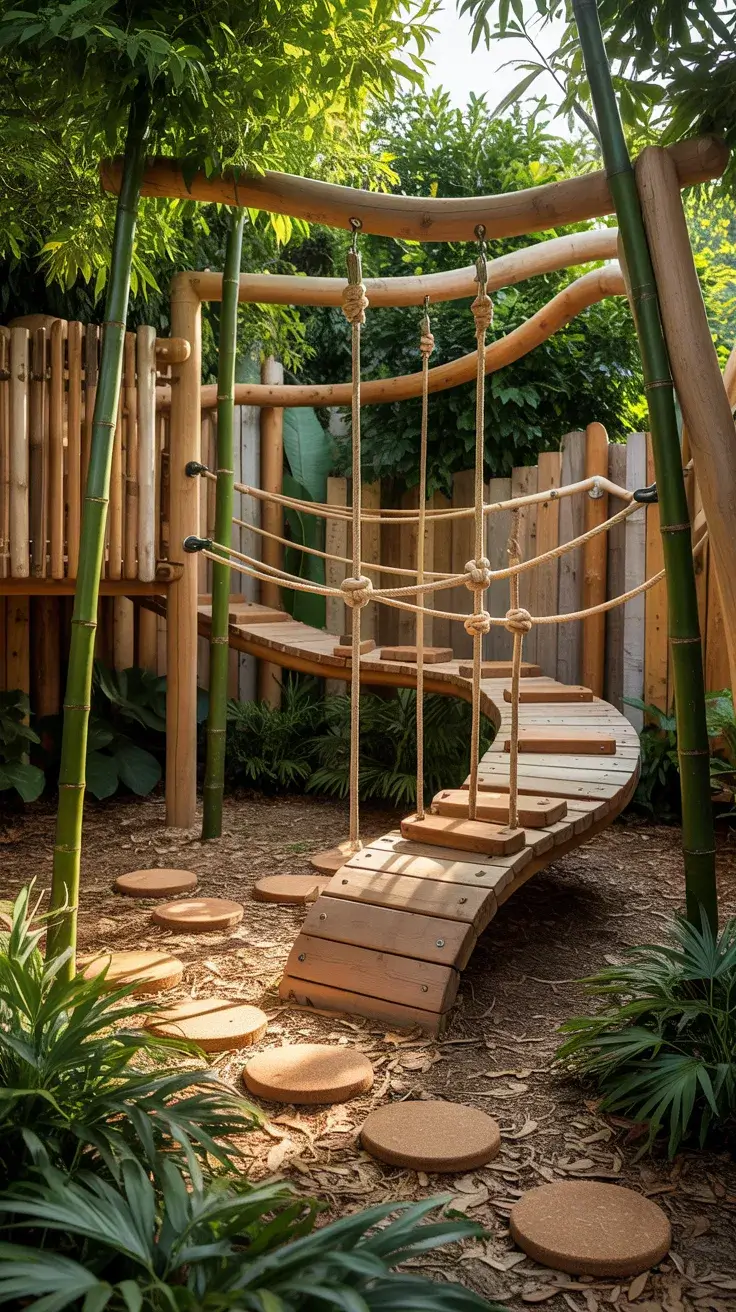
To enhance this section, I would include living elements like small pollinator-friendly planters integrated into the play zone to promote ecological awareness.
4. Safe Surface Materials For Backyard Play Areas
Safety remains at the core of every well-designed backyard playground, and I treat surface material selection as one of the most important decisions. In 2026, advanced shock-absorbing surfaces are widely available, combining soft impact performance with aesthetically pleasing textures. I often recommend poured-in-place rubber, engineered wood fiber, or turf-rubber hybrids depending on the layout.
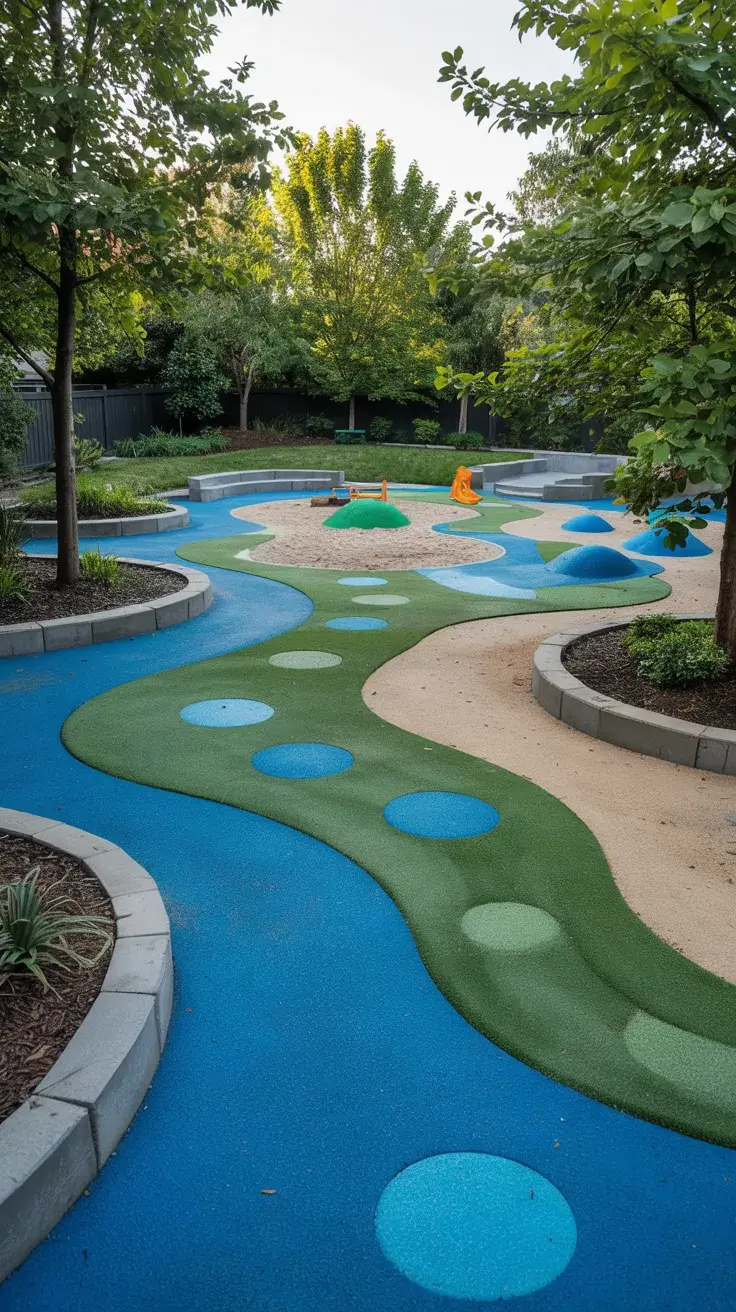
Each material adds a functional advantage. Engineered wood fiber blends naturally with timber structures, while rubber surfacing offers smoother, seamless coverage ideal for high-activity zones. Artificial turf with built-in padding is one of my favorites for cohesive modern aesthetics. I choose materials based on softness, drainage performance, and durability.
Professionals from outlets like HGTV often remind homeowners to check fall-height ratings and installation certifications when choosing surfaces. I echo this advice, as proper installation can significantly improve safety outcomes. My own projects consistently benefit from investing in the highest-quality surfacing.
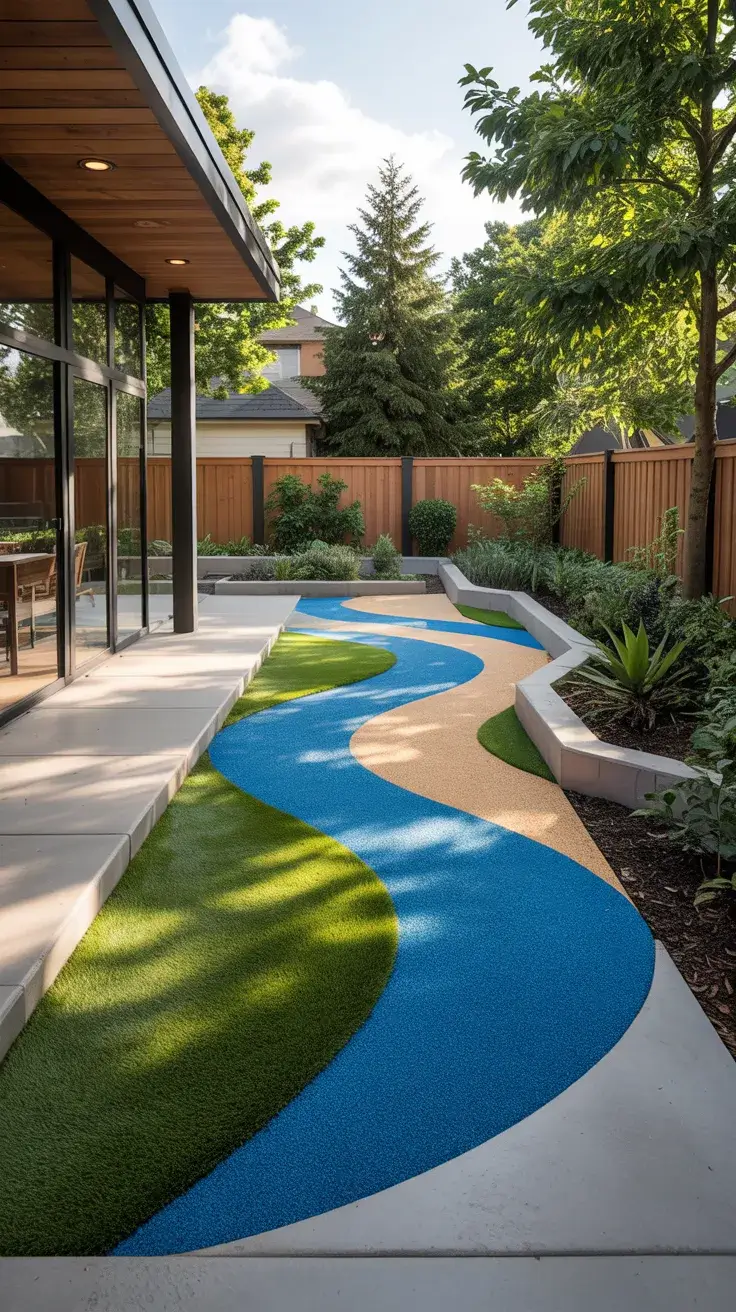
I would also add perimeter edging solutions to maintain clean lines and prevent material displacement.
5. Smart Technology Integration In Playground Design
In 2026, smart technology has evolved beyond screens and into interactive outdoor systems that support creativity and movement. When I design tech-integrated playgrounds, I prioritize child-safe, weather-resistant systems that enhance play without overwhelming it. These include motion-activated lighting, sound-play stations, and adaptive obstacle modules that respond to movement.
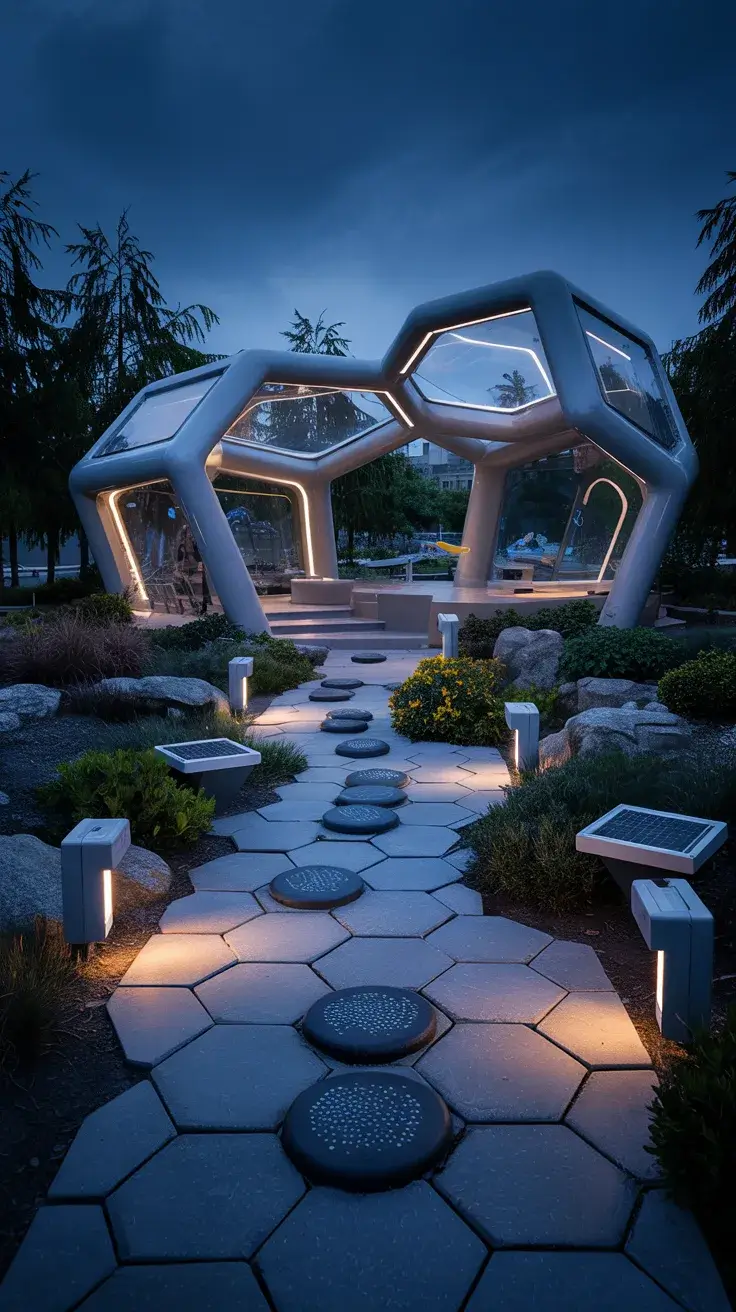
Smart components like embedded LED markers, pressure-sensitive stepping stones, and solar-powered audio features all contribute to immersive environments. I prefer selecting modular devices that can be updated or replaced as new technologies emerge, ensuring long-term functionality without requiring a full redesign.
Many US-based innovation specialists emphasize the importance of balancing tech with physical play. I fully agree—technology should enrich play, not replace hands-on experiences. In my projects, I’ve seen children become more engaged when tech acts as a subtle enhancement rather than a focal point.
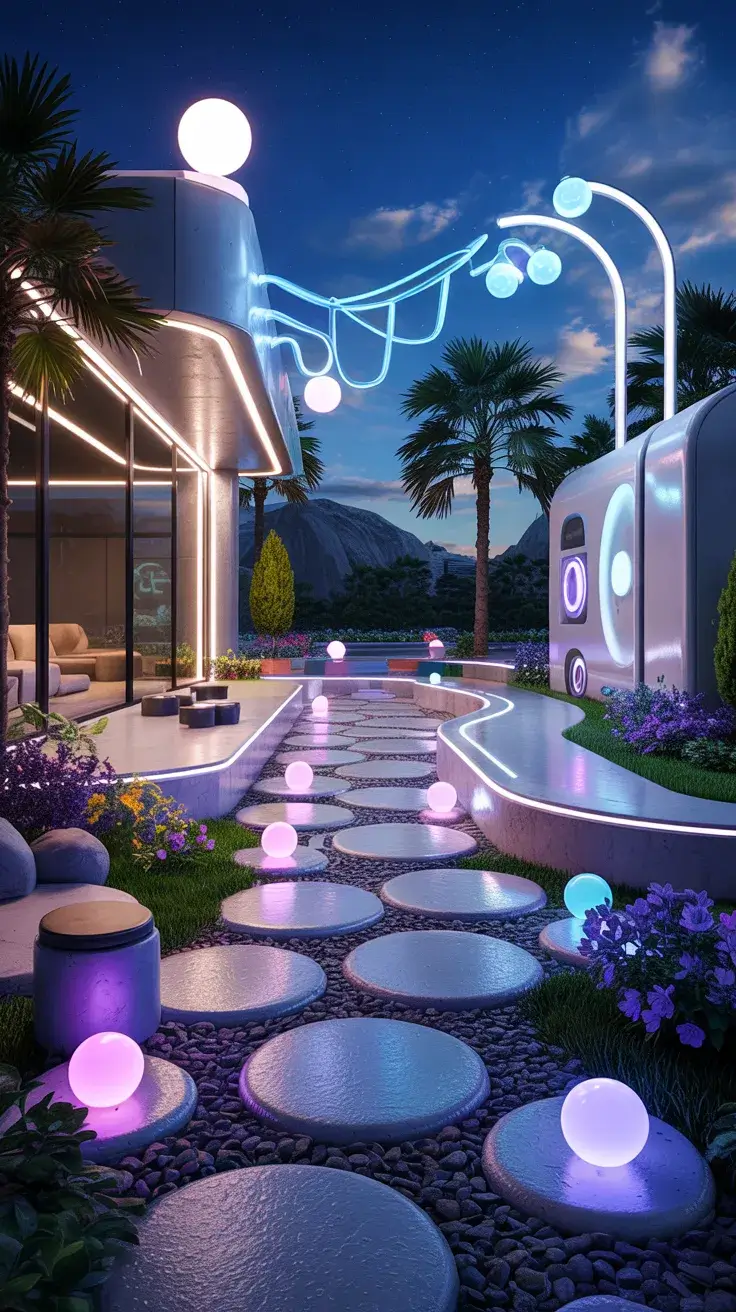
For this section, I’d add an optional app-controlled feature that allows parents to adjust lighting brightness or turn interactive elements on or off.
6. Nature Inspired Play Zones For Children
Nature-inspired playgrounds replicate organic forms and encourage sensory-rich exploration. When designing these spaces, I use irregular shapes, earthy tones, and natural materials to evoke forest trails or riverbank landscapes. This approach helps children build a connection to outdoor environments while offering a calmer play experience.
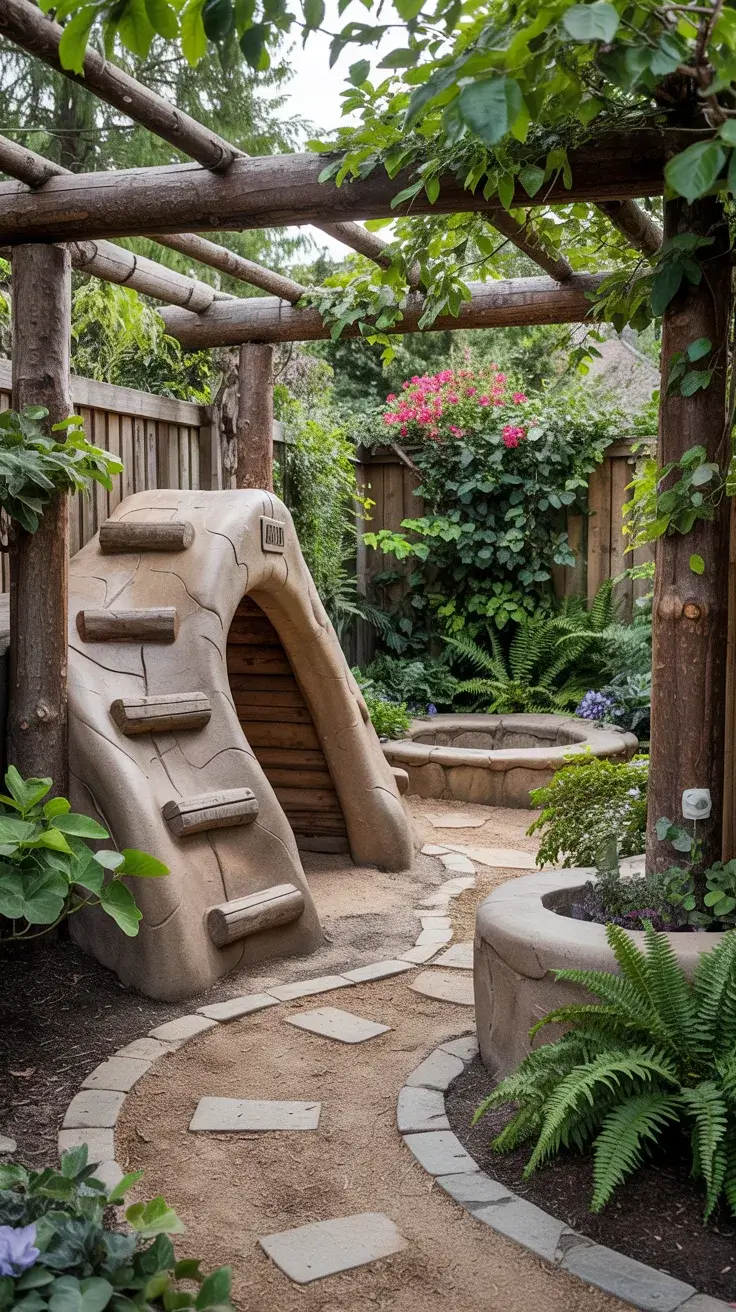
Items such as log balance beams, stone-like climbing structures, and textured pathways made of bark or pebbled composite contribute to a grounded atmosphere. I enjoy using curved forms and natural shadows to break the visual rigidity often seen in traditional playgrounds. The result is a setting that feels immersive and soothing.
From personal experience, expert recommendations from nature-based educational programs often underline the importance of sensory variety. I’ve implemented this advice in many backyards, and the difference in children’s engagement is noticeable—natural cues encourage imaginative play without overstimulation.
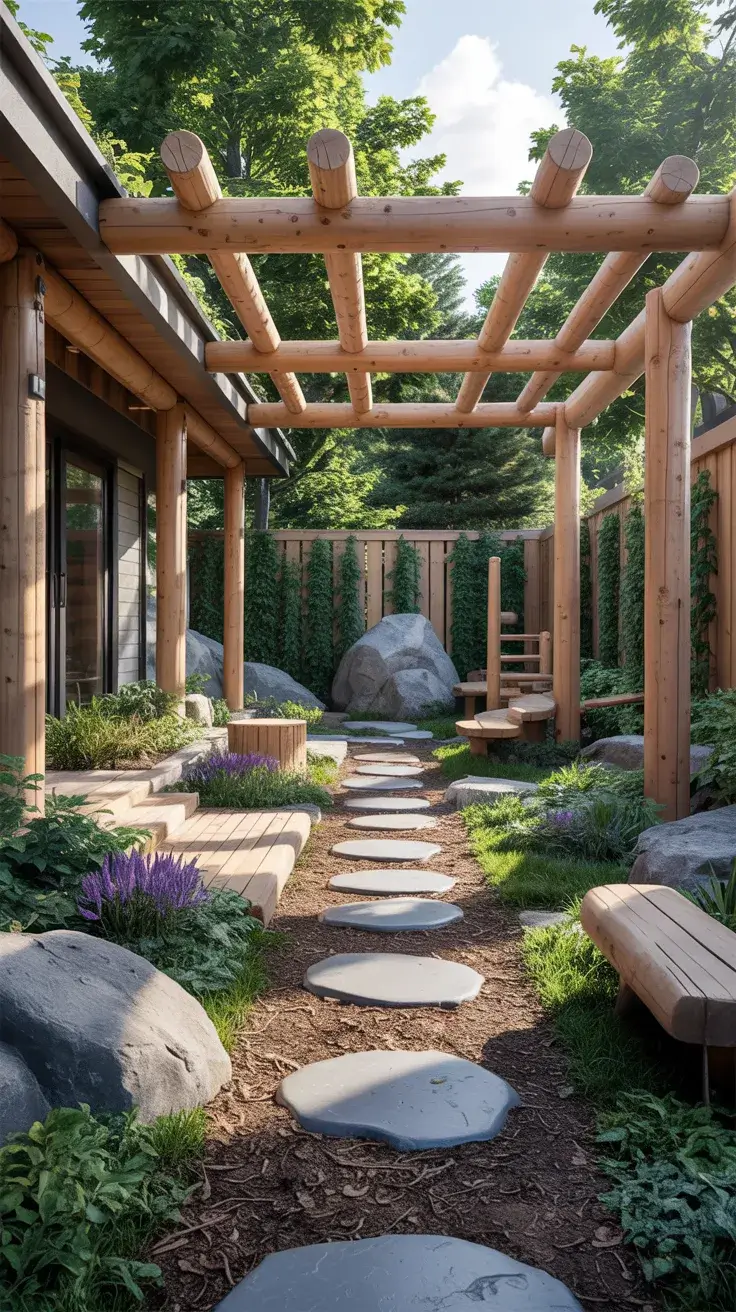
This section could also benefit from adding interactive garden beds or small water channels to expand sensory learning.
7. Minimalist Playground Designs For Modern Homes
Minimalist playgrounds are ideal for homeowners who prefer clean visuals and uncluttered layouts. In my work, I often design these spaces with restrained color palettes, smooth surfaces, and simple geometric forms that offer intentional play opportunities without overwhelming the yard. The goal is to blend play structures seamlessly into a modern architectural setting.
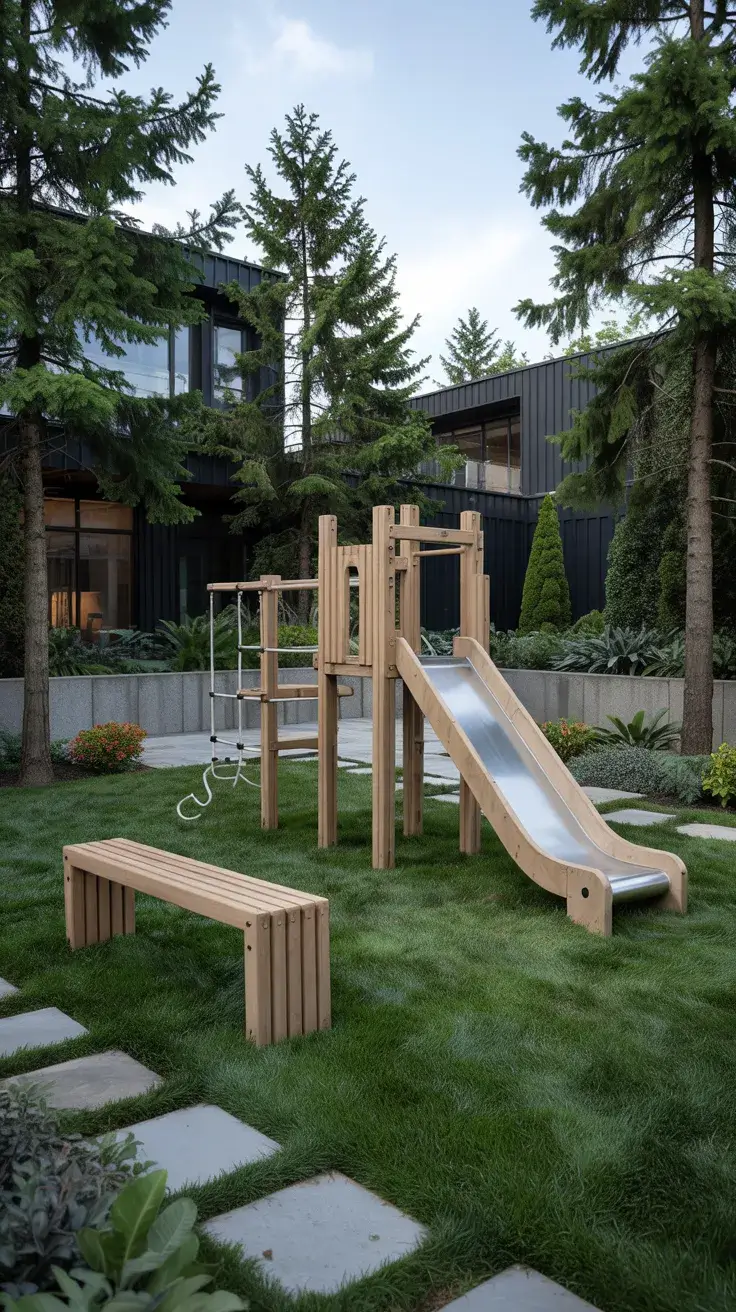
Essential elements include slimline climbing frames, compact slides, and multifunctional benches. I select materials such as powder-coated steel, matte composite boards, and high-density rubber to maintain visual harmony. Each component is chosen for its ability to support more than one activity, preserving the minimalist philosophy of “less but better.”
I personally favor minimalist playgrounds because they age gracefully. Many design critics and architects in the US note that minimalist outdoor spaces stay relevant longer and are easier to maintain. That reflects my experience: families appreciate the simplicity and reduced visual noise.
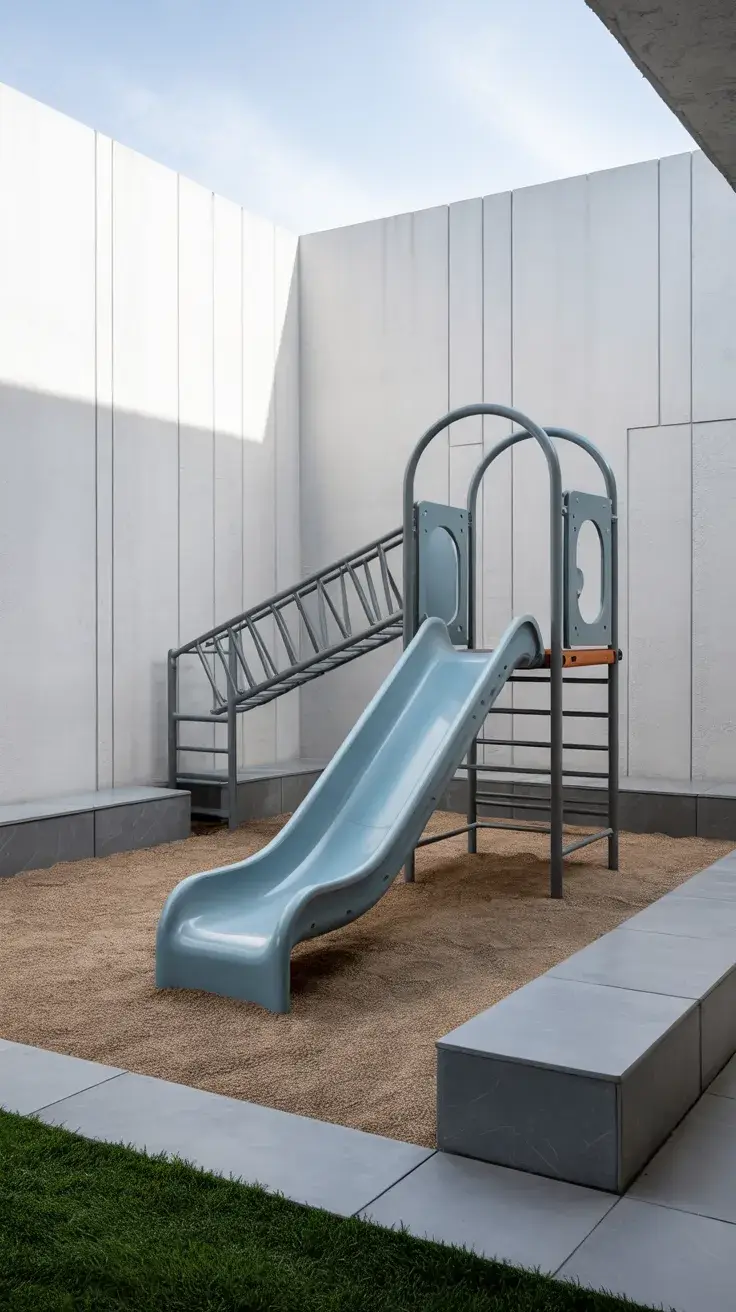
For completeness, I might add subtle built-in storage compartments to help keep toys and accessories out of sight when not in use.
8. Modular Backyard Play Systems
Modular backyard play systems are becoming increasingly popular in 2026 because they offer adaptability that traditional structures lack. When I design modular systems, I focus on components that can be rearranged as children grow or their interests evolve. This allows families to maintain a fresh, engaging play environment without needing a full redesign. I especially appreciate how modular designs can fill unusually shaped yards or expand in phases.
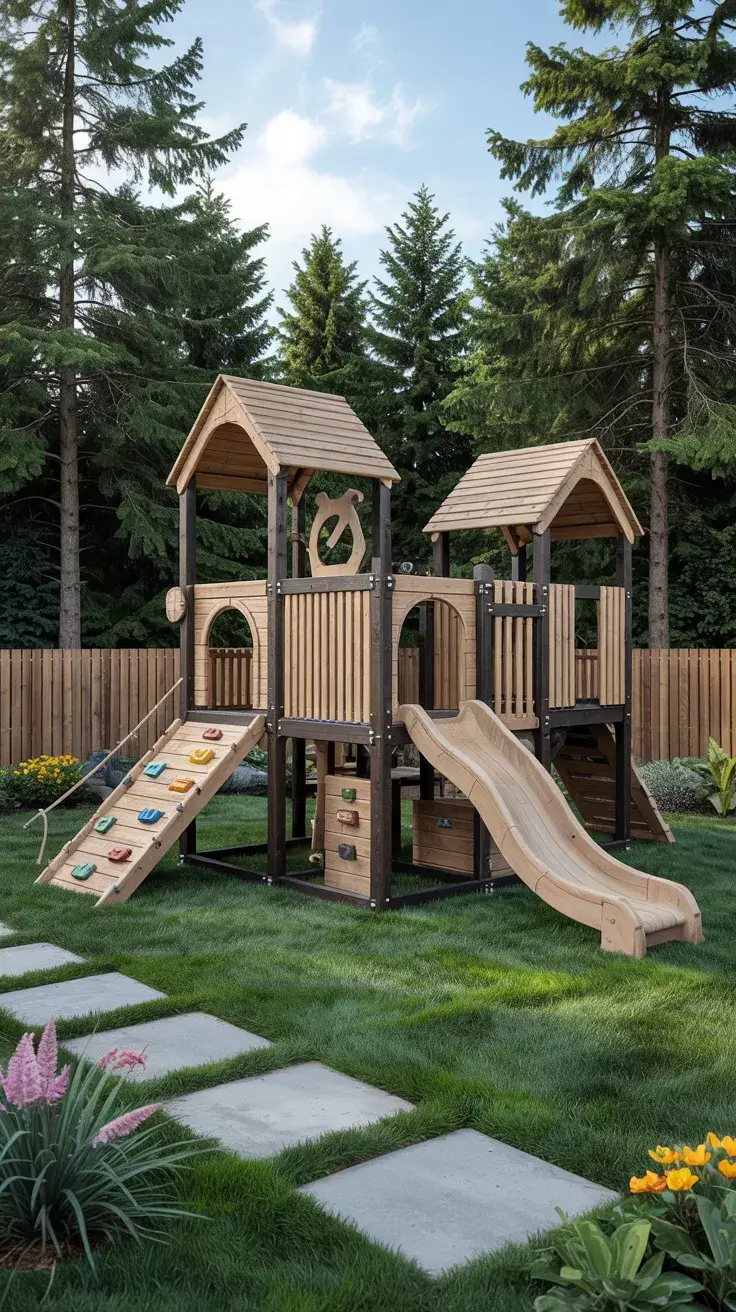
Each component—climbing cubes, interchangeable slides, balance beams, and attachable forts—serves a multifunctional purpose. I choose lightweight but durable materials such as powder-coated metal frames, weatherproof composite panels, and silicone grips that help children safely interact with changing configurations. These pieces work together visually and structurally, maintaining a cohesive look even when rearranged.
From a professional perspective, modular systems align perfectly with the customization trend seen across US design publications. Many experts note that homeowners value longevity and flexibility, which modular playgrounds inherently provide. My clients often remark that these systems evolve alongside their children, making them a highly economical long-term investment.
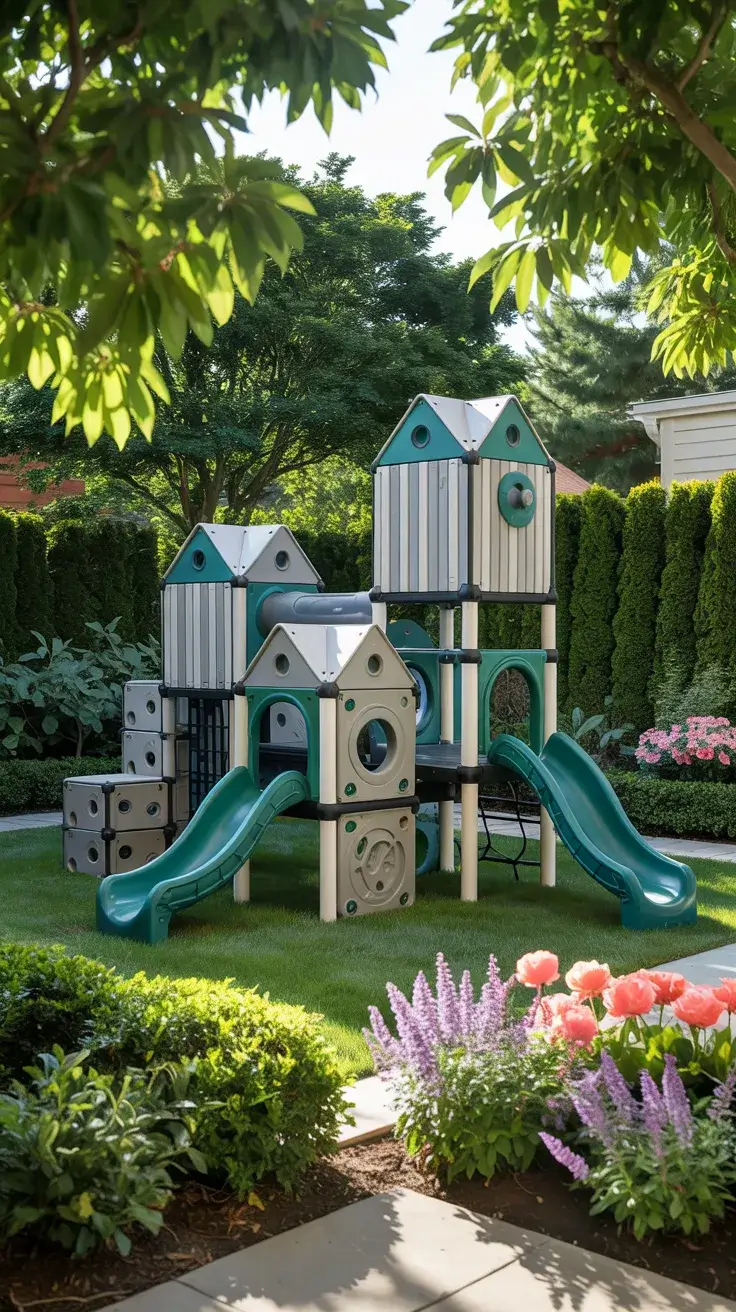
I would enhance this section further by adding optional canopy attachments or shade sails that can be clipped onto frames for hot-weather protection.
9. Backyard Playgrounds For Small Spaces
Designing playgrounds for small backyards requires finding creative ways to maximize vertical space while maintaining a sense of openness. I approach these compact environments with a strong focus on multifunctional features that allow children to climb, slide, and explore without overwhelming the yard. The key is creating visually light structures that encourage movement without clutter.
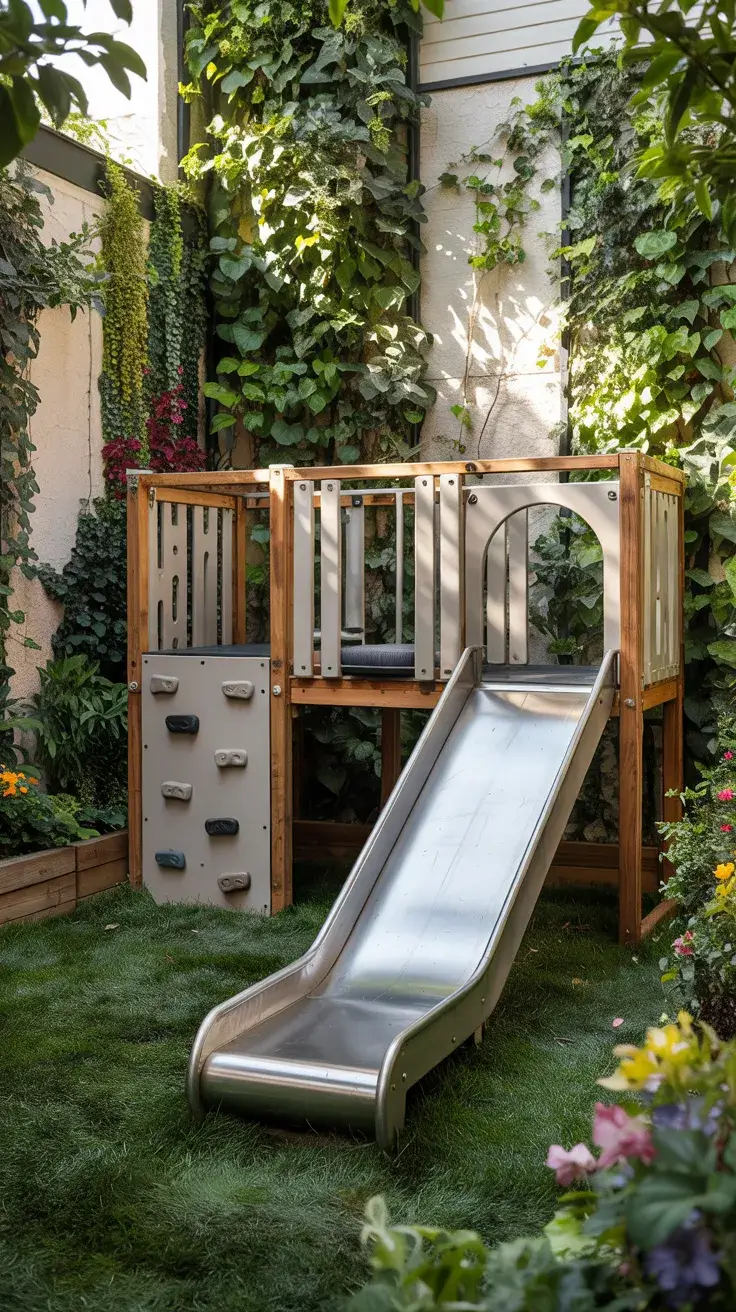
My preferred pieces in small spaces include wall-mounted climbing panels, narrow-profile slides, raised platforms, and compact sensory stations. I choose materials like matte-finish wood, slim steel frames, and textured surfaces that offer depth without bulk. Vertical gardens can also frame the play area beautifully while expanding the usable footprint through layered design.
In my experience, many home improvement experts highlight the trend toward small yet efficient playground zones that fit urban lifestyles. I’ve seen how incorporating vertical play dramatically improves the usability of tiny yards and helps transform them into functional retreats for children.
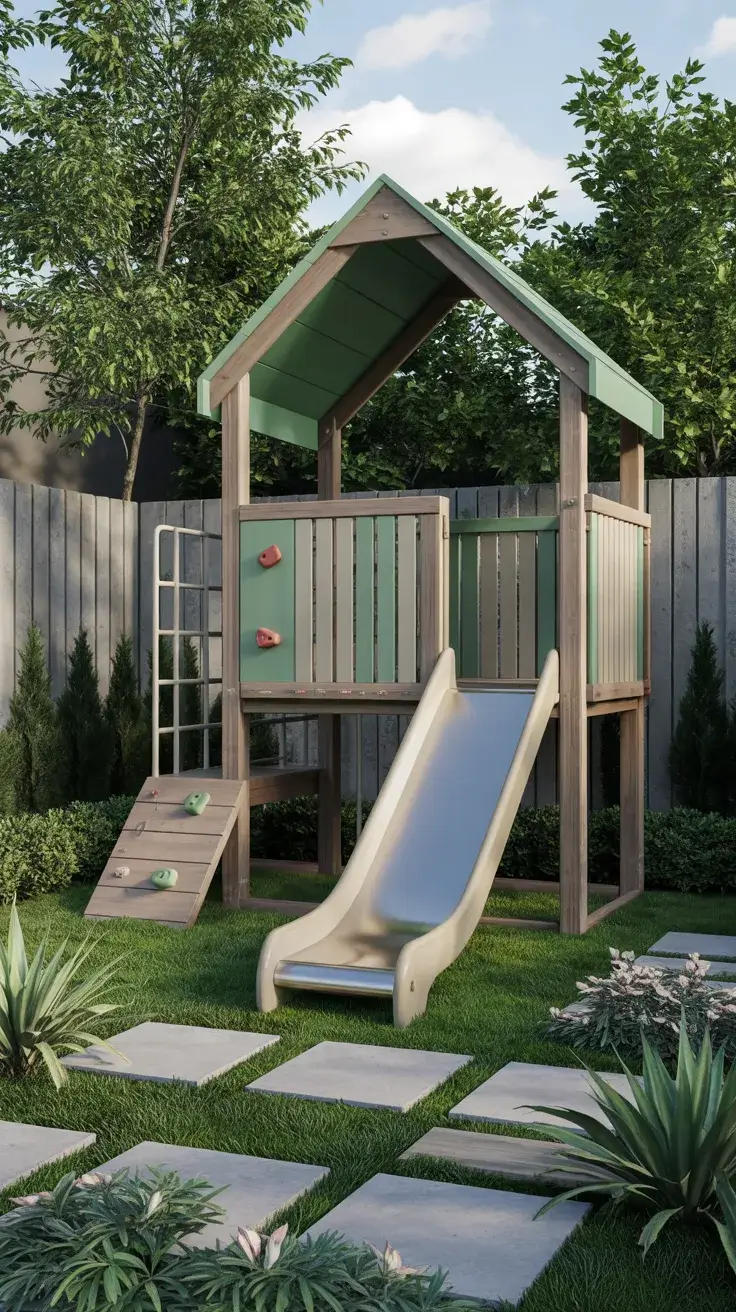
To complete this section, I’d add built-in storage drawers under raised platforms to keep toys accessible yet organized.
10. Creative DIY Playground Projects
DIY playground projects are ideal for families who enjoy hands-on creativity and want to customize their outdoor spaces. When I work with DIY-minded homeowners, I encourage them to approach their designs with both practicality and imagination. Well-planned DIY structures can rival professional installations when built with proper safety considerations and thoughtful material selection.
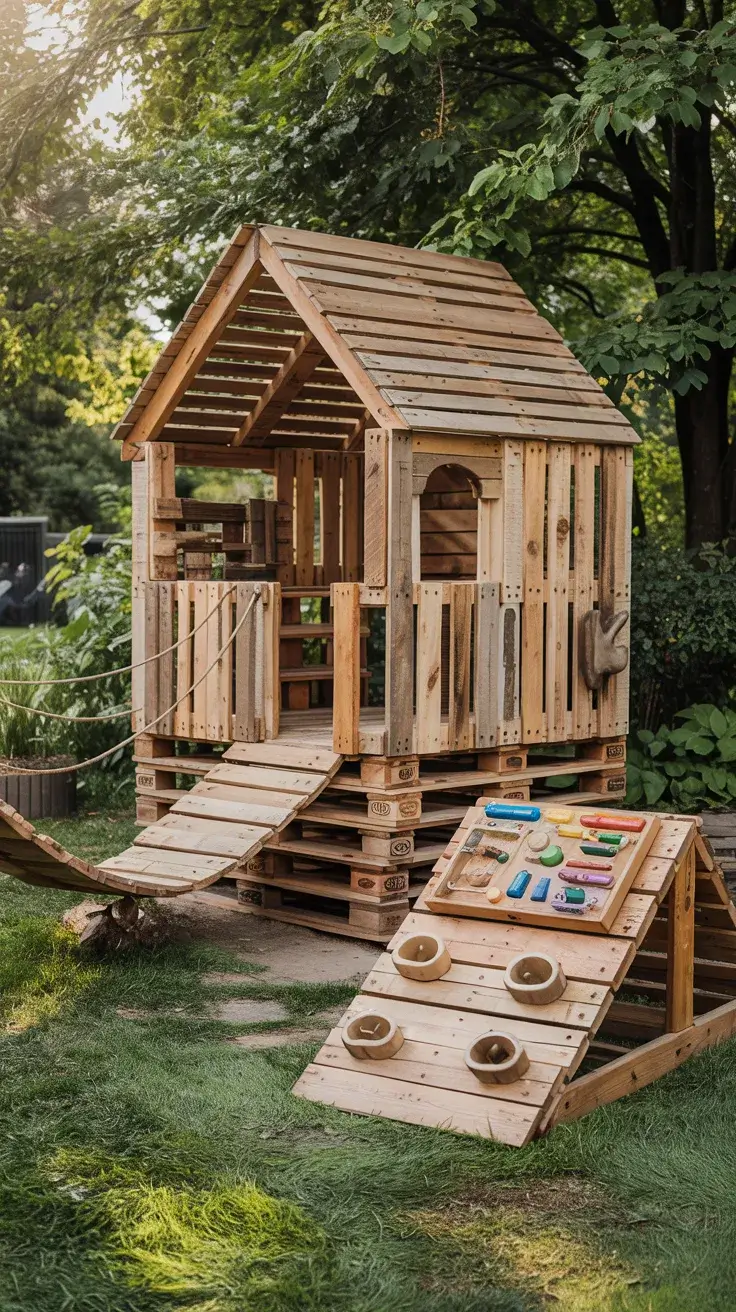
DIY elements such as handmade climbing ramps, pallet forts, rope bridges, and sensory boards bring personality to the space. I recommend using pressure-treated wood, outdoor-rated screws, and weather-resistant ropes to ensure long-term durability. Paints should always be non-toxic and outdoor-safe. Each item adds character and invites children to interact with the environment in unique ways.
From my professional standpoint, many US family and craft publications highlight the emotional value of DIY projects—children often feel more connected to play structures that their parents help create. I’ve seen firsthand how these projects foster bonding, creativity, and pride within families.
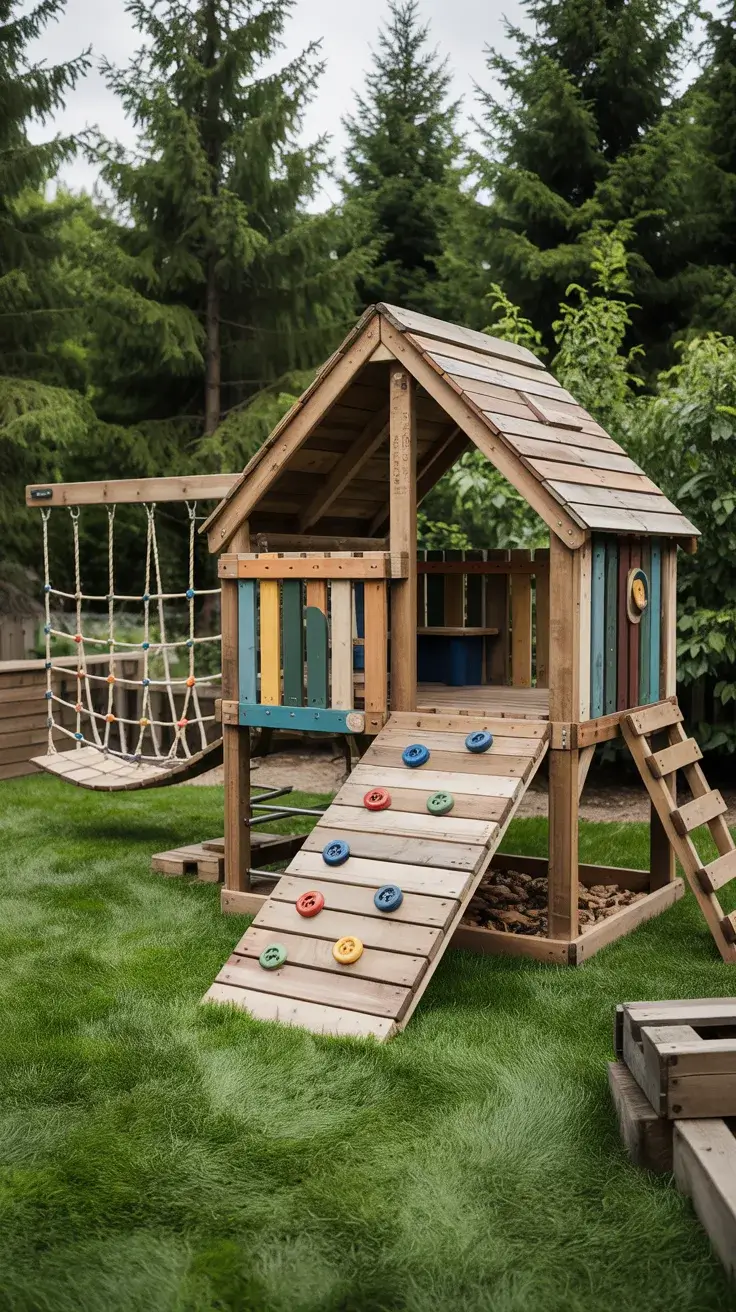
To improve this section, I’d suggest integrating modular DIY pieces that can be swapped out seasonally, keeping the space fresh and exciting.
11. Water Play Features For Summer Fun
Water play structures bring dynamic fun and sensory excitement to backyard playgrounds, especially during the summer months. When I design these areas, I prioritize splash-safe zones with integrated drainage systems to keep surfaces manageable and reduce slip hazards. The goal is to create spaces that feel joyful yet controlled, allowing children to enjoy water in a structured and safe environment.
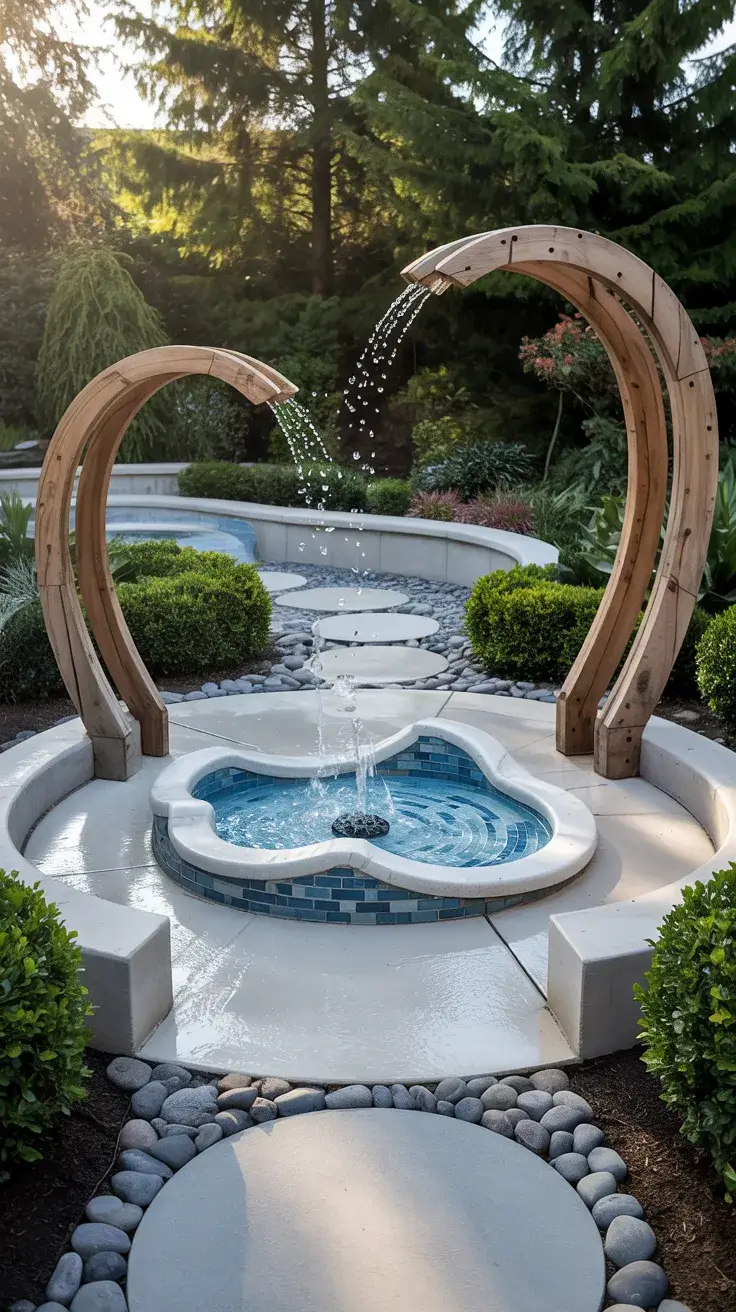
Items such as splash pads, misting arches, shallow water channels, and hand pumps add variety to water-based play. I choose materials like textured concrete, slip-resistant tiles, and UV-stable plastics to maintain safety. Incorporating subtle color tones helps elevate the modern aesthetic while keeping the design cohesive with the rest of the yard.
Based on expert viewpoints from outdoor recreation designers, well-executed water features stimulate sensory development and encourage group play. I’ve personally noticed how children naturally gravitate to water zones and engage in cooperative activities, making them ideal for social development.
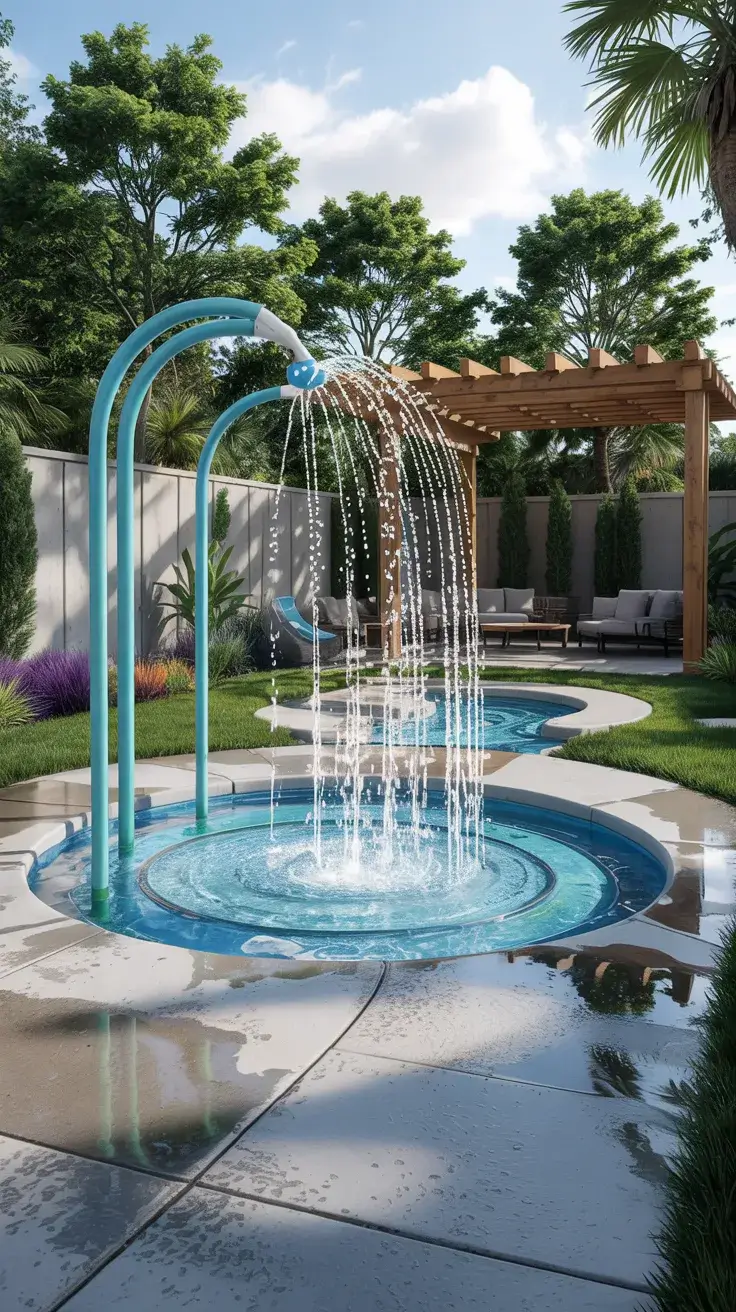
To further enhance this section, I’d add shaded lounge seating or waterproof storage bins for towels and water toys.
12. Adventure Themed Backyard Play Ideas
Adventure-themed playgrounds allow children to immerse themselves in imaginative worlds. When designing these spaces, I focus on creating story-driven environments such as jungle expeditions, mountain climbs, or nautical escapes. These themes help children engage in imaginative play while developing physical and cognitive skills.
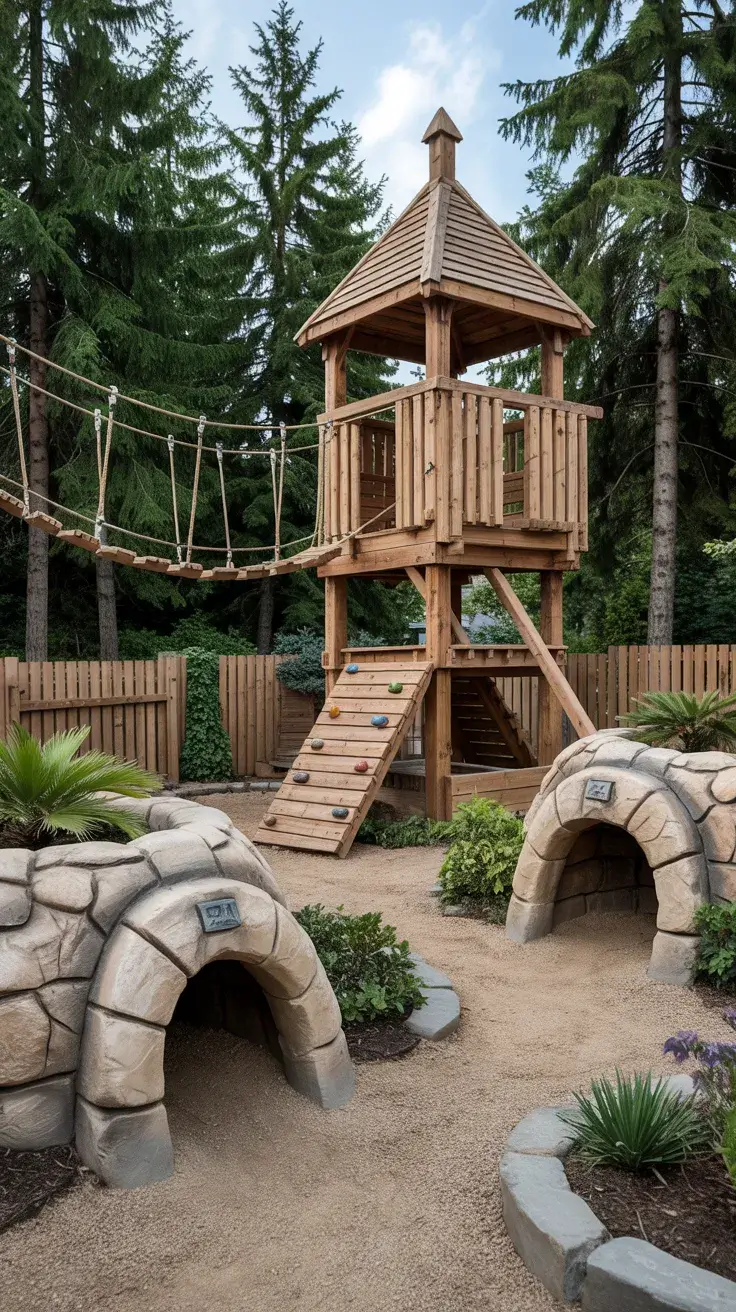
Essential elements include rope courses, faux boulders, lookout platforms, and tunnels. I prefer using durable composites that mimic natural textures while maintaining structural integrity. Accessories like wooden steering wheels, treasure chests, or exploration markers can enhance the theme without overwhelming the design.
Professionals in child development often emphasize the significance of imaginative, narrative-driven play in encouraging problem-solving and social growth. In my work, themed playgrounds consistently produce longer play sessions and more collaborative activities among children.
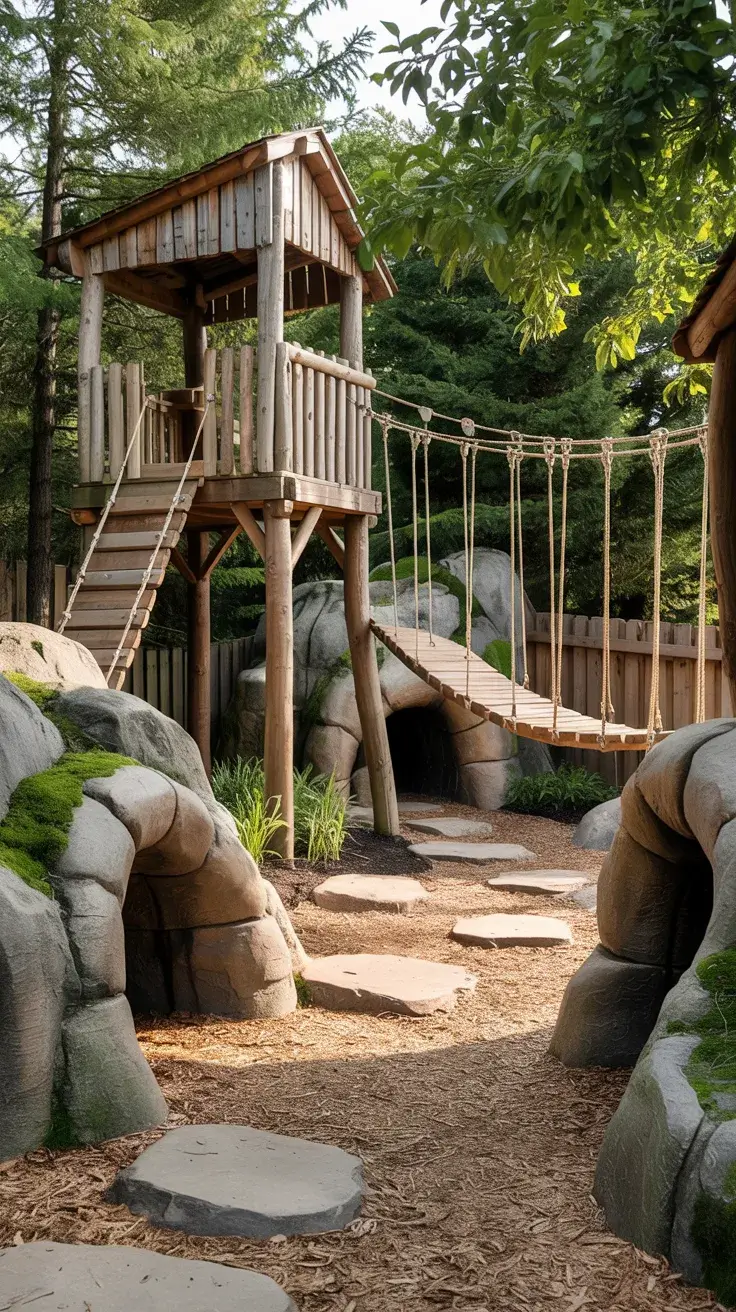
To complete this section, I’d integrate soft ambient lighting to enhance the theme during early evenings, extending playtime safely.
13. Inclusive Playground Design For All Abilities
Inclusive playgrounds ensure that children of all abilities can participate in play equally. When I plan inclusive spaces, I design with accessibility, sensory diversity, and mobility-friendly routes top of mind. This ensures that every child can navigate the space comfortably and confidently.
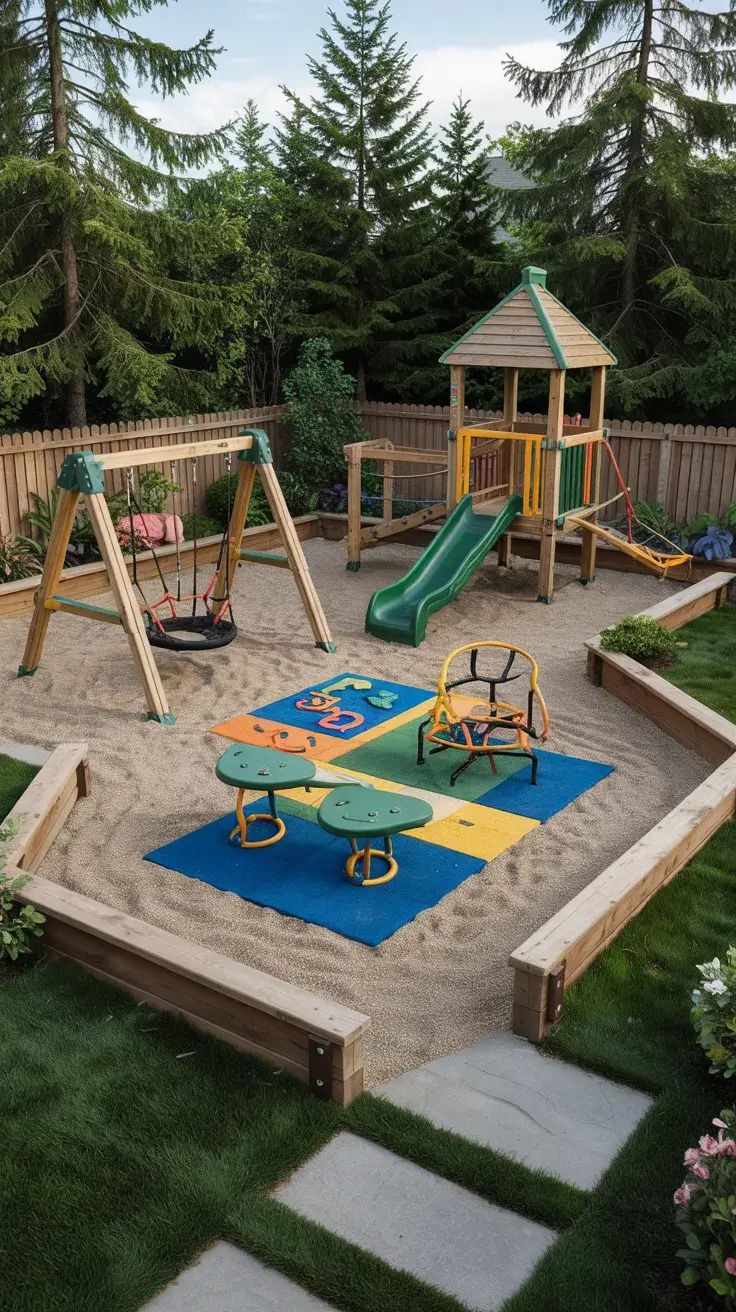
Components such as wide ramps, ground-level playboards, adaptive swings, and tactile sensory walls are essential. I select non-slip surfacing, contrasting color cues, and smooth transition zones between different materials. These features provide consistency and independence for children with mobility or sensory needs.
In the US, accessibility guidelines and insights from disability advocates strongly shape inclusive design practices. I’ve seen firsthand how inclusive features promote social interaction and improve the overall experience for families—everyone benefits from thoughtful accessibility.
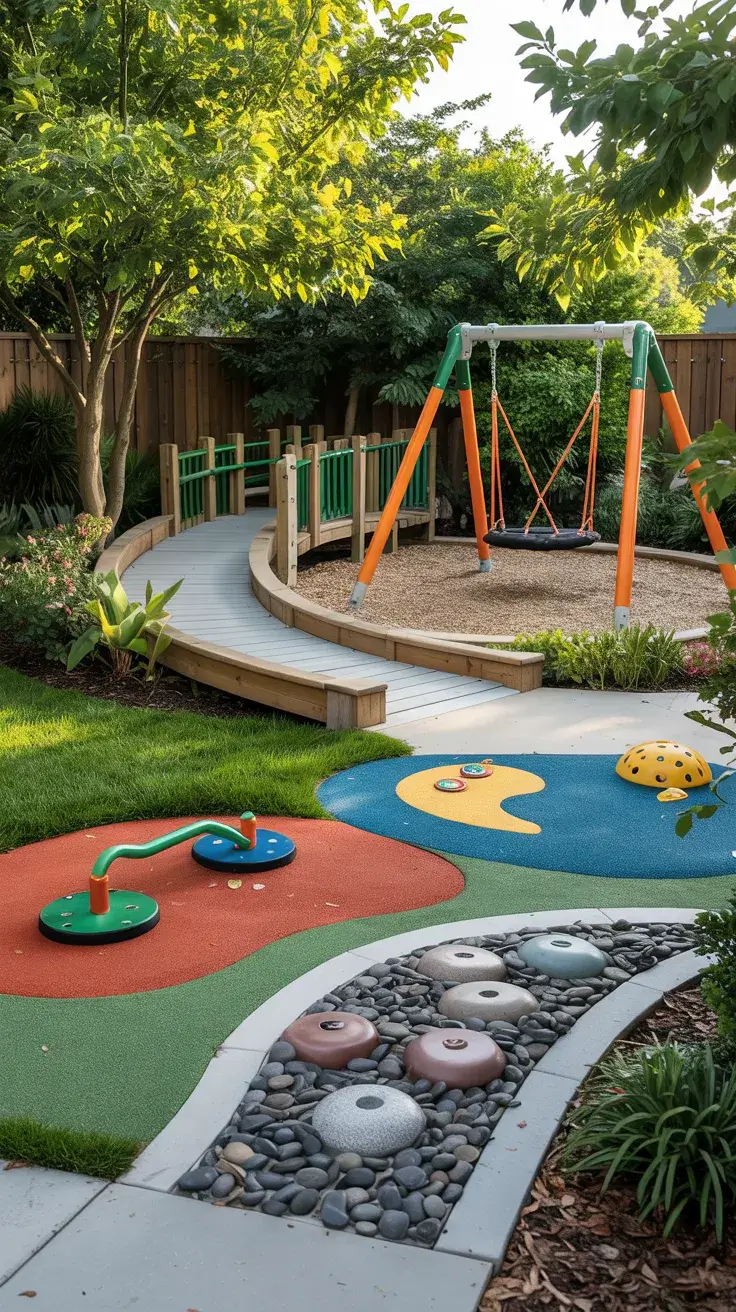
I would also incorporate quiet zones or shaded nooks for children who need a break from stimulating play.
14. Sustainable Timber Structures For Backyard Play
Sustainable timber structures remain a favorite in 2026 because of their warmth, strength, and environmentally friendly nature. When designing timber-based playgrounds, I use responsibly sourced wood that is treated without harsh chemicals. This results in structures that feel natural and blend beautifully into outdoor environments.
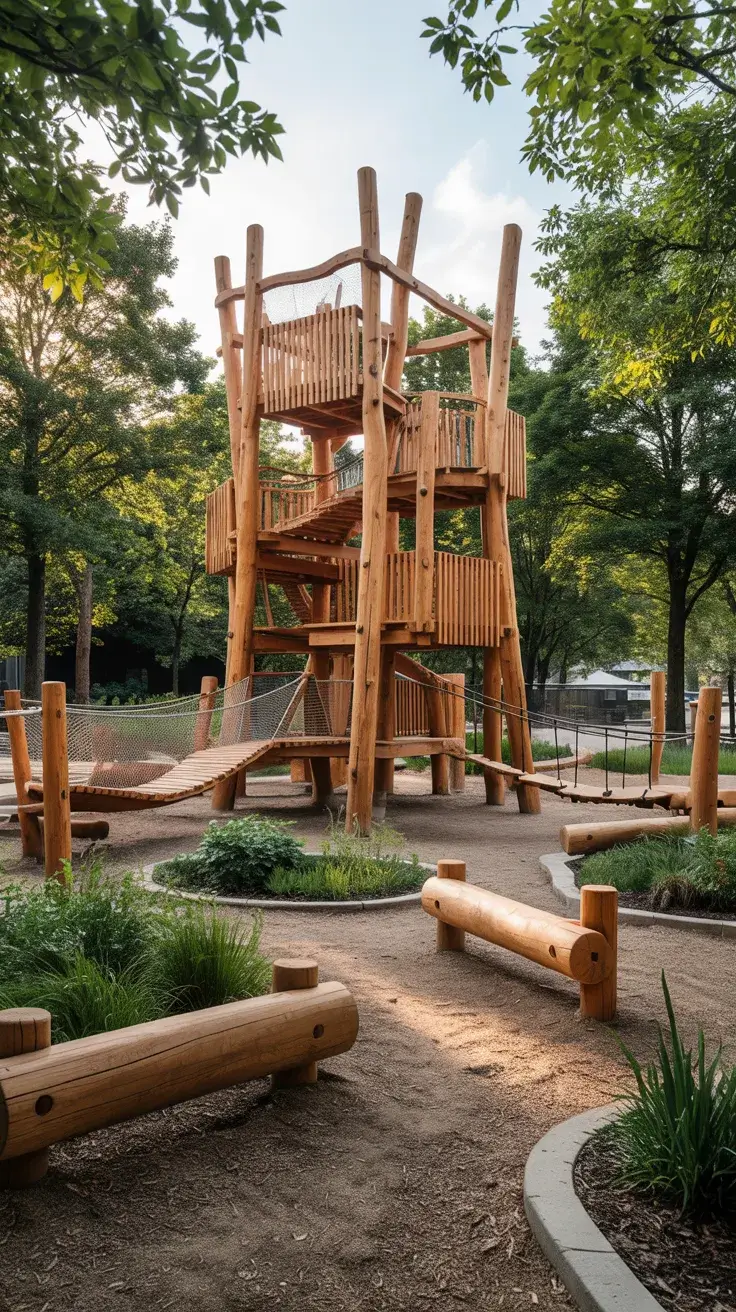
Core elements include timber climbing towers, bridges, balance logs, and elevated platforms. I often pair timber with metal reinforcement for durability while keeping the visual aesthetic earthy and organic. The texture and temperature of wood also provide a sensory-rich experience that children naturally respond to.
Many sustainable design experts emphasize choosing FSC-certified timber to ensure ethical sourcing. I follow this practice in professional projects and find that timber structures age gracefully when properly maintained. Their timeless look also makes them compatible with a variety of backyard styles.
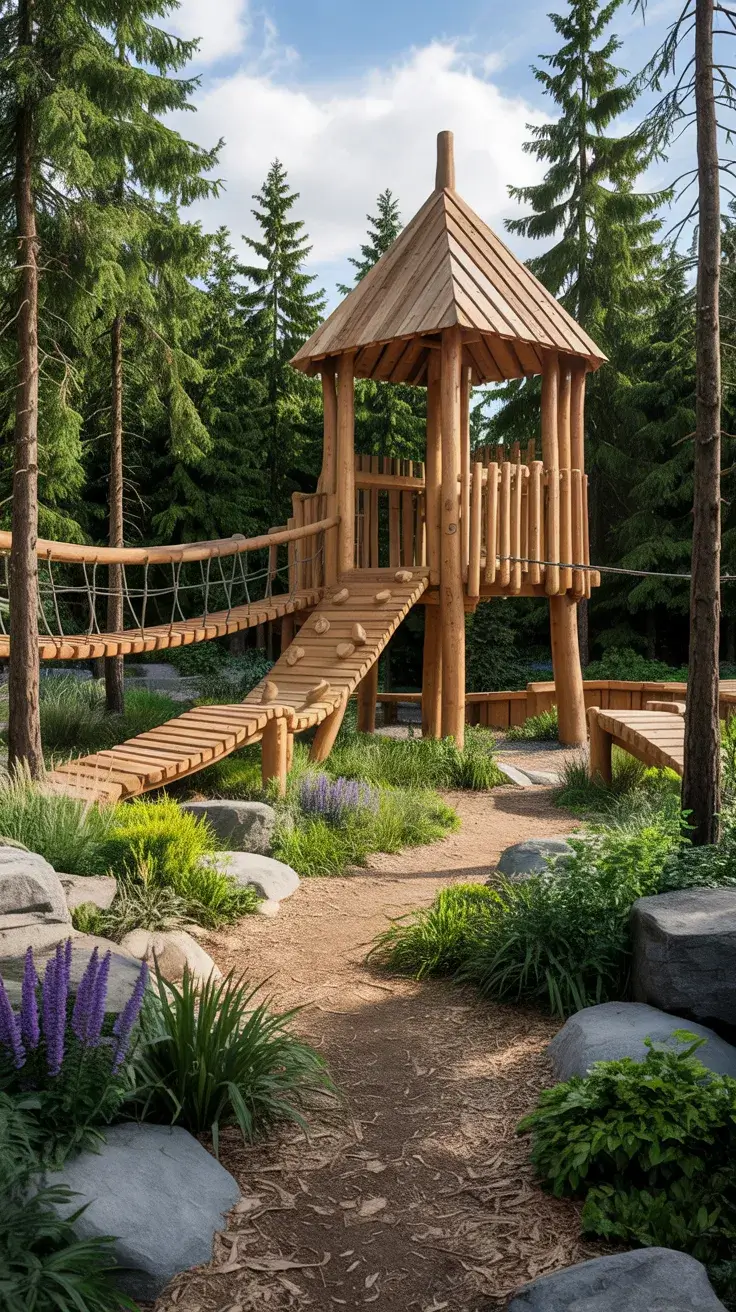
To expand this section, I’d add weatherproof timber seating or a shaded pergola-style frame that ties into the overall design.
15. Outdoor Learning Spaces For Kids
Creating outdoor learning spaces has become an essential part of modern backyard design, especially with educational trends shifting toward nature-based exploration. When I design these areas, I aim to create an environment where children can study, observe nature, and participate in hands-on learning while enjoying the fresh air. These zones often include shaded workstations, comfortable seating, and interactive educational tools integrated seamlessly into the landscape.
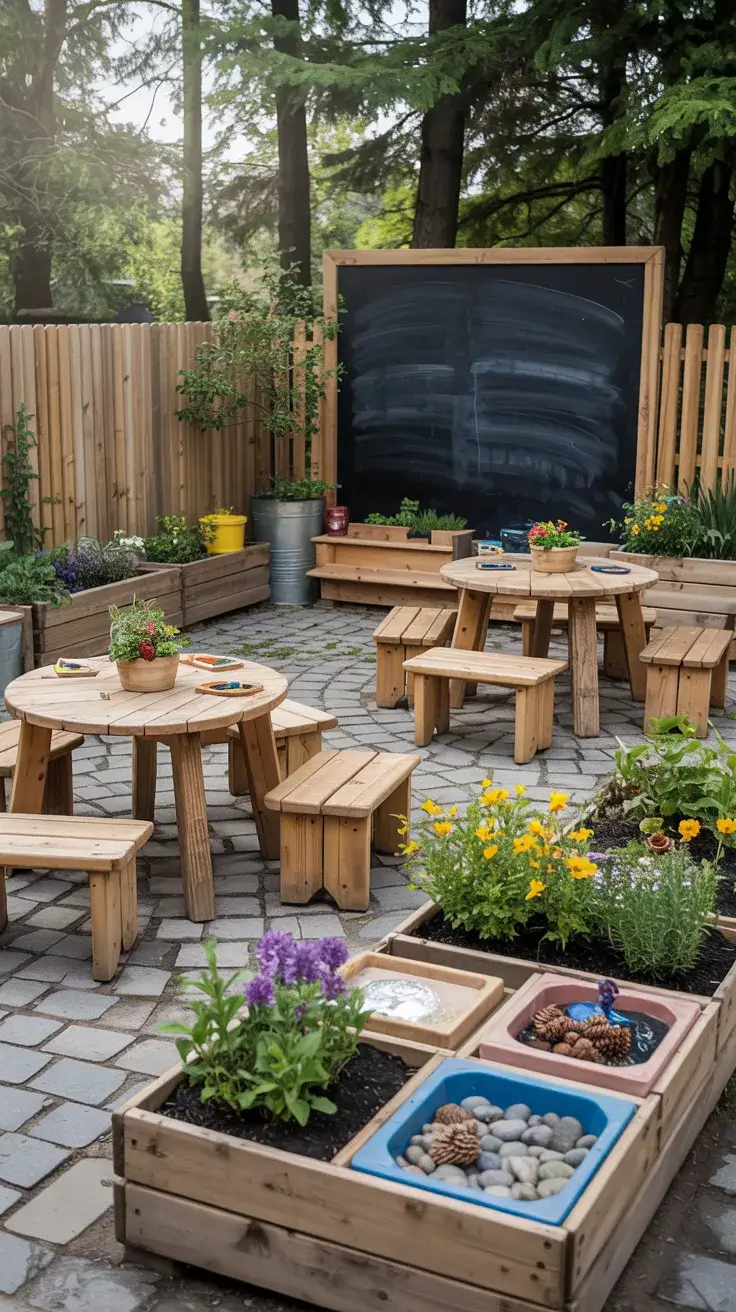
I typically include weatherproof tables, chalkboard walls, sensory bins, and low shelving for books and materials. Each item is selected for durability and accessibility, allowing children to learn independently while staying organized. Natural elements like stone seating or wooden planters make the space feel grounded and connected to the environment while reinforcing the learning atmosphere.
In my experience, many US-based educational designers emphasize how outdoor learning improves focus and creativity. I’ve seen firsthand how children engage more deeply with tasks when given the freedom to move and explore outside traditional indoor settings.
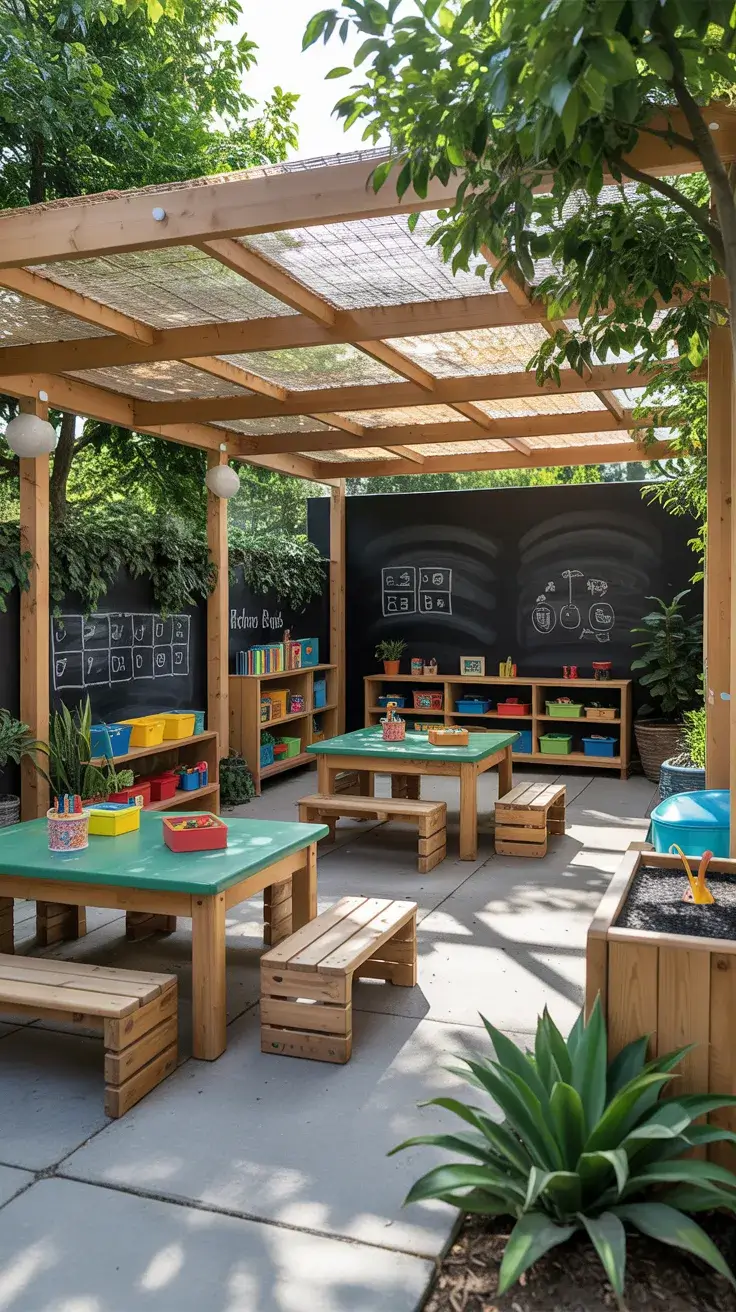
To enhance this section further, I would add a small observation station with magnifying tools to support science-based activities.
16. Sensory Play Zones For Child Development
Sensory play zones are among the most impactful elements of a child-friendly backyard, and in 2026 they are designed with greater intention than ever. When I create these zones, I focus on engaging all five senses through textures, sounds, colors, and interactive components. These areas help children develop fine motor skills, cognitive reasoning, and emotional regulation in a playful way.
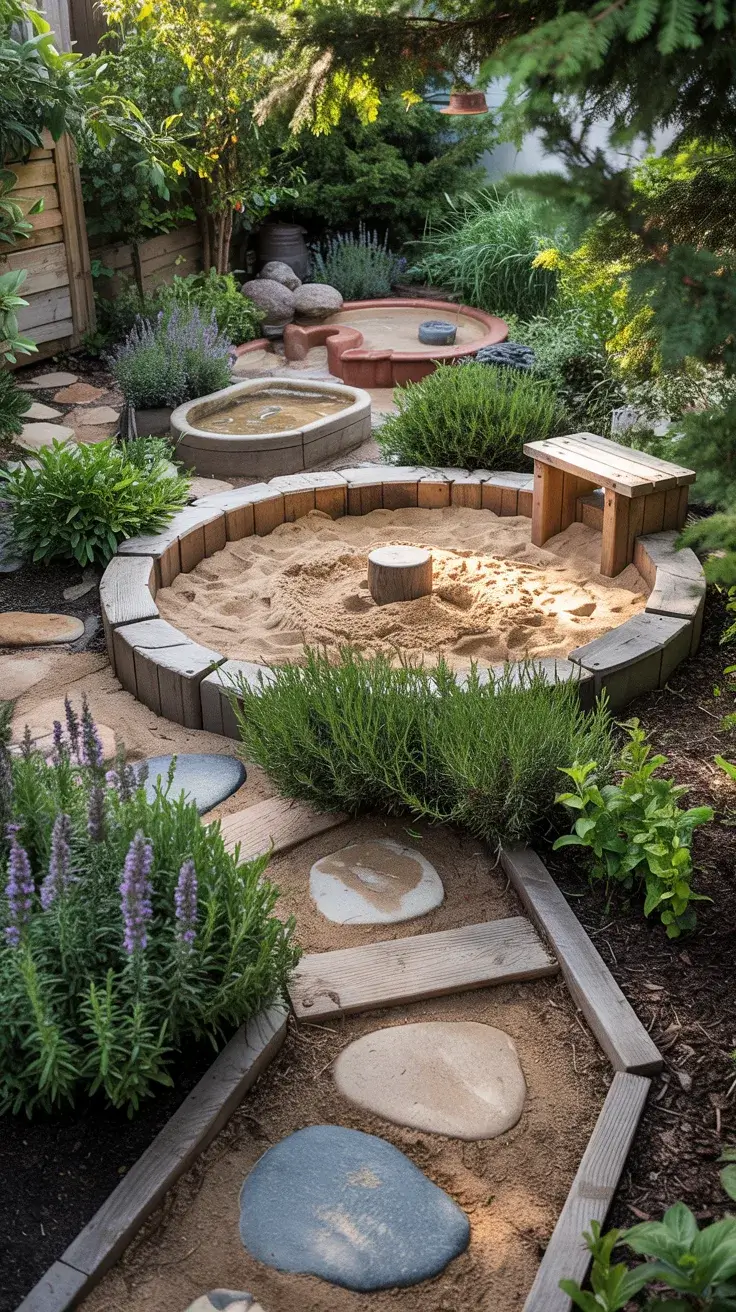
I usually incorporate sand pits, water tables, textured paths, musical panels, and aroma-rich garden beds. Each feature contributes a distinct sensory experience, allowing children to explore cause and effect, experiment with materials, and build awareness of their surroundings. Durable, non-toxic materials are essential for ensuring both safety and longevity.
Professionals in child development often highlight sensory play as a foundational tool for learning. I’ve observed that well-designed sensory zones keep children engaged for long periods and encourage self-directed play, which is incredibly beneficial for skill-building.
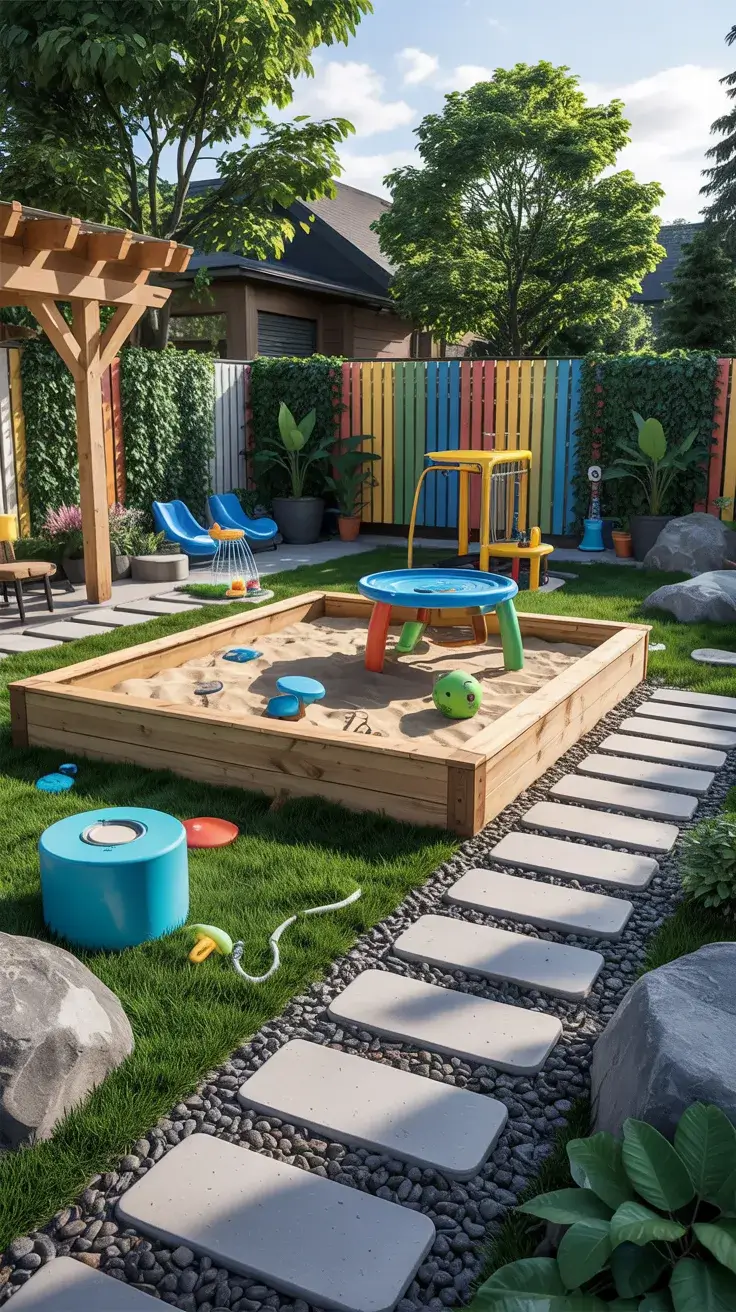
A useful addition here would be a shaded sensory deck made from composite planks to help keep surfaces cool in warm climates.
17. Backyard Climbing Structures For Active Play
Backyard climbing structures continue to evolve in 2026, offering modern shapes and materials that support strength, balance, and confidence-building. When I design these structures, I look for ways to incorporate vertical challenges, safe landing areas, and multiple points of engagement so children can explore at their own pace. The goal is to provide physically stimulating play without overwhelming the yard visually.
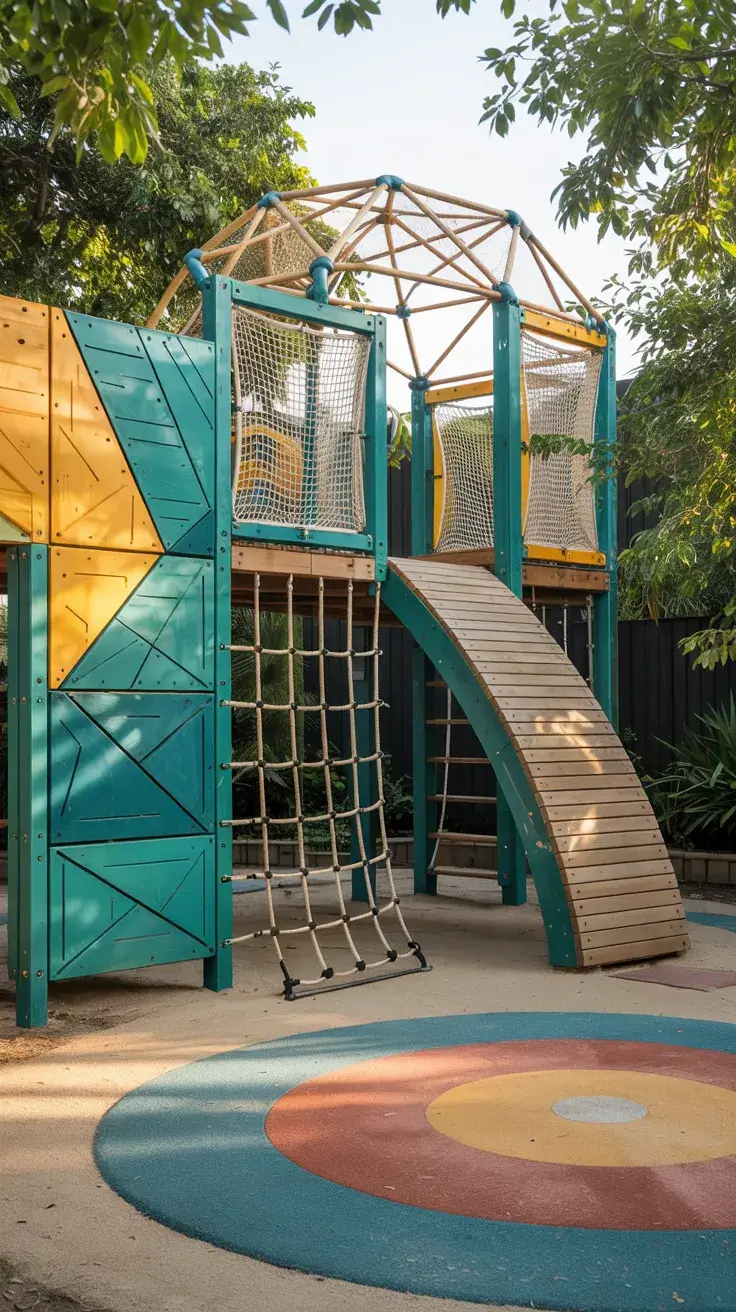
My typical components include geometric climbing walls, rope nets, curved ladders, and modular climbing domes. I select matte-finish composite panels, powder-coated steel frames, and reinforced rope materials to ensure durability and weather resistance. These pieces work together to create a cohesive active play zone that encourages movement and adventure.
From my professional experience, experts consistently recommend climbing play as an essential component of physical development. I’ve noticed that climbing structures also help boost confidence as children learn to navigate heights and solve physical challenges independently.
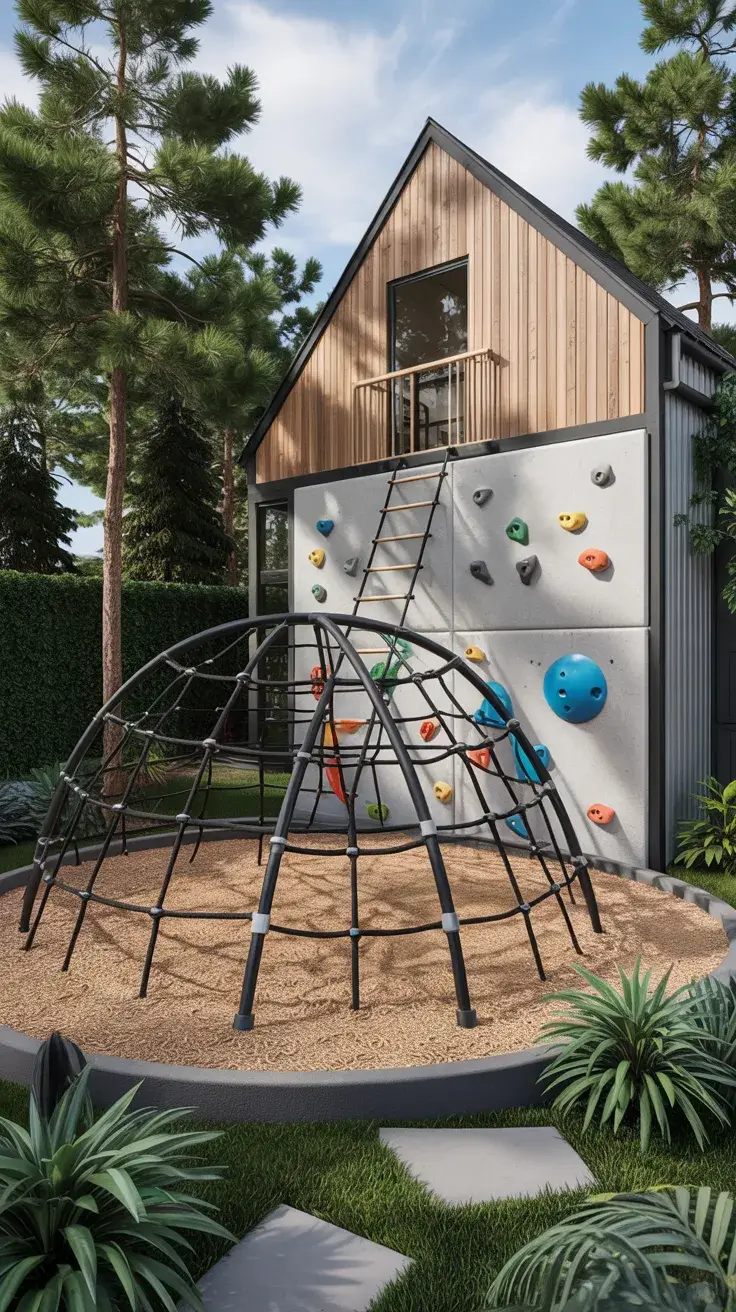
To complete this layout, I would add impact-absorbing surfacing beneath the structures for enhanced safety.
18. Innovative Swing Set Ideas For 2026
In 2026, swing sets are no longer limited to traditional designs. When I plan swing zones, I work to incorporate alternative styles that support a broader range of movement, comfort, and accessibility. Modern swing sets often include convertible frames, soft materials, and multifunctional attachments that grow with children’s needs.
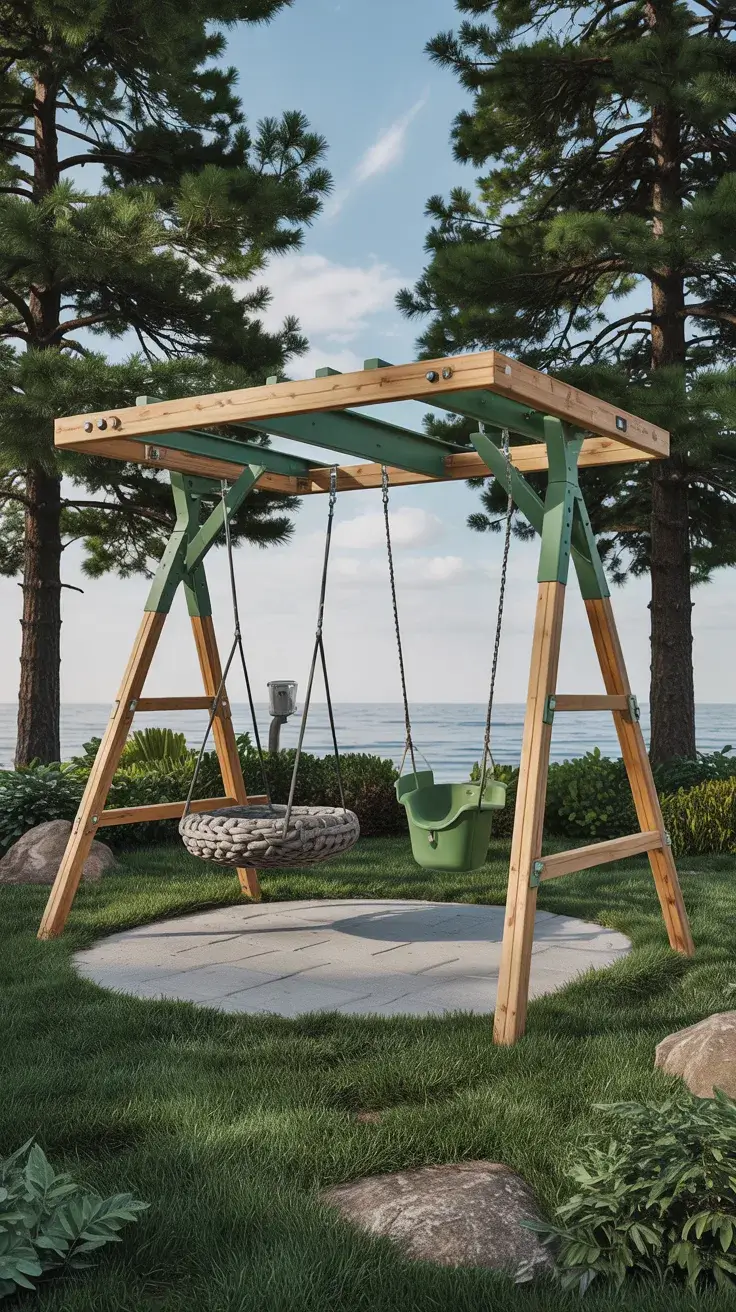
I like to include nest swings, adaptive bucket swings, standing platform swings, and modular frames that allow attachments to be swapped out. Weather-resistant ropes, reinforced joints, and anti-slip platforms ensure safety and longevity. Stylish finishes help integrate the swing set visually with the rest of the backyard layout.
Design specialists often note that swings offer not just fun but also developmental benefits such as improved balance and spatial awareness. I’ve also observed that children use swings creatively when given multiple styles, promoting imaginative play along with physical motion.
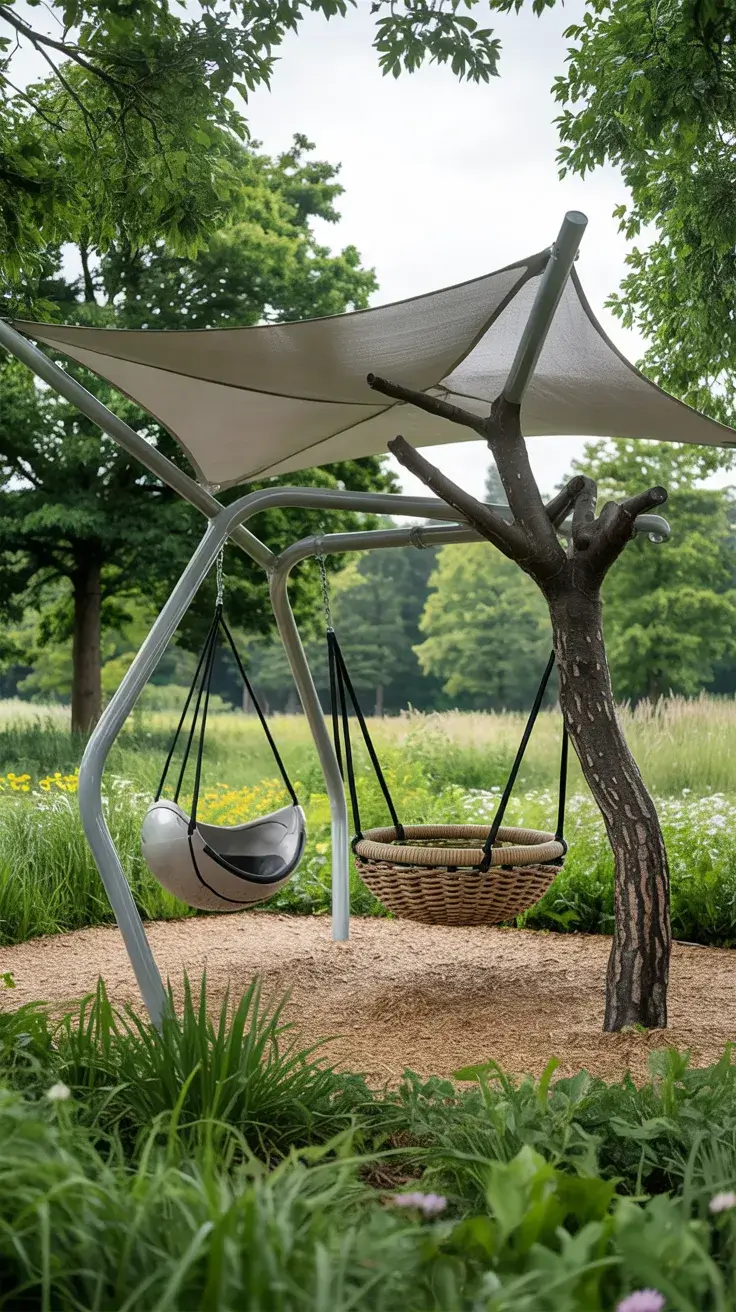
An additional enhancement would be overhead shading to protect children during extended swing sessions.
19. Ground Level Play Concepts For Toddlers
Ground-level play concepts are essential for toddler-friendly backyards, allowing young children to explore safely without climbing risks. When I design these areas, I prioritize smooth textures, low-impact activities, and open play surfaces that promote early motor development. Gentle shapes and soft materials are key to creating a safe yet stimulating environment.
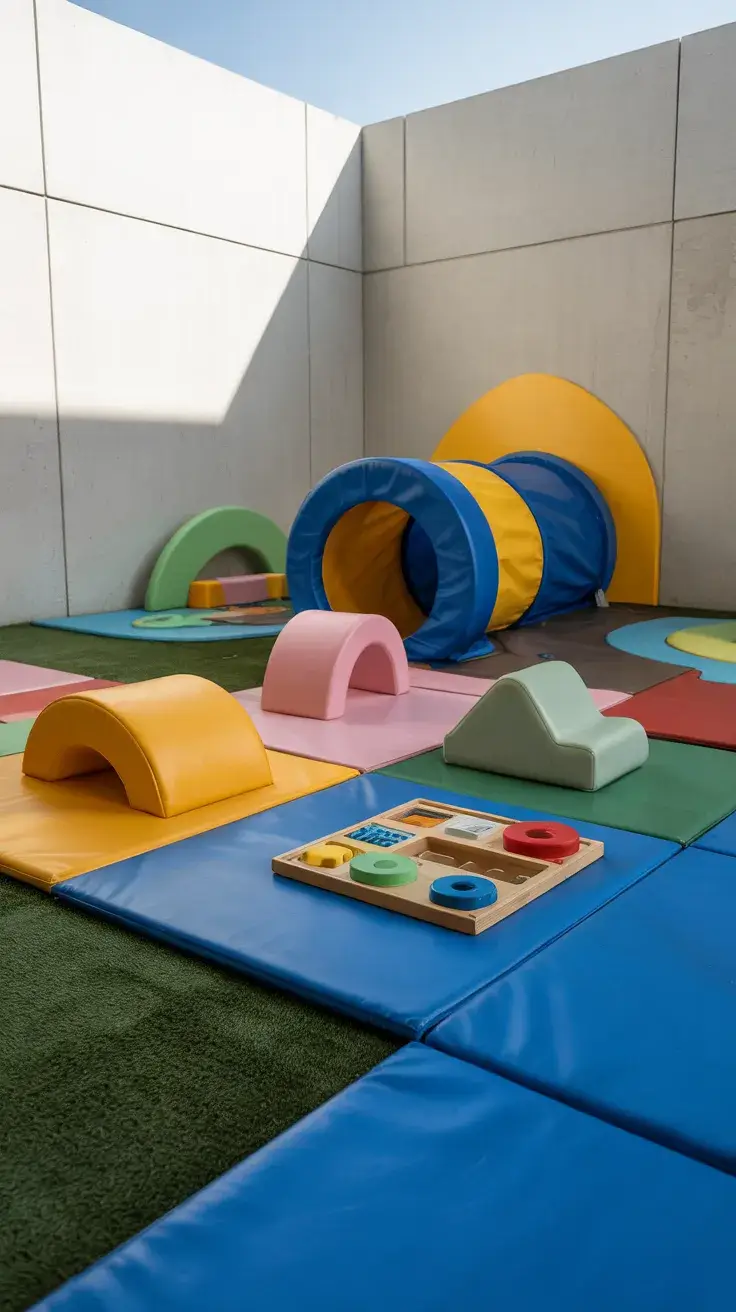
Typical features include foam stepping pads, rolling tunnels, mini balance beams, and simple push toys. I often incorporate rubberized flooring or cushioned turf to create a soft landing surface while maintaining a clean, modern finish. Low-profile sensory boards with knobs and sliders add additional interactive play without requiring elevation.
Professional recommendations frequently emphasize providing toddlers with freedom of movement at ground level. I’ve seen how these zones help children build confidence as they practice walking, crawling, and exploring independently.
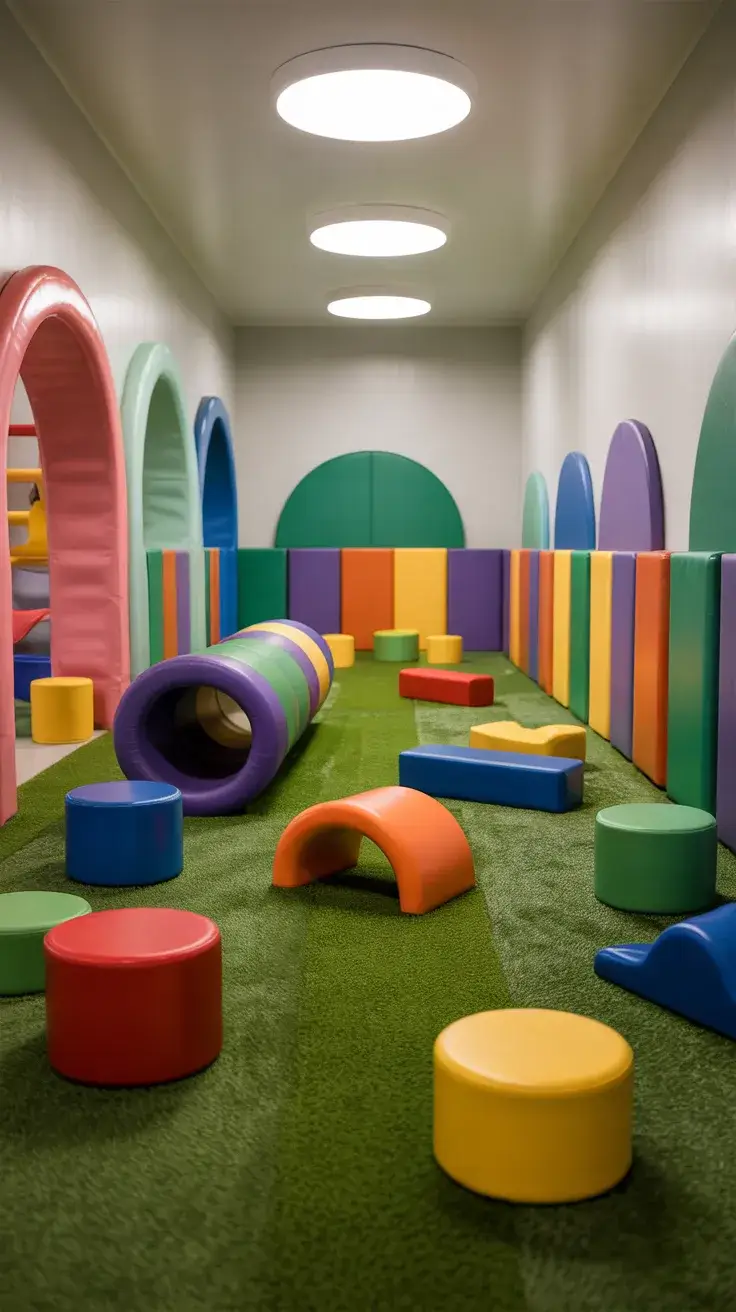
A suitable enhancement would be a low pergola frame to provide shade without imposing height risks.
20. Multi Level Playground Designs
Multi-level playgrounds offer dynamic play opportunities by combining bridges, platforms, and climbs into layered structures. When I design these layouts, I focus on balance: each level must be secure, visually open, and accessible from multiple angles. This builds excitement while giving children choices in how they explore.
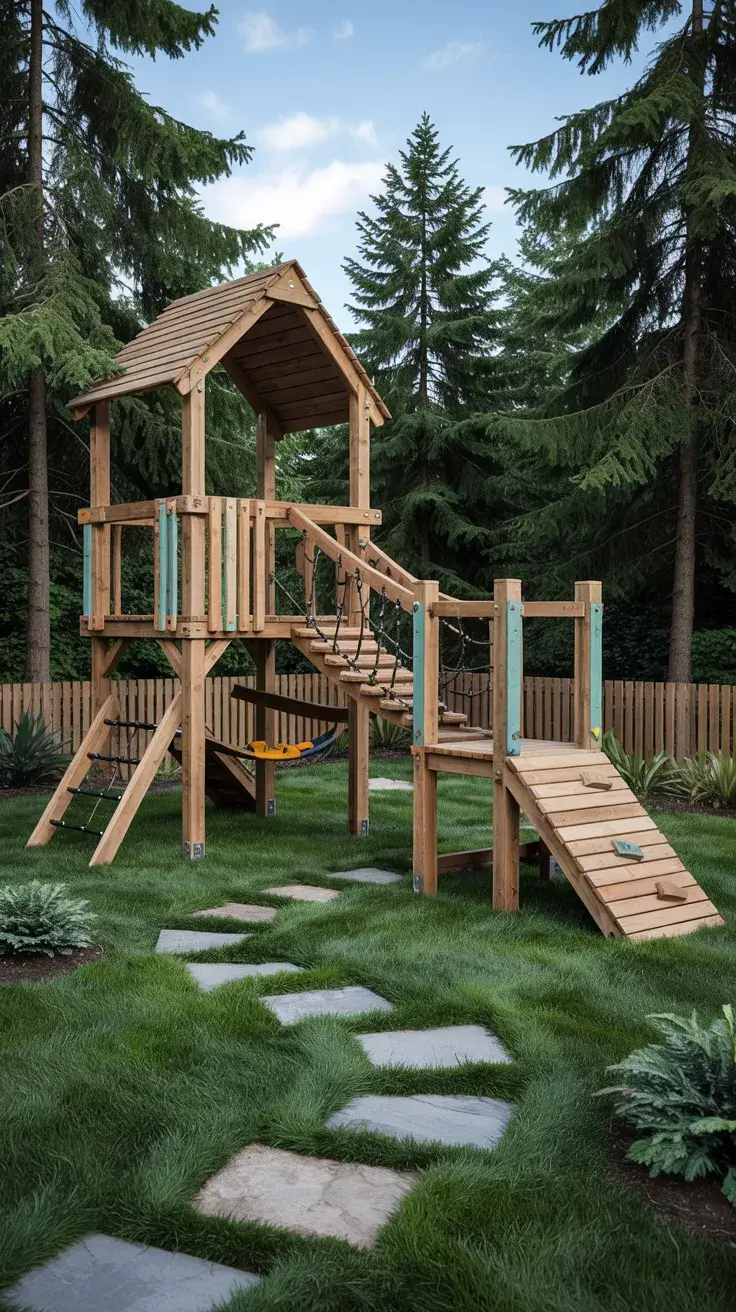
I incorporate raised decks, enclosed bridges, angled ramps, lookout platforms, and safe descending routes like slides or gentle slopes. Materials such as treated wood, reinforced composite panels, and transparent safety barriers help maintain stability and visibility. Multi-level designs often become the centerpiece of a modern backyard play zone.
From my perspective, layered playgrounds offer some of the most engaging experiences for children. Many design experts note that multi-level structures help encourage problem-solving and independent decision-making. I’ve seen children naturally gravitate toward structures that let them choose their own paths.
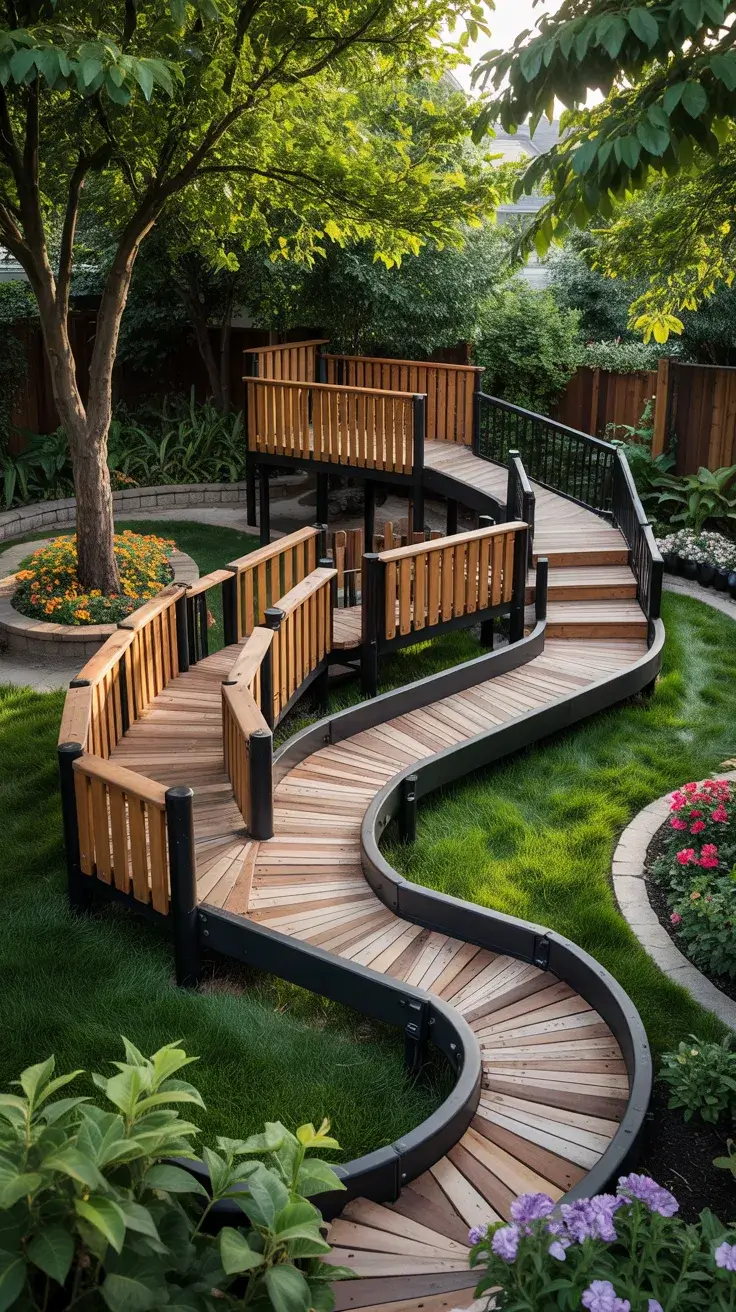
To further enhance this section, I would add soft perimeter lighting along ramps for early evening play.
21. Imaginative Role Play Areas For Kids
Role play areas encourage creativity by giving children immersive environments where they can invent stories and engage in pretend play. When I create these areas, I design small-scale structures that mimic real-world settings while maintaining durability and safety. These zones become powerful tools for cognitive and social development.
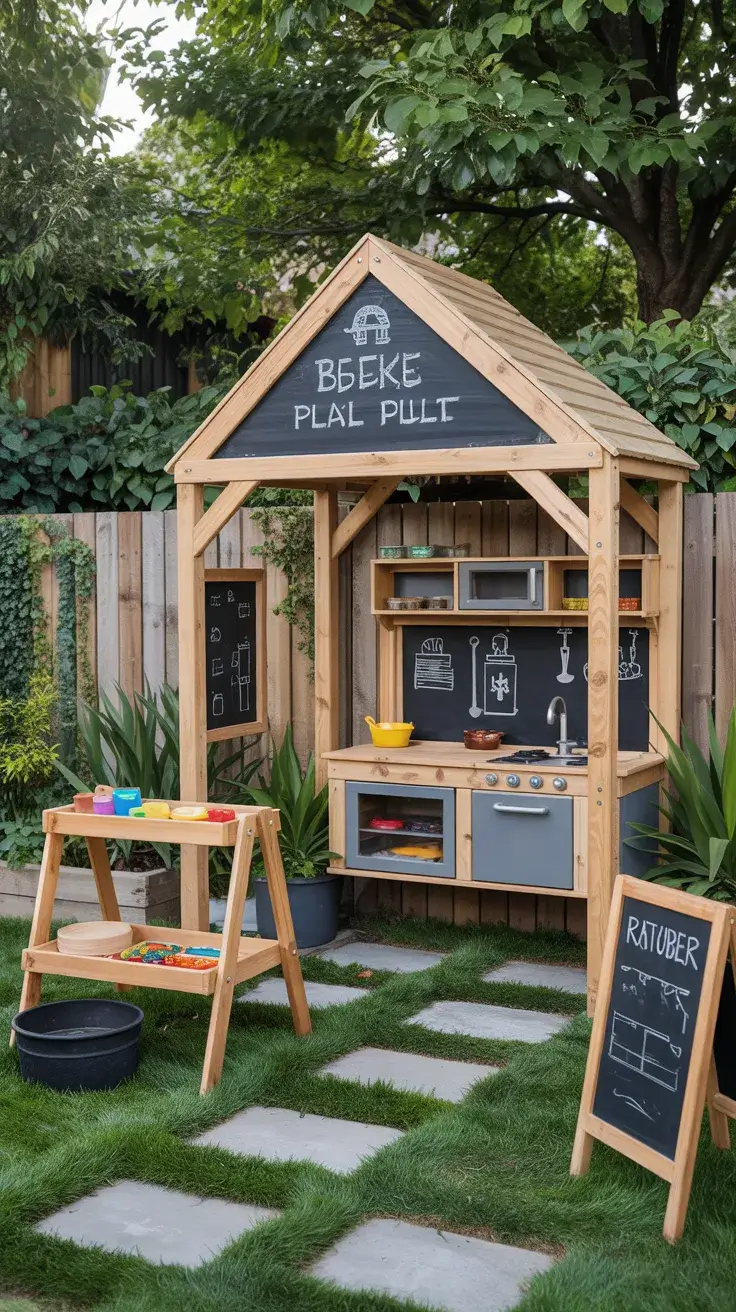
I typically include miniature storefronts, play kitchens, wooden market stands, and small house frames. Weather-treated wood, UV-stable paint, and reinforced connectors help these structures withstand outdoor conditions. Accessories such as chalkboard menus, fabric awnings, or pretend toolsets add realistic yet flexible details that support storytelling.
In my professional experience, role play is one of the most valuable forms of childhood development. Many early education experts highlight its ability to build language skills, empathy, and problem-solving abilities. I’ve consistently seen how much children enjoy these spaces and how creatively they use them.
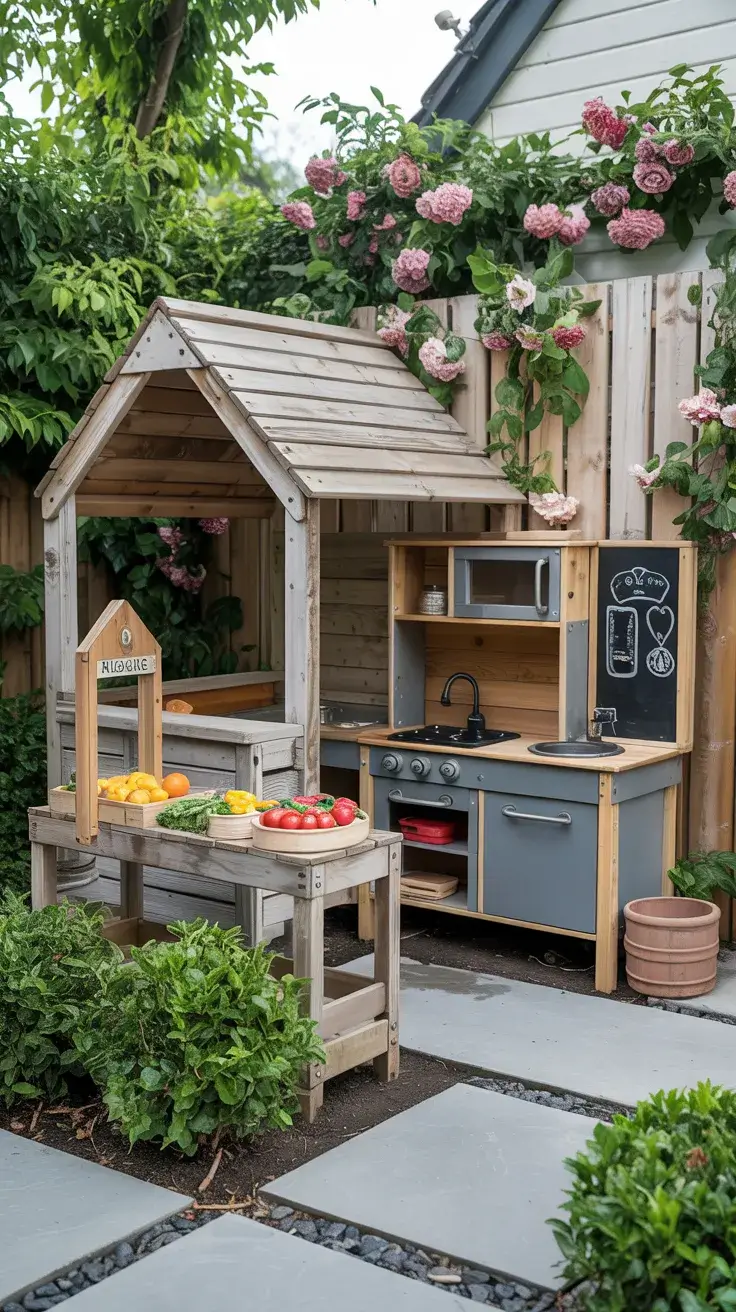
For a more enriched environment, I would also add storage crates for props to rotate themes seasonally.
22. Natural Landscaping Integration With Play Zones
Integrating natural landscaping into play zones is one of the most meaningful trends I’ve seen in 2026 backyard design. When I create these spaces, I focus on blending play elements with organic surroundings so that children interact seamlessly with nature. This approach helps the playground feel like an extension of the environment rather than an imposed structure.
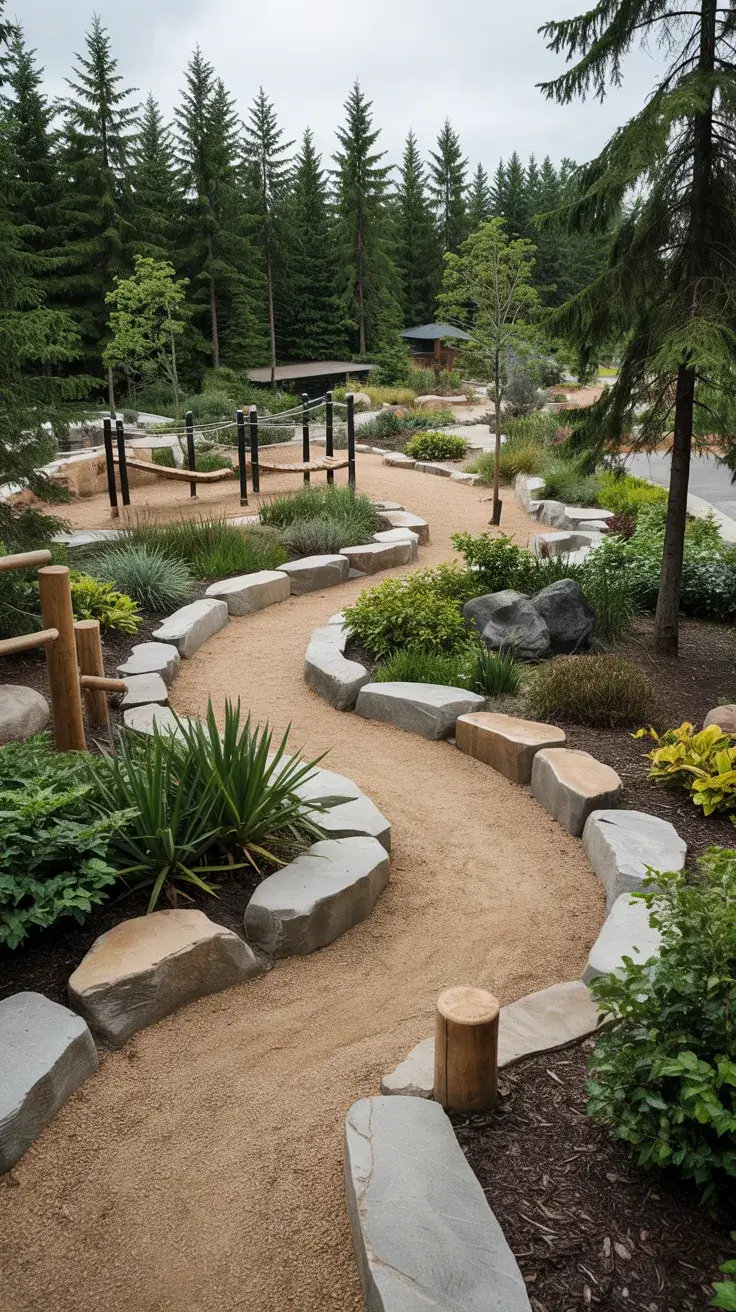
I often include features such as boulder seating, native plant beds, winding pathways, and log balance beams. These elements are chosen not only for their durability but also for their ability to enhance sensory experiences. Natural textures and shapes stimulate curiosity, while layered landscaping helps soften the look of play equipment.
Professionals in outdoor education consistently note that children benefit emotionally and cognitively when exposed to natural elements. I’ve observed the same in my design work: children explore more deeply and creatively when the space encourages discovery.
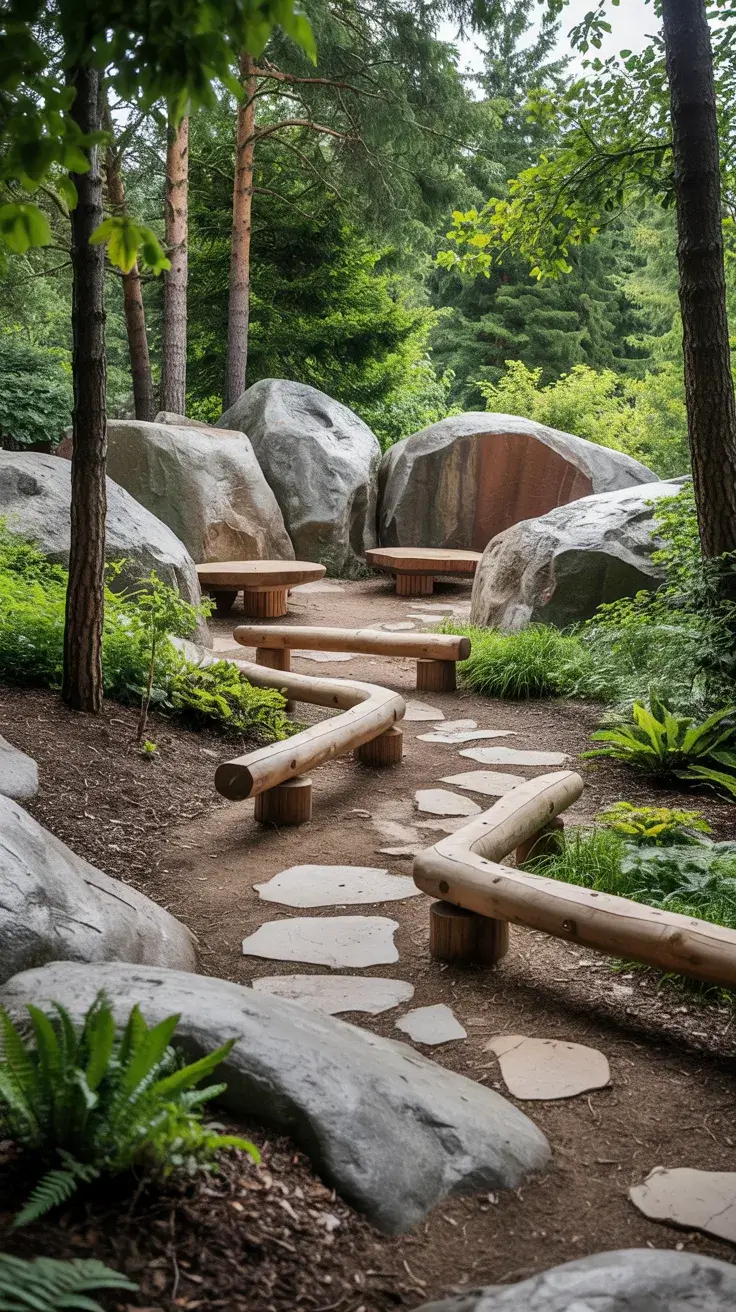
To enhance this section, I would incorporate small water features like a shallow stream bed to introduce soothing sound and sensory interest.
23. Weather Resistant Materials For Outdoor Play
Durability is a key priority in any modern play space, which is why weather resistant materials are central to backyard playground ideas 2026. When I design outdoor playgrounds, I always choose materials capable of withstanding UV exposure, moisture, temperature shifts, and continuous play. This ensures long-term safety and reduces maintenance demands.
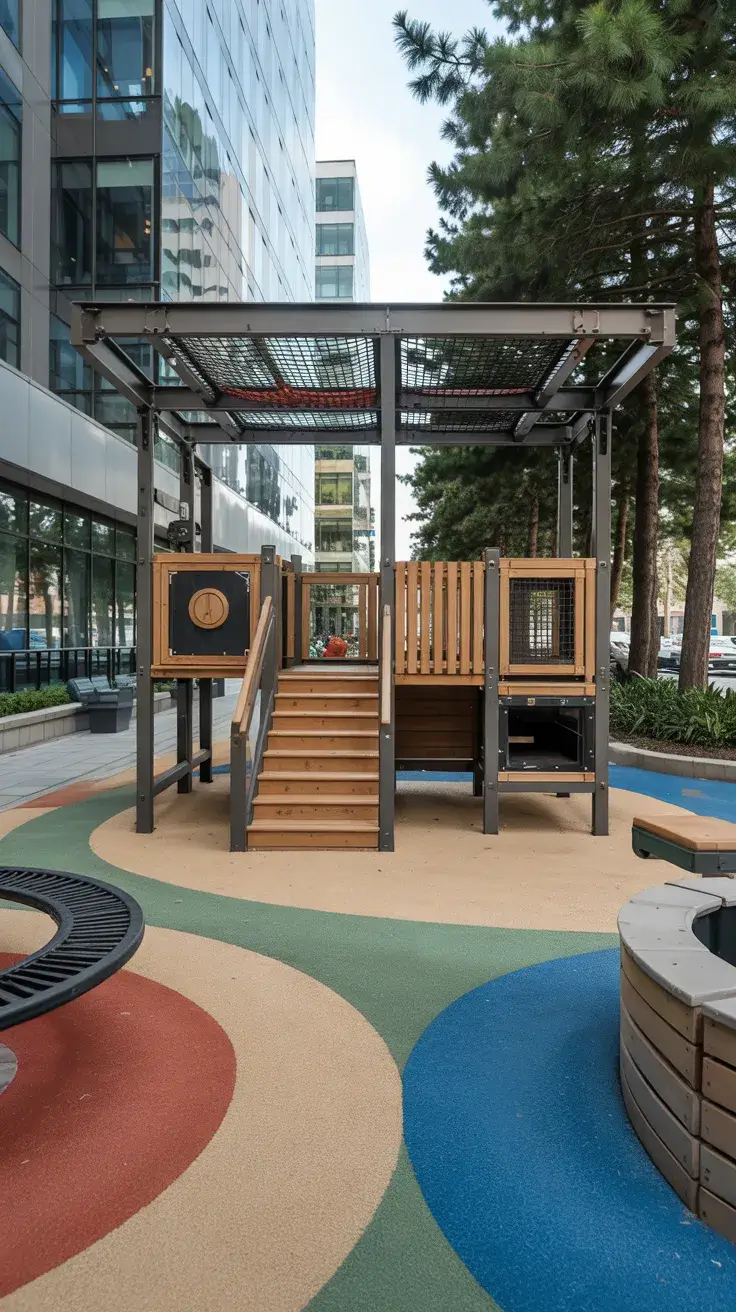
I rely heavily on powder-coated metal frames, reinforced composite boards, UV-stable plastics, and rubberized surfacing. These materials maintain color, shape, and texture even under harsh outdoor conditions. I also like incorporating waterproof fabrics for shading and aluminum hardware that resists rust, helping keep all components functioning smoothly.
Industry experts frequently recommend weather resistant materials as a foundational investment for any backyard play structure. Based on my experience, choosing the right materials upfront dramatically improves longevity and minimizes repair costs over time.
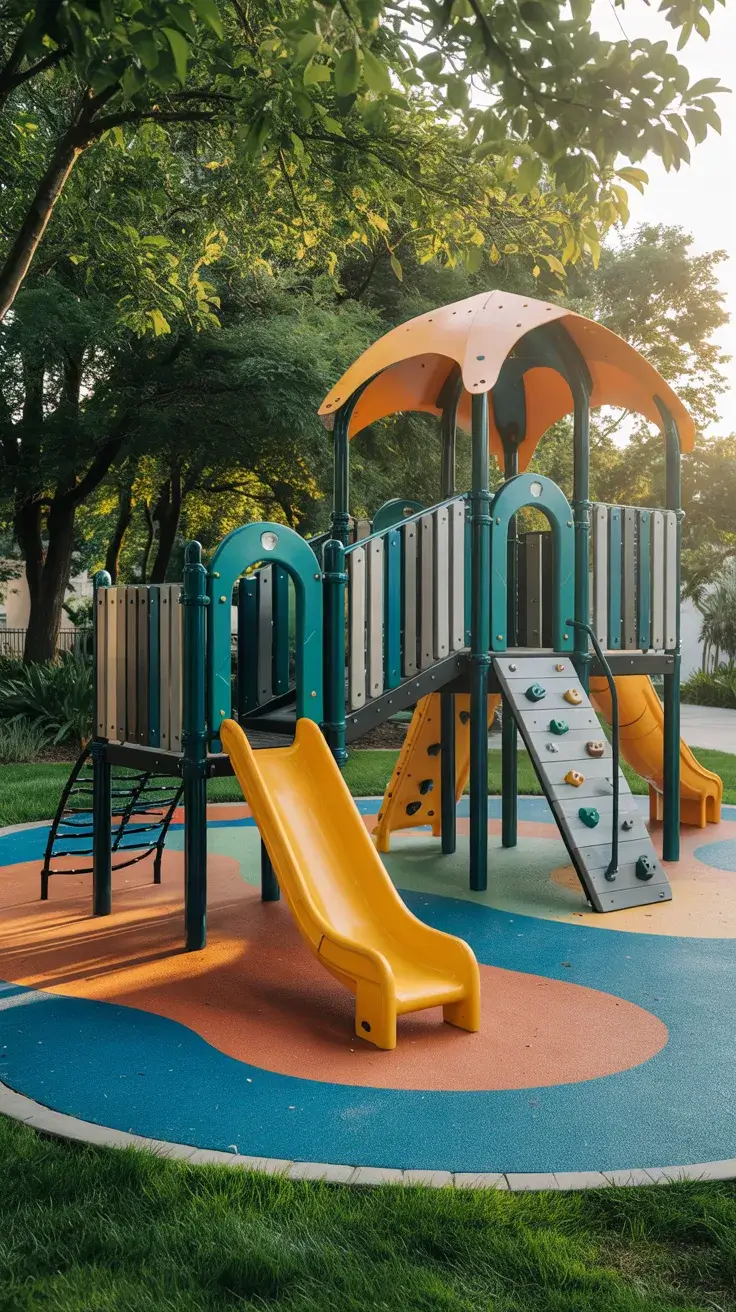
To improve this section, I would also add suggestions for protective sealants that homeowners can apply annually for extended durability.
24. Backyard Sports And Activity Zones
Backyard sports and activity zones are ideal for families seeking versatile play areas that encourage physical development. When I design these zones, I aim to create multifunctional layouts that support a variety of activities without overwhelming the yard. Clear boundaries and durable surfaces help create a safe, structured environment.
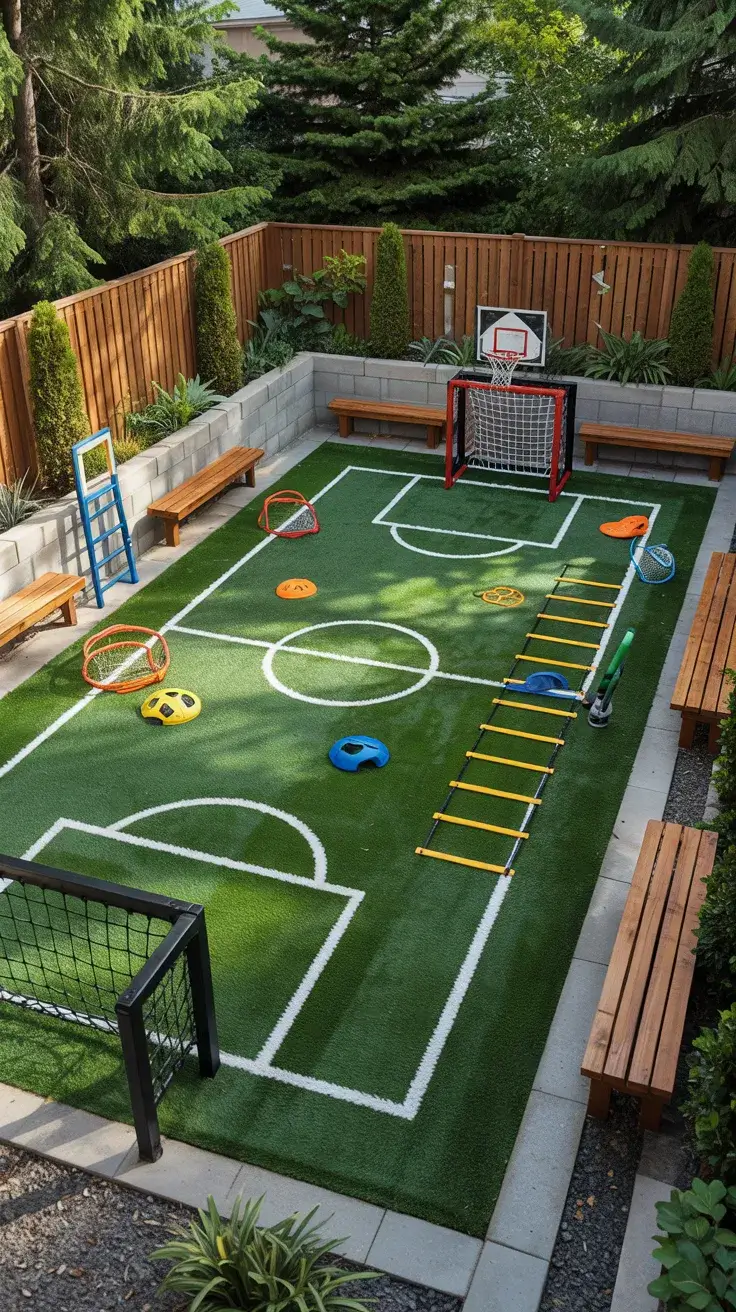
I typically include mini soccer goals, basketball hoops, turf fields, agility ladders, and chalk-line game courts. These items are selected for their compatibility with both casual play and athletic development. Using cushioned turf or rubberized courts ensures better traction and reduces impact, making the zone safe for high-energy movement.
US sports designers often highlight the importance of adjustable equipment for growing children. I fully agree, and many of my projects incorporate height-adjustable hoops or interchangeable game markers, which extend the lifespan of the activity zone as children’s skills evolve.
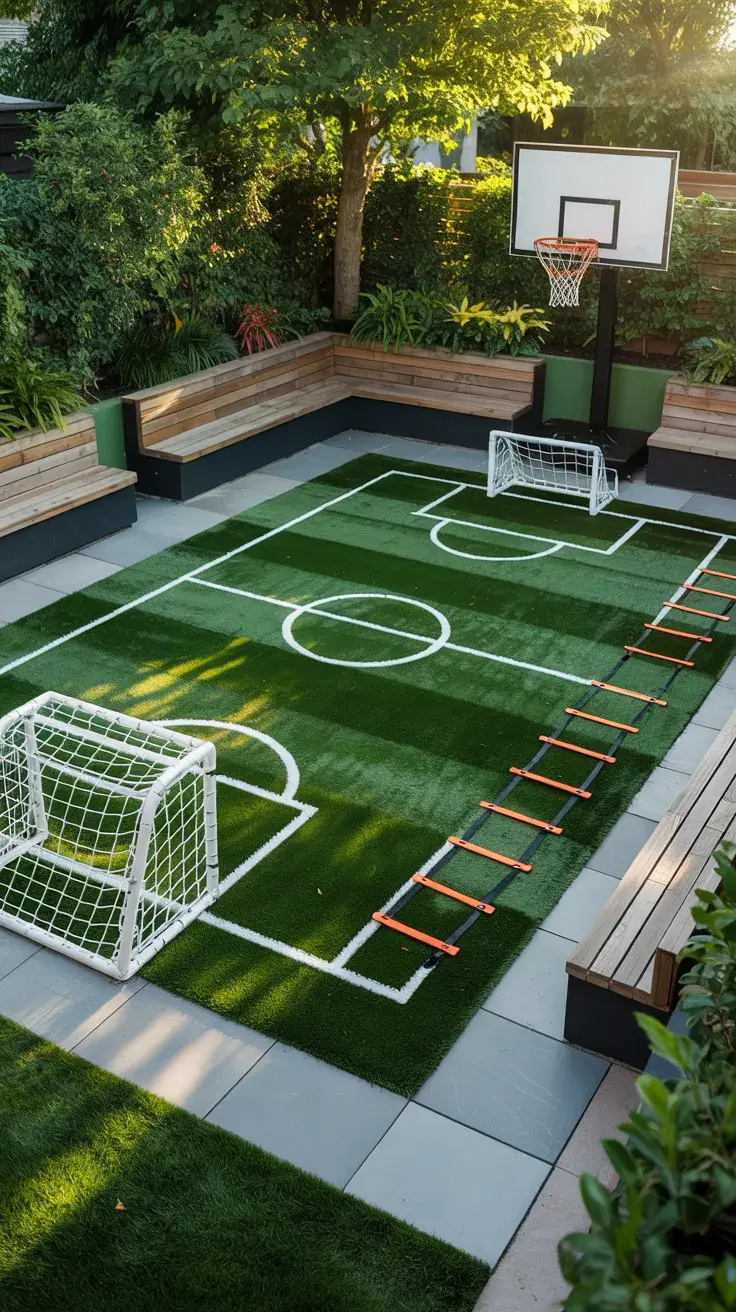
A final touch I would add is perimeter storage benches so equipment stays organized and accessible.
25. Quiet Retreat Spaces For Children
Quiet retreat spaces are essential for balancing active play with rest and reflection. When I design these areas, I aim to give children a calming environment where they can feel safe, regroup emotionally, or engage in quiet activities such as reading or drawing. These spaces help reduce overstimulation, especially in busy play environments.
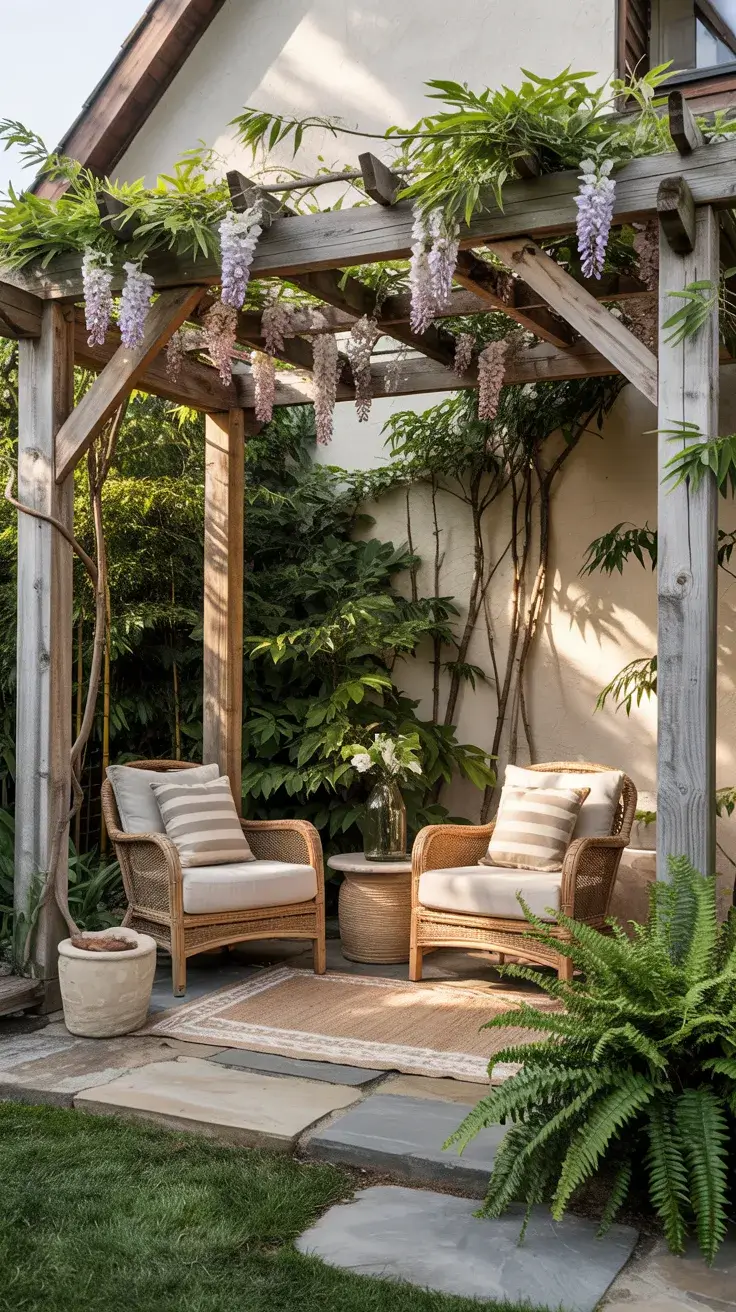
My preferred components include mini pergolas, cozy seating nooks, cushioned floor mats, and privacy screens created with plants or lattice panels. I choose muted tones and soft textures to reinforce a sense of tranquility. Natural lighting or gentle shading helps maintain comfort throughout the day.
Child wellness specialists frequently emphasize the value of calm zones to support emotional regulation. In my experience, these retreat spaces become a child’s favorite spot when thoughtfully designed, especially for introverted children or those who simply need downtime.
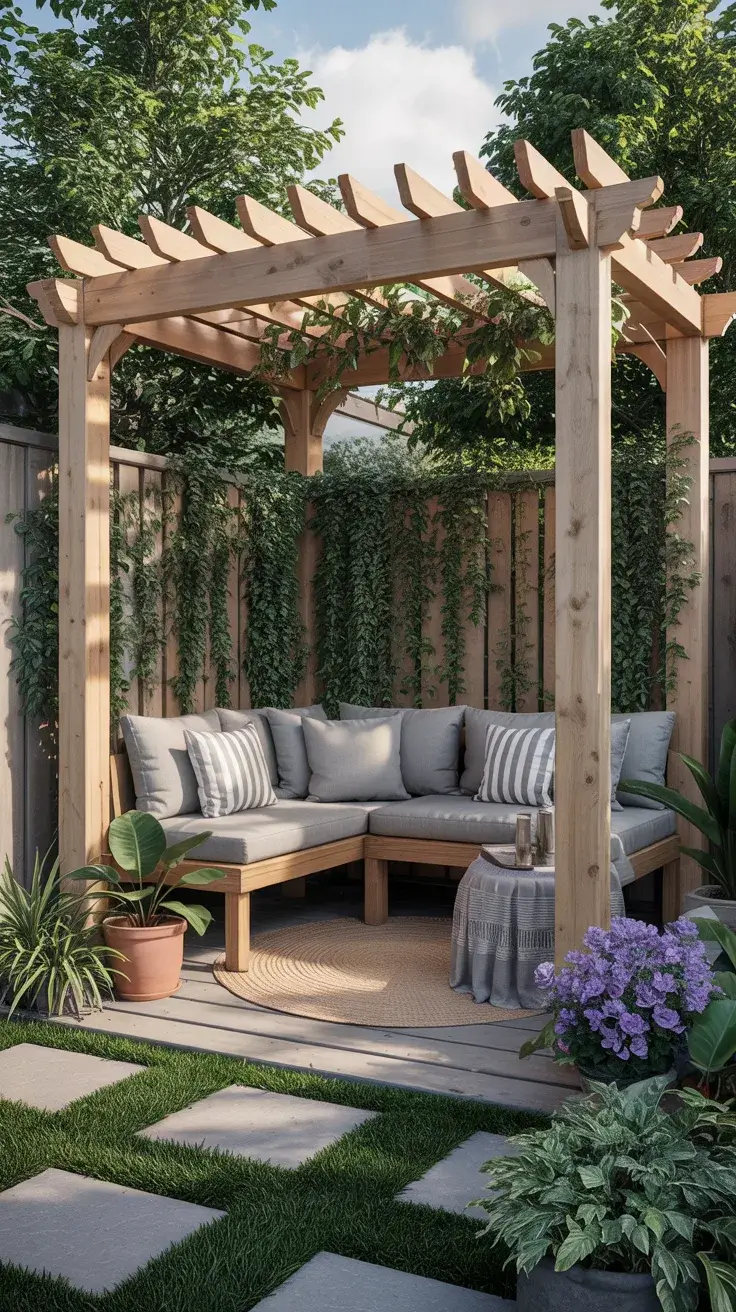
I would enhance this concept further by adding a small waterproof storage box for books or sketchpads.
26. Artistic Playground Designs With Creative Elements
Artistic playground designs bring visual excitement and self-expression into backyard play areas. When I design artistic spaces, I prioritize bold shapes, sculptural elements, and interactive art components that invite children to explore creativity while engaging physically with their surroundings.
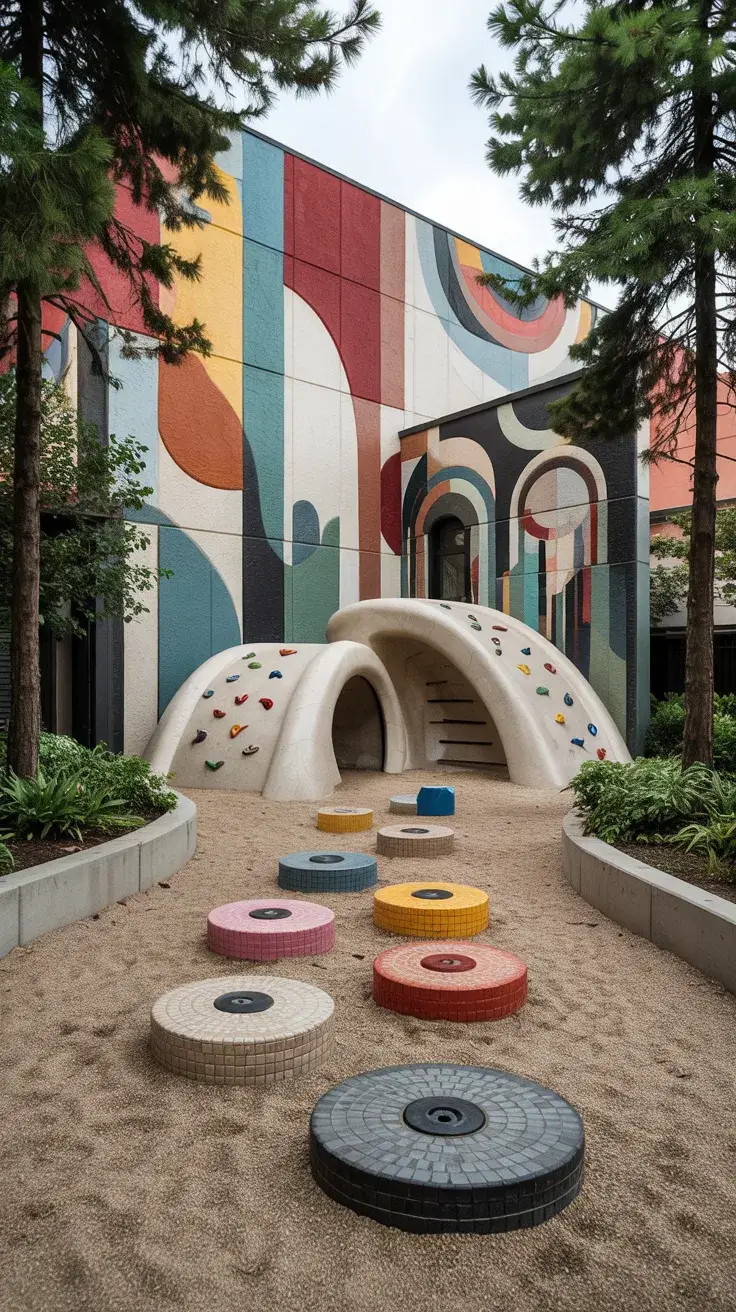
These playgrounds may feature abstract climbing sculptures, mosaic stepping stones, interactive mural walls, or color-blocked pathways. I often mix materials such as metal, glass-reinforced concrete, and weather-safe paints to create visually stimulating yet durable structures. Each piece contributes to a cohesive artistic theme while encouraging imaginative exploration.
Public art advocates frequently point out the benefits of exposing children to visual creativity at a young age. I’ve found that artistic playgrounds encourage children to think more freely and approach play with a sense of curiosity and wonder.
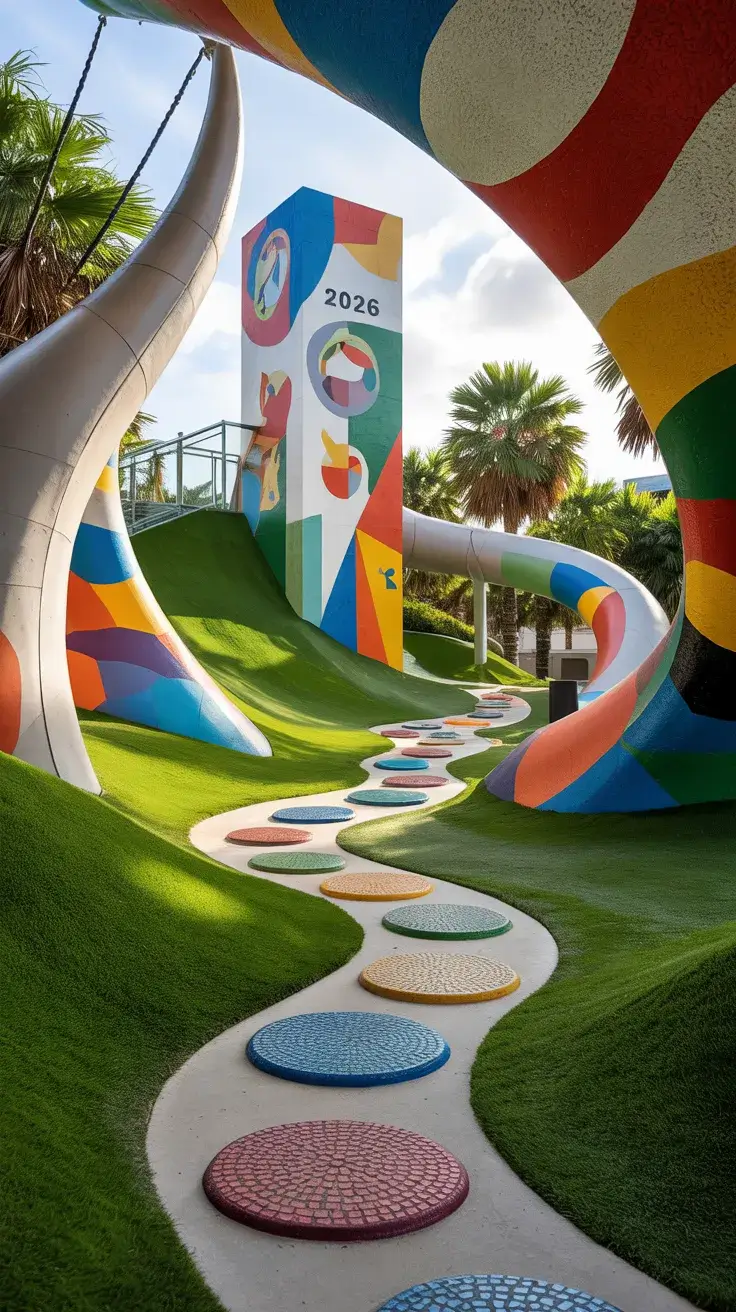
A valuable addition to this section would be rotating art panels that children can repaint seasonally using washable outdoor paints.
27. Bright Color Trends For 2026 Play Areas
Color plays a major role in shaping mood and engagement in playground spaces. In 2026, bright yet balanced palettes are trending, offering lively environments without overwhelming the senses. When I design colorful play zones, I aim for intentional use of color that highlights important features while enhancing visual flow.
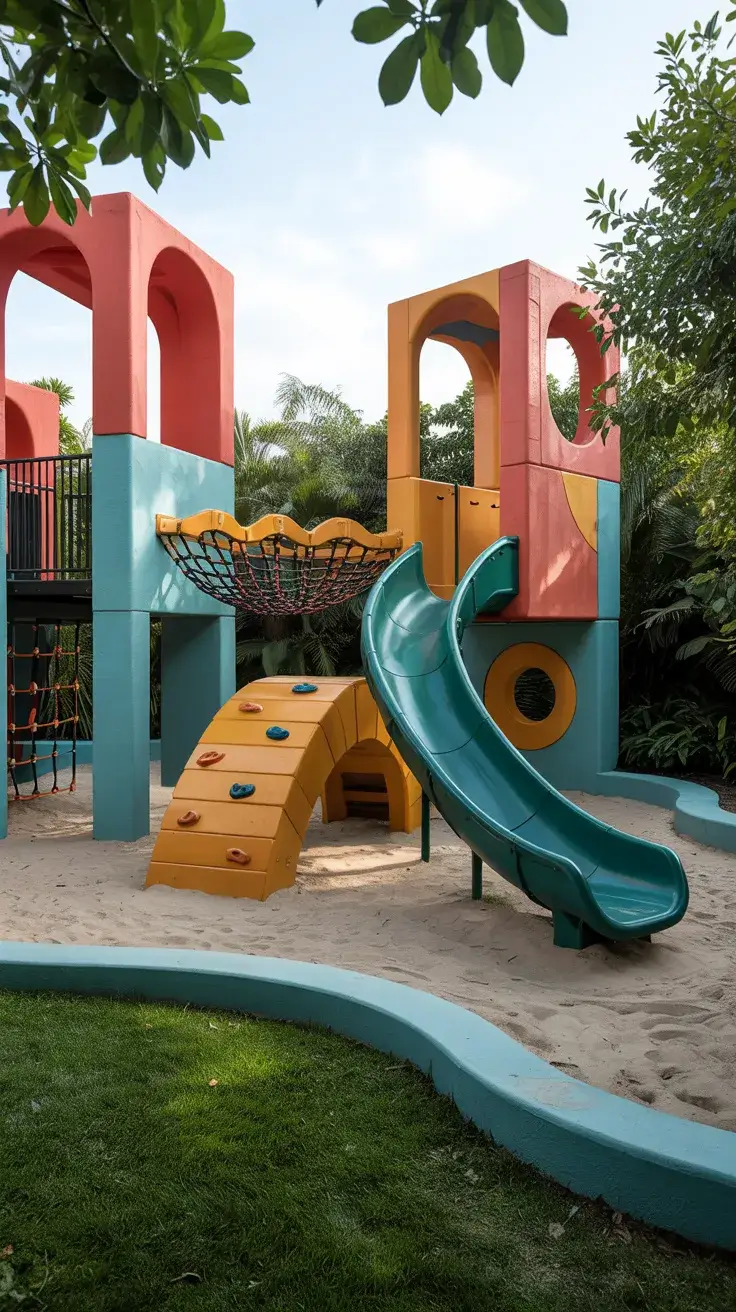
I like using pops of coral, teal, mustard yellow, and soft aqua on slides, climbing panels, and seating elements. Powder-coated metals and UV-stable paints help preserve color vibrancy outdoors. Strategic placement ensures the palette feels modern and cohesive rather than chaotic.
Design professionals often advise using bold colors to build excitement while pairing them with neutrals to maintain balance. This aligns with my own practice, where I’ve seen children respond positively to inviting colors that guide their attention naturally through the space.
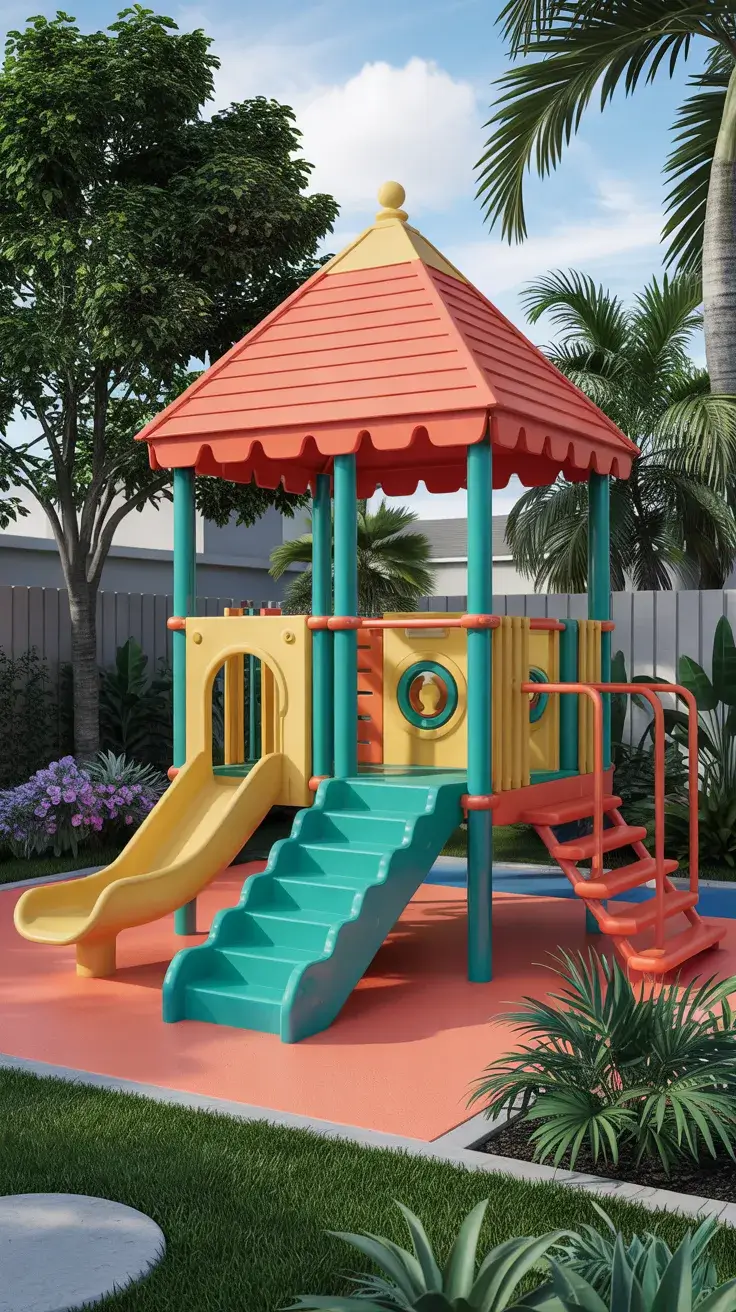
An enhancement here would be subtle nighttime lighting that reflects the color accents to maintain visual appeal after sunset.
28. Functional Storage Solutions For Backyard Toys
Functional storage solutions are essential for keeping a backyard play area organized and safe. When I design these spaces, I focus on accessible storage options that children can use independently. Thoughtful storage prevents clutter, reduces tripping hazards, and prolongs the lifespan of toys and equipment.
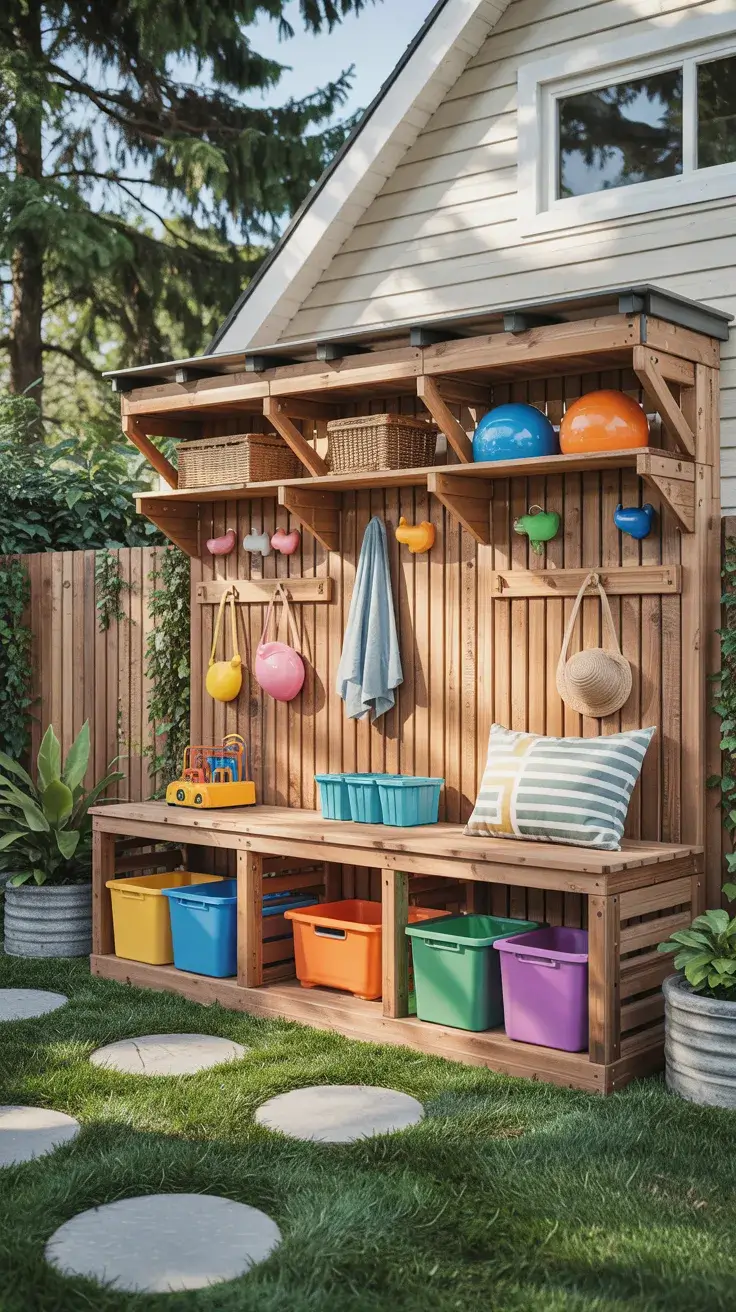
Common items include weatherproof storage benches, covered shelving units, rolling toy bins, and wall-mounted hooks. Materials such as resin, coated metal, and sealed wood help protect belongings from moisture and UV exposure. I also choose designs that blend visually with the play area to maintain aesthetic harmony.
Home organization experts often emphasize how structured storage supports better play habits. I’ve noticed that when children know exactly where items belong, cleanup becomes quicker and more consistent, enhancing the overall experience for both kids and parents.
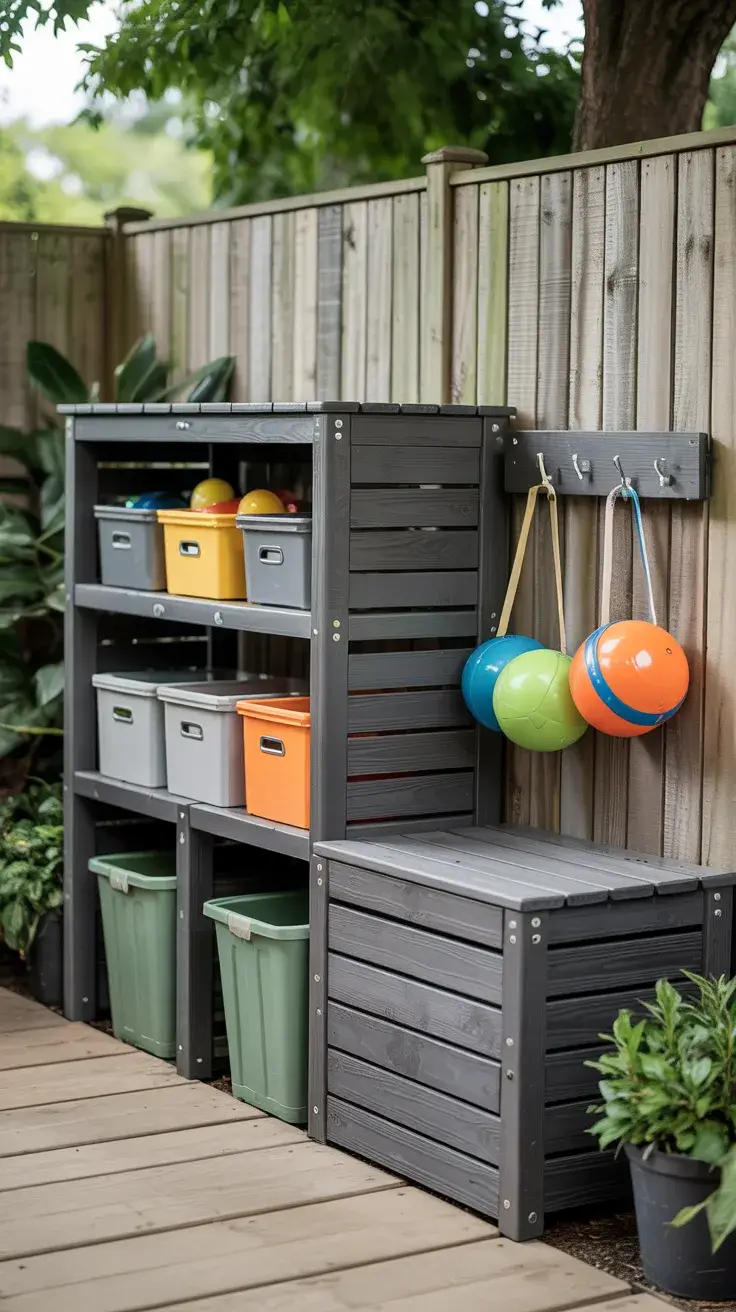
To finish this section, I would include labeled compartments for different toy categories to simplify organization.
29. Safety Guidelines For Modern Playgrounds
Safety remains the foundation of every successful playground design, especially when developing backyard playground ideas 2026 that reflect the newest materials and structural innovations. When I plan play areas, I prioritize sightlines, fall zones, and surface protection to ensure children can explore confidently. Modern playgrounds focus not only on physical safety but also on emotional comfort, giving children secure spaces where they feel supported and encouraged.
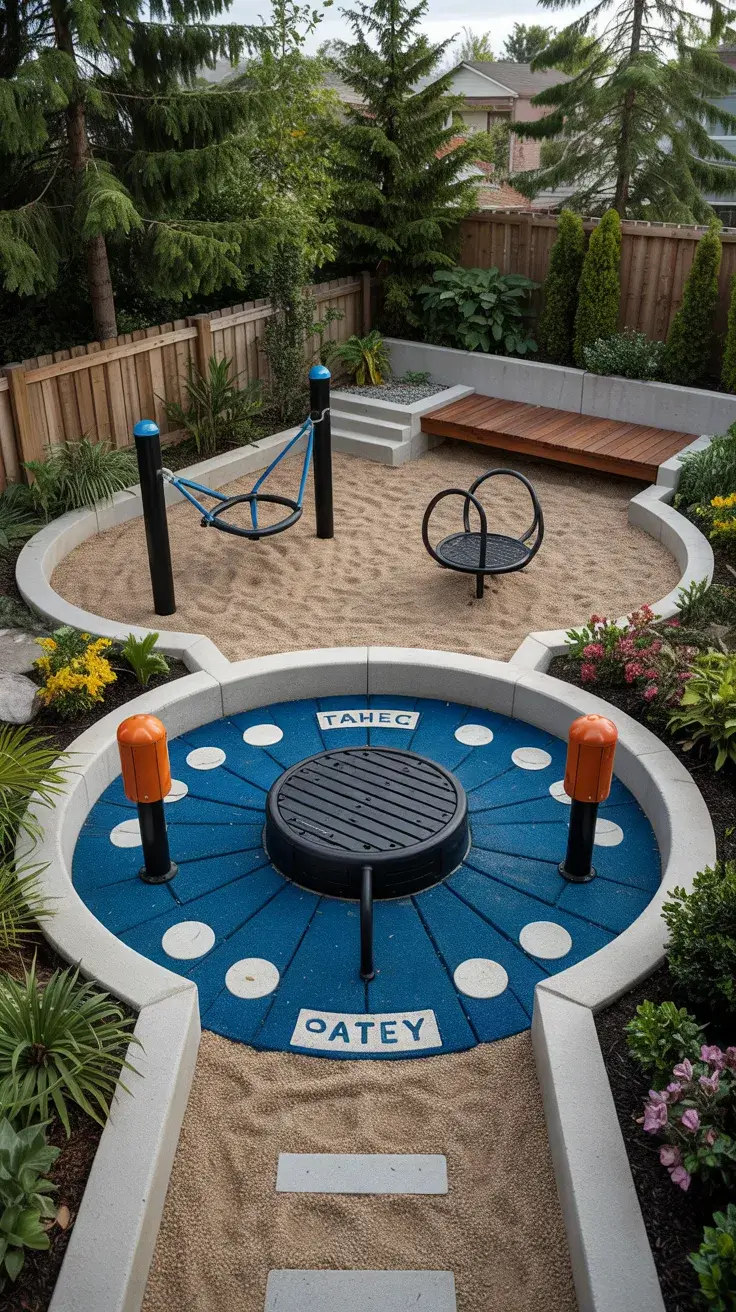
I typically incorporate impact-absorbing flooring, rounded edges on all structures, non-toxic finishes, and reinforced fasteners. Equipment spacing is essential to avoid collisions and overcrowding. I also prefer using transparent safety panels or railings on elevated structures to maintain visibility while preserving airflow and aesthetics. These decisions create a safer, more predictable environment for kids of all ages.
US safety specialists frequently emphasize following ASTM and CPSC guidelines, which align closely with my own professional standards. Based on my experience, even small improvements in surfacing, barrier height, or spacing can significantly reduce injury risks while enhancing overall play value.
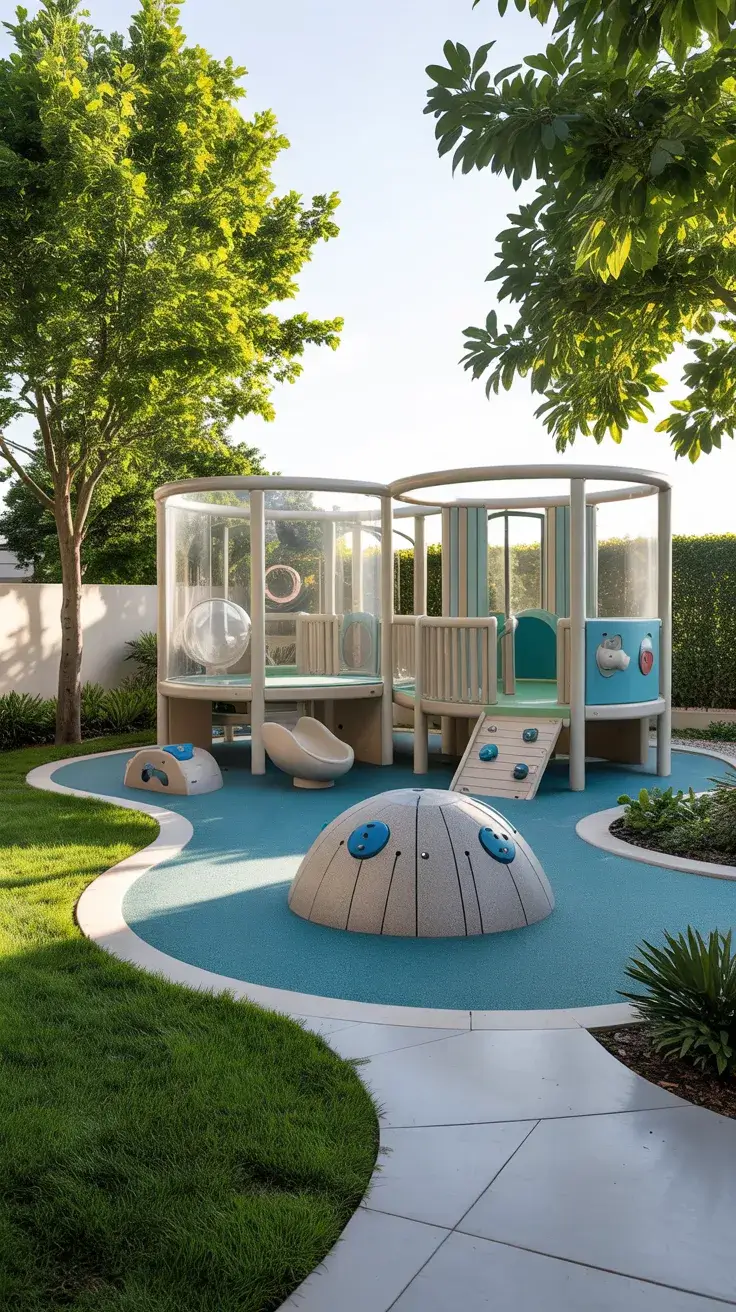
To complete this section, I would add a reminder for parents to create annual inspection checklists, ensuring equipment stays in optimal condition throughout the year.
30. Budget Friendly Backyard Playground Ideas
Budget-friendly approaches have become increasingly important as families look for creative ways to enhance their outdoor spaces without overspending. When I design economical backyard playground ideas 2026, I focus on multifunctional items, simple layouts, and materials that offer longevity without high cost. A well-planned budget-friendly playground can still be visually appealing, durable, and developmentally beneficial.
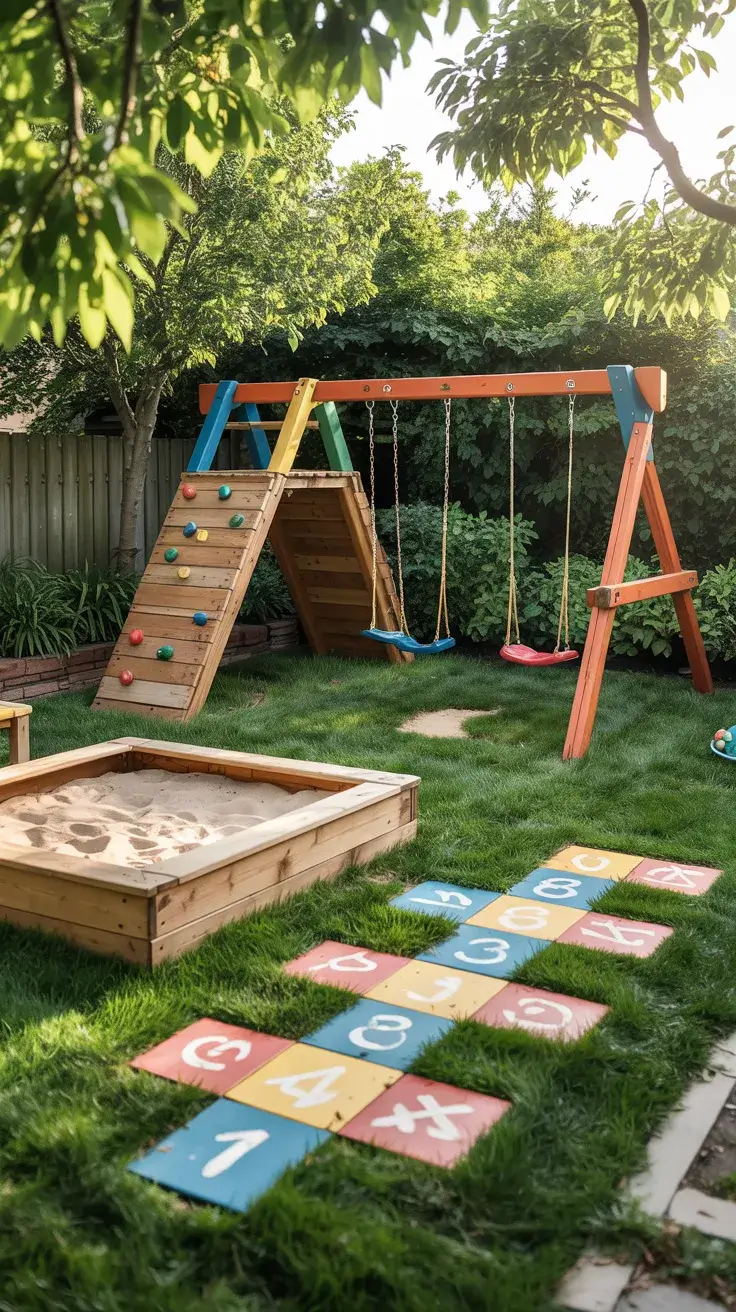
I often recommend DIY climbing structures, repurposed lumber seating, simple swing frames, sandbox zones, and painted ground games like hopscotch or four-square. These items reduce material costs while still providing meaningful play opportunities. Choosing modular pieces allows families to expand the playground in phases as the budget allows.
Financial planning experts in US family design publications often stress prioritizing core play essentials first, then slowly layering additional features. I fully agree, and I’ve watched families build beautiful, functional play spaces over time by investing wisely and creatively.
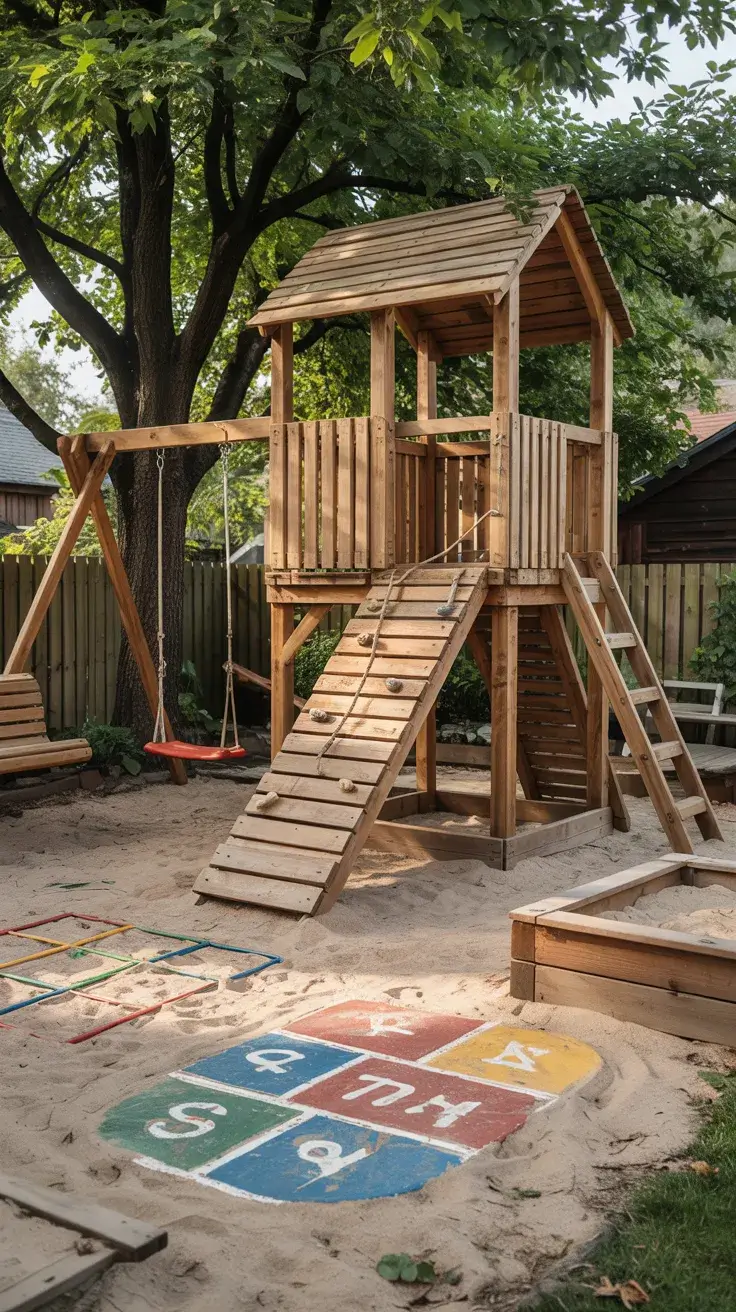
One improvement I would add is incorporating eco-friendly recycled materials whenever possible, as they reduce costs further while supporting sustainability.
31. Low Maintenance Playground Concepts
Low-maintenance playgrounds are perfect for families who want long-lasting functionality without constant upkeep. When I design these concepts, I prioritize durable surfaces, weather-resistant materials, and simplified structures that reduce wear and tear. A well-planned low-maintenance playground maintains its beauty and safety with minimal intervention.
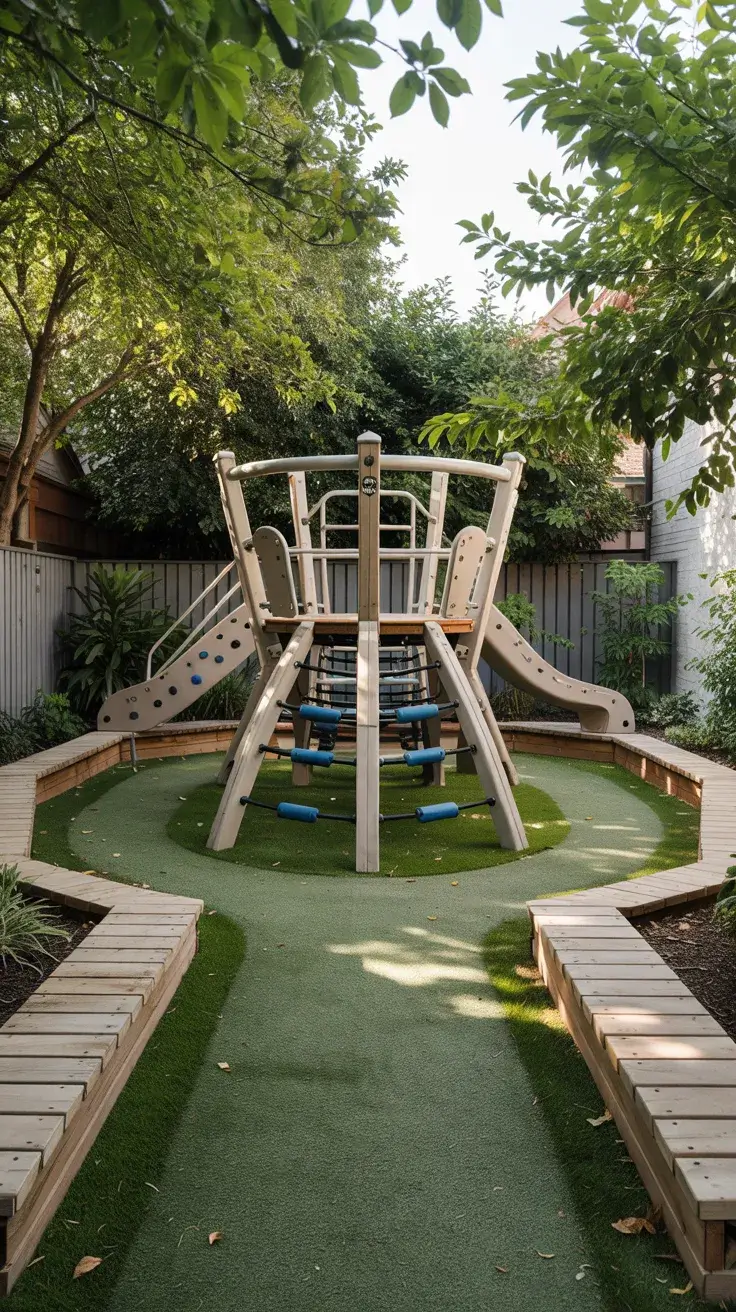
I typically incorporate composite decking, artificial turf with drainage layers, powder-coated steel frames, and sealed wood accents. These materials resist staining, warping, and fading, which significantly reduces the need for repairs. Simplified play elements such as fixed climbers, durable swings, and non-electronic sensory stations help maintain longevity.
Based on my experience, many US homeowners prefer low-maintenance designs because they support active play while fitting into busy lifestyles. Industry professionals also often highlight the benefit of predictable maintenance costs over time.
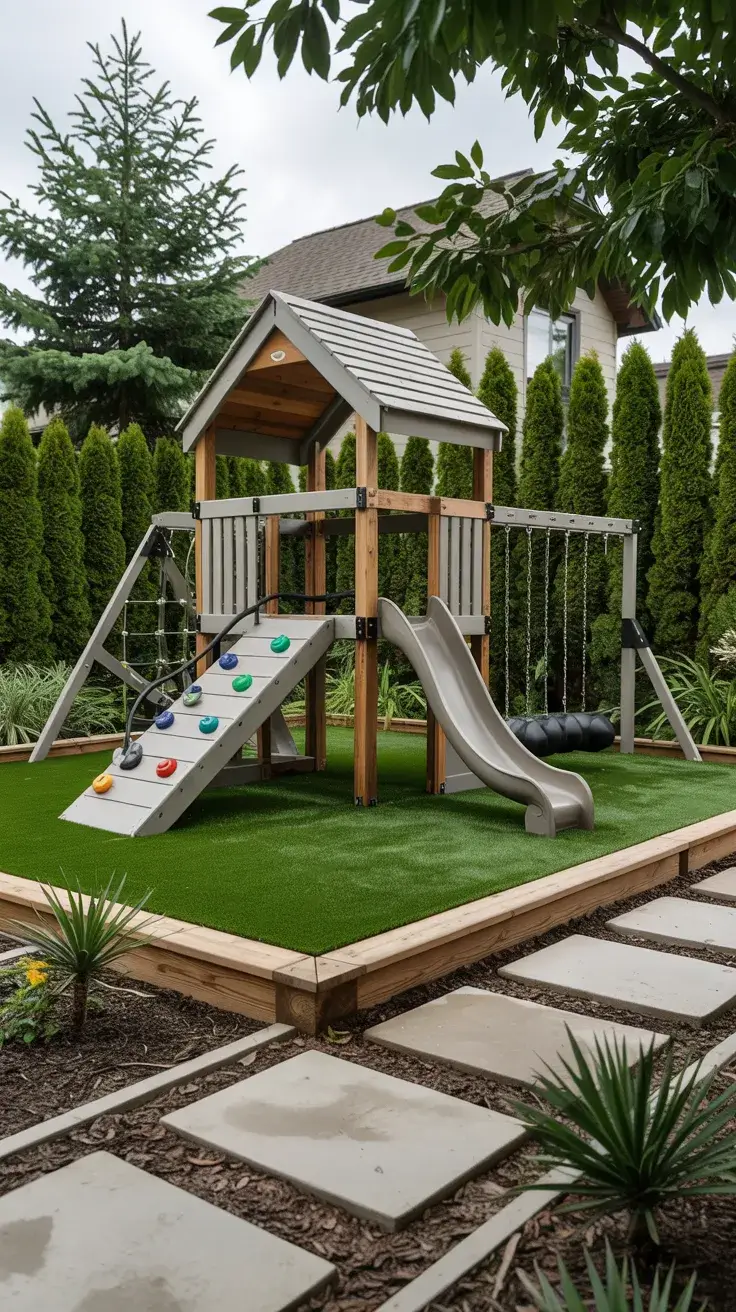
To further strengthen this concept, I would add built-in drainage systems to keep surfaces dry and prevent mold growth.
32. Future Forward Innovations In Backyard Play
The future of backyard play brings together technology, sustainability, and adaptive design in ways that redefine how children interact with outdoor spaces. When I imagine future-forward backyard playground ideas 2026, I envision smart systems that respond to movement, modular elements that evolve with children, and eco-conscious materials that minimize environmental impact.
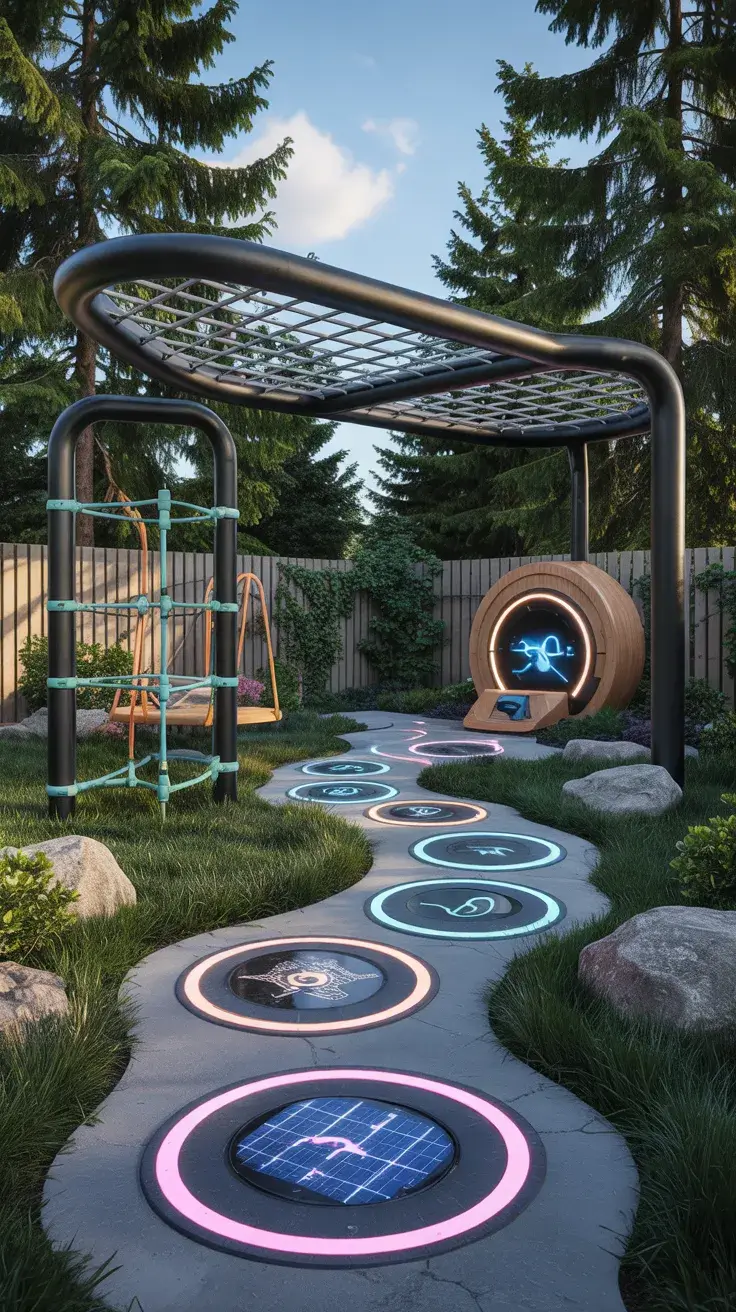
Features I often incorporate include motion-sensing light paths, solar-powered sound installations, shape-shifting climbing modules, and AR-enhanced exploration stations. All components are designed to be durable, intuitive, and engaging without overwhelming children with technology. I prioritize features that enhance curiosity and imagination while supporting physical play.
Experts in tech-integrated design frequently stress the importance of balancing digital and physical experiences. In my projects, I’ve seen the most success when technology acts as an enriching layer rather than a focal point, allowing play to remain active and grounded in real-world discovery.
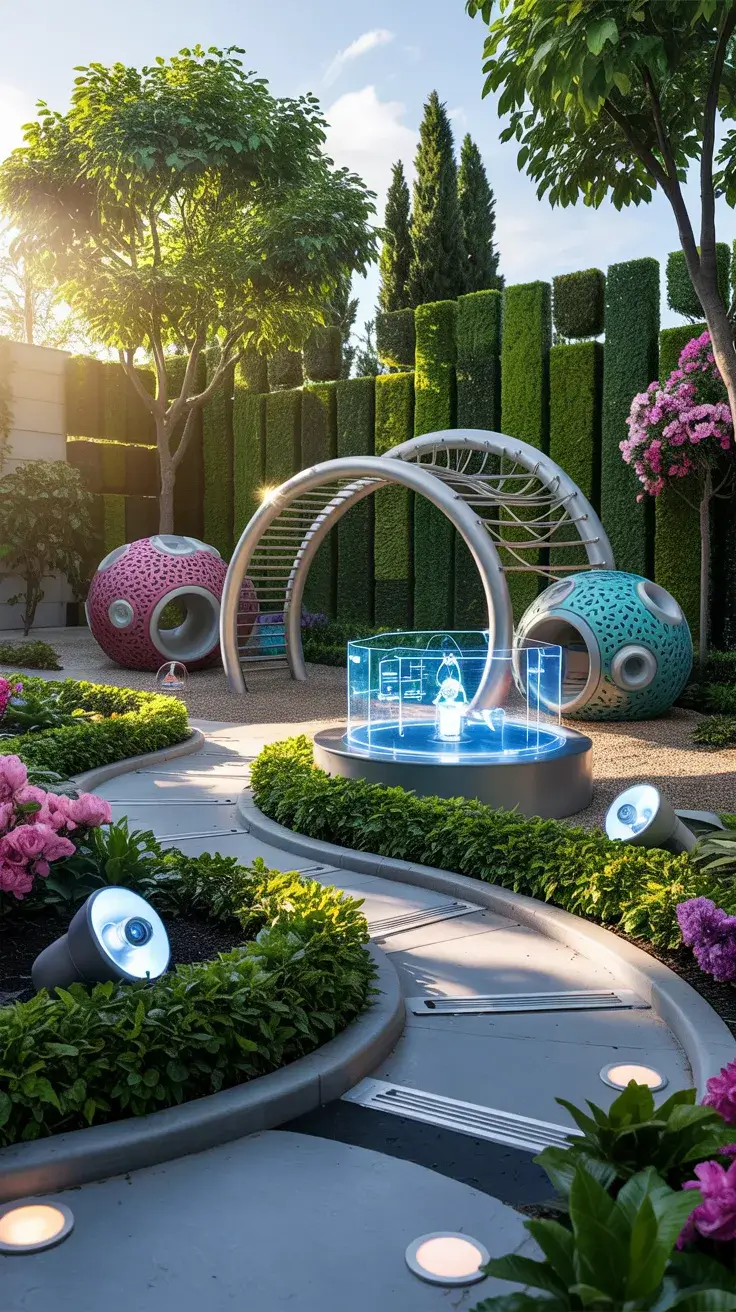
To complete this section, I would incorporate modular energy-efficient lighting to extend play into early evenings without excessive power use.